How To Cook Overnight Soups In Slow Cooker Safely: 2026 Guide
You can safely cook overnight soups in a slow cooker by ensuring the device maintains a constant temperature above 140 degrees Fahrenheit throughout the entire cooking process.
After years of testing kitchen appliances, I’ve learned that the best way to learn how to cook overnight soups in slow cooker safely is to know your specific machine. Waking up to the smell of a slow-cooked broth is a small daily pleasure. But safety must come first. Many cooks worry about leaving a cooker unattended. With the right prep and checks, you can leave a slow cooker on overnight with confidence. This updated guide covers temperature basics, practical tips, and steps I use every time I make overnight crockpot soups so they are safe and delicious.
:max_bytes(150000):strip_icc()/AR-228859-slow-cooker-french-onion-soup-beauty-4x3-dcfa288bf60e4698a0f526f1dc980926.jpg)
Understanding the Temperature Danger Zone
The main safety issue when you learn how to cook overnight soups in slow cooker safely is the temperature danger zone. Bacteria grow quickly between 40 and 140 degrees Fahrenheit (4–60°C). That is why your slow cooker must reach and keep a high enough temperature. If the pot sits in that range too long, bacteria can multiply and raise the risk of foodborne illness.
I once used an old cooker with a loose lid and woke to cool soup. That mistake taught me that safety is about equipment and ingredients. Always test your slow cooker with a thermometer if you doubt its performance. Keep the lid firmly in place. Every time you lift it, trapped heat escapes and the pot can drop into the danger zone.
Best Practices for Overnight Preparation
Good prep is the simplest way to make sure you know how to cook overnight soups in slow cooker safely. Follow these hands-on steps before bedtime. They help food cook evenly and limit safety risks.
- Cut vegetables and meat into uniform pieces. That helps everything cook at the same rate.
- Do not add frozen ingredients straight to the crock. They cool the pot and keep contents too long in the danger zone.
- Preheat the liquid base on the stove. Bringing stock or water to a simmer before adding it gives the slow cooker a head start.
- Fill the crock between half and two-thirds full. This allows steady heat circulation without overfilling.
These steps help you cook overnight soups in slow cooker safely while keeping texture and flavor. I also like to sauté aromatics—onions, garlic, celery—first. That adds depth and ensures they’re ready for a long, low simmer.
How to test your slow cooker for overnight use
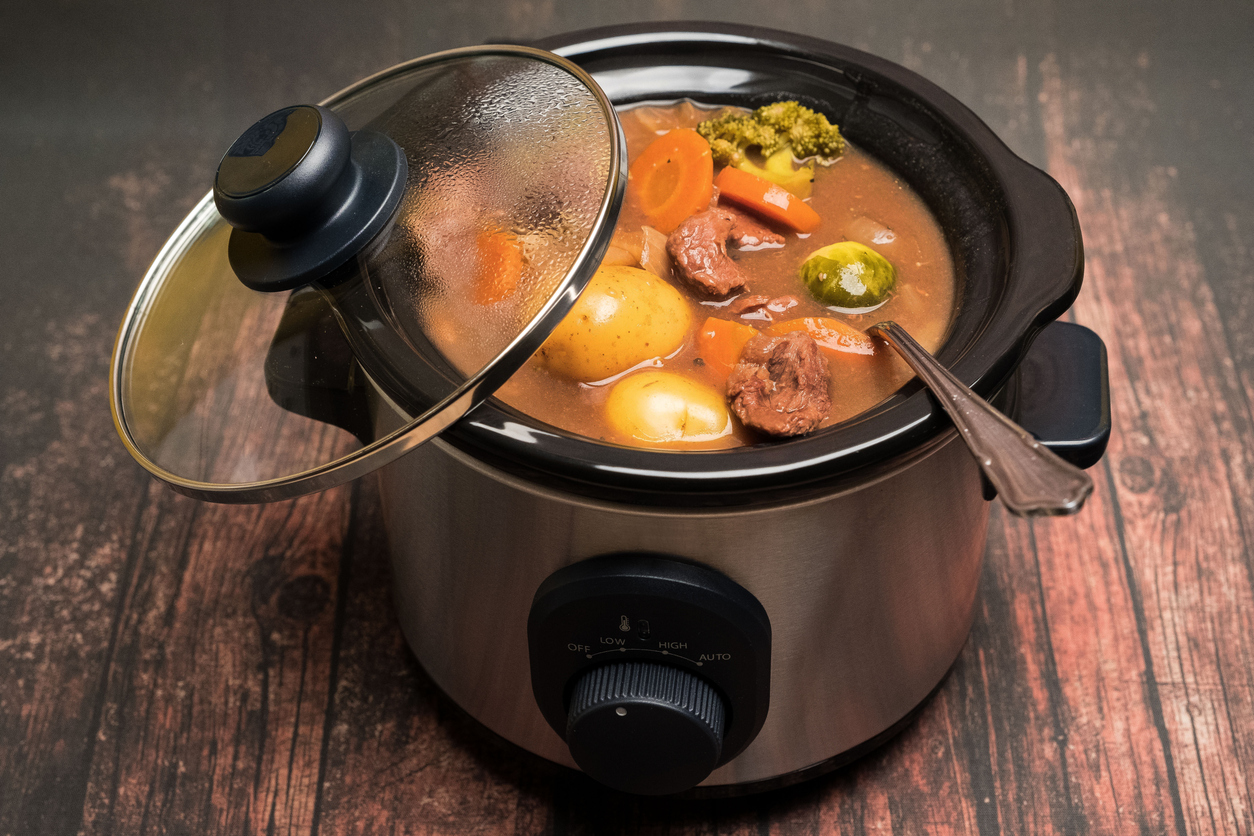
Before you trust any slow cooker for overnight soups, test it. Here’s a simple, reliable test I use. It helps you check whether the unit holds a safe temperature for long, unattended cooks.
- Fill the cooker with water to the level you normally use for soups.
- Set the cooker to the same program (low or high) you plan to use overnight.
- Place a probe thermometer in the center of the water, not touching the sides.
- Run the cooker for 2–4 hours and check the temperature. The water temperature should reach and stay at or above 140°F (60°C) for safe hot-holding.
If the temperature stays below 140°F, do not use that unit for unattended overnight slow cooking. Test periodically—age and wear change performance.
Recognizing Potential Risks and Limitations
Even when you know how to cook overnight soups in slow cooker safely, you should watch for outside risks. Power outages and appliance limits are the main concerns.
- Power outages are the biggest risk while you sleep. If power fails and you cannot verify how long the soup cooled, throw it out. Food left in the 40–140°F range for hours is unsafe.
- Older dial models can run cooler than modern programmable units. Newer slow cookers tend to manage temperature more consistently.
- Do not rely on the keep warm setting to cook raw meat. The keep-warm function usually does not reach 140°F and will not kill pathogens.
Programmable slow cookers are safer for overnight use because they can switch to “keep warm” after a timed cook. Still, only use keep-warm after the main cooking time finishes. Never start raw ingredients on warm.
:max_bytes(150000):strip_icc()/Simply-Recipes-Slow-Cooker-Pot-Roast-LEAD-1-849e074ff6324f53b0b6a13a986c6629.jpg)
Quick safety checklist before you go to bed
Use this checklist each time you plan to cook a soup overnight. It’s short and effective.
- Are ingredients fresh and properly thawed?
- Is the slow cooker clean and sitting on a heat-safe surface?
- Did you preheat the liquid before adding it?
- Did you test the cooker’s temperature or are you using a reliable, modern model?
- Is the lid sealed? No peeking during the night.
- Are flammable materials and curtains clear of the appliance?
Doing these quick checks takes a minute but reduces risk a lot.
Overnight crockpot soup ingredients and recipe tips
Certain ingredients and techniques work especially well for overnight soups. Here are practical tips from my own cooking experiments.
- Use tougher cuts of meat (chuck roast, short ribs) for long, slow cooks. They become tender and flavorful.
- Sturdy vegetables (carrots, potatoes, parsnips) hold up to long simmering. Add soft vegetables (peas, zucchini) near the end.
- Beans must be soaked or pre-cooked unless the recipe is written for dried beans in a slow cooker. Raw dried beans can release toxins if undercooked.
- Season lightly at the start. Flavors often concentrate overnight. Adjust salt and acid (vinegar, lemon) before serving.
These tips help you get reliable texture and full flavor from overnight soup recipes.
Frequently Asked Questions of how to cook overnight soups in slow cooker safely
Is it safe to leave a slow cooker on all night?
Yes, in most cases. If your slow cooker is in good condition, runs correctly, and sits on a stable, heat-safe surface, it is generally safe. Keep it away from curtains and clutter. Make sure your home’s wiring can handle the appliance.
What is the minimum temperature for safe slow cooking?
Your slow cooker contents should reach and remain at or above 140 degrees Fahrenheit (60°C). That temperature keeps bacterial growth under control. The USDA and CDC identify 40–140°F as the food safety danger zone, so stay above that line.
Should I stir my soup during the night?
No. Do not lift the lid at night. Lifting releases a lot of heat. Each time you open the lid, you add cooking time and risk letting the food sit cooler. Trust the cooker and only check in the morning.
Can I leave raw meat in the slow cooker overnight?
Yes—if the slow cooker heats quickly and reaches safe temperatures. Raw meat cooks fine overnight when the pot reaches and maintains the proper heat. If you are unsure about your cooker, brown the meat first or use pre-cooked protein.
How do I know if my slow cooker is reliable for overnight use?
Test it with water and a thermometer. Fill the cooker, run it on the setting you plan to use, and measure the temperature after a few hours. If the water stays above 140°F, the unit is reliable for overnight cooking. Retest older units periodically.
Common mistakes to avoid when cooking overnight
Here are frequent errors I see and how to avoid them.
- Starting with frozen ingredients—this keeps the pot too cool for too long.
- Overfilling the crock—this prevents even heat circulation and prolongs time in the danger zone.
- Using the “keep warm” setting to do the cooking—keep warm is for holding food after cooking, not for initially cooking raw items.
- Ignoring manufacturer recalls or obvious appliance damage—replace old or faulty units.
Conclusion
Mastering how to cook overnight soups in slow cooker safely is practical and rewarding. With the right cooker, a quick prep routine, and a simple temperature check you can enjoy hot, homemade soup every morning. Keep your appliance clean, test its performance, avoid unnecessary lid lifting, and do a short safety checklist before bed. That will help you wake to a safe, flavorful bowl. Start testing your favorite recipes tonight and enjoy the convenience of a hot breakfast or dinner waiting for you. If you have any tips or favorite recipes for overnight soups, feel free to share them in the comments below!

Appliance Review Expert
Lucas Ramirez is a trusted voice at HomeFixGrid.com, known for his clear, practical, and creatively written guides that simplify appliance care for everyday homeowners. With a strong focus on hands-on testing and real-world problem-solving, Lucas brings expert insight into appliance reviews and troubleshooting techniques. Her work empowers readers to confidently maintain, repair, and choose the right appliances for their homes.