

How To Check Fridge Temp: Easy Food Safety Guide
Use a refrigerator thermometer in the center of your fridge and keep the reading at or below 40°F.
Learning how to check fridge temp is simple, but doing it correctly protects food, reduces waste, and helps your refrigerator run well. This guide explains the best thermometer, the right location, common mistakes, and what to do when the temperature is too high or too low.
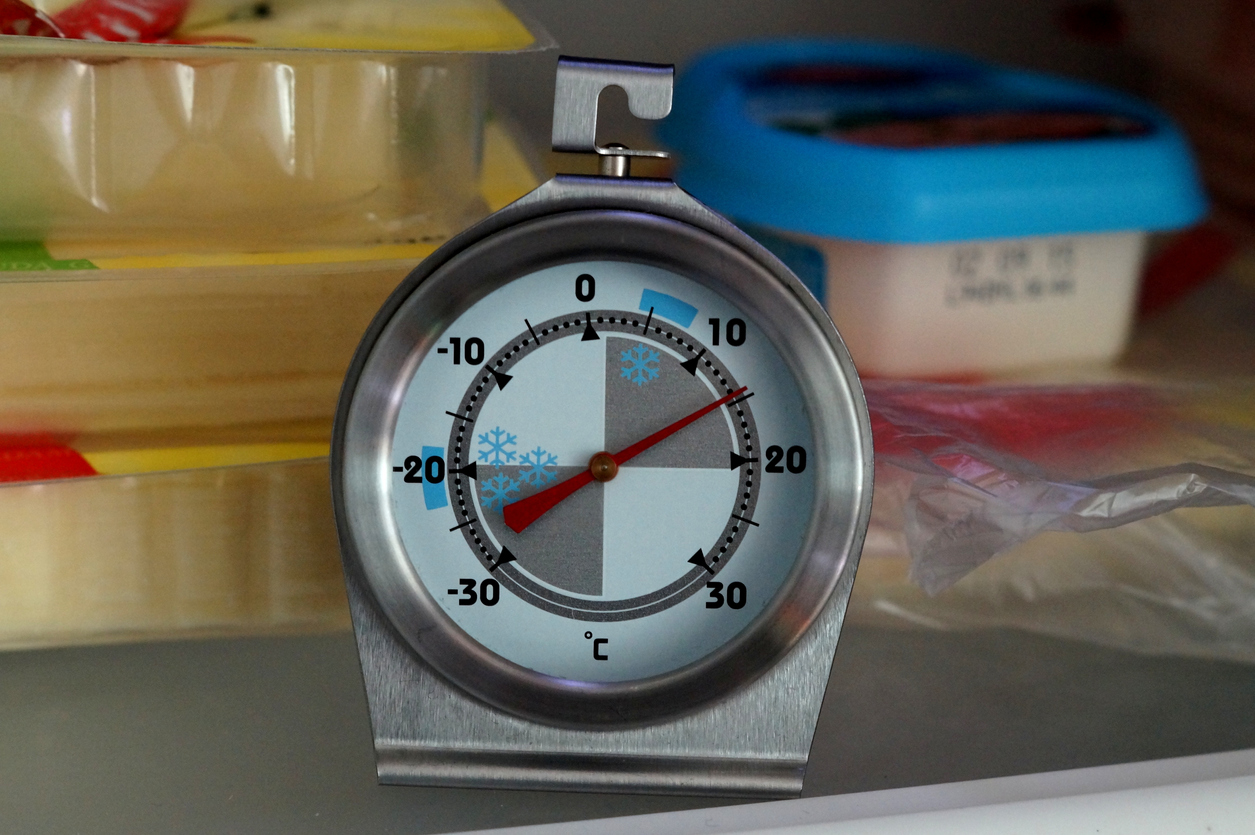
What temperature should a fridge be?
The ideal refrigerator temperature is 37°F. Food stays safely chilled when the fridge remains at or below 40°F, while temperatures below 32°F may freeze fresh food.
The 40°F limit is a food safety guide used in the United States. Bacteria can multiply quickly in the range from 40°F to 140°F, often called the danger zone. A cold fridge slows this growth, but it does not make food safe forever.
A good target range is:
• Best target: 37°F
• Safe maximum: 40°F
• Common cold setting: 35°F to 38°F
• Possible freezing risk: 32°F or lower
Your refrigerator’s display may show the setting rather than the true air temperature. This is why learning how to check fridge temp with a separate thermometer matters.

What you need to check fridge temperature
The most reliable tool is an appliance thermometer made for refrigerators. It is usually inexpensive and easy to read.
You can choose from three common types:
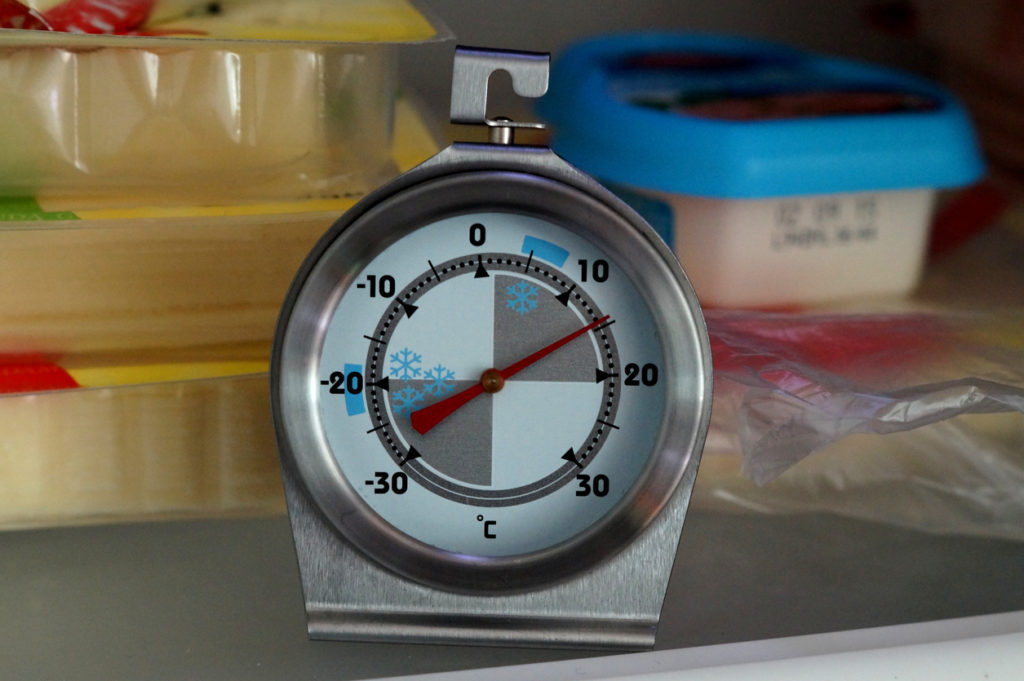
• Dial thermometer: Simple, durable, and does not need batteries.
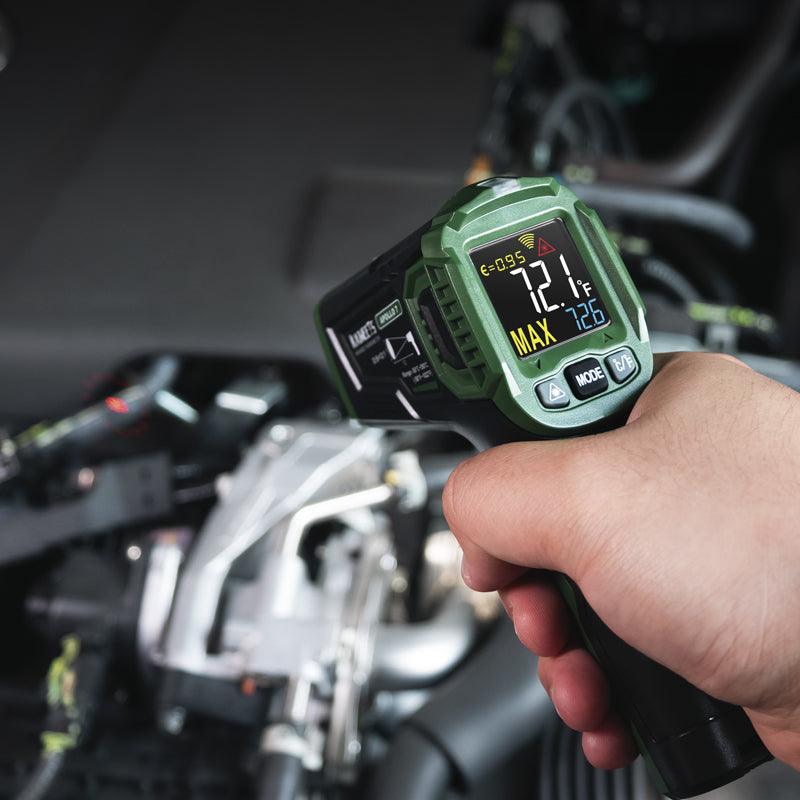
• Digital thermometer: Easy to read and often more precise.
• Wireless thermometer: Sends readings to an app or display outside the fridge.
Avoid relying only on a touch test. A fridge can feel cold while still being warmer than 40°F. Your hand also cannot detect small temperature changes with enough accuracy to protect perishable food.
For a more useful reading, choose a thermometer that measures from about 20°F to 80°F. A thermometer designed for refrigerators is better than a basic outdoor or room thermometer.
If you use a digital thermometer, check the battery from time to time. A weak battery can cause a false reading. It is also wise to compare an old thermometer with a new one if the readings seem unusual.
How to check fridge temp correctly
Follow these steps to get a dependable reading:
- Place an appliance thermometer in a glass of water. The water helps reduce quick changes caused by opening the door.
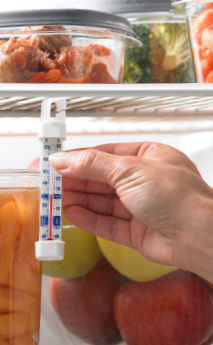
- Put the glass on the middle shelf, near the center of the refrigerator.
- Keep the thermometer away from the door, back wall, vents, and direct contact with food.
- Close the door and leave the thermometer in place for at least 5 to 8 hours.
- Check the reading before opening the door for a long time.
- Record the temperature and repeat the test at different times if needed.
Using a glass of water is especially helpful with a dial thermometer. It measures the temperature of a chilled object rather than a brief burst of warm air.
For a quick check, you can place a thermometer between two food packages. However, this method may be less stable than placing it in water. If you suspect a safety problem, use the longer test.
When you check fridge temp, test the fridge after it has been closed for several hours. A reading taken right after grocery shopping may be higher because warm food and open doors temporarily raise the temperature.

Where to place the thermometer
Location has a major effect on the reading. The door is usually the warmest area because it loses cold air each time you open it.
The best place to check fridge temp is usually the middle shelf, toward the center of the cabinet. This spot gives a useful picture of the temperature around most stored food.
Avoid these locations:
• Refrigerator door shelves, which warm up quickly
• The back wall, which may be much colder than the rest of the fridge
• Directly beside an air vent, where cold air may create a misleading result
• A crowded corner with little air movement
• Inside a drawer, unless you are testing that drawer on purpose
Different parts of the fridge can have different temperatures. The back may be cold enough to freeze lettuce, while the front may be several degrees warmer. That is normal, but large differences may point to an airflow or appliance problem.
If your refrigerator has a special meat drawer or produce drawer, test it separately when needed. These areas may have different controls and may not match the main compartment.
How to check fridge temp with a built-in display
Many modern refrigerators include a digital temperature display. It is useful, but it may not show the exact temperature of the food compartment.
Some displays show the temperature selected on the control panel. Others show an average reading from a sensor. The displayed number may also lag behind the actual temperature after you add food or open the door.
To check fridge temp with a built-in display:
- Confirm that the display is set to Fahrenheit if that is your preferred scale.
- Set the fridge near 37°F.
- Place a separate appliance thermometer on the middle shelf.
- Wait several hours.
- Compare the thermometer with the display.
- Use the thermometer reading to guide any adjustment.
If the display says 37°F but the thermometer says 44°F, do not ignore the difference. Check the door seal, airflow, and food placement before assuming the control panel is accurate.
A built-in sensor can also be blocked by food or affected by frost. A separate thermometer gives you an independent check.

What to do if your fridge is too warm
If you check fridge temp and find a reading above 40°F, first confirm the result. Make sure the thermometer is accurate and has stayed in the fridge long enough.
Then inspect the most common causes:
• The door may not close fully.
• The gasket may be dirty, cracked, or loose.
• The fridge may be packed too tightly.
• Food may block the cold air vents.
• The temperature control may be set too warm.
• The condenser coils may be dusty.
• The room may be unusually hot.
• The appliance may have a failing fan, sensor, or compressor.
Clean the door gasket with warm, soapy water. Check that no container or shelf prevents the door from closing. Leave space around vents so cold air can circulate.
You can lower the setting by a small amount, such as 2°F, then wait 12 to 24 hours before checking again. Do not turn the control to its coldest setting right away. That may freeze food without solving the underlying problem.
If perishable food has been above 40°F for two hours or more, safety becomes uncertain. When in doubt, throw it out. The risk is greater for meat, poultry, seafood, eggs, milk, cooked leftovers, and soft foods.
What to do if your fridge is too cold
A fridge below 32°F can freeze water-rich foods. You may notice icy lettuce, frozen berries, hard milk, or crystals on vegetables.
If you check fridge temp and find freezing conditions, try these steps:
- Move food away from the back wall and air vents.
- Check that the temperature control is not set too low.
- Wait several hours and test again.
- Look for heavy frost around the vents or back panel.
- Check whether the door seal closes evenly.
- Call a qualified appliance technician if the problem continues.
Do not use the coldest setting as a shortcut for keeping food fresh. A stable temperature near 37°F is usually better than repeated swings between warm and freezing.
Some foods are more sensitive to cold. Leafy greens, cucumbers, tomatoes, and certain fruits may suffer texture damage when they freeze. Store them in the proper drawer and keep them away from cold air outlets.

How often should you check fridge temp?
Check fridge temp at least once a month. Check it more often after a power outage, a repair, a move, or a major change in food storage.
It is also smart to test the refrigerator when you notice:
• Food spoiling sooner than usual
• Milk becoming warm or sour quickly
• Ice forming on fresh food
• A motor running almost constantly
• A temperature warning or error code
• Water or frost collecting inside the cabinet
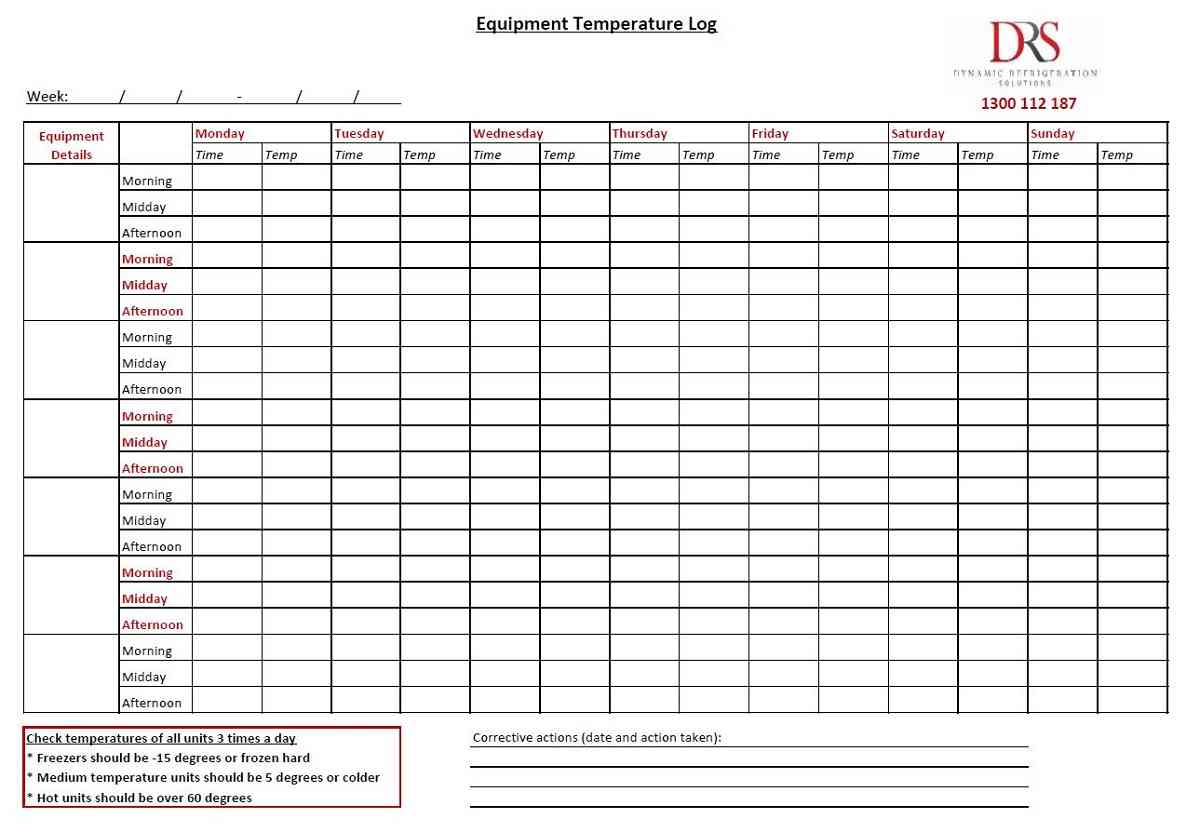
A simple monthly check can reveal a problem before it ruins a full grocery trip. Write the reading on a note inside the fridge or use a phone reminder.
After adjusting the temperature, wait at least 12 hours before judging the result. The cabinet, shelves, and food need time to reach a stable temperature.
Fridge temperature checking mistakes to avoid
Many incorrect readings come from small testing errors. Avoid these common mistakes:
Checking the air for only a few minutes
Air temperature changes fast when the door opens. A short test may show the warm air near the front rather than the steady temperature around the food.
Putting the thermometer in the door
The door is exposed to room air more often than the main compartment. Its temperature is not a reliable guide for the whole fridge.
Trusting the control dial
A dial marked from 1 to 5 is a setting, not a temperature. Test the fridge with an appliance thermometer instead.
Placing food against the back wall
The back wall may be cold enough to freeze food. Keep delicate items a short distance away.
Overloading the refrigerator
A full fridge can hold cold well, but an overcrowded fridge blocks air movement. Leave room around vents and avoid pressing packages against the rear panel.
Opening the door during the test
Each opening changes the result. Keep the door closed for the full test period whenever possible.
In practical fridge checks, one of the most common mistakes is adjusting the setting too often. Make one small change, wait, and test again. Patience produces a more useful result.
How to keep a fridge at the right temperature
Correct temperature depends on more than the control setting. Good storage habits help the appliance stay stable.
Use these habits:
• Keep the fridge at or below 40°F.
• Do not place hot food directly inside. Let it cool briefly, then refrigerate it in shallow containers.
• Do not leave the door open while preparing meals.
• Keep raw meat on the lowest shelf in a sealed container.
• Store foods in a way that leaves vents clear.
• Clean spills quickly to protect the door seal and prevent odors.
• Check that the fridge has enough space around its exterior for heat to escape.
• Clean condenser coils according to the manufacturer’s instructions.
A refrigerator should not be empty for long periods, but it should not be tightly packed either. Cold food helps hold the temperature, while open space allows air to move.
Power outages need special care. Keep the door closed as much as possible. A full, unopened refrigerator can often stay cold for about four hours, but use a thermometer and food safety guidance rather than guessing.
When to call for refrigerator repair
If you check fridge temp several times and the reading stays above 40°F, the appliance may need service. A repair is also wise when the fridge swings from warm to freezing without a clear reason.
Call a qualified technician if you notice:
• A loud or unusual fan noise
• A compressor that never seems to stop
• Heavy frost covering the back panel
• A warm freezer and warm refrigerator section
• A damaged power cord
• Repeated temperature alarms
• Water leaking near electrical parts
Do not remove sealed panels or handle refrigerant systems yourself. Refrigerators contain electrical parts and pressurized cooling systems that require proper tools and training.
Before calling, write down the temperature, the time of each reading, and any changes you made. This information can help the technician find the fault faster.
Why accurate fridge temperature matters
Knowing how to check fridge temp helps protect both health and money. A refrigerator that is too warm can allow harmful bacteria to grow, while one that is too cold can freeze food and increase energy use.
Temperature checks also help you spot problems early. A slow rise of just a few degrees may be the first sign of a worn door gasket, blocked vent, dirty coil, or failing sensor.
The goal is not to chase a perfect number every minute. The goal is a stable environment that keeps food safely cold. Think of the thermometer as a small dashboard for your refrigerator.
Frequently Asked Questions About How to Check Fridge Temp
What is the safest fridge temperature?
Keep your refrigerator at or below 40°F. Setting it near 37°F gives you a small safety buffer while reducing the chance of freezing fresh food.
Where should I put a fridge thermometer?
Place the thermometer on the middle shelf, near the center of the refrigerator. Keep it away from the door, back wall, cold air vents, and direct contact with food.
How long should a thermometer stay in the fridge?
Leave it in place for at least 5 to 8 hours for a useful reading. For the most stable result, test it overnight with the door closed.
Can I check fridge temp without a thermometer?
You can look for clues such as warm milk, spoiled food, or frozen vegetables, but these signs are not accurate. A refrigerator thermometer is the safest and simplest way to measure the temperature.
Why does my fridge display show 37°F when the thermometer shows 42°F?
The built-in display may show a setting or a sensor reading from another part of the appliance. Test the separate thermometer in the center of the fridge and check the door seal, vents, and airflow.
How often should I check fridge temperature?
Check it at least once a month and after a power outage, repair, move, or noticeable change in cooling. Test it sooner if food spoils unusually fast or begins to freeze.
Is 45°F too warm for a refrigerator?
Yes. A reading of 45°F is above the recommended safe limit for refrigerated food. Confirm the reading, adjust the appliance, and review the safety of any perishable food that stayed warm for too long.
Should the fridge thermometer be in water?
Putting a thermometer in a glass of water gives a steadier reading, especially with a dial thermometer. The water reduces the effect of short air temperature changes when the door opens.
Conclusion
Learning how to check fridge temp takes only a thermometer, the right placement, and a little patience. Aim for about 37°F, keep the refrigerator at or below 40°F, and test the center shelf after several hours with the door closed.
Check the temperature each month and after any power outage or cooling problem. A small habit today can prevent spoiled food, wasted money, and avoidable health risks. Pick up an appliance thermometer, test your fridge tonight, and share your results or questions in the comments.

Appliance Review Expert
Lucas Ramirez is a trusted voice at HomeFixGrid.com, known for his clear, practical, and creatively written guides that simplify appliance care for everyday homeowners. With a strong focus on hands-on testing and real-world problem-solving, Lucas brings expert insight into appliance reviews and troubleshooting techniques. Her work empowers readers to confidently maintain, repair, and choose the right appliances for their homes.