
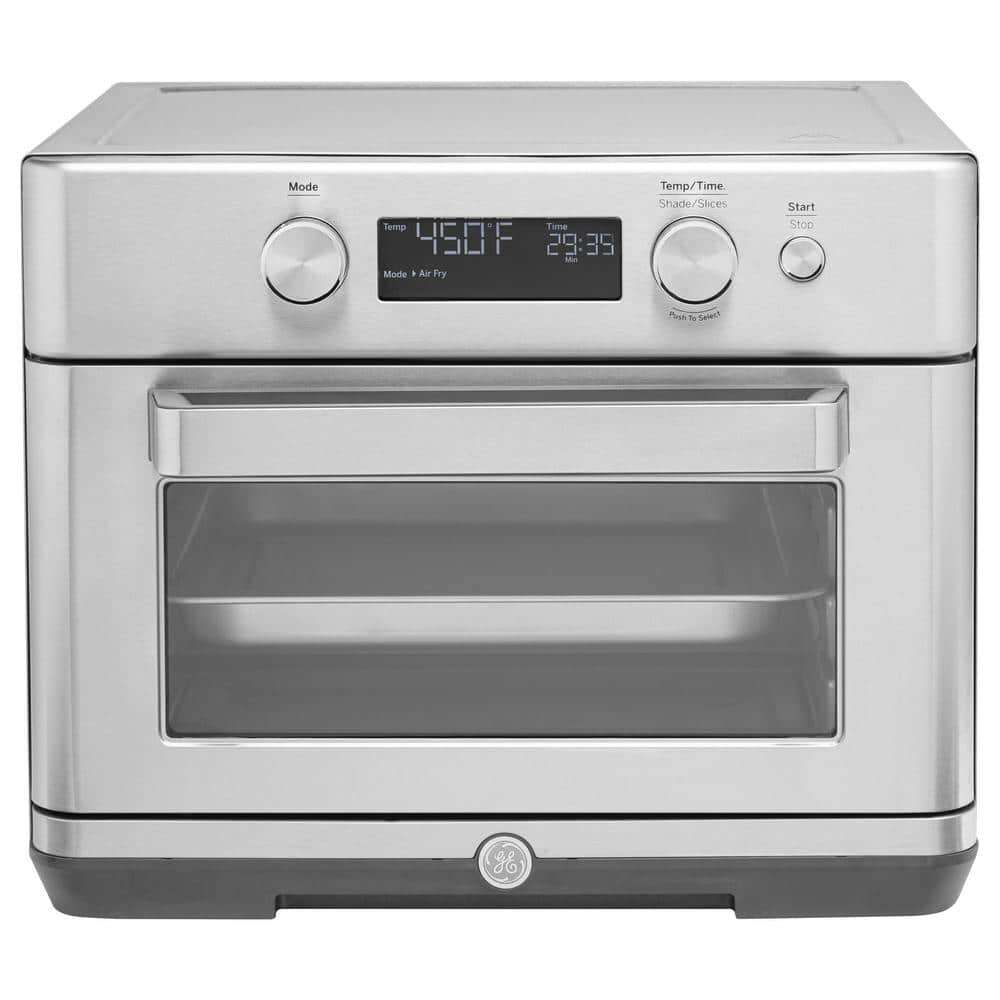
How To Use Air Fryer In GE Oven: Easy Step-By-Step Guide
If your GE oven has an Air Fry setting, you can cook crisp food with little oil by using the correct air fry tray, rack position, and food spacing. Start by checking that your exact GE model supports Air Fry, place food in one layer on the approved tray, select Air Fry, and follow the temperature and time in your owner’s manual.
GE oven features vary by model. Some GE ranges and wall ovens include a dedicated Air Fry mode, while others only offer convection bake or convection roast. The buttons, tray design, rack position, and preheating instructions may differ.
This guide applies to GE ovens sold in the United States, including select GE, GE Profile, and Café models. Always use the manual for your exact model when its instructions differ from this guide.
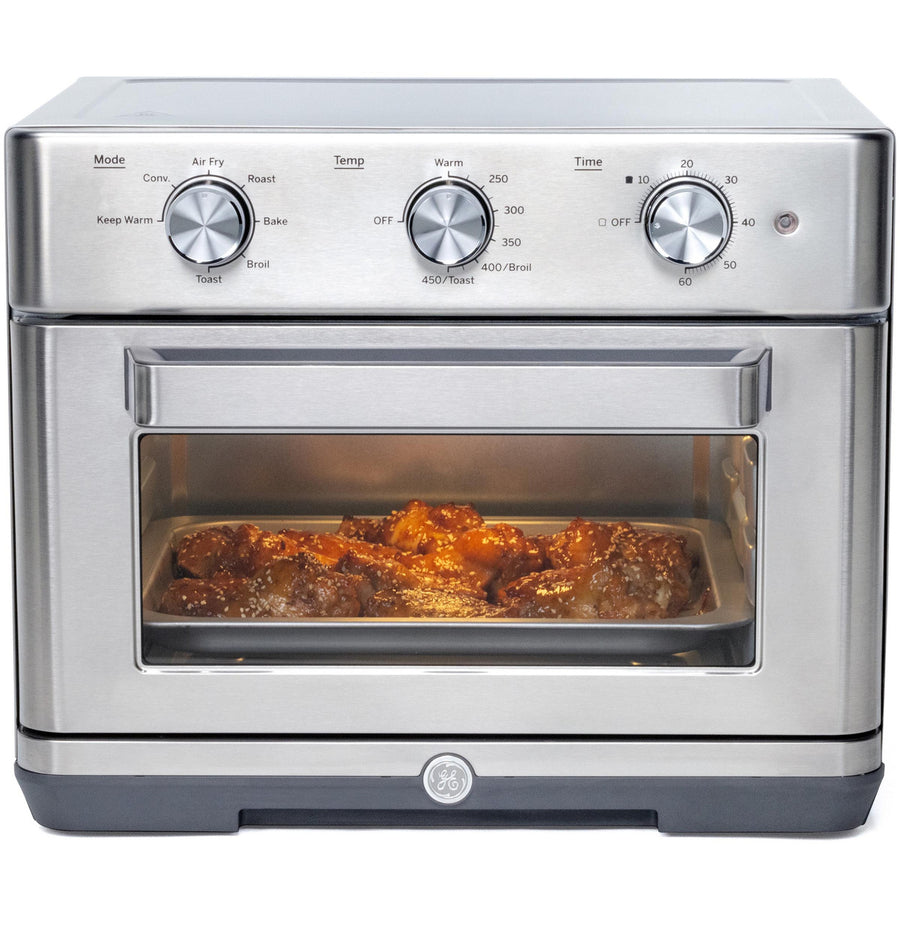
What you need before using Air Fry in a GE oven
You need four things to get good results:
- A GE oven with an Air Fry setting, or a suitable convection mode
- The tray listed in your owner’s manual
- A standard oven rack in the recommended position
- Food arranged in a single, loose layer
A GE air fry oven uses fast-moving hot air. The air must reach the food from several sides. This is why an air fry tray usually has holes or an open mesh surface. The holes let hot air move under the food and help moisture escape.
An air fryer oven is not the same as a small countertop air fryer. A GE oven has a much larger cavity, so it may need more time to heat and may produce less crisp food when the tray is crowded.
Check whether your GE oven has Air Fry
Look at the control panel for one of these options:
- Air Fry
- No Preheat Air Fry
- Convection Air Fry
- Air Fry Menu
- A touchscreen cooking mode with an Air Fry selection
You can also search the model number on the GE Appliances support website and download the owner’s manual.
The model number is often found:
- On the oven frame behind the door
- Inside the lower drawer
- On the left or right side of the range
- On a label near the control panel
Do not assume that every GE convection oven has Air Fry. If the setting is not listed in the manual, use only the cooking modes and accessories that GE approves for that model.
Use the correct tray
Many GE Air Fry ovens use a dark, perforated air fry tray. Some models require the tray to sit on a wire rack. Others use a special basket or tray assembly.
Do not cover the holes with foil or parchment. Covering the tray blocks air movement and can reduce crisping. It can also affect cooking time.
If you use a third-party basket, make sure it is:
- Rated for oven use
- Large enough to sit securely on the rack
- Free of plastic or silicone parts not rated for high heat
- Not blocking the oven’s fan or vents
The owner’s manual takes priority over general advice.

How to use Air Fry in a GE oven
follow these steps for most GE ovens with a dedicated Air Fry mode.
1. Prepare the food
Pat wet food dry with a paper towel. Excess moisture creates steam, which can make the surface soft instead of crisp.
For fresh vegetables, toss the pieces with a small amount of oil. For frozen foods, oil may not be needed because many frozen products already contain oil.
Keep pieces close in size. Even pieces cook at a more even rate.
2. Place the rack and tray
Put the oven rack in the position shown in the GE manual. If no position is listed, use the middle rack as a starting point.
Place the air fry tray on the rack. If your model includes a drip pan, place it below the air fry tray as directed.
Do not place a loose tray on the oven floor unless GE specifically says that your model allows it. The oven floor can become very hot and may damage the tray or oven.
3. Arrange food in one layer
Spread the food across the tray with space between pieces. Avoid stacking fries, wings, vegetables, or breaded food.
A crowded tray traps steam. The outside may brown while the center stays soft or undercooked.
For a large batch, cook in two rounds. A smaller batch often becomes crisp faster than a crowded batch.
4. Select Air Fry
Press the Air Fry button or choose Air Fry from the oven’s cooking menu.
Enter the temperature and time if your model asks for them. Some GE models use preset food choices, such as:
- French fries
- Chicken wings
- Nuggets
- Vegetables
- Fish
- Frozen snacks
Use the preset as a starting point. Food size, brand, tray load, and starting temperature can change the result.
5. Follow the preheating instruction
Some GE Air Fry modes are designed for no preheating. Other models may ask you to preheat first.
Follow the instruction displayed by your oven or listed in the manual. Do not add extra preheating time unless the food needs it.
If your oven has a “No Preheat Air Fry” mode, place the food in the oven before or immediately after starting the cycle, as the manual directs.
6. Turn or shake the food
Check the food about halfway through cooking. Turn larger pieces with tongs or shake smaller pieces carefully.
You may not need to turn thin food, such as a small layer of frozen fries, but turning usually helps with even browning.
Open the door briefly. A long door opening lets heat escape and extends the cooking time.
7. Check for doneness
Look for a crisp, browned surface, but do not rely on color alone. Thick foods can brown before the center is cooked.
For meat, use a food thermometer in the thickest part. The U.S. Department of Agriculture recommends:
| Food | Safe internal temperature |
|---|---|
| Poultry, including chicken wings | 165°F |
| Ground meats | 160°F |
| Beef, pork, lamb, and veal steaks or chops | 145°F, followed by a 3-minute rest |
| Fish | 145°F |
Use the current USDA safe minimum internal temperature chart for detailed guidance.
8. Remove the food safely
Use oven mitts. The tray, rack, and food juices can be very hot.
Let breaded food rest for a few minutes before serving. This allows the coating to firm up.
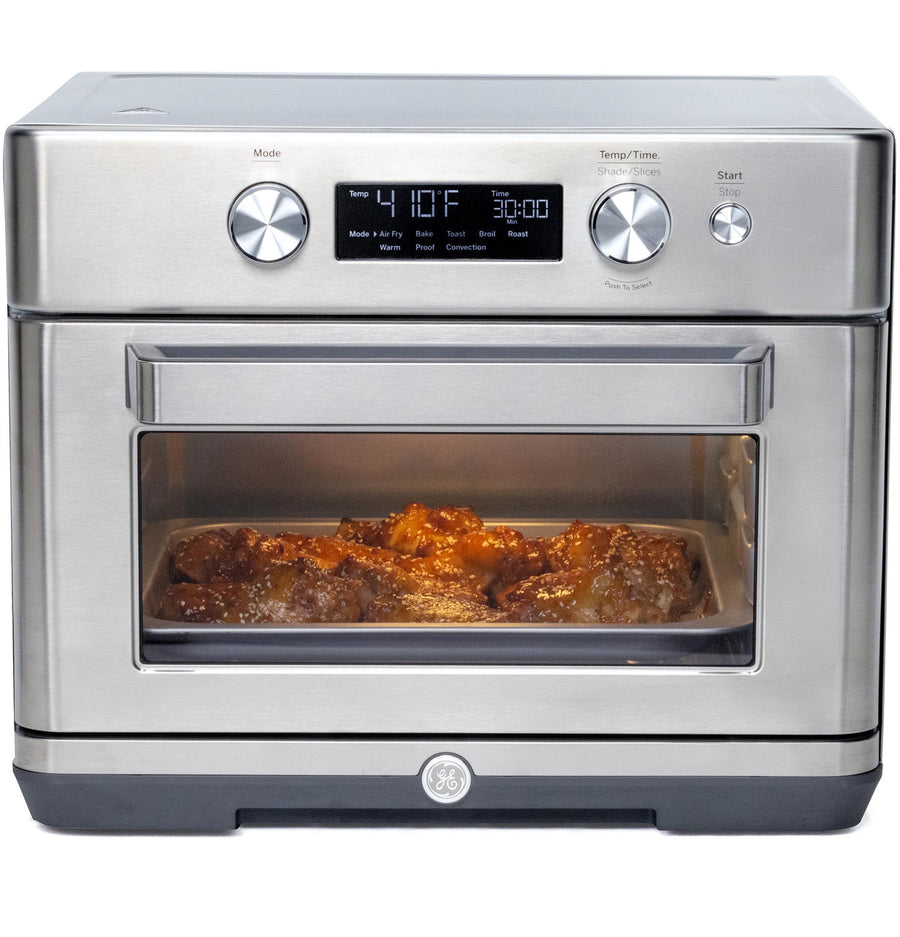
Recommended Air Fry temperatures and times
The table below gives starting points for common foods. These are general ranges, not guaranteed GE settings. Use the food package, GE manual, and a thermometer when needed.
| Food | Starting temperature | Approximate time | Helpful step |
|---|---|---|---|
| Frozen French fries | 400°F | 15–25 minutes | Shake once or twice |
| Frozen tater tots | 400°F | 15–22 minutes | Shake halfway |
| Chicken wings | 375°F–400°F | 25–35 minutes | Turn halfway; verify 165°F |
| Chicken nuggets | 400°F | 10–16 minutes | Turn if needed |
| Fresh broccoli | 375°F–400°F | 10–16 minutes | Toss with a little oil |
| Fresh Brussels sprouts | 375°F–400°F | 15–22 minutes | Cut large sprouts in half |
| Salmon portions | 375°F–400°F | 10–16 minutes | Check the thickest part |
| Breaded fish fillets | 400°F | 12–20 minutes | Turn carefully |
| Bacon | 375°F–400°F | 10–18 minutes | Watch closely near the end |
| Toasted vegetables | 375°F–400°F | 12–25 minutes | Keep pieces similar in size |
Cooking time depends on the food’s thickness, starting temperature, moisture, and amount. A full tray can take longer than a half-full tray.
Should you reduce the temperature from a package instruction?
Start with the package instructions when they are written for a conventional oven, then watch the food closely. Air Fry may brown food faster because hot air moves around the surface.
A practical starting adjustment is to use the package temperature and begin checking several minutes early. Do not automatically reduce the temperature for every food. The best setting depends on the GE model and the food.
Should you use oil?
Use only a light coating when needed. Too much oil can drip, smoke, or make the food greasy.
For vegetables, place the food in a bowl, add a small amount of oil, and toss before spreading it on the tray. Do not spray aerosol cooking spray directly into a hot oven unless the product label clearly permits that use.

Best foods for a GE oven Air Fry setting
Air Fry works well for food that benefits from a dry, browned surface.
Good choices include:
- Frozen fries and potato wedges
- Tater tots
- Chicken wings
- Breaded chicken
- Breaded fish
- Brussels sprouts
- Broccoli
- Cauliflower
- Zucchini
- Reheated pizza
- Frozen snacks
- Bacon
Air Fry is less useful for foods that need a deep pot of liquid or gentle baking. It is not a replacement for:
- Boiling pasta
- Cooking soup
- Deep-frying food in oil
- Baking delicate cakes
- Cooking a large roast when even low-speed heat is needed
You can cook raw meat and vegetables in the oven, but keep raw poultry and meat separate from ready-to-eat foods. Wash hands, cutting boards, and utensils after handling raw meat.
How to cook frozen fries
- Preheat only if your GE manual says to preheat.
- Spread the fries over the air fry tray.
- Avoid piling fries in the center.
- Cook at about 400°F as a starting point.
- Shake or turn the fries halfway through.
- Continue cooking until crisp and hot.
The brand and cut make a large difference. Thin shoestring fries may cook faster than thick steak fries.
How to cook chicken wings
- Pat the wings dry.
- Season them lightly.
- Arrange them with space between each piece.
- Start around 375°F to 400°F.
- Turn the wings halfway through.
- Check the thickest piece with a thermometer.
- Cook until the internal temperature reaches 165°F.
A dry surface helps the skin brown. Crowding can leave the skin soft.
How to cook vegetables
Cut vegetables into similar pieces. Toss them with a small amount of oil and seasoning, then spread them out.
Dense vegetables, such as carrots and Brussels sprouts, may need more time than zucchini or thin peppers. Stir or turn them during cooking so the exposed sides brown evenly.

Air Fry versus Convection Bake in a GE oven
Air Fry and Convection Bake both use a fan, but they are not always the same setting.
Air Fry is usually designed for fast browning on a perforated tray. It works best when air can reach the food from below.
Convection Bake circulates heated air around standard bakeware. It is better for cakes, casseroles, cookies, and foods that should not sit on an open mesh tray.
If your GE oven does not have Air Fry, you may be able to use Convection Roast or Convection Bake with an oven-safe rack and pan. Check the manual first. Do not treat this workaround as identical to the dedicated Air Fry program.
When to use each setting
| Cooking goal | Better starting mode |
|---|---|
| Crisp frozen fries | Air Fry |
| Brown chicken wings | Air Fry |
| Roast vegetables | Air Fry or Convection Roast |
| Bake cookies on a sheet | Convection Bake |
| Bake a cake | Regular Bake or Convection Bake |
| Cook a covered casserole | Bake or Convection Bake |
| Cook food in a deep dish | Convection Bake or Bake |
The correct mode depends on the food shape and the cookware. A deep dish blocks airflow, so Air Fry may not provide much benefit.

How to stop smoke and reduce mess
Smoke usually comes from grease, residue, or food that is too close to a heating element.
Use these steps:
- Remove heavy grease from the oven before Air Fry cooking.
- Do not over-oil the food.
- Place a drip pan below the air fry tray only if GE recommends it for your model.
- Keep fatty foods under observation.
- Wipe spills after the oven cools.
- Do not cover the oven’s vents.
- Keep the oven door closed during cooking.
Bacon, sausages, chicken wings, and other fatty foods can produce more smoke than vegetables or frozen fries. If you see heavy smoke, stop the cycle if it is safe to do so, turn off the oven, and keep the door closed until the smoke clears. If a grease fire occurs, do not open the door. Turn off the oven and call 911 if the fire does not go out quickly.
Never pour water on an oven grease fire.

How to clean a GE air fry tray and oven
Clean the tray after it cools. Remove loose crumbs and grease with warm water, dish soap, and a soft sponge.
Avoid:
- Steel wool
- Harsh scouring pads
- Knives or metal tools
- Abrasive cleaners unless the manual permits them
- Spraying cleaner into the fan, vents, or control panel
Some air fry trays are dishwasher safe, but this varies by model and tray coating. Confirm it in the GE manual before using a dishwasher.
Clean grease from the oven interior when the oven is cool. Do not use the self-clean cycle with accessories inside unless GE specifically says those accessories are self-clean safe. Remove the air fry tray and other cookware before starting self-clean.
A clean tray improves airflow and helps reduce smoke. Built-up oil can also cause unpleasant odors during later cooking.

Common GE oven Air Fry problems
The food is not crisp
Possible causes include:
- The tray is crowded.
- The food contains too much moisture.
- The temperature is too low.
- The food was not turned.
- The wrong tray was used.
- The oven was not set to Air Fry.
Dry the food, reduce the batch size, and leave space between pieces. If the food is fully cooked but pale, add a few minutes and watch it closely.
The food burns on top
The rack may be too close to the upper heating element. Move the rack to the position listed in the manual.
Also check whether the food is too small, too thin, or coated with sugar. Thin foods can brown quickly in moving hot air.
The oven produces smoke
Check for grease on the tray or oven floor. Reduce added oil and avoid cooking a very fatty food at a high temperature.
If smoke continues with clean equipment and a small amount of oil, stop using the mode and contact GE support or a qualified appliance technician.
The Air Fry button does not work
Check these items:
- Confirm that the oven door is fully closed.
- Make sure the control lock is off.
- Check whether the oven is already running another mode.
- Turn the breaker off and on only if the manual permits this basic reset.
- Confirm that your model actually includes Air Fry.
Do not remove panels or attempt electrical repairs yourself. A GE oven uses high voltage, even when it appears to be off.
The fan keeps running after cooking
A cooling fan may continue after the cycle ends to protect the controls and reduce heat around the oven. This can be normal.
If the fan runs for an unusually long time, the display shows an error, or the oven smells like burning plastic, stop using the appliance and contact GE support.

GE oven Air Fry safety rules
Follow these rules every time:
- Read the manual for your exact GE model.
- Use cookware rated for the oven temperature.
- Keep paper, towels, plastic, and other flammable items away from the oven.
- Do not line a perforated air fry tray with foil.
- Do not block vents or the fan.
- Use oven mitts when handling the tray.
- Keep children away from the open oven and hot door.
- Use a thermometer for meat and poultry.
- Do not leave high-fat food unattended.
- Do not use a damaged tray.
- Never use a countertop air fryer basket that cannot sit securely in the oven.
- Remove accessories before using self-clean unless the manual approves them.
The outside of the oven door and nearby cabinets can become hot. Allow room for heat and follow the installation and clearance guidance supplied with the appliance.

Frequently asked questions
Can I use a regular baking sheet for Air Fry in a GE oven?
You can use a regular baking sheet for some convection cooking, but it may not provide the airflow needed for Air Fry. Use the tray listed in your GE manual whenever possible. A solid sheet can make food less crisp because air cannot reach the underside.
Do I need to preheat a GE oven before Air Fry?
Not always. Some GE models use a no-preheat Air Fry cycle, while others may give different instructions. Check the display and owner’s manual for your model before starting.
Can I put foil under the Air Fry tray?
Do not cover the perforations in the Air Fry tray. Foil can block airflow and may affect cooking. Use a drip pan only when the GE instructions for your model allow it.
Can I cook two trays of food at once?
Only if your manual permits multiple racks for the Air Fry mode. Two trays can block airflow and cause uneven browning. If you use more than one rack, rotate the trays only when the manual and food type make that safe.
Why does my GE Air Fry oven smell the first time I use it?
A new oven may have a temporary manufacturing odor during its first heating cycles. Follow the break-in or first-use instructions in the manual. If the smell is strong, electrical, or continues after normal use, stop the oven and contact GE support.
Is GE Air Fry healthier than deep-frying?
Air Fry usually uses less added oil than deep-frying, but it does not make every food healthy. Frozen breaded foods can still be high in sodium, refined starch, or saturated fat. The nutritional result depends on the food, oil, portion, and cooking method.
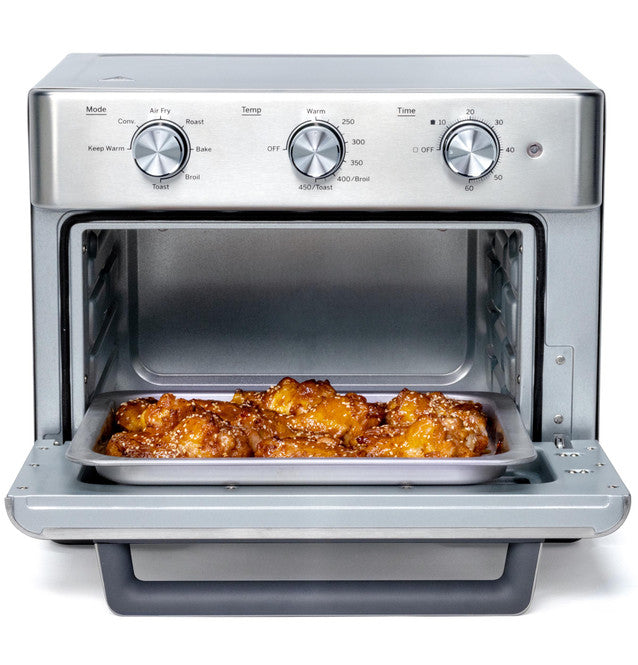
Final takeaway
To use the Air Fry setting in a GE oven, choose the correct mode, use the approved perforated tray, keep food in one layer, follow your model’s preheating instructions, and check meat with a thermometer. Start with a small batch so you can learn how your oven browns food.
If your GE oven does not have an Air Fry setting, check the manual before using Convection Bake or Convection Roast as an alternative. Your next step is to find the model number, download the manual, and confirm the approved tray and rack position.

Appliance Review Expert
Lucas Ramirez is a trusted voice at HomeFixGrid.com, known for his clear, practical, and creatively written guides that simplify appliance care for everyday homeowners. With a strong focus on hands-on testing and real-world problem-solving, Lucas brings expert insight into appliance reviews and troubleshooting techniques. Her work empowers readers to confidently maintain, repair, and choose the right appliances for their homes.


