How To Dispose Of A Microwave: A Simple, Eco-Friendly Guide
Take it to an e-waste drop-off, retailer take-back, or scrap yard. Do not trash it.
If you are searching for how to dispose of a microwave the right way, you are in the right place. I help people manage old appliances every week, and I know what works in real life. In this guide, I break down safe steps, legal rules, and smart options that save time and money. You will learn exactly how to dispose of a microwave without risk to you or the environment.
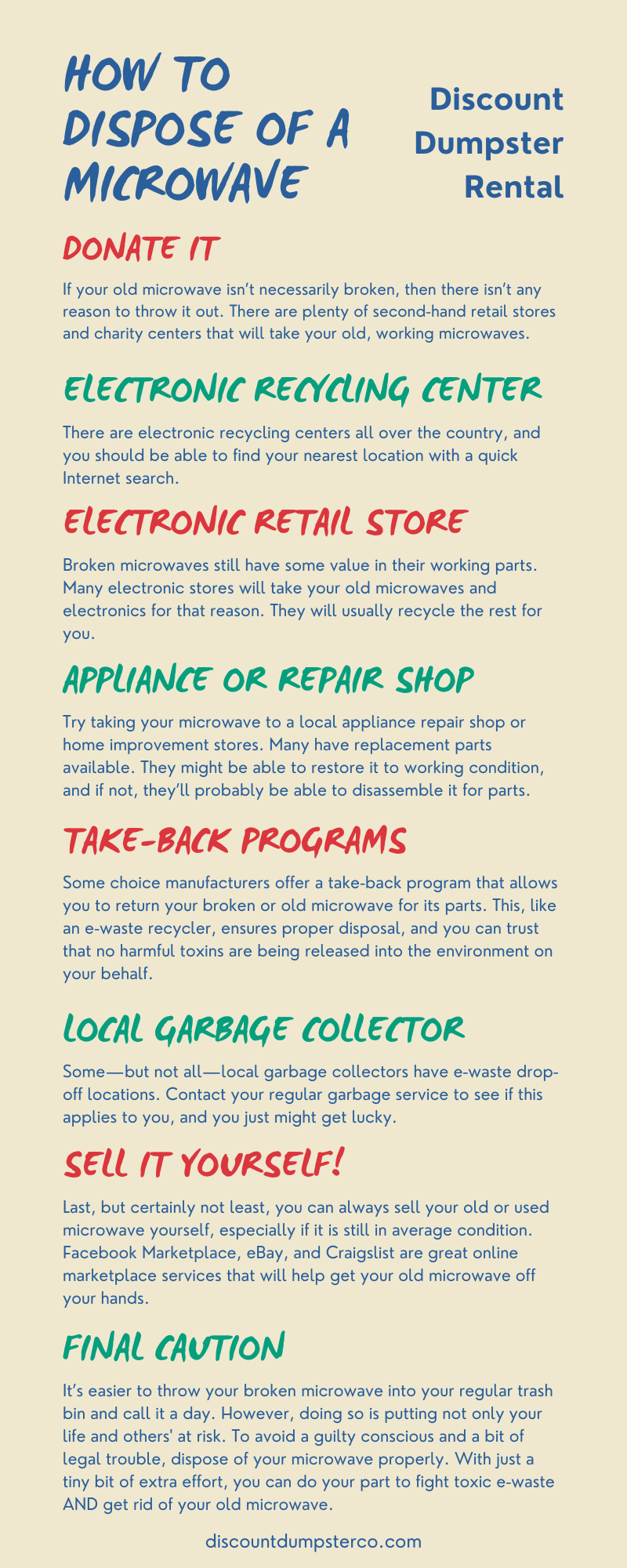
Why proper microwave disposal matters
Microwaves are more than metal boxes. They have circuit boards, a magnetron, copper, and glass. Dumping them sends reusable metals to a landfill and can cause harm.
Many states treat small appliances as e-waste. Local rules can be strict. If you want how to dispose of a microwave in a clean way, you must follow those rules. This guide shows simple steps that work anywhere in the U.S.
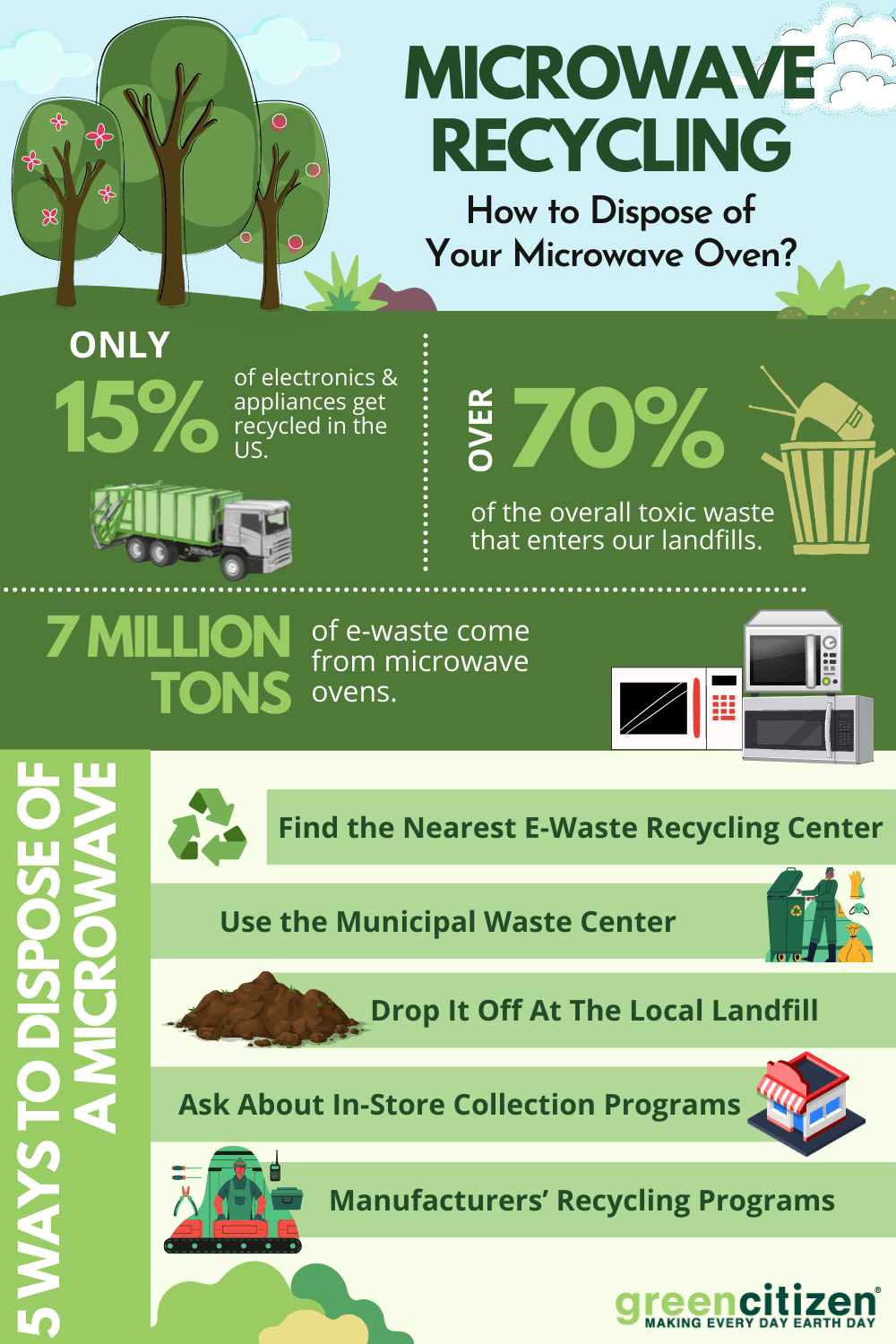
Quick checklist before you start
Before you choose how to dispose of a microwave, run through this list. It saves time and avoids mistakes.
- Confirm your city’s rules. Search your city name + e-waste or call 311.
- Pick your option. E-waste drop-off, retailer take-back, scrap yard, or donation.
- Unplug and clean. Remove the glass tray and wipe inside and out.
- Secure the unit. Tape the door shut and wrap the cord.
- Plan safe transport. Lift with care or use a dolly. The unit is heavy.
- Keep model info handy. Take a photo of the label for forms or staff.
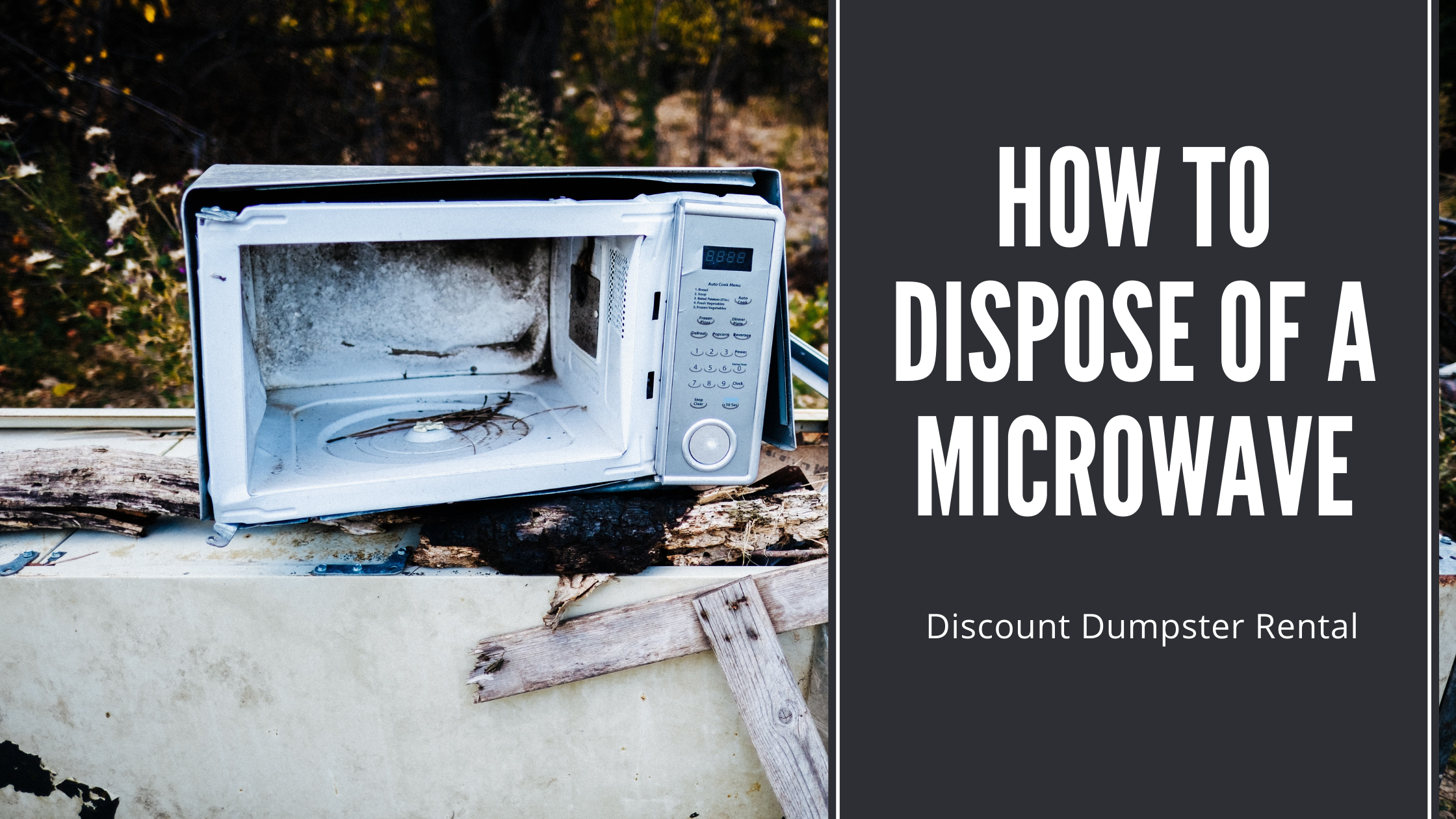
Step-by-step: how to dispose of a microwave
Here is a simple path that works for most people. It is my go-to process when clients ask how to dispose of a microwave.
-
Verify local guidance
Check your city’s website for e-waste rules. Some curbside programs allow microwaves with bulky item pickup. Others require drop-off. -
Choose the best disposal route
If you need it gone now, use a nearby scrap yard or retailer program. If you want the greenest choice, use a certified e-waste site. -
Prepare the microwave
Unplug it. Let it sit for a few minutes. Remove the glass tray and ring and pack them to avoid breaks. Wipe the unit so it is not greasy. -
Make it safe to move
Tape the door closed. Coil and tape the cord to the unit. Lift with your legs. Use gloves for grip. -
Transport and hand off
Drive it to the site you picked. Ask for a receipt if you need proof of proper disposal. -
Document your drop-off
Keep a photo of the site sign or the receipt. This helps for building rules or warranty notes on a replacement.

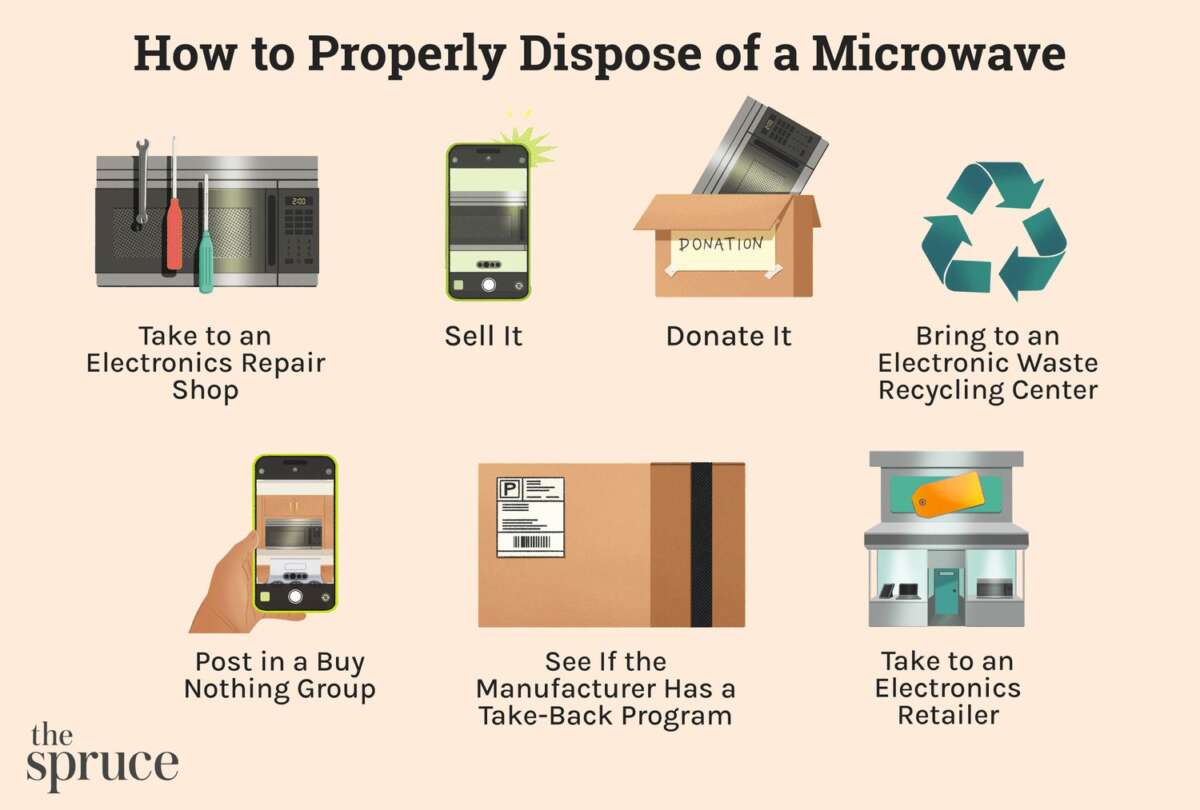
Best places to take a microwave
If you want fast, legal options for how to dispose of a microwave, start here. Pick what fits your schedule and budget.
-
City or county e-waste events
Many run monthly drop-offs. Some are free for residents. Check the calendar online. Bring ID if they ask for proof of address. -
Retailer take-back programs
Big box stores may accept small appliances. Terms change, and some charge a small fee. Call your local store first. -
Scrap metal recyclers
Many yards accept whole microwaves. You may get a small cash value based on weight. Ask if they need the cord removed. -
Manufacturer or mail-back options
Some brands offer mail-in recycling kits. It is rare for microwaves but worth a quick search on the brand site. -
Donation or reuse
If it works and looks clean, try a local charity, college group, or community board. Be honest about age and condition.
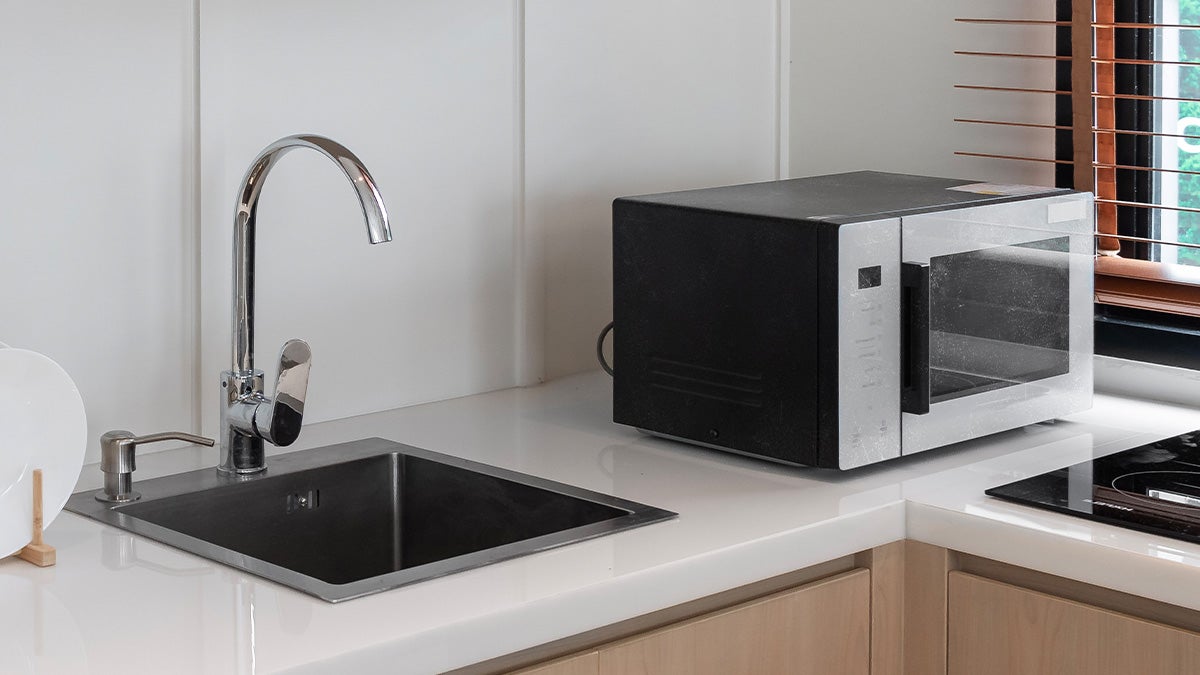
Can you recycle a microwave? What happens to it?
Yes. If you are asking how to dispose of a microwave without waste, recycling is best. The unit gets taken apart into parts that can be used again.
- Metals such as steel and copper get recovered and sold for reuse.
- Circuit boards are processed to capture metals like copper and sometimes precious metals.
- Glass and plastics may be recycled or used as fuel in some facilities.
- Hazard parts are handled by trained staff. You should not open the unit at home.
What not to do
Knowing what to avoid is part of how to dispose of a microwave the right way. These errors can cause fines or harm.
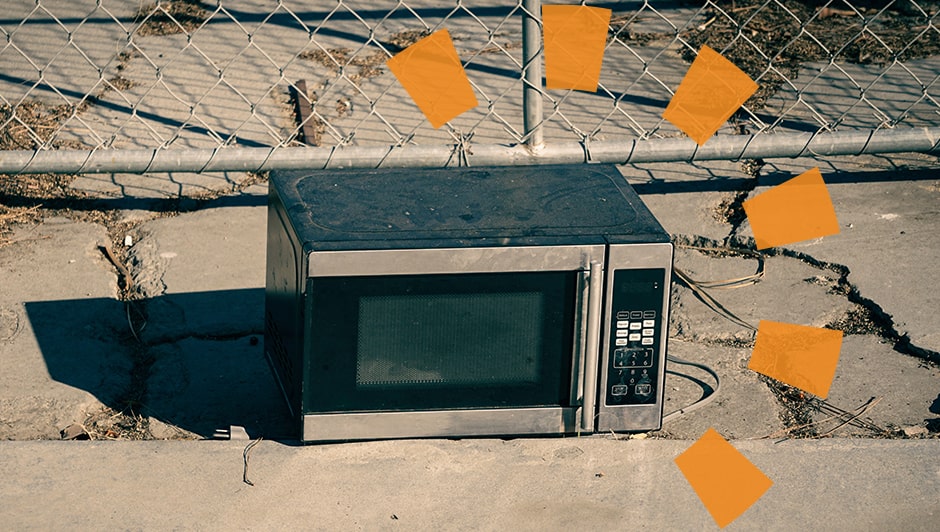
- Do not put it in regular trash. Many cities ban it or charge a fine.
- Do not leave it in an alley or on the curb without a pickup request.
- Do not open the case. The high-voltage capacitor can hold a charge. The magnetron can be risky if broken.
- Do not smash it to fit in a bin. That spreads sharp debris and dust.
Costs, incentives, and timing
If you budget time and a small fee, how to dispose of a microwave is easy. Here is what to expect.
-
Fees
City drop-offs are often free. Retailers may charge a small fee. Junk haulers charge more but will pick up and load. -
Incentives
Some utilities or cities run appliance recycling events. Watch for seasonal programs. You might get a discount on a new unit. -
Timing
Weekend drop-offs fill fast. Aim for early morning. Keep the unit dry to avoid mess in your car.
Smart microwaves and data privacy
Some newer models have Wi‑Fi features. When you plan how to dispose of a microwave, think about your data too.
- Reset the unit to factory settings if the menu allows it.
- Unlink the device from your app or smart home platform.
- Remove or cover any QR codes linked to your account.
Reuse and parts harvesting for advanced DIY
A quick note from hands-on work. I have salvaged parts from dead units for makers. But this is not for most people.
- Do not open the case unless you know high-voltage safety. The capacitor can shock even when unplugged.
- If you are skilled, the fan, turntable motor, and cord are useful. The transformer and magnetron are advanced parts and risky.
- For most folks, the safest way for how to dispose of a microwave is certified recycling.
Legal and safety notes by region
Local law sets the rules. This affects how to dispose of a microwave in your area.
- Many states treat microwaves as e-waste and require drop-off or special pickup.
- Some scrap yards want the cord removed or will not accept certain brands. Call ahead.
- Building rules may require proof of proper disposal. Keep your receipt or a photo.
Personal tips and common mistakes to avoid
I have hauled dozens of units for clients. These simple habits make the process smooth.
- Photograph the label with model and serial numbers. Staff ask for it a lot.
- Tap the door with tape so it does not swing in the car.
- Wrap the glass tray in a towel so it does not crack.
- Plan one trip with other e-waste to save time and fuel.
- Confirm open hours. Drop-off sites sometimes close for lunch.
Frequently Asked Questions of how to dispose of a microwave
Can I put a microwave on the curb for bulk pickup?
Some cities allow it with a scheduled bulk pickup. Check your local rules before putting it out.
Is it legal to throw a microwave in the trash?
In many places, no. Many cities classify microwaves as e-waste and require drop-off or special pickup.
Where can I take a broken microwave for free?
City e-waste events are often free for residents. Some scrap yards accept them at no cost, but call first.
Can I donate a used microwave?
Yes, if it works, is clean, and has no damage. Ask the charity about their appliance policy.
Are microwaves dangerous to dismantle?
Yes. The capacitor can hold a charge and shock you. Leave dismantling to trained recycling staff.
Will a retailer take my old microwave when I buy a new one?
Many stores offer haul-away or take-back with purchase. Policies vary by location, so confirm before you buy.
Does a microwave have hazardous materials?
It has parts that need careful handling, like the capacitor and magnetron. Recyclers are trained to process them safely.
Conclusion
You now know how to dispose of a microwave safely, legally, and with less stress. Choose a certified e-waste drop-off, a trusted retailer program, or a scrap yard, and avoid trashing it. Clean it, secure it, and keep a record of the drop.
Take the next step today. Check your city’s e-waste page and pick the best option for your zip code. If this guide helped, share it with a friend or leave a comment with your local tips.

Appliance Review Expert
Lucas Ramirez is a trusted voice at HomeFixGrid.com, known for his clear, practical, and creatively written guides that simplify appliance care for everyday homeowners. With a strong focus on hands-on testing and real-world problem-solving, Lucas brings expert insight into appliance reviews and troubleshooting techniques. Her work empowers readers to confidently maintain, repair, and choose the right appliances for their homes.