Are All Full Size Mattresses The Same Size: Size Guide
Introduction
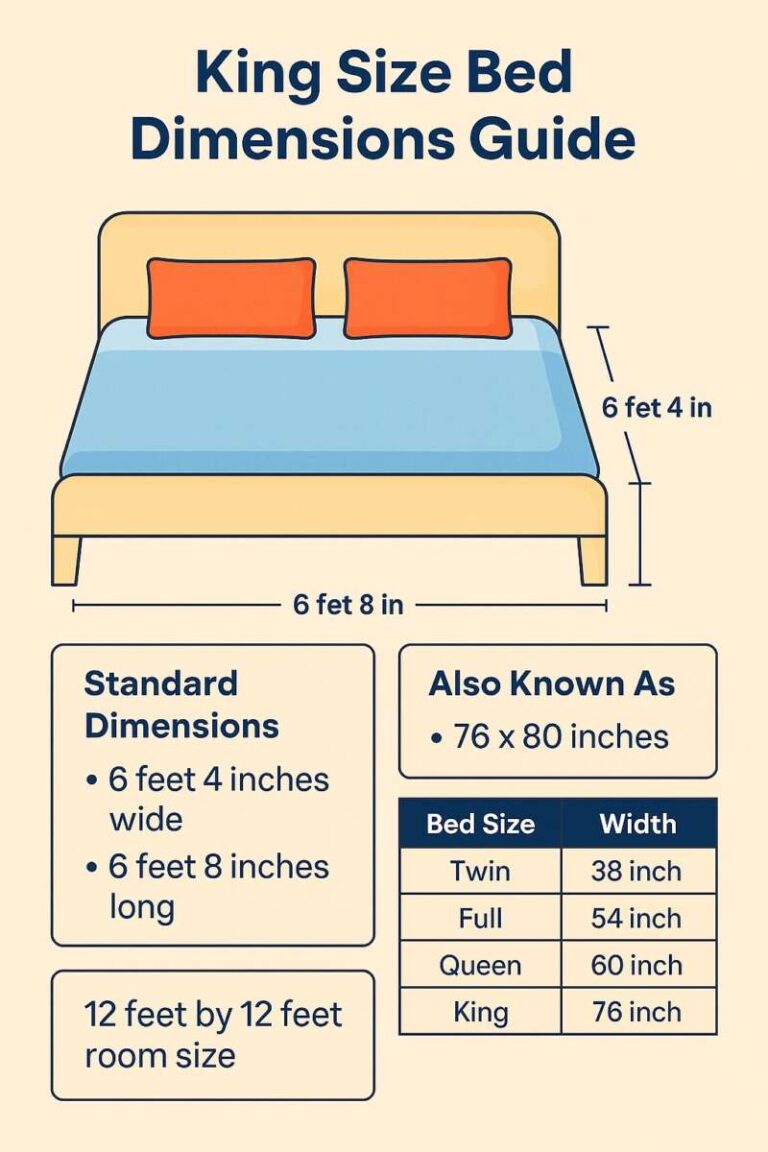
No. In the United States, a standard full-size mattress is usually 54 inches wide by 75 inches long. But the real size can vary by brand, model, material, and country of manufacture.
Some full mattresses measure about 53 inches wide. Others may be slightly longer or shorter than 75 inches. Those small differences can affect your bed frame, sheets, mattress protector, headboard, and room layout.
Before you buy, check the mattress maker’s exact measurements. Do not rely only on the words “full size” or “double.”


What Is the Standard Full-Size Mattress Size?
A standard full mattress in the U.S. is about 54 inches wide and 75 inches long. Retailers may also call this size a double mattress.
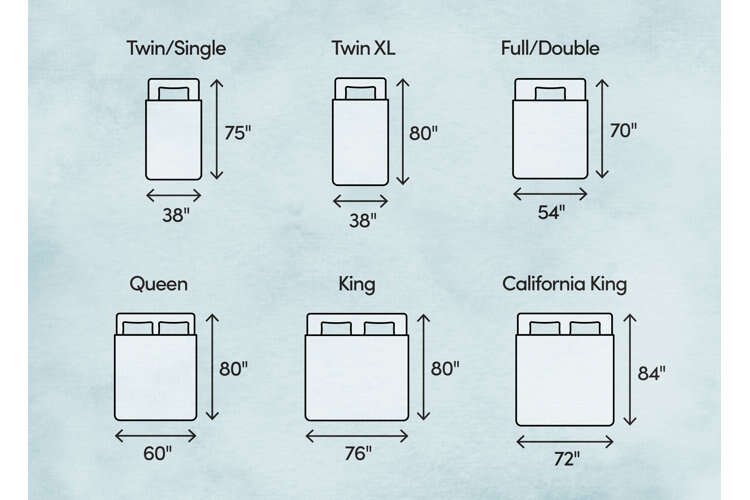
| Mattress size | Approximate width | Approximate length |
|---|---|---|
| Twin | 38 inches | 75 inches |
| Twin XL | 38 inches | 80 inches |
| Full | 54 inches | 75 inches |
| Queen | 60 inches | 80 inches |
| King | 76 inches | 80 inches |
| California king | 72 inches | 84 inches |
These are common U.S. mattress size standards. They are useful for planning, but they are not a promise that every mattress will have the exact same measurements.
A full mattress gives one adult more width than a twin. It is also shorter than a queen. Two adults can sleep on one, but each person gets only about 27 inches of width. That is much less space than a queen provides.
The Better Sleep Council mattress size guide lists the common dimensions used in the United States.

Why Do Full Mattresses Vary in Size?
Full mattresses vary because “full” describes a size category, not a strict measurement for every product.
Here are the main reasons:
Brand measurement standards
One company may list a full mattress as 54 by 75 inches. Another may list it as 53 by 75 inches. Both may sell the mattress as a full.
For example, some mattress brands list a full mattress near 53 inches wide. This difference may come from the design of the foam layers, edge support, cover, or the company’s measurement method.
Mattress materials
Foam, latex, and spring mattresses can have different edge shapes. A soft foam edge may round outward or inward. A mattress with firm border coils may hold a straighter shape.
Compressed mattresses can also change slightly after they expand. This does not always create a major size difference, but it can affect a close fit.


Handmade and upholstered construction
Some mattresses are made with thicker covers, tufting, or sewn borders. These features may change the final dimensions by a small amount.
Measurement method
A company may measure:
- The mattress from edge to edge
- The sleep surface only
- The cover before or after expansion
- The mattress at its widest point
- The mattress while compressed or fully expanded
For this reason, compare the exact product dimensions. A measurement such as 53 inches by 75 inches by 12 inches tells you more than the label “full.”
Different countries use different standards
U.S. full-size mattresses are not always the same as mattresses sold in Canada, Europe, australia, or the United Kingdom. A product called a “double” in another country may not fit a U.S. full-size bed frame.
If you are importing a mattress or buying an overseas bed, use inches or centimeters. Do not assume that “double” means the same thing everywhere.
Are Full Mattresses and Full Bed Frames the Same Size?
No. A full bed frame is usually larger than the mattress.
A frame needs space for rails, slats, brackets, and support parts. A full bed frame may be several inches wider or longer than a full mattress. The exact outer size depends on the frame design.
For example:
- A simple metal platform may stay close to the mattress size.
- A wood frame with thick side rails may add several inches.
- A bed with drawers or a built-in headboard may be much larger.
- A daybed may need extra space for arms and back panels.
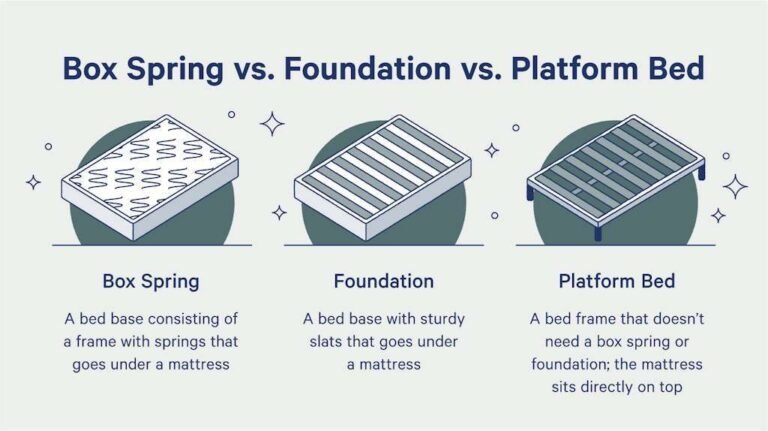
A full mattress should rest on a frame made for a full mattress. Do not use the outside frame measurement as the mattress size.
Before buying, measure these three areas:
- The mattress: Measure its width, length, and height.
- The frame opening: Measure the inside width and inside length.
- The room: Measure the space around the bed, including doors, drawers, and walkways.
A mattress that is too large may bend against the frame. A mattress that is too small may slide or leave unsafe gaps.
Will Any Full-Size Mattress Fit a Full Bed Frame?
Usually, but not always. A full mattress should fit a full frame when both products follow common U.S. dimensions. Still, close measurements matter.
A useful fit range depends on the frame type:
| Frame type | What to check |
|---|---|
| Metal bed frame | Check width, length, center support, and rail height |
| Platform bed | Check the inside opening and slat spacing |
| Wood bed frame | Check the inside ledge, not the outside width |
| Adjustable base | Check the base’s exact mattress requirements |
| Daybed | Check mattress depth and clearance inside the frame |
| Murphy bed | Check width, length, thickness, and weight limits |
The mattress should sit flat. It should not bow, hang over the edge, or leave a large gap at the sides.


Platform frames need special care
A platform frame may have a solid deck or slats. If it uses slats, check the space between them. A mattress maker may set a maximum gap to prevent poor support or damage.
The correct gap depends on the mattress design. Follow the mattress warranty instructions. This is especially important for memory foam, latex, and hybrid mattresses.
Adjustable bases need exact specifications
An adjustable base may bend the mattress during use. The mattress must be flexible enough for that movement, and its size must match the base.
Check the base maker’s product guide before buying. A full mattress may fit by width and length but still be too thick, too heavy, or too rigid for a particular base.
Do Full-Size Sheets Fit Every Full Mattress?
Not always. Full-size sheets fit many full mattresses, but mattress thickness can cause problems.
A standard fitted sheet may be made for a mattress around 7 to 14 inches thick. A thick pillow-top or hybrid mattress may measure 15 inches or more. If the pocket depth is too small, the sheet can pull off the corners.
Check these measurements:
- Mattress width
- Mattress length
- Mattress height
- Mattress topper height
- Fitted-sheet pocket depth
For example, a 12-inch full mattress with a 3-inch topper has a total height of about 15 inches. A fitted sheet made for a 10-inch mattress may not stay in place.
Flat sheets are more forgiving. Fitted sheets and mattress protectors need the closest match.
Sheet size labels can also vary
A package marked “full/queen” may fit both sizes, but it may not fit as neatly as a full-only sheet. Full and queen mattresses have different widths:
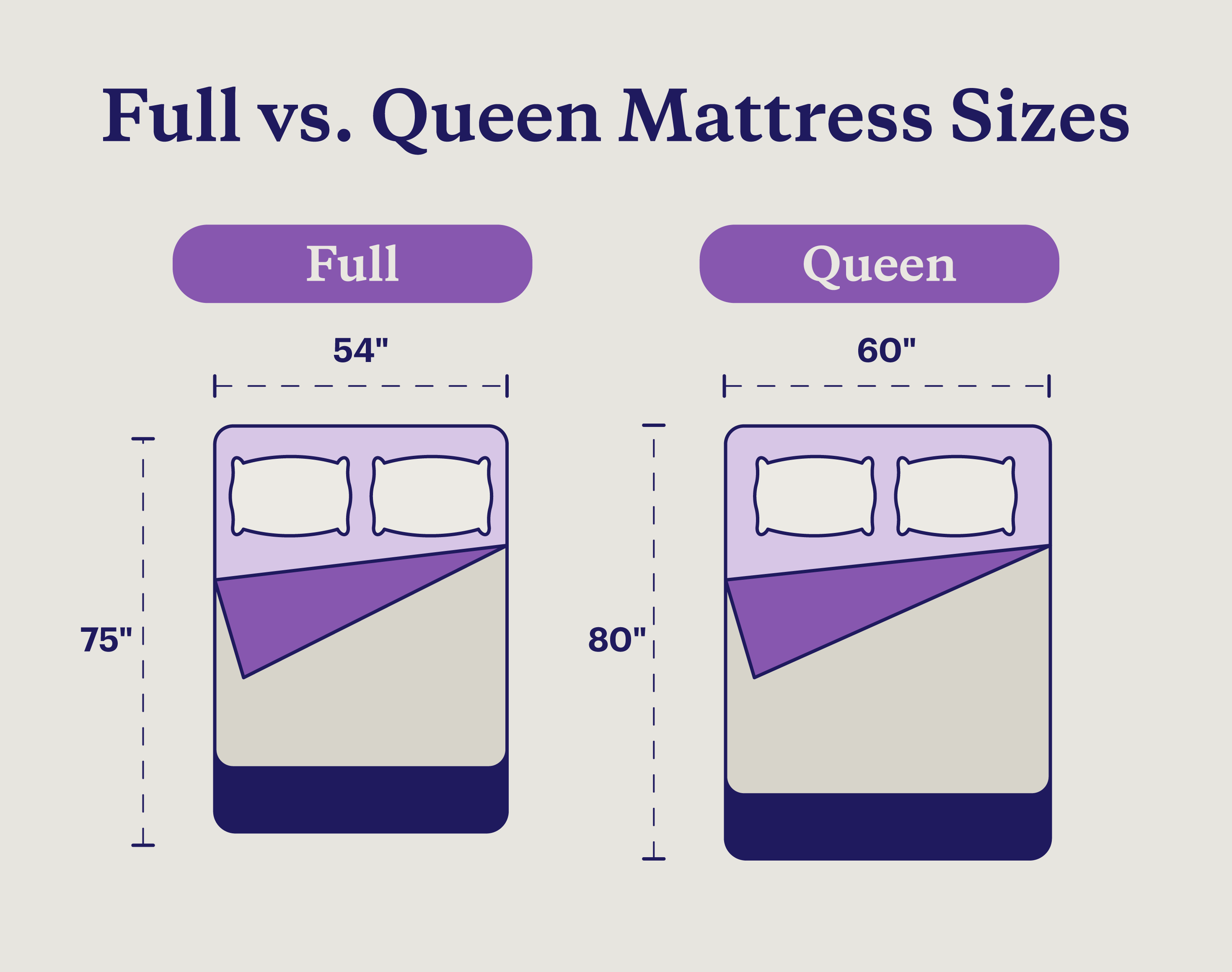
- Full: about 54 inches wide
- Queen: about 60 inches wide
A full/queen fitted sheet may have deeper or wider corners. Check the package measurements instead of relying only on the label.
How Much Space Does a Full Mattress Need?
A full mattress itself needs about 54 by 75 inches of floor space. Your room needs more space for the frame and for movement around the bed.
A practical room plan should include:
- The bed frame’s full outside dimensions
- A walking path beside the bed
- Space to open doors and drawers
- Room for nightstands
- Clearance for vents and outlets
A common planning mistake is measuring only the mattress. A large headboard, footboard, or storage frame can add a foot or more to the total length.
A full bed often works well in a small bedroom, guest room, studio, or child’s room. But the best choice depends on furniture placement and how many people will use it.


For two adults, consider a queen if the room allows it. A queen is 6 inches wider and 5 inches longer than a full. That extra space can make a large difference for daily sleep.
Full vs. Full XL: Are They the Same?
No. A full XL mattress is wider than a twin XL but longer than a standard full.
A full XL is commonly about:
- 54 inches wide
- 80 inches long
That makes it the same width as a standard full but about 5 inches longer. Full XL sizes are less common than standard full mattresses.
Full XL may suit a taller sleeper who wants more length but does not have room for a queen. However, full XL mattresses, frames, sheets, and protectors are not interchangeable with standard full products.
Look for the word XL in every related item:
- Mattress
- Bed frame
- Foundation
- Sheets
- Mattress protector
- Headboard brackets
A standard full sheet may be too short for a full XL mattress. A full XL frame may leave a gap around a standard full mattress.
How to Measure a Full Mattress Correctly
Measure the mattress before you order a frame, protector, or sheets. Use a firm tape measure and keep the mattress in its normal, expanded shape.
Follow these steps
- Remove blankets, sheets, and the mattress topper.
- Measure from the outside of one side to the outside of the other side.
- Measure from the top edge at the head to the bottom edge at the foot.
- Measure the height from the support surface to the highest point.
- Take a second measurement if the cover is rounded or the mattress is not flat.
- Write down the measurements in this order: width, length, height.
Do not compress the mattress while measuring. Do not measure the bed frame instead of the mattress.
If the mattress has a pillow top, measure the highest point. If you use a topper, measure the mattress and topper together when checking sheet fit.
What counts as a good fit?
The answer depends on the product:
- A fitted sheet should cover the full mattress height.
- A protector should have enough pocket depth for the mattress and topper.
- A frame should support the mattress without large gaps.
- A headboard should match the frame’s mounting points.
- A foundation should match the mattress maker’s required size.
If the mattress differs from the listed size by more than a small amount, contact the seller before opening or removing the packaging. Return rules often change after use.
Common Full-Mattress Size Mistakes
The most common mistake is assuming that every product labeled “full” has identical measurements.
Avoid these errors:
Buying by name alone
“Full” is a useful starting point. It is not a substitute for the product specification.
Confusing full with queen
A queen mattress is 6 inches wider and 5 inches longer than a full. Full-size sheets, frames, and protectors do not fit queen mattresses correctly.
Ignoring mattress height
A full mattress can be 8, 10, 12, 14, or more inches tall. The size label does not tell you the height.
Measuring the outside of the bed
The outside of the frame is not the same as the mattress size. Measure the inside opening when checking fit.
Using a full XL item by mistake
Full XL products are 5 inches longer than standard full products. The difference can create a gap or prevent the mattress from fitting.
Forgetting expansion time
A boxed mattress may need time to regain its full shape. Follow the maker’s setup instructions before judging its final size.
Overlooking support rules
A mattress can fit a frame but still lack proper support. Check the required center support, slat spacing, weight limit, and foundation type.
Quick Decision Guide
Use this simple guide before buying:
- Replacing only a mattress: Choose a U.S. full mattress and compare its exact measurements with your old mattress.
- Buying a frame for an existing mattress: Measure the mattress first, then compare it with the frame’s inside opening.
- Buying sheets: Match the full-size label and the fitted-sheet pocket depth to the mattress height.
- Buying a full XL mattress: Replace or confirm every related item, including the frame and sheets.
- Using a mattress from another country: Convert the measurements and check the frame in inches or centimeters.
- Using a topper: Add the topper height to the mattress height before buying fitted sheets or protectors.
- Using an adjustable base: Follow the base maker’s size, thickness, flexibility, and weight rules.
The safest rule is simple: match measurements, not just names.
Frequently Asked Questions
Is a full mattress the same as a double mattress?
In the United States, “full” and “double” usually mean the same mattress size: about 54 inches by 75 inches. In other countries, “double” may refer to a different size, so check the measurements.
Can two adults sleep on a full mattress?
Yes, but space is limited. Each person gets about 27 inches of width, before accounting for movement or edge space. A queen mattress usually gives two adults more practical room.
Is a full mattress the same size as a full bed?
No. The mattress is usually smaller than the bed frame. Rails, slats, headboards, footboards, and storage parts add to the frame’s outside dimensions.
Will a full mattress fit in a full-size SUV?
Not always. A full mattress is about 54 by 75 inches, and the cargo area may be too short or narrow. Measure the vehicle’s usable cargo space. Do not bend a mattress unless the maker allows it.
Can I use full-size sheets on a full XL mattress?
Usually not. A full XL mattress is about 5 inches longer. Use sheets made for full XL mattresses to avoid short corners and exposed areas.
Conclusion
Most U.S. full-size mattresses are close to 54 inches wide by 75 inches long, but they are not all exactly the same. Brand specifications, mattress construction, cover design, and measurement methods can create small differences.
Measure the mattress, check the frame’s inside opening, and confirm sheet pocket depth. If you are buying a full XL, imported mattress, adjustable base, or thick topper, verify every measurement before you order. That quick check can prevent gaps, poor support, and costly returns.

Appliance Review Expert
Lucas Ramirez is a trusted voice at HomeFixGrid.com, known for his clear, practical, and creatively written guides that simplify appliance care for everyday homeowners. With a strong focus on hands-on testing and real-world problem-solving, Lucas brings expert insight into appliance reviews and troubleshooting techniques. Her work empowers readers to confidently maintain, repair, and choose the right appliances for their homes.