Can You Clean Microwave With Clorox Wipes: Safe Guide
Introduction
Yes, you can clean the inside of a microwave with Clorox wipes in a U.S. home, but you should use them carefully. Wipe the microwave only when it is cool and unplugged, avoid vents and electrical parts, and remove any cleaner residue with a clean damp cloth before using the appliance.
Clorox wipes can help remove grease, food splashes, and odors from hard, nonporous surfaces. However, they are not always the best first choice for a microwave interior. Plain water and mild dish soap are often enough for routine cleaning, while steam can loosen dried food without leaving chemical residue.
Are Clorox Wipes Safe for a Microwave?
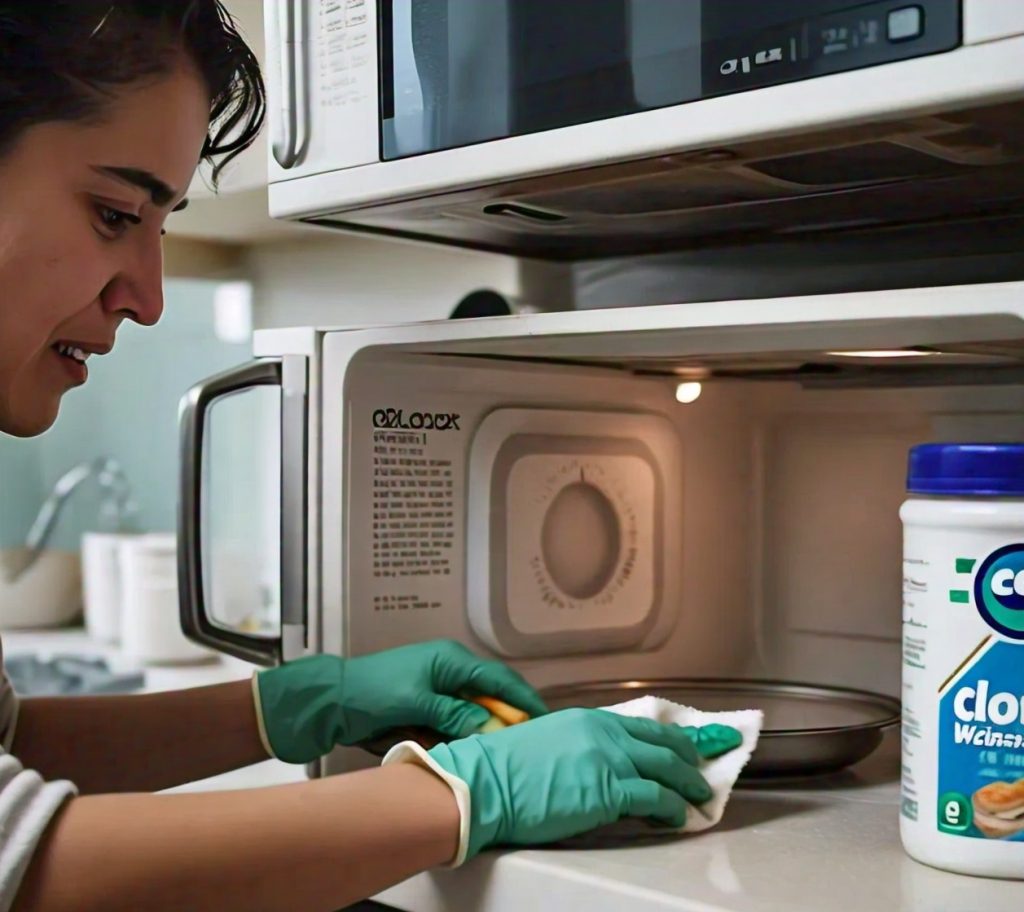
Clorox wipes are generally suitable for many hard, nonporous microwave surfaces when used according to the product label and the microwave manufacturer’s instructions. The main concern is not microwave radiation. It is cleaner residue, moisture entering the appliance, surface damage, and contact with food.


Most Clorox disinfecting wipes use chemical disinfectants rather than chlorine bleach. Still, the formula can vary by product. Check the exact label on your container before use.
Keep these points in mind:
- Use wipes on cool surfaces only.
- Do not spray cleaner directly into the microwave.
- Do not let liquid run into vents, seams, the door latch, the control panel, or the light opening.
- Do not use a dripping-wet wipe.
- Wipe the surface again with clean water.
- Dry the inside before plugging in or operating the microwave.
- Follow the microwave’s care manual if it gives different instructions.
A microwave interior is not the same as a plate or cooking pan, but food may touch its floor and walls through splashes. For that reason, rinsing away disinfectant residue is a sensible extra step.
Cleaning and disinfecting are also different tasks. Cleaning removes food, grease, and dirt. Disinfecting uses a product for a stated contact time to reduce certain germs. A quick swipe may clean a mark without disinfecting the surface.

How to Clean a Microwave With Clorox Wipes
Use this method for light to moderate spills. For thick, baked-on food, soften the mess with steam first.
1. Unplug the microwave
Unplug the appliance before cleaning the inside. This reduces the risk of starting the microwave while your hands are inside and helps protect the electrical parts from moisture.
If the plug is hard to reach, turn off the correct circuit only if you know which breaker controls the appliance. Do not clean a built-in microwave near exposed wiring or damaged parts. Contact a qualified appliance technician if you see frayed cords, sparks, burn marks, or cracked insulation.
2. Remove the turntable and support ring
Take out the glass tray and roller ring. Wash them in warm water with dish soap unless the microwave manual says they are dishwasher safe.
Clean these parts in a sink. Do not rely on a disinfecting wipe alone, especially if food has dried on the tray. Rinse them well and let them dry before putting them back.
3. Remove loose crumbs and food
Use a paper towel or a clean, dry cloth to pick up loose crumbs. This keeps the wipe from spreading food around the cavity.


Do not scrape the microwave with a knife, metal tool, or abrasive pad. Scratches can damage the interior coating and make future cleaning harder.
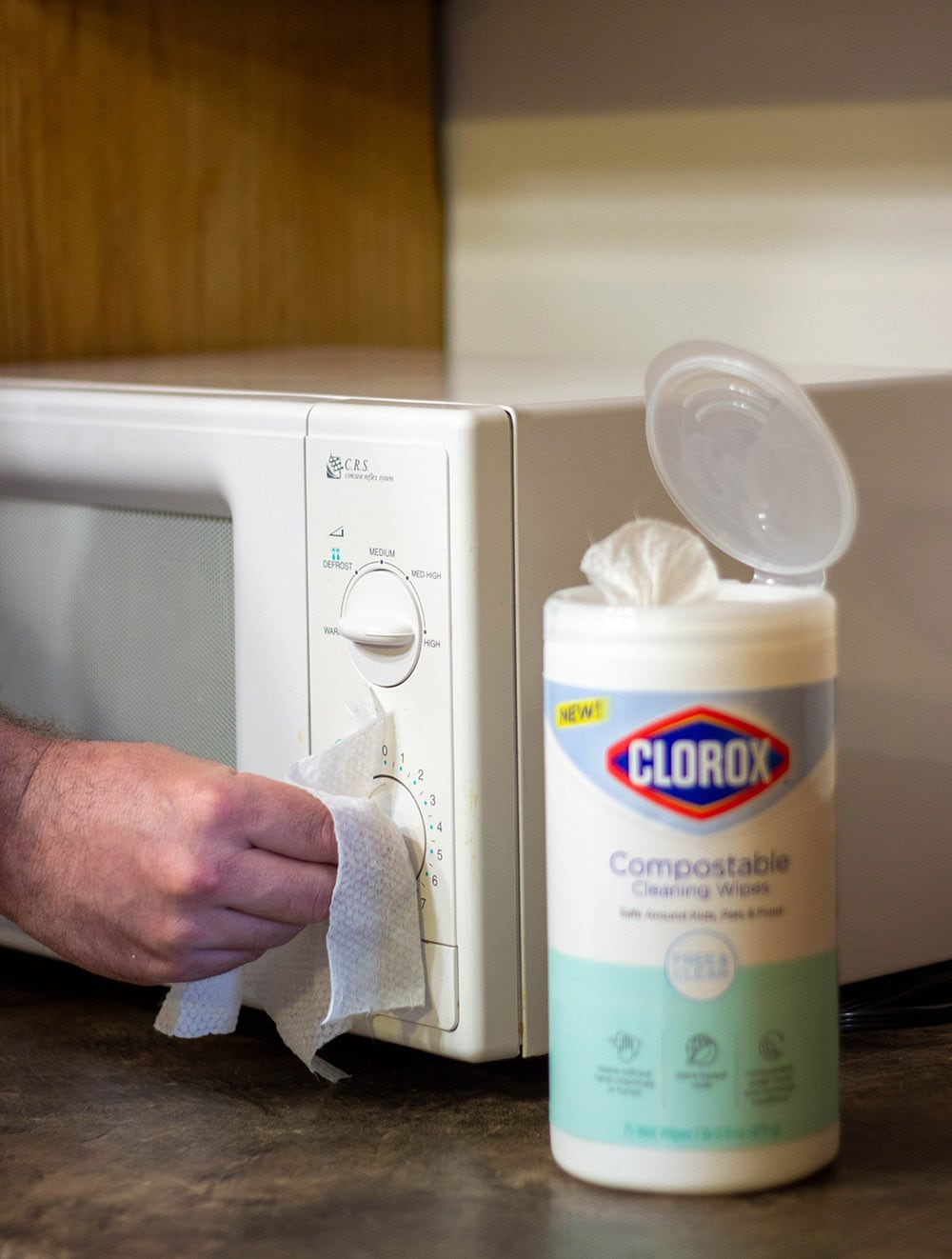
4. Wipe the interior walls and floor
Use one Clorox wipe to clean the ceiling, side walls, back wall, and floor. Work from the top down so loosened dirt falls onto areas that you have not cleaned yet.
Use gentle pressure. Pay special attention to:
- Grease near the ceiling
- Sauce splashes on the side walls
- Food stuck near the bottom edge
- The inside of the door
- The door seal and frame
Do not scrub hard over a chipped, peeling, or damaged coating. A damaged cavity may need service or replacement.
5. Avoid openings and sensitive parts
Do not push a wet wipe into the door latch, vents, seams, fan openings, or control panel. Keep moisture away from the waveguide cover, which is often a small mica or cardboard-like panel inside the microwave.
The waveguide cover should not be removed for normal cleaning. If it is cracked, burned, swollen, or covered with heavy grease, stop using the microwave and check the manufacturer’s repair guidance.
6. Wipe away the residue
Use a clean cloth dampened with plain water to wipe every area touched by the Clorox wipe. This step helps remove cleaner residue before food is heated.
Rinse the cloth often. Do not soak the microwave. The cloth should be damp, not dripping.
7. Dry the microwave
Dry the inside with a clean towel. Leave the door open for a short time so any remaining moisture can evaporate.
Make sure the turntable and roller ring are dry before replacing them.
8. Plug it in and test it
After the microwave is dry, plug it back in. If it smells strongly of cleaner, wipe the interior again with a clean damp cloth and allow it to air out.
Do not run an empty microwave. If you want to test it, place a microwave-safe cup of water inside and heat it briefly according to the appliance manual.
When Should You Use Steam Instead?
Use steam and mild dish soap when the microwave has dried food, grease, or a strong cleaner smell. Steam loosens stuck-on food and usually creates less residue than a disinfecting wipe.
Try this approach:


- Place a microwave-safe bowl with water inside the microwave.
- Heat it until the water produces steam. Use the microwave manual for safe heating guidance.
- Let the bowl sit for several minutes with the door closed.
- Carefully remove the hot bowl with an oven mitt.
- Wipe the softened food with a clean cloth.
- Use a small amount of mild dish soap on the cloth if grease remains.
- Wipe again with plain water.
- Dry the interior.
Never heat an empty microwave. Do not use metal containers, foil, or non-microwave-safe bowls for this process.
Steam is usually the better choice for:
- Dried oatmeal
- Tomato sauce
- Cheese
- Grease
- Soup splashes
- Food stuck to the ceiling
- A microwave with a strong chemical odor after wiping
Steam does not replace cleaning every surface. You still need to wipe away the loosened food. It also does not automatically disinfect the microwave.
What Not to Use in a Microwave
Avoid products and methods that can damage the microwave or leave unsafe residue.
Do not mix cleaning products
Never combine Clorox wipes or their residue with ammonia, vinegar, bleach, toilet cleaner, drain cleaner, or other chemicals. Mixing cleaners can create irritating or dangerous fumes.
Use one cleaning product at a time. If you change products, wipe the surface with clean water first.
Do not use abrasive cleaners
Avoid steel wool, scouring powder, rough scrub pads, and harsh oven cleaner unless the microwave manufacturer specifically approves them. These products can scratch the cavity coating.
Do not soak the microwave
A wet interior is not cleaner than a damp one. Excess liquid can reach electrical components, seals, vents, and the control panel.
Do not clean a hot microwave
Allow the appliance to cool before wiping it. A hot surface can dry the wipe too quickly, spread residue, or damage the wipe material.
Do not use a wipe on every part
Use extra care around:
- The control panel
- Door hinges
- Door locks
- Vent openings
- The waveguide cover
- Seams and edges
- The power cord and plug
For the control panel, a barely damp microfiber cloth is often safer than a wet disinfecting wipe. Follow the owner’s manual.
Clorox Wipes vs. Other Microwave Cleaning Methods
The best method depends on the type of mess.
| Cleaning method | Best for | Main benefit | Main limitation |
|---|---|---|---|
| Damp microfiber cloth | Light dust and fresh splashes | Leaves little residue | May not remove grease |
| Mild dish soap and water | Grease and food film | Good routine cleaning | Requires a rinse |
| Steam and water | Dried-on food | Softens stuck food | Does not disinfect by itself |
| Clorox wipe | Quick cleaning of hard, nonporous surfaces | Convenient and useful for surface germs when used as labeled | Requires residue removal and careful moisture control |
| Baking soda paste | Tough stains on approved surfaces | Mild abrasive action | Must be rinsed away; may not suit all finishes |
For most weekly microwave cleaning, steam followed by a damp cloth is enough. A Clorox wipe can be useful after raw food spills or when several people share the appliance, but the label’s directions still apply.


Do not assume that a disinfecting wipe removes all germs or makes the microwave sterile. Disinfectant claims are limited to the organisms, surfaces, and contact time listed on the product label.

What If the Microwave Still Smells After Cleaning?
A lingering smell usually comes from food trapped in the turntable ring, door seal, vent area, or grease film on the ceiling. Clean the removable parts separately and repeat the steam method with plain water.
If a chemical smell remains after using Clorox wipes, wipe the interior several times with a clean, damp cloth. Leave the door open to air out the appliance. Do not heat food until the smell has gone.
A burning or electrical smell is different. Stop using the microwave if you notice:
- Sparks
- Smoke
- A burning plastic smell
- A buzzing sound that is new
- A damaged waveguide cover
- Peeling or bubbling inside the cavity
- A door that does not close properly
Check the owner’s manual and contact the manufacturer or a qualified appliance professional. Do not attempt electrical repairs yourself.

Frequently Asked Questions
Can you use Clorox wipes on the microwave door?
Usually, yes, if the door has a hard, nonporous surface and the manufacturer allows it. Use a small amount of moisture, avoid the latch and hinges, then wipe the door with clean water and dry it.
Can you use Clorox wipes on the microwave turntable?
You can wipe a glass turntable with a Clorox wipe, but washing it with dish soap and water is usually simpler. Rinse it well before returning it to the microwave.
Do you need to rinse after using Clorox wipes?
Yes. Rinse-wiping the microwave interior with a clean, damp cloth helps remove disinfectant residue. This is especially useful because food may splash onto the microwave surface during heating.
Can you clean a microwave with bleach wipes?
Do not assume that every Clorox wipe contains bleach, and do not use a bleach product unless its label and the microwave manual permit it. Never mix bleach with other cleaners. A damp cloth, mild dish soap, or steam is often a safer routine option.
Can you use Clorox wipes while the microwave is plugged in?
It is safer to unplug the microwave before cleaning the inside. Keep all liquid away from the plug, cord, vents, control panel, and electrical openings.
Sources and Evidence
This guidance is based on the general cleaning and safety directions provided by:
- Clorox disinfecting wipes product information
- U.S. Environmental Protection Agency: Using disinfectants safely
- The cleaning and maintenance instructions in the owner’s manual for the specific microwave model
Product formulas, label directions, and microwave finishes can vary. The current product label and appliance manual control when they differ from general advice.

Conclusion
You can clean a microwave with Clorox wipes, but use them as a controlled surface cleaner rather than spraying or soaking the appliance. Unplug the microwave, wipe the cool interior carefully, avoid openings, remove residue with clean water, and dry everything before use.
For everyday food splashes, steam, mild dish soap, and a damp cloth are often enough. If the microwave shows burn damage, electrical problems, or a damaged door or waveguide cover, stop cleaning and arrange professional help.

Appliance Review Expert
Lucas Ramirez is a trusted voice at HomeFixGrid.com, known for his clear, practical, and creatively written guides that simplify appliance care for everyday homeowners. With a strong focus on hands-on testing and real-world problem-solving, Lucas brings expert insight into appliance reviews and troubleshooting techniques. Her work empowers readers to confidently maintain, repair, and choose the right appliances for their homes.