
Yes—can you defrost chicken in the microwave? You can, with safe steps.
If you need dinner fast, this guide breaks it down. I’ll show you can you defrost chicken in the microwave the right way, backed by food safety science and real kitchen tests. You will learn what works, what fails, and how to avoid risky mistakes.
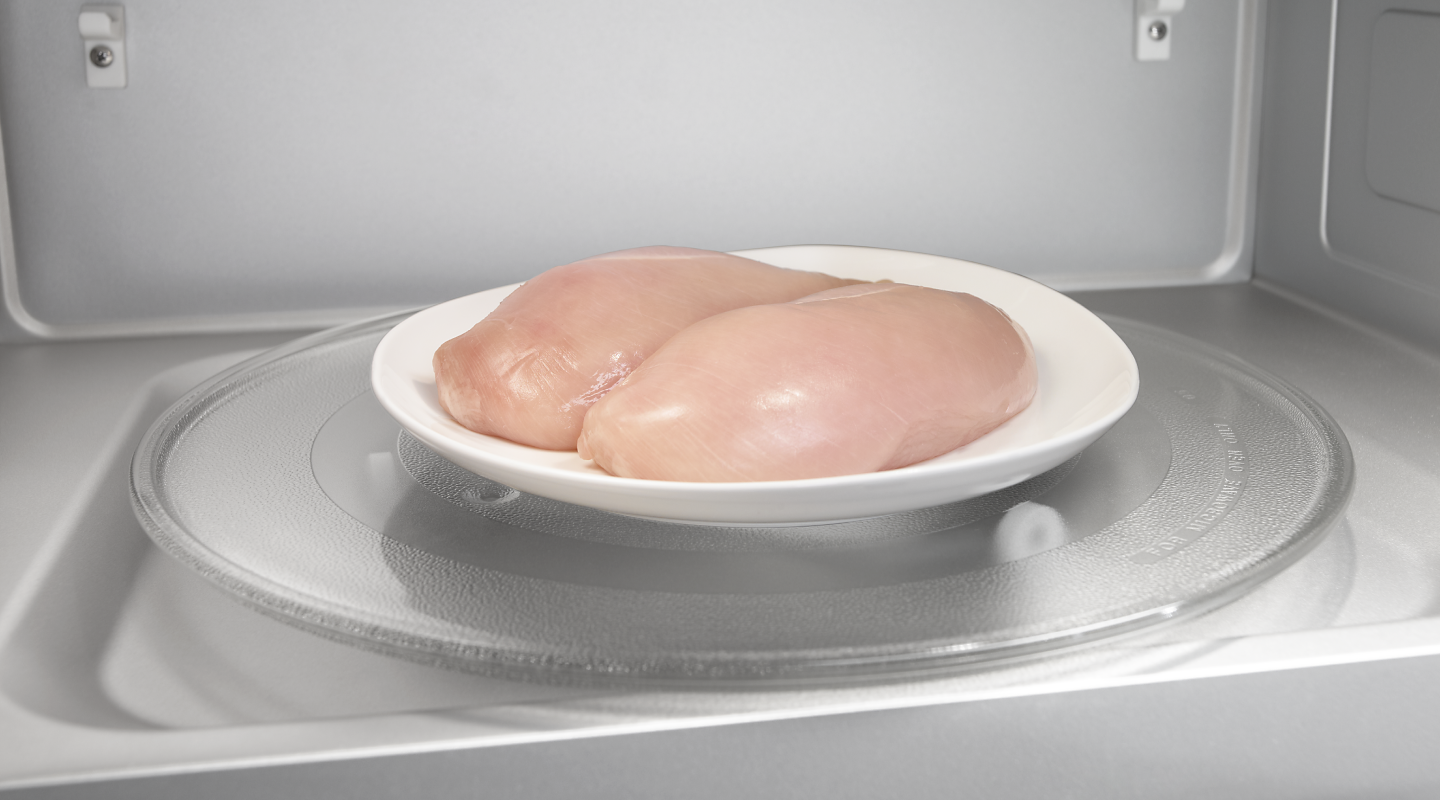
Is it safe to defrost chicken in the microwave?
Yes, it is safe if you do it right. Microwaves warm the outer layer fast while the center stays cold. That is why you must cook it at once after thawing. This reduces time in the danger zone.
So, can you defrost chicken in the microwave without risk? Yes, if you use low power, rotate often, and cook right away. Food safety agencies advise using the defrost setting or 30 percent power. They also stress cooking to 165°F.

Step-by-step: How to defrost chicken in the microwave the right way
Before you start, ask: can you defrost chicken in the microwave on full power? No. Use the defrost button or 30 percent power. That keeps edges from cooking.
Follow these steps:
- Unwrap the chicken. Remove trays, pads, and all plastic. Place it on a microwave-safe plate.
- Separate pieces if you can. If stuck, run cold water over them for 30 seconds. Do not use warm water.
- Set power to defrost or 30 percent. If your oven has weight-defrost, enter the weight for better timing.
- Defrost in short rounds. Try 2 to 3 minutes for small cuts. Flip or rotate the chicken. Move pieces as they loosen.
- Rest 1 minute between rounds. Heat spreads in the meat during rest. This keeps edges from cooking.
- Stop when pliable but still icy in the core. The meat should bend but not feel warm on the surface.
- Cook right away to 165°F. Use a thermometer in the thickest part. Clean hands and tools after handling raw poultry.
Pro tip: Cover thin tips with a small piece of parchment or a damp paper towel. This shields edges from hot spots. Do not use foil or any metal in the microwave.
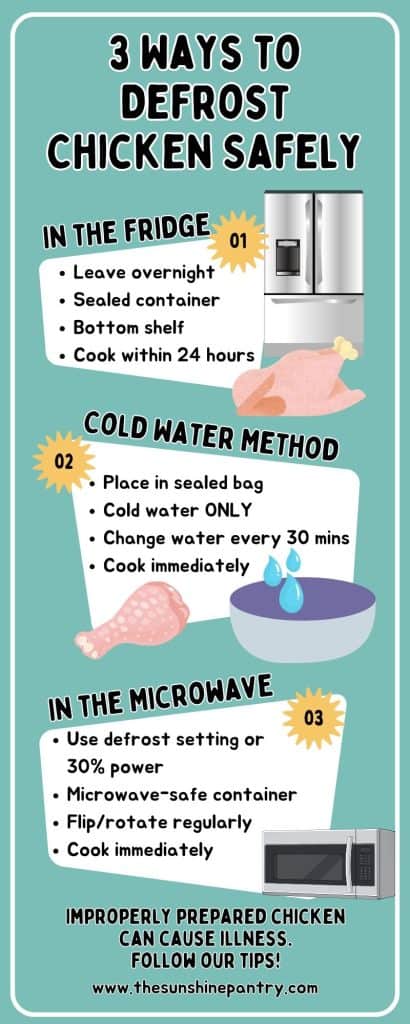
Common mistakes and how to avoid them
People often google can you defrost chicken in the microwave with packaging on. The answer is no. Most pads and films can leach or melt.
Avoid these errors:
- Using full power. This cooks the outside and leaves the center ice cold. Use 30 percent power.
- Leaving it out after thaw. Warm raw chicken grows bacteria fast. Cook right after defrosting.
- Not rotating or flipping. Microwaves heat in hot spots. Move pieces to even it out.
- Defrosting in the foam tray. The pad can leak and the tray can warp. Use a plate.
- Refreezing raw after microwave thaw. If the surface warmed above 40°F, do not refreeze raw. Cook first, then you can refreeze the cooked meat.

Microwave settings, times, and weights guide
Every microwave is a bit different. Start with low power and check often. Many wonder, can you defrost chicken in the microwave in five minutes. It depends on weight, shape, and bone.
Use these simple targets:
- Small boneless pieces, 8 to 10 ounces: 3 to 5 minutes total at 30 percent. Flip midway.
- One pound of boneless breasts: 6 to 9 minutes total at 30 percent. Pause and rest between rounds.
- Bone-in thighs or drumsticks, 1 to 1.5 pounds: 10 to 14 minutes total. Rotate and move pieces each round.
- Whole chicken: Not advised in the microwave. Thaw in the fridge or cold water instead.
- Mixed frozen clump: Run a 30 second cold water rinse to loosen. Then defrost in short rounds.
Tip: Stop when the meat bends but the core still has ice crystals. That is the sweet spot for even cooking.
:max_bytes(150000):strip_icc()/how-to-safely-thaw-frozen-chicken-4099592-FINAL-7ab537860f684c8d8475d808bfd304dd.png)
Food safety essentials and the science behind it
The danger zone is 40°F to 140°F. In that range, bacteria like Salmonella and Campylobacter can grow fast. Microwaves heat the surface first, so time control is key.
The science behind can you defrost chicken in the microwave centers on heat transfer and water in the meat. Low power lets heat move inward without cooking the edges. Food safety experts say to cook right after microwave thaw. Cook to 165°F in the thickest part to kill germs.
Two more rules:
- Never thaw chicken on the counter. Room temp is unsafe.
- Keep raw juices away from ready-to-eat foods. Wash boards, knives, and hands with warm, soapy water.
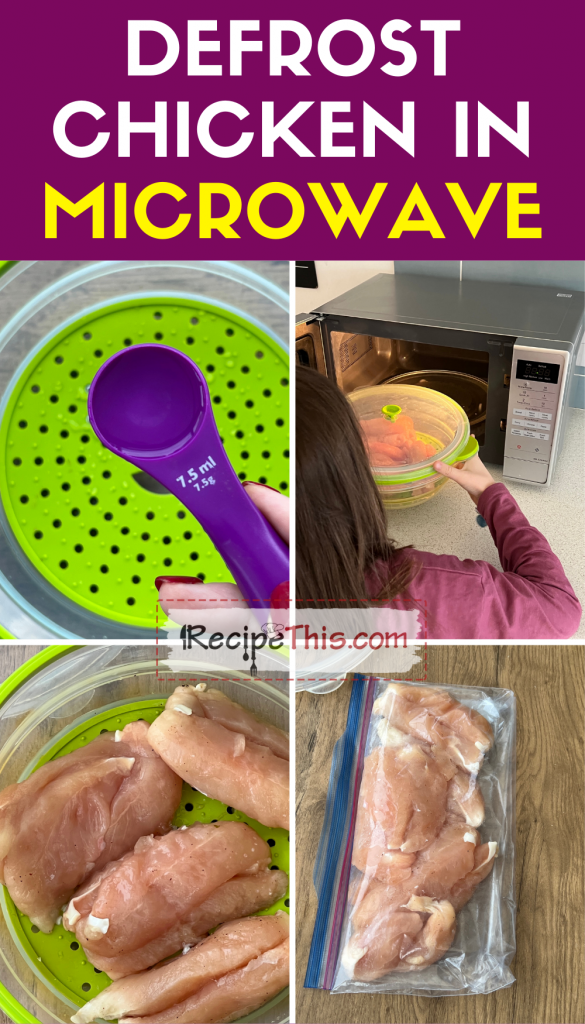
What to do after defrosting: cooking methods and timing
Go straight from the microwave to the stove, oven, air fryer, or grill. This keeps you out of the danger zone. Dry the surface and season well for a better sear.
Try these quick methods:
- Pan sear then finish in the oven. This gives color and keeps juices in.
- Air fry at 375°F to 400°F. Check for 165°F in the center.
- Grill over medium heat. Move to indirect heat to finish.
- Poach, shred, and season for tacos or salads.
A final note on can you defrost chicken in the microwave and then refreeze. Do not refreeze raw if the chicken warmed above 40°F. You can refreeze after you cook it to 165°F.

Alternatives to the microwave and when to use them
If you doubt can you defrost chicken in the microwave for large roasts, use cold water or the fridge. These methods are gentle and even.
Use these choices:
- Fridge thaw: Safest. 24 hours per 1 to 2 pounds. Plan ahead.
- Cold water thaw: Faster. Submerge in cold water in a sealed bag. Change the water every 30 minutes. About 1 to 3 hours for most cuts.
- Cook from frozen: Works for many cuts. Add about 50 percent more cook time. Season mid-cook as the surface thaws.
- Sous vide thaw: Use a low temp bath to bring meat just above freezing. Then cook at your target temp.
Each method avoids the danger zone when done right. Pick the one that fits your time and cut.
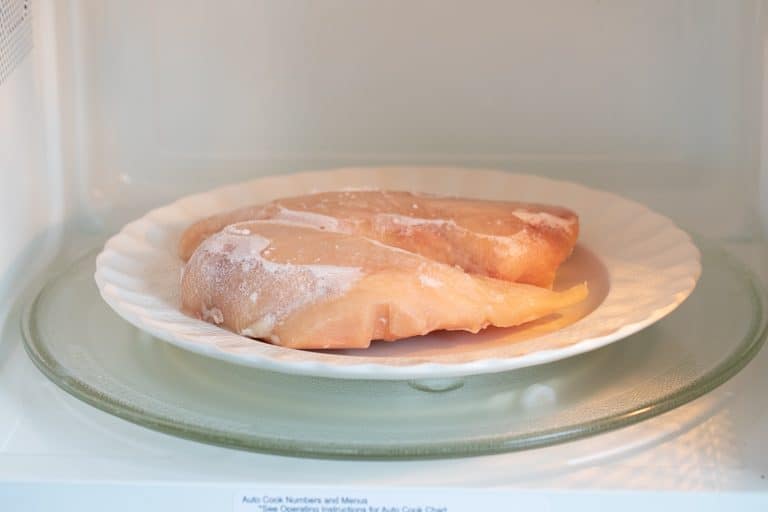
My real-world tips and lessons learned
In my classes, the top question is can you defrost chicken in the microwave without cooking it. You can, if you shield thin ends and use short rounds. Here is what cooks tell me works best.
What has helped me:
- Label packs by weight before freezing. Then the defrost program works better.
- Freeze pieces flat in a single layer. They thaw faster and more even.
- Place a mug of water in the microwave with the plate. It smooths hot spots in some ovens.
- Use 30 percent power, then 20 percent for the last round. This avoids cooked rims.
- Stop early. Let carryover do its job, then start cooking at once.
These small tweaks make a big change in texture and safety.
Frequently Asked Questions of can you defrost chicken in the microwave
Can you defrost chicken in the microwave safely?
Yes, if you use the defrost setting or 30 percent power and cook right away. Keep the meat out of the danger zone and cook to 165°F.
How long does it take to defrost one pound of chicken?
Plan for 6 to 9 minutes at 30 percent power, with flips and short rests. Check often and stop when pliable with small ice crystals.
Can I refreeze chicken after defrosting in the microwave?
Do not refreeze raw if the surface warmed above 40°F. You can refreeze after you cook it to 165°F.
Is it okay to defrost chicken in the microwave in its package?
No. Remove plastic, foam trays, and pads before microwaving. Place the chicken on a microwave-safe plate.
What if parts of the chicken start to cook while defrosting?
Stop the cycle, let it rest, and lower the power. Treat the process as the start of cooking and finish to 165°F right away.
Can you defrost chicken in the microwave without flipping it?
Flipping helps avoid hot spots and partial cooking. Rotate the plate or move pieces each round for even thawing.
Can you defrost chicken in the microwave and marinate it after?
Yes, but cook it right away after defrosting, then marinate warm or post-cook for best safety. Do not let raw thawed chicken sit out.
Conclusion
You asked can you defrost chicken in the microwave, and now you know how to do it right. Use low power, short rounds, and quick cooking to keep food safe and tender. Avoid common traps, and lean on proven methods.
Take action today. Label your freezer packs, plan your steps, and keep a thermometer handy. Want more time-saving kitchen guides? Subscribe, share your results, or drop a question in the comments.

Appliance Review Expert
Lucas Ramirez is a trusted voice at HomeFixGrid.com, known for his clear, practical, and creatively written guides that simplify appliance care for everyday homeowners. With a strong focus on hands-on testing and real-world problem-solving, Lucas brings expert insight into appliance reviews and troubleshooting techniques. Her work empowers readers to confidently maintain, repair, and choose the right appliances for their homes.
Leave a Reply