How Deep Is A Twin XL Mattress: Ideal Thickness Guide
A Twin XL mattress is usually 8 to 14 inches deep, with 10 to 12 inches being common in the United States. The exact depth depends on the mattress brand, model, and design.
A Twin XL mattress has a standard sleeping surface of about 38 inches wide by 80 inches long. Its depth, also called thickness, is measured from the bottom edge to the highest point of the mattress.
If you are buying sheets, checking bed height, or replacing a mattress, use the mattress maker’s listed thickness rather than relying on the Twin XL size alone.


What Does “Mattress Depth” Mean?
Mattress depth is the vertical thickness of the mattress itself. It does not include the bed frame, foundation, slats, mattress pad, topper, or bedding.
For example, a 12-inch Twin XL mattress placed on a 14-inch platform creates a sleep surface about 26 inches above the floor. A thick mattress topper may raise that height further.
The terms depth, thickness, and profile often mean the same thing in mattress listings. They describe the mattress from its lowest edge to its highest finished surface.
Twin XL size versus Twin XL depth
“Twin XL” tells you the mattress’s length and width:
- Width: about 38 inches
- Length: about 80 inches
- Depth: varies by model
Twin XL mattresses are the same width as standard Twin mattresses but are about 5 inches longer. The added length helps taller sleepers fit more comfortably.
Unlike width and length, mattress depth is not one fixed industry-wide measurement. A Twin XL may be 6 inches thick, 8 inches thick, 10 inches thick, 12 inches thick, or more.
Typical Twin XL Mattress Depths
Most Twin XL mattresses fall into a few practical thickness groups.
| Mattress depth | Common use | Practical notes |
|---|---|---|
| 6–8 inches | Guest rooms, children, compact spaces | Light and easy to move, but may offer less cushioning |
| 9–10 inches | Basic adult use | Often balances support, weight, and cost |
| 11–12 inches | Many foam, hybrid, and spring models | A common choice for everyday use |
| 13–14 inches | Plush or layered designs | May need deep-pocket sheets |
| More than 14 inches | Specialty or extra-plush models | Check frame, sheet, and clearance limits |
These ranges are general. Construction matters as much as thickness. A well-built 10-inch mattress may feel more supportive than a poorly designed 12-inch mattress.
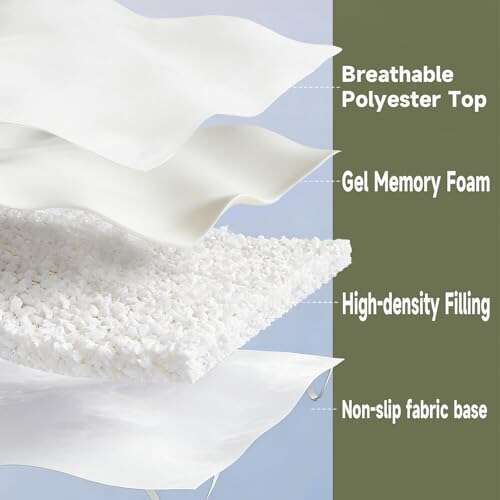
A thicker mattress is not automatically better. Extra height may come from comfort foam, transition foam, coils, quilting, or other layers. The materials, firmness, sleeper’s body weight, and sleep position also affect comfort.

How Deep Should a Twin XL Mattress Be?
For most adults, a 10- to 12-inch Twin XL mattress is a practical starting range. It usually provides enough room for comfort layers while remaining manageable on many standard bed frames.


The best depth depends on how the mattress will be used:
- For a dorm room: A mattress around 8 to 12 inches may work well, but first check the school’s bed frame and clearance rules.
- For a guest bed: A 8- to 10-inch model may be easier to move and store.
- For daily adult use: A 10- to 12-inch model often offers a broader range of comfort designs.
- For a platform bed: Many depths can work, as long as the total bed height is comfortable.
- For a bunk bed or loft: Use only the depth allowed by the frame maker.
- For a split king setup: Two Twin XL mattresses sit side by side to create a king-size surface. Matching depths help keep the two sides level.
Your body size and sleep position also matter. Side sleepers often prefer enough cushioning at the shoulders and hips. Back and stomach sleepers may prefer a thinner comfort layer or a firmer feel. These preferences do not create a universal depth rule, but they can narrow your choices.
How to Measure a Twin XL Mattress
Measure the mattress if the product page does not give a clear depth or if you need to buy fitted sheets.
What you need
- A straight ruler or tape measure
- A flat surface
- A second straight object, such as a book or yardstick
- The mattress without a topper or thick pad
Measurement steps
- Remove sheets, blankets, and mattress toppers.
- Place the mattress on its side or measure it while it lies flat.
- Put the straight object across the highest point of the mattress.
- Measure from the bottom edge to the straight object.
- Measure the highest point, not a lower side seam or compressed edge.
- Record the result in inches.
Do not press down on the mattress while measuring. Compression can make the mattress appear thinner than it is.
Some mattresses have a rounded top, pillow top, or quilted surface. For sheet fitting, measure from the bottom edge to the highest usable sleeping surface. For frame clearance, use the mattress maker’s stated height when available.

Mattress Depth and Fitted Sheet Size
A fitted sheet must cover the mattress depth as well as its width and length. Twin XL fitted sheets are made for a mattress about 38 by 80 inches, but their pocket depth varies.
Check the package for terms such as:
- Standard pocket
- Deep pocket
- Extra-deep pocket
- Fits mattresses up to 14 inches
- Fits mattresses from 16 to 18 inches
A 12-inch mattress may fit a sheet rated for mattresses up to 14 inches. A 14-inch mattress may need a deeper pocket, especially when used with a mattress protector or pad.
Add the thickness of any layer that stays on the mattress:
Required sheet depth = mattress depth + mattress protector depth + mattress pad or topper depth
Example
A hypothetical setup includes:
- 12-inch mattress
- 1-inch mattress protector
- 2-inch topper
The fitted sheet should accommodate at least:
12 + 1 + 2 = 15 inches
A sheet rated only for mattresses up to 14 inches may pull loose at the corners.


Do not choose sheets by the word “Twin” alone. A standard Twin fitted sheet is usually about 75 inches long, while a Twin XL fitted sheet is about 80 inches long.
How Mattress Depth Affects Bed Height
Mattress depth changes how high you sleep above the floor. This affects getting into bed, sitting on the edge, and reaching the floor.
Use this simple calculation:
Total bed height = floor clearance + foundation height + mattress depth + topper depth
Example calculation
Suppose a bed has:
- 12-inch clearance under the frame
- 8-inch foundation
- 11-inch mattress
- No topper
The top of the mattress will be about:
12 + 8 + 11 = 31 inches from the floor
The result may feel high for some people. A shorter sleeper, child, or person with limited mobility may prefer a lower setup. A taller person may find a higher bed easier to use.
The visible side height can also affect how deep the mattress looks. Bedding may cover part of the side, so measure the actual mattress if appearance matters.

Can a Twin XL Mattress Be Too Deep?
Yes. A mattress can be too deep for a bed frame, bunk bed, loft, fitted sheet, or room layout.
Bunk beds and loft beds
Bunk and loft frames have strict clearance limits. A mattress that is too thick can reduce the space between the mattress and the upper rail. That may increase the risk of falling.
Use the frame manufacturer’s instructions and the required safety label. Do not guess based on whether the mattress appears to fit. In the United States, federal bunk-bed rules include requirements related to guardrails, mattress support, and mattress thickness. The frame’s instructions still control the specific setup.
Platform beds and foundations
A platform bed can support many mattress depths, but its weight limit applies to the mattress, sleepers, bedding, and any topper. Check the frame’s listed capacity and slat spacing.
Some mattresses require a solid or closely spaced base. Others work with slats. The mattress warranty may also specify support requirements.


Murphy beds and trundle beds
A deep mattress may not fold, close, or slide correctly in a Murphy bed or trundle. Measure the available compartment before purchasing.
Check all of these dimensions:
- Maximum mattress depth
- Maximum mattress weight
- Required foundation type
- Available clearance above the mattress
- Space needed for bedding
A mattress that fits the sleeping surface may still fail to fit the storage space.
Is a 10-Inch or 12-Inch Twin XL Mattress Better?
Neither depth is automatically better. The choice depends on comfort, support, bed height, and available space.
A 10-inch mattress may suit you if:
- You want a moderate bed height.
- You need a lighter mattress for moving.
- The bed frame has limited clearance.
- You use a mattress topper.
- You prefer a firmer, less layered design.
A 12-inch mattress may suit you if:
- You want more room for comfort layers.
- You prefer a plusher feel.
- You do not have strict clearance limits.
- You want to use the mattress without a separate topper.
- Your sheets can fit the added depth.
Thickness alone does not tell you how soft or firm a mattress feels. A 12-inch mattress can be firm, medium, or soft. Always check the construction and firmness description for the specific model.
What If Your Twin XL Mattress Is Not the Expected Depth?
First, check the manufacturer’s product page, law tag, box label, or order confirmation. Mattress depth can vary slightly because of quilting, cover design, compression, and manufacturing tolerance.
If the mattress looks much thinner after opening, allow the time listed in the setup instructions for it to expand. Compressed mattresses may need time to reach their intended shape.
Contact the manufacturer if:
- The mattress remains visibly uneven.
- It does not reach the listed height after the stated expansion period.
- The cover or foam appears damaged.
- The mattress has a strong, persistent odor that concerns you.
- The delivered model does not match your order.
Do not remove the law tag or discard packaging until you confirm that the mattress is correct. Return policies often have specific steps and time limits.

Common Mistakes When Choosing Twin XL Mattress Depth
Confusing Twin with Twin XL
A Twin XL is longer than a standard Twin. A standard Twin fitted sheet may not stay on a Twin XL mattress.
Measuring the bed frame instead of the mattress
The frame’s height does not reveal mattress depth. Measure the mattress separately.
Ignoring mattress toppers
A topper changes both sheet requirements and total bed height. Include it in your calculation.
Assuming thicker means more supportive
Support depends on the mattress structure, firmness, and how well it suits the sleeper. More inches do not guarantee better alignment or comfort.
Using a deep mattress on a bunk bed without checking
A thick mattress may reduce guardrail protection. Follow the bunk or loft maker’s maximum-depth rule.
Buying sheets by size only
Twin XL sheets must match both the 38-by-80-inch footprint and the mattress depth. Check the fitted-sheet pocket range.
Quick Twin XL Mattress Depth Guide
| Your main concern | Depth detail to check |
|---|---|
| Buying fitted sheets | Mattress depth plus protector and topper |
| Setting up a dorm bed | Frame clearance and total bed height |
| Using a bunk or loft | Maximum mattress depth in the frame manual |
| Choosing for daily sleep | Construction, firmness, and comfort layers |
| Building a split king | Matching Twin XL length and similar mattress height |
| Using a trundle or Murphy bed | Maximum depth and weight limits |
| Replacing an old mattress | Exact model specifications and foundation rules |
Frequently Asked Questions
Is a Twin XL mattress the same depth as a Twin mattress?
Not necessarily. Twin and Twin XL mattresses usually share the same width, but their lengths differ. Depth depends on the model, not the size name.
Is a 12-inch Twin XL mattress too thick for a dorm bed?
It may be, depending on the dorm frame and school rules. Check the housing or bed-frame requirements before buying. Also account for a mattress protector or topper.
What fitted sheet fits a 12-inch Twin XL mattress?
Choose a Twin XL fitted sheet with a pocket range that includes at least 12 inches. If you use a protector or topper, add those layers before selecting the sheet depth.
Can two Twin XL mattresses make a king bed?
Yes. Two Twin XL mattresses placed side by side have the same overall footprint as a standard king: about 76 inches wide by 80 inches long. Similar mattress depths help create an even surface.
How thick should a Twin XL mattress be for an adult?
There is no single required thickness. A 10- to 12-inch mattress is a common starting range, but firmness, construction, body weight, sleep position, and bed-frame limits matter more than thickness alone.
Does mattress thickness affect support?
It can, but thickness is only one factor. The materials, coil or foam design, firmness, and base support also affect how the mattress supports your body.
Final Answer: How Deep Is a Twin XL Mattress?
A Twin XL mattress is commonly 10 to 12 inches deep, but available models may range from about 6 to more than 14 inches. The standard Twin XL footprint is approximately 38 inches wide by 80 inches long; depth is not standardized.
Before you buy, confirm three measurements:
- The mattress depth.
- The fitted sheet’s pocket range.
- The bed frame’s maximum height or clearance limit.
If the mattress will go on a bunk bed, loft, trundle, or Murphy bed, follow the frame maker’s instructions rather than choosing by thickness alone.

Appliance Review Expert
Lucas Ramirez is a trusted voice at HomeFixGrid.com, known for his clear, practical, and creatively written guides that simplify appliance care for everyday homeowners. With a strong focus on hands-on testing and real-world problem-solving, Lucas brings expert insight into appliance reviews and troubleshooting techniques. Her work empowers readers to confidently maintain, repair, and choose the right appliances for their homes.