What Is The Average Height Of A Mattress: Standard Sizes
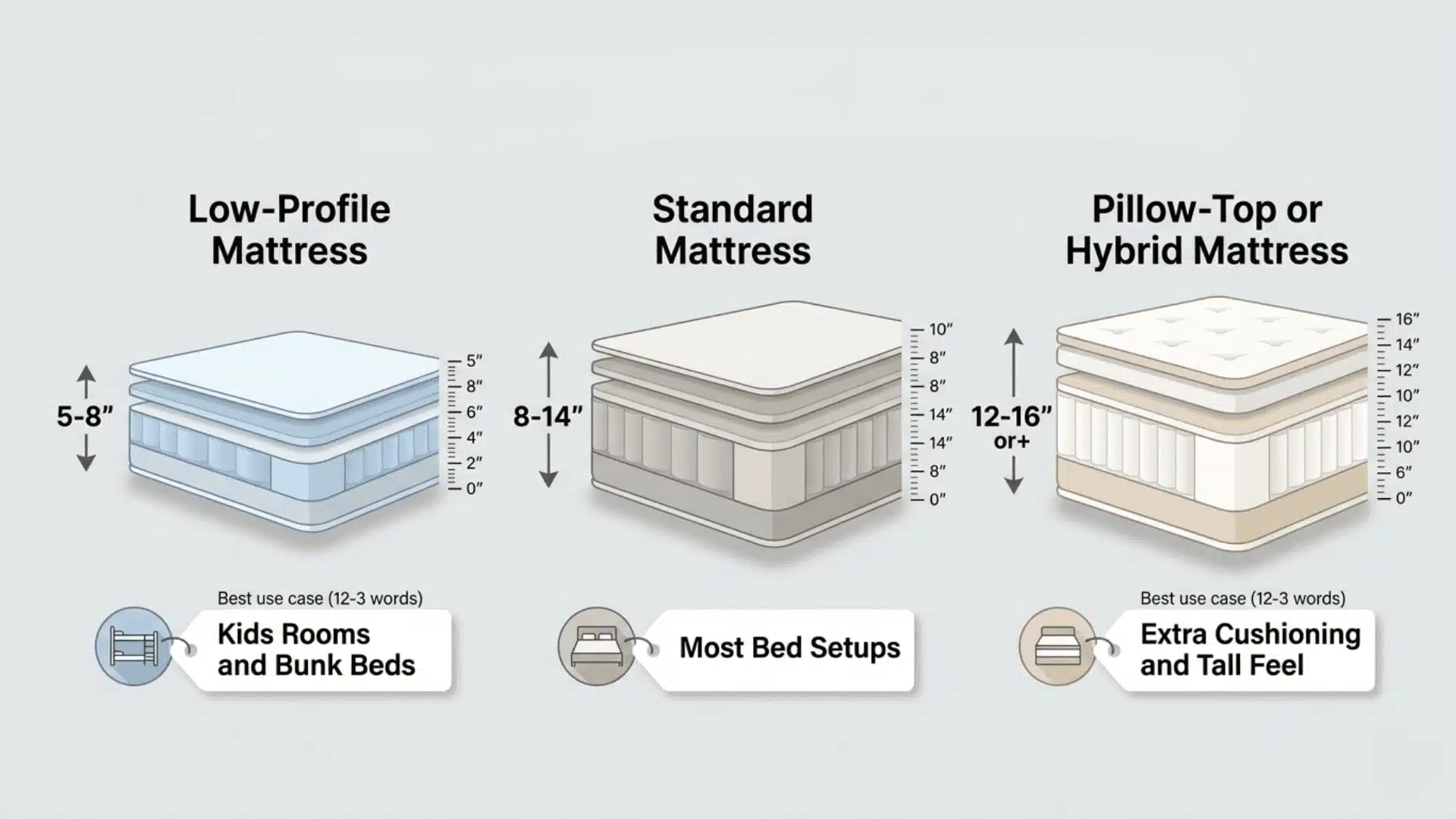
The average mattress in the United States is about 10 to 12 inches thick. Most mattresses sold for adult beds fall within a wider range of 8 to 14 inches.
There is no official U.S. standard for mattress height. Thickness depends on the mattress type, foam layers, coil system, comfort level, and brand. A 6-inch mattress may work well for a child or guest bed, while a 14-inch mattress may offer more cushioning for a larger adult or side sleeper.
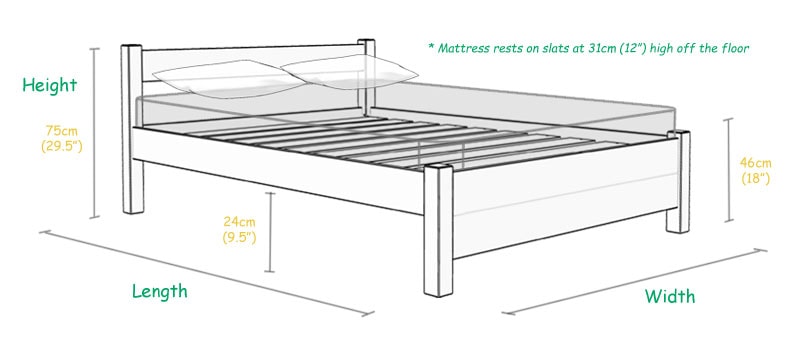
The key point is simple: mattress height is only one part of total bed height. Your bed frame, box spring, foundation, and mattress work together to determine how high the sleep surface sits.


Mattress Height vs. Bed Height
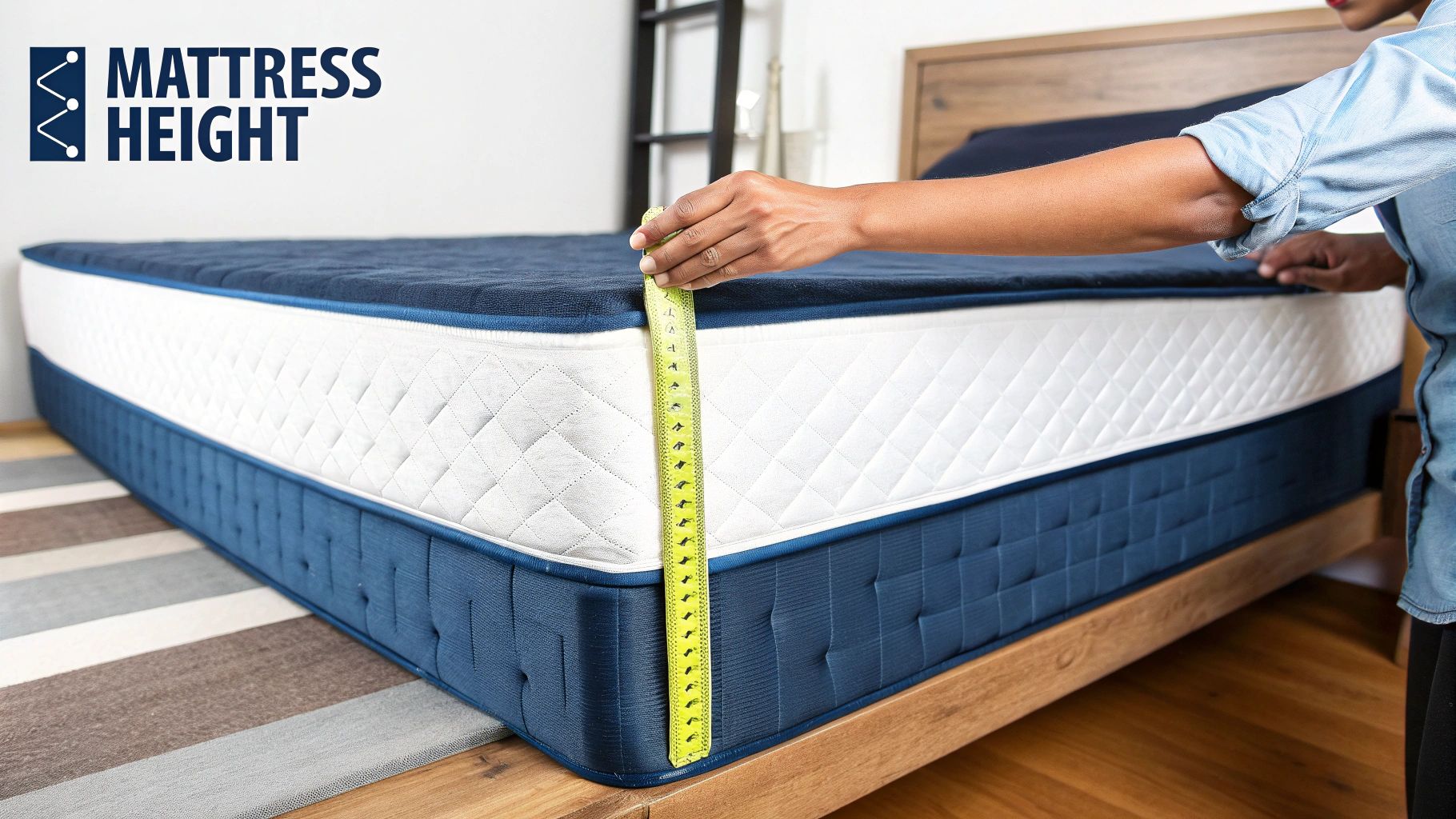
Mattress height means the thickness of the mattress alone. Bed height means the distance from the floor to the top of the mattress.
For example:
- Mattress: 11 inches
- Foundation: 8 inches
- Bed frame: 7 inches
- Total bed height: 26 inches
Use this basic formula:
Total bed height = frame height + foundation height + mattress height
This distinction matters when you buy sheets, choose a bed frame, or decide whether the bed will be easy to enter and leave.
A mattress can be 12 inches thick but still sit low if it rests on a short platform frame. A 9-inch mattress can sit high if it rests on a tall foundation and frame.
Typical total bed heights in the U.S.
Many American beds have a total sleep-surface height of about 20 to 30 inches. This is not a fixed industry rule. It is a practical range created by common mattress, foundation, and frame sizes.
A lower bed may look modern and feel easier for shorter adults to use. A taller bed may provide more storage space below and make it easier for some people to stand up.
The best height depends on your body, room layout, frame, and personal comfort.
How Thick Is a Mattress by Type?
Mattress height varies by construction. The following ranges are common in the U.S. market, but exact sizes differ by brand and model.


| Mattress type | Common thickness | Typical use |
|---|---|---|
| Innerspring | 8–12 inches | Guest rooms, everyday use, firmer feel |
| Memory foam | 8–14 inches | Pressure relief and motion isolation |
| Latex | 8–13 inches | Resilient feel and long-term support |
| Hybrid | 10–16 inches | Coils plus foam or latex |
| Air mattress | 8–22 inches | Guest use, camping, or temporary sleep |
| Crib mattress | About 5–6 inches | Infant sleep spaces; follow current safety rules |
Innerspring mattresses
Traditional innerspring mattresses often measure 8 to 12 inches. Their height comes from steel coils, padding, and upholstery layers.
A thinner innerspring mattress may feel firmer and have less cushioning. A thicker model may include more foam or fiber above the coils.
Memory foam mattresses
Memory foam mattresses often measure 8 to 14 inches. Thicker models usually have more room for a support core and comfort layers.
Thickness does not automatically mean better quality. Foam density, construction, support, and heat control also affect how a mattress feels and performs.
Latex mattresses
Latex mattresses commonly measure 8 to 13 inches. Latex has a springy feel, so a thinner latex mattress may still feel supportive.
Some latex beds use separate layers. This lets the owner change or replace a layer, but it can also make the total mattress taller than a simple one-piece design.
Hybrid mattresses
Hybrid mattresses often measure 10 to 16 inches. They combine pocketed coils with foam, latex, or other comfort materials.
The coil unit takes up space, and the comfort layers add more height. Hybrids may suit people who want both pressure relief and a more responsive feel, but their extra height can require deep-pocket sheets.

What Mattress Height Is Best for Different Sleepers?
The best mattress height depends more on support needs than on a single “ideal” number.
For most adults
A 10- to 12-inch mattress is a practical starting point for many adults. This range can provide space for a support core and one or more comfort layers without making the bed unusually tall.
Still, a 10-inch mattress is not automatically better than an 8-inch model. Compare the materials and firmness, not thickness alone.
For side sleepers
Side sleepers often prefer a mattress with enough comfort material to cushion the shoulders and hips. A 10- to 14-inch mattress may offer more room for these layers.
Height alone does not guarantee pressure relief. Firmness, body weight, sleep position, and material type matter as much as thickness.
For back and stomach sleepers
Back and stomach sleepers often need stable support to help keep the body from sinking too far. A 9- to 12-inch mattress may work well, depending on firmness and body size.


A very soft, thick mattress can still allow excessive sinking. A thinner, firmer mattress may provide better support for some people.
For larger adults
People with heavier body weights may benefit from a mattress with a strong support core and enough comfort material to prevent bottoming out. A 10- to 14-inch mattress is often worth considering.
Check the manufacturer’s stated weight limit when one is available. A thick mattress without a durable support system may not perform well under heavier loads.
For children and teenagers
Children may not need a thick adult mattress. A thinner mattress can be suitable if it provides proper support and fits the bed frame securely.
For infants, use a firm crib mattress that fits the crib correctly. The U.S. Consumer Product Safety Commission provides federal crib and infant sleep product requirements. Adult mattress advice should not be applied to infant sleep spaces.

How to Choose the Right Mattress Height
Start with the bed frame and work upward. This prevents a common mistake: buying a mattress first and discovering that the finished bed is too tall.
Step 1: Measure the current bed
Measure from the floor to the top of the existing mattress. Then measure the mattress by itself.
If you do not have a mattress yet, measure the frame and foundation. Record each height in inches.
Step 2: Set a target total height
Sit on the edge of the bed with your feet flat on the floor. Your knees should be close to a right angle, and you should not need to climb onto the bed.
This is a useful starting point, not a medical rule. People with joint pain, balance concerns, or limited mobility may need a different setup.
Step 3: Subtract the other components
Use this calculation:
Target mattress height = target total bed height − frame height − foundation height
Hypothetical example
Suppose:
- Desired total bed height: 25 inches
- Frame height: 7 inches
- Foundation height: 8 inches
Calculation:


25 − 7 − 8 = 10 inches
A mattress near 10 inches would bring the total bed height close to 25 inches.
Step 4: Check the foundation requirements
Some mattresses can sit on a platform bed with slats. Others need a solid foundation or a specific type of base.
Before buying, read the mattress warranty and setup instructions. Check:
- Maximum space between slats
- Required center support
- Whether a box spring is allowed
- Weight limits for the mattress and base
- Whether an adjustable base is compatible
A wrong foundation can cause poor support, sagging, or warranty problems.

How Mattress Height Affects Sheets and Bedding
A thicker mattress may require deep-pocket sheets. Standard fitted sheets may pull loose if the mattress is too tall.
Measure the mattress from the bottom seam to the highest point, including:
- Pillow tops
- Mattress toppers
- Quilted covers
- Mattress pads
Then compare that measurement with the sheet’s pocket depth. Leave a little extra room if you use a thick topper.
For example, a 12-inch mattress with a 3-inch topper creates a 15-inch sleep surface before the sheet is added. Sheets designed for a 12-inch mattress may not fit well.
Mattress height can also affect:
- Bed skirts
- Headboard proportions
- Nightstand height
- Under-bed storage
- Ease of changing sheets
- Whether the mattress fits through doors and stairways
A mattress may compress inside its shipping box, but it still reaches its full stated height after expansion. Follow the brand’s setup instructions before judging the final thickness.
Does a Thicker Mattress Last Longer?
A thicker mattress does not always last longer. Durability depends on the quality and density of the materials, the support structure, the sleeper’s weight, and how the mattress is used.
A thick mattress may have more material to wear through. However, a tall mattress made with low-density foam may wear out sooner than a thinner mattress with stronger materials.
Look for useful construction details, such as:
- Foam density, when the company provides it
- Coil type and coil count, where relevant
- Layer thickness
- Foundation requirements
- Weight limits
- Warranty terms
- Trial and return conditions
Treat warranty length as a contract term, not proof of expected life. A warranty may cover visible sagging only after the indentation reaches a stated depth.

Common Mistakes When Measuring Mattress Height
Measuring only the mattress
This gives you mattress thickness, not bed height. Measure the frame and foundation too.
Ignoring a mattress topper
A 2- or 3-inch topper can change the bed’s height, sheet fit, and how easily you get in and out.
Assuming every 12-inch mattress feels the same
Two mattresses with the same height can have very different firmness levels, pressure relief, and edge support.
Forgetting the foundation
A mattress designed for a platform bed may not work correctly on every box spring. Confirm compatibility before purchase.
Choosing a very tall bed without testing it
A tall bed may look attractive but feel awkward to use. If possible, sit on a bed with a similar finished height before ordering.
Using an unsafe setup
Do not place a mattress on an unstable surface, damaged frame, or poorly supported base. Follow the manufacturer’s instructions and replace broken or sagging support components.
Frequently Asked Questions
Is a 10-inch mattress thick enough?
For many adults, yes. A 10-inch mattress can provide enough room for a support core and comfort layers. Whether it works for you depends on firmness, materials, sleep position, and body weight.
Is a 12-inch mattress better than an 8-inch mattress?
Not necessarily. A 12-inch mattress may provide more cushioning, but thickness alone does not determine quality. Compare support, materials, firmness, and the manufacturer’s weight guidance.
What is the average height of a mattress and box spring together?
A mattress and box spring together often measure about 18 to 24 inches, before adding the bed frame. The actual height depends on the mattress and foundation sizes.
What is a good mattress height for older adults?
A finished bed height that lets the person sit with both feet flat on the floor may be easier to use. Test the full setup, including the frame and foundation. Anyone with major balance, mobility, or joint concerns should ask a qualified health professional for personalized advice.
Do I need deep-pocket sheets for a 12-inch mattress?
Not always. Check the sheet’s pocket-depth rating and measure the mattress. A 12-inch mattress may need standard or deep-pocket sheets depending on the brand and the sheet design. Add the height of any topper before choosing.
Key Takeaways
- The average U.S. mattress is about 10 to 12 inches thick.
- Most adult mattresses fall between 8 and 14 inches.
- There is no official standard mattress height.
- Total bed height includes the mattress, foundation, and frame.
- A thicker mattress is not automatically more supportive or durable.
- Measure the complete bed setup before buying.
- Check foundation, sheet, weight, and warranty requirements.
Conclusion
For most shoppers, a 10- to 12-inch mattress is a sensible starting range. Choose the height that supports your sleep needs while keeping the complete bed at a comfortable level.
Before you buy, measure the frame and foundation, calculate the final bed height, check the mattress specifications, and confirm that your sheets will fit. The right mattress height is the one that balances comfort, support, access, and compatibility with the rest of your bed.

Appliance Review Expert
Lucas Ramirez is a trusted voice at HomeFixGrid.com, known for his clear, practical, and creatively written guides that simplify appliance care for everyday homeowners. With a strong focus on hands-on testing and real-world problem-solving, Lucas brings expert insight into appliance reviews and troubleshooting techniques. Her work empowers readers to confidently maintain, repair, and choose the right appliances for their homes.