What’s A Pillow Top Mattress: Comfort And Buying Guide
A pillow top mattress has an extra layer of soft padding sewn onto its surface for added comfort.
If you have ever wondered, “what’s a pillow top mattress,” think of it as a standard mattress with a cushioned top layer that feels like a soft comforter beneath your body. This guide explains how pillow tops work, what they are made of, who should use one, and how to choose a durable model without being fooled by a plush showroom feel.
What’s a Pillow Top Mattress?
A pillow top mattress is a mattress with an extra layer of padding attached to the top surface. This layer may contain memory foam, latex, polyfoam, cotton, wool, or fiberfill. It creates a soft, cushioned feel while the main mattress core provides support.
The term “pillow top” describes the mattress design, not one specific material. A pillow top can sit on an innerspring, hybrid, foam, or latex mattress. The comfort layer may be a few inches thick, but its feel depends on the material, density, stitching, and firmness of the mattress below it.
When people ask what’s a pillow top mattress, they often expect a simple answer: it is a softer mattress. That is usually true, but not always. Some pillow top mattresses feel gently cushioned, while others feel deeply plush and allow the body to sink more.

How Does a Pillow Top Mattress Work?
A pillow top adds a comfort layer between your body and the mattress support system. It cushions pressure points such as the shoulders, hips, and knees. The lower layers then help keep your spine supported.
You can think of the design like a shoe with a padded insole. The insole adds comfort, but the shoe’s sole still controls stability and support. In the same way, a pillow top changes the surface feel, while the core determines much of the mattress’s long term support.
Most pillow top mattresses have these parts:
• A quilted cover that holds the surface materials in place
• A pillow top layer made from foam, fiber, latex, wool, or a blend
• A transition layer that spreads pressure and limits sinking
• A support core made from coils, foam, or latex
• Edge support on some models to improve stability near the sides
The surface padding can soften a firm mattress. However, it cannot completely change the support qualities of a weak or poorly built core. This is one of the most important lessons when comparing what’s a pillow top mattress with other mattress types.
Types of Pillow Top Mattresses
Pillow top mattresses vary based on the material inside the comfort layer and the support core beneath it. Knowing the differences can help you match the mattress to your sleep style.
Memory Foam Pillow Top
Memory foam pillow tops contour closely to the body. They can reduce pressure around the hips and shoulders and may limit motion transfer between partners.
The tradeoff is that some memory foam models retain heat or make movement feel slower. Look for breathable covers, open cell foam, cooling materials, or a coil support system if you tend to sleep warm.
Latex Pillow Top
Latex pillow tops offer a buoyant feel. They cushion the body but do not usually allow the same deep sinking found in memory foam.
Latex is also known for durability and natural resistance to dust mites. Natural latex tends to cost more, and people who want a very soft, sinking feel may find it too responsive.
Innerspring Pillow Top
An innerspring pillow top combines a coil system with a padded surface. The coils can provide airflow, bounce, and strong support, while the pillow top adds softness.
The quality of the coil system matters. Individually wrapped coils often reduce motion transfer better than traditional connected coils, though the full design still matters more than one feature alone.
Hybrid Pillow Top
A hybrid pillow top mattress usually combines pocketed coils with foam or latex comfort layers. It aims to balance pressure relief, airflow, edge support, and responsiveness.
Hybrid designs are popular because they can feel plush without being as difficult to move on as some all foam mattresses. They are often a good option for couples and people who want a soft surface with a supportive base.
Fiber and Wool Pillow Top
Some pillow tops use cotton, wool, polyester fiber, or other textile fills. These materials can create a light, airy feel, but they may compress more quickly than high density foam or latex.
Wool can help regulate moisture and temperature. Still, natural materials do not automatically mean the mattress will last longer. Construction quality remains the key factor.
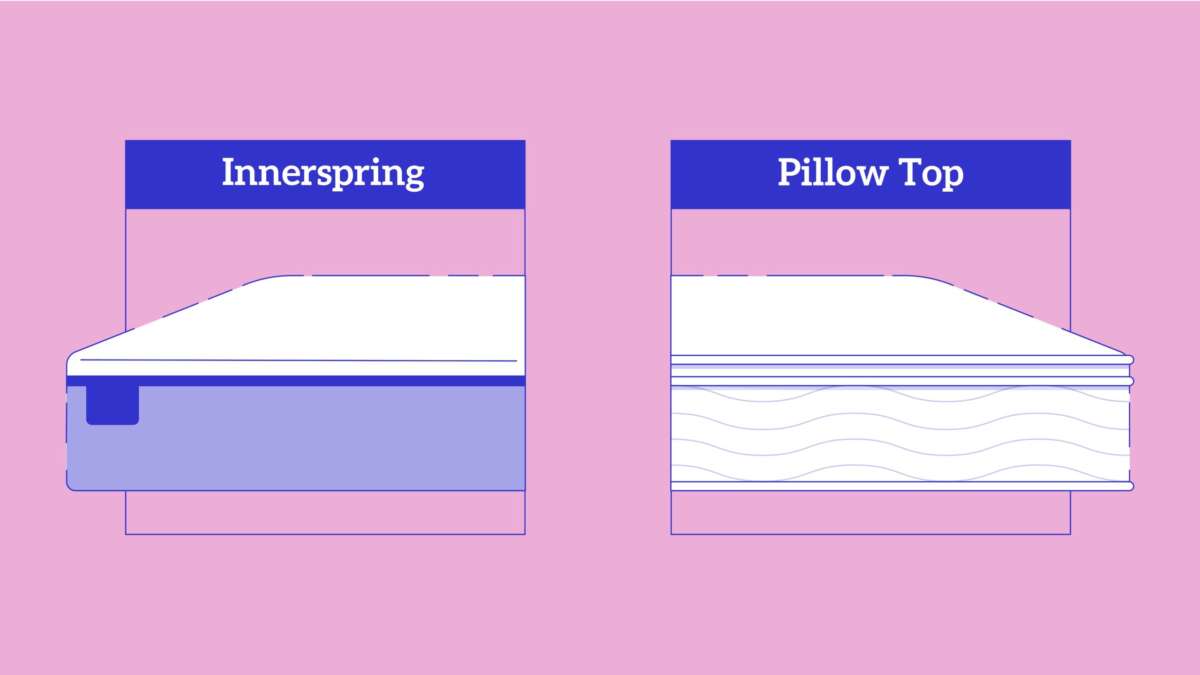
Pillow Top vs Euro Top
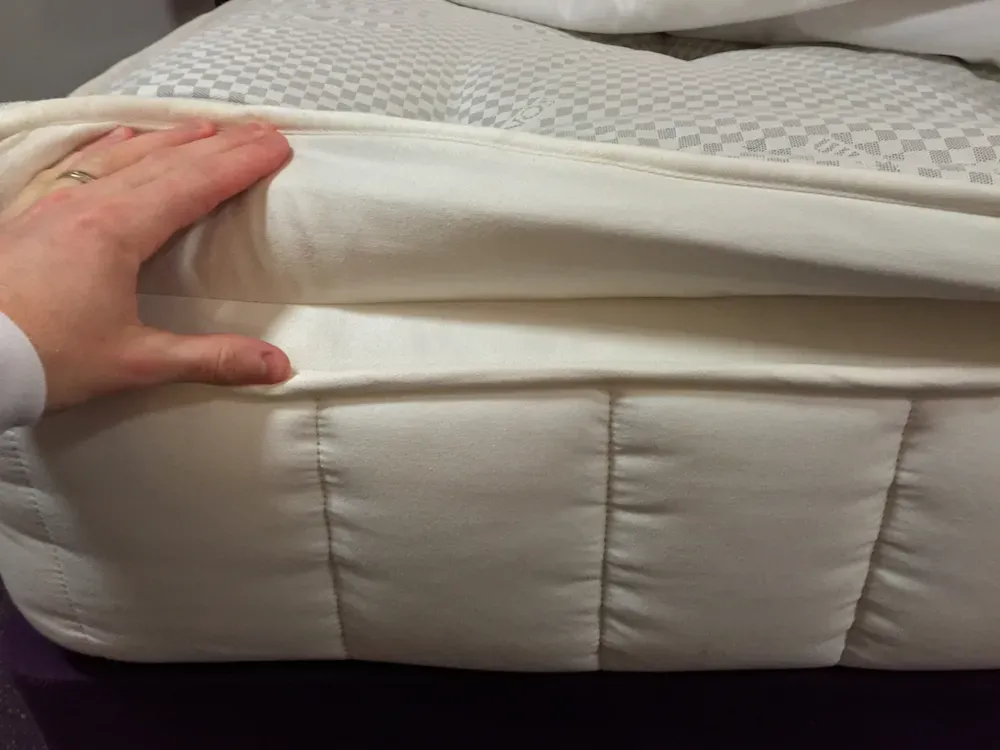
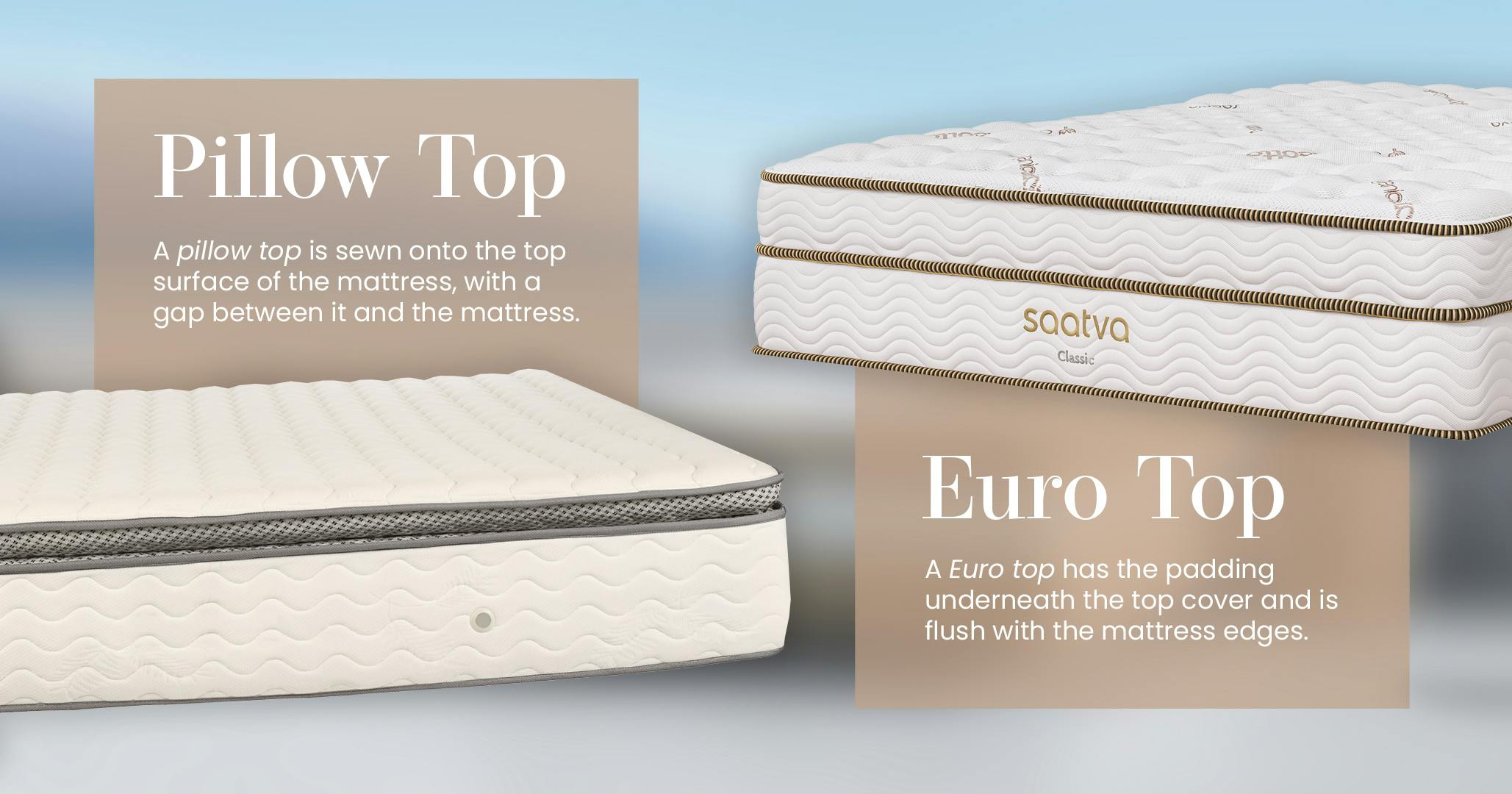
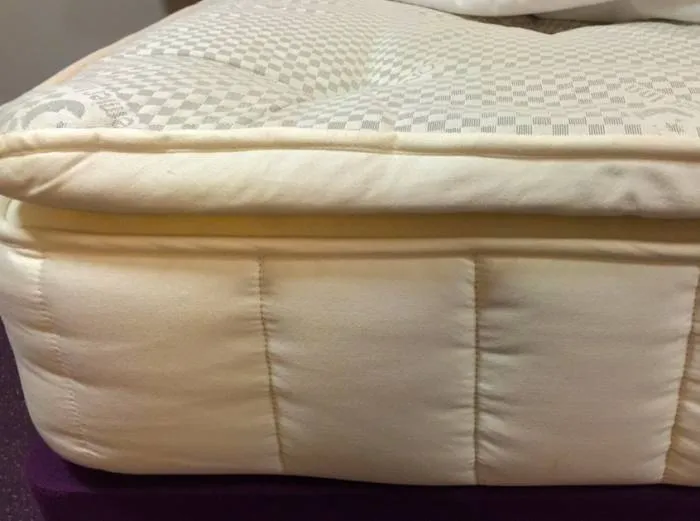
A pillow top has a separate, rounded layer sewn on top of the mattress. You can often see a raised edge where the comfort layer meets the mattress cover.
A Euro top also adds cushioning, but the padding is sewn flush with the mattress edges. This creates a cleaner, more solid appearance. Euro tops may also resist edge compression better because the padding reaches the border.
Neither design is always better. The materials inside matter more than the label. A well made pillow top can outlast a poorly made Euro top, and the reverse can also be true.
Here is a simple comparison:
• Pillow top: A visibly raised, softer surface with a separate cushioned layer
• Euro top: A flatter, squared off design with padding tucked into the mattress edge
• Both: Available in foam, latex, fiber, hybrid, and innerspring models
• Main buying factor: Material quality, support, firmness, and construction
When deciding what’s a pillow top mattress compared with a Euro top, focus on how the mattress feels and how well it supports your body. The name alone does not predict comfort or durability.
Benefits of a Pillow Top Mattress
A pillow top can be a strong choice for sleepers who value surface softness. It may also help reduce discomfort in common pressure areas.
Pressure Relief
Extra padding can cushion the shoulders, hips, knees, and lower back. This may feel helpful for side sleepers, who often place more pressure on their shoulders and hips.
Pressure relief does not mean the mattress should allow your body to collapse. Your spine should remain in a fairly neutral position. If your hips sink much lower than your shoulders, the mattress may be too soft.
Comfortable Surface Feel
Pillow tops create a soft first impression. They can make a firm support core feel more inviting without removing all of its support.
For many sleepers, this balance feels like lying on a padded surface rather than directly on a firm slab. That comfort can make it easier to relax at bedtime.
Reduced Motion Transfer
A foam based pillow top may absorb movement. This can help if your partner turns, gets up, or changes position during the night.
Motion control depends on the whole mattress. A thick comfort layer may help, but a bouncy coil system can still transfer some movement across the bed.
Good Choice for Side Sleepers
Many side sleepers prefer a cushioned surface because it can fill the space between the waist and the mattress. This helps reduce pressure on the shoulder and hip.
However, side sleepers still need enough support to keep the spine aligned. A very soft pillow top may feel comfortable at first but cause soreness if the body sinks too far.
Warm, Cozy Feel
Some pillow tops have a plush, comfortable feel that reminds people of a padded hotel bed. Materials such as wool and breathable cotton can also create a pleasant sleep surface.
If you sleep hot, choose the materials carefully. Thick memory foam and dense synthetic fibers may hold more heat than latex, wool, or a breathable coil design.
Drawbacks of a Pillow Top Mattress
A pillow top is not perfect for every sleeper. Its main limitations involve durability, heat, movement, and support.
It May Sag Over Time
Soft materials can compress under repeated body weight. This is more likely when the pillow top uses low density foam or loose fiberfill.
A permanent dip can cause uneven support and back discomfort. Rotate the mattress if the manufacturer allows it, use a strong foundation, and avoid sitting on the same edge each day.
It Can Feel Too Soft
People who sleep on their stomach or prefer a firm surface may find a plush pillow top uncomfortable. Too much sinking can make it harder to keep the pelvis level.
When testing a mattress, lie in your usual sleep position for at least 10 minutes. A quick sit on the edge does not show how your spine will feel after several hours.
It May Sleep Warm
Some thick pillow tops reduce airflow around the body. Memory foam can be especially warm for some sleepers, though modern designs vary.
Cooling claims should be viewed with care. A cover may feel cool when you first lie down, but long term temperature depends on the foam, room, bedding, body type, and airflow.
It Can Be Harder to Move On
Deeply cushioned pillow tops may make it harder to change positions. This can matter for people with limited mobility or those who prefer a responsive mattress.
Latex and spring based designs usually make movement easier than deeply contouring foam. Again, the whole construction matters.
It May Need Special Sheets
A thick pillow top can increase mattress height. Standard fitted sheets may not reach the corners securely.
Measure the mattress depth before buying bedding. Deep pocket sheets are often needed for tall pillow top models.

Is a Pillow Top Mattress Good for Your Sleeping Position?
Your sleeping position is one of the best ways to judge whether a pillow top will work for you.
Side Sleepers
Side sleepers often benefit from moderate cushioning. The pillow top can reduce pressure on the shoulder and hip while helping the body rest more comfortably.
Choose a medium soft to medium feel rather than the softest option if you have a larger body size or need stronger support.
Back Sleepers
Back sleepers usually need a balance of cushioning and support. A pillow top can support the natural curve of the lower back if it does not allow the pelvis to sink too deeply.
A medium or medium firm model often works well. Your lower back should feel supported, not pushed upward or left without support.
Stomach Sleepers
Stomach sleepers often need a firmer surface. A thick, soft pillow top may allow the abdomen and hips to sink, which can strain the lower back.
If you sleep on your stomach, consider a thinner comfort layer over a firm support core. A hybrid or responsive latex design may provide a better balance.
Combination Sleepers
Combination sleepers change positions during the night. They often need pressure relief plus easy movement.
A medium feel with latex, responsive foam, or pocketed coils may work better than a very deep memory foam pillow top.

How to Choose the Best Pillow Top Mattress
Shopping for a pillow top mattress requires more than pressing your hand into the surface. Use the following steps to compare models.
-
Check the support core. Look for a strong coil, foam, or latex base that suits your body size and sleep position.
-
Identify the comfort materials. Ask whether the pillow top uses memory foam, latex, wool, cotton, polyester, or a blend.
-
Look for foam density. Higher density foam often resists compression better, though it may feel firmer and warmer.
-
Test spinal alignment. Lie in your normal position and check whether your hips sink too far.
-
Consider edge support. Strong edges can make it easier to sit down, stand up, and use the full mattress surface.
-
Review the trial period. A home trial gives your body time to adjust. The first night does not always reveal long term comfort.
-
Read the warranty carefully. Check what counts as a defect, how deep a dip must be, and whether the foundation must meet certain rules.
-
Confirm the foundation. A weak or flexible base can reduce support and damage the mattress.
-
Compare total cost. Include the mattress, foundation, sheets, delivery, removal fees, and possible return charges.
A good return policy is especially useful because comfort is personal. The best pillow top for one person may feel too soft, too warm, or too slow for another.

How Long Does a Pillow Top Mattress Last?
A pillow top mattress may last about six to ten years, but lifespan varies widely. Materials, body weight, sleep habits, mattress care, and construction quality all affect durability.
The pillow top often shows wear before the support core does. This means a mattress can still have working coils but feel uncomfortable because the surface has compressed.
Signs that it may be time to replace the mattress include:
• A visible or noticeable body impression
• New pain or stiffness after sleeping
• Uneven support across the surface
• Increased tossing and turning
• Sagging near the edges
• Waking when your partner moves
• A mattress that no longer feels comfortable after a fair adjustment period
My practical rule is simple: do not judge only by age. If the mattress still supports you and feels comfortable, it may have useful life left. If it causes pain or poor sleep, age is less important than performance.

How to Care for a Pillow Top Mattress
Proper care can help preserve comfort and reduce uneven wear.
• Use the correct foundation and follow the manufacturer’s spacing rules.
• Rotate the mattress if the care instructions allow it.
• Use a breathable, washable mattress protector.
• Avoid jumping on the bed.
• Do not fold or bend the mattress unless the manufacturer says it is safe.
• Keep pets from repeatedly standing on one small area.
• Let the mattress air out after unpacking it.
• Clean spills quickly with a small amount of mild cleaner and limited moisture.
Many modern mattresses are designed to remain in one position, so do not flip a one sided pillow top unless the manufacturer specifically recommends it. Flipping can place the support layers in the wrong order and damage the comfort surface.
One mistake I often see is using a poor foundation under a good mattress. The bed may feel soft and unstable, and the owner may blame the mattress. Always check the base before deciding that the mattress has failed.
Who Should Buy a Pillow Top Mattress?
A pillow top may suit you if you want a soft surface but still need support underneath. It is often a good match for side sleepers, people with pressure sensitive joints, and sleepers who enjoy a plush hotel bed feel.
It may not be ideal if you sleep on your stomach, dislike sinking, sleep very hot, or need strong mobility on the mattress. People with back pain should also be careful. A pillow top may help by reducing pressure, but excessive softness can worsen discomfort for some sleepers.
If you share a bed, consider both partners’ needs. A medium hybrid pillow top can offer a useful middle ground between softness, support, and movement control.
For people with ongoing or severe pain, a mattress cannot replace medical care. A health professional can help identify whether pain comes from sleep posture, an injury, or another condition.
What’s a Pillow Top Mattress: Common Buying Mistakes
The biggest mistake is choosing based only on softness. A mattress can feel wonderfully plush for five minutes and still provide poor alignment during a full night.
Other common mistakes include:
• Buying without checking the return policy
• Assuming a higher price guarantees better quality
• Ignoring mattress height and sheet fit
• Trusting “cooling” labels without checking the materials
• Choosing the softest model without considering sleep position
• Failing to use the recommended foundation
• Expecting a pillow top to fix an unsuitable support core
In my experience comparing mattresses, the most useful test is not the first impression. It is whether your body feels supported after several nights and whether you wake without new aches. Comfort should feel steady, not merely impressive in a showroom.
Frequently Asked Questions About What’s a Pillow Top Mattress
Is a pillow top mattress the same as a soft mattress?
No. A pillow top describes an added cushion layer, while softness describes the overall feel. A pillow top can be soft, medium, or relatively firm depending on its materials and support core.
Are pillow top mattresses good for back pain?
They may help some people by reducing pressure, but they can also worsen pain if the hips sink too far. Choose a model that cushions your body while keeping your spine in a neutral position.
Can you flip a pillow top mattress?
Most modern pillow top mattresses are one sided and should not be flipped. You may be able to rotate the mattress, but always follow the manufacturer’s care instructions.
Do pillow top mattresses sag?
They can sag when soft materials compress, especially if the mattress uses low quality foam or fiberfill. A strong foundation, proper care, and durable materials may reduce the risk.
Are pillow top mattresses good for side sleepers?
Yes, many side sleepers like them because the extra padding cushions the shoulders and hips. The mattress should still provide enough support to prevent the waist and pelvis from sinking too deeply.
Do pillow top mattresses sleep hot?
Some do, especially those with thick, dense memory foam. Breathable covers, latex, coils, wool, and good bedroom airflow may help, but no cooling feature guarantees a cool sleep for every person.
How often should you replace a pillow top mattress?
Many last about six to ten years, though some fail sooner and others last longer. Replace it when it loses support, develops a lasting dip, or causes poor sleep, regardless of its exact age.
Conclusion
A pillow top mattress is a standard mattress with an added layer of cushioning sewn to its surface. It can provide pressure relief, a plush feel, and better comfort for many side sleepers, but it may also sag, sleep warm, or feel too soft.
The best choice depends on your sleep position, body needs, preferred firmness, materials, foundation, and return policy. Now that you understand what’s a pillow top mattress, compare the support core and comfort layers instead of judging the surface alone. Test your options carefully, read the warranty, and explore more mattress guides before making your purchase.

Appliance Review Expert
Lucas Ramirez is a trusted voice at HomeFixGrid.com, known for his clear, practical, and creatively written guides that simplify appliance care for everyday homeowners. With a strong focus on hands-on testing and real-world problem-solving, Lucas brings expert insight into appliance reviews and troubleshooting techniques. Her work empowers readers to confidently maintain, repair, and choose the right appliances for their homes.