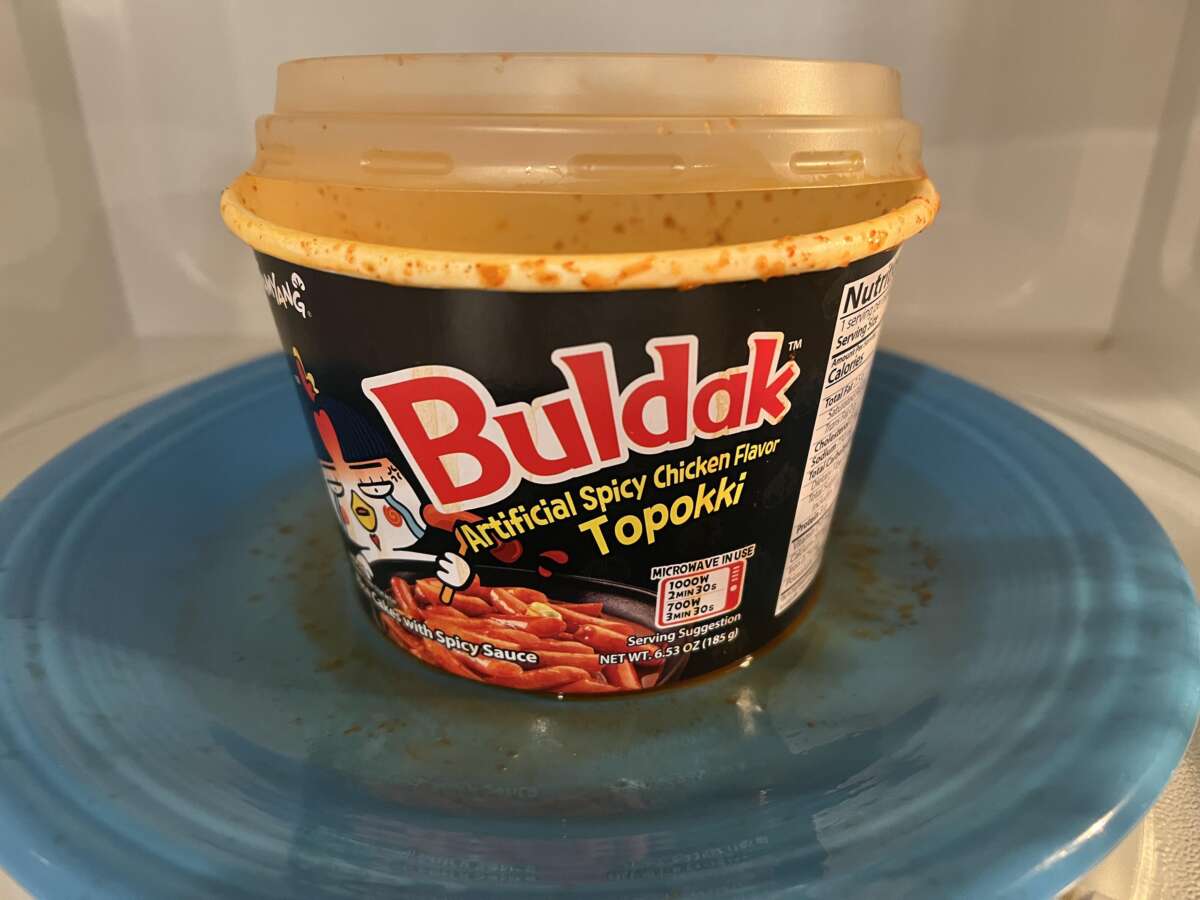
Can I Microwave Buldak Ramen Cup: The 2026 Safety Guide
No, you should not microwave your Buldak ramen cup because the container is not designed to withstand heat.
I have spent years perfecting my spicy noodle game, and I have seen many people make the mistake of trying to speed up their meal by throwing the whole cup into the microwave. I speak from experience. I once melted the bottom of a cup and nearly spilled hot, spicy broth across my counter. That taught me to respect packaging as much as the sauce. In this guide I explain why you should avoid microwaving your Buldak (Samyang Hot Chicken Flavor) cup and show safe, fast alternatives to get the same great taste without the risk.

Why Microwaving Your Buldak Ramen Cup Is Risky
The main reason is the cup material. Most Buldak cup packages use paper or thin plastic with an inner lining. They are made to hold boiling water poured in. They are not made for direct microwave heating. Microwaves heat food using high-frequency waves. That can cause uneven hot spots. Thin liners or foam can warp, soften, or melt. When that happens, chemicals can leach into your noodles or broth.
Some common risks to know:
- Plastic lining may soften or melt under microwave heat.
- Paper cups with plastic or wax coating can delaminate.
- Foam cups (polystyrene) can deform and produce styrene residues.
- Uneven heating can cause pockets of steam that rupture the cup.
- In extreme cases, the cup can char or burn if the moisture is low.
From a safety view, manufacturers usually mark the package as not microwave safe. Ignoring that label risks both a mess and your health. Melting plastic can change taste and may add unwanted chemicals to the broth. I have seen bottoms turn soft like wax. It spills and stinks. That was enough for me to stop microwaving cup ramen for good.
Common cup materials and what they mean
Here are the typical materials you’ll see and the issues each can cause:
- Polystyrene foam (Styrofoam): Lightweight and cheap. It can melt or release styrene when overheated.
- Paper with plastic lining: Holds hot water fine, but the lining can separate or soften in a microwave.
- Thin plastic (PP or PET): Some are microwave-safe, but many cup linings are not rated for direct microwave exposure.
- Aluminum elements: Rare in cups, but any metal in the microwave can spark and cause a fire.
When in doubt, follow the package instructions. They know the materials used.
Health and safety context
Regulatory agencies, including food-safety bodies, recommend using containers labeled microwave-safe. Some plastics are made to withstand heat. Others are not. Chemicals like BPA, phthalates, or styrene can be a concern if materials degrade. Avoid risking contamination by using the right container and method.
The Proper Way to Prepare Buldak Ramen
If you want perfect texture and full flavor, use hot water from a kettle or the stovetop. For cup ramen, the intended method is to pour boiling water in and let the noodles steep. This rehydrates the noodles evenly. It keeps the cup intact. It also avoids chemical risks from microwave heating.
Follow these steps for the best result:
- Boil water using a kettle or a pot on the stove until it reaches a rolling boil.
- Open the lid of the Buldak ramen cup halfway and remove the sauce packets inside.
- Pour the boiling water up to the marked fill line inside the cup.
- Close the lid securely and let the noodles sit for about four to five minutes.
- Drain the excess water carefully through the provided drainage holes if you are making the stir-fry variety.
- Add your spicy sauce packet, stir well, and enjoy your meal.
Quick stovetop method (for better texture)
If you want chewier, more even noodles, use a small pot:
- Bring water to a boil in a pot.
- Add the dry noodles and cook 2–3 minutes, stirring gently.
- Drain most water if you want stir-fry-style noodles. Leave some if you prefer soup.
- Mix in the sauce packets and any extras.
This method gives you control over texture and temperature. It is my go-to when I want the noodles just right.
Safe bowl and microwave workaround
If you must use a microwave, do not heat the original cup. Transfer the noodles and water to a microwave-safe glass or ceramic bowl. Heat the water separately in the microwave, then pour it over the noodles. Use a microwave-safe cover or plate to avoid splatter. Stir well and check the temperature before eating.
How to reheat leftovers safely
Leftover Buldak? Reheat like this:
- Put noodles in a microwave-safe bowl.
- Add a splash of water to prevent drying.
- Heat in 30–45 second bursts, stirring between bursts.
- Bring to the desired temperature. Do not overheat the sauce; it can burn.
This keeps texture and flavor intact while avoiding damaged packaging.

Frequently Asked Questions of can i microwave buldak ramen cup
Is it ever safe to microwave the Buldak cup?
No, it is never safe to microwave the cup provided by the manufacturer. The materials used are not heat-resistant for microwave use and can melt or release harmful substances into your food.
Can I transfer the noodles to a bowl and then microwave them?
Yes, you can safely transfer the dry noodles into a microwave-safe ceramic or glass bowl. Add water to that bowl and heat it in the microwave, but never use the original foam or paper cup.
Will the cup melt immediately if I put it in the microwave?
It might not melt instantly, but the heat will cause the plastic lining to degrade or soften quickly. This creates a high risk of spilling boiling hot liquid and contaminating your food with chemicals.
What should I do if I accidentally microwaved the cup?
If you accidentally microwaved your Buldak ramen cup, it is best to discard the meal entirely. You cannot be sure if plastic particles or chemicals have leached into the broth during the heating process.
Why do some other ramen brands allow microwaving?
Some specific brands use specialized microwave-safe containers designed to handle high temperatures. Always check the labels on the specific package you are using rather than assuming all ramen cups have the same construction.
Conclusion
Knowing how to prepare your Buldak ramen matters. Follow the boiling-water method to protect the cup and your health. Use a kettle or the stovetop for best results. If you must microwave, transfer to a microwave-safe bowl first. These small steps keep your meal tasty and safe. They also protect you from messy spills and possible chemical contamination.
Now that you know the facts, take a moment to look at your next package of spicy noodles and follow the steps provided for a perfect experience. If you found this information helpful, feel free to share these tips with a fellow noodle enthusiast or leave a comment below about your favorite way to customize your spicy ramen!

Appliance Review Expert
Lucas Ramirez is a trusted voice at HomeFixGrid.com, known for his clear, practical, and creatively written guides that simplify appliance care for everyday homeowners. With a strong focus on hands-on testing and real-world problem-solving, Lucas brings expert insight into appliance reviews and troubleshooting techniques. Her work empowers readers to confidently maintain, repair, and choose the right appliances for their homes.