
How To Make Popcorn In Air Fryer: Easy Crispy Guide
You can make popcorn in an air fryer, but only when your model’s manual allows loose kernels.
Learning how to make popcorn in air fryer can save time, but it also requires care. Air fryers use strong moving air and an exposed heating element, so popcorn does not behave like it does in a pot. This guide explains the safest method, the right temperature, common mistakes, and when another cooking method is the better choice.
Can You Make Popcorn in an Air Fryer?
Yes, some air fryers can pop popcorn, but the method has limits. A basket-style air fryer may blow kernels around before they heat evenly. Some kernels can also reach the heating coil, where they may burn or create smoke.
Before trying how to make popcorn in air fryer, check your owner’s manual. If the manufacturer warns against loose food near the heating element, do not use the appliance for popcorn. A countertop air fryer oven with a covered popcorn accessory is often a safer choice than a small open basket.
Air-fryer popcorn also tends to pop in smaller batches. The hot air must reach the kernels, but the kernels should not be able to escape the basket or touch the coil.

What You Need
Keep the ingredient list simple. You do not need special popcorn oil or a complex seasoning mix.
• ¼ cup popcorn kernels
• 1 teaspoon neutral oil, such as avocado, canola, or vegetable oil
• Salt or other seasoning, added after cooking
• A heat-safe air fryer accessory approved for your model, if required
Use fresh kernels when possible. Old kernels lose moisture, and that moisture creates the steam needed to make them pop. Very dry kernels may stay hard, even when the outside becomes hot.
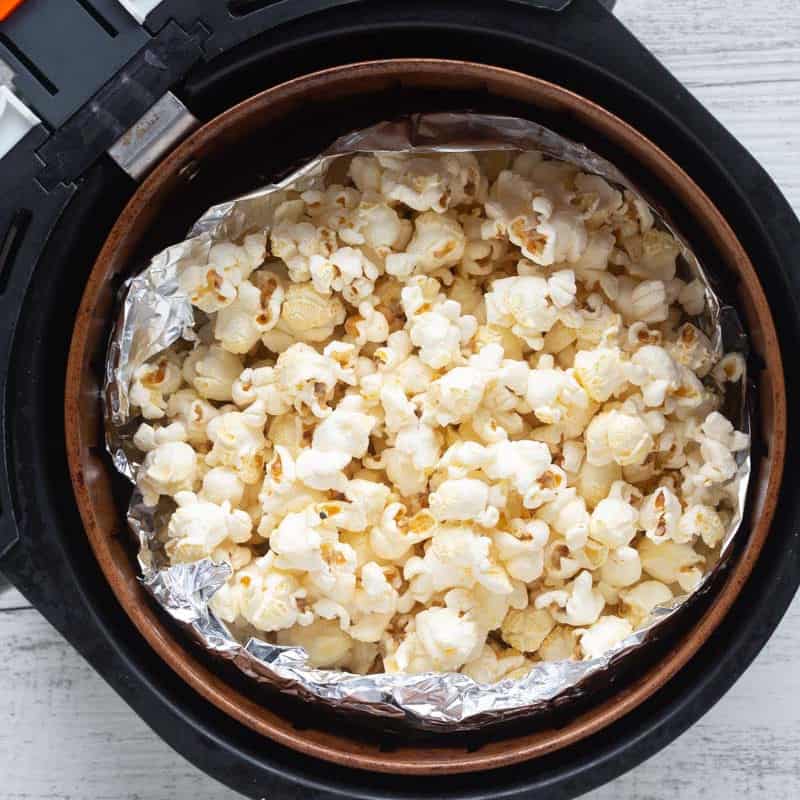
Do not use a glass bowl, sealed container, paper bag, or loose foil packet inside the air fryer. These items may block airflow, tip over, trap steam, or move into the heating element.
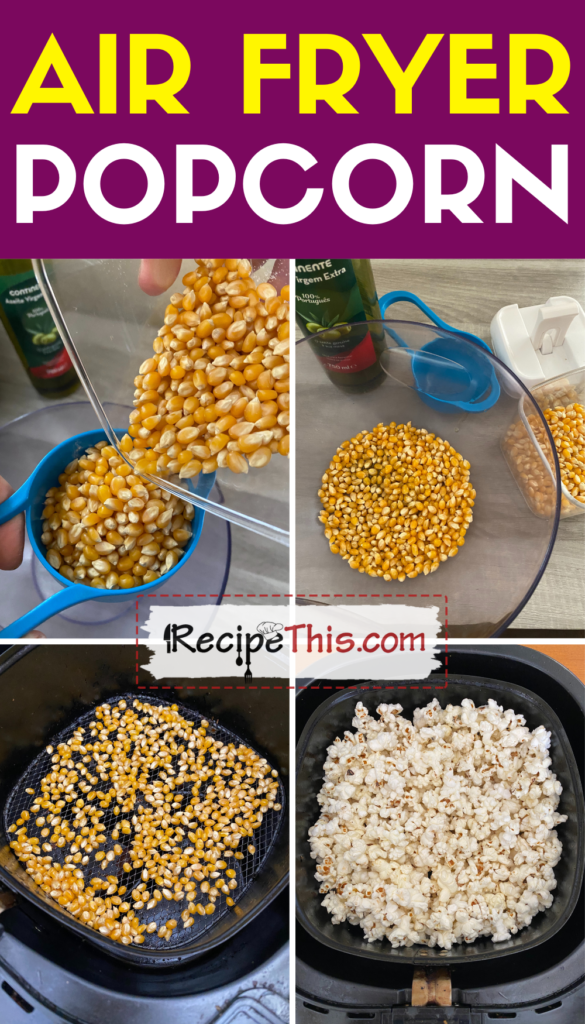
How to Make Popcorn in Air Fryer
Follow these steps only if your air fryer manual permits popcorn or loose kernels. Stop the appliance at once if you see smoke, smell burning, or notice kernels near the heating coil.
-
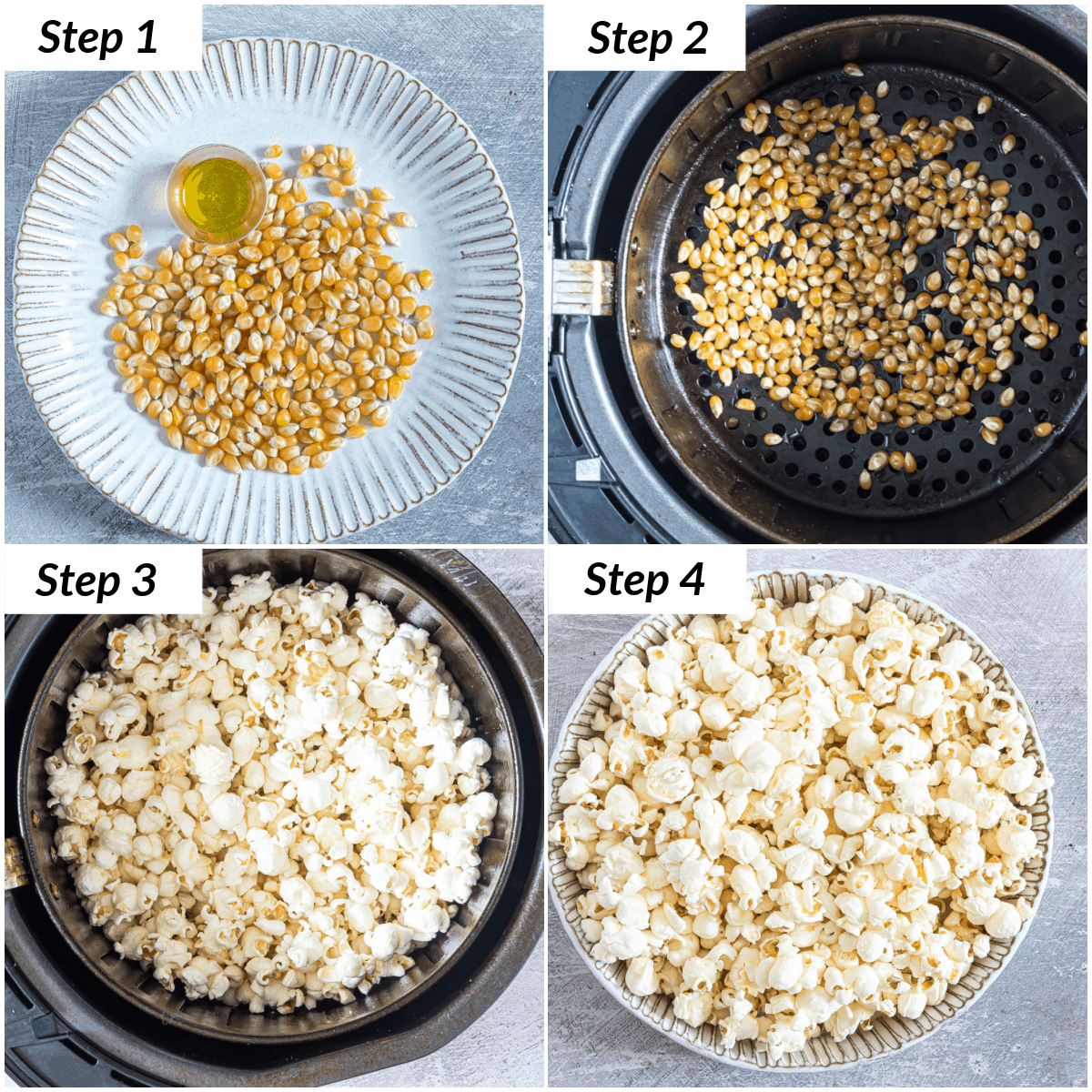
Preheat the air fryer to 400°F for 3 minutes.
-
Toss the popcorn kernels with 1 teaspoon of oil. The oil helps seasonings stick, but too much oil can create smoke.
-
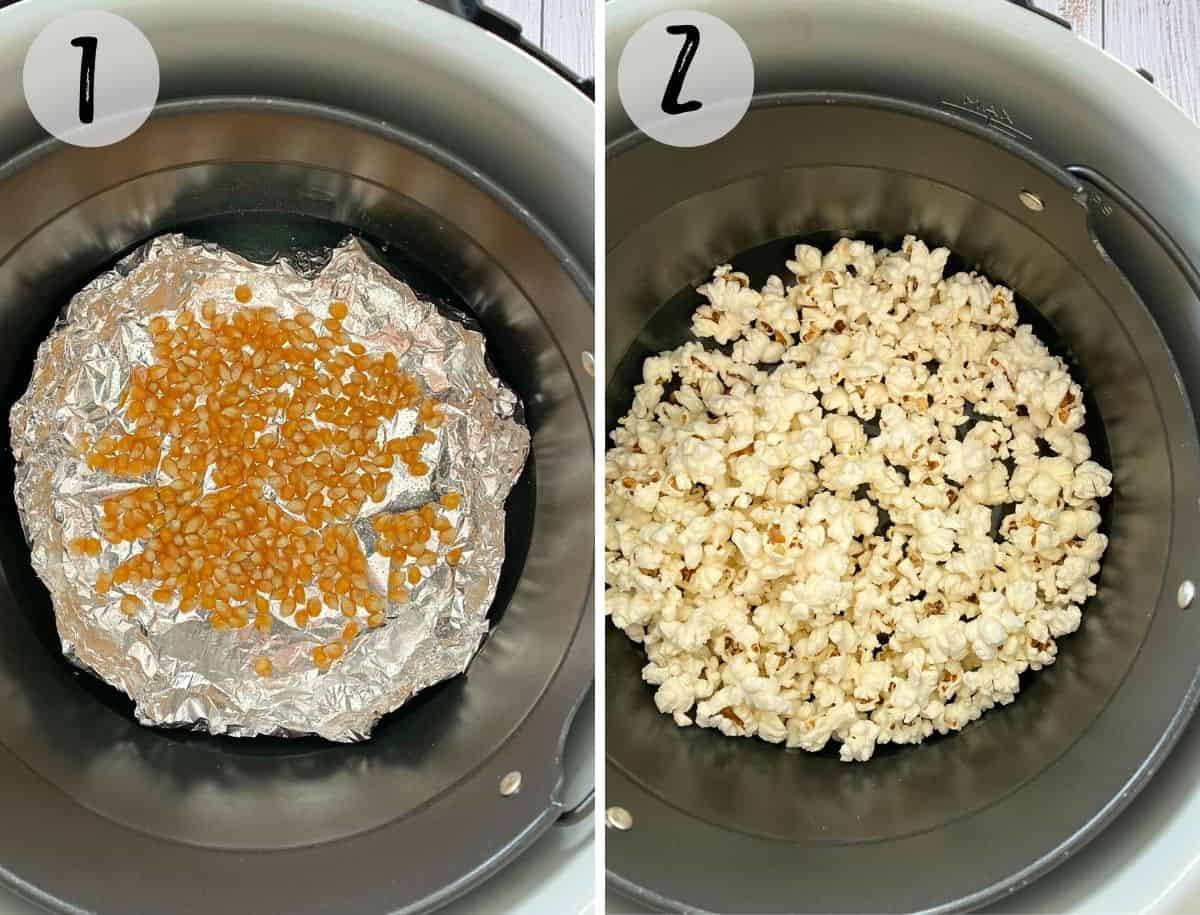
Place the kernels in an approved covered accessory or a secure cooking insert. Keep the layer shallow so the hot air can circulate.
-
Cook at 400°F for 5 to 8 minutes. Stay close and listen for the popping.
-
Turn off the air fryer when pops slow to about 2 seconds apart. Do not wait for every kernel to pop.
-
Carefully remove the accessory. It will be very hot.
-
Season the popcorn in a large bowl. Add salt, melted butter, nutritional yeast, chili powder, or another topping.
Cooking time can vary by air fryer size, wattage, basket design, and kernel freshness. The first batch is a test. Write down what worked, then adjust the time by 30-second steps.
The most common mistake is walking away. Popcorn can go from quiet to smoky in less than a minute. Keep the basket closed during cooking, but monitor the sound and stop early when popping slows.
The Best Temperature and Cooking Time
A temperature near 400°F gives kernels the heat they need to release steam. However, the highest setting is not always best for every appliance. Some air fryers run hotter than their display suggests.
Start with this guide:
• 380°F: Cook for about 7 to 10 minutes, with a lower risk of rapid browning.
• 400°F: Cook for about 5 to 8 minutes, which is the most common starting range.
• 350°F: Cook for about 10 to 14 minutes, though some kernels may not heat well.
Do not judge the batch by time alone. The sound of the pops is more useful than the clock. Once the pauses become longer, turn off the machine.
A few unpopped kernels are normal. Trying to pop every kernel may burn the popcorn that has already finished. This is true whether you are making popcorn in an air fryer, on the stove, or in a microwave.
How Much Popcorn Should You Use?
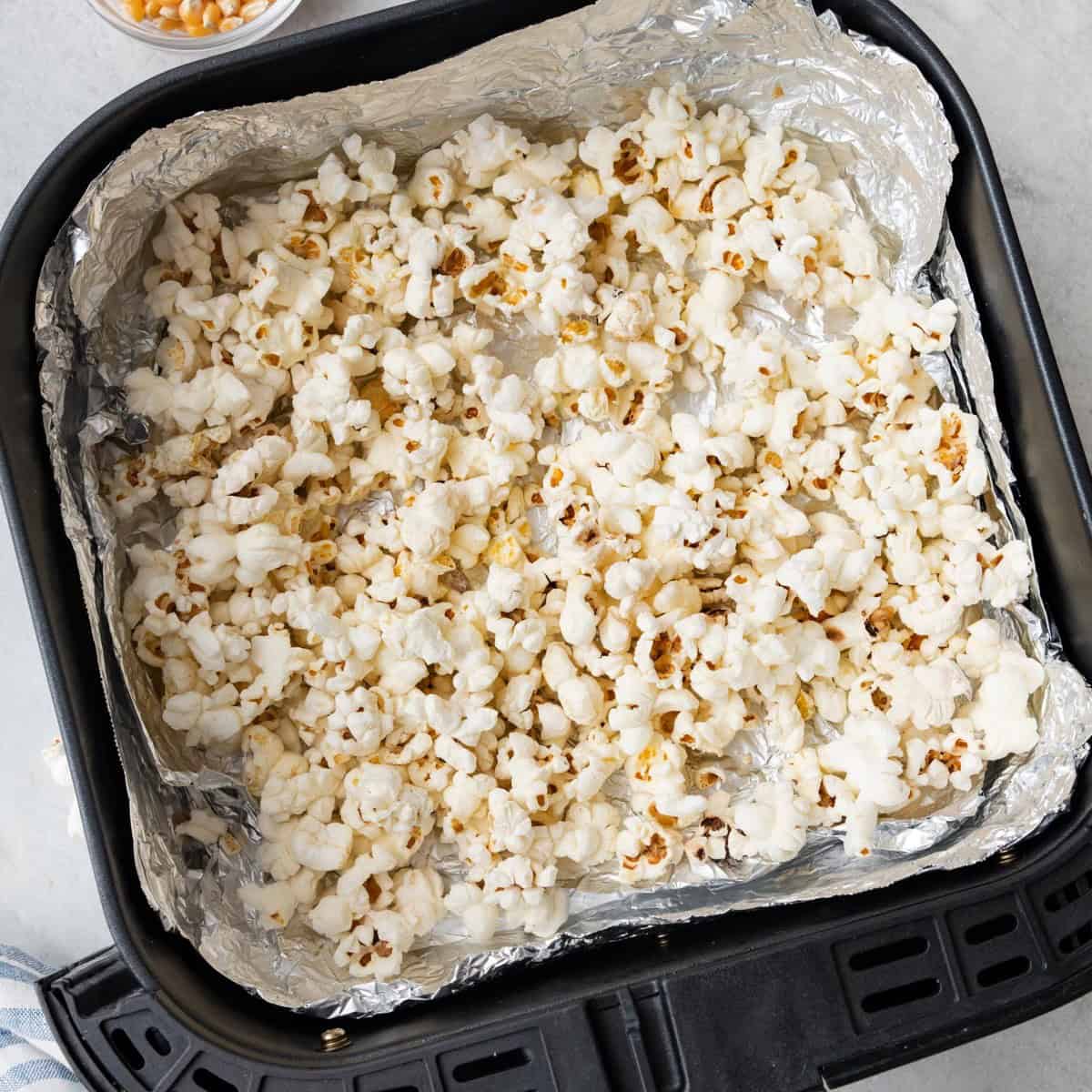
Use no more than ¼ cup of kernels for a small air fryer. Kernels expand several times as they pop, and a full basket can become crowded quickly.
A crowded basket causes three problems:
• Air cannot move freely around the kernels.
• Popped corn can block the heat and airflow.
• The fan may push pieces toward the heating element.
For a larger air fryer oven, you may be able to use more kernels, but follow the accessory’s capacity limit. Start with a small batch until you understand how your machine behaves.
If your air fryer has a narrow basket, 2 to 3 tablespoons may work better than ¼ cup. A smaller batch gives the kernels more room and makes it easier to remove the popcorn before it burns.
Why Air Fryer Popcorn May Not Work
Air fryers are designed to circulate hot air around food. They are not designed to create the steady, enclosed heat that popcorn needs. This difference explains why results can be mixed.
Here are the main causes of poor results:
• The kernels are too old or dry.
• The air fryer does not get hot enough.
• The fan blows kernels away from the hot surface.
• The basket has large holes.
• The kernels are spread too thinly.
• The cooking chamber allows popped corn to touch the heating element.
• The appliance manual does not support this use.
If most kernels remain unpopped, do not simply increase the cooking time. The popcorn may burn before the remaining kernels reach the right temperature. Instead, try fresher kernels, a smaller batch, or a safer cooking method.

Air Fryer Popcorn Safety Tips
Safety matters more than a perfect batch. Popcorn kernels are light, and the fan inside an air fryer can move them in unexpected ways.
Use these precautions:
• Read the air fryer manual before cooking loose kernels.
• Never leave the appliance unattended.
• Keep the air fryer on a stable, heat-safe surface.
• Do not cover the entire basket with foil.
• Do not place kernels directly beneath an exposed heating coil.
• Do not use oil that smokes easily at high heat.
• Keep children away from the hot basket and popping sounds.
• Stop cooking if you see smoke or smell burning.
• Unplug the appliance after use if smoke or overheating occurs.
Air fryer manufacturers commonly warn users not to place lightweight foods near the heating element. This warning applies to popcorn because popped kernels can lift into the upper part of the cooking chamber.
If your model does not clearly support popcorn, use a stovetop pot instead. A covered pot gives you better control and avoids sending loose kernels into a fan and heating coil.
How to Season Air Fryer Popcorn
Season the popcorn after it finishes cooking. Adding salt before popping can make the seasoning fall through the basket. It can also make cleanup harder.
For even flavor, toss the hot popcorn with a small amount of melted butter or oil. Add seasoning in stages rather than pouring it all in at once.
Try these combinations:
• Classic: Melted butter and fine salt
• Cheddar-style: Nutritional yeast, garlic powder, and salt
• Spicy: Chili powder, smoked paprika, and a pinch of cayenne
• Sweet and salty: A little cinnamon, sugar, and fine salt
• Ranch-style: Dried parsley, onion powder, garlic powder, and powdered buttermilk
Fine salt sticks better than coarse salt. If you use liquid butter, start with a teaspoon, toss well, and add more only if needed. Too much butter can make popcorn soft instead of crisp.

How to Keep Popcorn Crisp
Freshly popped popcorn can become chewy when steam gets trapped. Move it to a wide bowl as soon as cooking ends. Do not leave it in the warm air fryer basket.
Let the popcorn cool for a few minutes before storing it. If you add butter, eat the popcorn soon because moisture from the butter can soften it.
For storage, use an airtight container at room temperature. Popcorn usually tastes best within one or two days. If it becomes soft, spread it on a baking sheet and warm it briefly at 250°F, watching it closely.
Avoid storing popcorn in the refrigerator. Cold air and moisture can reduce its crisp texture.
Air Fryer Popcorn Compared With Other Methods
Learning how to make popcorn in air fryer is useful, but it is not always the easiest method. Each cooking option has clear strengths.
Air fryer
Air fryer popcorn can work with the right model and accessory. It uses little oil, but it may produce an uneven batch and carries a heating-element risk.
Stovetop
A covered pot is usually the most reliable method. You can shake the pot, control the heat, and see how quickly the kernels are popping.
Microwave
Microwave popcorn is convenient and needs no cookware. However, packaged varieties may contain more salt, fat, or flavor additives than plain kernels.
Electric popcorn maker
A hot-air popper is made for this task. It is often the simplest choice when you want plain popcorn with little or no oil.
For most homes, the stovetop or a dedicated popcorn maker gives more predictable results than a standard basket air fryer.
Common Mistakes to Avoid
Small errors can ruin popcorn or create a safety problem. Keep these lessons in mind when learning how to make popcorn in air fryer.
• Using too many kernels: The popcorn may overflow and block airflow.
• Adding too much oil: Excess oil can smoke at high heat.
• Cooking until every kernel pops: The finished popcorn may burn.
• Using a loose foil pouch: The fan may move it or the foil may block airflow.
• Walking away: Popping can speed up quickly.
• Using a basket with wide holes: Kernels may fall through or move toward the coil.
• Seasoning too early: Salt can fall away, and wet toppings can make the popcorn soggy.
• Ignoring the manual: The manufacturer’s instructions take priority over online recipes.
A careful first batch teaches you more than a fixed recipe. Air fryers vary widely, so use the method as a starting point rather than a guarantee.
Frequently Asked Questions About How to Make Popcorn in Air Fryer
Can you put popcorn kernels directly in an air fryer?
Only if the manufacturer allows it and the kernels can stay safely away from the heating element. A covered, approved accessory is safer than placing loose kernels in an open basket.
What temperature is best for popcorn in an air fryer?
A temperature of 380°F to 400°F is a reasonable starting range for models that support this use. Watch and listen closely because air fryers differ in actual heat and airflow.
How long does it take to make popcorn in an air fryer?
It often takes about 5 to 10 minutes at 400°F. Stop when the pops slow to about 2 seconds apart, rather than waiting for every kernel to pop.
Why are my popcorn kernels not popping in the air fryer?
The kernels may be old, too far from the heat, or constantly moved by the fan. Try fresher kernels, a smaller batch, or use a stovetop pot for more reliable heat.
Is air fryer popcorn safe?
It can be safe when the appliance manual permits it, the kernels are contained, and the machine is watched during cooking. Do not use this method if kernels can reach the heating coil or if the manufacturer warns against it.
Can you use oil when making popcorn in an air fryer?
You can use a small amount of high-heat oil if your air fryer instructions allow it. About 1 teaspoon is usually enough for ¼ cup of kernels, but oil is not required for popping.
Can you make microwave popcorn in an air fryer?
No. Microwave popcorn bags are designed for microwave energy, not air-fryer airflow and direct heat. Use plain kernels in an approved setup instead.
Conclusion
How to make popcorn in air fryer starts with safety, not seasoning. Check the manual, use a small batch, choose an approved covered accessory, cook near 400°F, and stop when the popping slows. Because air fryers vary, your first batch should be treated as a careful test.
If your air fryer cannot contain the kernels safely, choose a stovetop pot or dedicated popcorn maker instead. Try the method that fits your appliance, share your favorite seasoning, and leave a comment with what worked for you.

Appliance Review Expert
Lucas Ramirez is a trusted voice at HomeFixGrid.com, known for his clear, practical, and creatively written guides that simplify appliance care for everyday homeowners. With a strong focus on hands-on testing and real-world problem-solving, Lucas brings expert insight into appliance reviews and troubleshooting techniques. Her work empowers readers to confidently maintain, repair, and choose the right appliances for their homes.