How Wide Are French Door Refrigerators: Size Guide
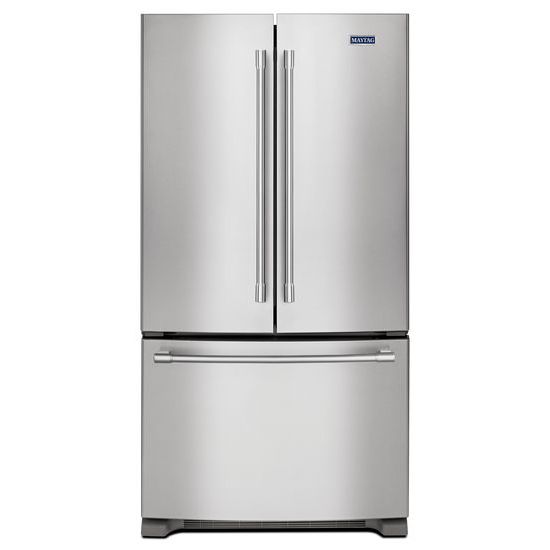
Most French door refrigerators are 30 to 36 inches wide, with many standard models measuring about 36 inches.
Knowing how wide are French door refrigerators helps you avoid a costly delivery problem. The listed width is only one part of the fit. You also need to check the cabinet opening, door swing, handles, wall space, and the path into your home. This guide explains common refrigerator widths, how to measure correctly, and what to check before you buy.
How wide are French door refrigerators?
Most French door refrigerators are between 30 and 36 inches wide. Some compact models are about 28 to 30 inches wide, while large models can reach 36 or even 40 inches.
The most common sizes are:
• 30 inches wide: Best for small kitchens and narrow openings
• 33 inches wide: A common middle size with useful storage
• 36 inches wide: The standard choice for many modern kitchens
• 40 inches wide: A large-capacity option for spacious kitchens
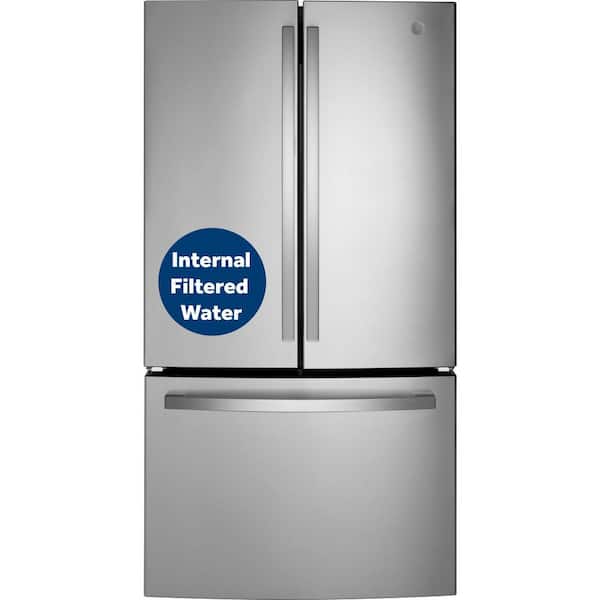
A French door refrigerator has two fresh-food doors at the top and a freezer drawer below. Since the upper doors open from the center, the appliance needs less side clearance than a single-door refrigerator. However, the doors, handles, and drawers still need room to open fully.
When people ask, “How wide are French door refrigerators?” they often mean the cabinet width. The actual space needed can be wider once you include handles and door movement. Always read the full installation guide for the exact model.

Common French door refrigerator dimensions
Width is important, but it is not the only measurement that affects installation. A refrigerator can fit between two cabinets and still fail because it is too deep or too tall.
Here are common size ranges for French door refrigerators:
| Refrigerator type | Typical width | Typical height | Typical depth |
|---|---|---|---|
| Compact French door | 28 to 30 inches | 67 to 70 inches | 30 to 34 inches |
| Standard French door | 33 to 36 inches | 68 to 70 inches | treinta? |
| Counter-depth French door | 30 to 36 inches | 68 to 70 inches | 24 to 30 inches |
| Large-capacity French door | 36 to 40 inches | 68 to 71 inches | treinta? |
The table shows common market ranges, but exact dimensions vary. Some models have deeper doors, thicker insulation, or large external ice and water systems.
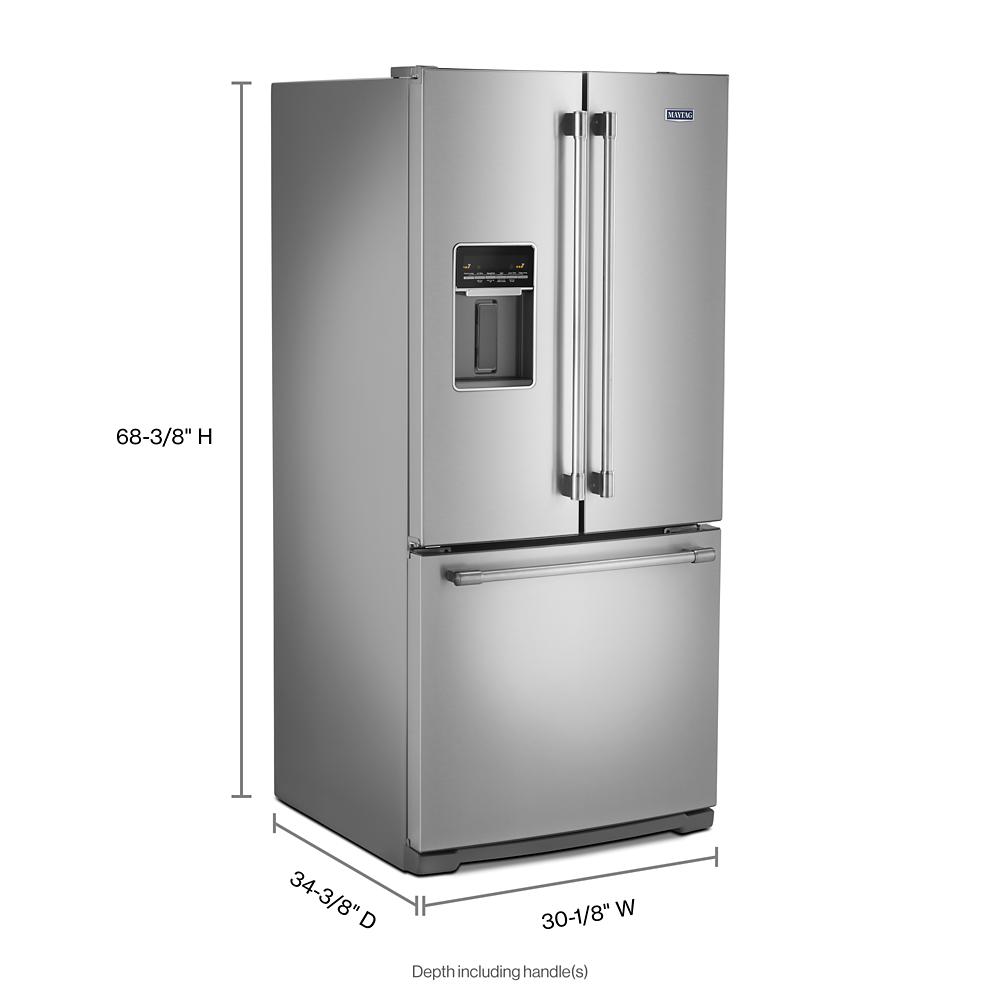
Most standard French door refrigerators are about 30 to 34 inches deep without handles. With handles, the total depth may increase by 2 to 4 inches. Counter-depth models sit closer to the cabinet line, but their doors and handles may still extend beyond the counters.
Height can also create a problem. Many French door refrigerators are close to 70 inches tall. Leave room above the unit if the manufacturer requires it for airflow or door hinge movement.
French door refrigerator width by kitchen size
The right width depends on your kitchen layout, household size, and storage needs. Bigger is not always better if the refrigerator blocks a walkway or hits a nearby wall.
30-inch French door refrigerators
A 30-inch model works well in a smaller kitchen, apartment, condo, or older home. It may offer less storage than a 36-inch model, but it can provide the same convenient French door layout.
This size is useful when the cabinet opening is narrow. It also leaves more space for nearby drawers and walkways.
33-inch French door refrigerators
A 33-inch refrigerator offers a useful balance between size and capacity. It can hold more food than many 30-inch units without taking as much room as a full 36-inch model.
This size often works well for a family kitchen with a 34-inch or 35-inch opening. Still, measure carefully because some 33-inch models need extra clearance on the sides.
36-inch French door refrigerators
A 36-inch French door refrigerator is one of the most popular choices in new kitchens. It usually provides wide shelves, large door bins, and a roomy freezer drawer.
However, a 36-inch appliance may require a 36.5-inch or wider opening. A tight opening can make installation difficult and may prevent the doors from opening far enough to remove shelves.
40-inch French door refrigerators
Large 40-inch models are designed for high storage capacity. They may include wide shelves, dual freezer drawers, flexible temperature zones, and larger ice systems.
These refrigerators need a generous kitchen opening and a clear delivery path. They may not work in a standard cabinet layout without changes.

How to measure for a French door refrigerator
Accurate measurement is the best way to answer how wide are French door refrigerators for your kitchen. Do not measure only the old refrigerator. The new model may have different hinge locations, handles, and clearance needs.
Follow these steps:
- Measure the opening width
Measure at the top, middle, and bottom of the opening. Walls and cabinets are not always perfectly square. Use the narrowest measurement when comparing it with the refrigerator’s listed width.
- Measure the opening height
Measure from the floor to the lowest point above the refrigerator. Check for cabinets, trim, crown molding, and lighting fixtures.
- Measure the available depth
Measure from the back wall to the front edge of the surrounding cabinets. Also note the location of outlets, water lines, and baseboards.
- Check the floor
An uneven floor can change the usable height and make the refrigerator difficult to level. A small height difference may matter in a tight opening.
- Measure the delivery path
Measure every doorway, hallway, stairway, and turn. Include the door frame and molding. A refrigerator that fits the kitchen may not fit through the front door.
- Compare the measurements with the installation guide
Use the manufacturer’s “cutout,” “installation,” or “clearance” dimensions. These numbers are more useful than the simple product width shown in an advertisement.
A good rule is to avoid guessing. Measure twice, write down the numbers, and compare them with the complete specification sheet.
How much clearance does a French door refrigerator need?
French door refrigerators need space for ventilation and movement. The required clearance differs by model, so the installation manual should always be the final guide.
Common clearance needs include:
• About ⅛ to ½ inch on each side for basic installation
• Extra side space when the doors must open beyond 90 degrees
• About 1 inch or more above the refrigerator for airflow or hinge movement
• Several inches behind the refrigerator for the power cord and water line
• Enough front space for the freezer drawer to open completely
A model that is 36 inches wide may need an opening wider than 36 inches. Some units require only a small gap, while others need more room because of the hinge design.
Side clearance matters most when the refrigerator sits beside a wall. The left or right door may not open far enough to pull out a crisper drawer. This is a common mistake in corner installations.
Think of clearance as breathing room. The refrigerator may physically fit, but it still needs room to work properly.

Do French door refrigerator handles add width?
Usually, handles do not add much to the listed cabinet width because they sit on the front of the doors. However, they can affect the total space needed in front of the refrigerator.
Handles may:
• Extend several inches from the door surface
• Hit a nearby wall or cabinet
• Reduce the usable walkway width
• Make it harder to move the appliance through a doorway
Some refrigerators use recessed handles. These can save space in a narrow kitchen. Other models have large bar handles that add a bold look but need more room during delivery and daily use.
When checking how wide are French door refrigerators, look at both the cabinet width and the overall product width. Product pages often list these as separate measurements.

Standard depth versus counter-depth models
A standard-depth French door refrigerator usually offers more storage. Its cabinet extends farther past the counter edge, often by several inches.
A counter-depth refrigerator sits closer to the front of the cabinets. It creates a cleaner, built-in look and can improve traffic flow in a small kitchen. The trade-off is usually less interior depth and sometimes less total capacity.
Counter-depth models are not always the same width as standard-depth models. A counter-depth refrigerator may still be 36 inches wide. The term “counter-depth” mainly describes front-to-back depth, not side-to-side width.
Choose standard depth when storage matters most. Choose counter depth when a streamlined appearance and better walkway space matter more.
How wide should a refrigerator opening be?
The required opening depends on the refrigerator model. A 30-inch refrigerator may need an opening near 30 to 31 inches, while a 36-inch model may need an opening close to 36 to 37 inches.
Never assume that the advertised width equals the required cabinet opening. The manufacturer may specify extra room for:
• Air circulation
• Door opening
• Hinge movement
• Leveling
• Water and electrical connections
For example, a refrigerator listed as 36 inches wide may be too large for a 36-inch opening if the installation guide calls for additional side clearance. In some cases, the doors may open, but the shelves and drawers may not slide out fully.
If the opening is too narrow, do not force the appliance into place. Scraped cabinet edges, damaged flooring, and poor airflow can follow.
How wide are French door refrigerators when the doors are open?
The open-door width varies by model and door angle. A French door refrigerator may need 45 to 60 inches of total space when both upper doors are open, depending on the door design and handle depth.
This matters when the appliance faces an island or a narrow walkway. The freezer drawer also moves forward, so you need room in front of the unit.
Check these areas before purchase:
• The distance from the refrigerator to the opposite island
• The space beside each door
• The location of nearby walls
• The path of drawers and pullout shelves
• The room needed to remove shelves for cleaning
A refrigerator can fit into its opening and still make the kitchen uncomfortable. Open the doors on the showroom model, if possible, and imagine standing in front of the open freezer.
Delivery and entry measurements
Delivery problems often happen because shoppers measure the kitchen but forget the route into the home. French door refrigerators are wide, heavy, and difficult to turn.
Measure:
• The front door opening
• The distance between the door and the opposite wall
• Hallways
• Interior doors
• Stairways
• Elevator doors
• Garage or basement entries
Remove doors from hinges if needed, but ask the retailer or delivery team whether this service is included. Do not remove refrigerator doors yourself unless the manufacturer provides clear instructions.
Protect floors before delivery. A refrigerator’s wheels can mark wood, vinyl, or tile, especially when the unit must be tilted or turned.
One lesson I always stress during appliance planning is simple: the delivery path is part of the installation. A perfect cabinet measurement cannot fix a hallway that is too narrow.
Common mistakes when measuring refrigerator width
Several small errors can lead to a poor fit. The most common mistake is measuring the old appliance and ordering a new one with the same listed width.
Avoid these errors:
• Measuring only one point in the opening
• Ignoring baseboards and trim
• Forgetting door handles
• Not checking the wall beside the refrigerator
• Measuring the cabinet depth but not the outlet
• Ignoring required top clearance
• Forgetting the freezer drawer’s forward movement
• Assuming a counter-depth model is narrower
• Failing to measure the delivery route
Another mistake is focusing only on physical fit. A refrigerator should also open comfortably. If a wall blocks one door, you may lose access to shelves and drawers.
Make a simple paper template with the refrigerator’s width and depth. Place it on the floor before buying. This quick test can reveal problems that a product page will not show.
How to choose the right French door refrigerator width
Start with the kitchen opening, not the refrigerator features. Once you know the maximum safe width, compare capacity, depth, finish, and functions.
Use this process:
-
Record the narrowest opening width
-
Confirm the opening height and depth
-
Check the manufacturer’s required clearances
-
Measure the full delivery path
-
Decide whether standard depth or counter depth suits the room
-
Compare interior storage, not just exterior size
-
Check door and drawer movement
-
Confirm installation and haul-away services
For a small kitchen, a 30-inch or 33-inch model may provide the best balance. For a larger family, a 36-inch model may be worth the extra space. A 40-inch unit makes sense only when the room and delivery path can support it.
Do not buy based on capacity alone. A refrigerator that blocks a walkway or cannot open fully will feel too large every day.
Benefits and limits of wider French door refrigerators
Wider refrigerators offer clear benefits. They often provide wider shelves, better storage for large platters, and more room for fresh food.
Other advantages include:
• Easier access to fresh food at eye level
• Less need to bend for common items
• Wide shelves for pizzas, trays, and meal containers
• Large freezer drawers
• Flexible storage for families
There are also limits. Wider models cost more, use more floor space, and may have higher repair or replacement costs. A larger refrigerator can also encourage food waste if food gets hidden in the back.
French door design itself has another trade-off. The split doors reduce swing space, but the center gap can limit where very wide items sit. Good shelf design matters as much as the outside width.
Energy use and refrigerator size
A wider refrigerator may have more storage, but size alone does not determine energy use. Insulation, compressor design, ice makers, temperature controls, and efficiency ratings also matter.
Look for the yellow EnergyGuide label when comparing models. It estimates annual energy use and operating cost under standard test conditions. Actual use can vary based on room temperature, door openings, food load, and settings.
An efficient 36-inch model may use less energy than an older, smaller refrigerator. Compare current ratings rather than assuming that smaller always means more efficient.
Keep the refrigerator away from heat sources when possible. Good airflow around the unit also helps it operate as designed.
A practical example of measuring a 36-inch model
Imagine a kitchen opening that measures 36½ inches at the top, 36¼ inches in the middle, and 36⅛ inches at the bottom. The narrowest point is 36⅛ inches.
A 36-inch refrigerator may fit in theory, but only if its installation guide allows the needed clearance. If the model requires ½ inch on each side, the opening may be too narrow.
A 33-inch model would provide more breathing room. It may also allow the doors and interior drawers to work better. This example shows why the smallest opening measurement matters most.
Frequently Asked Questions About How Wide Are French Door Refrigerators
How wide is a standard French door refrigerator?
A standard French door refrigerator is usually 33 to 36 inches wide. Many popular models measure about 36 inches, but the exact width varies by brand and design.
Are French door refrigerators wider than side-by-side refrigerators?
Many French door refrigerators are similar in width to side-by-side models. French door units often range from 30 to 36 inches, while side-by-side models commonly fall within a similar range.
Will a 36-inch refrigerator fit in a 36-inch opening?
Not always. The refrigerator may need extra side clearance for ventilation, leveling, and door movement, so check the manufacturer’s installation dimensions before buying.
How much space should be beside a French door refrigerator?
The required side space can range from about ⅛ inch to ½ inch or more per side. A wall-side installation may need additional room so the door can open and the interior drawers can slide out.
Are counter-depth French door refrigerators narrower?
Not necessarily. Counter depth describes how far the refrigerator extends from the wall, not its width. A counter-depth French door refrigerator can still be 33 or 36 inches wide.
How wide is a French door refrigerator with the doors open?
The total open-door space can reach about 45 to 60 inches, depending on the model, door angle, and handles. Measure the surrounding walkway and nearby walls before installation.
What is the narrowest French door refrigerator size?
Some compact French door refrigerators are about 28 to 30 inches wide. These models suit smaller kitchens but may offer less storage than 33-inch or 36-inch units.
Conclusion
French door refrigerators are usually 30 to 36 inches wide, with 33-inch and 36-inch models being especially common. The listed width is only the starting point. You must also check cabinet clearance, depth, height, door movement, handles, drawer space, and the delivery path.
Measure the opening at several points and use the narrowest measurement. Then compare it with the manufacturer’s full installation guide, not just the product name. Take a few minutes to plan now, and you can enjoy a refrigerator that fits your kitchen instead of fighting it every day. Explore detailed model specifications before you buy, and share your measurements or questions in the comments.

Appliance Review Expert
Lucas Ramirez is a trusted voice at HomeFixGrid.com, known for his clear, practical, and creatively written guides that simplify appliance care for everyday homeowners. With a strong focus on hands-on testing and real-world problem-solving, Lucas brings expert insight into appliance reviews and troubleshooting techniques. Her work empowers readers to confidently maintain, repair, and choose the right appliances for their homes.