
How Cold Is The Freezer Supposed To Be: Ideal Temp
A freezer should be kept at 0°F, or −18°C, to keep food safely frozen and maintain good quality.
Knowing how cold the freezer is supposed to be helps protect your food, lower waste, and spot appliance problems early. The ideal setting is simple, but real freezer temperatures can change with door openings, heavy loads, frost, and poor airflow. This guide explains the best freezer temperature, how to measure it, and what to do when your freezer is too warm or too cold.
How Cold Is the Freezer Supposed to Be?
The freezer is supposed to be 0°F, or −18°C. This is the standard target used for long term frozen food storage in most homes.
At this temperature, food stays solid, bacteria growth slows greatly, and frozen food keeps its quality for longer. Freezing does not kill every type of bacteria, though. It mainly pauses growth until the food thaws.
A freezer may move a few degrees above or below 0°F during normal use. For example, the temperature may rise when you add warm food or leave the door open. Short changes are usually not a concern, but a steady reading above 10°F may point to a problem.
The answer to “how cold is the freezer supposed to be” is therefore clear: aim for 0°F and check the actual temperature with a freezer thermometer.

Why 0°F Is the Recommended Freezer Temperature
The 0°F setting is a balance between food safety, food quality, and energy use. It is cold enough to keep food fully frozen without requiring most household freezers to work harder than needed.
Water in food forms ice crystals as it freezes. A stable, low temperature helps keep those crystals small. Small crystals cause less damage to the food’s texture than large crystals that form during repeated thawing and refreezing.
A freezer that stays near 0°F helps preserve:
• Meat, poultry, and seafood
• Frozen vegetables and fruit
• Bread and baked goods
• Prepared meals
• Ice cream and other frozen desserts
• Stored breast milk
• Homemade soups and sauces
The USDA advises keeping a freezer at 0°F or below for safe storage. However, frozen food quality can still decline over time. Freezing is not a pause button for flavor forever. It is more like putting food into slow motion.
Does colder always mean better?
Not always. A setting far below 0°F may keep food frozen, but it can raise energy use and increase frost buildup. It may also signal a faulty thermostat or control board.
For most homes, the best answer to how cold is the freezer supposed to be remains 0°F, not the coldest setting available.
How to Check Your Freezer Temperature
The display on the outside of a freezer may show the target setting, not the true internal temperature. For a more accurate answer to how cold is the freezer supposed to be, use a separate appliance thermometer.
Place the thermometer in the center of the freezer. The center usually gives a better reading than the door, where temperatures change more often.
Follow these steps:
- Place an appliance thermometer in the middle of the freezer.
- Close the door and leave it shut for at least 12 hours.
- Check the reading without leaving the door open for long.
- Repeat the test on another day if the result seems unusual.
- Adjust the control in small steps if needed.
A cup of frozen cooking oil can also help show temperature changes. Oil does not freeze at typical freezer temperatures, so some people use it with a thermometer as a stable test medium. A regular freezer thermometer is simpler and more reliable for most households.
Where should the thermometer go?
Keep it away from:
• The freezer door
• The air vent
• The wall or cooling plate
• A pile of newly added food
Put it near the center, with space around it. This gives the thermometer a reading that better reflects the average freezer temperature.
In my own kitchen checks, the door area often reads warmer than the center. That small difference explains why ice cream can soften near the front even when the freezer is working normally.
What Happens If a Freezer Is Too Warm?
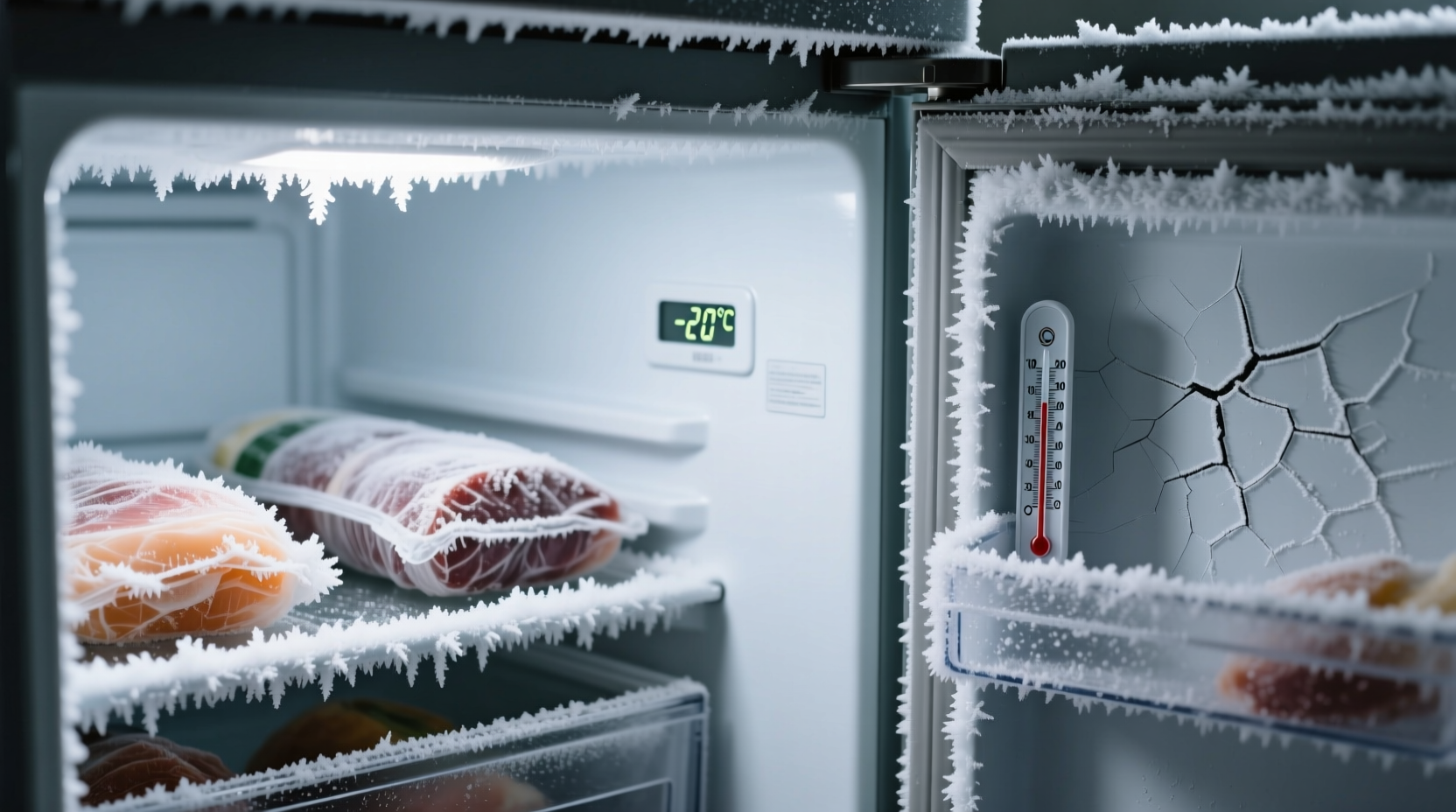
A freezer is too warm when it stays above 0°F for long periods. A reading between 0°F and 5°F is often acceptable, but food quality may decline faster as the temperature rises.
When the temperature reaches 10°F or higher, frozen food may become soft. You may see ice crystals, freezer burn, or liquid near packages. The food may still be safe if it remains cold and solid, but the quality can suffer.
Watch for these signs:
• Ice cream that is soft or partly melted
• Meat packages covered with large ice crystals
• Frozen food stuck together in a solid block
• Water or liquid under food
• A freezer alarm that keeps sounding
• Frost melting and refreezing on the walls
• Food that feels soft rather than hard
If food has fully thawed, safety depends on how long it stayed above safe temperatures. Perishable food should not remain above 40°F for more than two hours, or one hour when the room is above 90°F. When in doubt, discard food that smells bad, feels warm, or has been thawed for an unknown length of time.
Do not taste questionable food to test it. Harmful bacteria may not change the smell, color, or taste.
Can you refreeze thawed food?
You can usually refreeze food if it still contains ice crystals or has stayed at 40°F or below. Its texture may become worse after refreezing.
Food that has been fully thawed and held above 40°F for too long should be discarded. This rule matters most for raw meat, poultry, seafood, dairy products, and prepared meals.
What Happens If a Freezer Is Too Cold?
A freezer below 0°F is not usually dangerous for frozen food. In fact, the food may remain solid for a longer time. The main concerns are energy use, frost, and food quality.
Very low temperatures can cause:
• Higher electricity use
• More frost on the walls
• Dry freezer air and freezer burn
• Harder ice cream
• Longer compressor run times
• Extra wear on some appliance parts
Freezer burn does not make food unsafe by itself. It happens when moisture leaves the food and forms dry, grayish areas. The food may taste dry or stale, but you can often trim the damaged area after thawing.
If the freezer stays far below the set temperature, check the control setting first. A damaged thermostat, sensor, or control board may make the appliance run too long.
The answer to how cold is the freezer supposed to be does not change just because the freezer can reach −10°F. For normal home use, 0°F is still the practical target.
Best Freezer Temperature Settings for Different Foods
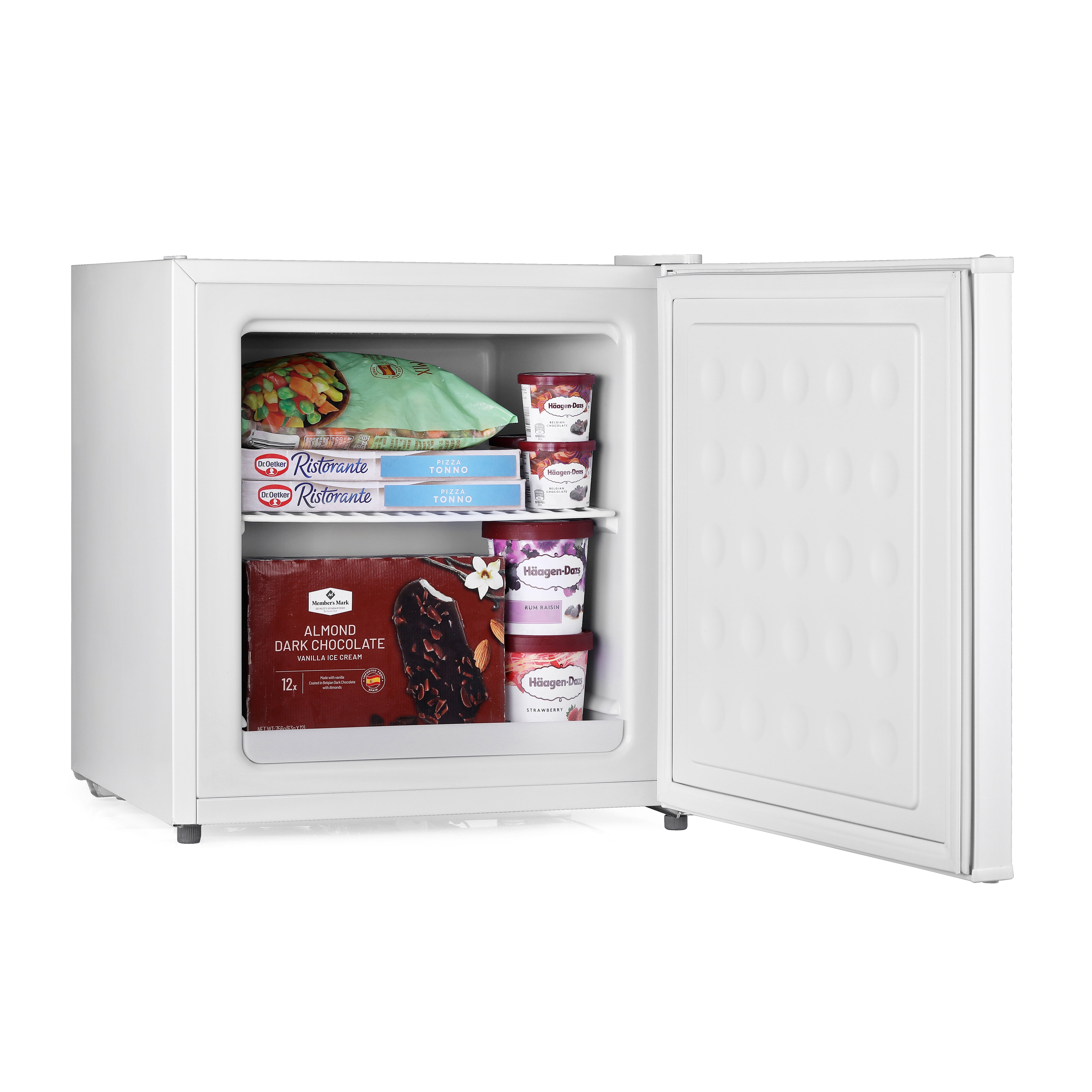
Most frozen foods do well at 0°F. You do not need a separate temperature for meat, vegetables, ice cream, or frozen meals.
Some foods may seem to need different conditions because their texture changes at different rates. Ice cream is a good example. It may be softer in one freezer and very hard in another, even when both freezers are close to 0°F.
Here are useful storage tips:
• Keep meat tightly wrapped or sealed in freezer bags.
• Remove excess air from packages to reduce freezer burn.
• Label food with the name and freezing date.
• Use older food before newer food.
• Freeze food in small, flat portions for faster cooling.
• Let hot food cool briefly before freezing it.
• Do not pack food against the interior air vents.
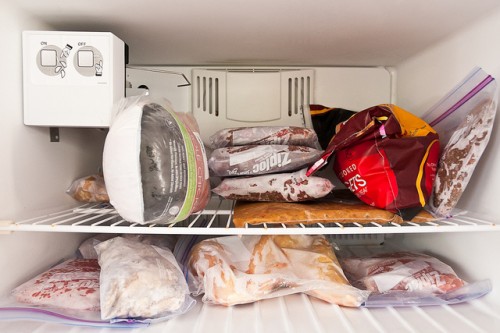
A full freezer often holds its temperature better than an empty one. However, overpacking blocks airflow. Leave enough open space for cold air to move around the food.
Frozen food should also stay in good packaging. Thin store packaging may allow air to reach the food over time. Repack meat and other foods in airtight freezer bags, foil, or freezer safe containers.
How to Adjust the Freezer Temperature
If your thermometer reads above 0°F, lower the control by one step. Wait about 24 hours before checking again. Freezers need time to reach a new stable temperature.
If the reading is below 0°F, raise the control by one step. Avoid turning the control from warm to maximum cold at once unless the manual recommends it.
Use this simple approach:
- Check the temperature with a thermometer.
- Confirm that the door seals tightly.
- Make sure vents are not blocked.
- Adjust the control one setting.
- Wait 24 hours.
- Check the temperature again.
Some controls use numbers from 1 to 5 or 1 to 7. These numbers are not universal temperatures. On many models, a higher number means colder, but you should confirm this in the owner’s manual.
Digital controls may let you choose 0°F directly. Even then, the actual temperature can vary. A separate thermometer remains useful.
One common mistake I see in home kitchens is changing the setting several times in one day. That makes the problem harder to diagnose. Make one small adjustment, wait, and measure again.
Why a Freezer May Not Reach 0°F
A freezer that cannot reach 0°F may have a simple airflow issue or a mechanical fault. Start with the easy checks before arranging service.
Door seal problems
A cracked or loose gasket lets warm air enter. Close the door on a sheet of paper. If the paper slides out easily in several spots, the seal may need cleaning or replacement.
Blocked air vents
Food pushed against the vents can stop cold air from circulating. Move packages away from the vents and leave room around the walls.
Heavy frost
A thick layer of frost can act like a blanket around the cooling parts. If the freezer is not frost free, follow the manual’s defrost instructions. Never use a knife or sharp tool to remove ice.
Dirty condenser coils
Some freezers have coils underneath or behind the unit. Dust on these coils can reduce cooling performance. Unplug the appliance before cleaning, and follow the manufacturer’s instructions.
Frequent door openings
Every door opening brings in warm, moist air. A busy freezer may need more time to recover, especially after a large shopping trip.
Hot food added too quickly
Large containers of warm soup or cooked food can raise the internal temperature. Divide food into shallow containers and chill it promptly before freezing.
A faulty component
If the compressor runs constantly, the freezer stays warm, or the temperature changes widely, the problem may involve the fan, thermostat, sensor, refrigerant system, or control board. A qualified appliance technician can test these parts safely.
How Long Does It Take a Freezer to Get Cold?
A new or recently unplugged freezer may need about 12 to 24 hours to reach 0°F. Some large models may take longer, especially if they contain food or sit in a warm room.
Keep the door closed during this time. Opening it repeatedly releases cold air and slows the cooling process.
After moving a freezer, check the manufacturer’s instructions before plugging it in. Some models need to stand upright for a period after transport. This allows compressor oil to settle.
Do not fill a warm freezer with large amounts of food at once. Add food after the appliance reaches the proper temperature. A thermometer can confirm when the freezer is ready.
Freezer Temperature and Energy Use
A freezer set at 0°F is usually more efficient than one set much colder. Energy use also depends on the appliance’s age, size, insulation, room temperature, and condition.
To reduce energy waste:
• Keep the freezer away from ovens and direct sunlight.
• Leave space around the appliance for heat to escape.
• Keep the door closed as much as possible.
• Clean the gasket with mild soap and water.
• Defrost manual defrost models when ice becomes thick.
• Keep the freezer reasonably full without blocking vents.
• Replace an old, inefficient appliance when repair costs become high.
A freezer in a hot garage may work much harder than the same freezer indoors. Some models are not designed for extreme heat or cold. Check the appliance manual before placing one in an unheated garage.
The best answer to how cold is the freezer supposed to be also supports energy savings. Set it near 0°F rather than using the coldest possible setting.
Freezer Storage Times and Food Quality
Food kept continuously at 0°F can remain safe for a long time, but quality does not last forever. Packaging, moisture, fat content, and temperature changes all affect storage life.
Examples of general quality periods include:
• Ground meat: about three to four months
• Steaks and roasts: about four to twelve months
• Cooked meat or poultry: about two to six months
• Fatty fish: about two to three months
• Lean fish: about six months
• Soups and stews: about two to three months
• Cooked vegetables: about two to three months
• Bread: about two to three months for best quality
These are quality guidelines, not exact safety deadlines. Properly frozen food may remain safe longer if it stays at 0°F or below and does not thaw.
Write the freezing date on every package. This small habit prevents mystery bags from taking over the freezer. It also helps you use food while its flavor and texture are still at their best.
Common Mistakes That Raise Freezer Temperature
Small habits can make it harder for a freezer to stay at 0°F. Most are easy to fix.
Avoid these mistakes:
• Leaving the door open while choosing food
• Placing hot food directly inside
• Blocking the internal vents
• Storing food in loose or damaged packaging
• Ignoring a damaged door gasket
• Relying only on the digital display
• Changing the temperature setting too often
• Scraping ice with a sharp object
• Overfilling the freezer
• Keeping the freezer beside a heat source
One practical lesson is to organize food by type. Keep vegetables together, meat together, and ready to eat meals together. You will find food faster and keep the door open for less time.
A simple freezer basket can also help. It acts like a small drawer and reduces the need to move every package when you need one item.
When to Call an Appliance Technician
Call for professional help if the freezer remains above 0°F after basic checks. A technician should also inspect the unit if it makes unusual noises or runs without stopping.
Seek service when you notice:
• The compressor never seems to stop
• The freezer temperature keeps rising
• The fan does not run
• Frost covers one small area only
• Water leaks from the appliance
• The door gasket will not seal
• A temperature alarm keeps returning
• The freezer trips a circuit breaker
Do not attempt to repair sealed refrigeration parts yourself. Refrigerant systems require special tools and training. Unplug the appliance before cleaning coils or checking accessible parts.
If food safety is uncertain during a breakdown, move food to another freezer or a cooler with plenty of ice. Keep a thermometer in the cooler and avoid opening it often.
Frequently Asked Questions About How Cold Is the Freezer Supposed to Be
How cold is the freezer supposed to be in Fahrenheit?
The freezer is supposed to be 0°F or below. This equals about −18°C, which is the standard target for home frozen food storage.
How cold is the freezer supposed to be in Celsius?
The freezer is supposed to be about −18°C. A small variation above or below this temperature is normal during daily use.
Is 10°F cold enough for a freezer?
A freezer at 10°F may keep food frozen, but it is warmer than the recommended target. Long term quality and storage life are better when the freezer stays near 0°F.
Is −10°F too cold for a freezer?
−10°F is not usually unsafe for food, but it may use more electricity and create extra frost. For most homes, setting the freezer near 0°F is enough.
How can I tell if my freezer is cold enough?
Use a separate appliance thermometer in the center of the freezer. Leave it in place for at least 12 hours before reading it, since the door area may be warmer.
Can food spoil in a freezer?
Food can lose quality through freezer burn, but bacteria generally do not grow while food stays fully frozen. If food thaws and remains above 40°F for too long, it may become unsafe.
Why is my freezer cold but my ice cream soft?
Ice cream can soften because of its recipe, door storage, repeated temperature changes, or partial thawing. Check the freezer with a thermometer instead of using ice cream texture as the only test.
Conclusion
The freezer is supposed to be 0°F, or −18°C. This setting keeps food safely frozen, protects quality, and avoids the extra energy use linked to extremely low temperatures.
Use a freezer thermometer, place it in the center, and wait 12 to 24 hours after each adjustment. Keep vents clear, check the door seal, limit door openings, and deal with frost or unusual noises early.
Take a minute today to check your freezer’s real temperature. If this guide helped, share it with someone who wants safer food storage or explore more appliance care resources.

Appliance Review Expert
Lucas Ramirez is a trusted voice at HomeFixGrid.com, known for his clear, practical, and creatively written guides that simplify appliance care for everyday homeowners. With a strong focus on hands-on testing and real-world problem-solving, Lucas brings expert insight into appliance reviews and troubleshooting techniques. Her work empowers readers to confidently maintain, repair, and choose the right appliances for their homes.