Does Microwaving Kill Bacteria In Food: Safe Tips
Yes, microwaving can kill bacteria in food when every part reaches a safe temperature.
Does microwaving kill bacteria in food? Yes, but the answer depends on heat, time, food type, and even heating. Microwaves do not magically sterilize a meal. They create heat, and that heat must reach the coldest part of the food for long enough to destroy harmful germs. This guide explains how microwave food safety works, where it can fail, and how to reheat meals with confidence.
Does microwaving kill bacteria in food?
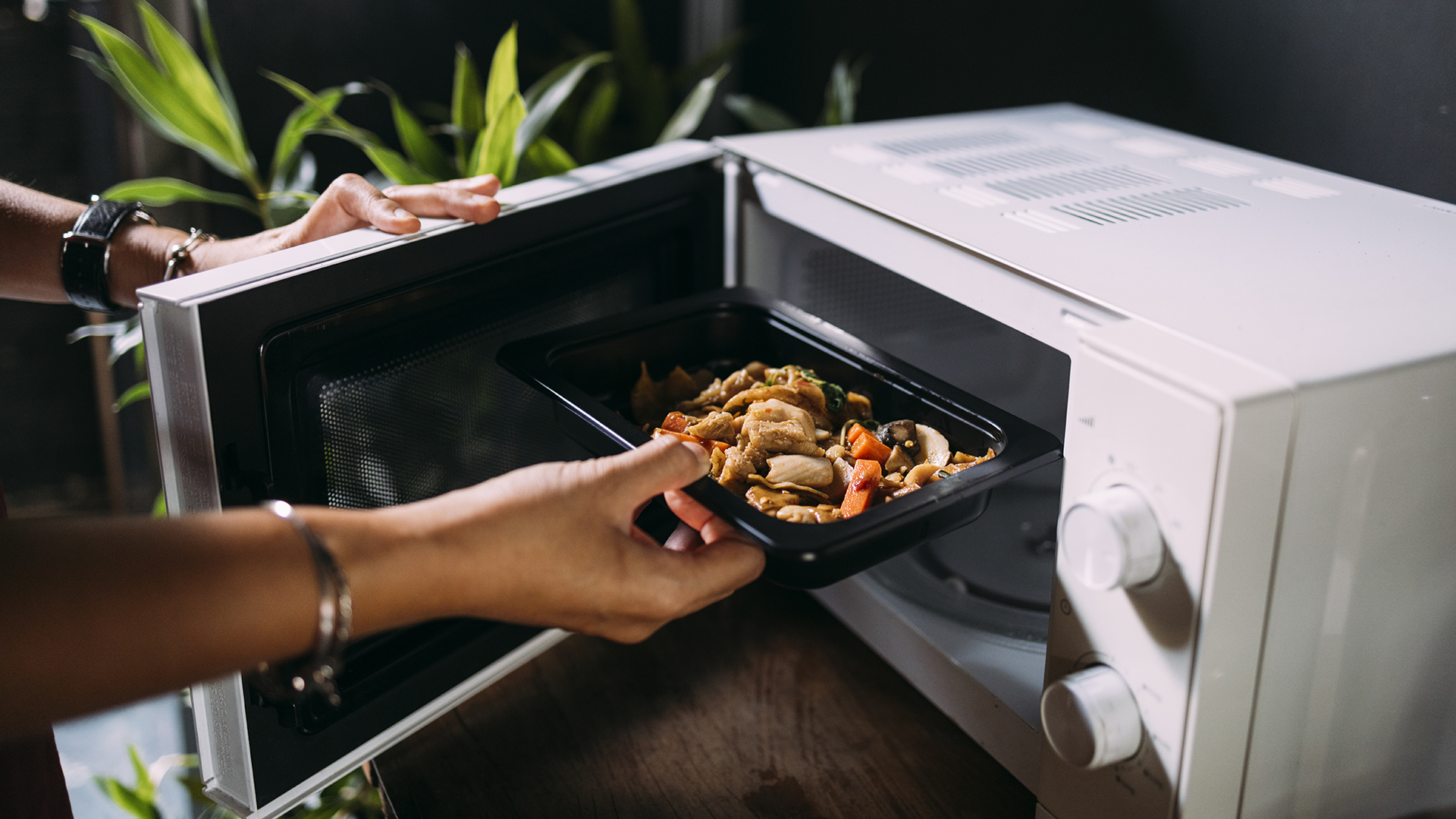
Yes, microwaving can kill many bacteria when food becomes hot enough throughout. Heat damages bacterial proteins and cell structures, much like boiling, baking, or frying does.
The key issue is not the microwave itself. The key issue is the temperature inside the food. If one area is steaming hot while another remains cool, bacteria may survive in the cool spot.
This is why does microwaving kill bacteria in food is not a simple yes-or-no question. Microwave safety depends on even heating, enough cooking time, proper resting time, and safe food handling before and after heating.
Microwave energy does not kill bacteria directly. It makes water molecules move, and that movement creates heat. The hot food then destroys bacteria.

How microwaves destroy bacteria
Microwaves use electromagnetic energy to heat food. Foods with water, fat, or sugar absorb this energy and become warm.
Bacteria begin to die as the food reaches temperatures that damage their cells. The exact time needed varies by:
• The type of bacteria
• The amount of food
• The food’s moisture level
• The starting temperature
• The shape and density of the food
• The microwave’s power
A small bowl of soup may heat quickly. A thick piece of meat or a frozen casserole may heat much more slowly in the center.
Some bacteria are easier to destroy than others. Certain bacterial spores and toxins can resist normal reheating. For example, bacteria may produce toxins in food that are not fully destroyed by microwave heating. This is one reason safe storage matters as much as reheating.
When asking does microwaving kill bacteria in food, think of the microwave as a heat tool, not a sanitation tool. It can reduce harmful bacteria, but it cannot make spoiled or poorly stored food safe.

Why microwave heating can be uneven
Microwaves often create hot and cold spots. This happens because energy does not spread through food in a perfectly even way.
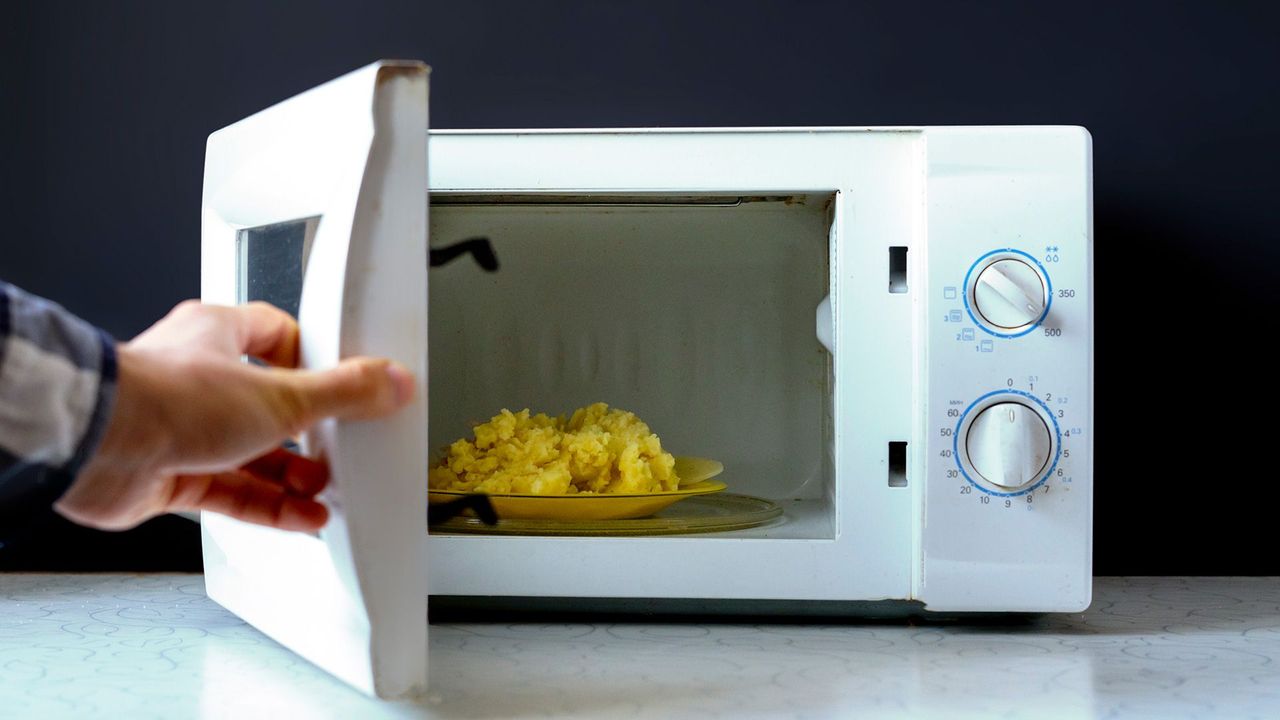
A plate of leftovers may look hot on top but remain cold beneath. Thick foods can block heat from moving quickly. Frozen meals may also have icy centers while the edges begin to dry out or overcook.
The shape of the food matters too. Round, shallow portions usually heat more evenly than tall, dense piles. Food placed around the outer edge of a plate often heats faster than food in the center.
To improve even heating:
• Spread food into a shallow, even layer.
• Place thicker pieces near the outside of the plate.
• Cover the food with a microwave-safe lid or loose paper towel.
• Stir soups, sauces, rice, and casseroles halfway through heating.
• Turn large pieces of food during cooking.
• Let the food stand after heating.
The standing time is important. Heat continues to move through the food after the microwave stops. This extra time helps reduce cold spots.
Safe microwave temperatures to remember
Temperature is the best way to check whether does microwaving kill bacteria in food. A food thermometer gives you more reliable information than steam, bubbling, or touch.
For many cooked leftovers, heat the food to at least 165°F. Check the thickest part and several spots, especially when the food is dense or contains meat.
Useful minimum internal temperatures include:
• Poultry, including chicken and turkey: 165°F
• Ground meat: 160°F
• Egg dishes: 160°F
• Fish and whole cuts of beef, pork, lamb, and veal: 145°F, followed by a short rest
• Cooked leftovers and casseroles: 165°F
These temperatures are widely used in U.S. food safety guidance. They help reduce common pathogens such as Salmonella, Escherichia coli, Campylobacter, and Listeria.
Do not rely only on appearance. Some foods stay pale even when fully cooked, while others may brown before the center becomes safe.
How to microwave leftovers safely
Correct reheating starts before the food enters the microwave. Bacteria can multiply when cooked food sits at room temperature for too long.
Use this simple process:
-
Refrigerate leftovers within two hours of cooking. If the room is above 90°F, refrigerate them within one hour.
-
Store food in shallow containers. This helps it cool faster and reheat more evenly.
-
Use leftovers within three to four days unless you freeze them sooner.
-
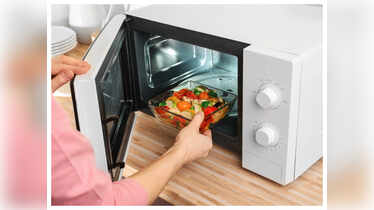
Put the food in a microwave-safe container. Avoid containers that can melt or release unwanted chemicals.
-
Cover the food loosely. This holds in moisture and helps create more even heat.
-
Stir or rotate the food during heating.
-
Let it stand for a few minutes after the microwave stops.
-
Check the center with a food thermometer.
-
Eat the reheated food soon after it reaches a safe temperature.
A common mistake is heating food for one long cycle and eating it right away. Short heating cycles with stirring often work better. They spread heat like mixing warm water into cool water.

Does microwaving kill bacteria in frozen food?
Microwaving can kill bacteria in frozen food, but frozen food may heat unevenly. Ice absorbs energy differently from liquid water, so one area may remain frozen while another becomes very hot.
Follow the package directions when heating commercial frozen meals. If the package gives a standing time, do not skip it. That time allows heat to spread through the meal.
For homemade frozen food, use a shallow container when possible. Break apart large frozen pieces during heating, stir the food, and continue heating until the center reaches a safe temperature.
Never assume that a frozen meal is safe simply because it is steaming at the edges. The center needs attention too.
Foods that need extra care in the microwave
Some foods are more difficult to heat evenly or carry special risks.
Rice and pasta
Cooked rice and pasta can support the growth of Bacillus cereus if they are cooled slowly or left at room temperature. Reheating may kill some bacteria, but it may not remove toxins already produced in the food.
Store rice and pasta quickly in the refrigerator. Reheat only the amount you plan to eat, and discard food that has been left out for many hours.
Meat and poultry
Thick meat can remain cold in the center. Cut large portions into smaller pieces before reheating, and check several areas with a thermometer.
Soups and sauces
Soups can develop hot pockets. Stir them from the outside toward the center during heating. Let them stand before tasting.
Eggs
Eggs can heat quickly and may burst if cooked in their shells. Remove shells before microwaving, and pierce yolks or whole eggs when needed to release steam.
Baby food
Stir baby food well and test it carefully before serving. Microwaves can create hot spots that may burn a child’s mouth. Do not heat baby food in its original metal container.
These examples show why does microwaving kill bacteria in food depends on more than the microwave’s power setting.

What microwaving does not destroy
Microwaving is useful, but it has limits. It cannot reverse every food safety problem.
Heating may not remove:
• Toxins produced by certain bacteria
• Chemicals from spoilage or contamination
• Allergens
• Foreign objects
• Harmful compounds created by severe burning
If food smells sour, feels slimy, shows mold, or has been stored too long, throw it away. Do not try to rescue it with extra microwave time.
Microwaving also does not make unsafe raw food safe unless the entire food reaches an appropriate cooking temperature. Partially cooked chicken, for example, can still contain harmful bacteria in its cold center.
The safest approach is to prevent contamination, chill food promptly, store it correctly, and then reheat it evenly.
Common microwave food safety mistakes
Even careful cooks make mistakes. Most are easy to prevent.
• Heating food in a sealed container: Steam can build pressure and cause the container to burst.
• Using metal by accident: Metal can spark unless the appliance and container instructions specifically allow it.
• Heating food without stirring: This leaves cold pockets where bacteria may survive.
• Trusting steam alone: Steam often comes from the surface, not the center.
• Reheating the same food many times: Each cycle can reduce quality and increase the time food spends in unsafe temperature ranges.
• Leaving leftovers out too long: Reheating does not always remove toxins made during improper storage.
• Using damaged plastic: Cracked or melted containers may not be suitable for food heating.
• Eating food immediately: A short standing period helps heat spread more evenly.
In practical kitchen testing, the biggest lesson is simple: food that looks hot is not always hot in the middle. A thermometer and a quick stir offer far more protection than appearance alone.
Microwave-safe containers and covering methods
Choose containers labeled microwave-safe. Glass, ceramic, and some heat-safe plastics are common options.
Avoid takeout containers, foam trays, and single-use plastic tubs unless they clearly state that they are safe for microwave use. Some containers can warp or transfer unwanted substances into food when heated.
Use a loose cover rather than sealing the container. A microwave-safe lid with a vent works well. A damp paper towel can help keep food moist and reduce splattering.
Never use aluminum foil, metal trim, or metal utensils unless the microwave’s instructions specifically permit them. Sparks can damage the appliance or start a fire.
Clean spills quickly. Dried food on the microwave walls can heat, smoke, and spread germs through contact with hands or containers.
Does microwaving kill bacteria in food better than an oven?
A microwave is not automatically better or worse than an oven. Both can kill bacteria when the food reaches a safe internal temperature.
An oven may heat dense foods more evenly, but it can take longer. A microwave is faster and often uses less energy, but it can create cold spots.
The best method depends on the food. A microwave works well for soup, vegetables, rice, and small portions. An oven may work better for thick casseroles, large roasts, or foods that need crisp surfaces.
Regardless of the appliance, use a thermometer for thick food. The cooking method matters less than the final internal temperature and safe handling.
Does microwaving kill bacteria in food without making it boil?
Yes. Food does not need to boil for microwave heating to kill many bacteria. The entire portion simply needs to reach an appropriate temperature for the food and remain hot long enough.
Boiling can be a useful sign for liquids, but it is not a reliable test for solid food. A casserole may be safe below its boiling point, while a steaming bowl of soup may still contain cooler areas.
Stirring, rotating, covering, and resting are often more important than reaching a rolling boil. These steps help heat move through the food.
What research and food safety guidance show
Food safety guidance consistently focuses on time, temperature, and even heating. Government food safety agencies advise using a thermometer, stirring food during microwave heating, and allowing standing time.
Research on microwave cooking also shows that bacteria are destroyed by heat, not by a special germ-killing effect from microwave radiation. The same basic principle applies to conventional cooking: enough heat must reach the food’s coldest point.
Results can vary between microwave models. A 1,200-watt appliance may heat food much faster than a small 700-watt model. Container shape, food volume, moisture, and starting temperature also affect the result.
This means does microwaving kill bacteria in food cannot be answered by a single cooking time. Package directions are useful, but checking the food itself is safer.
A simple microwave safety checklist
Before eating microwaved food, ask:
• Was the food refrigerated or frozen promptly?
• Is the container microwave-safe?
• Did you cover, stir, or rotate the food?
• Did the center become hot, not just the edges?
• Did the food reach the correct internal temperature?
• Did it stand for a short time after heating?
• Does the food still look and smell fresh?
If the answer to any key question is no, take another safety step or discard the food. When in doubt, do not taste food to test whether it is safe.
Frequently asked questions
Does microwaving kill all bacteria in food?
No. Microwaving can kill many bacteria when food heats evenly to a safe temperature, but it may not destroy every bacterial spore or toxin. Uneven heating and poor storage can allow hazards to remain.
Does microwaving kill bacteria in food when the food is only warm?
Usually, you should not assume so. Warm food may contain cold spots, and mild heat may not reduce bacteria enough to make the food safe.
How long should I microwave leftovers?
There is no single safe time because microwave power, food amount, and container shape vary. Heat leftovers to 165°F, stir them during heating, and let them stand before checking the center.
Does microwaving kill bacteria in food that was left out overnight?
You should discard it. Reheating may kill some bacteria, but it may not destroy toxins produced while the food sat at unsafe temperatures.
Can a microwave kill Salmonella and E. coli?
Yes, sufficient heat can kill Salmonella and E. coli. The food must reach a safe internal temperature throughout, with special care for thick or dense portions.
Is it safe to microwave food in plastic containers?
Only use plastic containers labeled microwave-safe and follow their instructions. Do not use cracked, melted, or unknown plastic containers for heating food.
Does microwaving kill bacteria in baby food?
It can reduce bacteria when the food heats evenly, but hot spots are a serious burn risk. Stir the food well, allow it to stand, and test the temperature before serving it.
Conclusion
So, does microwaving kill bacteria in food? Yes, when heat reaches every part of the food and the food is handled safely before and after heating. A microwave can destroy many harmful bacteria, but it cannot fix spoiled food, remove every toxin, or guarantee even heating.
Use a microwave-safe container, cover the food loosely, stir or rotate it, allow standing time, and check thick portions with a food thermometer. These small habits turn a quick reheated meal into a much safer one.
Keep this guide handy the next time you heat leftovers, and share your favorite microwave safety tips in the comments.

Appliance Review Expert
Lucas Ramirez is a trusted voice at HomeFixGrid.com, known for his clear, practical, and creatively written guides that simplify appliance care for everyday homeowners. With a strong focus on hands-on testing and real-world problem-solving, Lucas brings expert insight into appliance reviews and troubleshooting techniques. Her work empowers readers to confidently maintain, repair, and choose the right appliances for their homes.