How To Roast Almonds In Air Fryer: Easy Guide
For most U.S. home kitchens, the easiest way to roast almonds in an air fryer is to cook raw almonds at 325°F for 8 to 12 minutes. Shake the basket every 3 to 4 minutes, then let the almonds cool before eating. They will become crisp as they cool.
You do not need oil for plain roasted almonds. A light coating of oil, salt, or spices is optional. Since air fryers vary in size and power, start checking early. Almonds can go from golden to burnt in less than a minute.

What You Need to Roast Almonds
You need only a few basic items:
- Raw almonds
- An air fryer
- A heat-safe bowl or plate
- Optional oil, salt, sugar, or spices
Use raw, unsalted almonds for the most control over flavor and cooking time. Whole almonds work best for even roasting. Slivered almonds and sliced almonds cook faster because more surface area is exposed to the hot air.
You can roast almonds with the skin on. The thin brown skin adds flavor and a little texture. Blanched almonds, which have no skin, also work well.
Do you need oil?
No. Almonds contain natural oils, so they can roast well without added fat. Dry roasting gives them a clean, nutty flavor.
Use about 1 teaspoon of oil per 1 cup of almonds if you want seasonings to stick better. Neutral oils, such as avocado, canola, or light olive oil, work well. Avoid adding too much oil, because it can make the almonds greasy and may create smoke in some air fryers.
How many almonds should you cook?
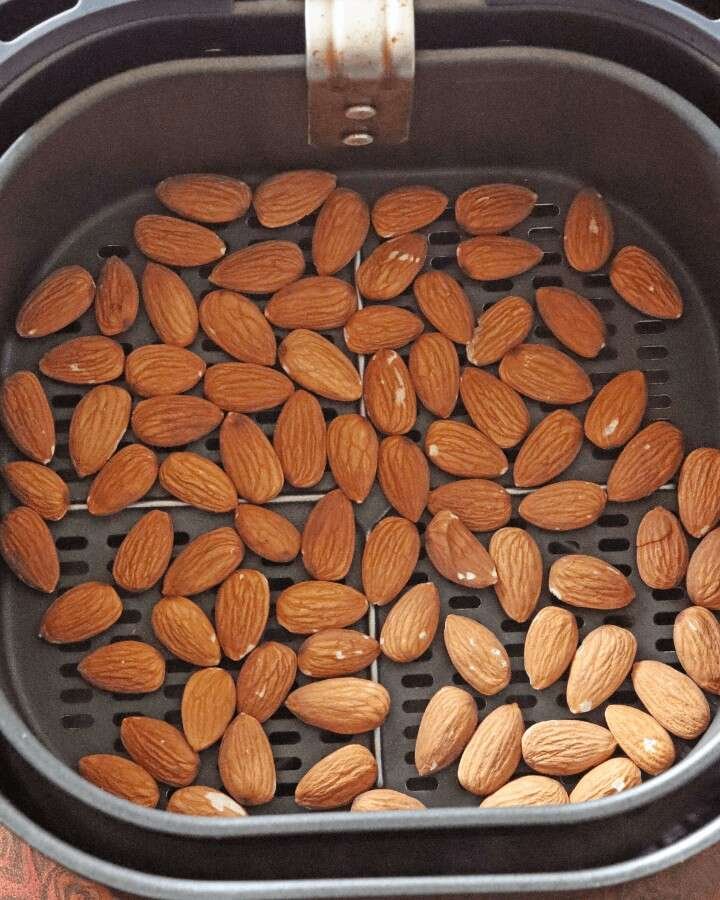
Spread the almonds in a mostly even layer. A single layer gives the most even roast.
For many air fryer baskets, 1 to 2 cups is a practical batch size. Do not fill the basket to the top. A crowded basket blocks airflow and can leave some almonds pale while others burn.

How to Roast Almonds in an Air Fryer
Follow these steps for plain or seasoned air-fryer roasted almonds.
1. Check and prepare the almonds
Remove any loose shell pieces, damaged nuts, or debris. If the almonds are wet, pat them dry with a clean towel.
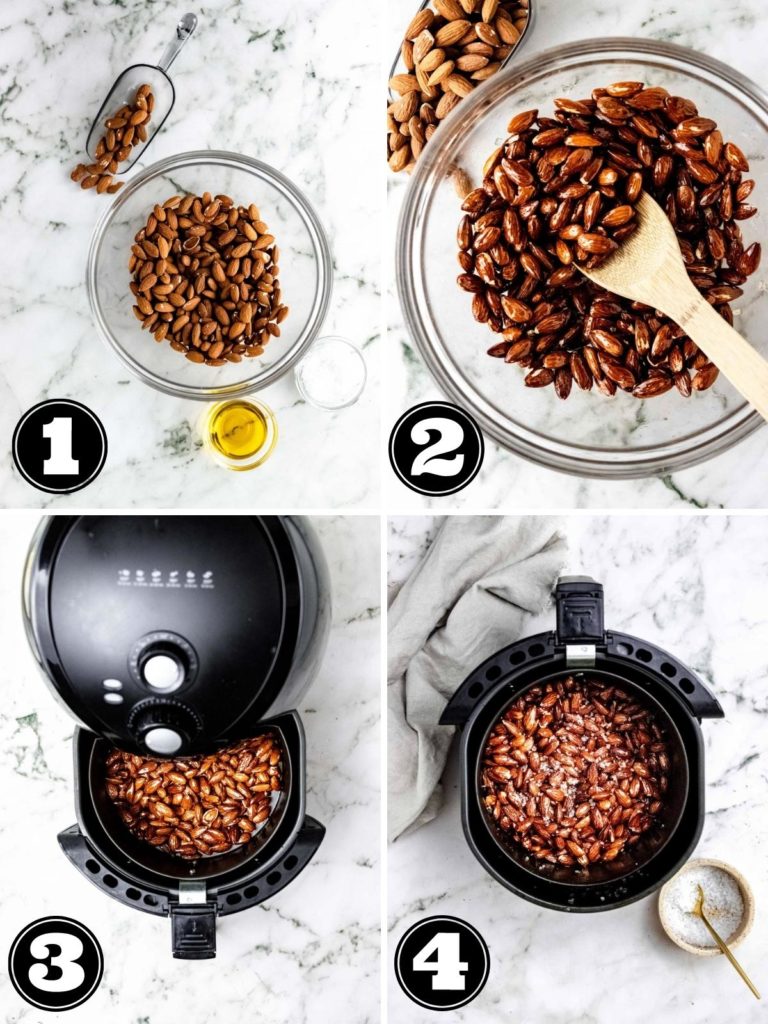
If you are using oil or seasoning, mix the almonds in a bowl first. This spreads the coating better than adding everything directly to the basket.
Try one of these simple combinations:
- Plain: almonds with no added ingredients
- Salted: 1 teaspoon oil plus a pinch of fine salt per cup
- Smoky: oil, salt, and a small pinch of smoked paprika
- Sweet: oil, cinnamon, and a small amount of brown sugar
- Spiced: oil, chili powder, garlic powder, and salt
Sugar can burn more quickly than almonds. For sweet almonds, use a lower temperature and watch them closely.
2. Preheat the air fryer if needed
Preheat the air fryer to 325°F for about 3 minutes if your model recommends preheating.
Preheating is not essential for every air fryer. It can help shorten the cooking time and improve consistency, but a cold basket may require an extra minute or two.
3. Add the almonds
Place the almonds in the basket. Spread them as evenly as possible.
Do not use parchment paper unless it is designed for air-fryer use and is held down by food. Loose paper can move into the heating element. You usually do not need a liner for almonds.
4. Air fry at 325°F
Cook the almonds at 325°F for 8 to 12 minutes.
Shake the basket after about 3 to 4 minutes. Shake again every 2 to 3 minutes after that. If your air fryer has a small basket or a powerful heating element, begin checking at 6 minutes.
The almonds may not look fully crisp while they are hot. Their texture firms as they cool.
5. Check for doneness
The almonds are ready when they are:
- Light to medium golden brown
- Fragrant and nutty
- Crisp after cooling
- Evenly roasted, without black spots
Taste one only after it cools enough to handle. Hot nuts can burn your mouth, and the center may remain soft until the almond cools.
6. Cool the almonds
Transfer the almonds to a plate or baking sheet in a single layer. Let them cool for at least 10 to 15 minutes.
Do not leave them in the hot air-fryer basket. Residual heat can continue browning them and may push them past the point you want.

Air Fryer Almond Cooking Times and Temperatures
The best setting depends on the almond shape, batch size, and air fryer model. Use the table below as a starting point, not a fixed rule.
| Almond type | Temperature | Starting time | What to watch for |
|---|---|---|---|
| Whole raw almonds | 325°F | 8–12 minutes | Shake often |
| Whole almonds with oil | 325°F | 8–11 minutes | Oil may speed browning |
| Sliced almonds | 300°F | 4–7 minutes | They burn quickly |
| Slivered almonds | 300°F | 4–7 minutes | Stir more often |
| Cinnamon-sugar almonds | 300°F | 6–9 minutes | Sugar can scorch |
| Frozen raw almonds | 325°F | 10–14 minutes | Add time in small steps |
These times assume a small to medium batch spread in a fairly even layer. A full basket may take longer, but it will not necessarily roast evenly.
Why 325°F works well
Moderate heat gives the almonds time to warm through and develop a toasted flavor without scorching the outside too quickly. Higher heat can work, but it leaves a smaller margin for error.
At 350°F, whole almonds may finish sooner, often in about 6 to 10 minutes. Check them frequently. Temperatures above that can burn the surface before the inside has a pleasant roasted taste.
How to adjust the time
Use these adjustments:
- Add 1 to 3 minutes for a larger batch.
- Reduce the time by 2 to 4 minutes for sliced or slivered almonds.
- Reduce the temperature to 300°F when using sugar.
- Add time in 1-minute steps near the end.
- Check early the first time you use a new air fryer.
The smell is a useful warning sign. A warm, nutty aroma usually means the almonds are close. A sharp, bitter, or burnt smell means you should stop the fryer at once.

How to Tell When Almonds Are Properly Roasted
Properly roasted almonds have a warm golden color and a crisp bite. The inside should no longer taste raw or soft.
Color alone is not enough. Some almonds have naturally dark skins, and seasoned almonds may brown unevenly. Use several signs together:
- The almonds smell nutty.
- The surface looks dry rather than pale and damp.
- The nuts feel firm.
- A cooled almond has a crisp texture.
- The flavor is rich but not bitter.
If you want a darker roast, add time in short steps. Dark brown or black patches usually mean the almonds are over-roasted.
Remember that almonds continue to cook briefly after you remove them. Pull them out when they are slightly lighter than your preferred final color.

Common Problems and How to Fix Them
The almonds burned
The temperature may be too high, the batch may be too small, or the almonds may have cooked longer than needed.
For the next batch:
- Lower the temperature to 300°F or 315°F.
- Check after 5 or 6 minutes.
- Shake the basket more often.
- Remove the almonds as soon as they turn golden.
Sliced and slivered almonds burn faster than whole almonds. Treat them as a separate recipe.
The almonds are still soft
They may need more time, or they may not have cooled yet. Let them cool fully before judging the texture.
If they remain soft, return them to the air fryer for 1 to 2 minutes at 325°F. Check after each minute. Moisture, crowding, or a low-powered air fryer can also slow roasting.
The almonds cooked unevenly
An overfilled basket is the most common cause. Hot air must reach the almonds on all sides.
Use a smaller batch and shake the basket during cooking. If your air fryer has a rack, avoid stacking too many almonds on different levels unless the manufacturer says the airflow is suitable.
The almonds taste bitter
They were likely overheated or cooked too long. Almonds can become bitter after the natural oils scorch.
Discard almonds with a strong burnt taste. Lower the heat and shorten the cooking time for the next batch.
Seasoning is not sticking
Dry almonds may not hold powder well. Toss the almonds with a small amount of oil before adding salt or spices.
For sweet coatings, use only a thin layer. Excess sugar can melt, burn, and make the basket difficult to clean.
The air fryer is smoking
A small amount of smoke can come from oil residue already inside the air fryer. Turn off the machine if smoke increases or smells burnt.
Let the air fryer cool, then clean the basket and heating area according to the manufacturer’s instructions. Do not pour water into the appliance or block its vents.
Air-Fryer Almonds vs. Oven-Roasted Almonds
An air fryer is useful for small batches because it heats a small cooking chamber and circulates hot air around the nuts. A conventional oven is usually better for a large batch.
Use an air fryer when you want:
- A quick snack
- A batch of about 1 to 2 cups
- Easy shaking during cooking
- Less oven heating
Use an oven when you want:
- Several cups of almonds
- A wide, flat layer
- More room for even spreading
- A large batch for baking or meal prep
For oven roasting, spread almonds on a baking sheet and roast them at about 350°F, checking often. The cooking time will vary with the batch and pan. Do not assume the air-fryer time will transfer directly to an oven.

How to Store Roasted Almonds
Cool the almonds completely before storing them. Warm almonds can release steam inside a container, which may soften them.
Place them in an airtight container and keep them in a cool, dry cupboard for short-term use. For longer storage, refrigeration or freezing can help protect the natural oils from becoming stale.
Before eating stored almonds, check for:
- A sour or paint-like smell
- A bitter taste
- A soft or damp texture
- Mold or unusual spots
Discard almonds that smell rancid or show mold. Do not try to fix spoiled nuts by roasting them again.
Roasted almonds make a useful topping for oatmeal, yogurt, salads, roasted vegetables, and baked goods. Chop them only after they cool if you want clean pieces.

Key Takeaways
- Roast whole almonds at 325°F for 8 to 12 minutes.
- Shake the basket every 3 to 4 minutes.
- Use 300°F for sliced, slivered, or sugar-coated almonds.
- Start checking early because air fryers vary.
- Cool the almonds before judging their texture or storing them.
- Store cooled almonds in an airtight container and discard any that smell rancid.
Frequently Asked Questions
Can you roast almonds in an air fryer without oil?
Yes. Almonds contain enough natural oil to roast without added fat. Dry-roasted almonds are crisp and flavorful. Add a small amount of oil only when you want salt or spices to stick better.
Should you soak almonds before air frying them?
No. Soaking adds water and makes the almonds take longer to crisp. If you soak almonds for another recipe, dry them very well before air frying.
Can you air fry already roasted almonds?
Yes, but they need much less time. Warm them at about 300°F for 2 to 4 minutes, shaking once. Watch them closely because they can burn quickly.
Can you roast almonds with salt in the air fryer?
Yes. Toss the raw almonds with a small amount of oil and salt before cooking. Fine salt sticks better than coarse salt. You can also add salt after roasting while the almonds are still warm.
Why are my air-fryer almonds not crunchy?
They may still be warm, or they may need another minute or two. Let them cool fully first. If they are still soft, cook them again in 1-minute steps at 325°F.
Are air-fryer almonds healthy?
Plain almonds provide protein, fiber, and unsaturated fat, but roasting does not make them a low-calorie food. Added oil, sugar, and salt change the nutrition. Portion size also matters.
Can people with nut allergies eat roasted almonds?
No. Almonds are tree nuts and can cause serious allergic reactions. Keep almonds away from anyone with a tree-nut allergy, and prevent cross-contact with shared baskets, utensils, and surfaces.
Conclusion
Air-frying almonds is quick and simple: use raw almonds, cook them at 325°F, shake the basket often, and check early. The key is to stop cooking before they look too dark, because the almonds keep firming and browning as they cool.
Start with a small batch the first time. Once you learn how quickly your air fryer browns nuts, you can adjust the time for your preferred roast and seasoning.

Appliance Review Expert
Lucas Ramirez is a trusted voice at HomeFixGrid.com, known for his clear, practical, and creatively written guides that simplify appliance care for everyday homeowners. With a strong focus on hands-on testing and real-world problem-solving, Lucas brings expert insight into appliance reviews and troubleshooting techniques. Her work empowers readers to confidently maintain, repair, and choose the right appliances for their homes.