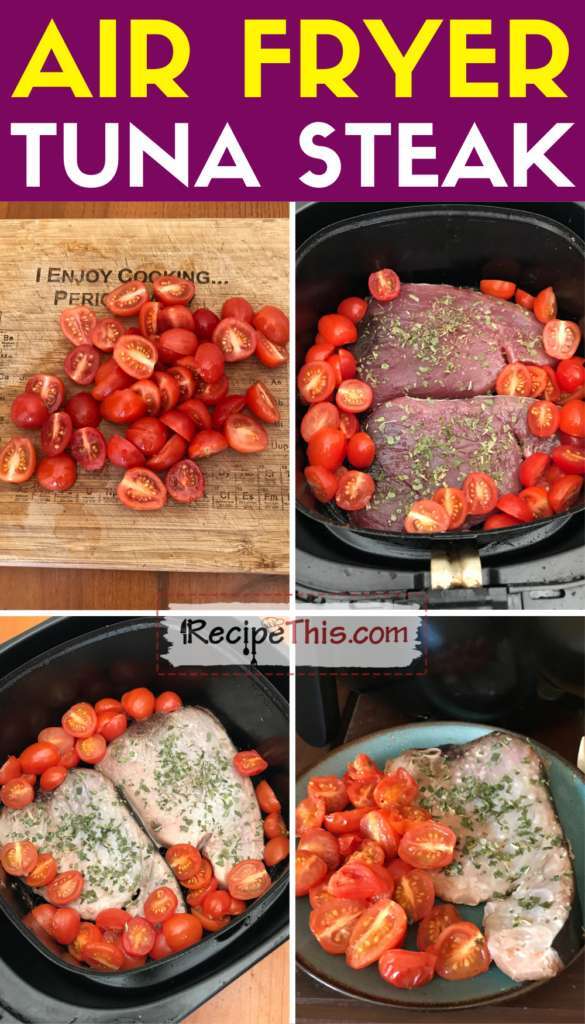
How To Cook Tuna Steak In Air Fryer: Easy Juicy Recipe
Cook tuna steak in an air fryer at 400°F for 5 to 8 minutes, flipping halfway through.
Learning how to cook tuna steak in air fryer style is simple, fast, and reliable when you control the heat and timing. The hot circulating air creates a lightly browned outside while keeping the center tender and moist. In this guide, I’ll share tested cooking times, safe temperature advice, seasoning ideas, common mistakes, and easy serving tips.
Why Cook Tuna Steak in an Air Fryer?
Air frying tuna steak takes less time than grilling or pan-searing. It also uses little oil and creates less mess, which makes it useful for a quick weeknight meal.
The air fryer works like a small convection oven. It moves hot air around the fish, so the tuna cooks evenly from all sides. A light coating of oil helps the surface brown without making the steak greasy.
When you cook tuna steak in air fryer, the most important factors are thickness, starting temperature, and desired doneness. A thin steak may finish in five minutes, while a thick steak may need eight minutes or more.
Tuna has a firm texture and a mild, meaty flavor. It can become dry if overcooked, so it is best to check it early. Think of the cooking time as a guide, not a rule set in stone.
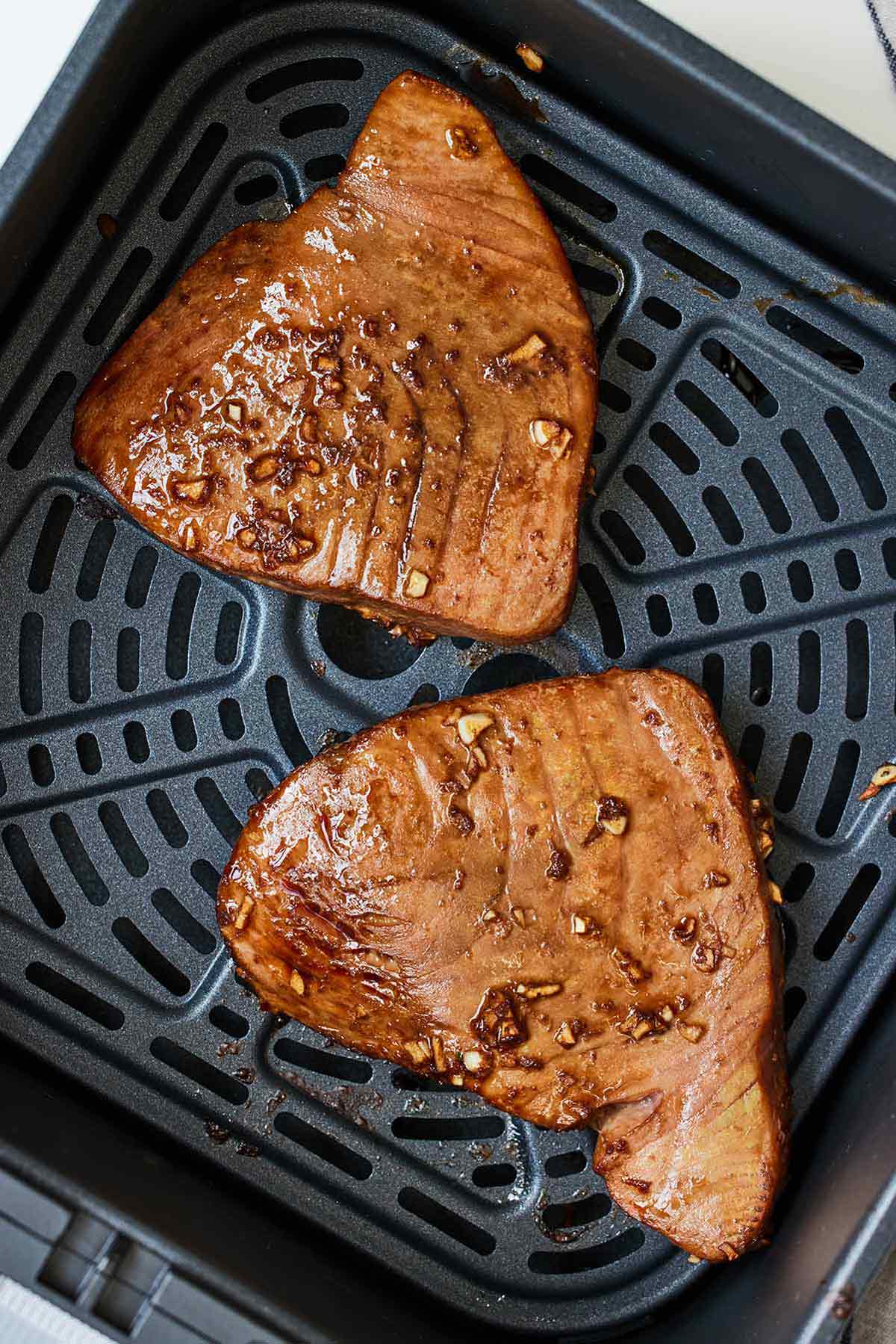
Ingredients for Air Fryer Tuna Steak
You only need a few basic ingredients. High-quality tuna and careful timing matter more than a long list of seasonings.
Basic ingredients
• 2 tuna steaks, about 6 ounces each and 1 inch thick
• 1 tablespoon olive oil or avocado oil
• ½ teaspoon kosher salt
• ¼ teaspoon black pepper
• ½ teaspoon garlic powder
• ½ teaspoon smoked paprika
• 1 teaspoon lemon juice
• Lemon wedges, for serving
Fresh ahi tuna, yellowfin tuna, or bluefin tuna can work well. Choose steaks with a fresh smell, firm flesh, and an even thickness. Avoid fish that smells strongly of ammonia or feels soft and mushy.
You can also use frozen tuna steaks. Thaw them fully in the refrigerator before cooking. Frozen fish can release extra water, which may prevent good browning and lead to uneven cooking.
How to Prepare Tuna Steak for the Air Fryer
Good preparation helps the tuna cook evenly. Start by patting the steaks dry with paper towels. Removing surface moisture allows the oil and seasoning to stick better.
Brush both sides with a thin layer of oil. Then season the tuna with salt, pepper, garlic powder, and smoked paprika. Add lemon juice just before cooking or use it after cooking for a fresher flavor.
Let the seasoned tuna rest at room temperature for about 10 minutes. Do not leave raw fish out for a long time. A short rest takes the chill off and helps the center cook more evenly.
Before you cook tuna steak in air fryer, preheat the appliance to 400°F. Preheating gives the fish an immediate burst of heat and reduces the risk of a pale or steamed exterior.
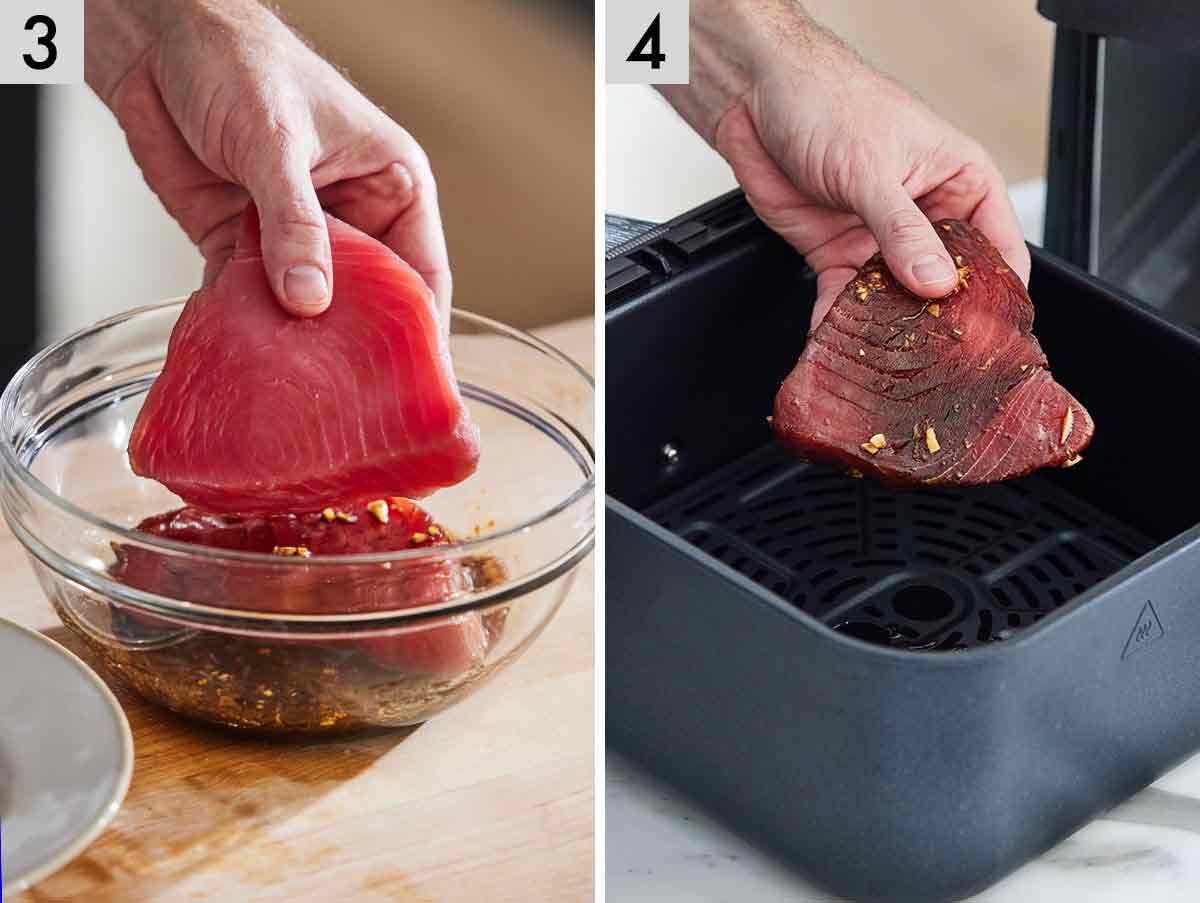
How to Cook Tuna Steak in Air Fryer
Follow these steps for tender tuna with a lightly browned surface.
- Preheat the air fryer to 400°F for 3 to 5 minutes.
- Lightly spray the basket with cooking spray or brush it with oil.
- Place the tuna steaks in a single layer. Leave space between them.
- Air fry at 400°F for 3 to 4 minutes.
- Flip the tuna carefully with a thin spatula or tongs.
- Continue cooking for 2 to 4 minutes.
- Check the thickest part with an instant-read thermometer.
- Rest the tuna for 2 to 3 minutes before slicing.
For a 1-inch tuna steak, the total cooking time is usually 5 to 8 minutes. The exact time depends on your air fryer, the thickness of the fish, and whether you want the center rare, medium, or well done.
If you prefer a rare center, begin checking at five minutes. For a medium center, cook closer to seven minutes. For well-done tuna, continue cooking until it reaches the safe internal temperature recommended for fish.
Air fryer tuna steak cooking chart
| Tuna steak thickness | Cooking temperature | Approximate time |
|---|---|---|
| ½ inch | 400°F | 3 to 5 minutes |
| ¾ inch | 400°F | 4 to 6 minutes |
| 1 inch | 400°F | 5 to 8 minutes |
| 1½ inches | 400°F | 8 to 11 minutes |
These times are estimates. Always use the fish’s internal temperature and appearance as your final guide.
Tuna Steak Internal Temperature and Doneness
Many restaurants serve tuna with a warm or cool pink center. That style can taste soft and rich, but it carries more food safety risk than fully cooked fish.
Food safety guidance commonly recommends cooking fish to 145°F in the thickest part. At this temperature, the tuna should look opaque and separate easily with a fork. A thermometer is the most dependable way to check.
Here are common doneness levels:
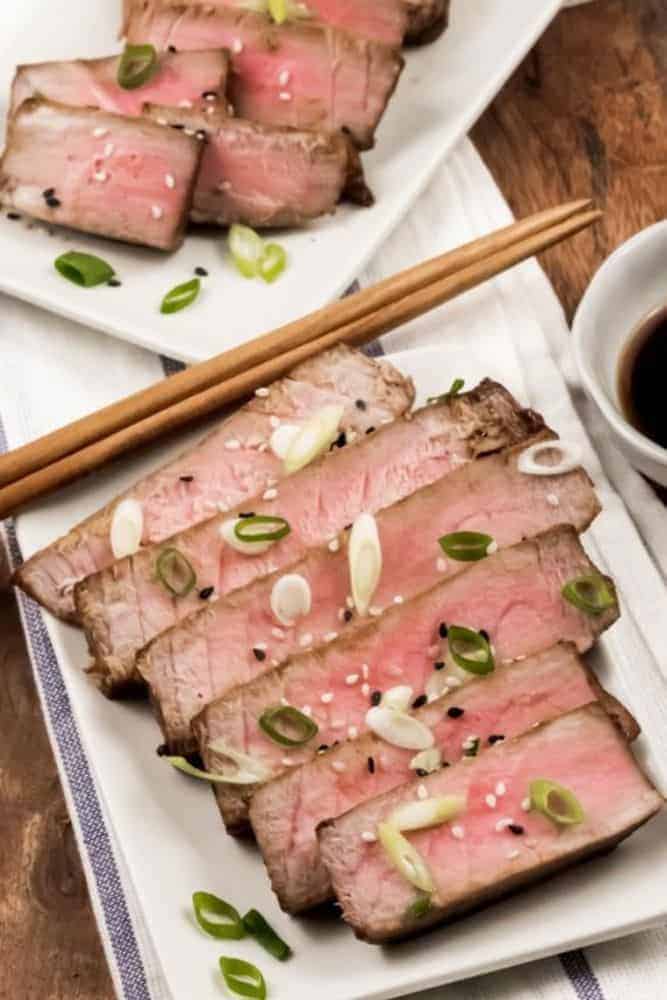
• Rare: Seared outside with a cool, red center
• Medium-rare: Warm, red-pink center with a firm edge
• Medium: Mostly pink center with a firmer texture
• Well done: Fully opaque and firm throughout
Raw or undercooked tuna may pose a greater risk for people who are pregnant, young children, older adults, or anyone with a weakened immune system. These groups should choose fully cooked tuna and follow safe seafood handling practices.
One mistake I learned early was judging tuna by color alone. The outside can look done while the center stays cold, or the fish can turn gray before it becomes safe. A quick thermometer check removes the guesswork.
How Long to Cook Tuna Steak in Air Fryer
The best time for air fryer tuna steak depends on thickness more than weight. A thick steak needs more time for heat to reach the center, even if it weighs the same as a thinner steak.
For a 1-inch tuna steak, start with five minutes at 400°F. Check it, then add one-minute bursts until it reaches your preferred doneness.
A powerful air fryer may cook tuna faster than a small model. Dark baskets can also brown fish more quickly than light baskets. Your first batch should be treated as a test run, so keep notes for future meals.
When you cook tuna steak in air fryer for the first time, avoid walking away. Tuna can change from tender to dry in only a few extra minutes.

Tips for Tender and Flavorful Air Fryer Tuna
Small details can make a large difference. Use these tips to improve both texture and flavor.
• Dry the tuna well before seasoning. Moisture blocks browning.
• Use a thin layer of oil. Too much oil can make the outside greasy.
• Preheat the air fryer. A hot basket helps sear the surface.
• Do not crowd the basket. Air must move around each steak.
• Flip the tuna halfway through cooking. This helps both sides cook evenly.
• Check the temperature early. You can always cook the fish longer.
• Rest the tuna briefly. This lets the juices settle before slicing.
• Cut against the grain. This makes each bite feel more tender.
• Add fresh lemon after cooking. Acid can brighten the fish without overpowering it.
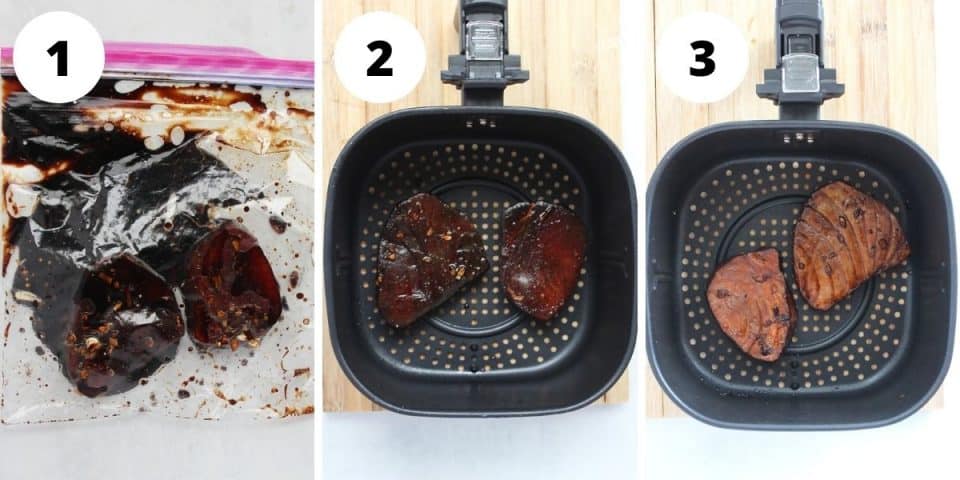
For extra flavor, try a simple soy-lime glaze. Mix 1 tablespoon soy sauce, 1 teaspoon lime juice, ½ teaspoon honey, and a small amount of grated ginger. Brush it on during the last one or two minutes so the sugars do not burn.
Best Seasonings for Tuna Steak
Tuna works with bold flavors because its texture is similar to a lean steak. You can keep the seasoning simple or use a global flavor profile.
Lemon pepper tuna
Use lemon zest, black pepper, garlic powder, salt, and olive oil. Serve with roasted vegetables or a green salad.
Cajun tuna steak
Use Cajun seasoning, smoked paprika, garlic powder, and a small amount of oil. This blend adds heat and works well with rice or corn.
Sesame soy tuna
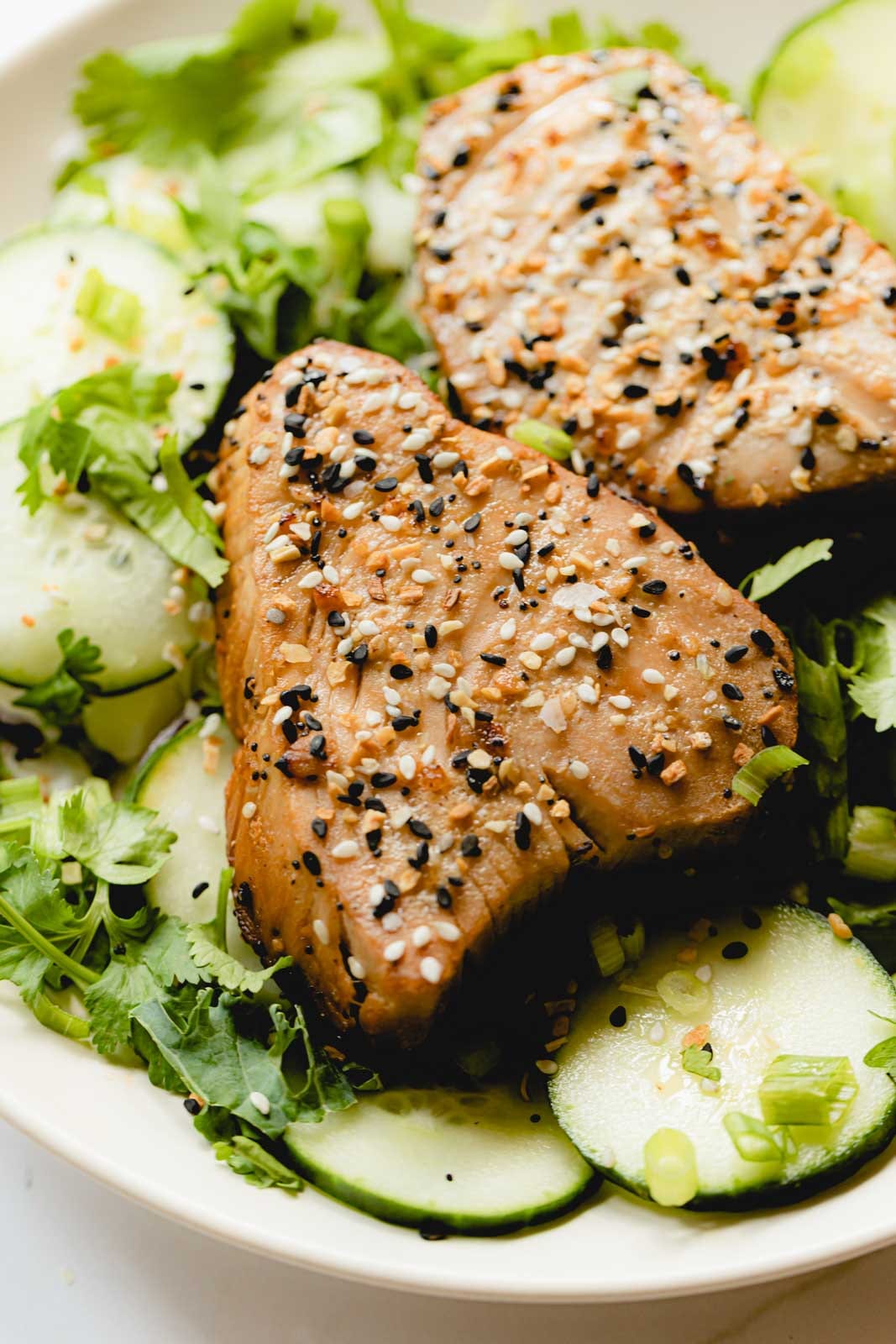
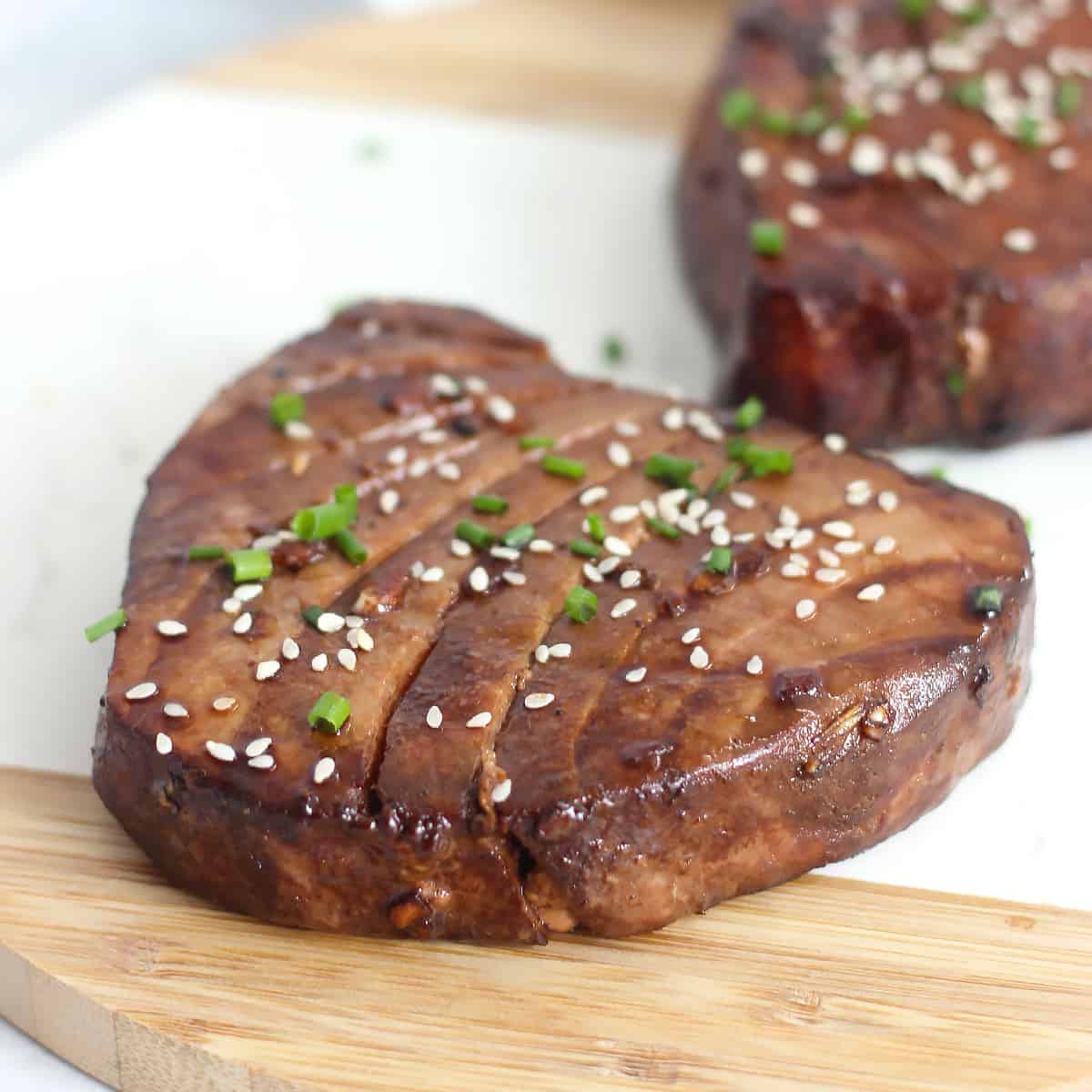
Brush the tuna with soy sauce and sesame oil. Add sesame seeds after cooking and serve with cucumber, rice, or steamed edamame.
Mediterranean tuna
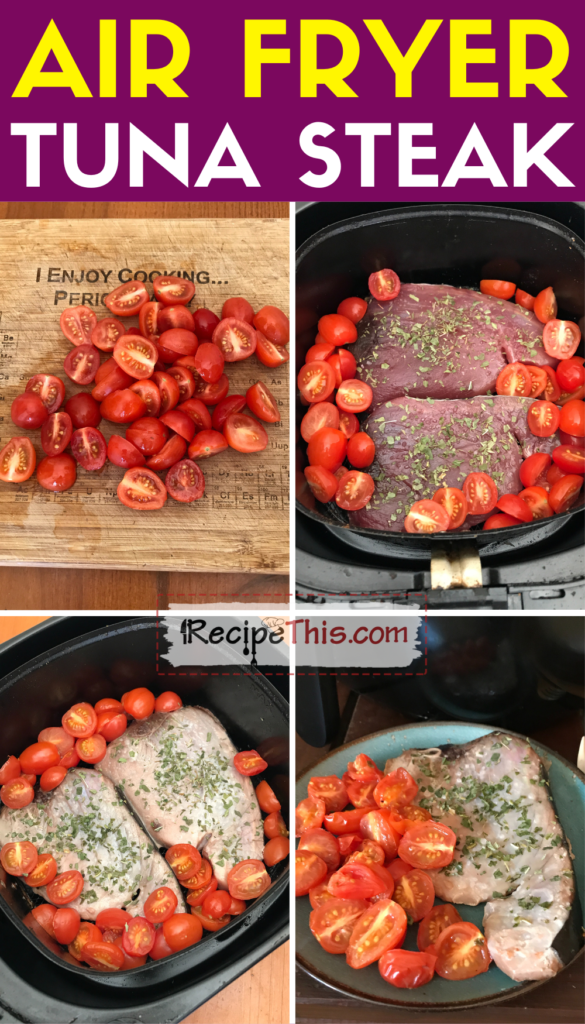
Use olive oil, oregano, garlic, lemon zest, and black pepper. Add chopped parsley and a spoonful of yogurt sauce at the table.
Chili-lime tuna
Combine chili powder, lime zest, cumin, salt, and oil. Top the cooked tuna with avocado salsa for a fresh contrast.
Avoid using thick sauces too early. Honey, barbecue sauce, and sweet marinades can burn in the air fryer. Apply them near the end of cooking instead.
What to Serve With Air Fryer Tuna Steak
Tuna steak pairs well with sides that add freshness, crunch, or mild flavor. Since tuna cooks quickly, choose sides that can be prepared at the same time.
Try serving it with:
• Jasmine rice or brown rice
• Air fryer asparagus
• Roasted broccoli
• Sweet potato wedges
• Cucumber and avocado salad
• Coleslaw
• Quinoa with herbs
• Steamed green beans
• Garlic mashed potatoes
• Mango salsa
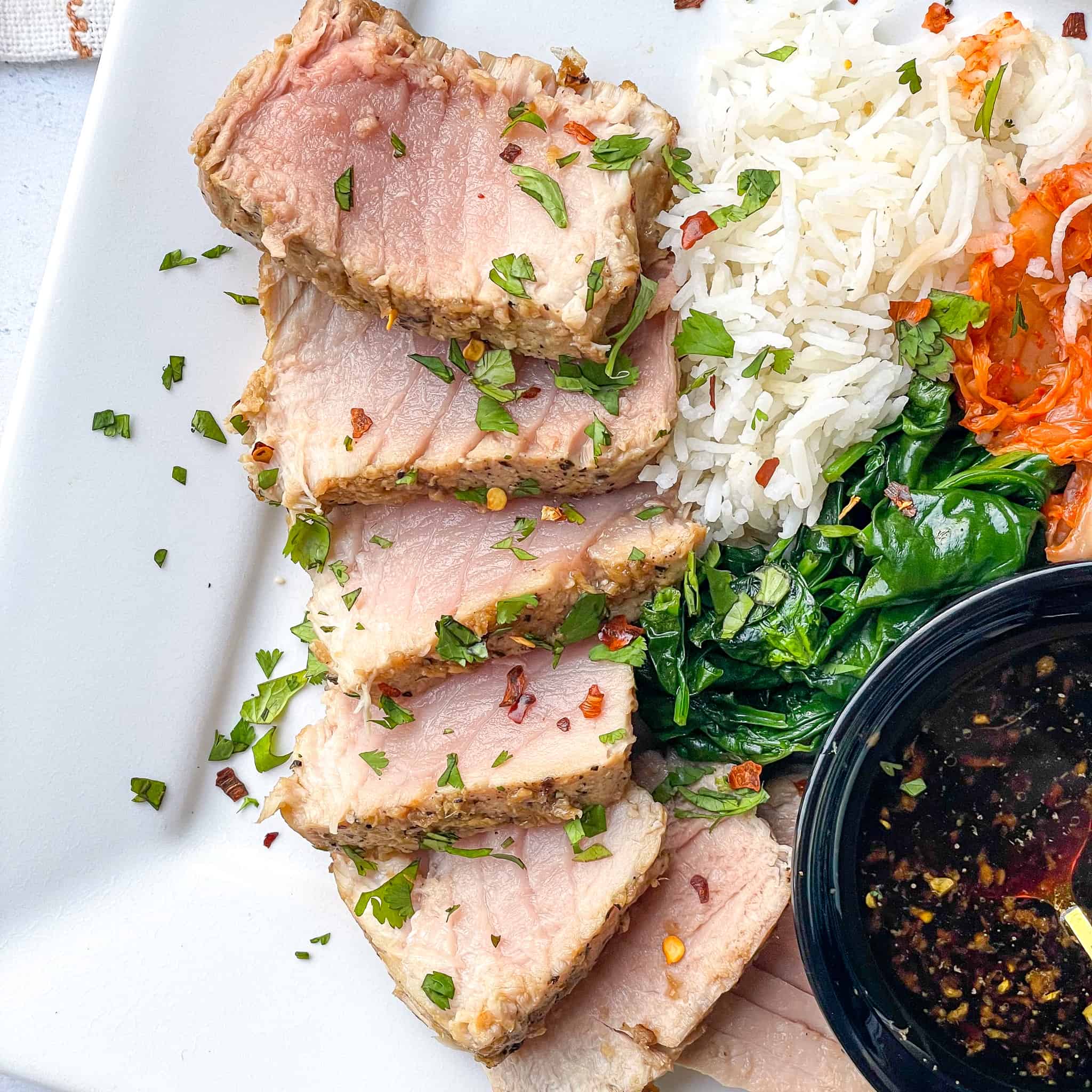
For a complete meal, serve the tuna over rice with sliced cucumber, shredded carrots, avocado, and a light soy-ginger sauce. This makes an easy bowl that feels filling without being heavy.
You can also slice the cooked tuna and place it in tacos. Add cabbage, lime crema, cilantro, and a little hot sauce for a quick seafood dinner.
Common Mistakes to Avoid
Learning how to cook tuna steak in air fryer becomes easier when you know what can go wrong.
Overcooking the tuna
Overcooked tuna becomes dry, firm, and chalky. Check it before the suggested finish time, especially if your steaks are less than 1 inch thick.
Skipping the preheat
A cold air fryer may cook the tuna slowly and produce a dull surface. Preheating helps the outside brown before the center loses moisture.
Using wet tuna
If the steaks are wet, the seasoning may slide off. The surface may also steam instead of brown.
Crowding the basket
Too many steaks reduce airflow. Cook in batches if needed.
Using too much marinade
A heavy marinade can drip into the basket and burn. Pat off excess liquid before cooking.
Forgetting to thaw frozen tuna
Frozen tuna can cook unevenly. Thaw it in the refrigerator overnight, then dry it well before seasoning.
Cutting the fish right away
Slicing immediately can release juices onto the cutting board. A short rest helps the tuna stay moist.
I once tried cooking two very thick tuna steaks together without checking their size. One was ready while the other needed more time. Since then, I measure the thickest steak and check each piece separately.
How to Store and Reheat Tuna Steak
Store leftover cooked tuna in a sealed container in the refrigerator. Use it within three to four days for the best quality and safety.
Cold tuna works well in salads, wraps, grain bowls, and sandwiches. If you want to reheat it, use a low temperature so the fish does not dry out.
To reheat tuna in the air fryer, set the appliance to 300°F and warm the fish for 2 to 4 minutes. Add a little moisture, such as lemon juice or a spoonful of sauce, before reheating.
Do not repeatedly warm and cool the same piece of fish. Reheat only the portion you plan to eat.
Can You Cook Frozen Tuna Steak in an Air Fryer?
You can cook frozen tuna steak in an air fryer, but thawed tuna usually gives better results. Frozen steaks may need extra time, and the outside can cook before the center warms.
If cooking from frozen, set the air fryer to 375°F. Cook for about 10 to 14 minutes, flipping halfway through, then check the internal temperature.
The exact time varies by thickness and air fryer model. For the best texture, thaw the tuna in the refrigerator, pat it dry, and cook tuna steak in air fryer at 400°F.
Is Air Fryer Tuna Steak Healthy?
Air fryer tuna steak can be a nutritious meal. Tuna provides protein and several important nutrients, while air frying requires less oil than deep frying.
The nutrition depends on the type of tuna, the amount of oil, and the toppings. Sauces made with butter, mayonnaise, or sugar can add more calories and sodium.
Tuna can contain mercury, and levels vary by species. Follow current seafood advice, vary the kinds of fish you eat, and choose options that fit your personal health needs. People who are pregnant or feeding young children should follow specific seafood guidance from health authorities.
Frequently Asked Questions About How to Cook Tuna Steak in Air Fryer
How long does it take to cook tuna steak in an air fryer?
A 1-inch tuna steak usually takes 5 to 8 minutes at 400°F. Check the fish early because air fryer power and steak thickness can change the cooking time.
Do you flip tuna steak in the air fryer?
Yes, flipping halfway through cooking helps the tuna cook more evenly. It also gives both sides similar exposure to the hot circulating air.
What temperature should tuna steak reach?
For food safety, cook fish to 145°F in the thickest part. Tuna served rare or medium-rare may not reach that temperature and carries more risk.
Can I cook tuna steak without oil?
Yes, but a small amount of oil improves browning and helps seasonings stick. Use about 1 teaspoon per steak if you want a lighter option.
Should I marinate tuna steak before air frying?
You can marinate tuna for 15 to 30 minutes before cooking. Pat off excess marinade so the tuna browns instead of steaming, and avoid long marinades with strong acid because they can change the texture.
How do I know when tuna steak is done?
Use an instant-read thermometer in the thickest part. The center should match your desired doneness, while fully cooked tuna should reach 145°F and look opaque.
Can I cook tuna steak in air fryer with vegetables?
Yes, but dense vegetables may need more time than tuna. Start the vegetables first, then add the tuna when there is enough cooking time left for both foods.
Conclusion
Cooking tuna steak in air fryer is a fast way to make a flavorful seafood meal with little cleanup. Preheat the appliance to 400°F, dry and season the tuna, cook it for about 5 to 8 minutes, and check the thickest part before serving.
The key lesson is simple: watch the fish closely and use a thermometer when food safety matters. Start with a shorter cooking time, then add more heat in small steps to protect the tuna’s texture.
Try the basic lemon-pepper version first, then explore sesame soy, Cajun, or chili-lime flavors. Share your favorite seasoning or serving idea in the comments, and explore more easy air fryer recipes for your next meal.

Appliance Review Expert
Lucas Ramirez is a trusted voice at HomeFixGrid.com, known for his clear, practical, and creatively written guides that simplify appliance care for everyday homeowners. With a strong focus on hands-on testing and real-world problem-solving, Lucas brings expert insight into appliance reviews and troubleshooting techniques. Her work empowers readers to confidently maintain, repair, and choose the right appliances for their homes.