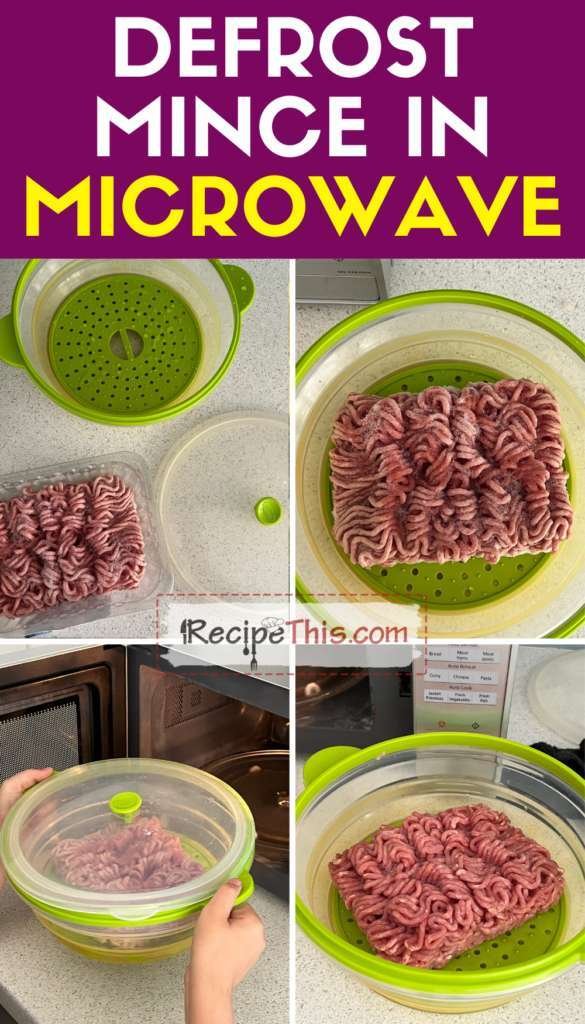
Can I Defrost Meat In Microwave: Safe Methods
Yes. You can defrost meat in a microwave, and it is often the fastest safe method in a U.S. kitchen. The key rule is simple: cook the meat right after microwave thawing.
Microwaves can warm some parts of the meat while other parts remain frozen. Those warm spots may enter the temperature range where bacteria grow quickly. For this reason, the USDA recommends cooking meat immediately after it thaws in the microwave.

Is It Safe to Defrost Meat in a Microwave?
Yes, microwave thawing is safe when you follow the right steps. It is not safe to thaw meat on the kitchen counter or in hot water.


The microwave may start cooking thin edges or small sections of the meat. This is normal. It also means you should not place the meat back in the refrigerator for later cooking unless you cook it first.
The USDA recognizes three safe ways to thaw meat:
- In the refrigerator
- In cold water
- In the microwave
The refrigerator method gives the best quality and allows you to wait before cooking. Cold-water thawing is faster but needs more attention. Microwave thawing is usually the quickest option.

How to Defrost Meat in the Microwave
Follow these steps to thaw meat safely and evenly.
1. Remove unsafe packaging
Take the meat out of foam trays, store wraps, cardboard boxes, and absorbent pads. These materials may melt, catch heat, or release unwanted chemicals.
Use a microwave-safe plate or dish instead. If the package clearly says it is safe for microwave use, follow its directions.
2. Use the defrost setting
Choose the microwave’s Defrost setting. If your microwave asks for a weight, enter the meat’s correct weight.
If it asks for power instead, use about 30% power. Lower power helps the meat thaw instead of cook.
Do not use full power unless the meat is very small and you plan to watch it closely.
3. Pause and turn the meat
Stop the microwave every few minutes. Turn the meat over and separate pieces as they loosen.


For a thick cut, place the thinner parts toward the center of the plate. The outer parts of a microwave-safe dish often receive more heat.
4. Shield thin parts
Small pieces and thin edges can begin to cook before the center thaws. Cover those areas loosely with small pieces of microwave-safe plastic wrap or use the microwave’s built-in shielding method.
Do not use aluminum foil unless your microwave manual specifically permits it. Metal can cause sparks and damage the appliance.
5. Check the center
The meat is ready when it is flexible and no large frozen core remains. It may still feel cold. That is fine.
Do not wait for the meat to become warm or fully cooked during thawing.
6. Cook it right away
Place the meat in the oven, skillet, grill, air fryer, or other cooking appliance immediately after thawing.
This rule applies to beef, pork, lamb, veal, poultry, ground meat, and seafood.

How Long Does Meat Take to Defrost in a Microwave?
Microwave thawing time depends on the meat’s weight, shape, thickness, starting temperature, and microwave wattage. A flat package thaws much faster than a thick roast.
Use the microwave manual as your main guide. The times below are only general estimates, not guarantees.
| Meat type | Typical microwave behavior |
|---|---|
| Ground beef or turkey | Thaws fairly quickly, but edges may start to cook |
| Chicken breasts | May thaw unevenly because the thin ends warm first |
| Pork chops | Usually thaw faster when separated |
| Steak | Thick centers may stay frozen while edges warm |
| Roast | Often thaws unevenly and may be better in cold water or the refrigerator |
| Fish fillets | Can thaw quickly but may become soft or partly cooked |
For example, two thin chicken breasts may thaw in several minutes, while a large beef roast may take much longer and may not thaw evenly. Stop the microwave often rather than relying on one long cycle.
If the meat begins to cook, stop thawing and start cooking it at once.
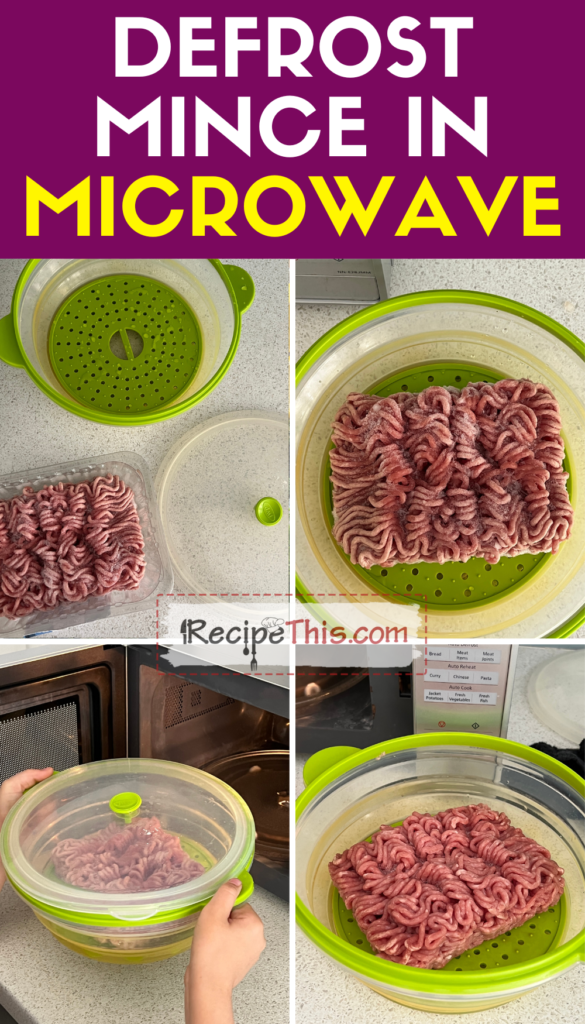
Can You Defrost Meat in Its Original Package?
Usually, you should remove meat from its original store package before microwave thawing.
Many grocery packages contain foam trays, plastic film, cardboard, or absorbent pads. These materials may not be designed for microwave heat.


Place the meat on a microwave-safe plate. If the meat is wrapped in microwave-safe packaging, check the package directions before using it.
Also remove:
- Metal clips
- Twist ties with metal
- Foil wrapping
- Foam trays
- Absorbent pads
- Any packaging with no microwave-safe instructions
If the packaging starts to melt, smoke, spark, or smell unusual, stop the microwave. Move the meat to a clean microwave-safe dish and discard damaged packaging.

What Temperature Should Meat Reach After Microwave Thawing?
Thawing does not make meat safe to eat. You still need to cook it to a safe internal temperature.
Use a food thermometer in the thickest part of the meat. Avoid touching bone, the pan, or the cooking surface with the probe.
According to the USDA safe minimum internal temperature chart, use these targets:
| Food | Minimum internal temperature |
|---|---|
| Poultry, including chicken and turkey | 165°F |
| Ground meat, including beef, pork, lamb, and veal | 160°F |
| Whole cuts of beef, pork, lamb, and veal | 145°F, followed by a 3-minute rest |
| Fish | 145°F, or until the flesh is opaque and flakes easily |
The thermometer is more reliable than color. Meat can look done before it reaches a safe temperature, or stay pink after it is safe.

Microwave Thawing vs. Other Safe Methods
The best thawing method depends on how soon you need the meat and whether you want to preserve quality.
| Method | Speed | Can you wait before cooking? | Main concern |
|---|---|---|---|
| Refrigerator | Slow | Yes | Requires planning |
| Cold water | Moderate | No; cook after thawing | Water must stay cold |
| Microwave | Fast | No; cook immediately | Uneven thawing and partial cooking |
Refrigerator thawing
Refrigerator thawing is the easiest method for meal planning. Keep the refrigerator at 40°F or below.
Place the meat in a leak-proof container on the bottom shelf. This helps prevent raw juices from dripping onto ready-to-eat food.
Small items may thaw overnight. Large cuts may need one or more days.
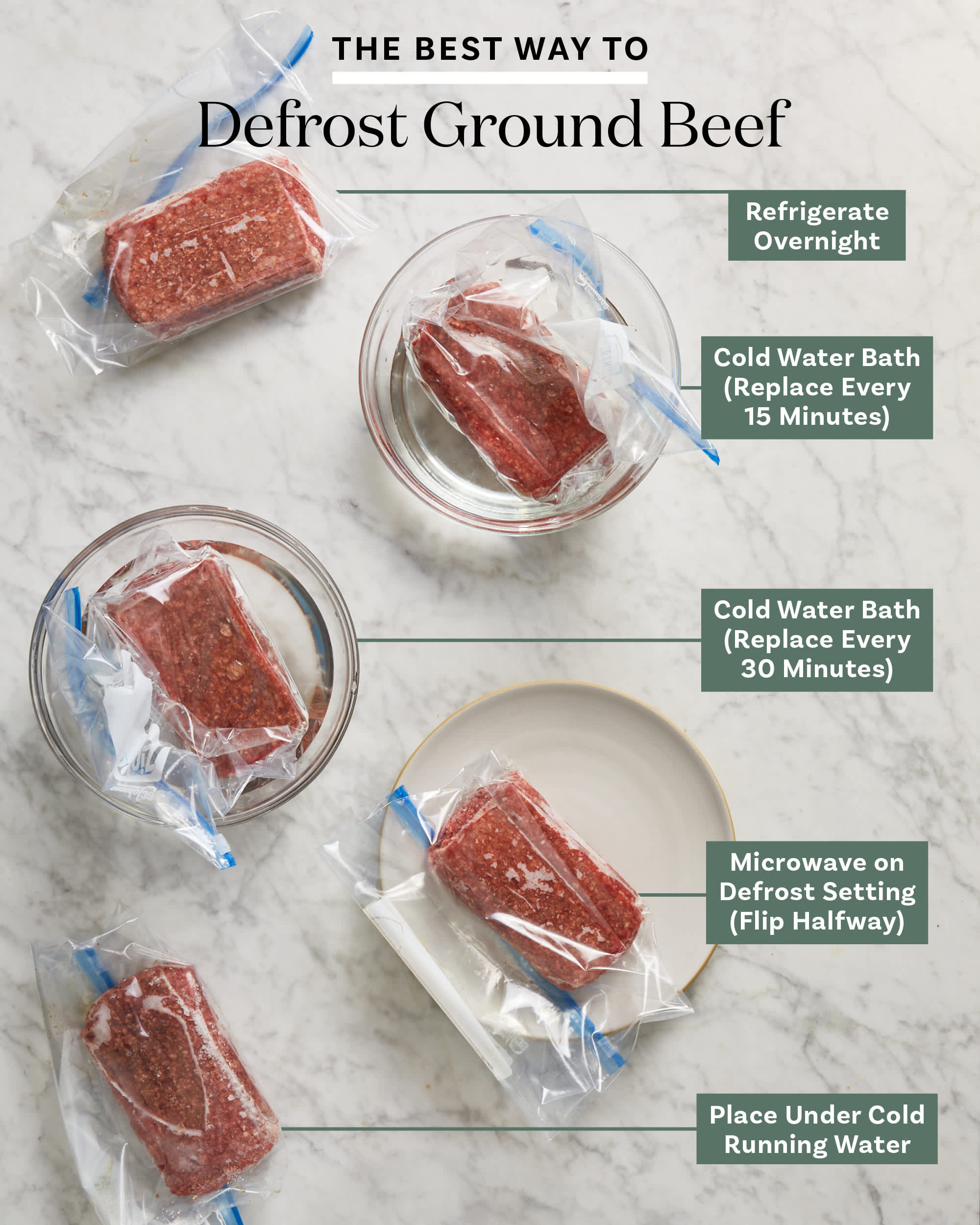
Cold-water thawing
Keep the meat in a leak-proof bag. Submerge it in cold tap water.
Change the water every 30 minutes so it stays cold. Cook the meat as soon as it thaws.


Do not use warm or hot water. The outside may become warm enough for bacteria to grow while the inside remains frozen.
Common Microwave Defrosting Mistakes
Avoid these mistakes when thawing meat.
Using full power for too long
Full power can cook the outside while the center stays frozen. Use the defrost setting or lower power, and pause often.
Leaving meat unattended
A microwave can change quickly. A few extra minutes may cook thin edges or poultry skin.
Refreezing raw meat after microwave thawing
Do not return microwave-thawed raw meat to the freezer. Cook it first.
The USDA allows meat thawed in the refrigerator to be refrozen while raw, although quality may decline. That rule does not apply to meat thawed in the microwave unless you cook it before refreezing.
Thawing meat on the counter
Room-temperature thawing is unsafe. The outside can warm while the inside remains frozen.
Guessing whether meat is safe
Smell and appearance cannot reliably show whether bacteria are present. Use safe thawing methods and a food thermometer.
Washing raw meat
Do not rinse raw meat to remove bacteria. Water can spread germs around the sink and nearby surfaces. Cooking is what makes the meat safe.

What If the Meat Starts Cooking During Defrosting?
If part of the meat turns gray, white, or firm from heat, stop the defrost cycle. Begin cooking the meat immediately.
Do not let it sit on the counter. Do not place it back in the refrigerator for later use.
If the meat becomes hot but you cannot cook it right away, follow the USDA’s general food-safety limits for perishable food. Keep raw meat out of the “danger zone,” which is 40°F to 140°F, as much as possible. Perishable food should not remain at room temperature for more than two hours, or more than one hour when the air temperature is above 90°F.
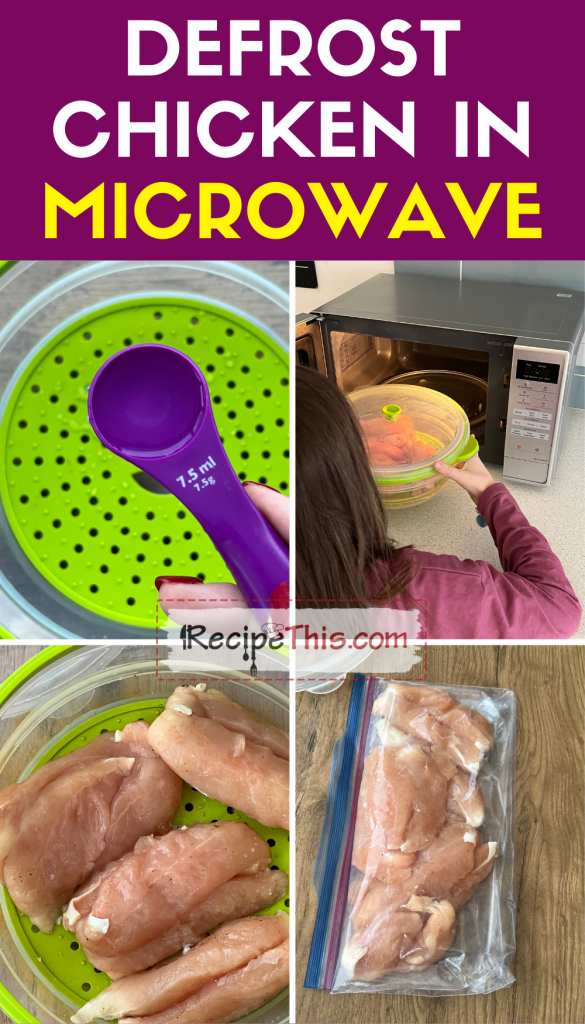
How to Defrost Different Types of Meat
Ground meat
Ground meat often thaws unevenly. Stop the microwave frequently and break off softened pieces.
Cook ground beef, pork, lamb, or veal to 160°F. Cook ground poultry to 165°F.
Chicken and turkey
Poultry can develop warm spots quickly, especially at thin ends and wings. Turn the pieces often and shield thin areas if needed.
Cook all poultry to 165°F.
Steak and pork chops
Separate pieces as soon as they loosen. A thick steak may still have a frozen center when the edges feel warm.
Cook whole cuts of beef, pork, lamb, or veal to at least 145°F, then let them rest for three minutes.
Roasts
Large roasts are difficult to thaw evenly in a microwave. The outside may cook before the center softens.
Use the refrigerator when possible. If you use the microwave, plan to cook the roast immediately and check it often.
Fish and seafood
Fish fillets can thaw quickly. Use short cycles and check for soft, flexible sections.
Cook fish to 145°F, or until the flesh is opaque and flakes easily with a fork.

Can You Cook Meat From Frozen Instead?
Yes. Many meats can be cooked from frozen, but cooking takes longer.
This option may work better than microwave thawing when you do not need to separate the pieces first. Use a food thermometer to confirm the final internal temperature.
Frozen meat may cook less evenly than thawed meat. A thick frozen cut can brown on the outside before the center is done.
For detailed cooking instructions, follow the appliance or recipe guidance for the specific cut.
Key Takeaways
- Yes, you can defrost meat in a microwave.
- Use the Defrost setting or about 30% power.
- Remove foam trays, absorbent pads, metal, and unsafe packaging.
- Turn and separate the meat during thawing.
- If any part begins to cook, stop thawing.
- Cook microwave-thawed meat immediately.
- Use a food thermometer to check doneness.
- Refrigerator thawing is better when you need to wait before cooking.
Frequently Asked Questions
Can I defrost meat in the microwave and cook it later?
No. Cook meat immediately after microwave thawing. The microwave may warm or partly cook some areas, which can allow bacteria to grow if the meat sits for too long.
Is it better to defrost meat in water or the microwave?
It depends on your time. The microwave is faster, but it can thaw unevenly and requires immediate cooking. Cold-water thawing is slower but often gives better results for larger packages.
Can I microwave frozen meat without using the defrost setting?
You can, but full power increases the chance that the outside will cook while the center stays frozen. Use the defrost setting or low power whenever possible.
Can I refreeze meat after defrosting it in the microwave?
Only after cooking it first. Raw meat thawed in the microwave should not be refrozen directly.
How do I know when meat is defrosted?
The meat should be flexible, with no large frozen center. It may still feel cold. Do not wait for it to become warm, because warm meat may already be cooking.
Conclusion
You can safely defrost meat in a microwave when you use low power, turn the meat often, remove unsafe packaging, and cook it right away. For the best texture and more flexible timing, thaw meat in the refrigerator. When speed matters, microwave thawing is a practical option—just use a food thermometer before serving.

Appliance Review Expert
Lucas Ramirez is a trusted voice at HomeFixGrid.com, known for his clear, practical, and creatively written guides that simplify appliance care for everyday homeowners. With a strong focus on hands-on testing and real-world problem-solving, Lucas brings expert insight into appliance reviews and troubleshooting techniques. Her work empowers readers to confidently maintain, repair, and choose the right appliances for their homes.