How To Clean Microwave Stains: Easy Cleaning Guide
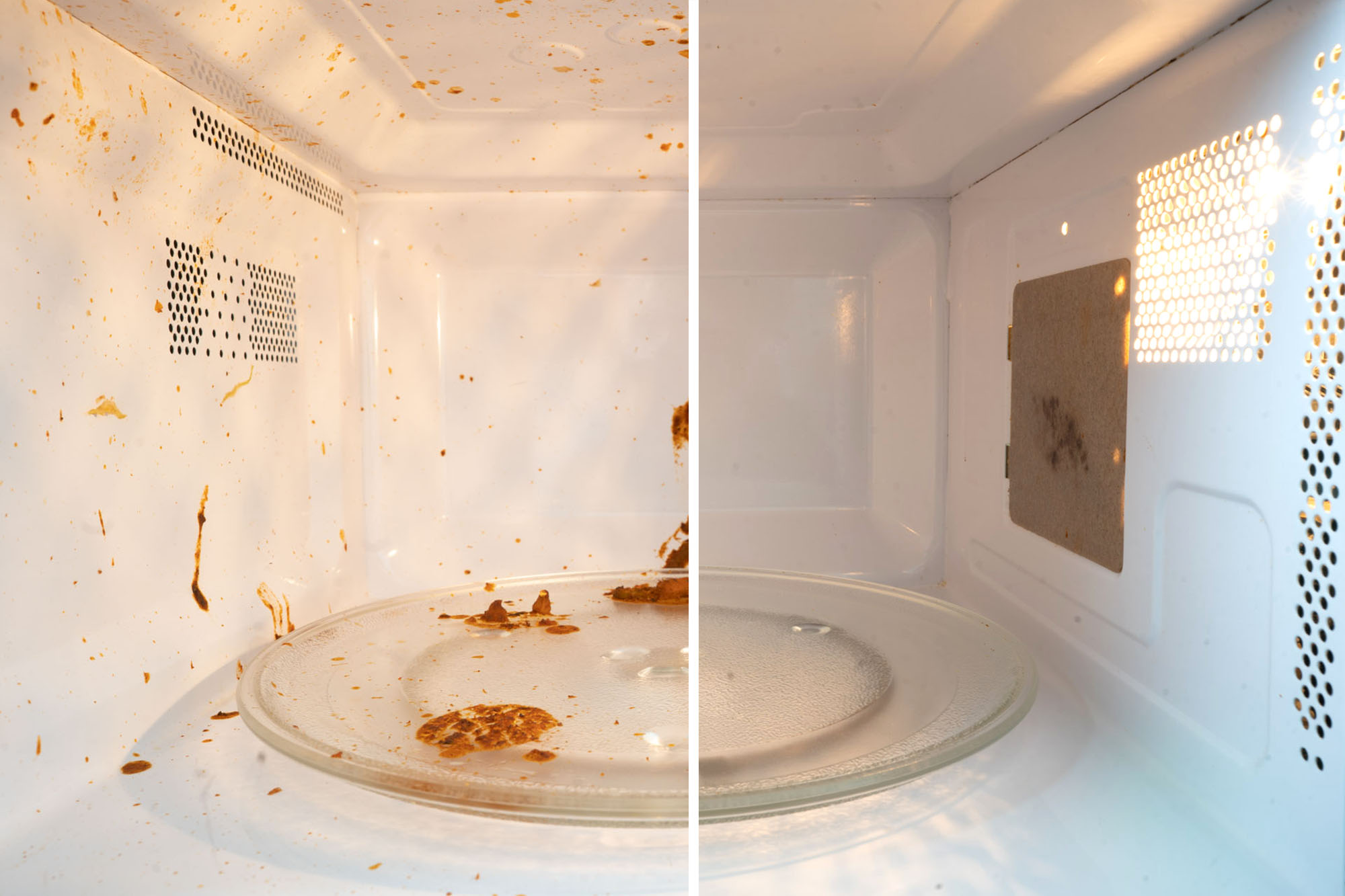
To clean microwave stains, loosen the dried food with steam, wipe the inside with warm soapy water, and treat grease or burnt spots with a gentle paste. In most U.S. kitchens, this takes about 10 to 15 minutes and needs only a bowl, water, dish soap, and soft cloths.
Do not use steel wool, harsh scouring powder, or a chemical cleaner that the microwave maker does not approve. These can harm the oven’s inside coating or leave unsafe residue near food.
What You Need Before You Start
Gather these simple supplies:
- A microwave-safe glass or ceramic bowl
- 1 cup of water
- Dish soap
- A soft sponge or microfiber cloth
- A clean towel
- A soft toothbrush for small seams
- Baking soda for tough spots
- White vinegar, if you want extra help with odors or grease
You do not need a special microwave cleaner. Warm water and dish soap work well for most stains.
Before cleaning, check the microwave’s owner’s manual. Some models have a stainless steel inside, while others have a painted or coated cavity. The manual may list cleaners to avoid.
Safety checks
Before you wipe the microwave:
- Turn it off and unplug it if you can reach the plug safely.
- Let the inside cool.
- Remove the glass turntable and roller ring.
- Check for broken glass, loose parts, or peeling paint.
- Keep water away from vents, the control panel, and door seals.
A microwave should not run while empty. Also, never heat a sealed container. Steam must have a safe way to escape.
How to Clean Microwave Stains Step by Step
The best first step is to soften the stains with steam. Steam will not remove every mark by itself, but it helps dried food release from the walls.
1. Remove loose crumbs and parts
Take out the turntable and roller ring. Shake loose crumbs into the trash or wipe them away with a dry cloth.
Wash the turntable in warm, soapy water. If the glass is hot, let it cool before placing it in water. A sudden temperature change may crack glass.
Clean the roller ring with a soft sponge. Food can collect under its small wheels.
2. Steam the inside
Add 1 cup of water to a microwave-safe bowl. For extra grease-cutting power, add 1 teaspoon of dish soap.
Place the bowl in the microwave. Heat it on high for about 2 to 3 minutes, or until the water is very hot and the inside looks steamy. Time can vary by microwave power and bowl size.
Keep the door closed for another 5 minutes. This gives the warm moisture time to soften stuck food.
Open the door with care. The bowl and water may be hot.
3. Wipe from top to bottom
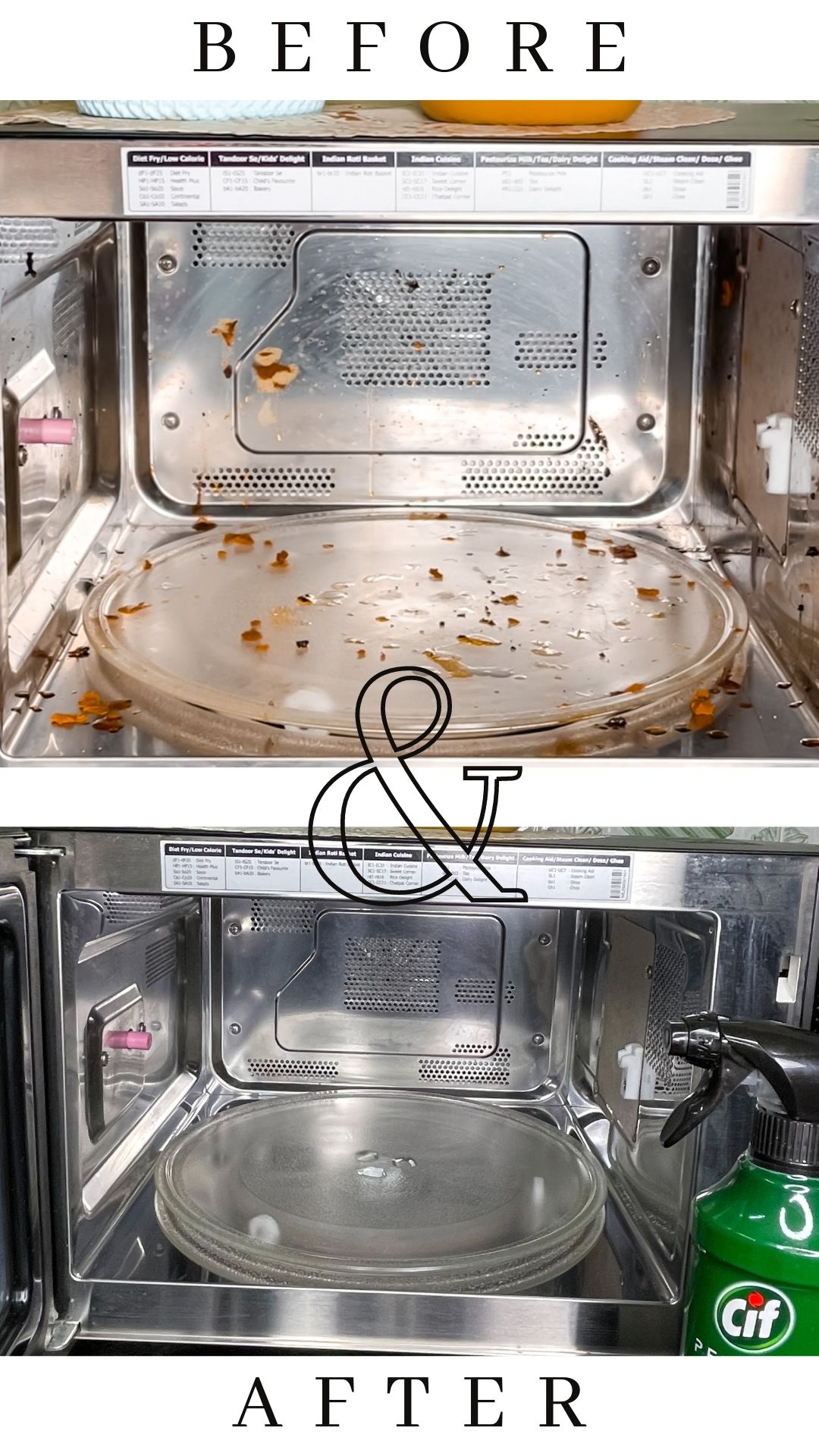
Remove the bowl. Use a damp, soft cloth to wipe the ceiling first, then the walls, door, floor, and door edge.
Work from clean areas toward dirtier areas. Rinse the cloth often. This keeps you from spreading grease around the cavity.
Use a soft toothbrush on:
- Door edges
- Corners
- Around the turntable track
- Small gaps near the bottom
- The area around the door latch
do not push water into vents or openings.
4. Treat the remaining stains
For a stain that still clings to the surface, make a thin paste with baking soda and a little water. Place it on the spot for 5 to 10 minutes.
Wipe gently with a damp cloth. Do not scrub hard. Baking soda is mild, but strong pressure can still dull or damage some finishes.
For grease, use a small amount of dish soap on a damp cloth. Wipe again with clean water to remove soap film.
5. Dry every surface
Use a clean towel to dry the inside, turntable, and roller ring. Leave the door open for a few minutes so moisture can escape.
Put the dry parts back in place. The microwave is ready when no food, soap, or loose moisture remains.

How to Remove Different Types of Microwave Stains
The right method depends on the stain. Start with the gentlest option and repeat it before trying anything stronger.
| Stain type | Best first method | What to avoid |
|---|---|---|
| Dried food | Steam, then wipe | Sharp tools |
| Grease | Warm water and dish soap | Strong scouring pads |
| Tomato or curry marks | Baking soda paste and gentle wiping | Hard scrubbing |
| Burnt food | Steam, soak, and repeat | Metal scrapers |
| Water spots | Damp cloth, then dry towel | Abrasive powder |
| Bad odor | Clean food residue, then air out | Masking the smell with fragrance |
Dried food
Steam the microwave first. If a spot remains, place a warm, damp cloth over it for several minutes.
Do not use a knife or razor blade. A sharp edge can scratch the coating and create a place where food and moisture collect.
Grease stains
Dish soap is usually the best choice because it breaks up grease. Apply it to the cloth, not directly into vents or control openings.
For a heavy grease film, repeat the steam step. Several gentle passes are safer than one hard scrub.
Tomato sauce and curry stains
Red and yellow foods can leave color behind. Clean the food film first, then use a baking soda paste on the mark.
Some color may remain even after the surface is clean. Staining is not always the same as leftover food. If the inside coating is smooth, intact, and clean, a faint color mark may be only a cosmetic change.
Burnt food
Remove any loose pieces. Steam the area, then wipe it with soapy water.
If the smell or dark mark remains, repeat the process after the microwave cools. Do not operate the microwave with a burnt object inside. If you see smoke, arcing, bubbling paint, or damage to the cavity, stop using the appliance and seek service guidance.
Yellow or brown marks
Yellow or brown spots may come from grease, repeated heating, or a damaged coating. Clean them gently first.
If the mark feels rough, flakes, blisters, or exposes metal, cleaning will not fix the problem. Contact the manufacturer or a qualified appliance technician.

How to Get Rid of a Bad Microwave Smell
Cleaning the food residue is the main way to remove a microwave odor. Air fresheners only cover the smell and can leave unwanted residue.
After cleaning, place a bowl of plain water inside and heat it until the water is hot and the cavity is steamy. Let it sit with the door closed for a few minutes, then wipe and dry the inside.
You can also place an open bowl of baking soda in the turned-off microwave for several hours. Do not heat dry baking soda.
White vinegar can help with some odors, but it is not required. If you use it, mix a small amount with water in a microwave-safe bowl. Never mix vinegar with bleach, ammonia, or other cleaners.
If the smell is electrical, sharp, or smoky rather than food-like, stop using the microwave. A food stain should not produce repeated sparks, smoke, or a burning-plastic smell.

What Not to Use on a Microwave
Some common cleaning tools can cause damage.
Avoid:
- Steel wool
- Metal scouring pads
- Knives, razors, and other sharp tools
- Abrasive powders
- Oven cleaner unless the manual clearly allows it
- Bleach mixed with another cleaner
- Ammonia-based products unless the manual allows them
- Excess water near vents or controls
- Fragrance sprays inside the cooking cavity
Do not spray cleaner directly on the ceiling, vents, door latch, or control panel. Spray or apply it to a cloth instead.
Do not remove the outer cabinet. The inside can contain high-voltage parts, and unplugging the unit does not make every component safe to touch.

How Often Should You Clean a Microwave?
Wipe fresh spills as soon as the microwave cools. Fresh food is easier to remove than dried food.
For normal home use:
- Wipe visible spills after cooking.
- Clean the inside once a week if the microwave gets daily use.
- Wash the turntable when food splashes onto it.
- Deep-clean the cavity when you notice grease, dried food, or odor.
Covering food with a vented microwave cover can reduce splatter. Leave a gap for steam unless the cover is designed to vent on its own.
Regular cleaning also helps you spot damage early. A clean surface makes peeling paint, cracks, rust, and burn marks easier to see.

Why Microwave Stains Sometimes Will Not Come Off
Not every dark mark is removable food. Some marks result from heat, grease that has baked onto the finish, or damage to the cavity coating.
Cleaning may not restore the surface if:
- The coating is peeling or bubbling.
- Rust is visible.
- Metal is exposed.
- The cavity has deep scratches.
- A burn mark returns after cleaning.
- The microwave sparks during use.
- The door does not close or seal correctly.
- The door glass or screen is damaged.
Do not paint the inside with ordinary household paint. Microwave cavity coatings must be suitable for that use. Ask the manufacturer about repair or replacement options.
A small cosmetic mark on an intact, smooth surface is different from exposed metal or peeling coating. When in doubt, stop using the microwave until the manufacturer or a qualified technician gives advice.
Common Cleaning Mistakes
Using too much water
A wet cloth is useful. A soaked microwave is not. Excess water can enter vents, switches, or electronic parts.
Scrubbing too hard
Hard scrubbing can damage a painted or coated cavity. Let steam and time do more of the work.
Cleaning while the microwave is hot
Hot food and hot glass can burn you. Let the unit cool before wiping it.
Mixing cleaning chemicals
Never mix bleach with vinegar, ammonia, or another cleaner. Harmful vapors can form.
Ignoring the door
Food on the door edge can stop the door from closing cleanly. Wipe the door seal and frame with a damp cloth, but do not bend or remove the seal.
Treating damage as a stain
If a mark is raised, flaky, rusty, or linked to sparks, it may be damage. More cleaner will not solve it.

Troubleshooting: What to Do If Cleaning Fails
The stain is still hard after steaming
Repeat the steam step once. Then apply a baking soda paste for 5 to 10 minutes and wipe gently.
If the mark remains but the surface is smooth and clean, it may be permanent discoloration.
The microwave still smells
Look under the turntable and around the roller ring. Small food bits can cause a strong smell.
Clean the door edge, ceiling, and vent area that the manual identifies as user-cleanable. If the smell is smoky or electrical, stop using the microwave.
The microwave sparks after cleaning
Stop the microwave at once. Remove any metal object, twist tie, foil, or dish with metallic trim.
If it still sparks, or if the cavity has chipped coating or exposed metal, unplug the unit and contact the manufacturer or a qualified repair professional.
The turntable will not rotate
Check that the roller ring sits correctly and that the turntable is aligned with its center guide. Remove food from the track.
If the plate still will not move, consult the manual. Do not force the motor or turn the microwave on with a damaged glass tray.

Frequently Asked Questions
Can I use vinegar to clean a microwave?
Yes, diluted vinegar can help loosen residue and odors. It is not essential, and it should never be mixed with bleach, ammonia, or another cleaner. Use a microwave-safe bowl and wipe the surface afterward.
Can I use lemon to clean a microwave?
You can heat water with lemon pieces or lemon juice to create steam and a fresh scent. Lemon does not replace wiping, and it will not repair damaged coating.
Can I use bleach inside a microwave?
Avoid bleach unless the microwave manufacturer’s manual specifically allows it. Bleach can leave residue and must never be mixed with vinegar, ammonia, or other products.
How do I clean a microwave after food catches fire?
Turn off the microwave and keep the door closed if there is a fire inside. Unplug it only if you can do so safely. After it cools, remove the food and inspect the cavity for melted parts, exposed metal, burn damage, or peeling coating. Do not use the microwave again until the manufacturer or a qualified technician says it is safe.
Is a stained microwave safe to use?
A food stain on a smooth, intact surface is usually a cleaning issue. Peeling paint, rust, exposed metal, cracks, repeated sparks, smoke, or a damaged door are safety concerns. Stop using the appliance and seek professional guidance if any of these appear.

Conclusion
The safest way to clean microwave stains is simple: steam the inside, wipe with warm soapy water, treat stubborn spots with a mild baking soda paste, and dry every surface.
Clean spills soon after they happen. Avoid metal scrubbers, sharp tools, harsh chemical mixes, and excess water. If a mark is actually peeling coating, rust, exposed metal, smoke, or sparking, stop cleaning and arrange a proper inspection.
Sources and further reading
- U.S. Department of Agriculture: Microwave Ovens and Food Safety
- U.S. Food and Drug Administration: Microwave Oven Safety
- Your microwave manufacturer’s owner’s manual and cleaning instructions

Appliance Review Expert
Lucas Ramirez is a trusted voice at HomeFixGrid.com, known for his clear, practical, and creatively written guides that simplify appliance care for everyday homeowners. With a strong focus on hands-on testing and real-world problem-solving, Lucas brings expert insight into appliance reviews and troubleshooting techniques. Her work empowers readers to confidently maintain, repair, and choose the right appliances for their homes.