How Can I Fix A Sagging Mattress: Easy Solutions
A sagging mattress can cause back pain, poor sleep, and uneven support. In most cases, you can improve the problem by checking the bed frame, rotating the mattress, and using the correct warranty process. However, a deeply worn mattress usually cannot be fully restored.
Start by finding the cause. The dip may come from the mattress, the foundation, the bed frame, or normal body impressions in the comfort layers. Fixing the wrong part may waste money and leave the problem unchanged.
This guide explains how to test the sag, repair the support beneath it, use a topper safely, and decide when replacement makes more sense for a U.S. mattress owner.


Check Whether the Mattress or Bed Base Is Sagging
First, remove all bedding and inspect the mattress on a firm, level base. A sag that disappears when the mattress is on the floor may come from the foundation or bed frame, not the mattress itself.
Do not sleep on the mattress while it is on the floor for more than a short test. A floor can trap moisture under the mattress and may create mold or mildew concerns.
Use a straightedge to measure the dip
Place a long, straight object across the deepest part of the sag. A yardstick, level, or straight board can work.
Measure the gap between the straightedge and the lowest point of the mattress. Take the measurement with no one on the bed.
Record:
- The depth of the dip
- Its length and width
- Its location
- Whether it appears on one or both sides
- Whether the dip returns after rotating the mattress
A visible hollow is not always a structural failure. Foam can soften in the areas where a person sleeps most often. This may feel like a sag even when the mattress cover looks smooth.
Test the bed frame and foundation
Inspect the support under the mattress. Look for:
- Broken or bowed slats
- Slats that are too far apart
- A cracked box spring
- Loose center supports
- Missing legs
- A weak metal frame
- A center rail that does not touch the floor
- A platform that bends under weight
A queen, king, or California king bed often needs strong center support. The exact support rule depends on the mattress and foundation maker, so check the owner’s manual or warranty page for your model.
Place the mattress on the floor for a brief comparison test. If the dip feels smaller or the mattress lies flatter, the support system may be the main problem.
Do not use this test as a permanent setup. The U.S. Environmental Protection Agency notes that moisture control is important for preventing mold indoors, and a mattress placed directly on a floor has little airflow beneath it.


Fix the Support Under the Mattress
If the base is weak, repairing or replacing it may solve the problem without buying a new mattress. A damaged foundation can also make a good mattress feel soft, uneven, or bent.
Tighten and repair the frame
Check every screw, bolt, bracket, and corner joint. Tighten loose hardware with the correct tool.
Replace any part that is:
- Cracked
- Bent
- Split
- Rusted through
– Missing a support leg - No longer level
Do not place books, loose boards, or random objects under the mattress. These can shift during sleep and create pressure points or a fall hazard.
Replace damaged slats
Slats should sit firmly in their holders. They should not slide, bow sharply, or break when you press on them.
The correct gap between slats varies by mattress type and brand. Memory foam mattresses often need closer support than traditional innerspring mattresses. Use the manufacturer’s instructions instead of guessing.
Adding extra slats can help only if:
- The frame can hold them securely.
- The slats are strong enough.
- The added support does not void the mattress warranty.
- The mattress maker allows that type of base.
Some manufacturers require a specific foundation or a certain number of legs. Save photos of the repaired frame and keep receipts in case you need a warranty claim.
Replace a weak box spring or foundation
A box spring with broken internal springs may cause a mattress to sag. So may a foundation with warped panels or a crushed center section.
A new foundation should match:
- The mattress size
- The mattress type
- The manufacturer’s support rules
- The weight of the sleepers
- The height of the bed frame
A foundation can improve support, but it cannot rebuild worn foam or replace broken mattress coils. If the mattress still has a deep dip on a firm, approved base, the mattress itself may be worn.

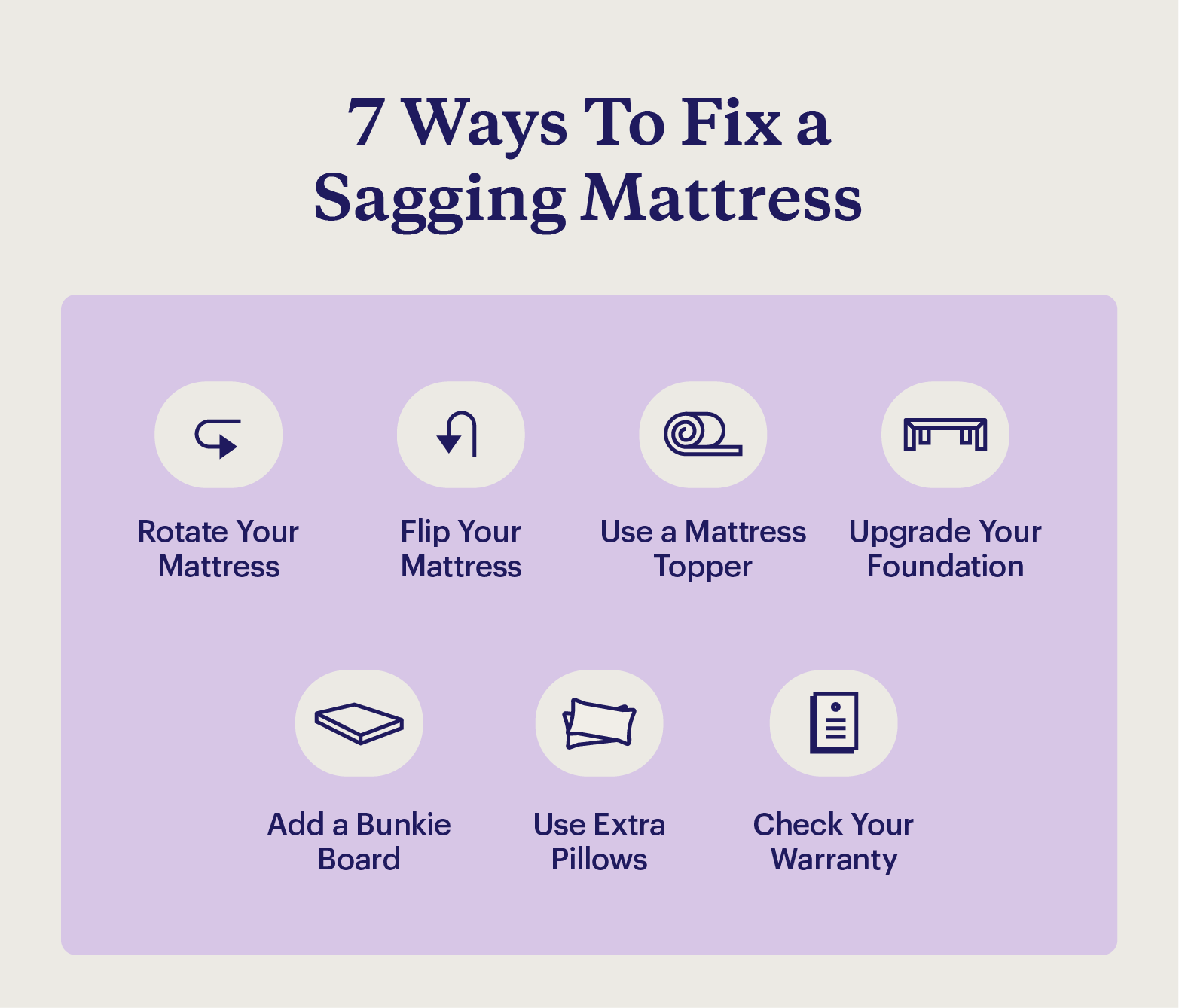
Rotate the Mattress Correctly
Rotating the mattress can reduce uneven wear. It works best when the mattress has a mild body impression, not a deep permanent sag.
Follow these steps
- Remove sheets, pillows, and other bedding.
- Check the mattress label or owner’s guide.
- Turn the mattress 180 degrees so the head moves to the foot.
- Lift and turn it with another adult if it is heavy.
- Recheck the surface after several nights.
Many modern mattresses are designed for rotation but not flipping. A one-sided mattress should not be turned upside down unless the maker specifically approves it.
Some two-sided mattresses can be flipped. Do not assume that an older mattress is double-sided. Confirm by checking the label, product manual, or manufacturer website.


How often should you rotate it?
There is no single schedule for every mattress. A common approach is to rotate a new mattress after the first few months, then rotate it at regular intervals if the manufacturer recommends it.
The Better Sleep Council advises regular mattress rotation as part of mattress care. The exact interval still depends on the model.
Rotation may help if the surface feels uneven. It will not reverse:
- Broken coils
- Torn foam
- A collapsed edge
- A permanently compressed support core
- A foundation that remains damaged
Use a Mattress Topper as a Temporary Fix
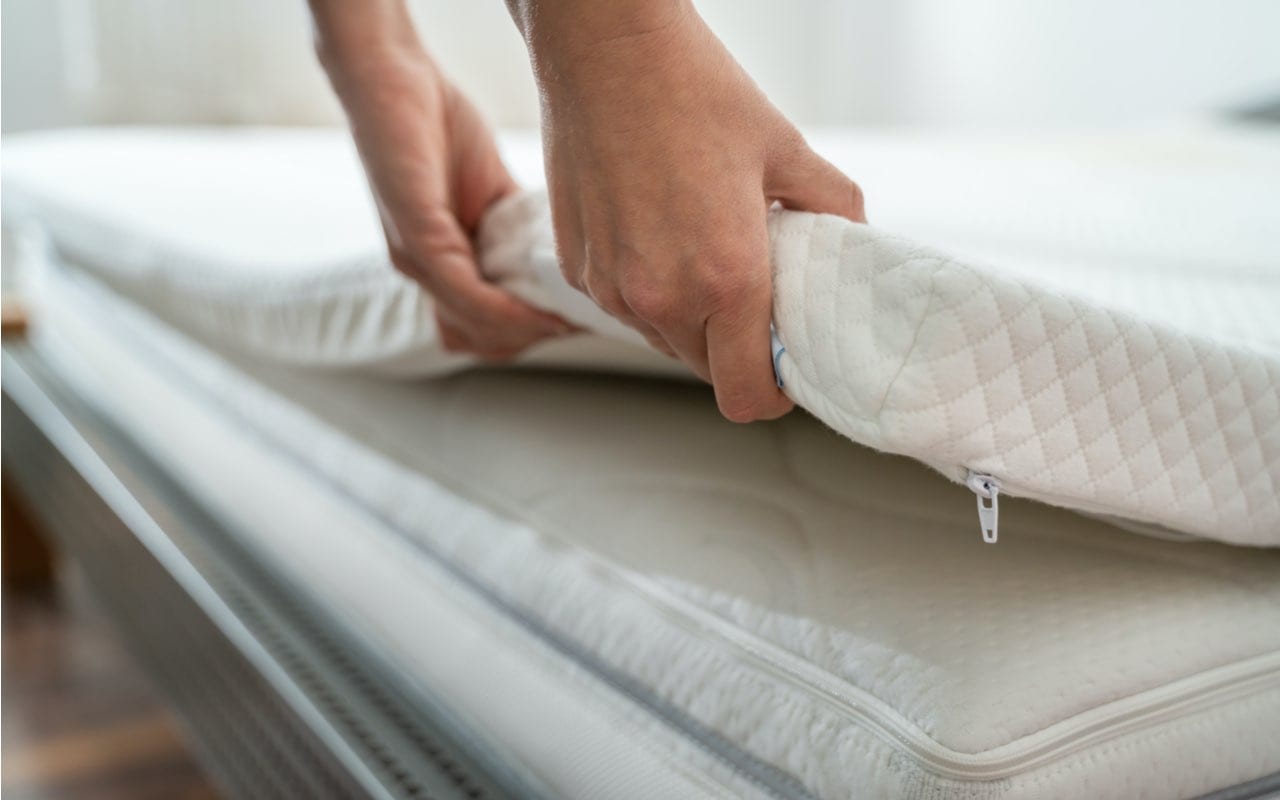
A topper can make a mild sag feel less noticeable. It cannot repair the mattress underneath.
A topper may help when:
- The dip is shallow
- The mattress is too firm around the sag
- You need a short-term comfort solution
- You are waiting for a warranty decision
- The mattress is near the end of its planned use
A topper is less likely to help when the mattress has a deep valley. In that case, the topper may sink into the same area and create a softer hammock effect.
Choose the topper thickness with care
A thicker topper can add more cushioning, but it can also make it harder to move and may increase the feeling of sinking.
Consider:
| Problem | A topper may do | Main limit |
|---|---|---|
| Mild surface wear | Smooth out comfort | Does not restore support |
| Mattress feels too firm | Add pressure relief | May increase heat or sinking |
| Deep sag | Cover the dip briefly | Often follows the same contour |
| Weak foundation | Add little benefit | Base still needs repair |
| Temporary use | Delay replacement | Not a permanent fix |
Use a topper only after checking the base. A soft topper on a weak frame can hide the cause without solving it.
Watch for signs the topper is making things worse
Remove the topper if you notice:
- More lower-back pain
- Difficulty turning over
- A stronger hammock feeling
- New shoulder or hip pressure
- Heat that disrupts sleep
- A mattress edge that feels unsafe
Comfort is personal, but new pain after a bedding change deserves attention. If pain continues or is severe, contact a qualified health professional.

Check Your Mattress Warranty Before Replacing It
A warranty may cover a sag if it passes the brand’s stated depth requirement and results from a covered defect. It may not cover normal softening, stains, a broken foundation, or an unsupported bed frame.
Warranty terms differ by brand and model. Read the actual warranty document for your mattress.


Prepare a strong warranty claim
Gather:
- Your purchase receipt
- The mattress model and serial number
- Photos of the sag
- A photo showing the measuring method
- Photos of the bed frame and foundation
- The date you noticed the problem
- Records of any support repair
Use a straightedge in the photo. A ruler or tape measure should show the depth of the dip. Take the photo in good light.
The Federal Trade Commission explains that written warranties set terms for covered repairs, replacement, and exclusions. A warranty does not automatically cover every comfort complaint.
Common reasons a claim may be denied
A manufacturer may reject a claim when:
- The mattress has stains or liquid damage
- The foundation does not meet its requirements
- The bed frame lacks required center support
- The mattress was used on an adjustable base without approval
- The dip is below the warranty threshold
- The issue is normal softening rather than structural failure
- The mattress was bought from an unauthorized seller
- The warranty is not transferable
Do not cut open the mattress, remove its law label, or attempt a major repair before contacting the manufacturer. Such changes may affect the claim.

Decide Whether to Repair, Replace, or Keep the Mattress
The best choice depends on the depth of the sag, the mattress age, the support base, and your sleep quality.
| Condition | Best next step |
|---|---|
| Sag improves on a firm base | Repair or replace the foundation |
| Mild dip with good support | Rotate and monitor it |
| Mild dip but poor comfort | Try a topper for short-term use |
| Deep dip on an approved base | File a warranty claim or replace it |
| Broken foam, coils, or edge | Replace or seek manufacturer service |
| New pain or poor sleep | Stop treating the dip as only a comfort issue |
| Mattress is old and worn in many areas | Plan for replacement |
A mattress repair is rarely simple. The cover, comfort layers, transition layers, and support core are made as a system. Cutting into the cover or adding foam beneath one area can create lumps, pressure points, and moisture problems.
A mattress may also seem to sag because it is too soft for the sleeper’s body shape. That does not always mean the materials failed. If the base is sound and the mattress has softened across the main sleeping area, replacement is often more reliable than repair.

Avoid These Common Fixes
Some popular fixes can create new problems.
Do not force a permanent bend out of the mattress
Standing on the mattress or folding it against its design can damage foam, coils, seams, or the cover. It may also void the warranty.
Do not place plywood without checking the design
A solid board may make a base feel firmer, but it can reduce airflow and change how the mattress flexes. It may also conflict with the manufacturer’s support rules.
If you use a board for a short test, keep the mattress dry and check the warranty before making the setup permanent.
Do not add a soft topper to solve a support problem
A plush topper can make a deep dip feel deeper. It adds comfort material but does not replace a damaged support core.
Do not ignore moisture or stains
Moisture can damage foam and fabric. It may also affect a warranty claim. Use a breathable, properly fitted protector and follow the care instructions from the manufacturer.
Do not keep sleeping on a dangerous frame
Stop using the bed if it has a broken rail, unstable legs, sharp metal, or a collapsing center support. A mattress cannot make an unsafe frame safe.

Frequently Asked Questions
Can you really fix a sagging mattress?
You can often fix the cause when the problem comes from a weak frame, damaged slats, or a worn foundation. You may also improve a mild dip by rotating the mattress. A mattress with a deep, permanent sag usually needs warranty service or replacement.
Will putting plywood under a sagging mattress help?
Plywood may make the surface feel firmer for a short test, but it does not repair the mattress. It can reduce airflow and may conflict with the mattress warranty. Check the manufacturer’s rules before using it long term.
Does a mattress topper fix a sagging mattress?
No. A topper can mask a shallow dip and add comfort for a limited time. It will not repair damaged foam, broken coils, or a weak foundation.
Should I flip or rotate a sagging mattress?
Rotate the mattress only if the maker allows it. Flip a mattress only when it is designed for use on both sides. Many modern mattresses are one-sided and should not be flipped.
How deep does a sag have to be for a warranty claim?
The required depth varies by brand, model, and warranty. Measure the sag with no one on the bed and compare it with the written warranty. Do not rely on a general industry number.
Can a bad bed frame make a mattress sag?
Yes. Broken slats, missing center support, and a weak foundation can cause uneven pressure and make the mattress bend. Test and repair the base before deciding that the mattress has failed.
Conclusion
To fix a sagging mattress, first inspect the bed frame and foundation. Measure the dip, repair weak support, and rotate the mattress if the manufacturer permits it. A topper may provide short-term comfort, but it will not rebuild worn materials.
If the sag remains on a firm, approved base, check the warranty before buying a replacement. When the mattress has a deep dip, damaged materials, or causes ongoing discomfort, replacement is usually the safer and more dependable option.
Sources
- Federal Trade Commission: Warranties
- Better Sleep Council: Mattress Care and Maintenance
- U.S. Environmental Protection Agency: Mold and Moisture

Appliance Review Expert
Lucas Ramirez is a trusted voice at HomeFixGrid.com, known for his clear, practical, and creatively written guides that simplify appliance care for everyday homeowners. With a strong focus on hands-on testing and real-world problem-solving, Lucas brings expert insight into appliance reviews and troubleshooting techniques. Her work empowers readers to confidently maintain, repair, and choose the right appliances for their homes.