What Is The Difference Between King And Queen Size Mattress: Guide
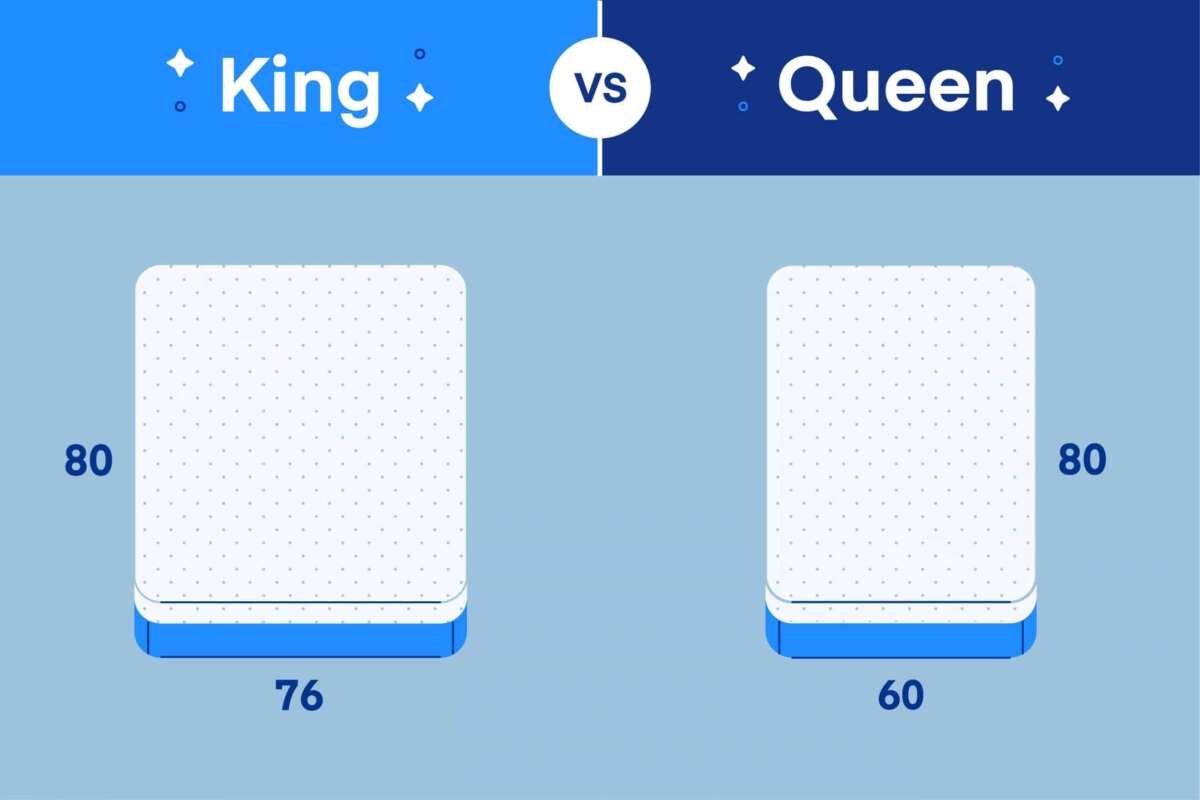
In the United States, a king mattress is wider than a queen mattress, while both are usually 80 inches long. A standard king measures 76 by 80 inches. A standard queen measures 60 by 80 inches.
That means a king gives you 16 extra inches of width. It also has about 27% more sleeping surface than a queen. The trade-off is simple: a king costs more and needs a larger bedroom, while a queen takes up less space and usually costs less.
King vs. Queen Mattress: Quick Comparison
The main difference between a king and queen mattress is width. Length is the same for both standard sizes.
| Feature | Queen mattress | King mattress |
|---|---|---|
| Width | 60 inches | 76 inches |
| Length | 80 inches | 80 inches |
| Sleeping surface | 4,800 square inches | 6,080 square inches |
| Best for | Couples, guest rooms, smaller bedrooms | Couples who want more personal space |
| Common room size | About 10 by 10 feet or larger | About 12 by 12 feet or larger |
| Relative cost | Lower | Higher |
| Common base setup | One queen foundation | One king foundation or two Twin XL bases |
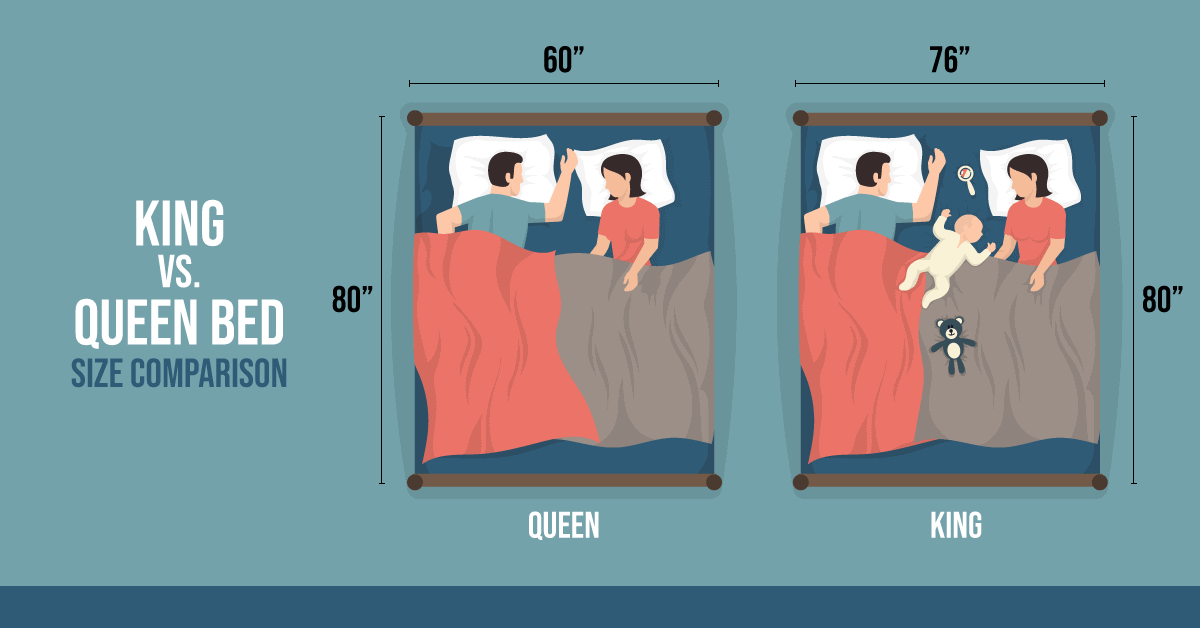
A queen mattress is 5 feet wide. A king mattress is 6 feet 4 inches wide. That extra 16 inches can make a major difference when two people share the bed.
For example, two adults on a queen mattress have about 30 inches of width each if the space is divided evenly. On a king, each person has about 38 inches. A king therefore gives each sleeper about the width of a Twin mattress.
These are standard U.S. mattress sizes. Actual dimensions can vary by about an inch depending on the brand, cover, or product design. Always check the manufacturer’s measurements before buying a bed frame, platform, or foundation.

What Is a Queen Size Mattress?
A queen mattress is 60 inches wide and 80 inches long. It is the most common choice for many adult sleepers because it balances sleeping space, room space, and cost.
A queen can work well for:
- One adult who wants plenty of room
- Two adults in a smaller bedroom
- Guest rooms
- Teen bedrooms
- Couples who do not need much personal space
- Homes where stairs, doors, or narrow halls limit large furniture
A queen gives each person less room than a king, but it still provides enough space for many couples. It is also easier to move through a home. Sheets, mattress protectors, bed frames, and foundations are widely available in queen sizes.
The main limitation is width. If one person moves a lot, spreads out, or shares the bed with a child or pet, a queen may feel crowded. It may also be less comfortable for couples who prefer separate sleep zones.

What Is a King Size Mattress?
A standard king mattress is 76 inches wide and 80 inches long. It has the same length as a queen but offers 16 more inches of width.
A king can be a strong fit for:
- Two adults who want more personal space
- Couples who share the bed with children or pets
- Tall or broad sleepers who need more room to move
- People who often wake when their partner moves
- Large primary bedrooms
- Couples who want to use separate firmness levels with a split setup
The extra width can reduce contact between sleepers. It may also make it easier for each person to choose a comfortable position without pushing the other person toward the edge.
A king takes up more floor space, though. It can make a bedroom feel tight if the room is small or already contains dressers, nightstands, chairs, or other furniture. It is also heavier and harder to carry through narrow spaces.

King vs. Queen Mattress Dimensions and Floor Space
A king mattress has 1,280 more square inches of sleeping surface than a queen.
Here is the calculation:
- Queen: 60 × 80 = 4,800 square inches
- King: 76 × 80 = 6,080 square inches
- Difference: 6,080 − 4,800 = 1,280 square inches
A king has about 26.7% more surface area than a queen. That does not mean it is 26.7% longer or wider. It is the result of its greater width.
How much bedroom space do you need?
A queen can often fit in a bedroom that is about 10 by 10 feet, but the mattress is not the only thing that needs space. You also need room for:
- Walking around the bed
- Opening drawers and closet doors
- Using nightstands
- Making the bed
- Moving safely at night
A king often works better in a room of about 12 by 12 feet or larger. A 12-by-12-foot room may still feel full once you add a thick bed frame, nightstands, a dresser, and a door swing.
These room sizes are practical planning guidelines, not strict rules. A minimalist room may fit a king comfortably. A crowded room may make a queen feel large.
Use the full bed footprint
Do not measure only the mattress. A bed frame may extend several inches beyond the mattress on each side. Headboards, footboards, rails, and built-in storage can increase the total footprint.
Before buying, use painter’s tape to mark the planned bed size on the floor. Add the frame dimensions if you have them. Then test whether doors, drawers, and walking paths still work.

Which Is Better for Couples: King or Queen?
For couples, a king is usually better when personal space matters more than floor space or price. A queen is often better when the bedroom is smaller or the budget is limited.
A king may help if:
- One partner moves often during sleep
- One person gets up at night
- You have different sleep schedules
- You share the bed with a child or pet
- You prefer to stretch out
- You want less chance of touching the other sleeper
A queen may be enough if:
- Both sleepers stay mostly on their own side
- The bedroom is less than about 12 by 12 feet
- You want to spend less on the mattress and bedding
- You move often
- Your home has tight stairs or narrow hallways
- You prefer more open floor space
A larger mattress cannot solve every sleep problem. Motion transfer also depends on the mattress design, construction, and firmness. A king may reduce disturbance because sleepers are farther apart, but it does not guarantee that movement will be completely isolated.
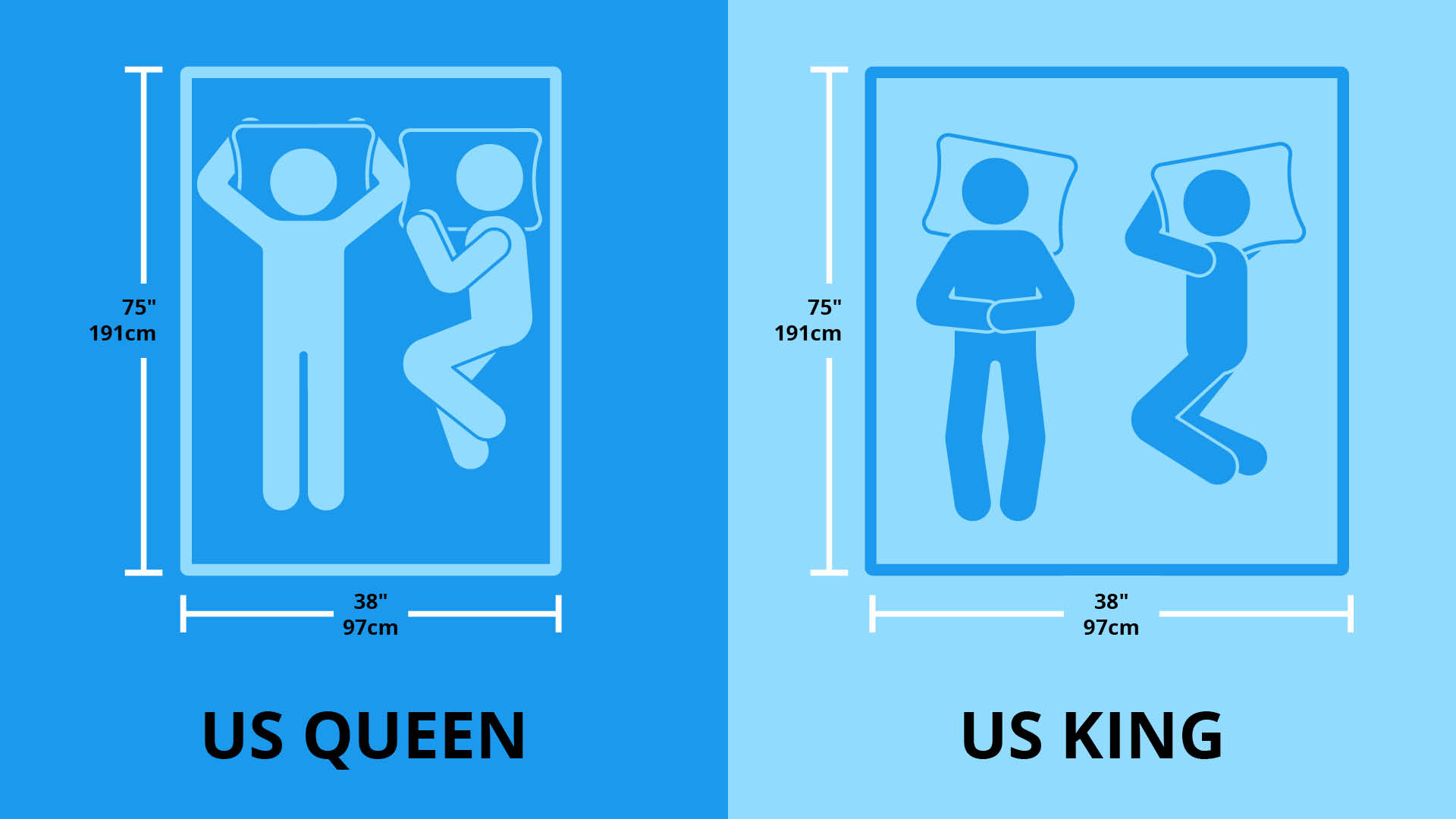
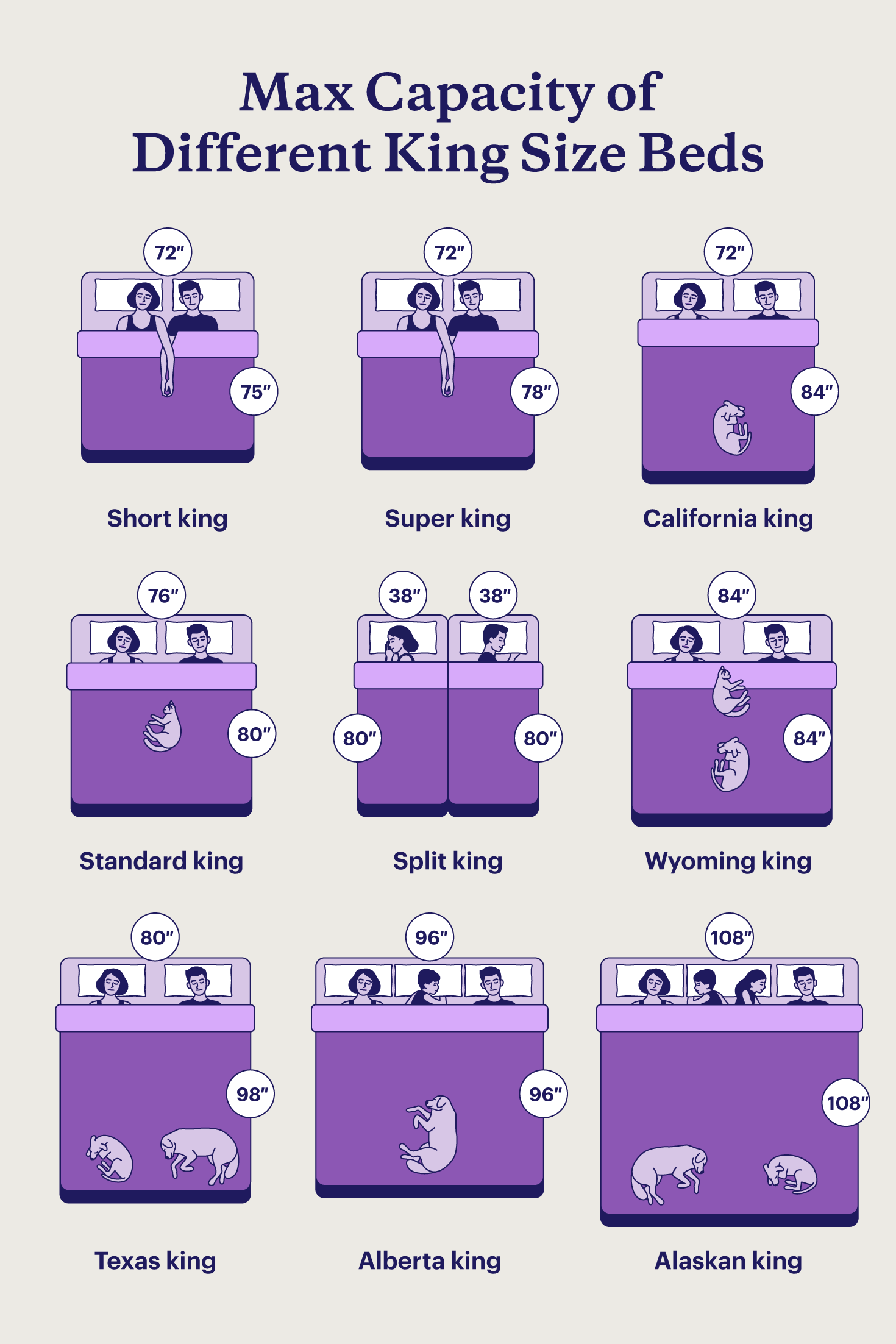
If you and your partner need different firmness levels, consider a split king. A split king uses two Twin XL mattresses, each measuring 38 by 80 inches. Together, they match the width and length of a standard king. The two sides can have different firmness levels, but you will need compatible sheets and a suitable adjustable base or foundation.

Cost, Bedding, and Moving Differences
A king mattress usually costs more than a queen mattress, but the mattress price is only one part of the total cost.
You may also pay more for:
- A king bed frame
- A king foundation or platform
- King sheets
- A king mattress protector
- A king comforter
- Larger pillows or a wider headboard
- Delivery or setup
King bedding is also larger and can take more effort to wash, fold, and store. Some compact washers may not handle bulky king comforters well. Check the care label and your appliance capacity before washing one at home.
Moving is another practical difference. A king mattress is wider and less flexible than a queen. Measure:
- The front door
- Hallways
- Stairways
- Elevator doors
- Bedroom doors
- Sharp turns
- The final space around the bed
A mattress may fit through a doorway when turned on its side, but the frame and foundation may create the real problem. Boxed mattresses can be easier to carry into a room, but they still need a clear path after expansion.
Do not bend a mattress in a way the manufacturer prohibits. Some foam mattresses can be moved on their side, while certain spring or hybrid designs may have stricter handling rules. Follow the product instructions.
King, Queen, California King, and Other U.S. Mattress Sizes
A standard king is not the only large mattress size sold in the United States. The table below shows common alternatives.
| Mattress size | Dimensions in inches | Main difference |
|---|---|---|
| Full | 54 × 75 | Narrower and shorter than a queen |
| Queen | 60 × 80 | Balanced size for many adults and couples |
| Olympic queen | About 66 × 80 | Wider than a queen; less common |
| King | 76 × 80 | Wider than a queen |
| California king | 72 × 84 | Longer but narrower than a standard king |
| Split king | Two 38 × 80 mattresses | Two Twin XL mattresses side by side |
| Eastern king | 76 × 80 | Another name for a standard king |
Standard king vs. California king
A standard king is 4 inches wider than a California king. A California king is 4 inches longer.
Choose a California king when:
- One or both sleepers need extra legroom
- The bedroom is long and narrow
- You want more length rather than maximum width
Choose a standard king when:
- You want the most width
- You need more room between sleepers
- Your bedroom is wider than it is long
- You want the most common king bedding and frame options
California king sheets do not fit a standard king correctly. The same is true in reverse. Check the exact size before buying bedding or a foundation.
Split king vs. standard king
A standard king is one 76-by-80-inch mattress. A split king is made from two Twin XL mattresses.
A split king can help couples who need:
- Different mattress firmnesses
- Independent adjustable-bed positions
- Less movement between sides
- Easier mattress handling
The center seam may be noticeable, especially without a suitable mattress bridge or fitted sheet. A split king also requires two compatible mattresses and may cost more overall.

How to Choose Between a King and Queen Mattress
Use this decision process before you shop.
Choose a queen if space and value come first
A queen is likely the better choice if your room is compact, you want lower total costs, or you move frequently. It offers a useful amount of space without dominating the room.
Measure the room first. If a king would block walking paths or make drawers hard to open, the extra width may not be worth it.
Choose a king if sleeping space comes first
A king is likely the better choice if two people share the bed and often feel crowded. It also makes sense when children or pets regularly sleep with you.
Check the full room layout before buying. Leave enough room to walk around the bed and reach storage areas.
Consider your body size and sleep position
Sleepers who are tall often need more length, not just more width. A California king may suit a tall couple better than a standard king, depending on the room.
Sleep position also matters. Side sleepers often bend their legs and may need less length than tall back or stomach sleepers. People who spread out may benefit more from king width.
Think about future changes
Your needs may change. A queen may be enough now but feel tight after adding a child or pet to the bed. On the other hand, a king may be difficult to move if you expect to relocate soon.
Consider the next several years, not just the first night. The best size is the one that fits both your sleep needs and your home.
Common Mistakes to Avoid
Buying the mattress before measuring the room
A mattress may fit inside a room while the complete bed does not. Measure the frame, headboard, nightstands, and walking paths together.
Assuming all king mattresses are the same
A standard king and California king have different dimensions. Split kings also use two separate pieces. Confirm the exact measurements before ordering accessories.
Forgetting the foundation
A queen mattress needs a queen-size support system. A standard king needs king-size support. Using the wrong foundation can cause poor fit, uneven support, or damage.
Follow the mattress maker’s rules for slat spacing and center support. Some foam mattresses need closer slat spacing than traditional innerspring mattresses.
Choosing based only on mattress price
A larger mattress can require more expensive sheets, protectors, frames, and bedding. Compare the full setup cost.
Ignoring delivery access
Measure tight turns and stairways. If the mattress cannot reach the bedroom, room size will not matter.
Expecting size to fix an unsuitable mattress
A larger mattress does not automatically provide better support. Firmness, materials, body weight, sleep position, and personal comfort also affect fit.

Frequently Asked Questions
Is a king mattress longer than a queen mattress?
No. A standard king and a standard queen are both 80 inches long. A king is wider by 16 inches. A California king is longer at 84 inches but is 4 inches narrower than a standard king.
Can two people sleep comfortably on a queen mattress?
Yes. Many couples sleep well on a queen mattress. Comfort depends on body size, sleep position, movement, and how much personal space each person wants.
Is a king mattress worth it for couples?
It can be worth it when the extra width improves sleep or reduces crowding. The decision depends on bedroom space, total cost, and whether you share the bed with children or pets.
Is a queen or king mattress better for a small bedroom?
A queen is usually better for a small bedroom because it leaves more room for walking and furniture. Measure the complete bed footprint rather than relying only on mattress dimensions.
Can I use queen sheets on a king mattress?
No. Queen sheets are too small for a standard king mattress. Use bedding labeled for the exact mattress size. Deep-pocket sheets must also match the mattress height.
What is the difference between a king and a split king?
A standard king is one 76-by-80-inch mattress. A split king is two Twin XL mattresses placed side by side. A split king can provide separate firmness levels or adjustable positions.
Final Answer: King or Queen?
The difference between a king and queen mattress is mainly width. A queen measures 60 by 80 inches, while a king measures 76 by 80 inches.
Choose a queen if you want lower costs, easier movement, and more open floor space. Choose a king if you share the bed and want more room to move, sleep with children or pets, or prefer extra distance from your partner.
Before you buy, measure the bedroom, doorways, stairs, and full bed frame. Then include the cost of the foundation, bedding, delivery, and future moves in your decision.

Appliance Review Expert
Lucas Ramirez is a trusted voice at HomeFixGrid.com, known for his clear, practical, and creatively written guides that simplify appliance care for everyday homeowners. With a strong focus on hands-on testing and real-world problem-solving, Lucas brings expert insight into appliance reviews and troubleshooting techniques. Her work empowers readers to confidently maintain, repair, and choose the right appliances for their homes.