Do Microwave Ovens Lose Power Over Time: The Real Answer
Yes. Microwave ovens can lose heating power over time, but a slow decline is not the only explanation. A weak magnetron, low household voltage, a blocked air vent, a damaged waveguide cover, or a failing power part can all make food heat more slowly.
For most people in the United States, the best first step is simple: test the oven with the same amount of water, use the same cup, and compare the heating time with the owner’s manual. If the oven sparks, smells hot, makes a loud hum, or runs but does not heat, stop using it and arrange service or replacement.
This guide explains how microwave power works, how to test it at home, and when repair is no longer a good choice.
What “microwave power” means
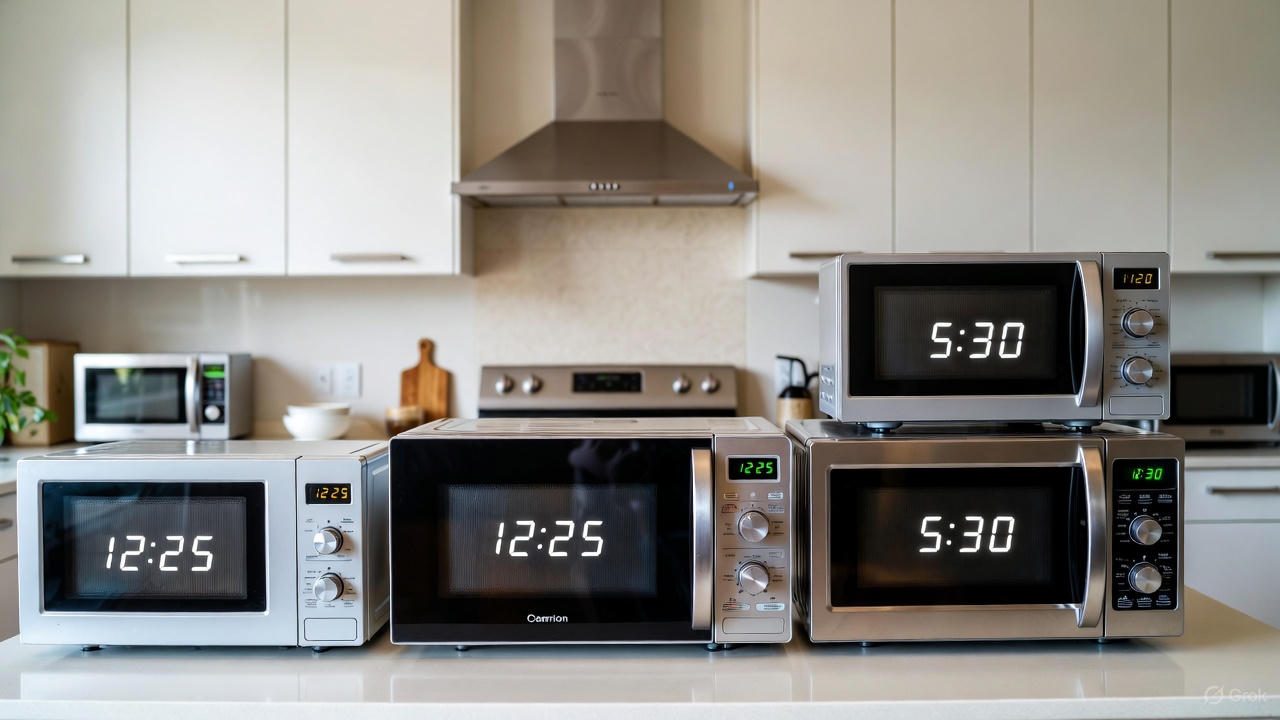
Microwave power is the rate at which the oven transfers energy to food. It is measured in watts. A 1,000-watt oven can usually heat food faster than a 700-watt oven, if both use the same cooking method.
The number on the label is often the oven’s output power, not the amount of electricity it pulls from a U.S. wall outlet. A microwave may use more electrical power than it sends into the food because some energy becomes heat in the magnetron, fan, controls, and other parts.
Power level is not always lower power
Many microwave ovens do not reduce power in a smooth way. On lower settings, a basic oven may run at full power for part of the time, then pause.
For example:
- High: full power for nearly all of the cooking time
- Medium: full power, then off, in repeated cycles
- Low: shorter heating periods with longer pauses
An inverter microwave may control power in a more continuous way. The result is different, but the cooking time can still vary by model.
A 50% setting does not always mean that the oven produces half power every second. It may mean that the magnetron runs for half the time.
Why microwave ovens may lose heating power
The part most linked with a real loss of output is the magnetron. It creates the microwave energy that heats food. Magnetrons can weaken with age, but they can also fail suddenly.
Other parts can cause the same symptom:
- High-voltage diode
- High-voltage capacitor
- Transformer
- Inverter board
- Waveguide cover
- Door switches
- Control board
- Cooling fan
- Air vents
A weak magnetron often gives a gradual “takes longer to heat” symptom. A failed diode, capacitor, or inverter may cause little or no heat at all.
Heat and power are not the same thing
Food can heat poorly even when the microwave’s output has not changed. Common reasons include:
- Food starts at refrigerator temperature instead of room temperature.
- The portion is larger than usual.
- Food is spread in a thick layer.
- The container blocks part of the food from heating evenly.
- The turntable does not rotate.
- The oven is used at high altitude or in a very cold room.
- The wall outlet has low voltage.
- The oven runs on a long extension cord.
- Steam, grease, or food soil is covering the inside walls.
- The cooking time or power setting is wrong.
The oven may feel “weak” when the real issue is food size, starting temperature, or poor circulation.
A simple way to think about it
Think of microwave output like water flowing from a faucet. A weak flow may come from a problem inside the faucet, but it may also come from low pressure in the pipe.
The magnetron is like the faucet. Household voltage, the control system, airflow, and the cooking load are like the pipe and water conditions.
Signs that a microwave may be losing power
A single slow meal does not prove that the oven has weakened. Look for a repeated pattern under the same conditions.
Possible signs include:
- The same food takes longer than it did before.
- A cup of water takes much longer to heat.
- Food stays cold in the center after normal stirring and standing time.
- The oven sounds different while heating.
- The light dims or the fan changes speed.
- The oven runs but produces little heat.
- The turntable stops or turns unevenly.
- The oven shuts off before the timer ends.
- The microwave smells hot or electrical.
- Sparks appear inside the cavity.
Some signs point to a cause other than low output. A stopped turntable can create uneven heating. A worn door switch can cause the oven to stop or start. A damaged waveguide cover can cause arcing and may damage the magnetron.
A microwave that runs but does not heat at all may have a failed high-voltage part. That is not the same as normal aging.

How to test microwave power at home
You can perform a basic comparison test with water. This will not measure laboratory output, but it can show whether the oven has a clear problem.
What you need
Use:
- A microwave-safe glass measuring cup or bowl
- 1 cup of water, about 8 fluid ounces
- A thermometer, if available
- A clean oven cavity
- A stable wall outlet
Do not use a metal cup. Do not run the microwave empty.
Basic water test
- Pour 1 cup of water into the same microwave-safe container each time.
- Measure the starting temperature if you have a thermometer.
- Place the container in the center of the turntable.
- Heat it on high for 1 minute.
- Stir the water carefully.
- Check the temperature or compare how hot it feels.
- Repeat the test once or twice under the same conditions.
Use care when handling heated water. Very smooth containers can allow water to become superheated. The water may look calm but erupt when moved or stirred. Let it stand briefly and stir with care.
A useful comparison is an older result from the same oven, the owner’s manual, or a similar oven with a known output rating. Do not compare a 700-watt oven with a 1,200-watt oven and call the slower result a fault.
A rough output estimate
If you know the water’s mass and temperature rise, you can estimate heating power:
[
\text{Power in watts} \approx \frac{\text{mass in grams} \times 4.186 \times \text{temperature rise in °C}}{\text{time in seconds}}
]
For 1 cup of water, the mass is close to 237 grams, though the exact amount varies.
Hypothetical example
If 237 grams of water rises by 40°C in 60 seconds:
[
\frac{237 \times 4.186 \times 40}{60} \approx 662 \text{ watts}
]
This is only a rough estimate. It does not fully account for heat lost to the container, air, and oven cavity. A home test may read lower than the manufacturer’s rated output.
A better standardized approach
Service technicians and appliance labs may use a larger water load and controlled test conditions. The IEC 60705 standard is commonly used for measuring microwave cooking performance. Home users do not need to recreate that test to spot a major fault.
The key is consistency. Use the same water amount, container, starting temperature, power setting, and test time.
What can cause a weak microwave?
The likely cause depends on the symptom. This table can help you narrow it down without opening the case.
| Symptom | Possible cause | What you can safely check |
|---|---|---|
| Food heats slowly but the oven sounds normal | Weak magnetron, low voltage, wrong power setting, food load | Repeat the water test and check the outlet |
| Oven runs but food stays cold | Failed magnetron, diode, capacitor, inverter, or control part | Stop using it and seek service |
| Heating is uneven | Turntable problem, food shape, low output, poor placement | Check that the turntable rotates |
| Sparks appear | Metal, foil, food soil, damaged waveguide cover, chipped cavity paint | Stop using the oven if sparking continues |
| Oven stops during cooking | Overheating, blocked vent, door switch, control fault | Clear vents and allow it to cool |
| Loud hum or buzz | High-voltage fault, transformer, magnetron, loose part | Unplug it and arrange repair |
| Burning smell | Food soil, damaged waveguide cover, wiring, motor, high-voltage fault | Stop use and unplug the oven |
| Display works but heating does not | Door switch, relay, magnetron circuit, inverter | Do not remove the cabinet |
Low household voltage
Microwave ovens can draw a large amount of current. A weak outlet, overloaded circuit, damaged receptacle, or long extension cord may reduce performance.
In a U.S. home, plug a countertop microwave directly into a suitable wall outlet when the manufacturer requires it. Avoid sharing the outlet with another high-load appliance.
Do not use an extension cord unless the owner’s manual specifically allows it and the cord has the correct rating. Many manufacturers advise against extension cords for countertop microwaves.
Dirty air vents
Microwaves need airflow to cool internal parts. Grease, dust, or objects covering the vents may cause overheating. Some ovens reduce operation or shut down when they become too hot.
Clean the outside vents and leave the clearance required by the manual. Do not place items on top of the oven unless the manual permits it.
Damaged waveguide cover
The waveguide cover is often a small sheet inside the cooking cavity. It helps direct microwave energy into the oven space. It may look like thin cardboard, plastic, or mica.
If it is cracked, burned, swollen, or covered with grease, the oven may spark or heat poorly. Do not remove it and continue using the oven. Check the manual for the correct replacement part or contact the manufacturer.
Can you make an old microwave stronger?
Usually, no. There is no safe setting that restores a worn magnetron to its original output.
You can improve performance by correcting outside causes:
- Clean the cavity and waveguide cover.
- Check that the turntable rotates.
- Use a suitable wall outlet.
- Remove an extension cord if the manual prohibits it.
- Confirm that the power level is set to high.
- Keep the air vents clear.
- Test with the same amount of water each time.
- Have a technician inspect the oven if it still heats slowly.
Do not try to increase power by changing the fuse, bypassing a door switch, or adjusting internal components. Those actions can create shock, fire, radiation, or equipment hazards.
Should you repair or replace it?
Repair may make sense when:
- The oven is built into a kitchen system.
- The cavity and door are in good condition.
- The fault is a small, accessible part.
- The unit is relatively new.
- A qualified technician gives a clear, reasonable estimate.
Replacement may make more sense when:
- The countertop microwave is inexpensive to replace.
- The magnetron or high-voltage system has failed.
- The cavity is rusted, cracked, or badly damaged.
- The door does not close firmly.
- The repair cost is close to the price of a new oven.
- The unit has had several recent faults.
A technician should diagnose high-voltage parts. A microwave can hold a dangerous electrical charge even after it is unplugged.
Microwave safety limits
Microwaves are designed with shielding and door interlocks. The U.S. Food and Drug Administration sets performance requirements for microwave ovens, including limits for radiation leakage. A properly maintained oven with an undamaged door and seals should not expose users to harmful microwave energy during normal use.
Still, stop using the oven if:
- The door is bent or does not close fully.
- The door seal is torn or badly damaged.
- The safety latch does not work.
- The oven runs with the door open.
- The cavity has severe rust or holes.
- The oven produces repeated sparks.
- You smell burning insulation or wiring.
- The cabinet gives a shock or tingling sensation.
Never bypass a door interlock. Never remove the outer cabinet unless you are trained and equipped to service microwave ovens.
If a fire starts inside, keep the door closed, turn off the oven, unplug it if safe, and call emergency services if the fire does not stop. Opening the door can feed the fire with air.
The FDA provides consumer guidance on microwave oven safety and radiation at FDA.gov.

Common mistakes when judging microwave power
Comparing different wattage ratings
A 700-watt microwave will normally heat more slowly than a 1,100-watt model. Check the rating label, owner’s manual, or product plate before comparing results.
Testing food instead of water
Food varies in size, moisture, shape, density, and starting temperature. Water gives you a more repeatable test.
Testing only once
One test can be affected by the container, water temperature, or a timing error. Repeat the test under the same conditions.
Using the wrong power setting
A microwave set to 30% or 50% may cycle on and off. That is normal behavior and does not necessarily show a weak oven.
Running the oven empty
An empty oven can reflect microwave energy back toward the magnetron. This may damage the oven. Always use a suitable load, such as water, when testing.
Ignoring the standing time
Food can continue to heat after the oven stops. Stir food, follow the package directions, and allow the recommended standing time before deciding that the oven is underpowered.
Assuming a new oven will heat exactly like an old one
Two ovens with the same watt rating may still cook differently. Cavity shape, turntable design, sensor controls, power cycling, and calibration can affect results.
Frequently asked questions
How long should a microwave last?
There is no single service life for every microwave oven. Lifespan depends on use, ventilation, cleaning, build quality, and the condition of high-voltage parts. A lightly used countertop unit may last much longer than a heavily used commercial-style or family kitchen unit.
Replace or repair based on condition and safe operation, not age alone.
Do microwaves lose power when the voltage is low?
Yes, low voltage can reduce heating performance. A microwave may also shut down or behave poorly when its circuit is overloaded. Test the oven on a suitable wall outlet and avoid using a prohibited extension cord.
If lights dim, breakers trip, or other appliances behave strangely, ask a qualified electrician to inspect the circuit.
Why does my microwave heat some areas but not others?
Uneven heating can result from the shape and moisture of the food, a nonmoving turntable, poor placement, or low output. Stir or rotate food when the instructions call for it. If the turntable does not move, check its track and roller ring. Do not use the oven if it sparks or has a damaged waveguide cover.
Can a microwave magnetron be replaced?
Yes, a trained appliance technician can replace a magnetron in some models. The repair may not be cost-effective for a low-priced countertop unit. The technician must also check the diode, capacitor, inverter, airflow, and door safety system.
Is a microwave safe if it makes a humming sound?
A mild hum is normal in many ovens. A new, loud, rough, or rapidly changing hum is not something to ignore, especially if the oven heats poorly or smells hot. Stop using it and arrange an inspection.
Does a microwave use less power as it gets older?
Not always. An aging oven may use similar electrical power while producing less microwave energy. A fault can also make it draw abnormal power, trip a breaker, or shut down. Input wattage and cooking output are related, but they are not identical.
Bottom line
Microwave ovens can lose heating power, often because the magnetron or another high-voltage part is wearing out. But slow heating also comes from low voltage, blocked vents, a damaged waveguide cover, a faulty turntable, food differences, or an incorrect power setting.
Start with a repeatable water test. Check the outlet, vents, turntable, and waveguide cover without opening the cabinet. If the oven runs but does not heat, sparks, smells hot, makes an unusual noise, or has a damaged door, stop using it and contact a qualified technician or replace the unit.
Sources
- U.S. Food and Drug Administration: Microwave Oven Radiation
- U.S. Department of Energy: Appliance and equipment standards
- U.S. Department of Agriculture: Microwave cooking and food safety

Appliance Review Expert
Lucas Ramirez is a trusted voice at HomeFixGrid.com, known for his clear, practical, and creatively written guides that simplify appliance care for everyday homeowners. With a strong focus on hands-on testing and real-world problem-solving, Lucas brings expert insight into appliance reviews and troubleshooting techniques. Her work empowers readers to confidently maintain, repair, and choose the right appliances for their homes.