How Long Should A Hot Pocket Be In The Microwave: Cook Time
Most Hot Pockets need about two minutes on high, then two minutes to stand before eating.
Knowing how long should a hot pocket be in the microwave helps you avoid a cold center, burnt edges, or a filling that can scald your mouth. Cooking time varies by flavor, size, microwave wattage, and whether you heat one or two sandwiches. This guide explains the safest method, how to adjust the time, and how to check that your Hot Pocket is ready.
How long should a Hot Pocket be in the microwave?
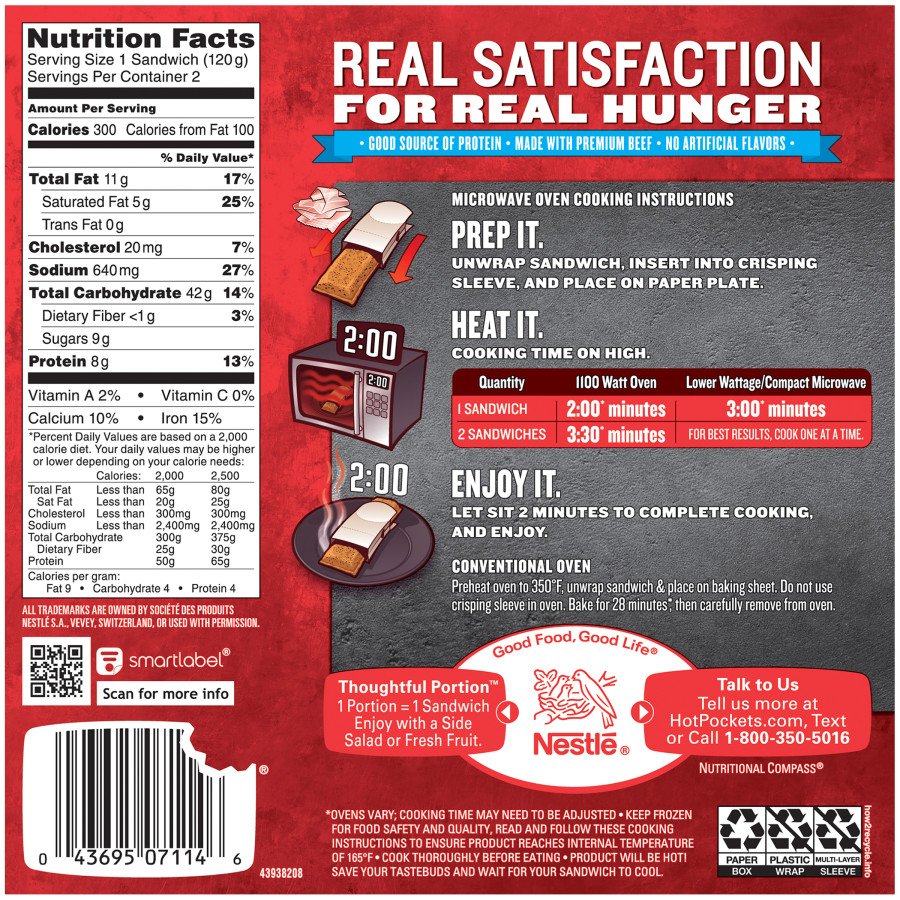
For most frozen Hot Pockets, microwave one sandwich on high for about 2 minutes in a 1,100-watt microwave. Let it stand for 2 minutes before eating. The standing time is important because the heat continues moving through the filling after the microwave stops.
Always check the package first. Nestlé may list different times for different varieties, sizes, crusts, or newer product formulas. The printed instructions on your box are more accurate than any general cooking chart.
For one standard frozen Hot Pocket, use this general guide:
• 700 to 900 watts: Cook for about 2 minutes 30 seconds to 3 minutes.
• 1,000 to 1,200 watts: Cook for about 1 minute 45 seconds to 2 minutes 15 seconds.
• Two sandwiches: Cook for about 3 minutes 30 seconds to 4 minutes, then let them stand.
• Refrigerated, not frozen: Start with about 60 to 90 seconds and check the center.
These times are starting points, not strict rules. A powerful microwave may heat the outside quickly while leaving the center cold, so use short extra bursts instead of adding a large amount of time at once.
Standard microwave instructions for a frozen Hot Pocket
The safest answer to how long should a hot pocket be in the microwave starts with the correct preparation. Remove the sandwich from its outer wrapper before heating it. Place it inside the crisping sleeve that comes with the product.
The sleeve helps create a firmer crust. It also keeps the sandwich easier to handle, but it does not remove the need to follow the package directions.
-
Remove the frozen Hot Pocket from its plastic wrapper.
-
Put it inside the crisping sleeve.
-
Place the sleeve on a microwave-safe plate.
-
Microwave on high for the time printed on the package.
-
Let the sandwich stand for the stated time.
-
Carefully remove the sleeve and check the center before eating.
Steam can build inside the sandwich. Take a small bite only after the standing period, and be careful with the first bite. The cheese and sauce may be much hotter than the crust.
If the center feels cold, return the sandwich to the microwave for 15 to 20 seconds. Let it rest again before checking it.

Why microwave wattage changes the cooking time
Microwave wattage tells you how much power the oven uses. A 1,200-watt microwave usually heats food faster than a 700-watt model. This difference explains why the same Hot Pocket may be ready in one kitchen but cold in another.
Many package directions use a microwave close to 1,100 watts. If your microwave has less power, you may need more time. If it has more power, you may need less.
Look for a wattage label inside the microwave door, on the back, or in the owner’s manual. Some models also show the wattage on a small label near the door frame.
Use these adjustments as a simple guide:
• 700 watts: Add about 30 to 60 seconds to the package time.
• 900 watts: Add about 15 to 30 seconds.
• 1,100 watts: Follow the package time closely.
• 1,200 watts or more: Reduce the time by about 10 to 20 seconds and check early.
Microwaves do not heat food perfectly evenly. The turntable, food position, and room temperature can all affect results. That is why checking the center matters more than following a timer alone.
How to tell when a Hot Pocket is fully heated
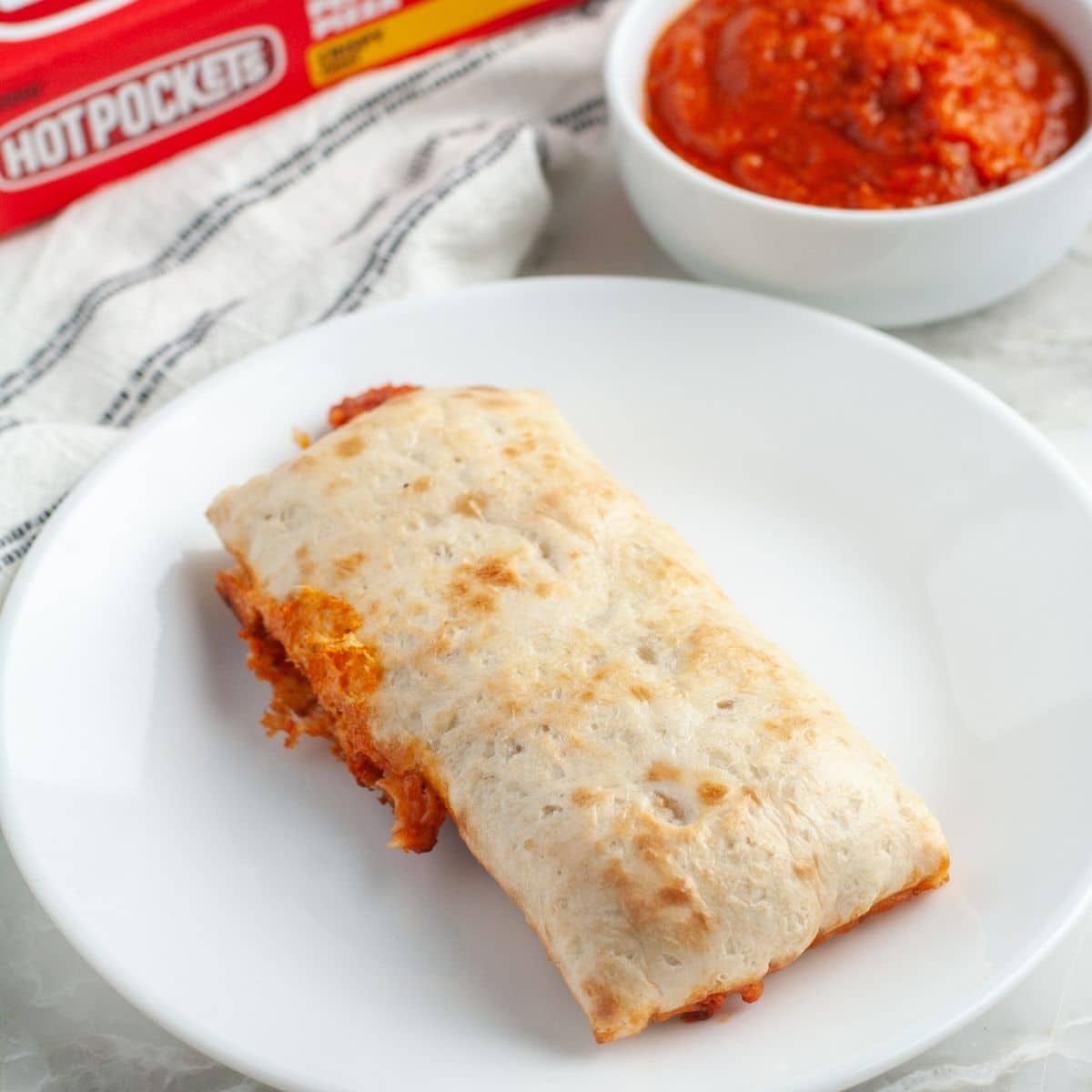
A fully heated Hot Pocket should feel hot in the center, not only warm around the crust. The filling should be soft and steamy, with no frozen or firm spot inside.
Do not judge it only by the crust. A crisp crust can surround a cold center, much like a warm blanket over a cold bed. Let the sandwich stand, then check it carefully.
Use these signs:
• The center feels hot when you gently press the sandwich.
• The filling is soft and evenly heated.
• No ice crystals or firm frozen patches remain.
• Steam rises after you cut or bite into it.
• A food thermometer reads at least 165°F in the thickest part.
A thermometer gives the most reliable check, especially for children, older adults, pregnant people, or anyone with a weaker immune system. Insert the probe into the filling rather than the crust.
If the temperature is below 165°F, microwave the sandwich in 15-second intervals. Wait briefly between checks so the heat can spread.

How long should a hot pocket be in the microwave for different situations?
The best time depends on more than the microwave. The flavor, number of sandwiches, starting temperature, and container can all change the result.
One frozen Hot Pocket
Start with the package time, which is often close to 2 minutes in a 1,100-watt microwave. Let it stand before checking the center.
Two frozen Hot Pockets
Two sandwiches need more time, but they do not always need exactly twice the time. Start with the package direction for two sandwiches, often around 3 minutes 30 seconds to 4 minutes.
Place them apart on the plate. If they touch, the sides may heat unevenly.
A refrigerated Hot Pocket
A refrigerated sandwich may need only 60 to 90 seconds. Begin with less time because it is already thawed.
Check the center after the first minute. Add 15-second bursts until it is hot throughout.
A thawed Hot Pocket
A thawed Hot Pocket can heat quickly. Use 45 to 75 seconds as a starting range, depending on size and microwave power.
Thawing may also make the crust softer. The crisping sleeve can help, but it may not produce the same texture as cooking from frozen.
A Hot Pocket in a lower-power microwave
If your microwave is under 1,000 watts, use the package time plus 15 to 60 seconds. Add time in small steps rather than guessing.
This method reduces the chance of overheated cheese and tough bread.
Common mistakes that make Hot Pockets uneven
Many microwave problems come from preparation, not the food itself. Small changes can make the result safer and more pleasant.
• Leaving the plastic wrapper on: Remove all outer plastic unless the package clearly says otherwise.
• Skipping the crisping sleeve: The sleeve helps improve the crust and makes the sandwich easier to hold.
• Eating it immediately: The center may still be heating after the microwave stops.
• Adding too much time: Long cooking can make the crust hard and the filling extremely hot.
• Cooking two sandwiches as if they were one: More food usually requires more time.
• Placing sandwiches too close together: Leave space between them for more even heating.
• Trusting the crust alone: The outside may look ready while the filling remains cold.
• Reheating more than once: Repeated heating can dry the bread and change the texture.
In my own kitchen testing, the most common mistake has been stopping at the first timer beep. The crust felt warm, but the filling was still cool near the middle. A short rest and a 15-second follow-up burst worked much better than cooking for one long extra minute.
Can you make a Hot Pocket crispier in the microwave?
You can improve the crust, but a microwave will not usually match an oven or air fryer. The crisping sleeve is the easiest microwave option.
For a better crust, follow these steps:
-
Use the included sleeve.
-
Place it on a microwave-safe plate.
-
Cook using the package directions.
-
Let the sandwich stand before removing the sleeve.
-
If needed, heat it for another 10 to 15 seconds.
Avoid using metal trays, foil, or metal-lined packaging in the microwave. These items can cause sparks and damage the oven.
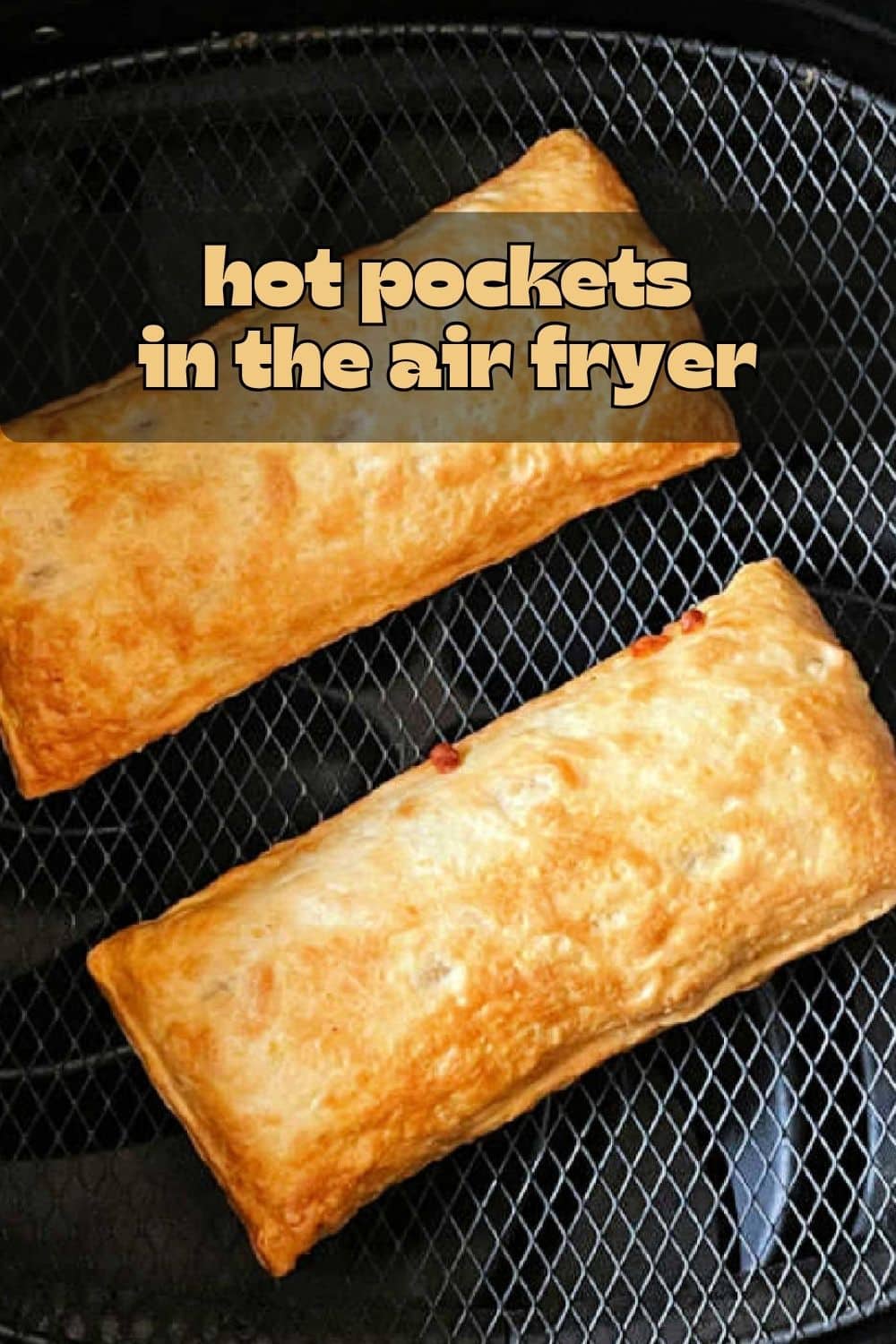
An air fryer or conventional oven usually creates a firmer crust. However, those methods take longer and require more attention. The microwave remains the fastest choice when you need a quick meal.
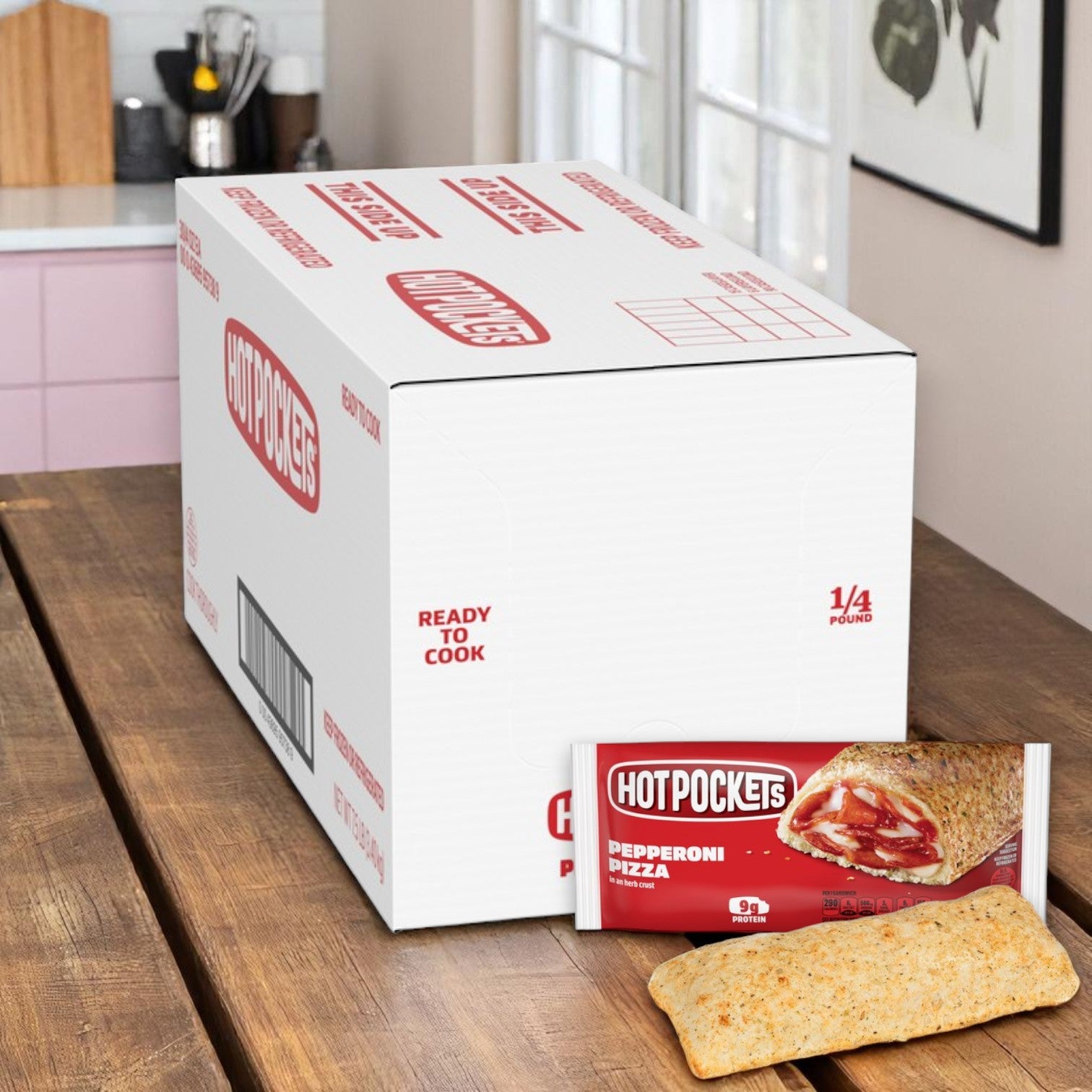
Microwave safety tips for Hot Pockets
Hot Pockets contain melted cheese, sauce, and other fillings that can hold heat for several minutes. Treat the center as a burn risk, even when the outside feels comfortable.
Follow these safety tips:
• Use a microwave-safe plate.
• Remove the outer wrapper before heating.
• Do not use foil or metal.
• Let the sandwich stand before eating.
• Open or bite into it carefully to release steam.
• Keep the hot filling away from young children.
• Do not leave the microwave unattended if food begins to smoke.
• Follow the package instructions for storage and cooking.
The United States Department of Agriculture recommends heating many ready-to-eat foods to 165°F when a safe reheating temperature applies. A thermometer is especially useful when microwave performance is uncertain.
Never eat a Hot Pocket that has been left at room temperature for an unsafe period. If it has thawed or warmed for several hours, follow food safety guidance and consider throwing it away.
Microwave versus oven or air fryer
The microwave is best for speed. An oven or air fryer is often better for texture.
| Cooking method | Main benefit | Typical limitation |
|---|---|---|
| Microwave | Fast and convenient | Softer crust |
| Conventional oven | Crisp, even crust | Takes longer |
| Air fryer | Crisp outside with a short cook time | Requires an appliance and careful timing |
When using an oven or air fryer, follow the package directions for that method. Do not use microwave timing in an air fryer. The heat moves through the food in a different way, so the cooking process is not interchangeable.
If you want a soft sandwich in a hurry, the microwave works well. If you want a crisp crust, choose an oven or air fryer and allow extra time.
A simple method for getting the best result every time
If you are unsure how long should a hot pocket be in the microwave, use a gradual approach. It is easier to add heat than to repair a dried-out sandwich.
-
Read the package directions.
-
Check your microwave wattage.
-
Start with the recommended time.
-
Let the Hot Pocket stand.
-
Check the center.
-
Add 15 to 20 seconds if needed.
-
Let it rest again before eating.
This method works well because it accounts for differences between microwave ovens. It also protects the crust from becoming hard while the center catches up.
For a first attempt, set a timer instead of relying on memory. Once you learn how your microwave behaves, you can adjust the time with more confidence.
Frequently Asked Questions
How long should a Hot Pocket be in the microwave at 1,100 watts?
Most frozen Hot Pockets need about 2 minutes at high power in a 1,100-watt microwave. Check the package and let the sandwich stand for the listed time before eating.
How long should a Hot Pocket be in the microwave if I cook two?
Two frozen Hot Pockets often need about 3 minutes 30 seconds to 4 minutes. Place them apart, follow the package directions, and check that both centers are hot.
Can I microwave a Hot Pocket without the sleeve?
Yes, but the crust may be softer. The sleeve is designed to improve the texture, so use it when the package includes one.
Why is my Hot Pocket cold in the middle?
The microwave may have lower wattage, or the sandwich may need more standing time. Heat it in 15 to 20-second bursts and check the center after each burst.
Is it safe to eat a Hot Pocket right away?
It is safer to wait for the recommended standing time. The filling can remain extremely hot and may cause burns even when the crust feels only warm.
Can I microwave a thawed Hot Pocket?
Yes, but it needs less time than a frozen one. Start with 45 to 75 seconds, then check the center and add short bursts if needed.
Is the oven better than the microwave for a Hot Pocket?
The oven usually gives a crispier crust, while the microwave is much faster. Choose the oven or air fryer when texture matters more than speed.
Conclusion
For most frozen Hot Pockets, start with about 2 minutes in a 1,100-watt microwave, then let the sandwich stand for 2 minutes. Adjust the time for your microwave’s wattage, the number of sandwiches, and whether the food is frozen or thawed. Always check the center, use the crisping sleeve, and handle the hot filling with care.
The next time you prepare one, follow the package directions and use short heating bursts for better control. Share your favorite Hot Pocket flavor or microwave tip in the comments, and explore more practical food safety guides for quick meals.

Appliance Review Expert
Lucas Ramirez is a trusted voice at HomeFixGrid.com, known for his clear, practical, and creatively written guides that simplify appliance care for everyday homeowners. With a strong focus on hands-on testing and real-world problem-solving, Lucas brings expert insight into appliance reviews and troubleshooting techniques. Her work empowers readers to confidently maintain, repair, and choose the right appliances for their homes.