How Long To Cook Beef Short Ribs In Air Fryer: Easy Guide
For most beef short ribs, cook them at 375°F in a US air fryer for 25 to 35 minutes, turning them halfway through. Thin, flanken-style ribs cook much faster—usually 8 to 12 minutes at 400°F. Thick, bone-in English-cut ribs need more care because an air fryer can cook them through without making them truly tender.
The best cooking time depends on the rib cut, thickness, bone, starting temperature, and your preferred doneness. Use a meat thermometer for safety, but remember that temperature alone does not guarantee tender short ribs.
Introduction
For home cooks in the United States, air-fryer beef short ribs can be a fast way to make browned, flavorful ribs without heating the oven or grill. The key is to match the cooking time to the cut. Thin Korean-style ribs cook quickly, while thick American-style short ribs contain more connective tissue and usually need slow, moist cooking.
This guide explains how long to cook each common type of beef short rib, which temperature to use, how to tell when the ribs are done, and what to do if they are still tough.

Air Fryer Beef Short Rib Cooking Times
Use the table below as a starting point. Times assume the ribs are thawed, the air fryer is preheated, and the pieces are arranged in one layer.
| Beef short rib type | Typical thickness | Air fryer temperature | Approximate cooking time |
|---|---|---|---|
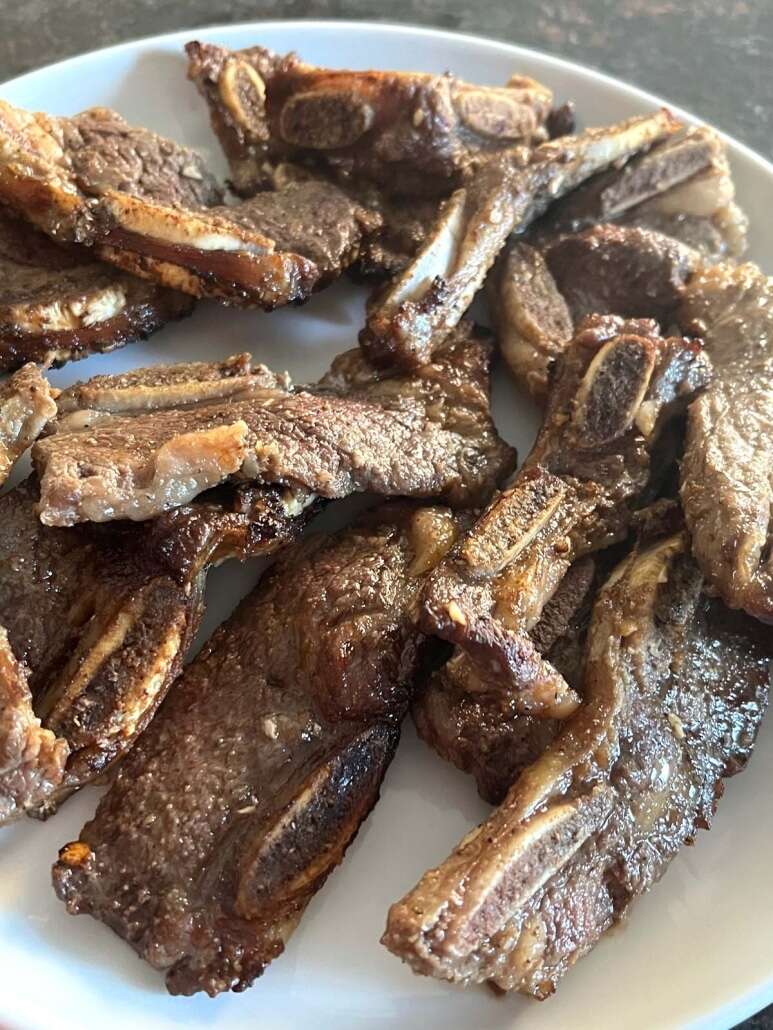
| Flanken-style, thin-cut | ¼ to ½ inch | 400°F | 8–12 minutes |
| Thin boneless short ribs | ½ to ¾ inch | 390°F | 12–18 minutes |
| Boneless country-style ribs | 1 to 1½ inches | 375°F | 25–35 minutes |
| Thick English-cut, bone-in ribs | 2–3 inches | 350–375°F | 40–60 minutes, but may remain tough |
| Pre-braised short ribs | Fully cooked and chilled | 400°F | 5–10 minutes to brown and heat |
Flip the ribs halfway through cooking. Add a few minutes if the pieces are crowded, very cold, or thicker than the sizes listed.
The safest way to judge doneness is to check the thickest part with an instant-read thermometer. The USDA lists 145°F with a three-minute rest as the minimum safe internal temperature for whole cuts of beef. That temperature makes beef safe to eat, but it may not make thick short ribs tender.
Why the Cut Changes the Cooking Time
The cut determines whether your goal is simply to cook the meat or to soften connective tissue. Thin flanken ribs have a large surface area and little thickness, so hot air can cook them in minutes. Thick English-cut ribs contain more meat, fat, and connective tissue, so they need much longer cooking.
Short ribs become soft when collagen breaks down into gelatin. That process usually works best with low heat, moisture, and time. An air fryer uses dry, moving heat. It can brown the outside well, but it may dry the meat before the connective tissue has softened.
For that reason, an air fryer is best for:
- Thin, quick-cooking short ribs
- Boneless ribs cut into smaller pieces
- Ribs that were braised or pressure-cooked first
- reheating cooked short ribs while crisping the edges
It is less reliable for making large, raw, bone-in ribs fall-apart tender from start to finish.

Best Method for Thin Flanken-Style Short Ribs
Thin flanken ribs are often cut across the bones. They are common in Korean-style barbecue and may be labeled LA-style short ribs in US grocery stores.
Ingredients
- 1 to 2 pounds flanken-style beef short ribs
- 1 tablespoon neutral oil, such as avocado or canola oil
- Salt and black pepper
- Optional marinade or dry seasoning
Steps
- Thaw the ribs completely. Frozen pieces cook unevenly and may burn on the outside before the center is ready.
- Pat the ribs dry. Dry meat browns better than wet meat.
- Season the ribs. If using a sugary marinade, let excess liquid drip off. Too much sugar can burn.
- Preheat the air fryer to 400°F for about 3 minutes, if your model requires preheating.
- Place the ribs in one layer. Leave space around each piece so air can move.
- Cook for 4 to 6 minutes. Turn the ribs.
- Cook for another 4 to 6 minutes.
- Check the thickest piece. Remove the ribs when they reach your preferred doneness and at least the USDA minimum of 145°F, followed by a three-minute rest.
- Rest for three to five minutes before serving.
Very thin ribs may finish in 8 minutes. Thick flanken ribs may need 14 minutes or more. Start checking early because the difference between browned and burned can be small.
Best Method for Thick Boneless Short Ribs
Boneless country-style short ribs are usually thicker than flanken ribs. They often need 25 to 35 minutes at 375°F.
Trim large hard pieces of surface fat, but do not remove every bit of fat. Season the ribs and place them in a single layer. Cook for 15 to 18 minutes, turn them, and continue cooking until the center reaches a safe temperature.
If you want tender, pull-apart meat, air frying raw thick ribs may disappoint. A better method is to braise or pressure-cook the ribs first, chill them if needed, and then air fry them at 400°F for 5 to 10 minutes to brown the outside.
For raw thick ribs, do not judge success only by color. A dark crust can form while the middle is still firm. Test both temperature and texture with a fork or skewer.

Can You Cook Bone-In English-Cut Short Ribs in an Air Fryer?
You can cook English-cut short ribs in an air fryer, but it is not usually the best way to make them tender. These ribs are cut between the bones, leaving a thick block of meat on one bone. They are designed for slow braising, not quick dry cooking.
If you still want to use an air fryer:
- Season the ribs and let them sit at room temperature for up to 20 minutes.
- Preheat the air fryer to 350°F.
- Cook the ribs for about 25 minutes.
- Turn them and cook for another 15 to 35 minutes.
- Check the internal temperature and texture.
- If the meat is safe but still tough, do not simply keep increasing the heat. Wrap or cover the ribs with moisture and finish them in a covered oven, Dutch oven, or pressure cooker.
A thick rib may reach 145°F before its collagen has softened. That is why “safe to eat” and “fall-apart tender” are different cooking goals.
How to Know When Air Fryer Short Ribs Are Done
Use three checks together: temperature, appearance, and texture.
Temperature
Insert the thermometer into the thickest part of the meat. Avoid touching the bone, because the bone can affect the reading.
- 145°F: USDA minimum safe temperature for whole cuts of beef, followed by a three-minute rest
- 150–160°F: More medium to medium-well
- Above 160°F: More well-done, with a greater risk of dryness
- Around 195–205°F: A possible tenderness range for collagen-rich ribs, but not a required safety temperature and not a guarantee in dry heat
The higher range is a texture guide, not a substitute for safe handling.
Appearance
Cooked short ribs should have a browned surface and no raw-looking center. However, color is not a reliable safety test. Marinades, smoke flavor, and dark seasonings can change the outside color.
Texture
Thin ribs should be easy to bite and slightly juicy. Thick ribs should offer little resistance when pierced with a fork if your goal is tender, braised-style meat.
If the thermometer says the ribs are safe but the fork meets strong resistance, the ribs need more tenderizing time—not simply more high heat.

Factors That Change the Cooking Time
Several details can add or subtract minutes from the suggested range.
Thickness
Thickness matters more than total weight. A single thick rib takes longer than several thin ribs with the same combined weight.
Bone-in or boneless
Bones can slow heat movement through the meat. Boneless pieces often cook more evenly, but their shape still matters.
Fresh or frozen
Cook thawed ribs when possible. Frozen ribs may need substantially more time and often cook unevenly. Thaw them in the refrigerator, not on the counter.
Air fryer size and design
Basket-style air fryers, toaster-oven air fryers, and oven-style units can circulate heat differently. A small basket may brown food faster because it concentrates heat. A crowded basket may cook more slowly.
Marinade and sugar
Honey, brown sugar, and some bottled barbecue sauces can burn at high temperatures. Cook marinated ribs at a slightly lower setting or add sweet sauce near the end.
Crowding
Overlapping ribs block airflow. Cook in batches when needed. A second batch may cook faster because the air fryer is already hot.
Common Problems and Fixes
The ribs are tough
The ribs may be thick and collagen-rich. Air fryers brown meat quickly but do not provide the moist, slow environment that thick short ribs need.
Fix: Cover the ribs with broth or another cooking liquid and finish them with a slow braise. Alternatively, use a pressure cooker, then air fry briefly for browning.
The outside is burnt
The temperature may be too high, or the marinade may contain too much sugar.
Fix: Lower the heat to 350–375°F. Wipe off excess marinade and brush on sweet sauce during the final few minutes.
The ribs are dry
They may have cooked too long, been cut too thin, or contained very little fat.
Fix: Check earlier next time. Serve with a sauce, and avoid cooking thin ribs by time alone.
The center is undercooked
The ribs may be too thick, crowded, or partly frozen.
Fix: Separate the pieces, return them to the air fryer, and cook in short two- to three-minute intervals. Check the thickest piece with a thermometer.
The ribs stick to the basket
Excess marinade and insufficient preheating can cause sticking.
Fix: Lightly oil the basket if your air fryer manual allows it. Pat the ribs dry before cooking and turn them only after the surface has set.

Food Safety for Air Fryer Beef Short Ribs
Keep raw beef separate from cooked food. Use a clean plate for cooked ribs, and wash tools that touched raw meat with hot, soapy water.
The USDA recommends cooking whole cuts of beef to at least 145°F and resting them for three minutes. Check the temperature in the thickest section. If the ribs are cut into small pieces or ground, different safety guidance may apply.
Do not rely on smell or surface color to decide whether beef is safe. Refrigerate leftovers within two hours, or within one hour if the room temperature is above 90°F. Store leftovers in a shallow container and use them within three to four days.
Air frying does not make spoiled or mishandled meat safe. Begin with properly refrigerated beef from a reliable source.
Air Fryer Short Rib Temperature and Time Guide
This quick guide works well for planning:
- Thin flanken ribs: 400°F for 8–12 minutes
- Thicker flanken ribs: 390–400°F for 12–18 minutes
- Boneless ribs, 1 to 1½ inches thick: 375°F for 25–35 minutes
- Large bone-in ribs: 350–375°F for 40–60 minutes, with no guarantee of tenderness
- Pre-cooked or braised ribs: 400°F for 5–10 minutes
Begin checking at the early end of the range. Adding time is easier than fixing dry or burned beef.
Frequently Asked Questions
Can I put frozen beef short ribs in an air fryer?
You can, but thawed ribs cook more evenly. Frozen ribs may brown before the center is ready. For best results, thaw them in the refrigerator, pat them dry, and then cook according to their thickness.
Should I wrap short ribs in foil in an air fryer?
Foil can help retain moisture, but it reduces airflow and prevents browning. For thick ribs, use foil only during a moist finishing step. Open the foil for the final few minutes if you want a crust.
Do I need to preheat the air fryer?
Preheating is helpful, especially for thin ribs. It starts the browning process at once and makes cooking times more predictable. If your model does not require preheating, add a few minutes to the first batch.
Can I cook short ribs with barbecue sauce?
Yes. Apply most barbecue sauce during the final 3 to 5 minutes. Sauce with sugar can burn if it stays in the air fryer for the whole cooking time.
Why are my short ribs cooked but not tender?
Short ribs contain connective tissue that needs time to soften. The meat can reach a safe temperature while still being chewy. Finish thick ribs with moist, slow cooking, then return them to the air fryer briefly for browning.
Final Answer
For the most common air-fryer short ribs, use these starting points:
- Thin flanken ribs: 400°F for 8–12 minutes
- Boneless, medium-thick ribs: 375°F for 25–35 minutes
- Thick bone-in ribs: 350–375°F for 40–60 minutes, though braising is better for tenderness
Turn the ribs halfway through, check the thickest piece with a thermometer, and rest whole cuts of beef for three minutes after reaching at least 145°F. For fall-apart short ribs, braise or pressure-cook first, then use the air fryer to create a browned finish.

Appliance Review Expert
Lucas Ramirez is a trusted voice at HomeFixGrid.com, known for his clear, practical, and creatively written guides that simplify appliance care for everyday homeowners. With a strong focus on hands-on testing and real-world problem-solving, Lucas brings expert insight into appliance reviews and troubleshooting techniques. Her work empowers readers to confidently maintain, repair, and choose the right appliances for their homes.