How To Bake A Potato In Microwave Oven: Quick Guide
To bake a potato in a microwave oven, pierce it, cook it on high, turn it, and rest it before serving.
Learning how to bake a potato in microwave oven is one of the fastest ways to make a warm, filling side dish. The method is simple, but potato size, microwave wattage, and cooking time all affect the result. This guide explains how to get a soft center, avoid common mistakes, and add crisp skin when you want a more oven-baked finish.
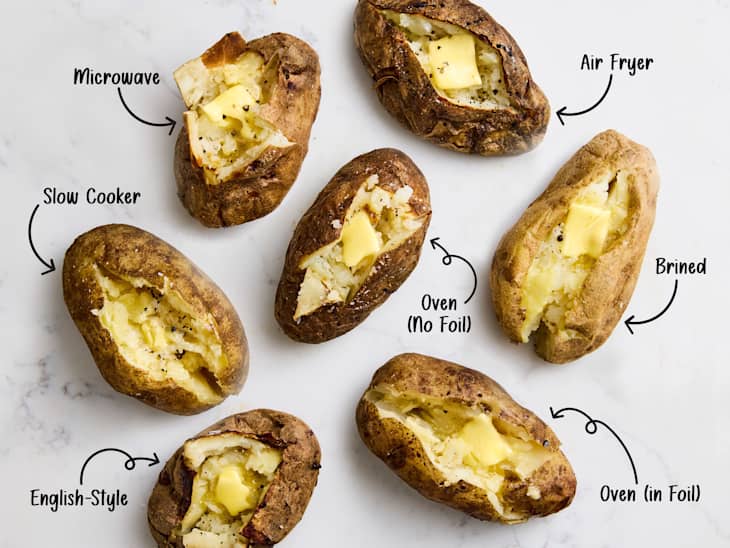
:max_bytes(150000):strip_icc()/tips-for-baking-potatoes-995935-hero-01-781579cf2cc54dd093d16b433d1b5b4a.jpg)
What You Need to Bake a Potato in Microwave Oven
You need only a few basic items. A russet potato works best because its high starch content creates a light, fluffy center. Yukon Gold potatoes also work, but their texture is naturally creamier and less dry.
Gather:
• One medium russet potato, about 8 to 10 ounces
• Cool running water
• A clean kitchen towel or paper towel
• A fork
• A microwave-safe plate
• Oven mitts
• Butter, salt, pepper, cheese, or other toppings
Choose a potato that feels firm and heavy for its size. Avoid potatoes with soft spots, deep cuts, a strong odor, or large green areas. A small amount of green skin can be trimmed away, but heavily green potatoes are best discarded.
Before you start, check that your plate is labeled microwave-safe. Never use aluminum foil, metal trays, or metal utensils in the microwave.
How to Bake a Potato in Microwave Oven Step by Step
Follow these steps for a tender potato with an evenly cooked center.
1. Wash and dry the potato
Rinse the potato under cool water. Rub the skin gently to remove dirt, then dry it well with a clean towel.
Dry skin helps the potato heat more evenly. It also makes the skin less wet and easier to crisp later.
2. Pierce the skin
Use a fork to pierce the potato several times on all sides. Six to eight piercings are usually enough for a medium potato.
These holes allow steam to escape. Do not skip this step, because steam can build up inside the potato and split the skin during cooking.
3. Place it on a plate
Set the potato in the center of a microwave-safe plate. Place it lengthwise if the potato is long.
Do not wrap it in foil. Foil can cause sparks and may damage the microwave. A microwave-safe cover can be used loosely, but it is not required.
4. Cook on high power
For a medium potato, microwave it on high for 5 minutes. Turn it over, then cook for another 3 to 5 minutes.
The total time is often 8 to 10 minutes in a 1,000-watt microwave. Larger potatoes may need 10 to 14 minutes. If you are learning how to bake a potato in microwave oven, start with less time and add short bursts as needed.
5. Check for doneness
Carefully press the center with an oven mitt or towel. The potato should feel soft all the way through.
You can also insert a fork into the thickest part. It should slide in with little resistance. If the center still feels firm, microwave the potato for 1 minute at a time until tender.
6. Let it rest
Leave the potato on the plate for 2 to 5 minutes before cutting it open. The trapped heat continues to cook the center and helps spread moisture through the flesh.
Cut a shallow slit from end to end. Gently squeeze the ends to open the potato, then fluff the inside with a fork.
Microwave Potato Cooking Times
Cooking time depends on the potato’s weight, shape, and the power of your microwave. A narrow potato may cook faster than a wide one of the same weight.
Use this table as a starting point:
| Potato size | Approximate time in a 1,000-watt microwave |
|---|---|
| Small, 5 to 6 ounces | 5 to 7 minutes |
| Medium, 8 to 10 ounces | 8 to 10 minutes |
| Large, 12 to 14 ounces | 10 to 14 minutes |
| Two medium potatoes | 12 to 16 minutes |
Turn the potatoes halfway through cooking. If you cook two potatoes, leave space between them so the microwaves can circulate.
Microwave wattage varies. A 700-watt model may need more time, while a 1,200-watt model may cook the potato faster. The fork test is more reliable than the clock.
When learning how to bake a potato in microwave oven, treat the listed times as estimates rather than fixed rules. The potato is ready when the thickest part is soft.
How to Get Crispy Potato Skin
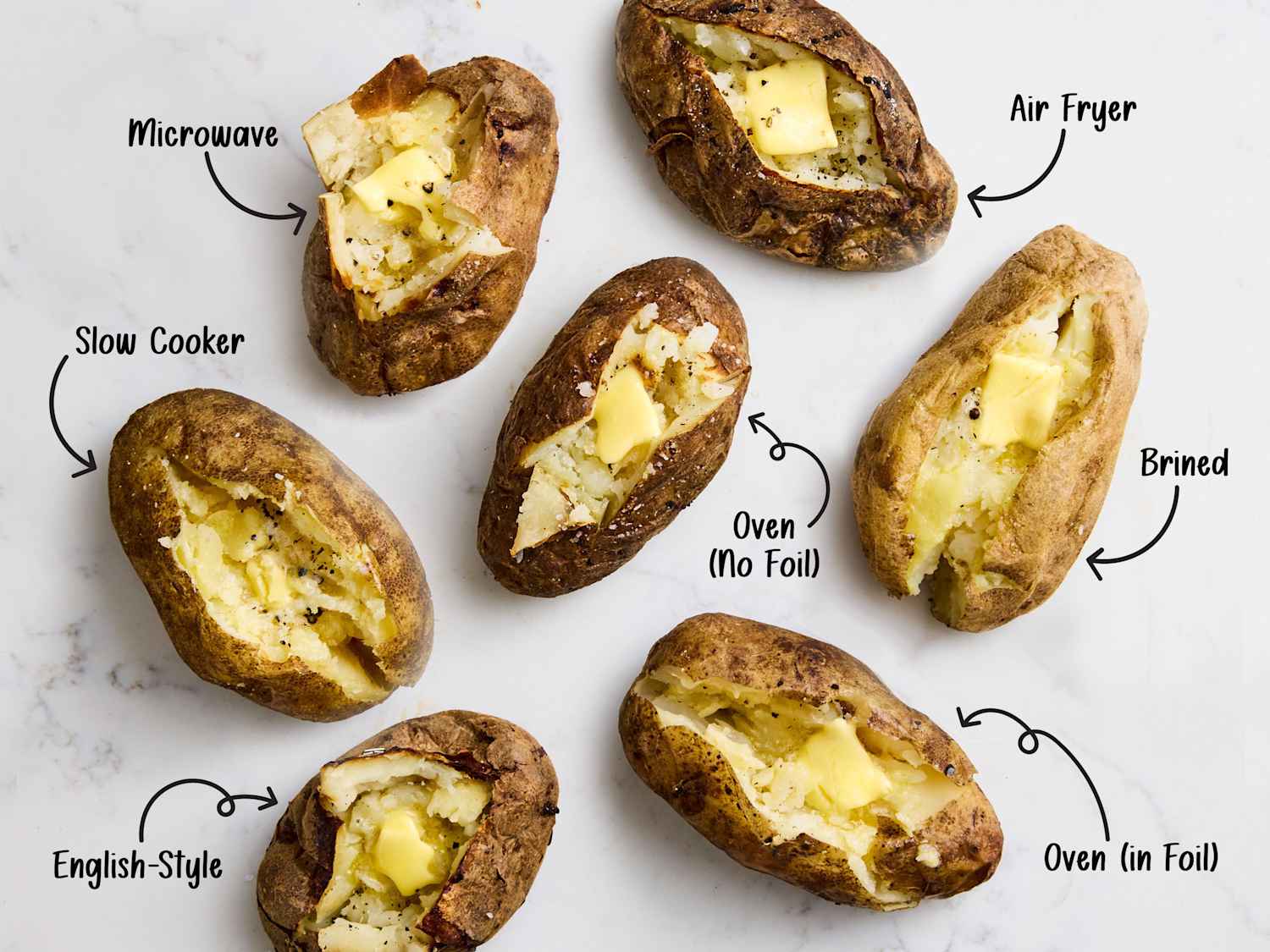
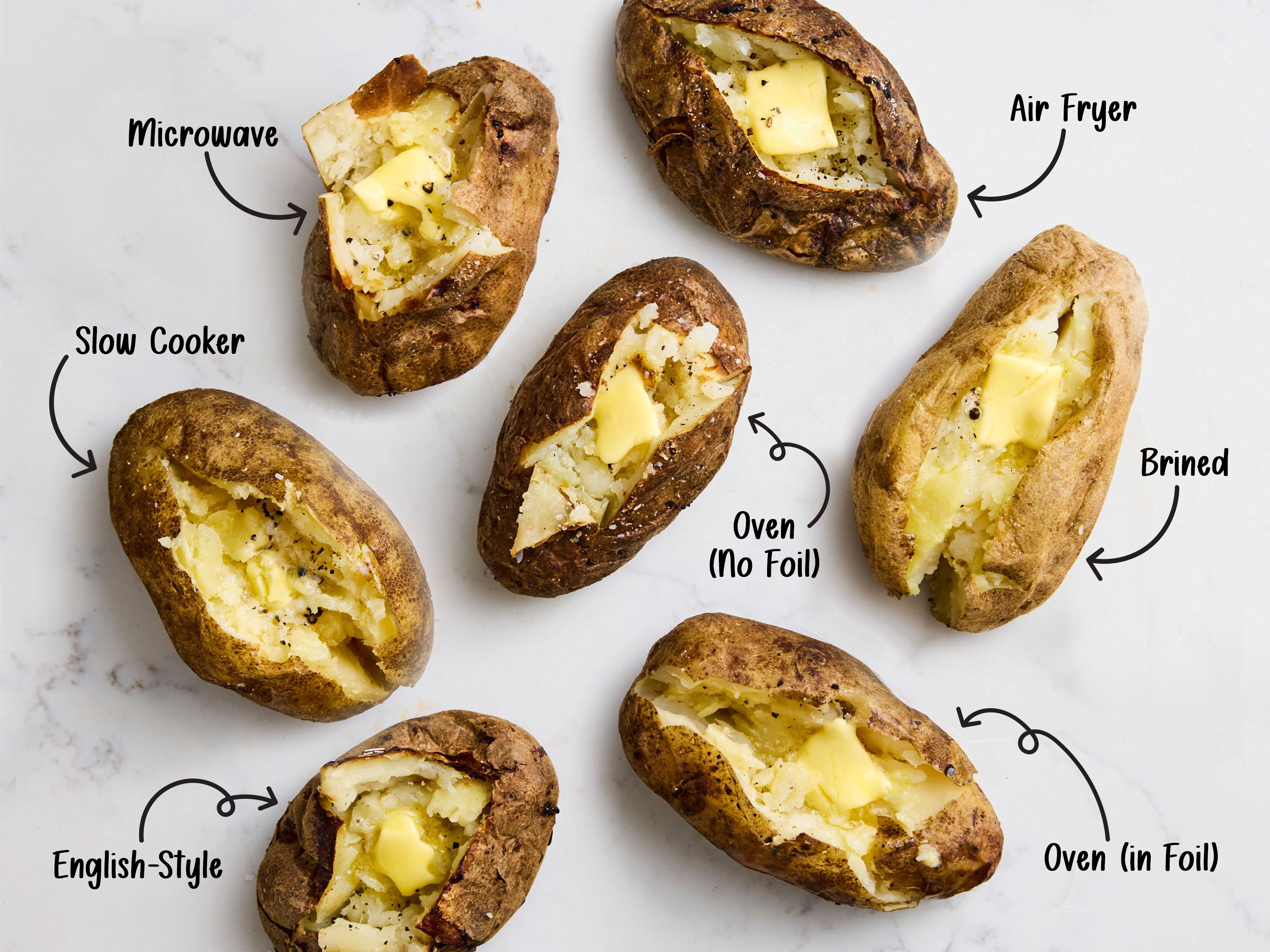
A microwave makes the inside soft, but it does not usually create crisp skin. If crisp skin matters to you, use a short finishing step.
After microwaving, brush the potato lightly with oil and sprinkle it with salt. Then use one of these methods:
• Broil it for 2 to 4 minutes until the skin is crisp
• Bake it at 425°F for 10 to 15 minutes
• Place it in an air fryer at 400°F for 5 to 8 minutes
• Toast it in a countertop oven until the outside feels crisp
Watch the potato closely during this step. The skin can brown quickly, especially under a broiler.
This two-stage method is useful when you want speed without giving up texture. The microwave cooks the center like a fast steam bath, while the oven or air fryer gives the skin a dry, crisp finish.

The Best Potatoes for Microwave Baking
Russet potatoes are the classic choice for a microwave baked potato. Their thick skin and starchy flesh produce a fluffy center that pairs well with butter, sour cream, and cheese.
Other types can work well too:
• Russet: Light, fluffy, and ideal for traditional baked potatoes
• Yukon Gold: Smooth, creamy, and slightly buttery
• Red potatoes: Moist, firm, and better for slicing or serving with herbs
• Sweet potatoes: Soft, naturally sweet, and rich in beta-carotene
Sweet potatoes may need a similar cooking time, but their shape and size can change the result. Always pierce them before cooking and test the thickest part with a fork.
Avoid potatoes with a strong green color. Green skin can indicate increased glycoalkaloid levels, which may cause illness when eaten in large amounts. Trimming a tiny green spot may be enough, but a very green or bitter potato should not be used.
Common Mistakes to Avoid
A few small mistakes can lead to a hard center, soggy skin, or an overheated potato.
Skipping the fork holes
Unpierced potatoes can trap steam. Piercing the skin is the simplest safety step in this method.
Using only the timer
Two potatoes that look alike may need different cooking times. Use the timer as a guide, then check the texture.
Cooking one side too long
A potato can develop hot spots in the microwave. Turning it halfway helps distribute heat more evenly.
Cutting it open too soon
The center may still be firm when the microwave stops. Resting gives the heat time to finish the job.
Overcooking the potato
Too much time can make the inside dry, chewy, or tough. Cook in short one-minute bursts near the end.
Using foil
Do not use foil in a microwave. Save foil for conventional oven use only, and remove it before microwaving.
In my kitchen tests, the most common mistake was choosing a very large potato and using the time for a medium one. The outside became hot while the center stayed firm. A smaller potato, or a longer cook with regular checks, gave a much better result.
How to Serve a Microwave Baked Potato
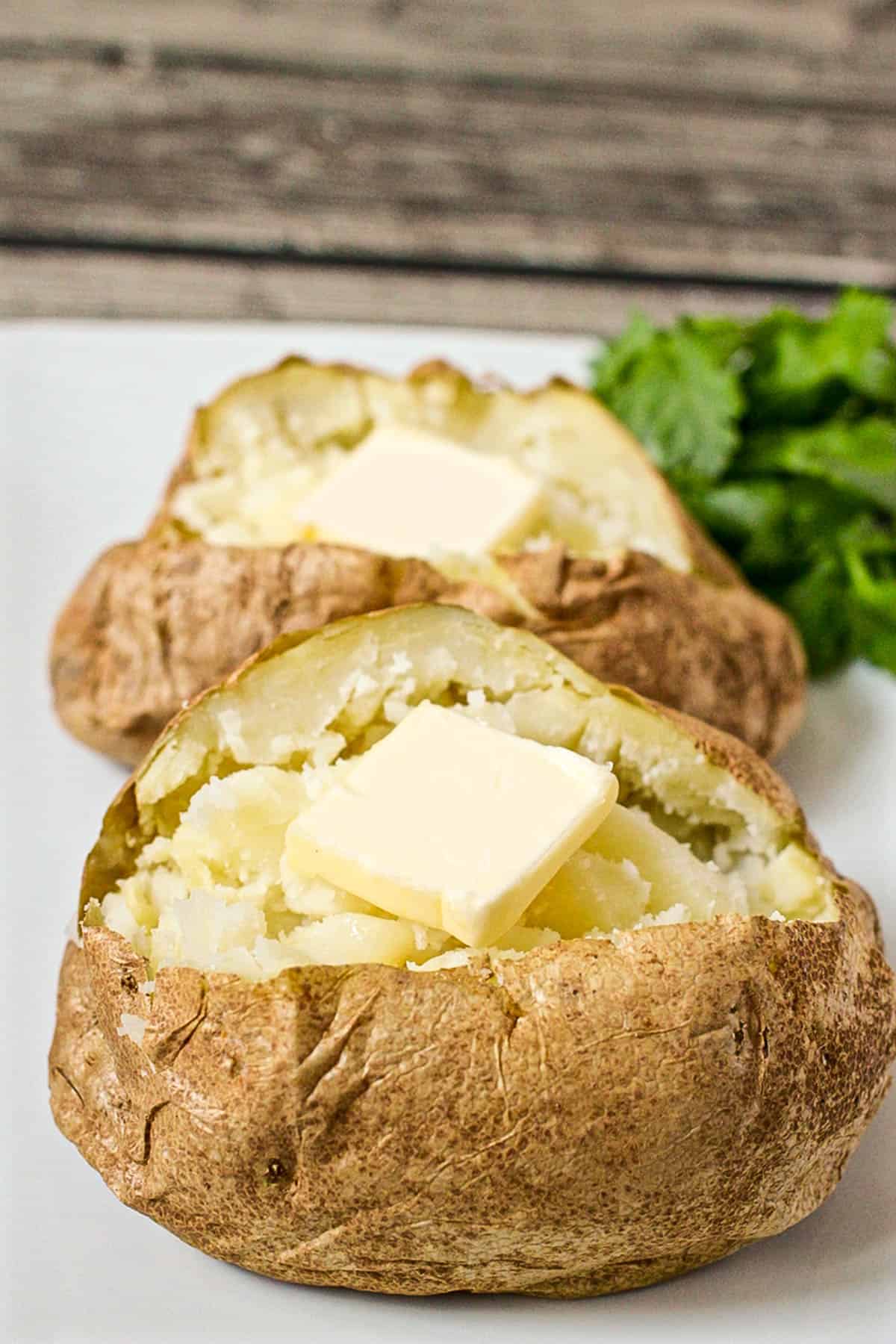
A hot potato is a blank canvas. Slice it open, fluff the center, and add toppings while it is still warm.
Classic toppings include:
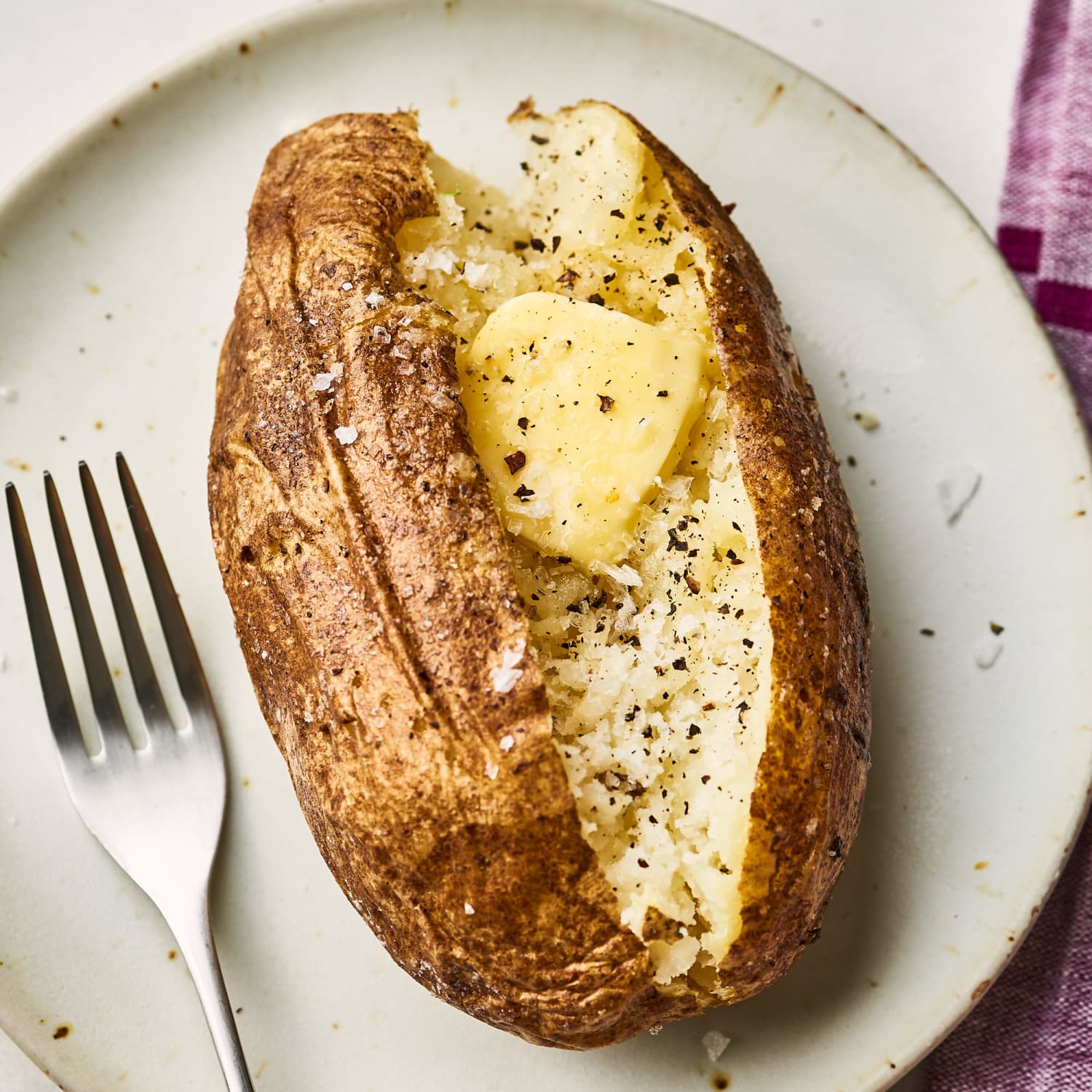
• Butter and sea salt
• Sour cream and chives
• Shredded cheddar cheese
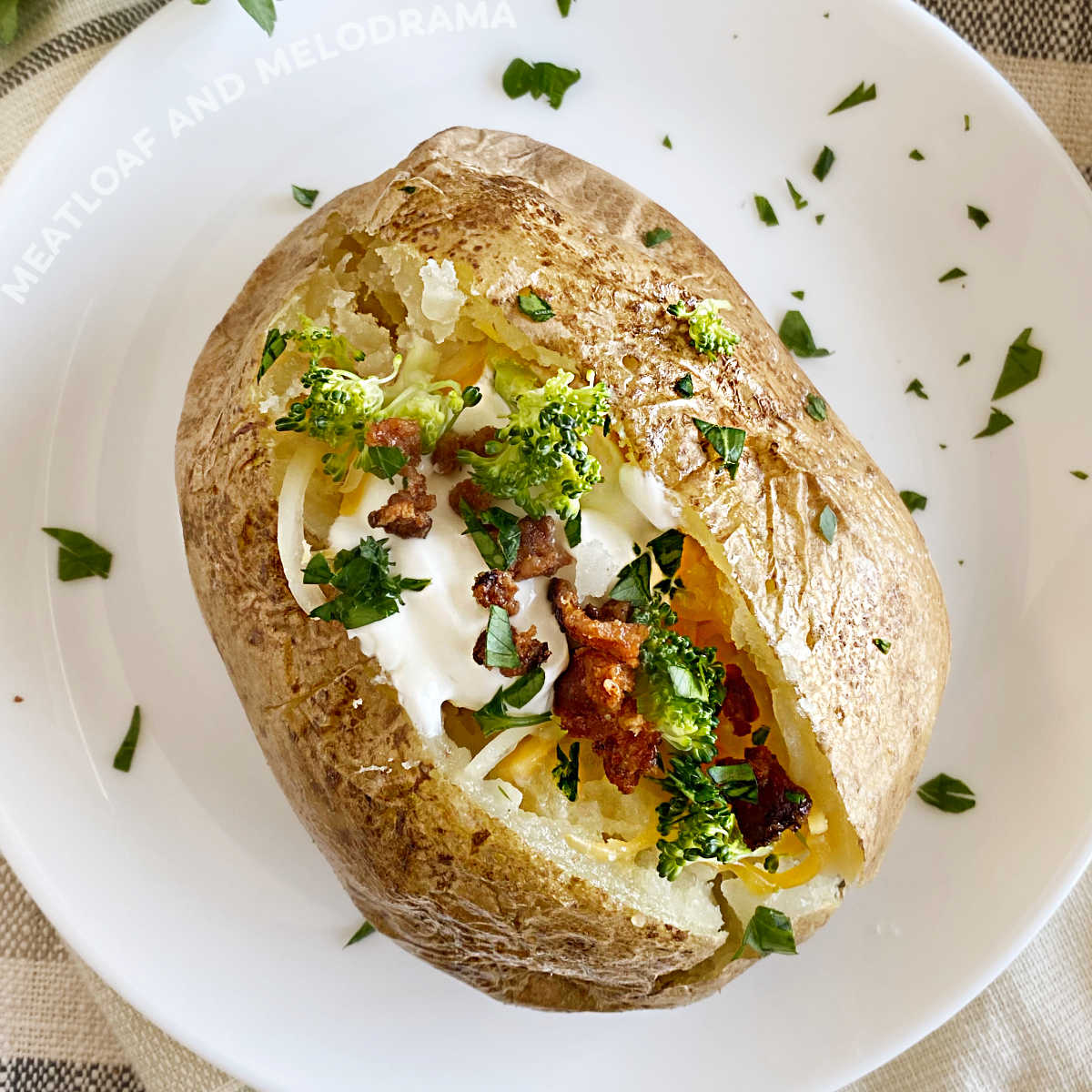
• Broccoli and cheese sauce
• Chili and green onions
• Bacon and plain Greek yogurt
• Black beans, salsa, and avocado
• Steamed vegetables and grated Parmesan
For a balanced meal, add protein and vegetables. Chili, beans, tuna, chicken, cottage cheese, and lentils can turn a simple potato into a filling lunch or dinner.
For less saturated fat, use plain yogurt, salsa, herbs, or a small amount of sharp cheese. Strong flavors often let you use less topping while still keeping the dish satisfying.
Is a Microwave Baked Potato Healthy?
A plain potato can fit well into a balanced diet. It provides carbohydrates, fiber, potassium, vitamin C, and other nutrients. Much of the fiber is in or near the skin, so keeping the skin on adds nutritional value when the potato is washed well.
The cooking method itself does not add fat. The main change in calories usually comes from toppings such as butter, cheese, bacon, and creamy sauces.
Microwaving can also reduce cooking time and limit the need for added oil. Still, nutrient levels vary with potato type, storage, cooking time, and serving size. A potato is healthiest as part of a meal that also includes vegetables and a suitable protein source.
Food safety matters too. Eat the potato while it is hot, or refrigerate leftovers within two hours. Store leftovers in a covered container and reheat them until steaming hot.

How to Reheat a Baked Potato
To reheat a cooked potato, place it on a microwave-safe plate and cut it open. Cover it loosely with a damp paper towel, then microwave it for 1 to 2 minutes.
Turn it once and continue in 30-second bursts until the center is hot. The damp towel helps reduce dryness.
For crisp skin, reheat the potato in an oven or air fryer instead. A temperature of 375°F for about 10 to 15 minutes usually works well, depending on the potato’s size.
Do not leave a baked potato at room temperature for a long time. Refrigerate leftovers promptly, and discard them if they have an unusual smell, slimy texture, or other signs of spoilage.
Tips for Better Results Every Time
Use these practical tips to make the method more consistent:
• Choose potatoes with a similar size when cooking more than one
• Place thick potatoes toward the outside of the plate
• Turn the potato halfway through cooking
• Add one minute at a time near the end
• Rest the potato before serving
• Open the potato carefully because steam may escape
• Fluff the center with a fork for a lighter texture
• Use an oven or air fryer if crisp skin is important
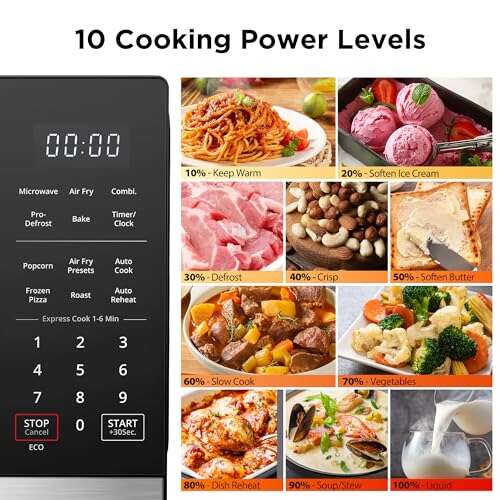
If your microwave has a potato setting, use it as a starting point rather than a guarantee. Sensor programs vary by brand and may not know the exact weight or shape of your potato.
The best approach is simple: learn your microwave. After a few attempts, you will know how long a medium russet takes in your specific appliance.
Frequently Asked Questions About How to Bake a Potato in Microwave Oven
How long does it take to bake a potato in microwave oven?
A medium potato usually takes 8 to 10 minutes in a 1,000-watt microwave. Turn it halfway through, then add one-minute bursts until the center is soft.
Do you need to poke a potato before microwaving it?
Yes, poke the skin several times with a fork before cooking. The holes let steam escape and reduce the chance of the skin splitting.
Can you microwave two potatoes at the same time?
Yes, but they need more time than one potato. Place them apart on the plate, turn both halfway through, and check each one because they may cook at different rates.
Should you wrap a potato before microwaving it?
Do not wrap a potato in aluminum foil in a microwave. Foil can spark and create a fire risk, so use a bare potato on a microwave-safe plate instead.
How do you know when a microwave baked potato is done?
The potato is done when a fork slides easily into the thickest part. It should feel soft when gently pressed with a towel or oven mitt.
Can you make a microwave potato crispy?
A microwave alone usually will not make the skin crisp. Brush the cooked potato with a little oil, then finish it under a broiler, in an oven, or in an air fryer.
Is it better to microwave a potato covered or uncovered?
Either method can work, but covering is not required. If you cover it, use only a loose microwave-safe cover that allows steam to escape.
Conclusion
To bake a potato in microwave oven, wash and dry it, pierce the skin, cook it on high, turn it halfway, and rest it before serving. Start with about 8 to 10 minutes for a medium potato, but rely on softness rather than time alone.
Use a russet for a fluffy center, add a crisping step when desired, and never use foil in the microwave. Try the method with your favorite toppings, then share your best combination or explore more simple microwave recipes.

Appliance Review Expert
Lucas Ramirez is a trusted voice at HomeFixGrid.com, known for his clear, practical, and creatively written guides that simplify appliance care for everyday homeowners. With a strong focus on hands-on testing and real-world problem-solving, Lucas brings expert insight into appliance reviews and troubleshooting techniques. Her work empowers readers to confidently maintain, repair, and choose the right appliances for their homes.