How Wide Is A Side By Side Refrigerator: Standard Sizes
Most side-by-side refrigerators are 30 to 36 inches wide, with some models reaching 40 inches.
Knowing how wide is a side by side refrigerator helps you plan the cabinet opening, delivery path, and door swing before you buy. In real kitchens, even a small measuring error can turn a simple installation into a costly return, so this guide covers standard widths, depth, clearance, measuring steps, and fit tips.
How Wide Is a Side by Side Refrigerator?
Most side-by-side refrigerators are between 30 and 36 inches wide. Compact models may measure about 29 inches, while large family-size models can reach 40 inches wide.
The listed width usually measures the refrigerator cabinet and exterior body. It may not include every hinge, handle, or door curve. Always check the product specification sheet for the exact width.
Common width ranges include:
• Compact models: 29 to 31 inches wide
• Standard models: 32 to 36 inches wide
• Large-capacity models: 37 to 40 inches wide
• Commercial-style models: 40 inches or more
A 36-inch refrigerator is one of the most common choices for a large kitchen. It offers useful storage without taking up as much space as many French-door or professional-style models.
The answer to how wide is a side by side refrigerator depends on the brand, capacity, ice maker design, and door style. Two refrigerators with the same storage capacity may still differ by an inch or more.

Standard Side by Side Refrigerator Dimensions
Width is only one part of the fit. You must also consider height and depth.
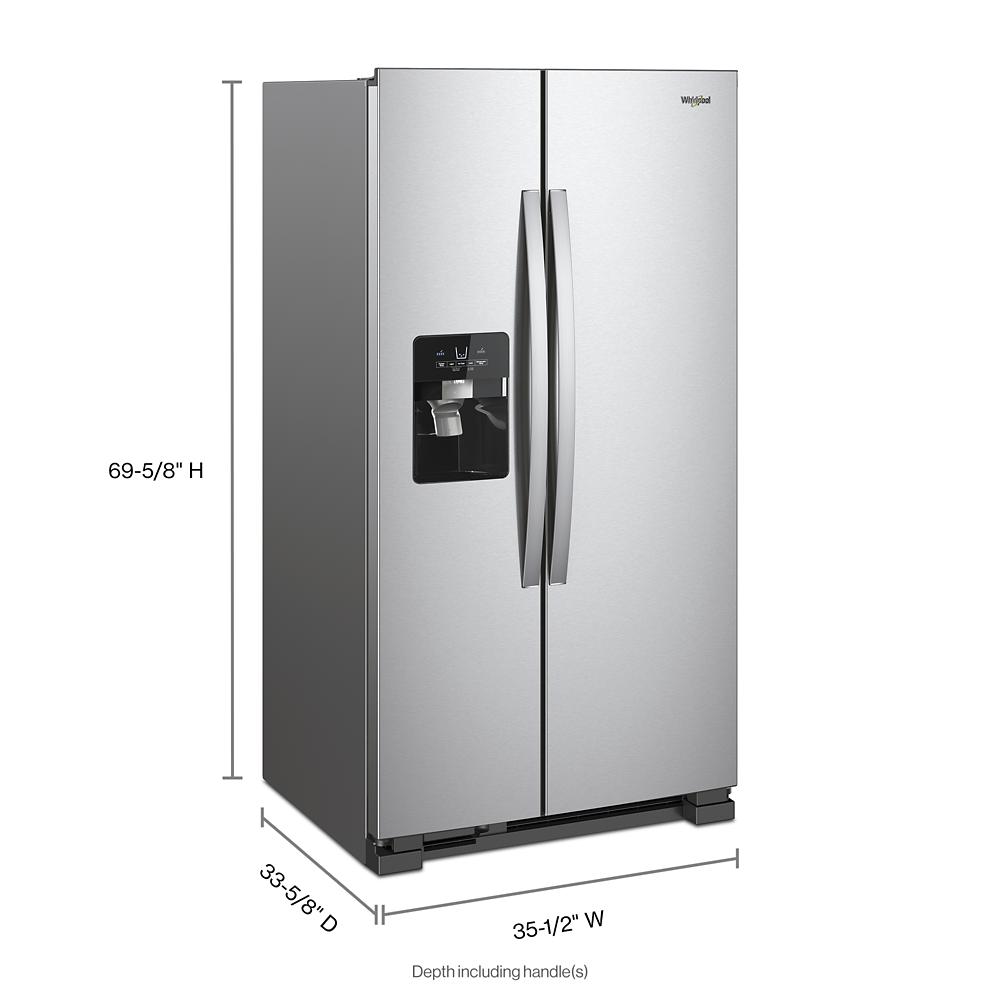
Most standard side-by-side refrigerators have these approximate measurements:
| Dimension | Common range |
|---|---|
| Width | 30 to 36 inches |
| Height | 66 to 71 inches |
| Depth with doors | 30 to 34 inches |
| Cabinet depth | 24 to 30 inches |
| Open door depth | 45 to is 55 inches |
Some models are taller than 71 inches. Others have a shallow cabinet but doors that extend farther into the room.
Capacity also affects size. A refrigerator with 20 to 22 cubic feet of storage often has a narrower body. Models with 25 to 28 cubic feet usually need more width, height, or depth.
When comparing how wide is a side by side refrigerator, look at the “product dimensions” and “cutout dimensions.” Product dimensions describe the appliance. Cutout dimensions describe the space the manufacturer recommends for installation.

Why Refrigerator Widths Vary
Several design choices affect refrigerator width. A water dispenser, ice maker, thick insulation, and larger shelves can all change the exterior size.
The main factors include:
• Storage capacity: More cubic feet often means a wider cabinet.
• Door design: Thick doors and large bins can increase the total width.
• Ice system: In-door ice makers may need extra door space.
• Insulation: Modern units use insulation to improve energy performance.
• Counter-depth design: This reduces depth more often than width.
• Brand design: Each manufacturer uses its own cabinet and hinge layout.
Side-by-side refrigerators also divide storage into two narrow vertical sections. This design makes both the freezer and fresh-food areas easy to reach, but each compartment may be less wide than a French-door refrigerator.
In my experience helping people compare appliance spaces, buyers often focus on the advertised cubic feet and forget the outside width. That mistake is easy to avoid: treat the exterior dimensions as the starting point, not the storage number.
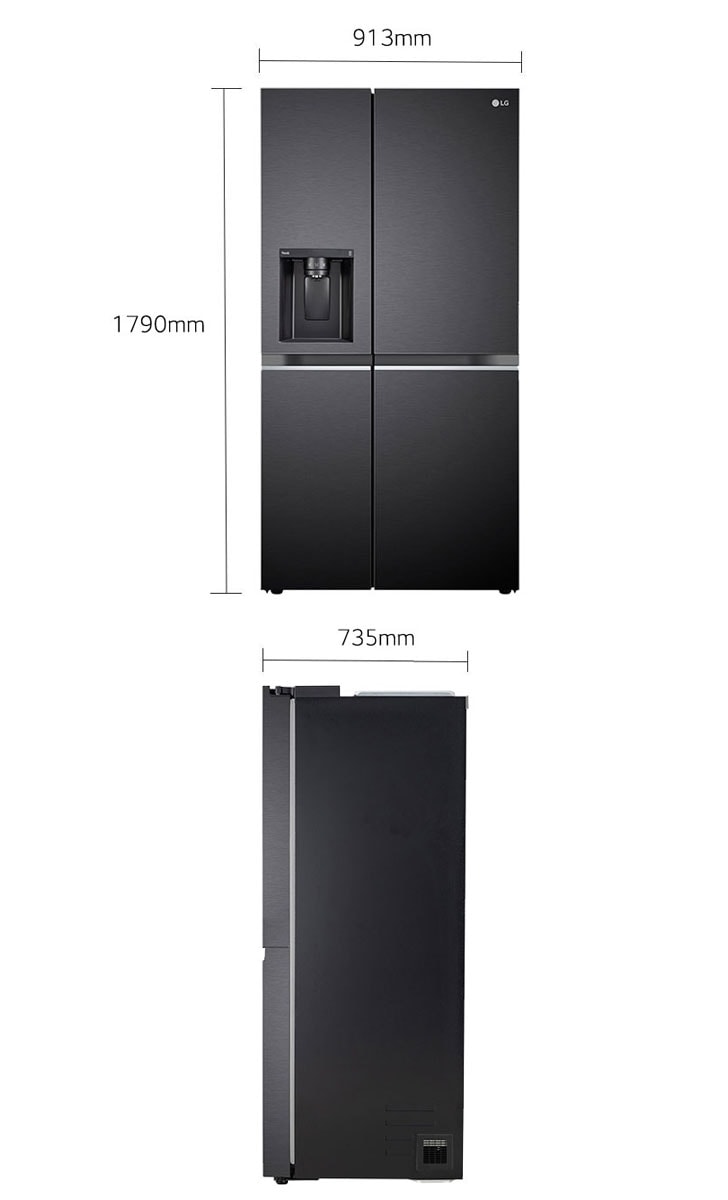
Side by Side Refrigerator Width by Capacity
Capacity gives you a useful estimate, but it does not replace exact measurements.
Small side-by-side refrigerators
Small models usually hold about 18 to 21 cubic feet. Their widths often range from 29 to 32 inches.
These refrigerators suit apartments, smaller homes, offices, and kitchens with narrow openings. Their shelves may be less wide, but the vertical layout still gives good access.
Standard side-by-side refrigerators
Standard models usually offer about 22 to 25 cubic feet. Most are 33 to 36 inches wide.
This range works well for many households. It gives enough room for fresh food and frozen items without requiring a very large kitchen opening.
Large side-by-side refrigerators
Large models may provide 26 to 30 cubic feet of storage. Their widths often range from 36 to 40 inches.
These units can be helpful for large families, bulk shoppers, and homes that need extra freezer space. However, they may need wider doors, stronger flooring, and more delivery clearance.

How Much Space Should You Leave Around a Refrigerator?
A refrigerator needs more room than its body width alone suggests. Proper clearance allows air to move, doors to open, and technicians to service the unit.
Manufacturers often recommend:
• About ⅛ to ½ inch on each side
• About 1 inch above the refrigerator
• About 1 to 2 inches behind the unit
• Extra space beside the hinge side for door movement
The exact clearance varies by model. Some built-in or counter-depth refrigerators need very precise gaps. Others allow more flexibility.
Do not push a refrigerator tightly against a wall. The door may not open far enough to remove shelves or drawers. A tight fit can also trap heat around the compressor and make the appliance work harder.
If your opening is 36 inches wide, do not assume every 36-inch refrigerator will fit. One model may measure 35⅝ inches, while another may measure 36¼ inches.
How to Measure Your Refrigerator Opening
Measure the opening before you shop. Use a steel tape measure, and record each result in inches.
Follow these steps:
- Measure the width at the top, middle, and bottom of the opening.
- Use the smallest width as your safe measurement.
- Measure the height from the floor to the lowest cabinet or countertop.
- Measure the depth from the back wall to the front edge of the counter.
- Check for baseboards, trim, outlets, and water lines.
- Measure the doorways and hallway before scheduling delivery.
- Confirm the manufacturer’s required clearance.
Also measure the path from the delivery entrance to the kitchen. A refrigerator may fit the kitchen opening but fail at a narrow doorway or sharp hallway turn.
One practical lesson is to measure with doors and drawers in mind. A refrigerator can fit in the opening yet still block a nearby cabinet when the freezer door is fully open.
Door Swing and Side Clearance
A side-by-side refrigerator has two tall doors. Each door usually needs room to open without hitting a wall, cabinet, or island.
Check these points before purchase:
• The hinge side should have enough space for the door to open fully.
• The handle should not strike nearby cabinets.
• The doors should open wide enough to remove shelves.
• The freezer door should not block a main walkway.
• The refrigerator should not hit a kitchen island.
Some models use reversible doors, but many side-by-side units have fixed hinge locations. A reversible door can help in a tight kitchen, but the installation process may require special parts or a qualified technician.
A counter-depth refrigerator may look neat and built-in, but it still needs front clearance. Its doors and handles can extend several inches beyond the cabinet line.
Standard Depth Versus Counter-Depth Models
Standard-depth side-by-side refrigerators extend farther beyond the kitchen cabinets. Their total depth, including doors and handles, may reach 30 to 34 inches.
Counter-depth models usually have a cabinet depth of about 23 to 27 inches. Their doors and handles may still extend beyond the counter, so the total depth can be greater.
Counter-depth models offer several benefits:
• A cleaner, more integrated appearance
• Easier movement through narrow kitchens
• Less refrigerator space projecting into the room
• Better access to nearby drawers and walkways
They also have limitations:
• Less interior storage in many models
• Higher prices in some product lines
• More sensitive installation requirements
• Possible loss of rear shelf depth
The answer to how wide is a side by side refrigerator usually stays similar between standard-depth and counter-depth versions. The main difference is often front-to-back depth, not side-to-side width.
Can a 36-Inch Refrigerator Fit a 36-Inch Opening?
Usually, no. A refrigerator labeled 36 inches wide may be slightly wider than 36 inches when you include the exact cabinet, hinges, or required clearance.
For a 36-inch opening, look for a model with a published width that leaves room for installation. If the refrigerator measures 35⅝ inches, it may fit with a small gap. If it measures 36 inches exactly, it may be too tight.
Check the following before ordering:
• Product width
• Required side clearance
• Hinge and handle projection
• Floor level and cabinet alignment
• Water and electrical connection space
An uneven floor can also cause trouble. The refrigerator may slide into the opening but lean forward or fail to keep its doors aligned.
When people ask how wide is a side by side refrigerator, they often mean, “What opening do I need?” The safer answer is to compare the actual model width with the manufacturer’s installation diagram.
How Wide Is a Side by Side Refrigerator Compared With Other Types?
Refrigerator style affects both width and interior layout.
| Refrigerator type | Common width |
|---|---|
| Top-freezer | 28 to 33 inches |
| Bottom-freezer | 29 to 36 inches |
| French-door | 30 to 36 inches |
| Side-by-side | 30 to 36 inches |
| Large professional-style | 36 to 48 inches |
A side-by-side refrigerator is often similar in width to a French-door model. However, side-by-side doors split the vertical space into two sections, while French-door models provide a wider fresh-food area.
Top-freezer refrigerators are often narrower and may fit older kitchens more easily. Professional-style models are wider, deeper, and heavier, so they need careful planning.
Choose the style based on your kitchen space and how you use food storage. A wider refrigerator is not always better if the doors cannot open comfortably.
Benefits of a Side by Side Refrigerator
Side-by-side refrigerators remain popular because their layout is easy to use.
Key benefits include:
• Easy access to both fresh and frozen food
• Less bending than with a bottom freezer
• Tall freezer storage for boxes and bottles
• A narrow door swing compared with some wide-door designs
• Convenient eye-level placement for many foods
• Common availability in several width ranges
This style can work especially well in a narrow kitchen. Each door opens into a smaller arc, which may help when a counter or island sits nearby.
The vertical freezer also makes it easier to see frozen food than a deep chest-style compartment. Still, the shelves are narrow, so wide pizza boxes and large trays may not fit easily.
Limitations to Consider Before Buying
A side-by-side design is not perfect for every home. The narrow compartments can limit how you store large items.
Common drawbacks include:
• Narrow fresh-food shelves
• Less space for wide platters
• Door bins that may become crowded
• A wider total footprint than compact models
• Possible difficulty opening doors beside a wall
• Higher energy use than smaller refrigerators
Energy use depends on the model, size, features, and efficiency rating. A larger refrigerator generally has more space to cool, but the product’s energy label gives the best comparison.
You should also consider noise, dispenser design, filter costs, and warranty terms. A refrigerator is a long-term purchase, so the cheapest model may not be the lowest-cost choice over several years.
Delivery and Installation Tips
Delivery problems often happen because buyers measure only the final kitchen opening. Measure the entire route.
Before delivery, check:
• The front door width
• Porch and entry steps
• Hallway width
• Ceiling height near turns
• Elevator or stair access
• Kitchen doorway width
• Appliance packaging dimensions
Ask the retailer whether the delivery team removes packaging, doors, or handles. Some refrigerators can be made narrower for transport by removing the doors, but this should follow the manufacturer’s instructions.
Protect the floor with a suitable appliance mat or moving board. Never drag a heavy refrigerator across finished flooring without proper protection.
After installation, let the unit stand as instructed before plugging it in if it was transported on its side. The manufacturer’s manual is the best guide because waiting time depends on how the appliance was moved.
Mistakes to Avoid When Measuring Refrigerator Width
A few simple mistakes can create a poor fit.
Avoid these errors:
• Measuring only one point of the opening
• Ignoring the baseboard or wall trim
• Forgetting door and handle depth
• Assuming the listed width includes clearance
• Measuring the kitchen but not the delivery route
• Overlooking the water line location
• Failing to check whether doors can be removed
Do not rely on an old refrigerator’s measurements. New insulation, hinges, handles, and dispenser systems can change the outside size.
Keep a written measurement list. Include the smallest opening width, lowest ceiling height, route width, and available depth. This makes online comparison much easier.
Frequently Asked Questions About How Wide Is a Side by Side Refrigerator
How wide is a standard side by side refrigerator?
A standard side-by-side refrigerator is usually 32 to 36 inches wide. Compact models may be closer to 30 inches, while large models can reach 40 inches.
How wide is a side by side refrigerator with an ice and water dispenser?
Most side-by-side refrigerators with an ice and water dispenser are about 33 to 36 inches wide. The dispenser may change door thickness, but it does not always make the full refrigerator wider.
Will a 36-inch side by side refrigerator fit in a 36-inch opening?
It may not. Check the exact product width and required side clearance because a refrigerator labeled 36 inches can exceed the available opening.
How much clearance does a side by side refrigerator need?
Many models need about ⅛ to ½ inch on each side, about 1 inch above, and 1 to 2 inches behind. Always follow the clearance diagram for the specific model.
Are counter-depth side by side refrigerators narrower?
Not always. Counter-depth models are mainly shallower from front to back, while their width often remains between 30 and 36 inches.
What is the widest side by side refrigerator size?
Large residential side-by-side refrigerators may be about 37 to 40 inches wide. Professional-style units can be wider, but they require more space and careful installation planning.
Conclusion
Most side-by-side refrigerators are 30 to 36 inches wide, but the exact answer depends on the model, capacity, hinges, handles, and required clearance. Width is only part of the fit, so measure the opening, door swing, depth, height, and delivery path before you buy.
Use the smallest opening measurement, compare it with the manufacturer’s installation guide, and leave enough room for ventilation and service. Take a few minutes to measure now, then explore models that fit your kitchen with confidence and share your questions or appliance-planning tips in the comments.

Appliance Review Expert
Lucas Ramirez is a trusted voice at HomeFixGrid.com, known for his clear, practical, and creatively written guides that simplify appliance care for everyday homeowners. With a strong focus on hands-on testing and real-world problem-solving, Lucas brings expert insight into appliance reviews and troubleshooting techniques. Her work empowers readers to confidently maintain, repair, and choose the right appliances for their homes.