What Size Is An Apartment Refrigerator: Quick Guide
Most apartment refrigerators measure 24 to 30 inches wide and hold about 7 to 14 cubic feet.
When people ask, “What size is an apartment refrigerator?” they usually need more than one number. Width, height, depth, storage space, door swing, and kitchen clearance all matter. This guide explains the standard apartment refrigerator size, how it compares with a full-size model, and how to choose one that fits your home and daily routine.
What size is an apartment refrigerator?
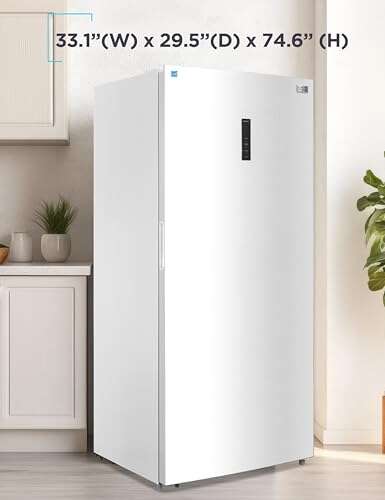
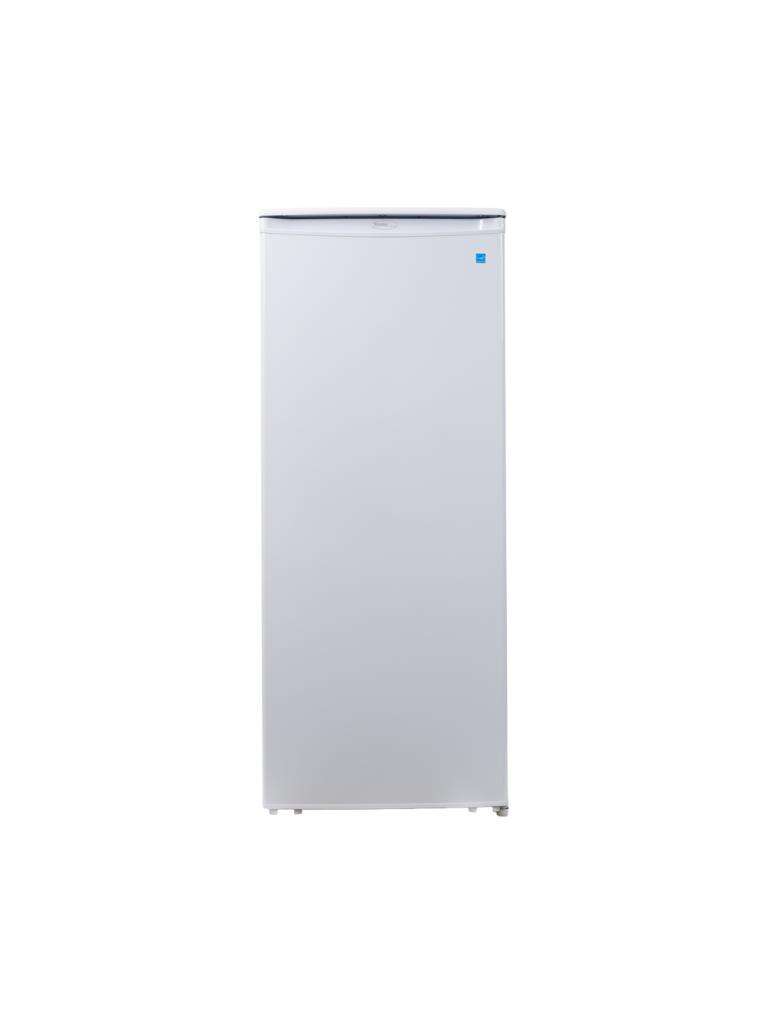
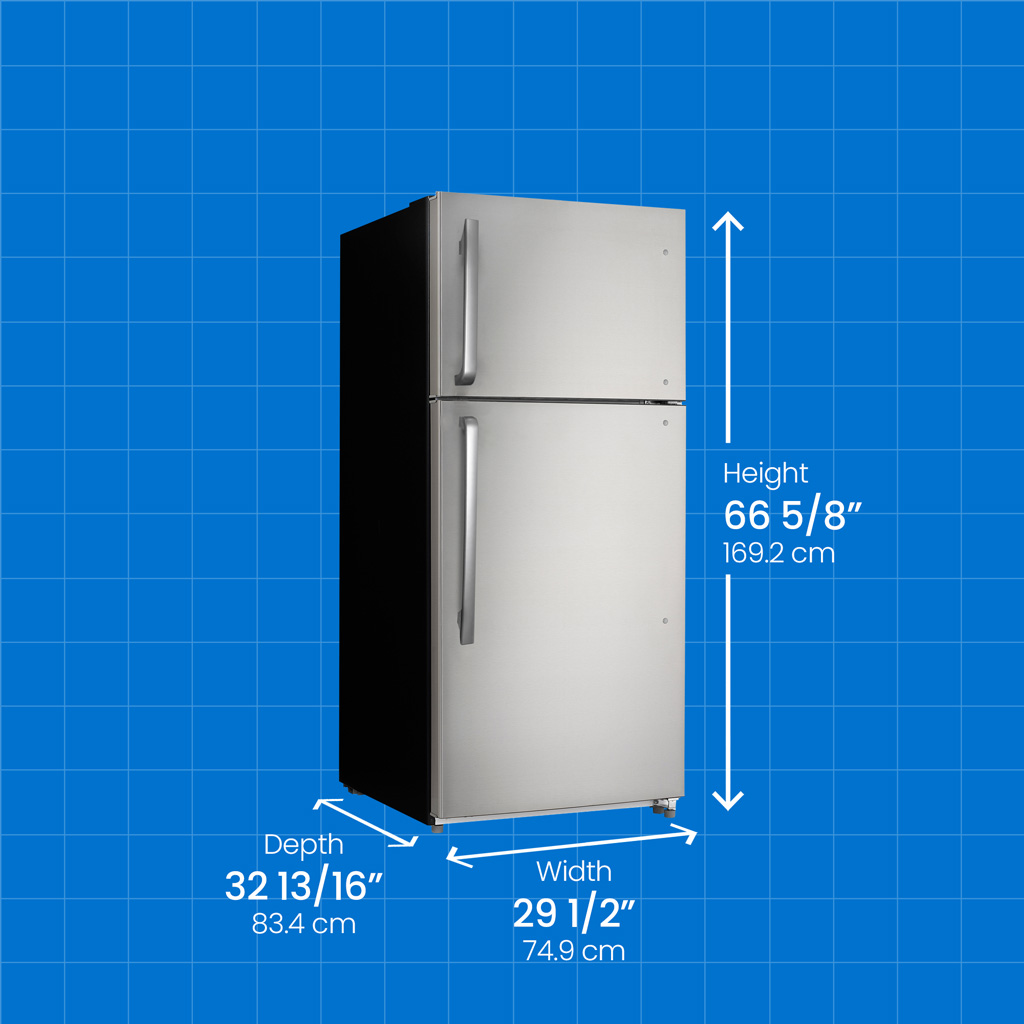
An apartment refrigerator is usually smaller than a standard family-size refrigerator but larger than a mini fridge. Most models are about 24 to 30 inches wide, 26 to 30 inches deep, and 55 to 68 inches tall. Their storage capacity often ranges from 7 to 14 cubic feet.
The exact size depends on the style. A top-freezer model may offer more food storage for its price, while a bottom-freezer or French-door model may need more width and depth. Some slim models are only 18 to 24 inches wide.
Here are common apartment refrigerator measurements:
| Refrigerator type | Typical width | Typical height | Typical depth | Capacity |
|---|---|---|---|---|
| Compact refrigerator | 18 to 24 inches | 32 to 60 inches | 18 to 26 inches | 3 to 7 cu. ft. |
| Slim apartment refrigerator | 24 to 28 inches | 55 to 68 inches | 24 to 29 inches | 7 to 12 cu. ft. |
| Standard apartment refrigerator | 28 to 30 inches | 60 to 68 inches | 26 to 30 inches | 10 to 14 cu. ft. |
| Small counter-depth model | 24 to 30 inches | 60 to 70 inches | 23 to 27 inches | 9 to 14 cu. ft. |
These figures are general ranges, not fixed rules. Always check the product specification sheet before buying because two refrigerators with the same capacity can have very different outside dimensions.
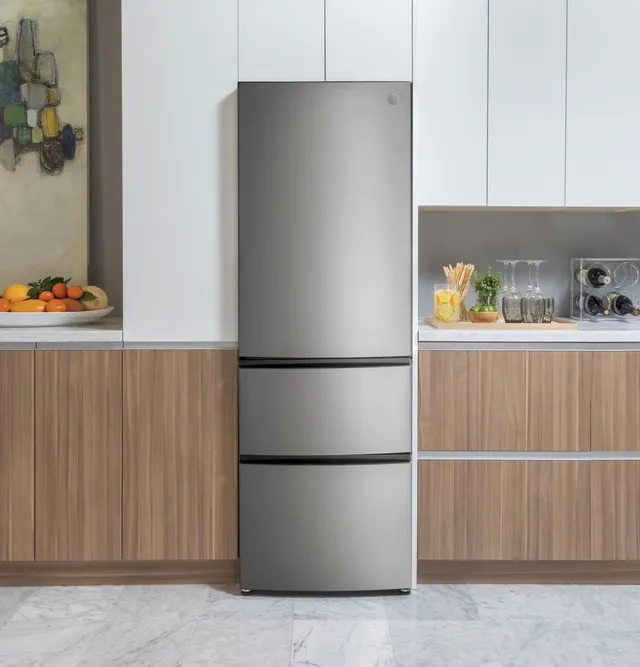
How apartment refrigerator sizes compare with standard refrigerators
A standard full-size refrigerator for a larger home often measures 30 to 36 inches wide and provides 18 to 28 cubic feet of storage. By comparison, an apartment refrigerator uses less floor space and usually has a smaller freezer.
A 7 to 10 cubic foot refrigerator may work well for one person. A 10 to 14 cubic foot apartment refrigerator is often better for two people or for anyone who cooks several times each week.
The main differences include:
• Width: Apartment models are often 4 to 10 inches narrower.
• Capacity: They may provide 5 to 15 cubic feet less storage than a full-size model.
• Freezer space: The freezer may take up one-third or less of the total interior.
• Energy use: A smaller unit often uses less electricity, though efficiency varies by model.
• Layout: Shelves and bins may be tighter, so tall bottles and wide pans can be harder to store.
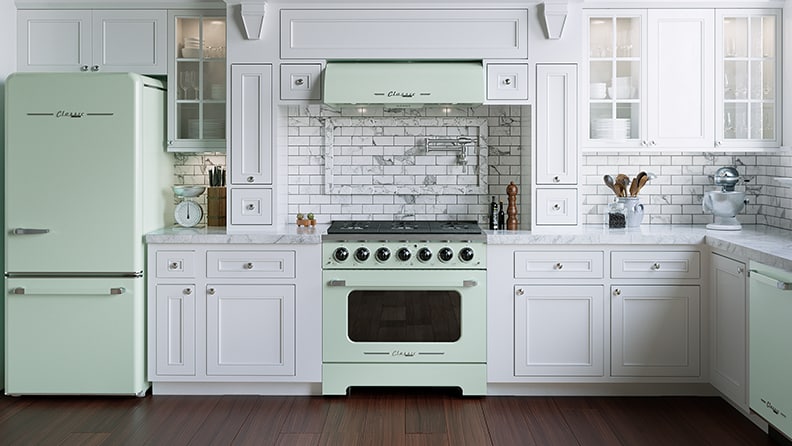
In my experience measuring kitchens, depth causes just as many problems as width. A refrigerator can fit between two cabinets but still block a walkway when the door opens. Think of the appliance as a small car entering a garage: the space around it matters as much as the space it occupies.
Apartment refrigerator dimensions by household size
The best apartment refrigerator size depends on how many people use it, how often you shop, and how much fresh food you keep at home. Household size offers a useful starting point, but lifestyle matters just as much.
For one person
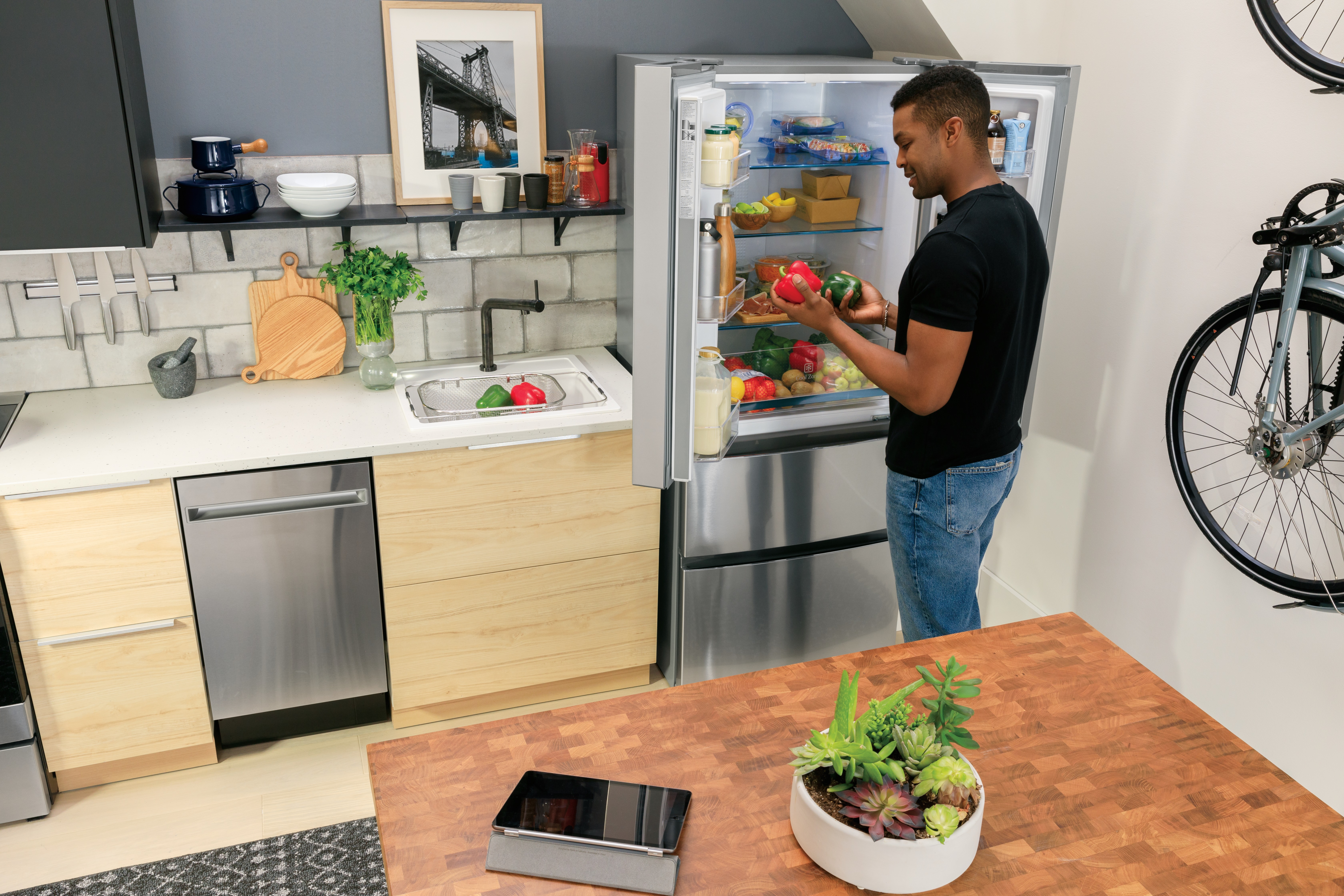
A 7 to 10 cubic foot refrigerator is often enough for one adult. It can hold fresh produce, drinks, dairy products, leftovers, and a modest amount of frozen food.
Choose closer to 10 cubic feet if you meal prep, buy large cartons, or shop only once a week. A 3 to 5 cubic foot compact refrigerator may work in a studio, office, guest room, or basement, but it can feel cramped as a primary kitchen appliance.
For two people
Two adults often need 10 to 14 cubic feet. This range gives you more room for fresh food, meal containers, sauces, and frozen items without requiring a full-size refrigerator.
A top-freezer apartment refrigerator can provide good value here. If you freeze food often, look for a model with at least 3 to 5 cubic feet of freezer space.
For three or more people
A 12 to 16 cubic foot refrigerator may be more practical for a small family. However, many apartment kitchens cannot accept a model this large, especially in older buildings.
Before choosing a smaller unit for a larger household, consider your shopping habits. Frequent grocery trips can make a smaller refrigerator work. Bulk shopping may make it frustrating.
How to measure a space for an apartment refrigerator
Measuring the opening is the most important step before purchasing. Do not rely only on the listed size of your old refrigerator. New models may have different hinges, handles, doors, and ventilation needs.
Follow these steps:
-
Measure the opening width at the top, middle, and bottom. Use the smallest measurement.
-
Measure the opening height from the floor to the lowest cabinet or countertop above it.
-
Measure the depth from the back wall to the front edge of the counter.
-
Check the baseboard, wall trim, and outlet. These can reduce usable depth.
-
Measure the path from the entrance to the kitchen. Include hallways, stairways, elevators, and doorways.
-
Check the door swing. Make sure the door can open far enough to remove shelves and drawers.
-
Read the installation guide for required clearance.
Leave room for ventilation and movement. Many refrigerators need space above, behind, or beside the cabinet, but the required amount varies by manufacturer. A tight fit can reduce airflow and make the compressor work harder.
One mistake I often see is measuring only the front opening. A refrigerator may fit at the front but fail to clear a narrow hallway or a kitchen island. Measure the whole delivery path before placing the order.
How much clearance does an apartment refrigerator need?
Clearance allows heat to escape and lets the doors open properly. The correct amount depends on the model, so the manufacturer’s installation instructions should always come first.
As a general planning guide, allow:
• At least 1/2 inch on each side when the manual permits it.
• About 1 inch above the refrigerator when recommended.
• Around 1 to 2 inches behind the unit for airflow and the power cord.
• Extra room on the hinge side if the door must open beside a wall.
Some counter-depth models need less front-to-back space, but they still require ventilation. Counter-depth does not mean flush with the wall. The doors and handles usually extend beyond the cabinets.
Also check whether the refrigerator needs to be perfectly level. Many models require slight adjustment so the doors close correctly. A floor that slopes toward the kitchen can affect both the door swing and the fit.
Which apartment refrigerator style is best?
Different refrigerator styles use space in different ways. The best choice depends on your kitchen layout and food habits.
Top-freezer refrigerators
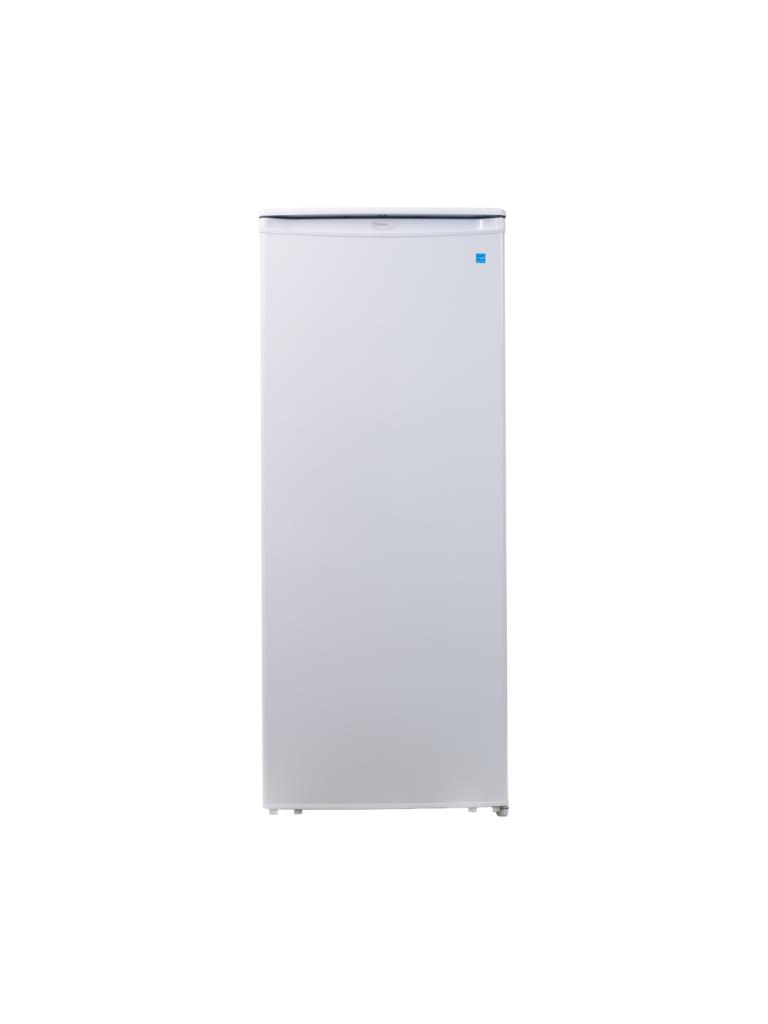
Top-freezer models place the freezer above the fresh-food section. They are often affordable, simple, and efficient in small kitchens.
Benefits include:
• Good storage for their width.
• Easy-to-reach freezer shelves.
• Many narrow models are available.
• Usually lower purchase and repair costs.
The main drawback is that fresh food sits lower, so you may bend more often.
Bottom-freezer refrigerators
Bottom-freezer models keep fresh food at eye level and place frozen food below. This design is convenient if you use the refrigerator section more often than the freezer.
The freezer may use a drawer, which needs room to open fully. Check for nearby islands, cabinet doors, and walls before choosing this style.
Side-by-side refrigerators
Side-by-side models have a vertical freezer and refrigerator. They make both sections easy to reach, but each side is narrow.
This style may not suit people who store wide trays, large pizza boxes, or big serving dishes. It can work well in a narrow kitchen if the door swing is limited.
French-door refrigerators
French-door models usually have two refrigerator doors and a bottom freezer. They offer a wide fresh-food area and require less door-swing space than a single wide door.
However, small French-door models may still be 30 inches wide or more. They can also be deeper and more expensive than basic top-freezer units.
Compact refrigerators
Compact refrigerators are useful for dorm rooms, offices, guest rooms, and small studios. Many include a small freezer shelf rather than a separate freezer compartment.
A compact refrigerator is not always a good substitute for a primary kitchen refrigerator. Its shelves may be shallow, and the freezer may not maintain enough space for regular frozen-food storage.
What size apartment refrigerator fits a small kitchen?
For a narrow kitchen, begin by looking at models that are 24 to 28 inches wide. A capacity of 8 to 12 cubic feet often provides a good balance between storage and floor space.
If the kitchen has a shallow counter, consider a counter-depth model. It can make the walkway feel wider, but you may lose some interior depth. This trade-off is similar to choosing a narrow bookshelf: it takes up less room, but each shelf holds less.
For a galley kitchen, door swing is critical. A refrigerator with reversible hinges may give you more layout options. Some models use French doors, which can also reduce the space needed in front of the appliance.
For a studio apartment, measure noise and heat concerns as well. A refrigerator near your bed or desk should have a quiet operating rating when available. Good ventilation also helps prevent excess heat in a small room.
How to choose the right apartment refrigerator capacity
Exterior size tells you whether a refrigerator fits the kitchen. Interior capacity tells you whether it fits your life.
Use these questions to estimate your needs:
• How many people live in the home?
• How often do you shop for groceries?
• Do you cook from fresh ingredients?
• Do you store leftovers in large containers?
• Do you buy frozen meals or meat in bulk?
• Do you need space for drinks?
• Do you host guests often?
A useful rule is to choose the smallest model that supports your normal routine, not the smallest model that fits the opening. Saving a few inches is not helpful if you cannot store the food you use.
Look closely at the interior layout. Adjustable shelves, gallon-door storage, humidity-controlled drawers, and a full-width freezer shelf can make a smaller refrigerator feel much larger.
Cubic feet also require context. A 12 cubic foot model with thick walls and a large ice maker may provide less usable space than a simpler 12 cubic foot model. Read the shelf and drawer details, not just the capacity number.
Common mistakes when buying an apartment refrigerator
Buying an apartment refrigerator is easier when you know what can go wrong. These mistakes are common and avoidable.
Measuring only the width
Width is not enough. Height, depth, door swing, and delivery clearance can stop an installation.
Forgetting the hinges and handles
The listed cabinet depth may not include handles. Hinges may also need extra room near a wall or cabinet.
Ignoring the freezer layout
A small freezer can become a daily problem if you store frozen vegetables, meat, ice cream, or meal-prep containers.
Choosing capacity over access
A deeper refrigerator may hold more food but make the kitchen walkway feel tight. In a small apartment, comfortable movement is part of the value.
Skipping the delivery check
Measure every doorway and turn. Remove doors from the home or refrigerator only if the manufacturer or delivery team approves the process.
Assuming apartment models are always energy efficient
Smaller size can reduce energy use, but efficiency depends on insulation, compressor design, settings, age, and certification. Compare the yellow EnergyGuide label and estimated yearly energy cost.
Forgetting rental restrictions
Some apartments require a specific appliance size, finish, or installation method. Renters should check the lease and ask the property manager before changing a supplied refrigerator.
Apartment refrigerator energy use and maintenance
A smaller refrigerator may use less electricity than a larger one, but age and condition have a major effect. Look for an energy label that shows estimated annual electricity use and operating cost.
Keep the refrigerator at about 37°F and the freezer at 0°F for safe food storage. A small appliance thermometer can confirm the actual temperature because the dial setting is not always precise.
Simple care can improve performance:
• Clean dust from accessible coils as directed by the manual.
• Keep air vents inside the refrigerator clear.
• Do not pack food tightly against the back wall.
• Check door seals for gaps or cracks.
• Let hot food cool slightly before placing it inside, while following safe food-handling rules.
• Keep the unit level so the doors close well.
The U.S. Food and Drug Administration advises keeping perishable food cold and discarding food that has been held at unsafe temperatures for too long. A small refrigerator has less thermal mass, so its temperature may change faster when the door stays open.
Frequently asked questions about what size is an apartment refrigerator
What is the most common apartment refrigerator size?
The most common apartment refrigerator is about 24 to 30 inches wide and holds 7 to 14 cubic feet. Many units are close to 28 inches wide and 60 to 68 inches tall.
Is a 10 cubic foot refrigerator big enough for two people?
A 10 cubic foot refrigerator can work for two people who shop often and do not store much frozen food. If you meal prep or buy groceries weekly, 12 to 14 cubic feet may feel more comfortable.
What is the difference between a compact and an apartment refrigerator?
A compact refrigerator often holds 3 to 7 cubic feet and may have only a small freezer compartment. An apartment refrigerator usually holds about 7 to 14 cubic feet and functions more like a full kitchen appliance.
Will a 24-inch refrigerator fit in a 24-inch opening?
Usually, no. The refrigerator needs installation clearance, and the opening may not be perfectly square. Measure the narrowest point and follow the manufacturer’s required clearance before ordering.
Are apartment refrigerators less powerful than regular refrigerators?
Not necessarily. An apartment refrigerator is smaller, but it can cool food as effectively as a full-size model when properly installed. Performance depends on the compressor, insulation, temperature settings, door seals, and room temperature.
What size refrigerator is best for a studio apartment?
A 7 to 10 cubic foot model is often a practical choice for a studio apartment. Choose a compact model only when floor space is extremely limited or the refrigerator will not be your main food-storage appliance.
Conclusion
The answer to “what size is an apartment refrigerator?” is usually 24 to 30 inches wide, 55 to 68 inches tall, 26 to 30 inches deep, and 7 to 14 cubic feet inside. The right choice depends on your kitchen opening, delivery path, household size, shopping habits, freezer needs, and door clearance.
Measure the space at several points, check the manufacturer’s installation guide, and compare usable layout rather than capacity alone. Take a few minutes to plan before buying, then explore energy-efficient models and share your refrigerator measurements or questions in the comments.

Appliance Review Expert
Lucas Ramirez is a trusted voice at HomeFixGrid.com, known for his clear, practical, and creatively written guides that simplify appliance care for everyday homeowners. With a strong focus on hands-on testing and real-world problem-solving, Lucas brings expert insight into appliance reviews and troubleshooting techniques. Her work empowers readers to confidently maintain, repair, and choose the right appliances for their homes.