What Are The Dimensions Of A Mini Fridge: Size Guide
Most mini fridges measure 18 to 24 inches wide, 19 to 26 inches deep, and 20 to 35 inches tall.
Knowing what are the dimensions of a mini fridge helps you choose the right model for a dorm, office, bedroom, garage, or small apartment. The outside size is only part of the answer. You also need to check storage capacity, door swing, ventilation space, shelf layout, and the difference between listed and usable dimensions. This guide explains what are the dimensions of a mini fridge in practical terms, so you can measure your space and buy with confidence.
What Are the Standard Dimensions of a Mini Fridge?
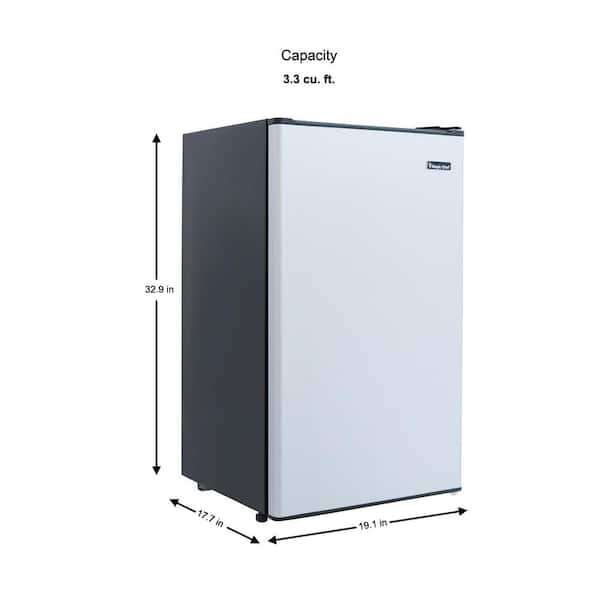
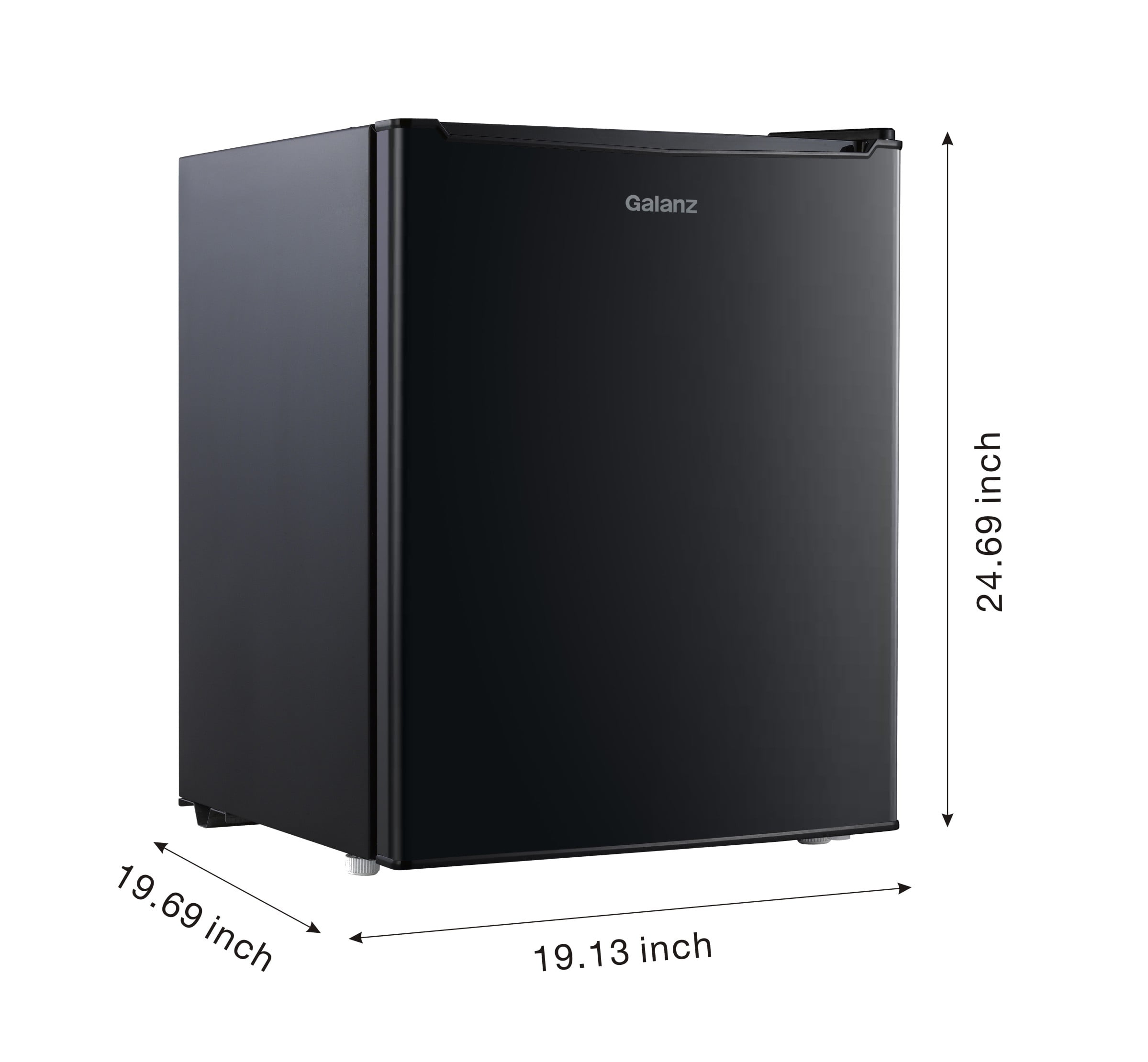
The typical mini fridge is about 18 to 24 inches wide, 19 to 26 inches deep, and 20 to 35 inches tall. These measurements describe the outside of the appliance, including its cabinet and, in some cases, the door handle.
Mini fridge dimensions vary by design and storage capacity. A small beverage cooler may be less than 18 inches wide, while a compact refrigerator with a freezer compartment may be more than 24 inches deep.
Here is a simple size guide:
| Mini fridge type | Width | Depth | Height | Typical capacity |
|---|---|---|---|---|
| Personal cooler | 15 to 18 inches | 17 to 20 inches | 18 to 24 inches | 1.0 to 2.0 cubic feet |
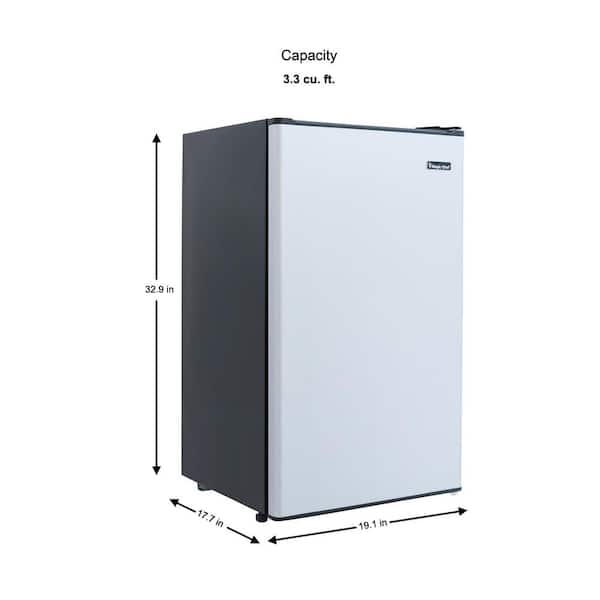
| Compact mini fridge | 18 to 22 inches | 19 to 24 inches | 24 to 32 inches | 2.0 to 3.3 cubic feet |
| Mini fridge with freezer | 19 to 24 inches | 20 to 26 inches | 30 to 35 inches | 3.0 to 4.5 cubic feet |
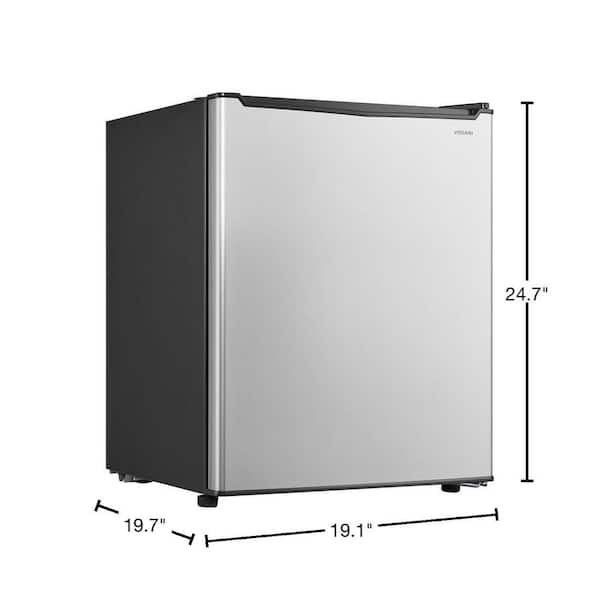
| Cube refrigerator | 17 to 21 inches | 18 to 21 inches | 19 to 25 inches | 1.7 to 2.7 cubic feet |
| Undercounter refrigerator | 23 to 24 inches | 23 to 25 inches | 32 to 35 inches | 3.0 to 5.5 cubic feet |
These are general ranges, not strict rules. Always check the manufacturer’s specification sheet before ordering because two refrigerators with the same capacity can have very different shapes.
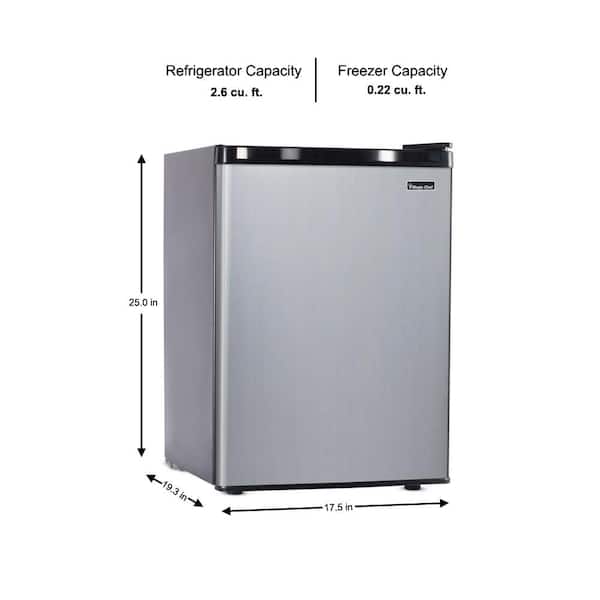
Mini Fridge Dimensions by Type
Cube Mini Fridges
Cube mini fridges are among the smallest models. They often measure about 17 to 21 inches wide, 18 to 21 inches deep, and 19 to 25 inches tall.
They work well for:
• Dorm rooms
• Bedrooms
• Home offices
• Guest rooms
• Small hotel-style spaces
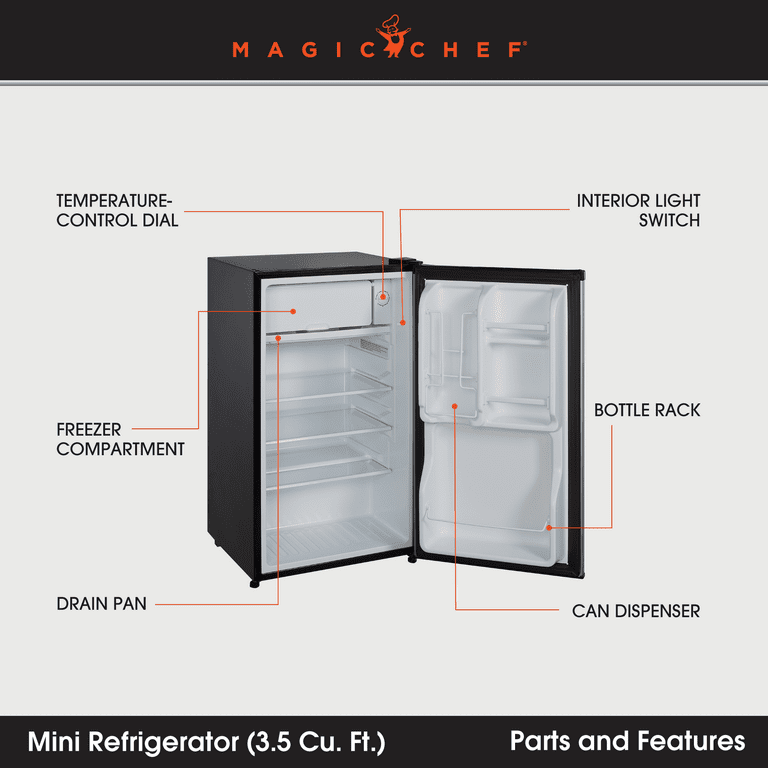
A cube refrigerator may hold drinks, snacks, fruit, and a few small containers. Its compact shape saves floor space, but the short height limits shelf space. Many cube models also have a small chiller box instead of a true freezer.
Compact Mini Fridges With Freezers
A mini fridge with a separate freezer compartment is usually larger. Common dimensions range from 19 to 24 inches wide, 20 to 26 inches deep, and 30 to 35 inches tall.
The freezer adds useful storage for ice, frozen meals, and small bags of food. However, it also takes up room that could otherwise hold fresh food.
When comparing what are the dimensions of a mini fridge with a freezer, pay close attention to depth. The freezer compartment often requires a thicker cabinet and a larger cooling system.
Beverage Refrigerators
Beverage refrigerators are often shorter or narrower than standard mini fridges. They may measure 18 to 24 inches wide, 18 to 24 inches deep, and 20 to 34 inches tall.
Some models are designed for countertop use. Others are made for installation under a counter. Beverage coolers tend to have wire shelves and glass doors, but they may not offer enough space for food containers.
Undercounter Mini Fridges
Undercounter models are built to fit below a standard kitchen counter. They are commonly about 23 to 24 inches wide, 23 to 25 inches deep, and 32 to 35 inches tall.
The height is important. A counter-height refrigerator must slide under the counter without touching the underside. Built-in models also need front ventilation, while freestanding models usually require open space around the sides or back.
Portable Mini Fridges
Portable mini fridges are made for cars, camping, dorm desks, and small work areas. They may measure 10 to 18 inches wide, 10 to 18 inches deep, and 10 to 20 inches tall.
These units often use thermoelectric cooling rather than a compressor. They are convenient, but they usually have less storage and weaker temperature control than a household mini fridge.

How to Measure for a Mini Fridge
Measuring the space first is the safest way to avoid a frustrating return. A refrigerator that is only one inch too wide may not fit through a cabinet opening or beside a wall.
Follow these steps:
- Measure the available width from side to side.
- Measure the height from the floor to the lowest object above the space.
- Measure the depth from the wall to the front edge of the opening.
- Measure the doorway, hallway, and stairway leading to the room.
- Mark the door swing area with tape on the floor.
- Compare your measurements with the product’s listed dimensions.
- Add the manufacturer’s recommended ventilation clearance.
Measure at the narrowest point. Walls, baseboards, trim, outlets, and cabinet lips can reduce the usable space.
Do not measure only the open cavity. Check whether the door, handle, hinges, and power cord extend beyond the listed cabinet depth.
Exterior Dimensions Versus Interior Dimensions
Product listings usually show exterior dimensions. These tell you how much floor or counter space the refrigerator needs.
Interior dimensions are different. Insulation, cooling parts, shelves, door bins, and the freezer box reduce the usable space. A 3.3-cubic-foot mini fridge does not provide 3.3 cubic feet of open shelf space.
This is one reason capacity alone can be misleading. A tall, narrow model may have the same capacity as a short, wide model but feel less useful for large food containers.
Door Swing and Handle Clearance
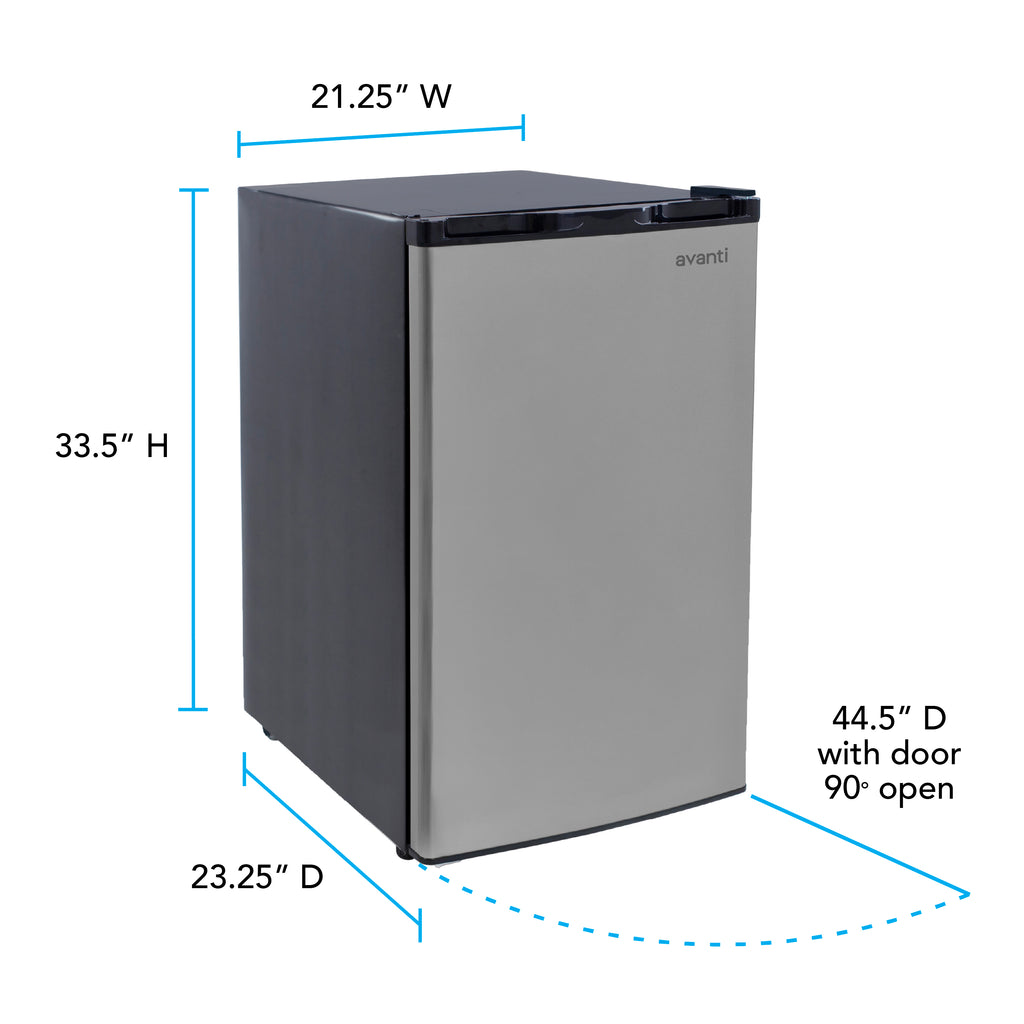
A mini fridge needs room for its door to open fully. If the hinge is next to a wall, the door may not open far enough to remove shelves or drawers.
Before buying, check:
• Whether the door is reversible
• Which side the hinges use
• How far the handle sticks out
• Whether the door needs to open 90 degrees
• Whether drawers can slide out beside a wall
A reversible door can make a major difference in a tight room. Still, reversing the door may require basic tools and careful alignment.
How Much Ventilation Space Does a Mini Fridge Need?
Ventilation helps the refrigerator release heat. Without enough airflow, the compressor may run longer, energy use may rise, and the appliance may wear out sooner.
The exact clearance depends on the model. Many freestanding mini fridges need at least 1 to 2 inches on the sides and top, plus space behind the unit. Some models need more room near the back because the condenser releases heat there.
Read the installation instructions before placing the unit in a cabinet. Never assume that a freestanding mini fridge is safe for a fully enclosed space.
Keep these areas clear:
• Air vents
• The compressor area
• The rear cooling coils
• The top surface, if heat escapes upward
• The door and hinge side
Built-in undercounter refrigerators are different. They are designed to vent through the front and can usually fit more tightly. A standard freestanding model should not be treated as a built-in appliance.
Mini Fridge Capacity and Usable Storage
Capacity is measured in cubic feet. It tells you the approximate total interior volume, including areas occupied by shelves and compartments.
Here is what common capacities may hold:
• 1.0 to 1.7 cubic feet: Drinks, snacks, medicine, or a few personal items
• 2.0 to 2.7 cubic feet: Basic food for one person
• 3.0 to 3.5 cubic feet: Food, drinks, and a small freezer section
• 4.0 to 5.5 cubic feet: More complete food storage for one or two people
A mini fridge for drinks can use space efficiently because cans and bottles fit neatly. A food refrigerator needs more flexible shelves for cartons, bowls, meal containers, and produce.
In practical use, shelf shape often matters more than the number printed on the box. I have seen compact refrigerators with good capacity but poor shelf spacing. A tall bottle could fit only in the door, while a small freezer box reduced the main shelf area.
Look for adjustable shelves, a crisper drawer, deep door bins, and enough vertical space for the items you use most.
What Size Mini Fridge Should You Buy?
The right size depends on your room, habits, and storage needs.
For a Dorm Room
A 1.7- to 3.3-cubic-foot model is often enough for drinks, snacks, fruit, and leftovers. Check your school’s housing rules because some dorms limit refrigerator size or prohibit certain cooling appliances.
A compact model with a reversible door is helpful when furniture placement changes. Also measure the space below a desk or beside a bed before shopping.
For an Office
A 2.0- to 4.0-cubic-foot refrigerator can work well for lunches and drinks. If several people will share it, choose a larger model with easy-to-clean shelves.
Avoid placing it directly against a heat-producing printer or in a closed cabinet. Good airflow matters in an office just as much as it does in a kitchen.
For a Bedroom
A small cube refrigerator may be enough for water, medicine, and snacks. Choose a quiet model if you are sensitive to compressor sounds at night.
Manufacturers may list noise levels in decibels. Lower numbers are generally quieter, but the sound can still vary as the compressor cycles on and off.
For a Garage
A 3.3- to 5.5-cubic-foot model may offer better storage. However, many mini fridges are designed for indoor temperatures, not very hot or cold garages.
Extreme temperatures can affect cooling performance. Review the appliance’s climate range before using it in an unheated garage.
For an Apartment or Tiny Kitchen
An undercounter model can provide useful storage without taking over the room. Measure the cabinet opening carefully and confirm whether the unit is approved for built-in installation.
For a small kitchen, front ventilation and a reversible door can make installation much easier.

Energy Use and Temperature Considerations
A mini fridge may use less electricity than a full-size refrigerator, but efficiency varies widely. Look for the annual energy-use estimate on the EnergyGuide label and check whether the model has an ENERGY STAR certification.
Energy use depends on:
• Appliance size
• Compressor design
• Door seal quality
• Room temperature
• Door-opening frequency
• Ventilation space
• Frost buildup
The coldest setting is not always the best setting. For food safety, the refrigerator compartment should stay at or below 40°F, while the freezer should reach 0°F when it is intended for frozen storage. An inexpensive appliance thermometer can confirm the actual temperature.
A small freezer box may not keep food frozen as reliably as a full freezer. Some are only chiller compartments. Check the product description before storing meat or other foods that need stable freezing.
Common Mini Fridge Buying Mistakes
Measuring Only the Width
Many shoppers measure the opening but forget depth. A refrigerator may fit between two cabinets but stick out far into a walkway.
Measure the full depth, including the door and handle. Then decide whether that extra projection is safe and comfortable.
Ignoring Ventilation
Pushing a mini fridge tightly against a wall can trap heat. The appliance may run often and struggle to maintain a safe temperature.
Leave the clearance listed in the manual. If the manual is not available, contact the manufacturer rather than guessing.
Confusing a Chiller Box With a Freezer
A small compartment with a flap is not always a true freezer. It may cool food below the refrigerator temperature but fail to freeze it solid.
Look for clear freezer performance details. When in doubt, use a thermometer and follow the manufacturer’s guidance.
Forgetting Delivery Access
A refrigerator may fit in the final location but fail to pass through a narrow door. Measure the packaged dimensions as well as the unboxed dimensions if possible.
Remove the packaging only after confirming that the unit can reach its destination safely.
Buying Based Only on Cubic Feet
Capacity does not show shelf width, door-bin depth, or freezer placement. Review interior photos and shelf measurements when available.
The most useful mini fridge is not always the largest one. It is the model that matches your daily items and fits your room with safe clearance.
A Simple Mini Fridge Dimension Checklist
Use this checklist before placing an order:
• Space width
• Space height
• Space depth
• Door and handle projection
• Door swing direction
• Hinge clearance
• Ventilation clearance
• Packaged width and height
• Electrical outlet location
• Interior shelf height
• Freezer type
• Room temperature range
Write the measurements down. A quick sketch can help you see how the door will open and how far the appliance will extend into the room.
For a tight space, leave a small safety margin instead of choosing a unit that exactly matches the opening. Walls are not always perfectly straight, and floors may not be level.
Frequently Asked Questions About What Are the Dimensions of a Mini Fridge
What are the dimensions of a standard mini fridge?
A standard mini fridge is usually 18 to 24 inches wide, 19 to 26 inches deep, and 20 to 35 inches tall. The exact size depends on its capacity, freezer design, and intended use.
What are the dimensions of a mini fridge for a dorm room?
A dorm mini fridge often measures about 18 to 22 inches wide, 19 to 24 inches deep, and 24 to 32 inches tall. Always check the school’s size limit before buying.
How much space should I leave around a mini fridge?
Many models need about 1 to 2 inches of clearance on the sides and top, plus rear ventilation space. Follow the manufacturer’s instructions because required clearance differs by design.
Is a 3.3-cubic-foot mini fridge big enough for one person?
A 3.3-cubic-foot model is often suitable for one person’s drinks, snacks, leftovers, and some fresh food. A freezer compartment will reduce the refrigerator space available for fresh items.
Can a mini fridge fit under a kitchen counter?
Some undercounter models are made for this purpose and usually measure about 32 to 35 inches tall. A regular freestanding mini fridge may overheat in a tight cabinet unless the manufacturer approves that installation.
Are mini fridge dimensions listed with the handle?
Manufacturers do not always measure the handle in the same way. Check the product drawing or specification sheet for the complete depth, including the door, handle, and hinges.
Conclusion
Most mini fridges measure between 18 and 24 inches wide, 19 and 26 inches deep, and 20 and 35 inches tall. Cube models save space, freezer models offer more flexibility, and undercounter units require careful height and ventilation checks.
The best way to choose a mini fridge is to measure the full space, confirm door clearance, allow airflow, and compare interior storage instead of relying only on cubic feet. Use the checklist above before purchasing, then review the manufacturer’s installation guide for the final details. Take a few minutes to measure now, and you can avoid an expensive fit problem later.

Appliance Review Expert
Lucas Ramirez is a trusted voice at HomeFixGrid.com, known for his clear, practical, and creatively written guides that simplify appliance care for everyday homeowners. With a strong focus on hands-on testing and real-world problem-solving, Lucas brings expert insight into appliance reviews and troubleshooting techniques. Her work empowers readers to confidently maintain, repair, and choose the right appliances for their homes.