How Cold Does A Fridge Get: Ideal Temperature Guide
Most refrigerators get cold enough to keep food safe, usually between 35°F and 38°F.
If you are wondering how cold does a fridge get, the best answer depends on its setting, age, design, and where you measure the temperature. A well-adjusted refrigerator should stay at or below 40°F, while avoiding temperatures so low that water, lettuce, and fresh produce freeze. This guide explains the ideal fridge temperature, how to test it, and what to do when your refrigerator is too warm or too cold.

How cold does a fridge get?
Most household refrigerators operate between 32°F and 40°F. The ideal target for food safety is about 37°F, with the U.S. Food and Drug Administration advising consumers to keep refrigerators at 40°F or below.
A fridge does not keep every shelf at the same temperature. Cold air often collects near the back wall, around the air vents, and on lower shelves. The door is usually warmer because it is opened often and has less direct airflow.
When asking how cold does a fridge get, it helps to separate three temperatures:
• Ideal setting: About 37°F
• Safe maximum: 40°F
• Freezing point of water: 32°F
Some refrigerators may briefly dip below 32°F in certain spots. This can happen near the cooling vent or back wall. That does not always mean the whole refrigerator is too cold.
A refrigerator is not meant to freeze food. Its job is to slow the growth of bacteria and preserve quality. The freezer has a separate purpose and should stay near 0°F.

What is the ideal refrigerator temperature?
The ideal refrigerator temperature is 37°F. This gives you a useful safety margin below 40°F without making most fresh foods freeze.
Food safety agencies commonly use 40°F as the upper limit for a safe refrigerator. Between 40°F and 140°F is often called the “danger zone,” where many bacteria can grow quickly. Keeping your fridge below 40°F helps reduce this risk.
A setting near 37°F also allows for normal temperature changes. Every time you open the door, warm air enters. The temperature may rise for a short time before the cooling system brings it down again.
Keep these points in mind:
• Set the refrigerator between 35°F and 38°F for daily use.
• Never rely only on the number shown on the control panel.
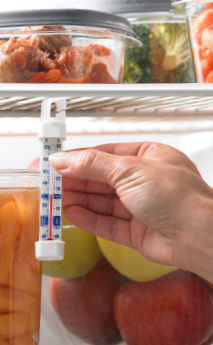
• Use a separate appliance thermometer to check the real temperature.
• Keep the freezer at 0°F or lower.
• Check the temperature after the refrigerator has been closed for several hours.
Some digital displays show the selected setting, not the actual air temperature. That is why a stand-alone thermometer gives a more useful answer to how cold does a fridge get in your home.

How to measure your fridge temperature correctly
A refrigerator thermometer is the simplest way to find out how cold does a fridge get. These thermometers are inexpensive and can reveal problems that a built-in display may miss.
Follow these steps:
- Place the thermometer in a glass of water on the middle shelf.
- Keep the door closed for at least 8 hours.
- Check the reading without leaving the door open for long.
- Repeat the test on another shelf if the temperature seems unusual.
- Adjust the temperature control in small steps.
- Wait 12 to 24 hours before testing again.
The glass of water helps create a more stable reading. Measuring empty air can show quick swings caused by the compressor turning on and off.
Do not place the thermometer directly against the back wall. That area may be much colder than the rest of the compartment. It can give you a reading that does not represent the temperature of the food.
In practical refrigerator checks, one common mistake is changing the control several times in one day. This makes the temperature hard to track. Make one small adjustment, wait, and test again.
Why some parts of a fridge are colder than others
Cold air moves through a refrigerator in a pattern. The cooling system removes heat, then a fan pushes cold air through vents. As the air moves, some areas become colder than others.
The coldest areas are often:
• The back of the refrigerator
• The shelf near the cooling vent
• The lower shelf in some models
• The crisper drawers, depending on airflow
• Areas close to the freezer connection
The warmest areas are often:
• The refrigerator door
• The front of the top shelf
• Crowded sections with blocked air vents
• Areas near warm leftovers
• Shelves that receive direct sunlight through a window
This uneven pattern explains why milk may stay fresh in one spot but freeze in another. It also explains why door shelves are not the best place for eggs, meat, or other foods that need steady cooling.
Store food based on temperature needs:
• Top shelf: Ready-to-eat foods and leftovers
• Middle shelf: Dairy products and drinks
• Lower shelf: Raw meat, poultry, and seafood in sealed containers
• Crisper drawers: Fruits and vegetables
• Door shelves: Condiments, butter, and drinks
Keeping raw meat on the bottom shelf helps prevent leaks from reaching other foods.

What temperature is too warm for a refrigerator?
A refrigerator is too warm when it stays above 40°F. A short rise may happen during loading, cleaning, or a power interruption, but a steady reading above 40°F needs attention.
Food safety becomes more important as time passes. Perishable foods, such as meat, seafood, eggs, milk, and cooked leftovers, should not remain in the danger zone for long periods.
A warm refrigerator may have one or more of these causes:
• The door is not sealing well.
• The fridge is overfilled.
• Air vents are blocked.
• The condenser coils are dirty.
• The temperature control is set too high.
• The door is opened too often.
• Hot food was placed inside.
• The fan or compressor has a problem.
• The refrigerator is in a hot garage or near an oven.
Check the door gasket first. Close the door on a sheet of paper. If the paper slides out easily, the seal may be weak.
Also check for frost, unusual noises, or water under the drawers. These signs can point to airflow or drainage problems. If the refrigerator remains warm after basic checks, contact a qualified appliance technician.
When food safety is uncertain, do not taste food to decide whether it is safe. Harmful bacteria may not change the smell, taste, or appearance.

What temperature is too cold for a refrigerator?
A refrigerator is too cold when food regularly freezes or the temperature stays near or below 32°F. Some items may freeze even when the average temperature is above 32°F because cold spots form near vents and walls.
Common signs include:
• Ice crystals on vegetables
• Frozen milk or juice
• Hard lettuce or watery produce after thawing
• Frost on the back wall
• Eggs or drinks freezing near the rear shelf
• A temperature reading below 32°F
A fridge that is too cold may have a control set too low, blocked airflow, or a faulty thermostat. In some models, a problem with the damper can send too much cold air into the refrigerator section.
Move delicate foods away from the back wall and vents. Then raise the temperature slightly and wait at least 12 hours before checking again.
Do not pack food tightly against the walls. Cold air needs room to circulate. A refrigerator that is too full can develop warm pockets, while food placed directly beside a vent may freeze.

How cold does a fridge get when the setting is different?
The temperature dial does not always show degrees Fahrenheit. Many older refrigerators use numbers such as 1 through 5 or 1 through 7. In most models, a higher number means more cooling, not a higher temperature.
There is no universal temperature chart for these settings. A “3” on one brand may not match a “3” on another brand. The only reliable method is to measure the temperature with an appliance thermometer.
A general approach works well:
• Start at the manufacturer’s recommended setting.
• Place a thermometer in the center of the fridge.
• Wait 8 to 24 hours.
• Adjust one level at a time.
• Recheck after each adjustment.
Smart refrigerators may display a digital temperature, but even these readings can differ from the temperature near the food. A sensor may sit in one location while the food is stored in another.
This is why the question how cold does a fridge get cannot be answered by the dial alone. The actual reading matters more than the number printed on the control.
:max_bytes(150000):strip_icc()/RealSimple_refrigerator-temperature_01_preview-8d2cf36eb6064a3c99ed9e920010ba3c.jpg)
How long does it take a fridge to get cold?
A new or recently unplugged refrigerator may need 12 to 24 hours to reach its normal temperature. A fully loaded refrigerator can take longer because food and containers absorb heat.
After placing warm groceries inside, the internal temperature may rise for a while. Keep the door closed as much as possible during this period.
Use these practical steps:
- Plug in the refrigerator and set it near 37°F.
- Leave space around the air vents.
- Wait several hours before adding a large amount of food.
- Check the temperature after the first full day.
- Avoid placing hot pots directly inside.
A refrigerator may feel cold within an hour, but feeling cold does not mean it has reached a safe, stable temperature. The thermometer gives a better answer to how cold does a fridge get after setup or a power outage.
How to keep your refrigerator at a safe temperature
Good habits can help a refrigerator maintain a stable temperature and use less energy.
• Keep the door closed as much as possible.
• Do not place the refrigerator beside an oven or heater.
• Leave space between food containers.
• Clean dust from condenser coils when the manufacturer allows it.
• Check the door gasket for cracks or gaps.
• Cover leftovers and label them with the date.
• Let hot food cool slightly before refrigeration, but do not leave it out for hours.
• Keep the refrigerator reasonably full without blocking vents.
• Clean spills quickly to prevent odors and contamination.
• Test the temperature every few months.
The U.S. Department of Agriculture recommends refrigerating perishable food promptly and using a refrigerator thermometer. This small tool is one of the easiest ways to protect food at home.
One lesson worth remembering is that a packed fridge is not always a cold fridge. Air must move around the food. Think of cold air like water in a stream: blocked paths prevent it from reaching every area.
Refrigerator temperature and food storage safety
The temperature affects both safety and quality. A fridge that is too warm can allow bacteria to multiply. A fridge that is too cold can damage fresh foods and waste money.
Keep these foods especially cold:
• Raw meat and poultry
• Seafood
• Milk and soft dairy products
• Eggs
• Cooked leftovers
• Cut fruits and vegetables
• Deli meats
Place raw animal foods in leakproof containers on the lowest shelf. Keep leftovers covered and use them within the time recommended by food safety guidance.
Some foods should not be stored in the refrigerator at all, or may lose quality there. Bread can become stale faster, while certain tomatoes and tropical fruits may develop poor texture. Food safety and food quality are related but not identical.
The key point is simple: how cold does a fridge get is important, but where you place food also matters.
What to do during a power outage
A closed refrigerator can usually keep food cold for about four hours, according to common food safety guidance. The exact time depends on room temperature, how full the fridge is, and how often the door opens.
During an outage:
• Keep the refrigerator and freezer doors closed.
• Do not check the food repeatedly.
• Use a refrigerator thermometer if available.
• Move food to a cooler with ice if the outage may last.
• Discard perishable food that has been above 40°F for too long.
• Never judge safety by smell alone.
A full freezer stays cold longer than a refrigerator. Frozen food may still be safe if it contains ice crystals or remains at 40°F or below, but quality can decline after thawing and refreezing.
When in doubt, throw it out. The cost of replacing food is usually much lower than the cost of a serious foodborne illness.
Common mistakes that make a fridge warmer or colder
Small habits can cause large temperature swings. Many problems are easy to prevent once you know what to watch for.
Common mistakes include:
• Setting the control to the coldest level without checking the temperature
• Storing milk in the door
• Blocking vents with large containers
• Leaving the door slightly open
• Placing hot food inside
• Ignoring heavy frost buildup
• Using the refrigerator in an extremely hot location
• Measuring temperature right after opening the door
• Overloading the shelves
• Failing to clean the door seal
Another mistake is trusting touch. A drink may feel cold while the refrigerator remains above 40°F. Human hands are not accurate temperature sensors.
Use a thermometer, allow time for changes, and check more than one area. These steps provide a much clearer answer to how cold does a fridge get in real daily use.
Frequently Asked Questions About How Cold Does a Fridge Get
How cold should a refrigerator be?
A refrigerator should usually be set near 37°F. It should remain at or below 40°F to help keep perishable food safe.
Can a refrigerator get colder than 32°F?
Yes. Some areas near vents or the back wall may fall below 32°F, even if the average temperature is higher. Move food away from these cold spots if it freezes.
Is 42°F safe for a refrigerator?
A brief reading of 42°F may not mean food is immediately unsafe, but a refrigerator should not stay at that temperature. Adjust the setting and check the door seal, airflow, and condenser area.
How cold does a fridge get compared with a freezer?
A refrigerator usually stays between 32°F and 40°F. A freezer should stay near 0°F, which is much colder and suitable for long-term frozen storage.
Where is the coldest part of a refrigerator?
The coldest area is often near the back wall or an air vent. The exact location varies by model, so use a thermometer to identify cold spots.
Why is my refrigerator freezing food?
Food may freeze because the temperature is set too low, an air vent is blocked, or a thermostat or damper is faulty. Move food away from the back wall and raise the setting slightly before testing again.
How long does a refrigerator take to cool after being plugged in?
Most refrigerators need about 12 to 24 hours to reach a stable operating temperature. A thermometer is the best way to confirm that the inside has reached about 37°F.
Conclusion
So, how cold does a fridge get? Most household refrigerators should stay between 35°F and 38°F, with 37°F as a practical target and 40°F as the safe upper limit. Temperature can vary by shelf, door, airflow, and refrigerator design, so a separate appliance thermometer is more reliable than touch or a control dial.
Check your refrigerator today, keep vents clear, store food in the right areas, and inspect the door seal. These simple steps can protect your food, reduce waste, and help your appliance work better. For more practical food storage tips, explore related guides or share your refrigerator temperature experience in the comments.

Appliance Review Expert
Lucas Ramirez is a trusted voice at HomeFixGrid.com, known for his clear, practical, and creatively written guides that simplify appliance care for everyday homeowners. With a strong focus on hands-on testing and real-world problem-solving, Lucas brings expert insight into appliance reviews and troubleshooting techniques. Her work empowers readers to confidently maintain, repair, and choose the right appliances for their homes.