
What Are The Sizes For Mattresses: Mattress Size Guide
Mattress sizes range from compact Twin and Twin XL beds to spacious Queen, King, and California King options.
Knowing what are the sizes for mattresses helps you choose a bed that fits your room, sleep habits, and budget. Standard measurements are fairly consistent in the United States, but mattress thickness, brand variations, RV models, and bed frames can change the final fit. This guide explains each size in plain language so you can shop with confidence.

What Are the Sizes for Mattresses in the United States?
The main mattress sizes in the US are Twin, Twin XL, Full, Queen, King, and California King. Each size has a different width and length, so the best choice depends on who will use the bed and how much floor space you have.
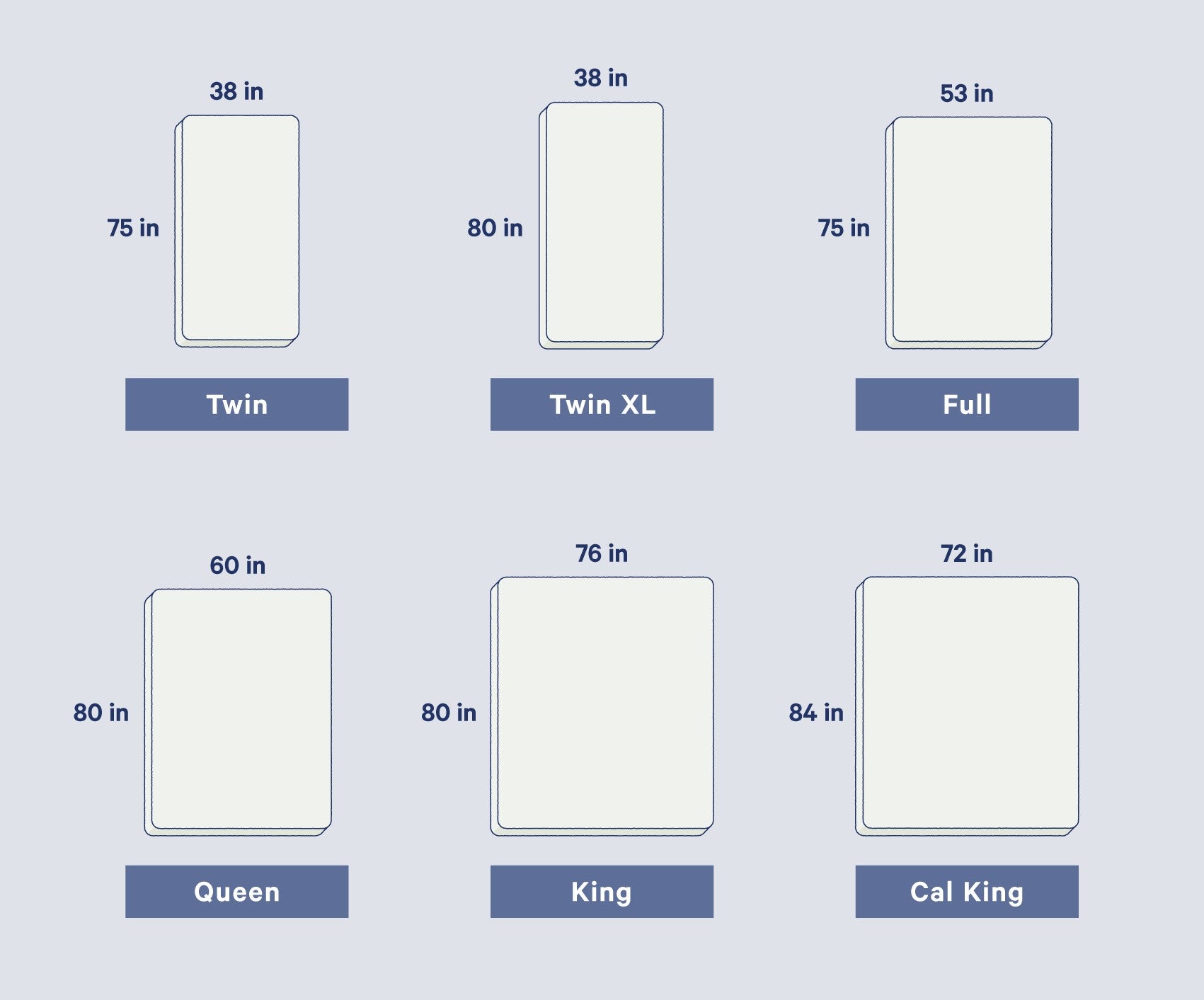
Here are the standard mattress dimensions:
| Mattress size | Width | Length | Best for |
|---|---|---|---|
| Twin | 38 inches | 75 inches | Children, teens, and small rooms |
| Twin XL | 38 inches | 80 inches | Tall sleepers, dorm rooms, and guest rooms |
| Full | 54 inches | 75 inches | One adult or cozy guest use |
| Queen | 60 inches | 80 inches | Most couples and bedrooms |
| King | 76 inches | 80 inches | Couples who want more personal space |
| California King | 72 inches | 84 inches | Tall sleepers and long bedrooms |
These measurements describe the mattress itself. Your bed frame may add several inches to the width and length. Always measure the frame, doorway, stairs, and bedroom before ordering.
Mattress sizes can vary by a small amount between brands. A mattress listed as 60 by 80 inches may measure slightly differently because of fabric, foam, stitching, or manufacturing limits.

Standard Mattress Sizes Explained
Understanding what are the sizes for mattresses is easier when you see how each option works in daily life. A mattress is not only a sleeping surface. It also affects movement, storage, room design, and comfort.
Twin mattress
A Twin mattress is about 38 inches wide and 75 inches long. It is the smallest standard mattress size for most older children and adults.
A Twin works well in:
• Children’s bedrooms
• Bunk beds
• Small apartments
• Guest rooms
• Daybeds
• Sleeping areas with limited floor space
A Twin may feel narrow for an adult who moves a lot during sleep. It can also feel short for anyone taller than about 6 feet.
Twin XL mattress
A Twin XL keeps the same 38-inch width but adds 5 inches of length. It is usually 80 inches long, which matches the length of a Queen or King mattress.
Twin XL mattresses are common in college dorms. They also work well for tall teenagers, solo adults, and adjustable bed setups. Two Twin XL mattresses placed side by side create the same surface size as a standard King.
Full mattress
A Full mattress, also called a Double, is about 54 inches wide and 75 inches long. It gives one person more room than a Twin but can feel tight for two adults.
A Full size may suit:
• Teenagers
• Single adults
• Guest bedrooms
• Studio apartments
• Couples who prefer close sleeping
A Full mattress is wider than a Twin but not longer. Tall sleepers may need a Full XL, although Full XL mattresses are less common and may be harder to match with sheets and frames.
Queen mattress
A Queen mattress measures about 60 inches wide and 80 inches long. It is the most popular mattress size for many American homes because it balances comfort and space.
A Queen usually gives two adults enough room without taking over the bedroom. It also leaves space for nightstands, dressers, and walking paths.
For many shoppers, Queen is the practical middle ground. It is larger than a Full, more affordable than a King, and easier to move through hallways and doors.
King mattress
A standard King mattress is about 76 inches wide and 80 inches long. It has the same length as a Queen but offers 16 extra inches of width.
A King is useful for:
• Couples who want more personal space
• Parents who share the bed with young children
• People with large bedrooms
• Sleepers who move often at night
• Homes with enough room for a wide bed frame
A King mattress can make a small bedroom feel crowded. Check the room layout before buying, not just the empty floor measurement.
California King mattress
A California King is about 72 inches wide and 84 inches long. It is 4 inches narrower and 4 inches longer than a standard King.
This mattress can be a smart choice for tall sleepers. It may also fit better in a long, narrow bedroom. However, California King sheets, bed frames, and mattress protectors are not interchangeable with standard King products.
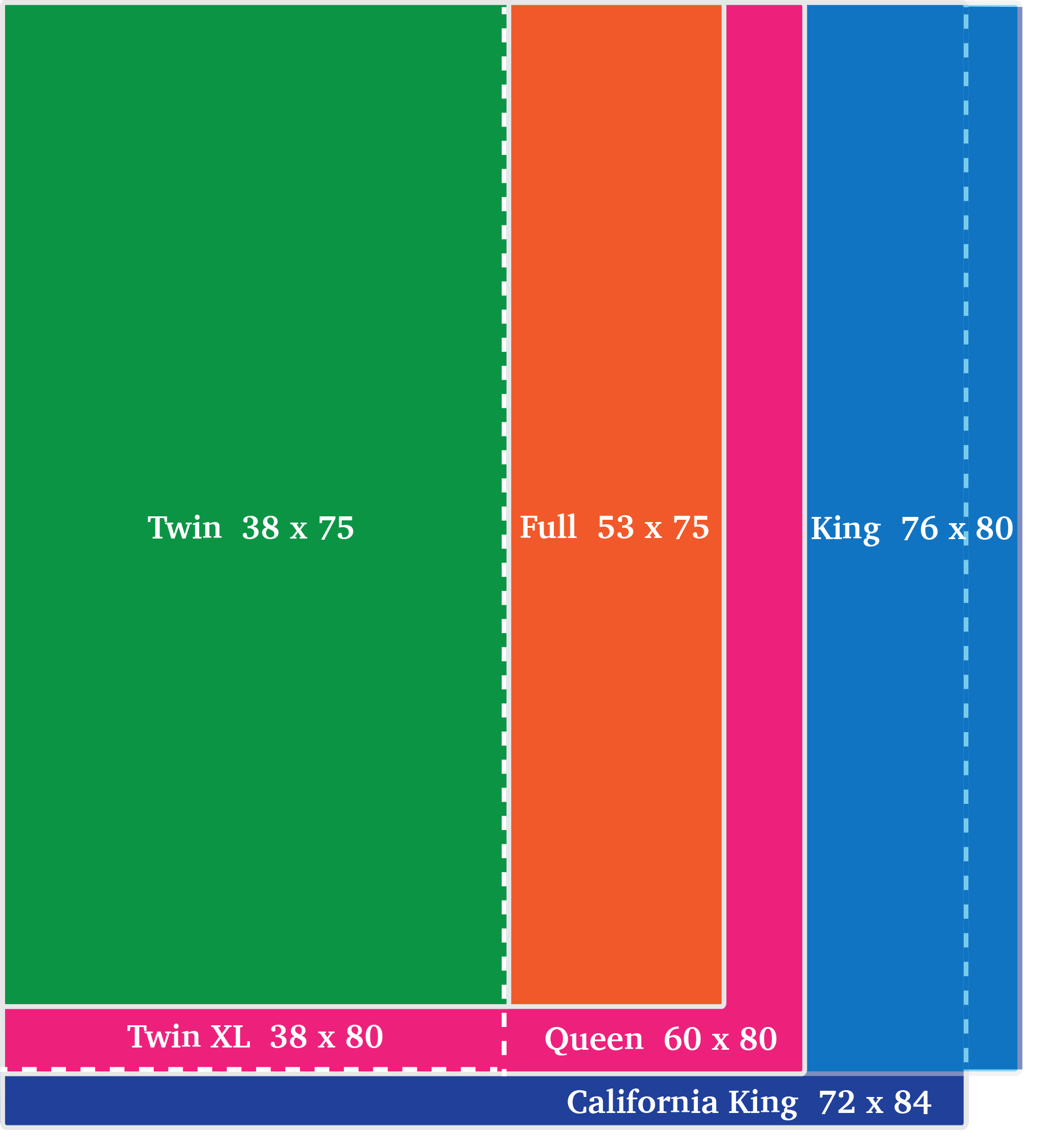
Mattress Size Comparison: Twin, Full, Queen, and King
When comparing what are the sizes for mattresses, width often matters more than length. Most adult mattresses are 80 inches long, while Twin and Full mattresses are usually 75 inches long.
Use this simple comparison:
• Twin: Best for one child or one adult with limited space
• Twin XL: Best for one tall sleeper
• Full: Best for one adult who wants extra width
• Queen: Best for most couples and primary bedrooms
• King: Best for couples who want maximum width
• California King: Best for tall sleepers who need extra length
A Queen provides 30 inches of mattress width per person when two people share it. A King provides about 38 inches per person. That difference can feel significant, especially if one person spreads out or gets up often.
A Full mattress gives one sleeper much more room than a Twin. Yet two adults sharing a Full have only about 27 inches of width each, which is less personal space than a Queen offers.
How to Choose the Right Mattress Size
The right mattress size depends on more than the number of sleepers. Think about your room, lifestyle, body size, and plans for the next few years.
Consider the number of sleepers
One adult can sleep comfortably on a Twin, Twin XL, Full, or Queen. Couples usually prefer a Queen, King, or California King.
If a child or pet often joins you, extra width becomes more important. A King gives a family more shared space, but it also requires a larger room and stronger support.
Measure your bedroom
Leave room for safe movement around the bed. A useful target is about 24 to 30 inches of walking space on the open sides, when possible.
Before ordering, measure:
• The room’s length and width
• Doorways and hallways
• Stairways and elevators
• Existing furniture
• Closet and drawer access
• The space reserved for the bed frame
A mattress may fit inside a room but still fail to enter through a narrow doorway. This is one of the most common mistakes shoppers make.
Think about your height
A standard 75-inch Twin or Full mattress may feel short for a tall adult. Twin XL, Queen, King, and California King mattresses are generally 80 or 84 inches long.
Your height is not the only factor. If you sleep diagonally, stretch often, or share the bed with a partner, extra length can improve comfort.
Plan for the future
Children grow. Couples may move to a larger home. A guest room may later become a home office or nursery.
If you are buying for a teenager, a Twin XL can provide extra length without using much more floor space. If you expect to share the bed later, a Queen may offer better long-term value than a Full.

Less Common Mattress Sizes
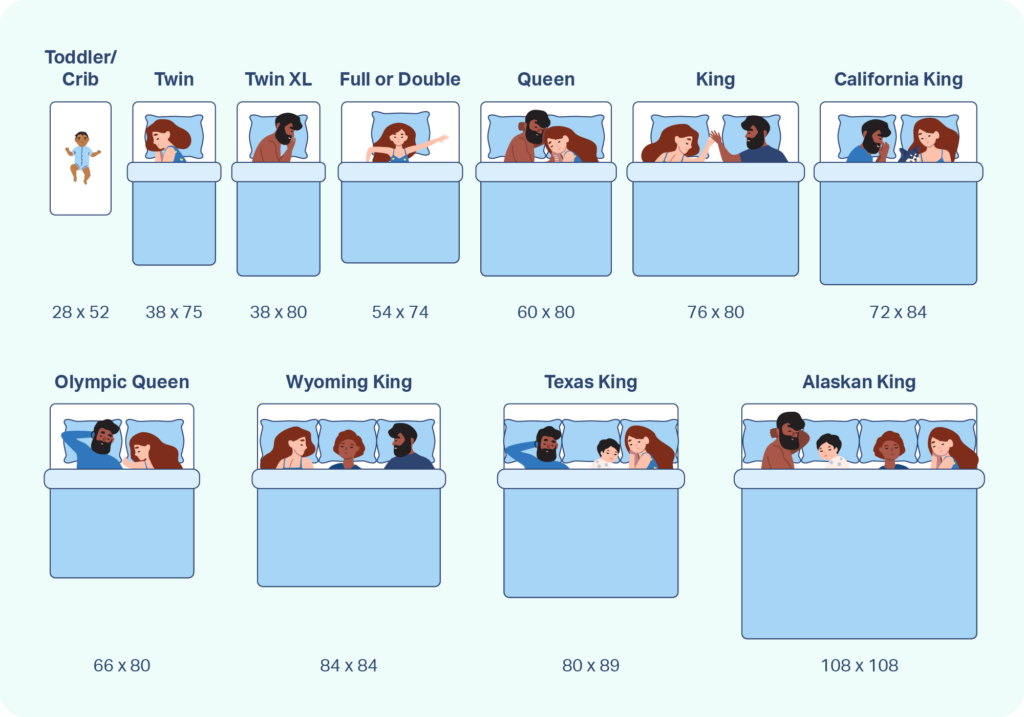
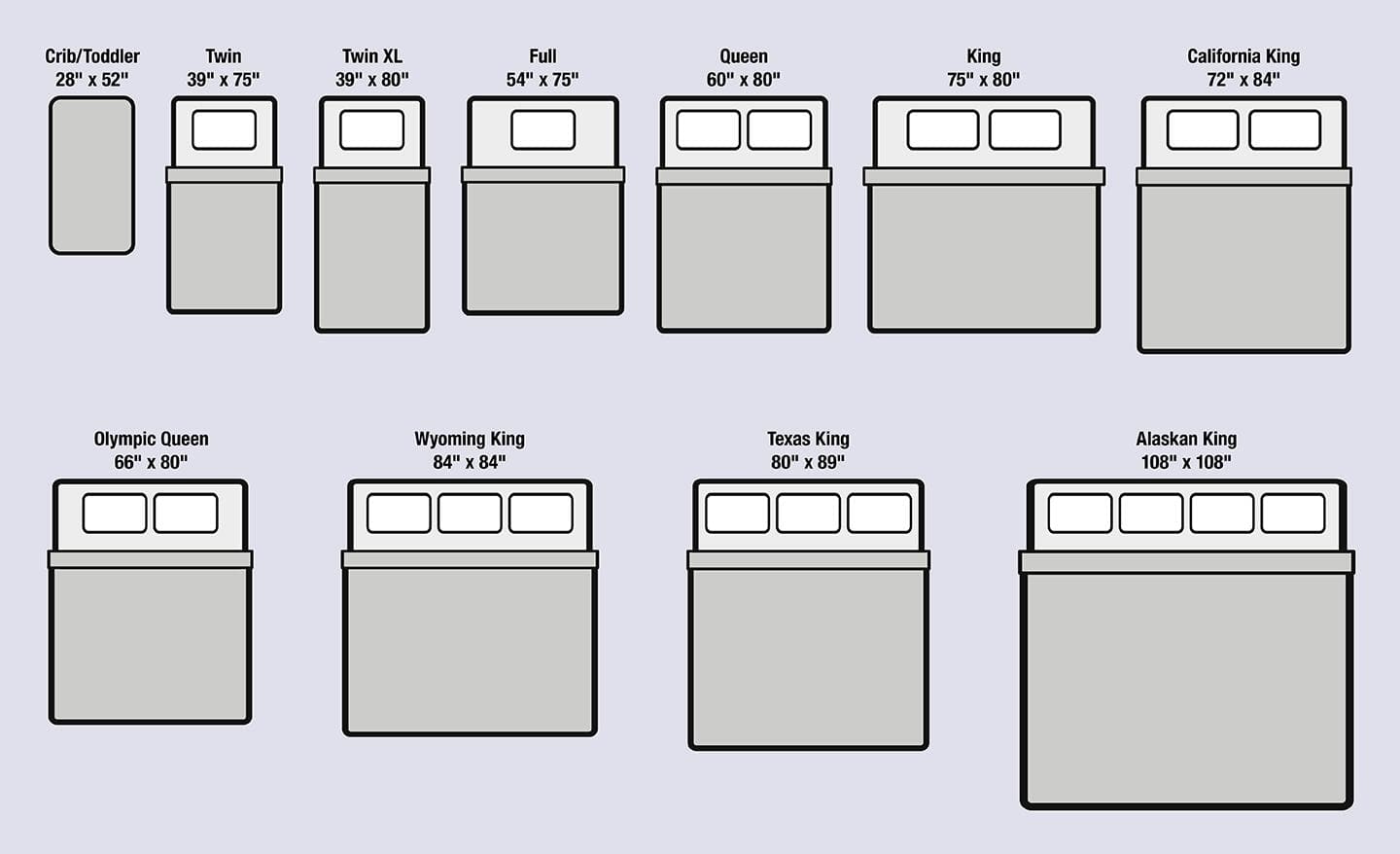
Standard sizes do not cover every sleeping arrangement. Some homes, recreational vehicles, antique frames, and custom rooms require special dimensions.
Full XL
A Full XL is usually 54 inches wide and 80 inches long. It provides the width of a Full and the length of a Queen.
This size can suit a tall solo sleeper. However, Full XL mattresses and fitted sheets are less widely available than standard sizes.
Split King
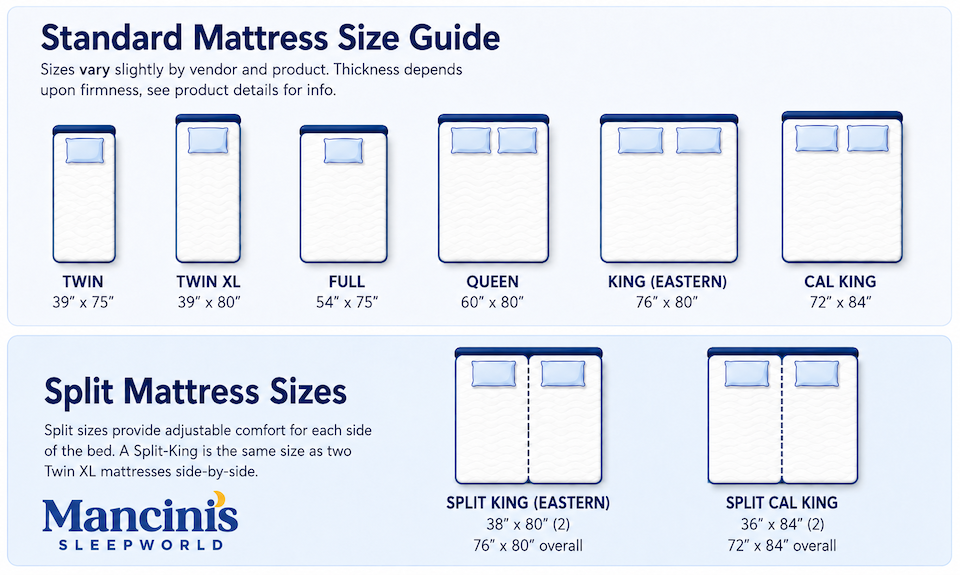
A Split King uses two Twin XL mattresses placed side by side. Each mattress is about 38 by 80 inches, creating a combined surface of about 76 by 80 inches.
Split Kings are useful for adjustable bases. Each sleeper can raise or lower their side without disturbing the other person. The gap between the two mattresses may bother some sleepers, so a connector strap or fitted bridge can help.
Olympic Queen
An Olympic Queen is commonly about 66 inches wide and 80 inches long. It gives couples 6 extra inches of width compared with a standard Queen.
This size is not offered by every manufacturer. You may need special sheets and a matching frame.
RV and truck mattresses
RV mattresses may have shorter lengths, rounded corners, or unusual widths. Common labels include RV Twin, RV Full, RV Queen, and RV King, but the measurements can differ from household mattress sizes.
Never buy an RV mattress by name alone. Measure the sleeping platform and compare the exact dimensions.
Mattress Thickness and Height
Many people ask what are the sizes for mattresses and assume size means only width and length. Thickness is also important, but there is no single standard mattress height.
Most mattresses are about 8 to 14 inches thick. Some pillow-top and luxury models are 15 inches or taller.
Mattress thickness affects:
• How high the bed feels
• Whether fitted sheets stay in place
• How easy it is to get in and out of bed
• The total height of an adjustable base or platform
• Clearance for storage under the bed
Measure the mattress, foundation, and frame together. A thick mattress on a tall foundation may make the bed uncomfortable to enter or leave.
Check the pocket depth of your fitted sheets. Sheets must be deep enough to fit over the mattress without pulling loose. A mattress protector should also match the mattress height.
Mattress Sizes and Bed Frame Fit
A mattress and frame should use matching dimensions. A Queen mattress belongs on a Queen frame, while a King mattress needs a standard King frame unless the frame is specifically designed for another size.
Platform beds and slatted frames need close, even support. Large gaps between slats can allow the mattress to sag or may affect the warranty. Follow the mattress maker’s rules for slat spacing and center support.
For a Split King, use two Twin XL-compatible spaces. A regular King frame may work only if it is designed to hold two separate mattresses.
Before buying, confirm:
• The exact mattress dimensions
• The frame’s inside dimensions
• The number and spacing of support slats
• Whether center legs are included
• The recommended foundation type
• The warranty requirements
In my experience helping people plan bedrooms, the most common issue is not choosing the wrong mattress size. It is pairing the right mattress with a frame that is too small, too large, or poorly supported.
Sheets, Bedding, and Accessories
The answer to what are the sizes for mattresses also matters when you shop for bedding. Sheets are made for specific mattress sizes and depths.
A Queen fitted sheet will not fit a Full mattress correctly. A King comforter may fit a California King bed, but it may not provide the same side coverage because the shapes are different.
Check each item carefully:
• Fitted sheets should match the mattress size and pocket depth
• Mattress protectors should cover the full mattress height
• Bed skirts should match the frame and foundation height
• Comforters should be wide enough for the desired drop
• Headboards should match the frame’s width and mounting points
For a Split King, you can use two Twin XL fitted sheets with one King comforter. This setup gives each sleeper independent sheet movement while keeping a shared top layer.

Common Mistakes When Buying a Mattress
Shopping for what are the sizes for mattresses may seem simple, but several small errors can create costly problems.
Measuring only the room
A mattress can fit on the floor but fail to fit through a doorway. Measure the delivery path before placing the order.
Confusing King and California King
A California King is longer but narrower than a standard King. The sheets and frames are different.
Ignoring mattress thickness
A 14-inch mattress needs deeper sheets than an 8-inch mattress. It may also make your bed too tall when placed on a high frame.
Forgetting movement space
Filling a room with the largest possible mattress can block drawers, closets, and walking paths. Comfort includes being able to use the whole room.
Buying a frame before checking the mattress
Frame measurements can vary. Confirm the mattress dimensions and the frame’s inner dimensions before buying both items.
Assuming “Queen” is identical everywhere
Standard Queen dimensions are consistent in the US, but handmade beds, antique frames, RV beds, and imported products may use different measurements.
How to Measure for a New Mattress
Use a tape measure and write down each result. Do not rely on memory or an old product label.
- Measure the available width from wall to wall.
- Measure the available length from the headboard area to the foot of the bed.
- Mark the planned mattress location with painter’s tape.
- Check that doors, drawers, and closets can still open.
- Measure doorways, stairs, and tight corners.
- Compare the measurements with the mattress manufacturer’s specifications.
- Confirm the frame, foundation, sheets, and protector all match.
If you are replacing an old mattress, measure the frame too. A worn mattress may have softened edges or changed shape, so its current measurement may not show the true size of the frame.
Frequently Asked Questions About What Are the Sizes for Mattresses
What are the sizes for mattresses from smallest to largest?
The usual order is Twin, Twin XL, Full, Queen, California King, and King by overall sleeping area. California King is longer than King, while King is wider.
What are the sizes for mattresses used by most couples?
Queen is the most common practical choice for many couples. A King is better for couples who want more personal space or share the bed with children or pets.
What are the sizes for mattresses for tall people?
Twin XL, Queen, King, and California King mattresses are usually about 80 to 84 inches long. California King offers the greatest standard length, at about 84 inches.
What are the sizes for mattresses in a college dorm?
Many college dorms use Twin XL mattresses, which are about 38 by 80 inches. Always check the school’s housing details because some dorms use standard Twin beds.
Are King and California King mattresses the same size?
No. A standard King is about 76 by 80 inches, while a California King is about 72 by 84 inches. King is wider, and California King is longer.
Can two Twin mattresses make a King?
Two Twin XL mattresses make the same overall size as a standard King. Two regular Twin mattresses are shorter and do not create a true King-size surface.
Conclusion
The standard mattress sizes in the US include Twin, Twin XL, Full, Queen, King, and California King. Choose based on sleeper count, room size, body height, comfort needs, frame support, and future plans.
Measure the room and delivery path before ordering. Then confirm the mattress, frame, foundation, sheets, and protector all use matching dimensions. Taking these simple steps can prevent returns and help you create a bedroom that feels comfortable rather than crowded. Use this guide when comparing beds, and share your mattress-size questions or shopping experience in the comments.

Appliance Review Expert
Lucas Ramirez is a trusted voice at HomeFixGrid.com, known for his clear, practical, and creatively written guides that simplify appliance care for everyday homeowners. With a strong focus on hands-on testing and real-world problem-solving, Lucas brings expert insight into appliance reviews and troubleshooting techniques. Her work empowers readers to confidently maintain, repair, and choose the right appliances for their homes.