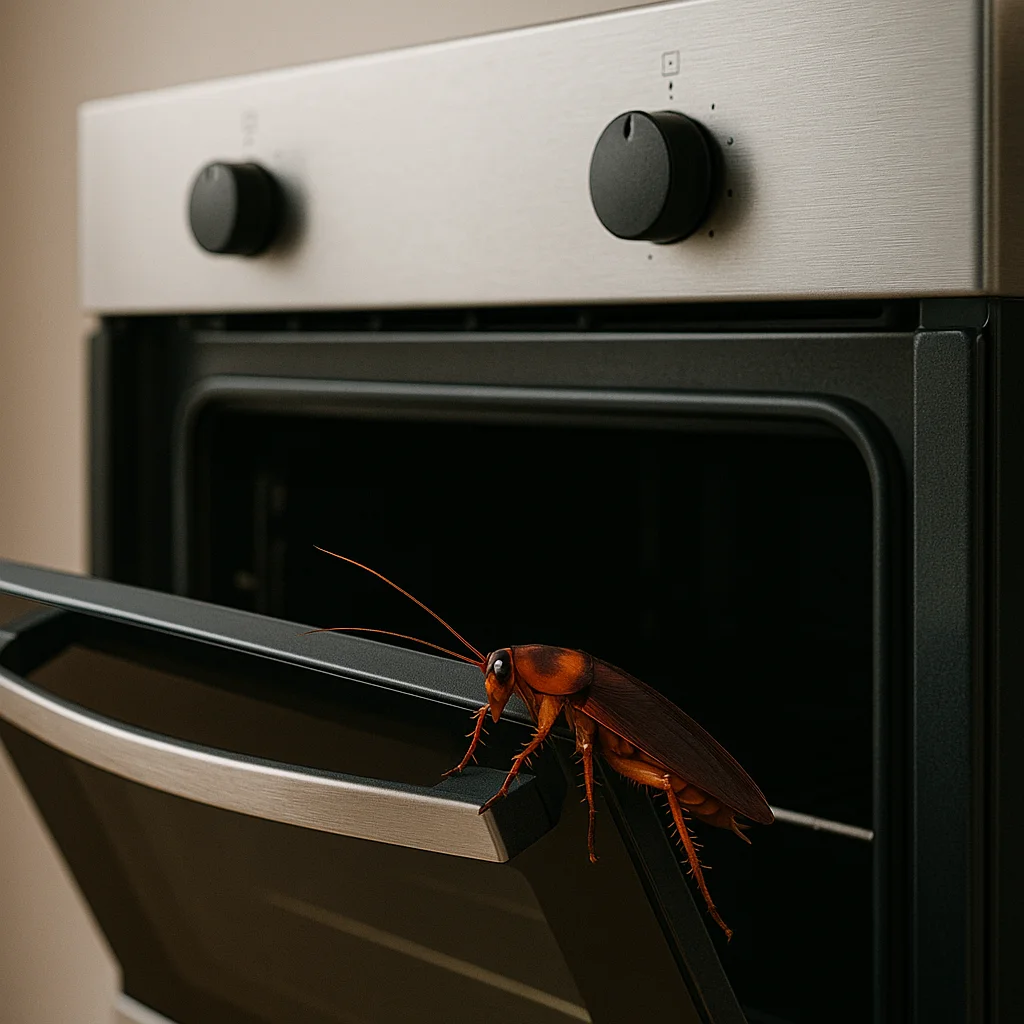
Can A Cockroach Survive In A Microwave: The Shocking Truth
Yes, a cockroach may survive inside a microwave, especially if it is exposed for a short time or remains in a cooler spot. A microwave does not heat every part of its cavity or every object evenly. However, enough microwave energy can kill a cockroach, injure it, or contaminate the oven.
Do not place a cockroach in a microwave on purpose. It is unsafe, unhygienic, and may damage the appliance.
This guide applies to household microwave ovens used in the United States.


Why can a cockroach survive in a microwave?
A microwave oven heats food by making certain molecules, mainly water, move rapidly. That movement creates heat. The heat then spreads through the food by conduction.
A cockroach is small and has a hard outer shell. Its body also contains less water than many foods. These factors can make heating less even and less predictable.
Microwaves also create hot and cool areas inside the oven. The turntable helps reduce these areas, but it does not remove them completely. A cockroach may stay near a wall, under a food container, or in another spot that receives less energy.
The main factors are:
- Exposure time: A few seconds may not transfer enough heat.
- Location: Some areas inside the oven receive less microwave energy.
- Moisture: Water-rich tissue heats more easily than dry material.
- Movement: A roach may move into a cooler area.
- Oven design: Power level, cavity shape, and turntable design affect heating.
- Shelter: Food, packaging, grease, or a container can block or reduce exposure.
A microwave can heat food unevenly. The same principle explains why one part of a meal may be hot while another part remains cold. A small insect can exploit that uneven heating, at least for a short time.
Does microwave radiation kill cockroaches?
Microwave radiation can kill a cockroach if it raises the insect’s body temperature high enough for long enough. But microwave ovens do not work like a uniform radiation chamber.
Household microwaves use non-ionizing radio-frequency energy, commonly around 2.45 gigahertz. This energy mainly causes heating. It does not make food or objects radioactive.
Cockroaches are often described as “radiation-proof.” That claim is misleading. Cockroaches can tolerate some ionizing radiation better than humans, but that does not make them immune to heat. Microwave exposure and nuclear radiation are different things.
A microwave’s effect depends on temperature and exposure, not on a special ability to resist all forms of radiation.
What happens to a cockroach in a microwave?
Possible outcomes include:
- It survives with little visible harm.
- It becomes stunned or injured.
- It dies from overheating.
- Its body dries, burns, or contaminates the oven.
- It escapes when the door opens or the oven stops.
There is no safe household rule that predicts the result from time alone. Microwave power ratings are not a reliable way to estimate insect survival. A 1,000-watt oven does not transfer all 1,000 watts directly into a cockroach.


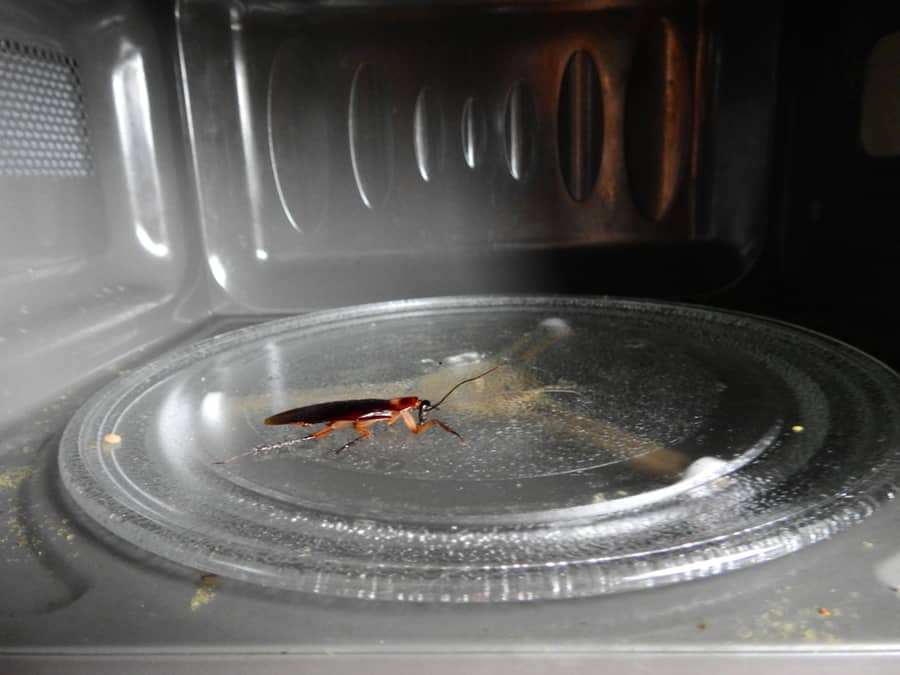
Can a cockroach live inside a microwave when it is off?
Yes. A microwave that is switched off is a dark, sheltered space. It may offer warmth, food smells, crumbs, grease, and protection from people.
A cockroach may enter through:
- Gaps around the door
- Open vents
- The rear or underside of the appliance
- Cracks near the control panel
- Nearby cabinets or counters
Microwave ovens are not sealed pest barriers. The door is designed to contain microwave energy during operation. It is not designed to keep insects out when the appliance is not running.
If you see one roach, there may be more nearby. Cockroaches often hide in warm, tight spaces and become active at night. They can also move between appliances, cabinets, wall gaps, and plumbing openings.
Signs of cockroaches near a microwave
Look for:
- Small dark specks that resemble ground pepper
- Smear marks along edges or corners
- Shed skins
- Egg cases
- A stale or oily odor
- Live roaches at night
- Roaches appearing near other appliances
Droppings near the microwave do not prove that the insect lived inside the cooking chamber. It may have traveled across the counter or entered through a nearby gap.
What should you do if a cockroach is inside your microwave?
If the microwave is running, press Stop. Do not continue heating it to kill the insect.
If the microwave is not running, follow these steps:
-
Unplug the microwave if you can do so safely.
Do not pull on a damaged cord or touch exposed wires. -
Open the door carefully.
A microwave does not keep dangerous radiation inside after it stops. The door interlock is designed to stop microwave production when the door opens. -
Remove food, plates, and the turntable.
Seal or discard food that the cockroach touched or may have contaminated. -
Remove the insect without touching it.
Use a paper towel, a vacuum, or another safe method. Do not use your bare hands. -
Clean the inside surfaces.
Use warm water and dish soap unless the appliance manual gives different instructions. Clean the floor, ceiling, walls, door edges, and turntable. -
Dry the oven fully.
Moisture around controls, vents, or electrical parts can cause problems. -
Inspect the outside and nearby area.
Check under the microwave, behind it, inside the cabinet, and around the power cord. -
Check the microwave before using it again.
Do not use it if the door, seal, screen, hinges, controls, or housing is damaged.


A cockroach can carry bacteria and other contaminants. Cleaning matters even if the insect appears dead.
What if the cockroach was inside while food was cooking?
Discard food that the cockroach touched or that may have been contaminated by the insect. Do not rely on microwave heating to make contaminated food safe.
Clean the microwave before using it again. If the roach entered the cavity through a damaged door seal, vent, or housing, stop using the appliance and have it inspected or replaced.

Can you use bug spray inside a microwave?
No. Never spray insecticide inside a microwave.
Bug sprays are not made for food-contact surfaces or enclosed cooking appliances. Their ingredients may leave harmful residue. Some products can also create a fire risk near electrical parts.
Avoid placing these items inside a microwave:
- Insecticide
- Bleach
- Aerosol cleaners
- Traps
- Boric acid
- Mothballs
- Flammable liquids
Use soap and water for routine cleaning. For a serious infestation, use pest-control products only as their labels direct, and keep them away from food and cooking surfaces.
If a pesticide was sprayed inside the microwave, do not use the appliance until you receive product-specific advice from the manufacturer or a qualified professional. Replacing the appliance may be safer than trying to remove an unknown chemical residue.
How do you stop cockroaches from returning?
Cleaning the microwave removes contamination, but it may not solve the source of the infestation.
Take these steps:
- Wipe grease and food spills from the counter.
- Store food in sealed containers.
- Empty crumbs from nearby cabinets.
- Repair leaks under the sink.
- Keep the area dry at night.
- Seal gaps around pipes and cabinets.
- Reduce clutter near the appliance.
- Clean behind and beneath the microwave.
- Place monitoring traps along walls and under cabinets.
Sticky traps can help show where roaches travel. They are useful for monitoring, but they may not control a larger infestation.
Do not use more pesticide than the label allows. More product does not always mean better control. It can increase exposure for people and pets.


Contact a licensed pest professional if you see roaches during the day, find egg cases, see repeated activity, or notice roaches in several rooms. A professional can identify the species and find hiding places that surface cleaning will miss.

Is a cockroach in the microwave a sign of an infestation?
It can be, but one roach does not prove a large infestation.
A single insect may have entered from a nearby cabinet or wall gap. Still, a microwave provides a useful clue because roaches often hide near warm appliances and food sources.
Treat the sighting as a reason to inspect the area. Look for additional signs over the next several nights. If you find droppings, egg cases, or more live insects, take action rather than waiting.
The type of cockroach also matters. German cockroaches often live indoors near food and water. American cockroaches may enter from drains, basements, sewers, or damp outdoor areas. Correct identification can improve control.
Common mistakes to avoid
The most common mistake is running the microwave longer to “make sure” the cockroach dies. This can spread contamination, damage the appliance, or create a fire risk if the insect or nearby material burns.
Avoid these actions:
- Do not microwave an insect intentionally.
- Do not put water, oil, or chemicals in the oven to trap or kill it.
- Do not spray pesticide inside the cavity.
- Do not assume a dead insect made the food safe.
- Do not use a microwave with a damaged door or seal.
- Do not ignore roaches found near other appliances.
- Do not touch a hot insect or residue with bare hands.
If the oven sparks, smells burnt, smokes, or makes an unusual sound, stop using it. Unplug it if safe and contact the manufacturer or a qualified appliance technician.

Key takeaways
- A cockroach may survive in a microwave, especially after brief or uneven exposure.
- Microwave energy heats objects; it does not guarantee instant insect death.
- Microwave exposure is not the same as nuclear radiation.
- Never put a cockroach, insecticide, or cleaning chemical in a microwave.
- If a roach was inside, remove food it touched, clean the oven, and inspect the surrounding area.
- Repeated sightings may indicate a wider pest problem.
Frequently asked questions
Can a cockroach survive microwave radiation?
It may survive brief microwave exposure because heating can be uneven. A microwave can kill it if its body becomes hot enough for long enough, but survival cannot be predicted safely from the timer setting.
Will a microwave kill cockroach eggs?
Do not assume it will. An egg case may receive uneven heating, and the microwave may not reach every part of it equally. Remove the egg case without handling it directly, clean the area, and address the infestation.
Is food safe if a cockroach was in the microwave?
Food that the cockroach touched or may have contaminated should be discarded. Heating is not a reliable way to reverse contamination.
Can cockroaches damage a microwave?
They can contaminate the cooking area and may hide near wiring or control components. If the microwave has a damaged cord, door, seal, housing, or control panel, stop using it and arrange an inspection.
How do I know whether the roach came from inside the microwave?
You usually cannot tell from one sighting. Check the underside, rear vents, nearby cabinets, wall gaps, and other warm appliances. Droppings or repeated activity provide stronger evidence than a single roach.
Conclusion
A cockroach can survive in a microwave, so do not count on microwave heat as pest control. Stop the appliance, remove the insect safely, discard contaminated food, and clean the interior with soap and water.
Then inspect the area around the microwave. If you see more insects or signs of activity, use monitoring traps and consider a licensed pest professional.
Sources and further reading
- U.S. Food and Drug Administration: Microwave Oven Radiation
- U.S. Environmental Protection Agency: Cockroach Pest Control
- University of Minnesota Extension: Cockroaches
- U.S. Department of Agriculture Food Safety and Inspection Service: Cleaning and Sanitizing

Appliance Review Expert
Lucas Ramirez is a trusted voice at HomeFixGrid.com, known for his clear, practical, and creatively written guides that simplify appliance care for everyday homeowners. With a strong focus on hands-on testing and real-world problem-solving, Lucas brings expert insight into appliance reviews and troubleshooting techniques. Her work empowers readers to confidently maintain, repair, and choose the right appliances for their homes.