Can I Microwave Sweet Potato: Easy Cooking Guide
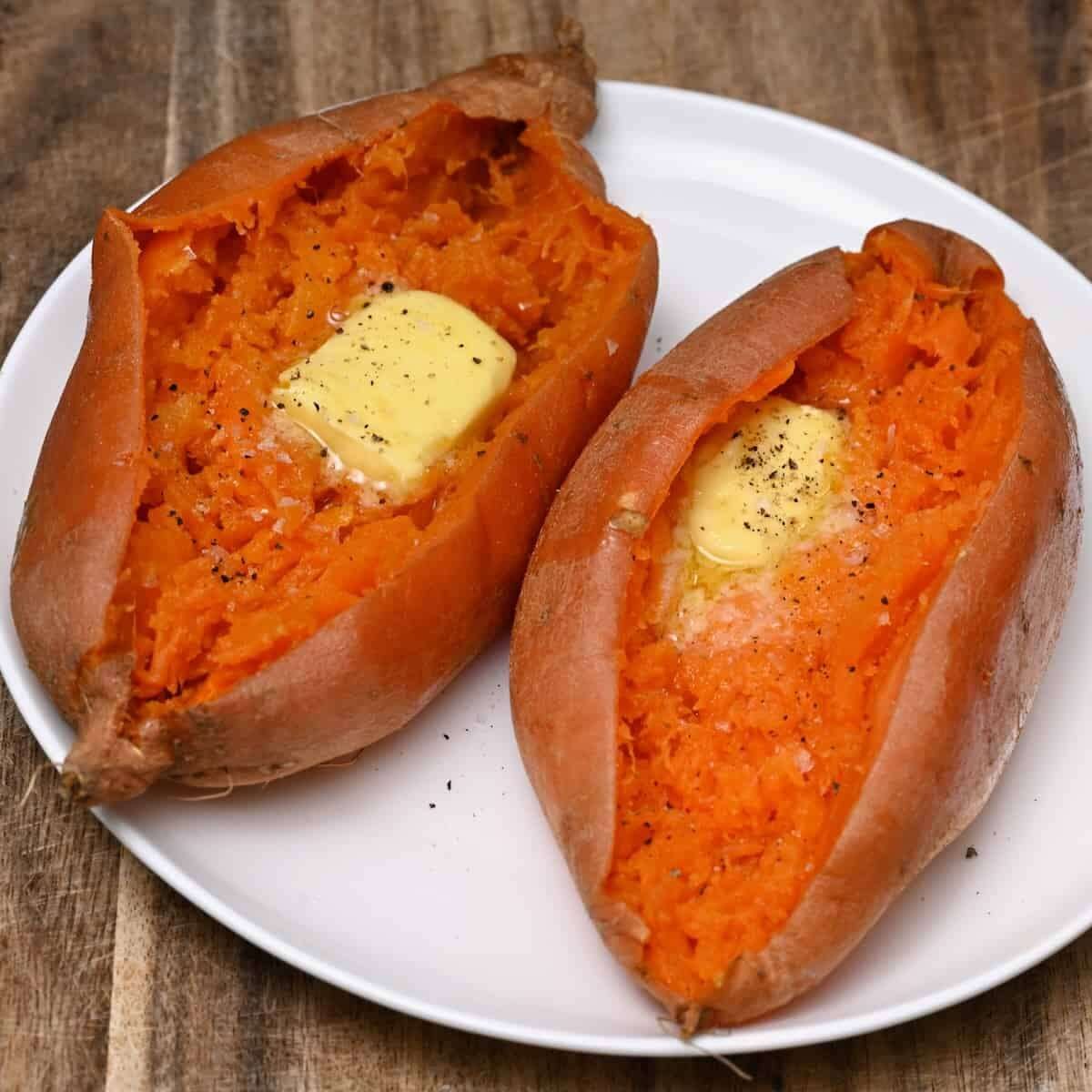
Yes, you can microwave a sweet potato. A medium sweet potato usually cooks in about 5 to 8 minutes in a 1,000-watt microwave. Pierce the skin first, place the potato on a microwave-safe plate, cook it in stages, and let it rest before eating.
Microwaving is faster than baking and keeps the inside moist. The trade-off is that the skin will not become crisp or browned. This method works well in U.S. kitchens when you need a quick side dish, lunch, or meal-prep ingredient.

How to Microwave a Whole Sweet Potato
The safest method is simple: wash, pierce, cook, turn, and rest.


What you need
- 1 medium sweet potato
- Water
- A fork
- A microwave-safe plate
- An oven mitt or clean kitchen towel
Steps
-
Wash the sweet potato.
Rinse it under cool running water and scrub away visible dirt. Pat it dry. -
Pierce the skin.
Use a fork to make several holes around the potato. These holes let steam escape. Do not skip this step. -
Place it on a microwave-safe plate.
Put the whole potato on the plate. You do not need to wrap it in plastic or foil. -
Cook on high.
Start with the times below:Sweet potato size Starting time in a 1,000-watt microwave Small, about 5–6 ounces 3–5 minutes Medium, about 7–9 ounces 5–8 minutes Large, about 10–12 ounces 8–12 minutes Turn the potato halfway through cooking. If your microwave does not have a turntable, rotate the plate instead.
-
Check for doneness.
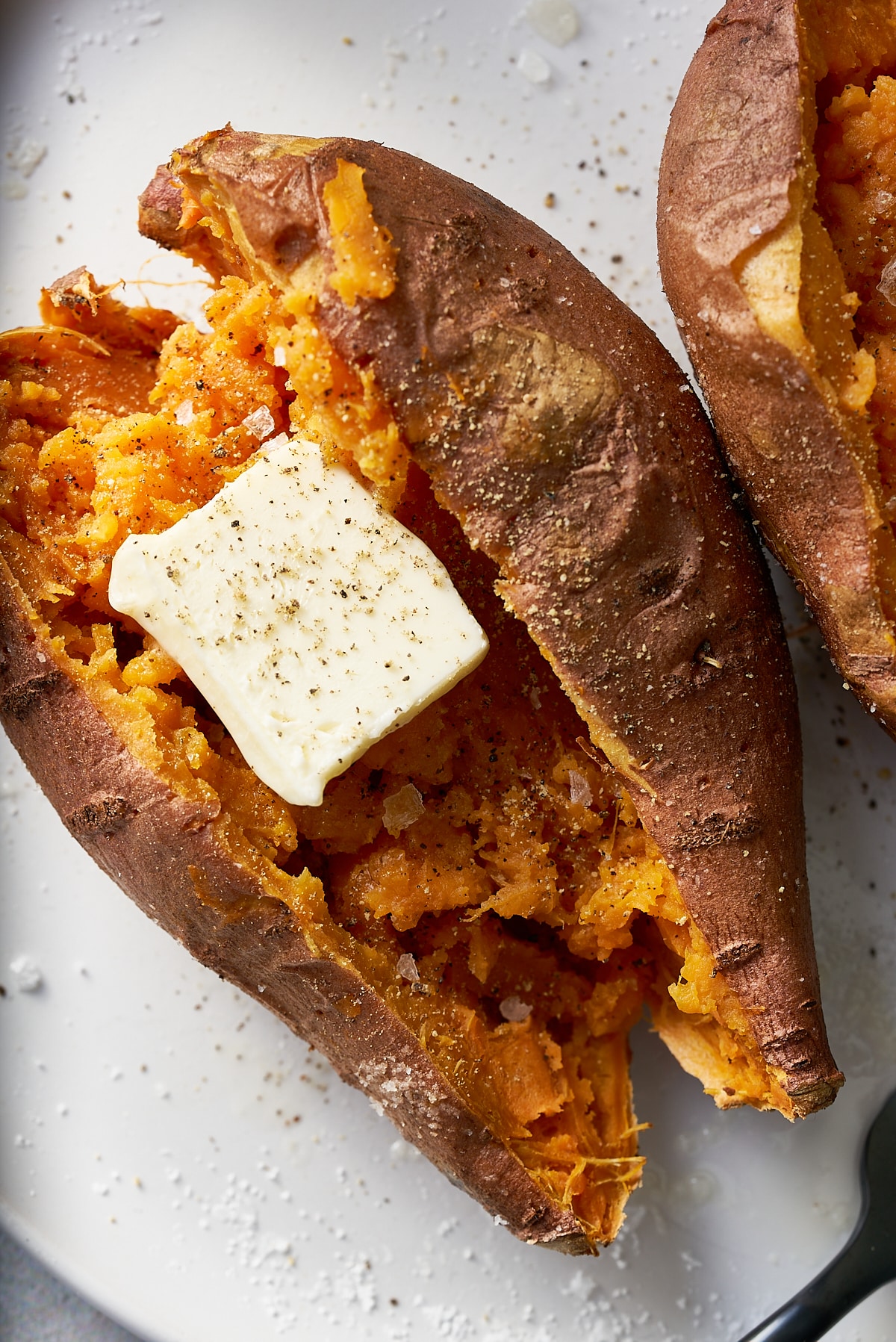
The sweet potato is ready when a fork slides through the center with little resistance. If it is still firm, cook it for another 30 to 60 seconds at a time. -
Let it rest.
Leave the potato on the plate for about 2 minutes. Steam will keep moving through the center, and the skin will be very hot. -
Split and serve.
Cut it open carefully. Add butter, cinnamon, plain Greek yogurt, black beans, chili, or another topping you like.
Microwave cooking times vary because potatoes differ in size, shape, moisture, and starting temperature. A thick potato may need more time than a long, narrow one of the same weight.
Should You Pierce a Sweet Potato Before Microwaving?
Yes. Pierce the skin before microwaving a whole sweet potato.


A sweet potato contains water. As it heats, some of that water turns into steam. The skin can hold steam in, which may cause the potato to split or burst. Fork holes give the steam small paths out.
Piercing does not make the potato dry. It simply reduces pressure under the skin. Make holes on several sides rather than placing all of them in one spot.
Do not microwave a whole sweet potato inside aluminum foil. Metal foil can cause arcing and may damage the microwave or create a fire risk. If the sweet potato is wrapped in foil, remove the foil before cooking.

How Long Does It Take to Microwave a Sweet Potato?
Most medium sweet potatoes take 5 to 8 minutes on high in a 1,000-watt microwave. Your exact time may be shorter or longer.
Use this method to adjust the time:
- Cook for half of the estimated time.
- Turn the potato.
- Test the center with a fork.
- Add 30 to 60 seconds if it is firm.
- Repeat until the center is soft.
A lower-wattage microwave may need more time. For example, a 700-watt microwave often needs roughly 25% to 40% more cooking time than a 1,000-watt microwave. This is only a starting estimate. Check the potato rather than relying on the clock alone.
Cooking two sweet potatoes at once also changes the timing. They may need more time than one potato, and they should sit in one layer with space between them. Turn each potato during cooking if possible.
Signs that your sweet potato is done
A cooked sweet potato should have:
- A soft center
- A skin that looks slightly wrinkled or loose
- Steam when opened
- Little resistance when pierced with a fork
If the outside is soft but the center is hard, keep cooking in short bursts. The potato may be thick, unevenly shaped, or positioned in a cold spot in the microwave.

Can You Microwave a Cut Sweet Potato?
Yes. Cutting a sweet potato before microwaving can reduce cooking time and help it cook more evenly.
Cubed sweet potato
- Wash and peel the sweet potato if you want.
- Cut it into similar-size cubes, about 1 inch wide.
- Place the cubes in a microwave-safe bowl.
- Add 1 to 2 tablespoons of water.
- Cover the bowl with a microwave-safe lid or a vented microwave cover.
- Microwave for 4 to 7 minutes, stirring halfway through.
- Test a cube with a fork and cook longer if needed.
The water creates steam. The cover helps the cubes soften, but it must allow steam to escape. Do not seal the bowl tightly.
Halved sweet potato
Cut the sweet potato lengthwise. Place the halves cut-side down on a microwave-safe plate. Add a small splash of water, cover loosely with a vented cover, and cook for about 4 to 7 minutes.
Cut pieces need careful handling because steam can collect under the cover. Lift the cover away from your face and hands.


Can You Microwave a Sweet Potato Without Water?
Yes. A whole sweet potato can go directly on a microwave-safe plate without added water.
For cut pieces, a small amount of water helps create steam and prevents the exposed surfaces from drying out. You do not need to submerge the pieces.
Avoid adding too much water. Excess water can make the sweet potato watery and may lengthen the cooking time. A tablespoon or two is usually enough for a bowl of cubes.

Microwave Versus Oven: Which Method Is Better?
Microwaving is better when speed matters. Oven baking is better when you want a dry, fluffy center and a browned, slightly crisp skin.
| Cooking method | Typical result | Main benefit | Main limitation |
|---|---|---|---|
| Microwave | Soft and moist | Fast cooking | Little or no browning |
| Oven | Soft center with firmer skin | Better roasted flavor | Takes much longer |
| Air fryer | Soft center with crisp skin | Good texture in less time than an oven | Smaller cooking space |
A microwave does not brown food in the same way an oven or air fryer does. If you want both speed and crisp skin, microwave the sweet potato until tender, then place it in a hot oven or air fryer for a few minutes.
Do not transfer a foil-wrapped potato from an oven directly into a microwave. Remove all foil first.

How to Microwave a Sweet Potato for Meal Prep
For meal prep, cook whole sweet potatoes or cubes until tender, then cool them promptly.
Store cooked sweet potatoes in a covered container in the refrigerator. The USDA advises refrigerating perishable cooked food within 2 hours, or within 1 hour when the surrounding temperature is above 90°F. Use refrigerated leftovers within 3 to 4 days.
To reheat:
- Place the sweet potato in a microwave-safe dish.
- Cover it loosely with a microwave-safe lid or damp paper towel.
- Heat in 30- to 60-second intervals.
- Turn or stir when practical.
- Check that the center is hot before serving.
For leftovers that contain meat, poultry, seafood, eggs, or other mixed ingredients, reheat them to 165°F, as recommended by the USDA. Use a food thermometer when the temperature matters.
Do not reheat food in a container that is not labeled microwave-safe. Some plastic containers can warp or transfer chemicals into food when heated.


Common Microwave Sweet Potato Mistakes
Skipping the fork holes
A whole, unpierced sweet potato can build up steam under its skin. Pierce it before cooking.
Cooking only by the listed time
Microwave power and potato size vary. Use the time as a guide, then test the center.
Using foil or metal
Do not use aluminum foil, metal utensils, or metal-trimmed dishes in the microwave unless the microwave maker specifically permits that item for that use.
Cutting it open right away
Steam can cause burns. Let the potato rest, then open it away from your face.
Overcooking the potato
Long cooking can make the edges dry, tough, or rubbery. Use short bursts near the end.
Using a sealed container
Steam needs a way to escape. Use a vented cover or leave the lid slightly open according to the container instructions.
Assuming a microwave will crisp the skin
A microwave softens food but does not provide the dry heat needed for browning. Use an oven or air fryer after microwaving if crisp skin matters.

What to Do If the Sweet Potato Is Not Cooked Evenly
Uneven cooking usually comes from the potato’s shape, size, position, or the microwave’s heat pattern.
Try these fixes:
- Turn the potato halfway through cooking.
- Rotate the plate if the microwave has no turntable.
- Move the potato away from the exact center if your microwave manual recommends that.
- Cut a very large potato in half.
- Let the potato rest for 2 to 3 minutes before testing again.
- Add cooking time in 30- to 60-second bursts.
If one area becomes very hot while another stays firm, the potato may be unusually thick or the microwave may heat unevenly. Cutting the potato into evenly sized pieces can improve the result.
If the potato smells burned, smokes, or sparks, stop the microwave. Keep the door closed for a moment, unplug the appliance if it is safe to do so, and remove the food only after it has cooled enough to handle.

Frequently Asked Questions
Is it safe to microwave a sweet potato in plastic wrap?
It depends on the specific wrap. Use plastic wrap only if its package says it is microwave-safe, and keep it from touching the food when the directions require that. A vented microwave-safe lid is often simpler. Never use plastic wrap that is not labeled for microwave use.
Can I microwave a sweet potato with the skin on?
Yes. The skin can stay on. Wash it well, pierce it with a fork, and cook it on a microwave-safe plate. The skin may wrinkle or become soft.
Can I microwave a sweet potato after baking it?
Yes, if the baked sweet potato was stored safely. Refrigerate it within 2 hours, keep it covered, and reheat it until hot. Remove any foil before placing it in the microwave.
Why did my sweet potato explode in the microwave?
An unpierced skin may trap steam. A sealed container or tightly wrapped potato can also create pressure. Stop the microwave, allow the food to cool, and clean the interior after it is safe to handle.
Can I microwave a sweet potato for a baby or young child?
You can cook it in a microwave, but allow it to cool and check the texture carefully. Hot spots can occur. Mash it thoroughly and test the temperature before serving. Avoid adding salt or other ingredients that do not fit the child’s dietary needs.
Key Takeaways
- You can safely microwave a sweet potato.
- Pierce the skin before cooking a whole potato.
- A medium potato usually takes 5 to 8 minutes in a 1,000-watt microwave.
- Turn it halfway through and add time in short bursts.
- Let it rest before opening or eating.
- Never microwave aluminum foil or use a sealed container.
- For crisp skin, finish the cooked potato in an oven or air fryer.
Conclusion
Microwaving is one of the quickest ways to cook a sweet potato. Wash it, pierce it, place it on a microwave-safe plate, and cook it until a fork slides into the center with ease. Let it rest before serving, and adjust the time for your microwave’s power and the potato’s size.
For the best texture, microwave it first and finish it in an oven or air fryer. For a fast, soft, ready-to-eat sweet potato, the microwave alone works well.
Sources
- USDA FoodKeeper: Storage of cooked foods
- USDA: Leftovers and food safety
- U.S. Food and Drug Administration: Microwave ovens and food safety
- U.S. Department of Energy: Microwave oven energy use

Appliance Review Expert
Lucas Ramirez is a trusted voice at HomeFixGrid.com, known for his clear, practical, and creatively written guides that simplify appliance care for everyday homeowners. With a strong focus on hands-on testing and real-world problem-solving, Lucas brings expert insight into appliance reviews and troubleshooting techniques. Her work empowers readers to confidently maintain, repair, and choose the right appliances for their homes.