How Does Microwave Convection Work: A Simple Guide
In U.S. kitchens, a microwave convection oven combines two cooking methods in one appliance. Microwave energy heats food from within, while a heating element and fan cook the outside with moving hot air. You can use either method alone or use both at the same time.
This makes a microwave convection oven useful for reheating leftovers, roasting chicken, baking small batches, and browning food. It does not make microwave cooking identical to full-size oven cooking, though. Each mode has a different job, and safe cookware and cooking times matter.

What Is a Microwave Convection Oven?
A microwave convection oven is a combination appliance with three basic functions:
- Microwave cooking: Uses electromagnetic energy to heat water, fat, and other molecules in food.
- Convection cooking: Uses a heating element and fan to circulate hot air.
- Combination cooking: Uses microwave energy and hot air at the same time.
A standard microwave heats food quickly but usually does not brown or crisp it well. A traditional oven browns food through dry heat but takes longer to preheat and cook. A convection microwave sits between these two appliances.
The microwave function is best for speed and moist foods. The convection function is best for browning, crisping, baking, and roasting. Combination mode can shorten cooking time while still giving food a browned surface.
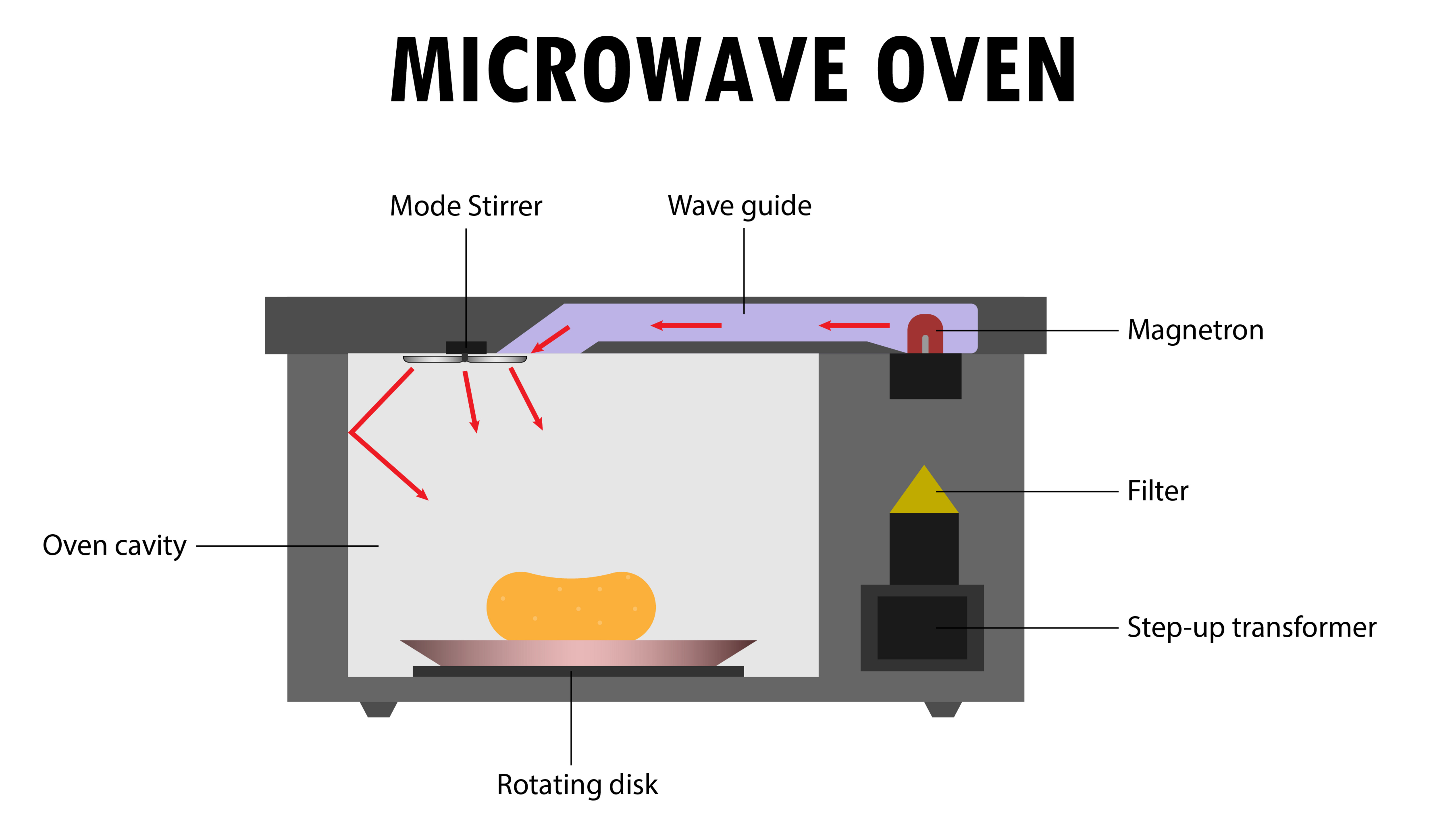
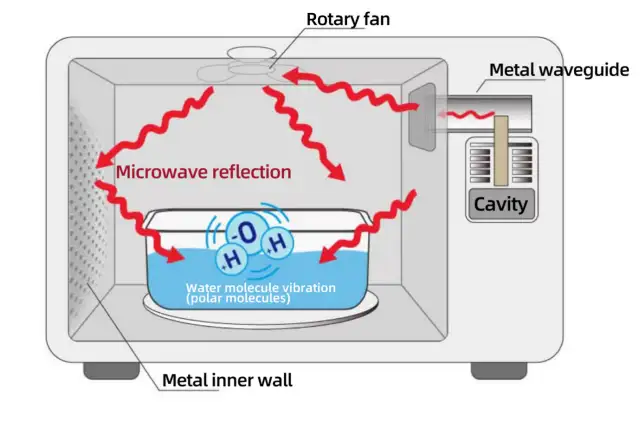
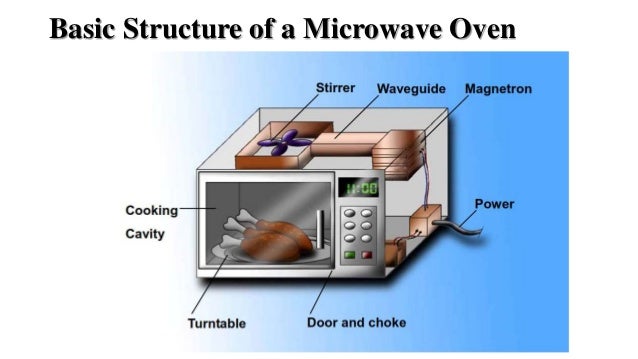
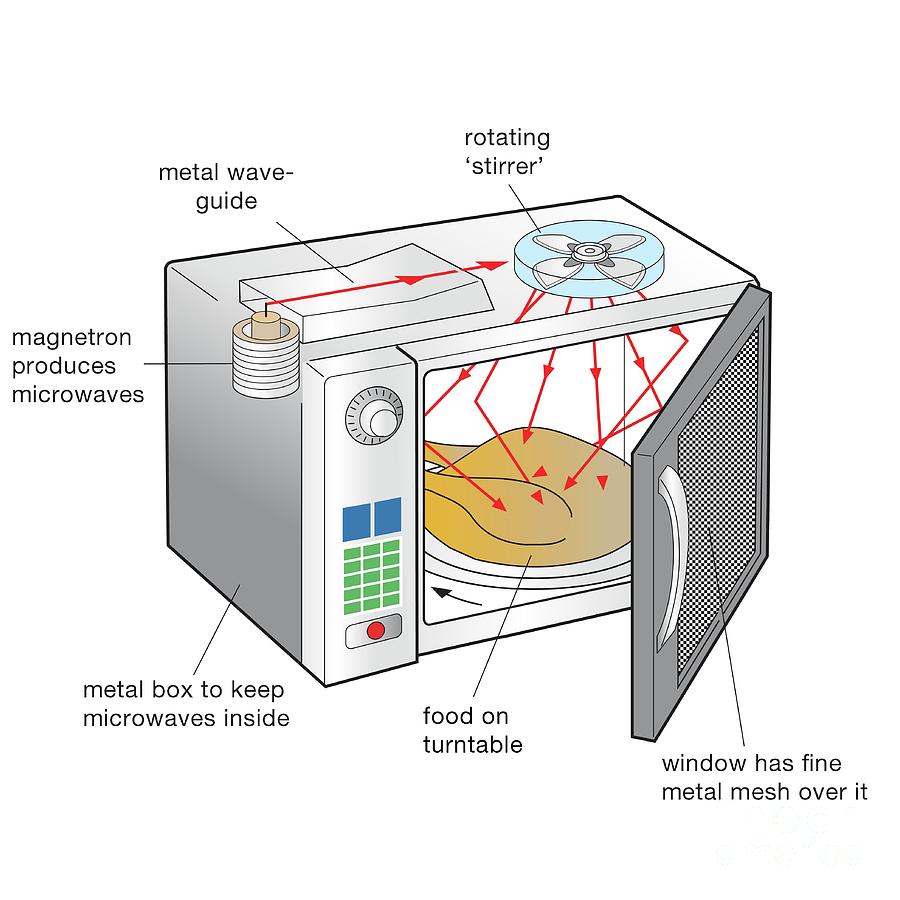
Most combination models have a metal cooking cavity, a turntable or tray, a microwave generator called a magnetron, a heating element, and a circulation fan. A control board selects which systems operate.
Microwave energy
Microwaves are a form of non-ionizing electromagnetic energy. In household ovens sold in the United States, the microwave frequency is generally 2.45 gigahertz.
The electric field makes certain molecules move back and forth. Water molecules respond strongly because they have an uneven electrical charge. This movement creates heat through molecular friction and energy transfer.
Microwaves do not cook food from the exact center outward. They enter the food from the surface and travel only a limited distance before losing strength. Heat then spreads inward through conduction.
Convection heat
Convection cooking works much like a small fan oven. An electric heating element warms the air, and the fan moves that air around the food.
Moving air transfers heat more efficiently than still air. It also helps remove moisture from the food’s surface. That dry surface allows browning and crisping, especially when the food contains sugars or proteins.
How Does Microwave Convection Work?
Microwave convection cooking works by applying microwave energy and circulating hot air in the same cooking chamber.
The microwave system heats water and other molecules inside the food. At the same time, the heating element warms the air around the food. The fan carries that hot air across the surface.
This creates two heat paths:
- Microwave energy speeds heating inside the food.
- Convection heat dries and browns the outside.
The two systems do not create one new type of heat. They work side by side. Microwave energy mainly helps food heat faster, while convection heat improves surface texture.
For example, a raw potato may cook faster in combination mode than in convection mode alone. Microwave energy softens the inside. Convection heat then helps dry and brown the skin.
A casserole may also finish sooner because the microwave warms the middle while hot air browns the top. However, the result can vary with the food’s shape, moisture, density, and starting temperature.
What happens inside the oven?
The process usually follows this pattern:
- The oven produces microwave energy with its magnetron.
- The energy enters the food through the oven cavity.
- Molecules in the food move and produce heat.
- The heating element raises the air temperature.
- The fan moves hot air around the food.
- The food’s surface dries, browns, or crisps.
- Heat continues to spread through the food after the cycle ends.
The turntable helps expose different parts of the food to the microwave field. It does not guarantee perfectly even cooking. Dense areas, thick portions, bones, and cold spots can still remain.
The U.S. Food and Drug Administration explains that properly operated microwave ovens are designed to prevent harmful microwave leakage. The main safety risks usually come from overheated food, burns, damaged doors, or unsuitable containers rather than normal microwave exposure. See the FDA microwave oven safety guidance.

What Is the Difference Between Microwave, Convection, and Combination Modes?
The main difference is the type of heat each mode uses.
| Mode | Main heat source | Best uses | Main limitation |
|---|---|---|---|
| Microwave | Electromagnetic energy | Reheating, steaming, softening, defrosting | Little browning |
| Convection | Heating element and fan | Baking, roasting, crisping | Takes longer than microwave cooking |
| Combination | Microwave plus convection heat | Faster roasting, casseroles, some baked foods | Needs careful timing and cookware |
Microwave mode
Microwave mode heats food quickly. It works well for:
- Reheating soup
- Steaming vegetables
- Softening butter
- Cooking oatmeal
- Heating leftovers
- Defrosting food
Microwaves heat water-rich areas faster than dry areas. A food with uneven moisture may have hot and cold spots. Stirring, rotating, and resting help spread the heat.
Microwave mode does not normally create the dry surface needed for crisping. A microwave-heated pizza crust, for example, may become soft or chewy.
Convection mode
Convection mode acts more like a small oven. It preheats, circulates hot air, and cooks the food from the outside inward.
Use it for:
- Cookies
- Biscuits
- Small cakes
- Roasted vegetables
- Chicken pieces
- Frozen foods that need a crisp surface
Some models reduce the recommended temperature automatically when you select convection. Others require you to make the adjustment. Always check the appliance manual.
Combination mode
Combination mode uses both systems during the same cycle. It can be useful for foods that need a cooked center and a browned outside.
Good examples include:
- Lasagna
- Baked pasta
- Chicken pieces
- Stuffed peppers
- Meatloaf
- Frozen casseroles
- Small roasts
Combination mode is not ideal for every baked recipe. A delicate cake may cook too quickly in the center or develop an uneven texture. For precise baking, a full-size conventional or convection oven may offer better control.
How Do You Use a Microwave Convection Oven?
Start by identifying the cooking mode, the correct cookware, and the food’s safe internal temperature.
1. Read the mode instructions
Look for controls labeled:
- Microwave
- Convection
- Grill or broil
- Combination
- Sensor cook
- Preheat
The exact names differ by brand and model. A button labeled “Combi” may offer several microwave-to-convection ratios.
2. Choose the right cookware
Use cookware that matches the selected mode.
For microwave-only cooking, use containers labeled microwave-safe. Glass, ceramic, and some microwave-safe plastics are common choices.
For convection cooking, use oven-safe glass, ceramic, or metal if the manual allows it. Metal may be safe during convection-only operation but unsafe during microwave or combination operation.
Do not assume that a container is safe because it feels sturdy. Check the container label and the appliance manual.
3. Preheat for convection cooking
Use the preheat function when the recipe calls for it. Preheating helps the heating element and oven cavity reach the target temperature before the food goes inside.
Microwave-only cooking usually does not need preheating. Combination mode may or may not require it, depending on the appliance.
4. Arrange the food evenly
Spread food into an even layer when possible. Place thick pieces toward the outside of the turntable, where they may receive more heat from the cavity walls and air flow.
Avoid stacking dense pieces. If you are reheating several items, leave space between them so air and microwave energy can reach more surfaces.
5. Use the recipe as a starting point
A microwave convection oven may cook faster than a full-size oven, especially in combination mode. Begin checking food early.
For microwave recipes, lower power can improve evenness. For convection recipes, use the temperature and time recommended by the manual or a tested recipe.
6. Stir, rotate, or turn when needed
Stir liquid foods halfway through heating. Turn meat or poultry if the instructions call for it. Rotate food manually if the oven does not have a working turntable.
These steps help reduce cold spots and uneven browning.
7. Check the internal temperature
Color and texture do not always prove that food is safe. Use a food thermometer for meat, poultry, egg dishes, and reheated leftovers.
The U.S. Department of Agriculture provides safe minimum internal temperature guidance through its FoodSafety.gov temperature chart. Follow the applicable temperature and rest guidance for the food you are cooking.
8. Let the food rest
Resting allows heat to move through the food. It also reduces the risk of burns from steam and hot liquid.
A container may feel only warm while the food inside is extremely hot. Open covers away from your face and use oven mitts.
What Cookware Can You Use?
The correct cookware depends on whether microwave energy is active.
Microwave-safe cookware
Common microwave-safe choices include:
- Plain glass
- Microwave-safe ceramic
- Paper products made for microwave use
- Certain plastics marked microwave-safe
- Silicone products approved for microwave cooking
Avoid containers that can melt, warp, crack, or release unwanted chemicals when heated. Do not use plastic wrap unless the product label permits microwave use. Keep it from touching the food when the instructions require that.
Metal cookware
Metal reflects microwave energy. In microwave mode, that reflection can create sparks or uneven heating. Metal may also damage the oven if it contacts the cavity wall.
Some microwave convection ovens include metal racks or trays designed for specific modes. Use them only as the manual directs. A metal rack supplied with one model is not automatically safe in another model.
Aluminum foil
Small amounts of smooth foil may be allowed in some microwave ovens for shielding parts of food. However, foil can spark if it is crumpled, touches the oven wall, or sits too close to another metal surface.
Do not use foil unless the manual or recipe gives clear instructions. Never use damaged foil.
Containers with lids
Loosen lids and vent covered containers. Steam can build pressure inside a sealed container and cause burns or sudden breakage.
Never microwave a sealed jar, tightly closed bottle, or whole egg in its shell.

Why Does Food Cook Unevenly?
Uneven cooking usually comes from food shape, moisture, placement, or timing.
Microwaves do not heat every point at the same rate. Thick food can remain cold in the center while the edges become hot. Frozen areas also absorb energy differently from thawed areas.
Convection heat can be uneven when:
- The fan is blocked
- The food is too close to a wall
- The tray is overcrowded
- The oven was not preheated
- The food has a very wet surface
- The rack position is wrong
To improve results, use shallow containers, spread food evenly, stir during microwave cooking, and leave space around the food. For baked items, avoid opening the door too often because heat escapes.
A standing time is especially useful after microwave cooking. The outside may be hot while the center continues to warm. Stirring before serving also helps distribute heat.
Why is my food hot but not browned?
Microwave energy does not provide the same dry surface heat as an oven. Food may be fully hot but still pale and soft.
Use convection or combination mode when you need browning. Pat wet food dry, avoid covering it, and use a suitable rack or tray if the manual recommends one.
Some foods need a short convection finish after microwave heating. This can improve texture without requiring a long oven cycle.
Why is my food dry?
Dry food can result from too much time, too much convection heat, or uncovered microwave cooking.
Use shorter cooking periods and check early. Cover moist foods loosely during microwave reheating. For combination cooking, use the ratio and temperature listed in the manual.

Microwave Convection Cooking: Common Mistakes
Avoid these mistakes to improve safety and results.
Using metal in the wrong mode
Metal can be safe in convection-only mode on some models but unsafe when microwave energy is active. Follow the manual instead of relying on general rules.
Treating combination mode like a normal oven
Combination cooking may finish sooner than a conventional oven. A recipe written for a full-size oven may overcook if you use the same time without checking.
Skipping the thermometer
Poultry, meat, leftovers, and egg dishes can look done before reaching a safe temperature. Use a calibrated food thermometer.
Heating sealed containers
Pressure can build quickly. Vent covers and open containers before heating.
Running the oven empty
Do not run microwave mode with no food or liquid inside. The energy needs something to absorb it. An empty cavity can cause damage.
Blocking the vents
Keep the appliance’s air vents clear. Blocked vents can reduce performance and cause overheating.
Using a damaged oven
Do not use a microwave if the door, hinges, latch, or seal is damaged. Stop using it and arrange service through the manufacturer or a qualified repair provider.
Assuming microwave cooking kills every toxin
Microwave cooking can kill many harmful bacteria when food reaches a safe temperature. It does not make spoiled food safe, and it may not destroy every toxin produced during spoilage. When food has been left at unsafe temperatures or smells spoiled, discard it.

Is a Microwave Convection Oven Worth Using?
A microwave convection oven is most useful when you want one appliance for several small cooking tasks.
It can save counter space and reduce the time needed to reheat, roast, or brown food. It is often practical for apartments, offices, small households, and kitchens without a separate wall oven.
Its limits matter too. The cooking space is smaller than a full-size oven. Large pans may not fit. Airflow, rack height, and microwave power can vary by model, so results may need adjustment.
Choose microwave mode when speed and moisture matter. Choose convection mode when texture and browning matter. Choose combination mode when you want faster cooking with some surface browning.
The best setting depends on the food, not on a claim that one mode is always superior.
Frequently Asked Questions
Does convection microwave cooking cook from the inside out?
Not exactly. Microwave energy can heat deeper parts of food than surface heat can, but it does not instantly cook the center. Energy absorption varies through the food, and heat then spreads by conduction.
Can you use aluminum pans in a convection microwave?
Only when the appliance manual clearly allows them for the selected mode. Aluminum can reflect microwave energy and cause arcing. It is often safer in convection-only operation, but model instructions control.
Does a convection microwave need preheating?
Convection cooking often benefits from preheating. Microwave-only cooking does not. Combination mode depends on the model and recipe, so check the manual.
Can you bake a cake in a microwave convection oven?
Yes, many models can bake cakes in convection mode. Use an oven-safe pan that fits the cavity, preheat when required, and follow a recipe designed for the appliance. Microwave mode alone may cook a cake but can produce a different texture.
Is food cooked in a microwave convection oven safe?
Yes, when the oven is used correctly. Use approved cookware, follow the manual, vent containers, check food temperatures, and do not use an oven with a damaged door or seal.
Conclusion
A microwave convection oven combines fast microwave heating with the dry, moving heat of a small convection oven. Microwave energy helps heat the food, while the heating element and fan cook and brown the surface.
Use microwave mode for quick, moist cooking. Use convection mode for baking and crisping. Use combination mode when you need both speed and a browned exterior.
For reliable results, choose the correct cookware, arrange food evenly, follow the model’s instructions, check safe internal temperatures, and allow food to rest before serving.

Appliance Review Expert
Lucas Ramirez is a trusted voice at HomeFixGrid.com, known for his clear, practical, and creatively written guides that simplify appliance care for everyday homeowners. With a strong focus on hands-on testing and real-world problem-solving, Lucas brings expert insight into appliance reviews and troubleshooting techniques. Her work empowers readers to confidently maintain, repair, and choose the right appliances for their homes.