How Big Is A 7.5 Cubic Foot Refrigerator: Size Guide
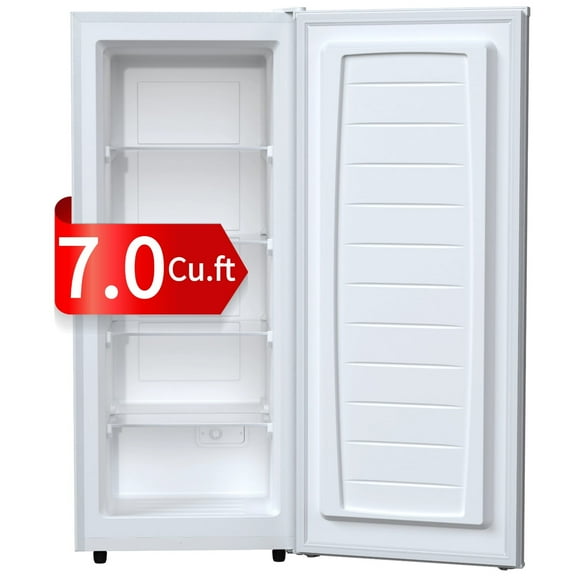
A 7.5 cubic foot refrigerator holds about 7.5 cubic feet of food space, or roughly 212 liters. In the United States, this size is usually a compact, apartment-size, garage, office, or secondary refrigerator.
The inside space is often enough for one or two people. It may hold a few grocery bags, several drink containers, fresh food, and a small freezer load. However, the outside size can vary by model, so cubic feet alone cannot tell you if the refrigerator will fit your kitchen or storage area.
A typical 7.5 cu. ft. refrigerator may be about:
- 21 to 24 inches wide
- 22 to 26 inches deep
- 54 to 60 inches tall
Always check the exact product specifications before you buy or move one.


What Does 7.5 Cubic Feet Mean?
Seven and a half cubic feet is the refrigerator’s stated usable storage volume, not its outside size. Manufacturers usually list the total space for the fresh-food section and freezer together.
One cubic foot equals 1,728 cubic inches. Therefore:
7.5 cubic feet × 1,728 = 12,960 cubic inches
Using the US conversion of 1 cubic foot = 28.3168 liters:
7.5 cubic feet ≈ 212.4 liters
That number describes volume, not a single open box. Shelves, bins, door racks, walls, lights, vents, and the freezer compartment take up some of the interior area.
Total capacity versus usable space
A refrigerator labeled 7.5 cu. ft. may not give you 7.5 cubic feet of open space for food. The listed capacity is measured under a standard method. The design may divide it into:
- A fresh-food compartment
- A freezer compartment
- Door storage
- Crisper drawers
- Fixed shelves
- Air channels and cooling parts
A model with a large freezer may offer less fresh-food space than another 7.5 cu. ft. model. Two refrigerators with the same capacity can also feel very different inside.
How Wide, Deep, and Tall Is a 7.5 Cu. Ft. Refrigerator?
Most 7.5 cu. ft. refrigerators are around 2 feet wide, 2 feet deep, and 4.5 to 5 feet tall. These are useful planning ranges, not fixed dimensions.
| Measurement | Common planning range |
|---|---|
| Width | 21–24 inches |
| Depth | 22–26 inches |
| Height | 54–60 inches |
| Capacity | 7.5 cu. ft. |
| Capacity in liters | About 212 L |
The exact size depends on the refrigerator type. A top-freezer unit may be taller. A compact refrigerator with a built-in freezer may be shorter but deeper. A model with a curved back or large compressor housing may need more space than its cabinet width suggests.


Why the listed size is not enough
A product page may show cabinet dimensions and separate dimensions with handles. The shipping carton may be much larger. Door hinges can also need clearance above or beside the unit.
Before measuring your space, check the manufacturer’s specification sheet for:
- Product width
- Product depth
- Product height
- Depth with the handle
- Depth with the door open
- Door swing clearance
- Hinge clearance
- Required space around the cabinet
- Shipping dimensions
A refrigerator that is 23 inches wide may still fail to fit if the doorway, hallway, or turn is narrower.
How Much Food Fits in a 7.5 Cu. Ft. Refrigerator?
A 7.5 cu. ft. refrigerator usually works best for one or two adults, light grocery storage, or occasional use. It can hold basic meals and drinks, but it does not provide the same reserve space as a standard family refrigerator.
A practical load may include:
- A gallon of milk or a large milk container
- Eggs
- Yogurt and cheese
- Fresh fruit and vegetables
- Deli meat
- Several meal containers
- A few bottles or cans
- Condiments and sauces
- A modest amount of frozen food
The real capacity depends on how the space is divided. A unit with a freezer on top may give you less room for tall items in the fresh-food section. A separate freezer door can also reduce the size of the main compartment.
How many groceries can it hold?
A 7.5 cu. ft. refrigerator may hold about three to five days of food for one person, depending on the person’s diet and shopping habits. It may hold two to three days of food for two people if the household buys large containers or cooks many meals at home.
This is an estimate, not a standard capacity test. Produce, beverage containers, meal boxes, and frozen foods use space in different ways.
Can it hold a gallon jug?
Maybe. Many US refrigerators have door shelves shaped for common gallon jugs, but some compact models do not. Others may fit a gallon jug only on an interior shelf.
Check the product photos and dimensions before buying if gallon storage matters. A refrigerator can have enough total volume but still lack a shelf tall enough for a gallon container.
Is a 7.5 Cu. Ft. Refrigerator Big Enough for You?
A 7.5 cu. ft. refrigerator is often large enough for a dorm room, studio apartment, office, guest suite, workshop, or small household. It may be too small for a family that shops once a week or stores many large containers.
| User or setting | Likely fit |
|---|---|
| One person | Usually suitable |
| Two people | Suitable with regular shopping |
| Three or more people | Often limited |
| Dorm or office | Usually suitable |
| Garage backup refrigerator | Useful for drinks and overflow |
| Main family refrigerator | Usually too small |
| Vacation cabin | Often practical |
Think about your shopping pattern. A small refrigerator may work well if you buy fresh food often. It may feel cramped if you store bulk items, meal-prep containers, large pizzas, or many drinks.
The freezer is often the limiting factor
A 7.5 cu. ft. refrigerator may have a freezer section of roughly 1.5 to 2.5 cu. ft., though the exact split varies. That may be enough for frozen vegetables, ice cream, meat, and a few frozen meals.
It may not be enough for:
- Several large frozen pizzas
- Bulk meat
- Big bags of frozen food
- Long-term meal storage
- Ice storage for events
If frozen storage matters most, compare the freezer capacity separately. Do not rely only on the total 7.5 cu. ft. number.


How to Measure for a 7.5 Cu. Ft. Refrigerator
Measure the space and the delivery path before ordering. This prevents a common problem: the refrigerator fits the final spot but cannot pass through the door.
Step 1: Measure the opening
Measure the narrowest points for:
- Width
- Height
- Depth
Measure at the floor, middle, and top of the opening. Walls, trim, counters, and baseboards can make the opening smaller in one spot.
Step 2: Check the usable depth
A refrigerator needs room for its body, power cord, and air flow. The required clearance varies by model. Use the installation instructions rather than guessing.
Do not measure only from the wall to the front edge of the counter. Include the space needed for the door to open.
Step 3: Check door and drawer movement
The unit may fit when closed but still be unusable if the door hits a wall. Confirm that you can:
- Open the main door wide enough
- Pull out crisper drawers
- Remove shelves for cleaning
- Reach the plug
- Access the freezer
- Open the door without blocking a walkway
Step 4: Measure the delivery route
Measure the refrigerator’s path through:
- Exterior doors
- Interior doors
- Hallways
- Stairs
- Elevator doors
- Sharp turns
Compare those measurements with the boxed dimensions if delivery includes the packaging. Some refrigerators can be moved through a narrow opening with the doors removed, but only follow the manufacturer’s instructions or use a qualified appliance mover.
Step 5: Leave the required clearance
Refrigerators release heat through the back, sides, or top. Crowding the cabinet can reduce cooling performance and increase energy use. The correct clearance depends on the model, so read the installation guide.
How Does a 7.5 Cu. Ft. Refrigerator Compare With Other Sizes?
A 7.5 cu. ft. refrigerator sits between a small compact refrigerator and a standard full-size refrigerator.
| Refrigerator size | Common use |
|---|---|
| 1.7–4.5 cu. ft. | Bedroom, dorm, office, drinks |
| 5–9 cu. ft. | Studio, apartment, guest space, backup use |
| 10–18 cu. ft. | Small household or apartment kitchen |
| 19–22 cu. ft. | Household main refrigerator |
| 23 cu. ft. and above | Larger families and bulk storage |
These ranges overlap because refrigerator layouts vary. A well-designed 7.5 cu. ft. model may feel more useful than a poorly arranged larger model.
The main trade-off is simple: 7.5 cu. ft. saves floor space but requires more careful shopping and organization.
How to Organize a 7.5 Cu. Ft. Refrigerator
Use the main shelves for food that needs steady cooling. Use the door for items that tolerate more temperature change, such as condiments and some drinks.
A simple layout can help:
- Keep ready-to-eat food on an easy-to-reach shelf.
- Place raw meat in a sealed container on the lowest shelf.
- Keep fruits and vegetables in the crisper drawers.
- Store tall bottles where the door or shelf allows.
- Leave air vents clear.
- Avoid packing food tightly against the rear wall.
- Label meal containers with the date.
Do not overfill the refrigerator. Cold air needs room to move. An empty refrigerator is not always efficient either, because food can help hold cold temperatures when the door opens. The goal is an even load with clear air paths.


Follow the USDA refrigerator storage guidance for safe food storage. A refrigerator should keep perishable food at 40°F or below, according to the USDA.
Common Mistakes When Buying a 7.5 Cu. Ft. Refrigerator
The most common mistake is treating capacity as a complete description of size. Capacity tells you how much space the refrigerator claims to hold, but it does not tell you the width, door swing, shelf height, or freezer layout.
Watch for these issues:
-
Measuring only the cabinet space
Include the handle, hinges, required clearance, and open-door space. -
Ignoring the freezer split
Two 7.5 cu. ft. models may have very different fresh-food and freezer areas. -
Assuming every model fits a gallon jug
Check the door shelf and interior shelf height. -
Forgetting the delivery route
A unit may fit the kitchen but not the front door or hallway. -
Using an extension cord without approval
Follow the refrigerator manual and local electrical requirements. Many manufacturers advise plugging the appliance directly into a properly grounded outlet. -
Placing it too close to a heat source
Keep it away from ovens, heaters, and strong sunlight when possible. -
Buying based only on outside dimensions
A thick cabinet or large compressor area can reduce usable storage.
For energy information, compare the model’s official EnergyGuide label and look for applicable ENERGY STAR refrigerator listings. Energy use depends on the exact model, not just its cubic-foot rating.
Frequently Asked Questions
Is a 7.5 cu. ft. refrigerator considered full size?
No. In the US, a 7.5 cu. ft. refrigerator is usually considered compact, apartment-size, or small-capacity. Full-size household refrigerators commonly offer much more storage.
How many cans fit in a 7.5 cu. ft. refrigerator?
The answer depends on shelf spacing and door storage. A 12-ounce can takes about 0.02 cubic feet before accounting for gaps and shelf design. In practice, shelves, bins, food, and the freezer reduce the number. Check the actual layout rather than calculating from total volume alone.
Can a 7.5 cu. ft. refrigerator fit under a counter?
Usually not. Many 7.5 cu. ft. models are about 54 to 60 inches tall. Under-counter refrigerators are much shorter and often have a capacity below 7.5 cu. ft. Check the height of the specific model.
Is 7.5 cu. ft. enough for a family of four?
Usually, it is too small as the only refrigerator for a family of four. It may work as a drink refrigerator, garage backup, or secondary freezer companion.
How much does a 7.5 cu. ft. refrigerator weigh?
Weight varies by design, materials, freezer type, and features. Check the manufacturer’s product or shipping specifications. Use a suitable appliance dolly, secure the unit during transport, and follow the manual when allowing it to stand before plugging it in.
How long should a refrigerator run before adding food?
Follow the model’s manual. Many refrigerators need time to reach a safe temperature after installation. Use an appliance thermometer and wait until the fresh-food section reaches 40°F or below before storing perishable food.
Final Answer: How Big Is a 7.5 Cubic Foot Refrigerator?
A 7.5 cubic foot refrigerator holds about 212 liters of total interior capacity. Its outside dimensions are often close to 21–24 inches wide, 22–26 inches deep, and 54–60 inches tall, but the exact size depends on the model.
It is usually a good fit for one person, a small apartment, an office, a dorm, a guest space, or backup food and drink storage. Before buying, compare the exact exterior dimensions, freezer size, shelf layout, door clearance, delivery path, and installation requirements.

Appliance Review Expert
Lucas Ramirez is a trusted voice at HomeFixGrid.com, known for his clear, practical, and creatively written guides that simplify appliance care for everyday homeowners. With a strong focus on hands-on testing and real-world problem-solving, Lucas brings expert insight into appliance reviews and troubleshooting techniques. Her work empowers readers to confidently maintain, repair, and choose the right appliances for their homes.