How Wide Is A Double Door Refrigerator: Size Guide
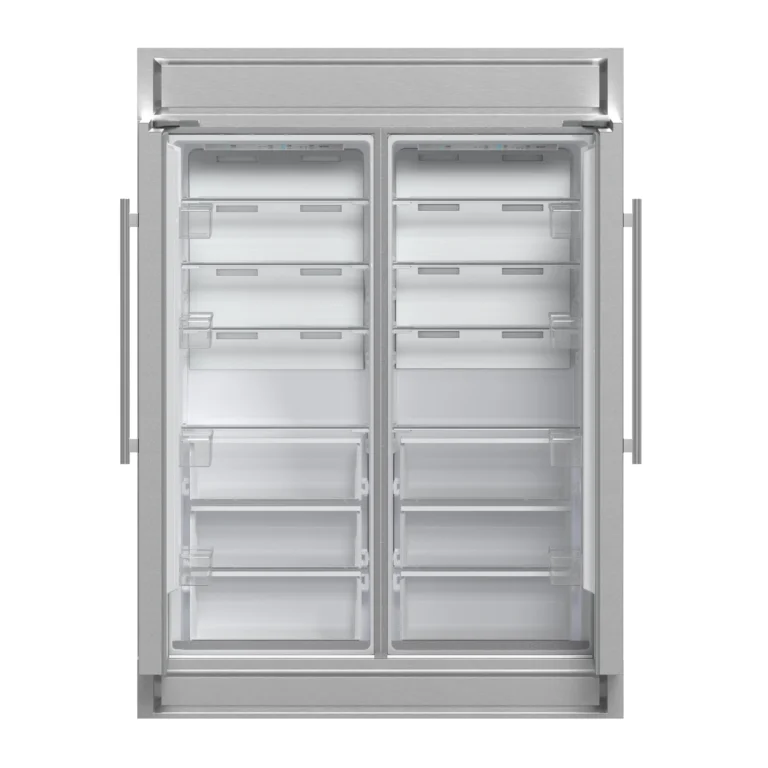
In the United States, a double-door refrigerator is usually 30 to 36 inches wide. Most full-size models are about 36 inches wide, while smaller models may be 30, 33, or 34 inches wide.
The term “double-door refrigerator” can mean two common designs:
- French-door refrigerator: Two fresh-food doors sit above a bottom freezer.
- Side-by-side refrigerator: The refrigerator and freezer stand next to each other.
The exact width depends on the model, brand, door style, ice maker, and depth. Always check the product specification sheet before you buy.


Standard Double-Door Refrigerator Widths
Most double-door refrigerators sold in the U.S. fall between 30 and 36 inches wide. A 36-inch model is common in a standard kitchen opening, but it is not the only size.
| Refrigerator type | Common width | Typical use |
|---|---|---|
| Compact French-door | 28–30 inches | Small kitchens and apartments |
| Narrow French-door | 31–33 inches | Standard kitchens with less space |
| Full-size French-door | 35–36 inches | Larger kitchens and families |
| Narrow side-by-side | 30–32 inches | Small openings |
| Standard side-by-side | 33–36 inches | Many U.S. kitchen layouts |
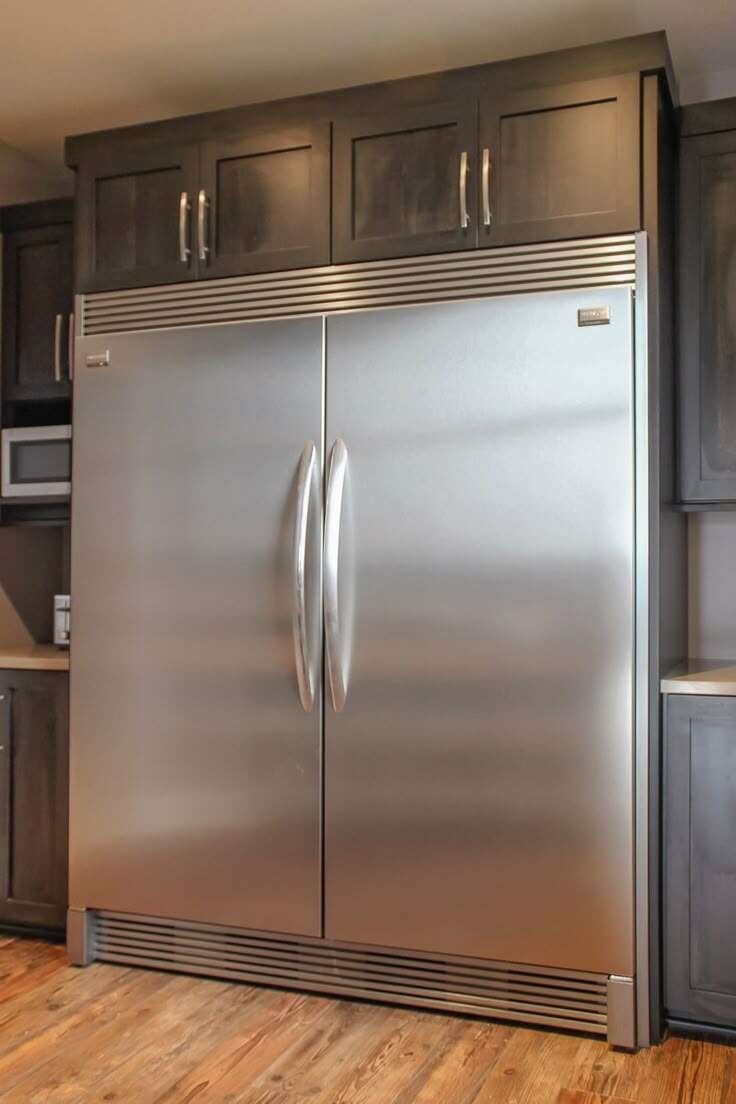
| Built-in or column style | 36 inches or more | Custom kitchens |
These ranges are general. A refrigerator listed as 36 inches wide may measure slightly less or slightly more when you include the handles, hinges, or trim.
The most common width
A 36-inch-wide refrigerator is one of the most common choices for a full-size U.S. kitchen. It often provides more storage than a 30- or 33-inch model.
A 36-inch refrigerator may need more than a 36-inch opening. The installation guide may require extra room on the sides, top, or back for ventilation and door movement.
Narrower double-door models
A 30- to 33-inch refrigerator can work well in an older home, apartment, condo, or small kitchen. These models often have less interior storage, but they may fit openings where a full-size refrigerator cannot.
A narrow model may also have slimmer doors. That can help when the refrigerator sits near a wall or kitchen island.
French-Door vs. Side-by-Side Width
Both French-door and side-by-side refrigerators use two front doors, but their dimensions and storage layouts differ.
French-door refrigerators
French-door models place the fresh-food section at the top. Two doors open from the center. The freezer is usually a drawer at the bottom.
Common widths include:
- 30 inches
- 33 inches
- 36 inches
French-door models often need less door-swing space than a single wide-door refrigerator. Each door is narrower, so the doors may clear a nearby wall more easily.
However, the bottom freezer drawer needs open space in front of the refrigerator. Measure the walkway and kitchen island before choosing this style.


Side-by-side refrigerators
Side-by-side models have a refrigerator compartment on one side and a freezer compartment on the other. Common widths range from 30 to 36 inches.
The doors are often narrow, which can help in a tight kitchen. The freezer shelves are also easy to reach because they are raised from floor level.
The trade-off is storage width. Each compartment is narrower than the fresh-food section in a French-door model. Large trays, wide boxes, and pizza cartons may be harder to store.

How to Measure for a Double-Door refrigerator
measure the opening before you shop. Do not measure only the old refrigerator.
You need four measurements:
- Opening width
- Opening height
- Opening depth
- Clearance around the opening
Step 1: Measure the opening width
Use a tape measure to check the width at the:
- Top of the opening
- Middle of the opening
- Bottom of the opening
Write down the smallest number. Walls and cabinets are not always perfectly straight.
For example:
- Top: 36 1/8 inches
- Middle: 36 inches
- Bottom: 35 7/8 inches
Your usable opening width is 35 7/8 inches, not 36 1/8 inches.
Step 2: Measure the height
Measure from the floor to the lowest part of the cabinet above the refrigerator. Check the left, center, and right sides.
Use the smallest height. Do not assume the floor is level.
This matters because a refrigerator can be too tall even when its width is correct.
Step 3: Measure the depth
Measure from the back wall to the front edge of the cabinets or counter. Then measure again to the front edge of the old refrigerator.
Check whether the new refrigerator depth includes:


- Doors
- Handles
- Hinges
- Rear water connections
- Power cord
- Air space behind the unit
Manufacturers often list several depth measurements. These may include “case depth,” “depth without handles,” and “depth with handles.”
Step 4: Check the path into the home
The refrigerator must fit through more than the kitchen opening. Measure:
- The front door
- Hallways
- Stairways
- Interior doors
- Turns
- Elevator doors, if used
A refrigerator may fit the kitchen but fail at a narrow hallway turn. Delivery teams may remove doors, but that depends on the delivery service and the model.

How Much Extra Width Does a Refrigerator Need?
A refrigerator needs more than the space occupied by its cabinet. It may need room for air flow and door movement.
The required space varies by model. Many manufacturers ask for a small side gap, but the exact amount may differ. Some models can sit close to a cabinet. Others need more room.
Use the installation instructions for the exact refrigerator. Do not rely only on the product title, store listing, or old refrigerator opening.
A simple width calculation
Use this formula:
Available opening width − refrigerator width = remaining side space
For example:
- Opening width: 36 inches
- Refrigerator width: 35 7/8 inches
- Remaining space: 1/8 inch
That may not be enough. The refrigerator may need space for leveling, door alignment, air flow, or delivery movement.
A better example:
- Opening width: 37 inches
- Refrigerator width: 35 7/8 inches
- Remaining space: 1 1/8 inches
Whether this works depends on the manufacturer’s clearance rules.
Do handles count?
Usually, the listed width refers to the refrigerator cabinet, not the full width of open handles. Handles may extend forward rather than sideways, but some designs can affect nearby walls or cabinets.
Check the product drawing for:


- Width with doors closed
- Width with doors open
- Door-open angle
- Hinge clearance
- Handle projection
How Wide Should a Refrigerator Opening Be?
The opening should be wider than the refrigerator when the installation guide requires side clearance.
For a 36-inch refrigerator, a rough planning range may be 36 to 38 inches, but this is not a universal rule. Some counter-depth models and built-in models have different requirements.
A proper opening must also allow the doors to open far enough. A refrigerator can fit the opening but still fail if the doors hit a wall.
Wall clearance
If one side of the refrigerator is next to a wall, check the hinge side carefully. The door may need to swing beyond 90 degrees to open drawers and shelves.
This is a common problem with French-door refrigerators. The door may open, but the inner crisper drawer may not slide out fully.
Cabinet clearance
Cabinets above the refrigerator can limit height and door movement. Side cabinets can also block the doors.
Some refrigerators need the doors to open wider than 90 degrees before the shelves or bins can be removed. This affects cleaning, repairs, and moving the refrigerator.

Standard Refrigerator Dimensions Beyond Width
Width is only one part of the fit. A double-door refrigerator also has height, depth, and open-door dimensions.
| Dimension | Common full-size range |
|---|---|
| Width | 30–36 inches |
| Height | ค 67–70 inches |
| Cabinet depth | About 24–30 inches |
| Total depth with handles | About 29–36 inches |
The height and depth ranges vary widely by design. Built-in and counter-depth models may have a different shape from standard-depth models.
The table is a planning guide, not a substitute for the model’s specification sheet.
Standard-depth refrigerators
Standard-depth models extend farther past the counter. They often offer more storage for the price and may have a larger interior.
The extra depth can make a kitchen walkway feel narrow. Measure from the back wall to the front of the handles, not just to the cabinet.
Counter-depth refrigerators
Counter-depth models are made to sit closer to the front of the cabinets. Their cases are often shallower, but the doors and handles still project outward.
A counter-depth refrigerator is not always flush with the cabinets. It may still extend several inches beyond them.
These models can improve the look and flow of a kitchen, but they may offer less interior capacity.
Built-in refrigerators
Built-in models often sit nearly flush with the cabinets. They may require a specific opening, electrical setup, water line, and ventilation plan.
Do not replace a built-in refrigerator with a standard freestanding model without checking the opening and air-flow requirements.

What Size Double-Door Refrigerator Fits a 36-Inch Opening?
A refrigerator labeled 36 inches wide may fit a 36-inch opening only if the exact specifications allow it.
Check these details:
- Actual cabinet width
- Required side clearance
- Top clearance
- Rear clearance
- Hinge location
- Door swing
- Leveling-foot adjustment
- Water-line location
If your opening is exactly 36 inches, a 36-inch model may be too tight. A 33-inch model may provide a safer fit, but it will have less storage.
If the opening is 37 to 38 inches wide, you may have more choices. Still, confirm the installation requirements before ordering.
Common Mistakes When Measuring
Small measurement errors can cause a large delivery problem.
Measuring the old refrigerator only
The old refrigerator may be narrower than the new one. Its doors may also use a different hinge design.
Measure the cabinet opening and the delivery path.
Ignoring the handles
Handles affect how far the refrigerator projects into the room. They can also strike nearby cabinets or walls.
Forgetting the water line
A water dispenser or automatic ice maker needs a water connection. The connection may reduce the usable space behind the refrigerator.
Follow local plumbing rules and the manufacturer’s instructions. If you are unsure about the water line, ask a qualified plumber.
Measuring only one point
An opening can be wider at the top than at the bottom. Always measure in at least three places and use the smallest result.
Overlooking the floor
An uneven floor can change the height and alignment. It can also make the doors swing open or closed on their own.
Assuming delivery is included
Delivery services differ. Some remove doors. Some do not. Confirm the service before purchase, especially if the path is narrow.

How to Choose the Right Width
Choose the narrowest model that meets your storage needs and fits the opening with the required clearance.
A simple decision guide:
- Choose 30 inches for a small opening or compact kitchen.
- Choose 33 inches when you need more space but cannot fit a full-size model.
- Choose 36 inches for a common full-size kitchen opening and greater storage.
- Choose a counter-depth model when walkway space and cabinet alignment matter most.
- Choose a side-by-side model when narrow door swing matters.
- Choose a French-door model when you want a wide fresh-food section and a bottom freezer.
Do not choose by width alone. Interior layout, door clearance, depth, and freezer access can matter just as much.
Key Takeaways
- Most U.S. double-door refrigerators are 30 to 36 inches wide.
- 36 inches is a common width for full-size French-door and side-by-side models.
- Narrow models may be 30, 33, or 34 inches wide.
- Measure the opening at the top, middle, and bottom.
- Check the manufacturer’s required side, top, and rear clearance.
- Measure hallways and doors before scheduling delivery.
- A 36-inch refrigerator does not always fit a 36-inch opening.
- Door swing and handle depth can matter as much as cabinet width.
Frequently Asked Questions
Is a double-door refrigerator always 36 inches wide?
No. Double-door refrigerators can be about 30, 33, 34, or 36 inches wide. Some compact models are narrower, while some built-in models are wider.
How wide is a French-door refrigerator?
Most French-door refrigerators in the U.S. are 30 to 36 inches wide. Full-size models are often close to 36 inches, while compact models may be near 30 inches.
How wide is a side-by-side refrigerator?
Most side-by-side refrigerators are 30 to 36 inches wide. The exact width depends on the model and its water dispenser, ice maker, and cabinet design.
Can a 36-inch refrigerator fit in a 36-inch opening?
Maybe, but do not assume it will. The refrigerator may need side clearance for ventilation, leveling, or door movement. Check the installation guide for the exact model.
How much space should be left beside a refrigerator?
The required space varies by model. Some refrigerators need only a small gap, while others need more room near the hinges or doors. Use the manufacturer’s installation diagram rather than a general rule.
Is a counter-depth refrigerator the same width as a standard-depth refrigerator?
Often, yes. Counter-depth and standard-depth refrigerators may both be 30 to 36 inches wide. Counter-depth describes how far the refrigerator extends from the wall, not its width.
How do I know if a refrigerator will fit through my front door?
Measure the narrowest point of the door and every turn along the delivery path. Compare those measurements with the refrigerator’s delivery dimensions. Ask the retailer whether the delivery team can remove doors or handles.
Final Answer
A typical double-door refrigerator in the United States is 30 to 36 inches wide, with 36 inches being a common full-size choice. For a reliable fit, measure the kitchen opening, delivery path, door swing, and required clearance for the exact model.
Before ordering, compare your smallest opening measurement with the manufacturer’s installation drawing. That one step can prevent a costly and frustrating delivery problem.

Appliance Review Expert
Lucas Ramirez is a trusted voice at HomeFixGrid.com, known for his clear, practical, and creatively written guides that simplify appliance care for everyday homeowners. With a strong focus on hands-on testing and real-world problem-solving, Lucas brings expert insight into appliance reviews and troubleshooting techniques. Her work empowers readers to confidently maintain, repair, and choose the right appliances for their homes.