How To Adjust Refrigerator Temperature Control GE: Guide
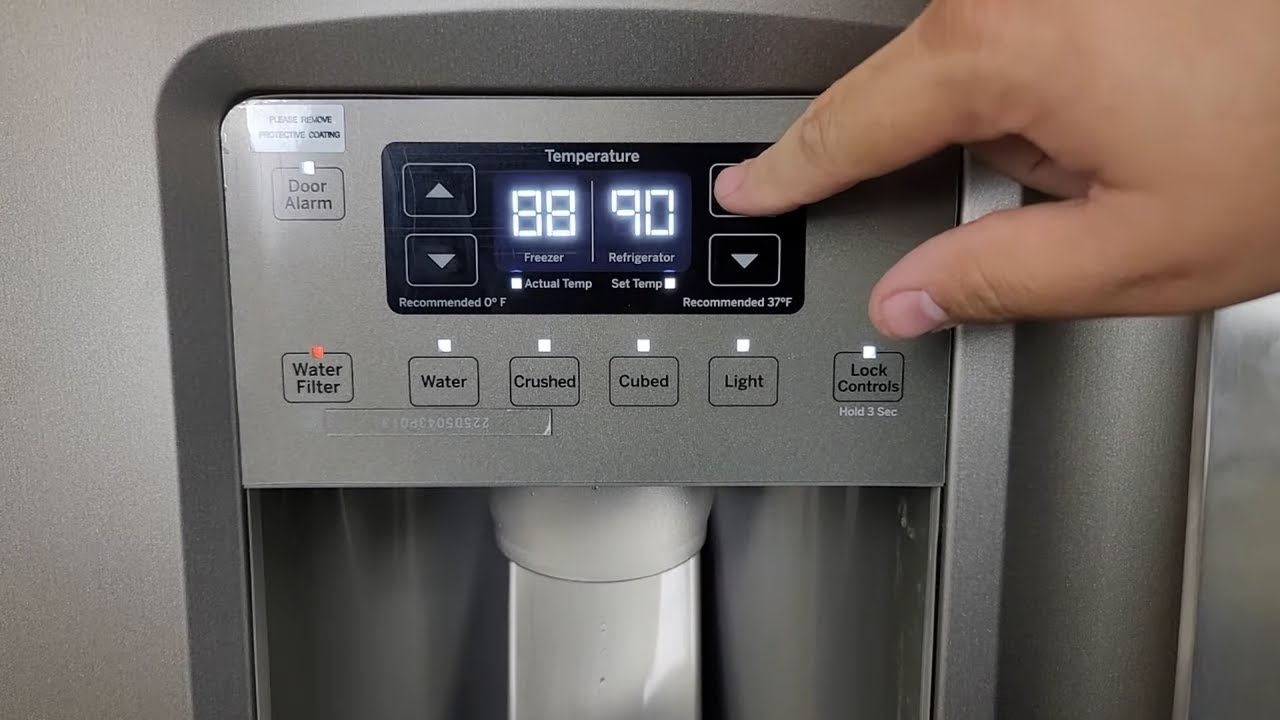
To adjust a GE refrigerator in the United States, use the temperature controls inside the fresh-food section or on the exterior display. Set the refrigerator near 37°F and the freezer near 0°F. Then wait about 24 hours before making another change.
The exact steps depend on your GE model. A newer model may use digital Warmer and Colder buttons, while an older model may use a numbered dial. The number on a dial is usually a setting level, not a temperature in degrees Fahrenheit.
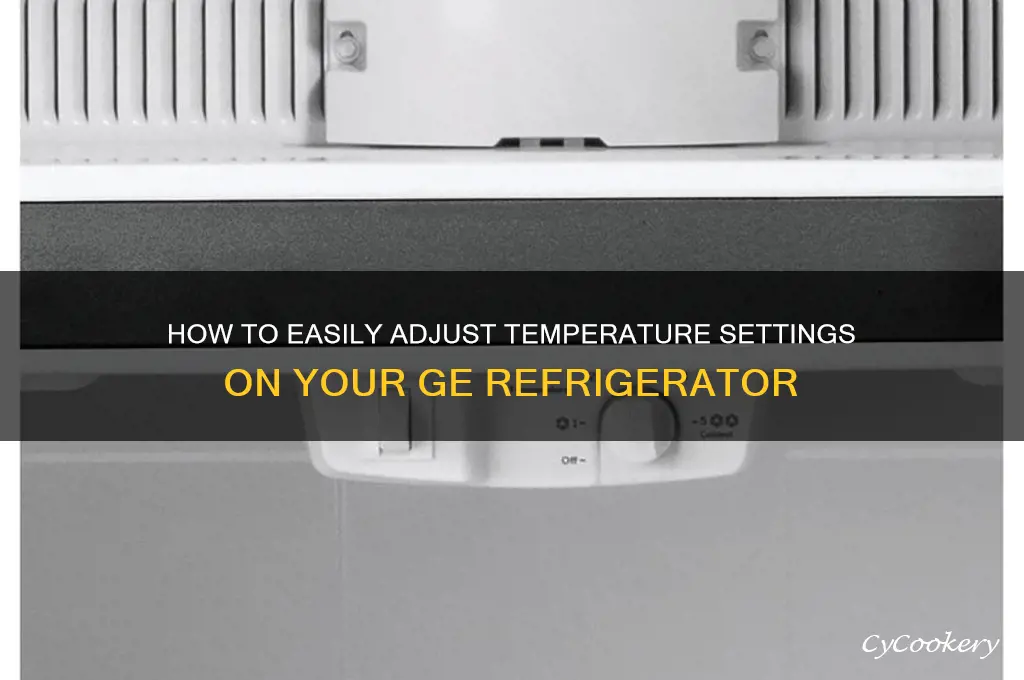
Find the Temperature Controls on Your GE Refrigerator
Most GE refrigerators place the controls in one of three areas:


- On the top or front wall inside the refrigerator compartment
- On the rear wall near the top shelf
- On the outside door control panel
Look for labels such as:
- Refrigerator
- Fresh Food
- Freezer
- Temperature
- Warmer
- Colder
- Set Temp
- Lock Controls
Some GE models have separate settings for the refrigerator and freezer. Others use one control that changes the balance of cold air between the two sections.
Before adjusting the temperature, find the refrigerator’s model number. GE usually places it on a label inside the fresh-food section, near the top, side wall, or crisper drawers. The model number matters because button names and adjustment steps vary.
Recommended GE Refrigerator and Freezer Temperatures
Set the fresh-food section to 37°F and the freezer to 0°F as a practical starting point.
The U.S. Food and Drug Administration advises keeping a refrigerator at 40°F or below and a freezer at 0°F. A refrigerator setting of 37°F gives some safety margin while helping food stay fresh without freezing in most areas.
| Section | Good starting setting | Food-safety limit |
|---|---|---|
| Fresh-food compartment | 37°F | 40°F or below |
| Freezer compartment | 0°F | 0°F for best frozen-food storage |
The air temperature may vary within the cabinet. Door shelves are often warmer than the back wall, while areas near cold-air vents may be colder. Use an appliance thermometer to check the real temperature instead of relying only on the display.

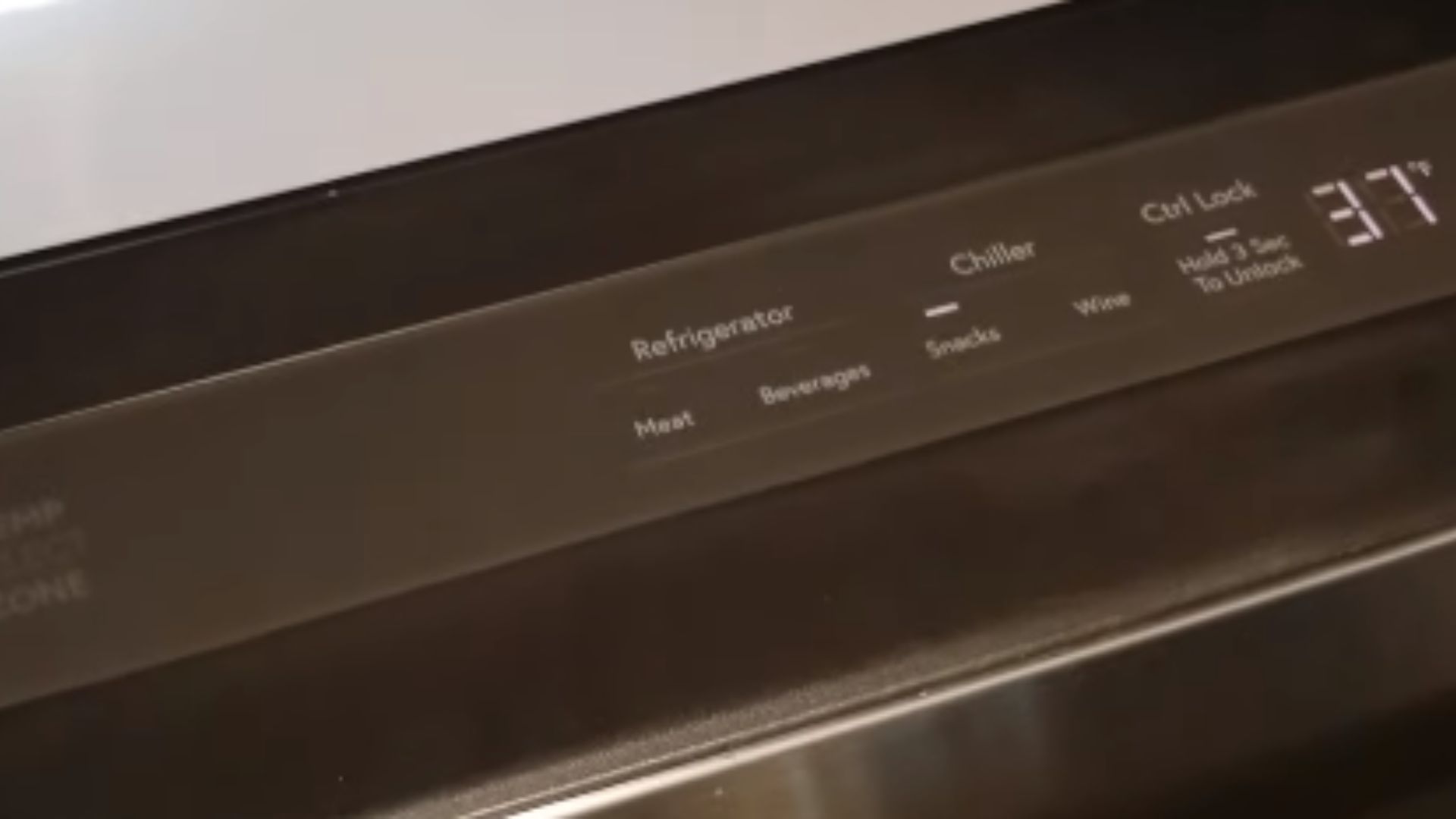
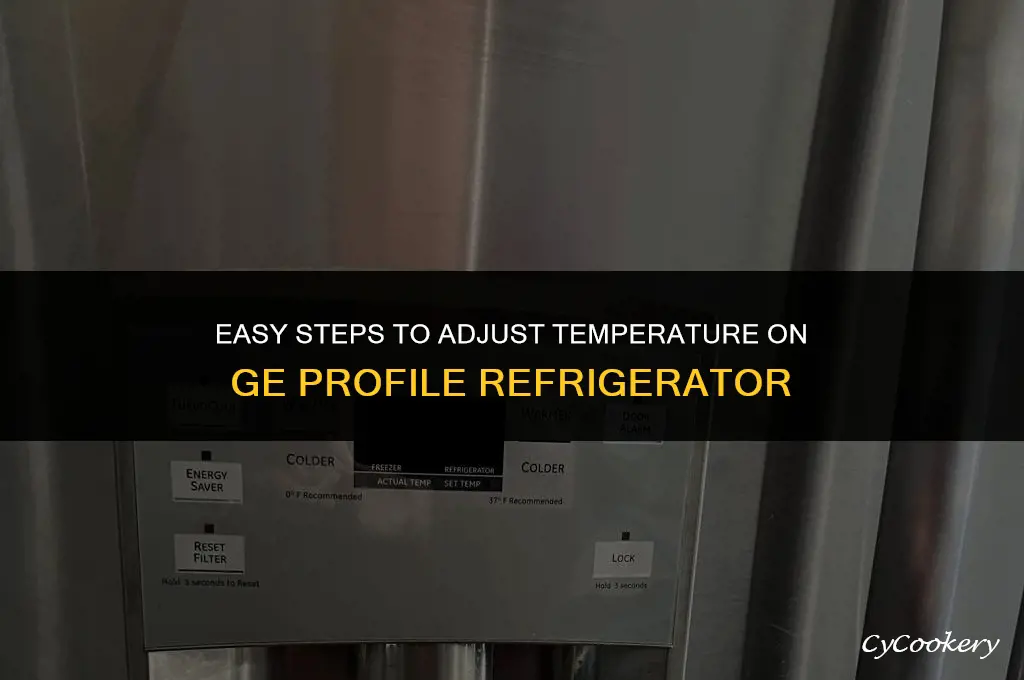
How to Adjust a GE Refrigerator With Digital Controls
Use these steps if your GE refrigerator has buttons or a touch panel.
- Locate the control panel. Open the refrigerator door if the display is inside.
- Check whether the controls are locked. If the panel does not respond, press and hold the Lock button for about three seconds, if your model uses one.
- Select the refrigerator or fresh-food setting.
- Press Warmer or Colder. Choose a target near 37°F.
- Select the freezer setting.
- Set the freezer near 0°F.
- Wait 24 hours. Keep the doors closed as much as possible during this period.
- Check the actual temperature with an appliance thermometer.
- Make only one small change at a time if the temperature is still too warm or too cold.
Some GE models show the current set point only after you press a button. The displayed number may flash, then return to the normal display. That does not always mean the refrigerator has reached that temperature; it may only show the target setting.
If the digital display shows a number but the refrigerator is warm
A set point is not the same as the measured cabinet temperature. The refrigerator needs time to cool after:
- Installation
- A long power outage
- A large grocery load
- Frequent door opening
- A temperature adjustment
- A defrost cycle
Check for blocked air vents and make sure the doors close fully. If the freezer is cold but the fresh-food section is warm, cold-air circulation may be restricted.


How to Adjust a GE Refrigerator With a Numbered Dial
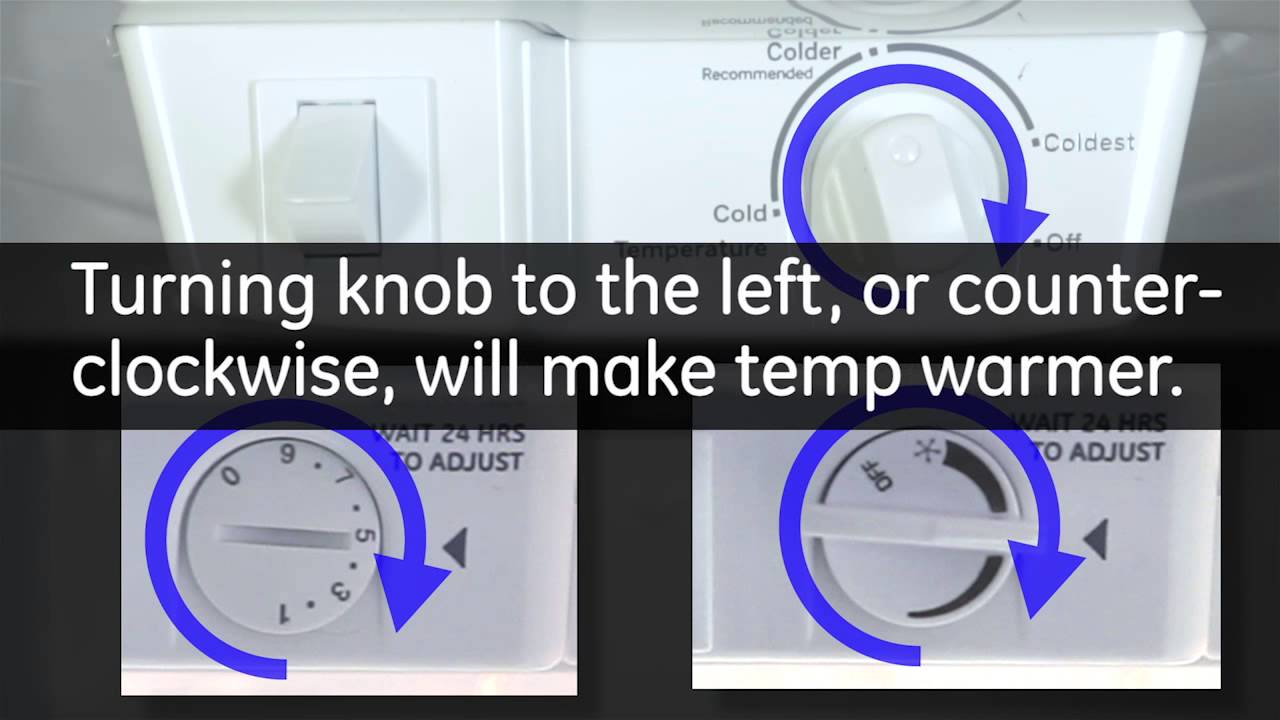
Older GE refrigerators may use a dial marked from 1 to 9 or a similar range. The numbers are not degrees.
In most GE dial-controlled models:
- A lower number makes the refrigerator warmer.
- A higher number makes it colder.
- The middle setting is a reasonable starting point.
- Turning the dial to 0 may turn cooling off on some models.
To adjust the dial:
- Find the refrigerator or freezer temperature dial.
- Turn it one number colder if food is too warm.
- Turn it one number warmer if food is freezing.
- Wait about 24 hours.
- Check the temperature with an appliance thermometer.
- Repeat only if needed.
Do not turn the dial from a middle setting to the coldest setting just to cool food faster. A very cold setting can freeze food near the air outlet without solving an airflow or door-seal problem.
What if your GE refrigerator has only one control?
A single control may regulate how much cold air moves between the freezer and refrigerator. Changing it can affect both sections.
If the freezer is cold but the refrigerator is warm, a colder refrigerator setting may help, depending on the model. If the refrigerator is cold but the freezer is not, the problem may involve airflow, frost, the evaporator fan, or the cooling system rather than the dial alone.
Check the owner’s manual before making large adjustments.

How Long Does a GE Refrigerator Take to Change Temperature?
A GE refrigerator may need about 24 hours to stabilize after a temperature adjustment. The exact time depends on the room temperature, food load, door use, model, and condition of the cooling system.
Use this method for a reliable check:
- Place an appliance thermometer in the center of the refrigerator.
- Put it in a glass of water to reduce the effect of brief air swings.
- Leave it undisturbed for several hours, preferably overnight.
- Read the thermometer before opening the door for a long time.
- Compare the result with the 40°F food-safety limit.
For the freezer, place the thermometer between frozen packages. Do not judge the freezer temperature by ice alone. Ice can remain solid even when the freezer is warmer than the recommended 0°F.
Avoid repeated adjustments every few minutes. That makes it hard to tell which change worked and may create unnecessary temperature swings.

What to Check if a GE Refrigerator Is Too Warm
If the refrigerator remains above 40°F after 24 hours, check the simple causes first.


1. Check the setting
Make sure the setting was saved. Some electronic controls require you to press Set, Enter, or another button. On a dial model, confirm that the dial did not move when food or a shelf was placed nearby.
2. Check the doors and gaskets
A door that does not seal lets warm, moist air enter. Look for:
- Food packages blocking the door
- A drawer that is not fully closed
- A torn or loose door gasket
- A refrigerator that is not level
- A door that springs back open
Close the door on a thin sheet of paper. If the paper pulls out with little resistance in several areas, the gasket may not be sealing well. This is only a basic check, not a complete leak test.
3. Keep air vents clear
Do not pack food tightly against the rear wall or cold-air vents. Air must move between the freezer and fresh-food compartment. Move large containers away from vents without blocking shelves or drawers.
4. Check the condenser area
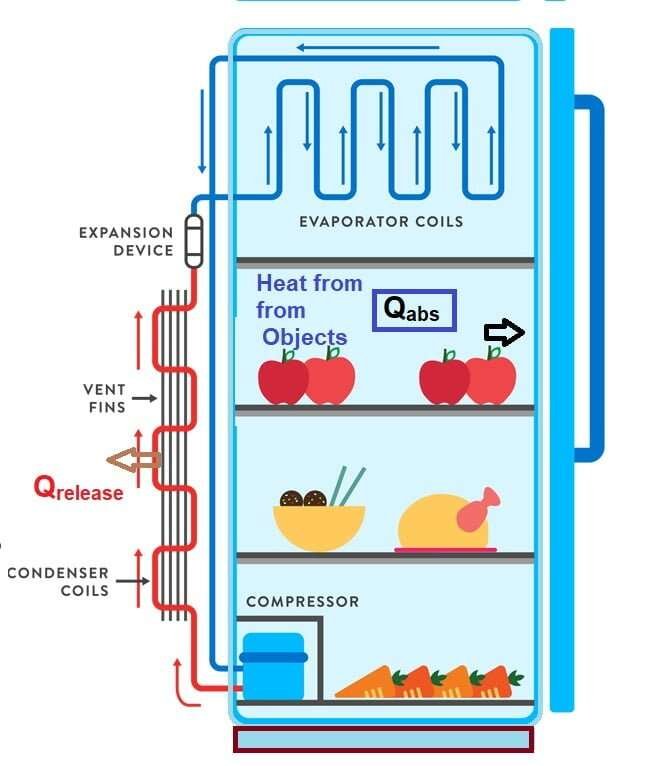
Dust around the condenser coils or grille can reduce heat release on models that use accessible coils. Unplug the refrigerator before cleaning areas that the owner’s manual identifies as serviceable. Do not remove covers or reach near fans while the appliance is powered.
5. Consider recent use
The refrigerator may need extra time after loading warm groceries, opening the doors often, or recovering from a power interruption.
If the freezer is also warm, the issue may be more serious. If the compressor runs constantly, the refrigerator makes unusual sounds, or temperatures do not improve, arrange service.

What to Check if a GE Refrigerator Is Too Cold
Food that freezes in the fresh-food compartment usually points to a setting, airflow, or placement issue.
Try these checks:
- Raise the refrigerator temperature by one small step.
- Move food away from the rear wall and air vents.
- Keep delicate foods away from the coldest areas.
- Check whether the refrigerator is in a very cold or very hot room.
- Make sure the door closes completely.
- Wait 24 hours before judging the change.
Do not store milk, eggs, produce, or other sensitive foods directly beside a cold-air outlet unless the manual recommends that location. Some foods may freeze even when the average refrigerator temperature is within a safe range.
If food freezes in several parts of the compartment after the setting is raised, the temperature sensor, damper, control board, or airflow system may need professional diagnosis.
GE Refrigerator Temperature Troubleshooting Table
Use this table to connect the symptom with the safest first check.
| Symptom | Likely first checks | Next action |
|---|---|---|
| Refrigerator is warm, freezer is cold | Air vents, door seal, refrigerator setting | Wait 24 hours after a small adjustment |
| Refrigerator is warm, freezer is also warm | Door seal, power, condenser area, heavy frost | Schedule service if it does not improve |
| Food freezes in refrigerator | Setting, food near vent, blocked sensor | Raise setting one step and relocate food |
| Display does not respond | Control lock, power, model-specific lock mode | Unlock the panel using the manual |
| Temperature changes after loading food | Warm groceries, frequent door opening | Allow up to 24 hours to stabilize |
| Heavy frost covers the freezer wall | Blocked airflow or defrost problem | Do not chip ice with a sharp tool; seek service |
| Refrigerator runs almost constantly | Hot room, dirty condenser area, poor seal, low airflow | Check simple causes, then arrange service |
A temperature problem can be caused by more than the control setting. Changing the setting will not repair a failed fan, blocked drain, faulty sensor, sealed-system leak, or defrost fault.


Common Mistakes When Adjusting a GE Refrigerator
Avoid these mistakes:
Changing the control too often
A refrigerator does not respond instantly. Give each adjustment time to work.
Treating dial numbers as degrees
A dial marked 1 through 9 shows relative coldness, not a temperature in Fahrenheit.
Setting the refrigerator to its coldest level
The coldest setting may freeze food and increase energy use without fixing the underlying cause of poor cooling.
Trusting the display without checking the cabinet
The display may show a target setting. An appliance thermometer shows the temperature where food is stored.
Blocking the vents
Cold air must circulate. Overpacking can create warm zones and cold spots at the same time.
Putting hot food directly against cold surfaces
Let food cool safely in shallow containers, following USDA food-safety guidance. Do not leave perishable food at room temperature for long periods.
Scraping frost with a knife
A sharp tool can puncture a liner or damage a refrigerant component. Use the model instructions or arrange service.
When to Call for GE Refrigerator Repair
Call a qualified appliance technician when basic checks do not restore safe temperatures or when you see signs of a mechanical fault.
Arrange service if:
- The refrigerator stays above 40°F after proper adjustment and stabilization.
- The freezer cannot maintain frozen food.
- The compressor runs continuously and the cabinet remains warm.
- A thick layer of frost returns quickly.
- A fan makes a grinding or repeated clicking sound.
- The refrigerator leaks refrigerant or has an oily residue.
- The control display shows an error code.
- The appliance trips a circuit or has a burning smell.
Move perishable food to a working refrigerator or cooler if the temperature rises above safe limits. Do not remove sealed-system parts or electrical covers unless you are qualified to do so.

Frequently Asked Questions
What temperature should a GE refrigerator be set to?
Set the fresh-food section near 37°F and the freezer near 0°F. Keep the refrigerator at 40°F or below for food safety.
Is 1 colder or 9 colder on a GE refrigerator dial?
On many GE dial models, 9 is colder and 1 is warmer. The exact behavior can vary, so confirm it in the owner’s manual.
Why is my GE refrigerator warm but the freezer cold?
Blocked vents, a failed evaporator fan, a stuck air damper, a poor door seal, or a sensor issue can cause this pattern. First check the setting, vents, food placement, and door seal.
Why is my GE refrigerator freezing food?
The setting may be too cold, or food may be touching a cold-air outlet or rear wall. Raise the setting one step, move the food, and wait 24 hours.
How can I reset the temperature on a GE refrigerator?
Use the refrigerator and freezer temperature buttons or turn the temperature dial to the desired setting. If the controls are locked, unlock the panel first. The exact button sequence depends on the model.
Conclusion
For most GE refrigerators, begin with 37°F for the refrigerator and 0°F for the freezer. Adjust the control one small step at a time, wait about 24 hours, and confirm the result with an appliance thermometer.
If the temperature remains unsafe, check the door seal, vents, food placement, frost, and condenser area. Persistent cooling problems usually require model-specific troubleshooting or qualified repair rather than a colder control setting.
Sources
- U.S. Food and Drug Administration: Refrigerator and Freezer Storage Chart
- USDA Food Safety and Inspection Service: Refrigeration and Food Safety
- GE Appliances Support
- GE Appliances Owner Manuals

Appliance Review Expert
Lucas Ramirez is a trusted voice at HomeFixGrid.com, known for his clear, practical, and creatively written guides that simplify appliance care for everyday homeowners. With a strong focus on hands-on testing and real-world problem-solving, Lucas brings expert insight into appliance reviews and troubleshooting techniques. Her work empowers readers to confidently maintain, repair, and choose the right appliances for their homes.