Do Mini Fridges Have Freezers: What To Know
In the United States, some mini fridges have small freezer compartments, but many do not. A compact refrigerator may include an icebox for short-term frozen storage, while another model may only cool food and drinks. The key is to check whether the unit can reach and hold 0°F (-18°C), the temperature the USDA recommends for frozen food storage.
A shelf with frost or a tiny door does not always mean you have a true freezer. Some compartments are designed only to make ice or keep frozen items cold for a short time.
The short answer: Some mini fridges have freezers
Mini fridges come in several designs:
- Mini fridge with no freezer: The whole cabinet is a refrigerator.
- Mini fridge with an icebox: A small cold compartment may hold ice or frozen food for a limited time.
- Mini fridge with a freezer compartment: The unit has a separate section intended for frozen storage.
- Compact refrigerator-freezer: A larger compact appliance with separate cooling controls and more usable freezer space.
The product name can be confusing. Retailers may call a small icebox a “freezer,” even when it cannot keep food at a steady 0°F. Read the specifications, owner’s manual, and temperature ratings before you buy.


For a simple test, look for these details:
- A listed freezer temperature of 0°F or lower
- A separate freezer door or compartment
- A stated freezer capacity in cubic feet
- A thermostat or control that supports freezer operation
- Instructions for storing frozen food
- A manufacturer claim that the unit freezes food, not just makes ice
If the listing only says “chiller compartment,” “icebox,” or “cold storage,” treat it as limited frozen storage unless the manual says otherwise.
What counts as a freezer in a mini fridge?
A freezer must do more than feel cold. It needs to keep food at a safe frozen temperature over time.
The USDA recommends setting home freezers to 0°F (-18°C). At this temperature, frozen food stays solid and quality lasts longer. A compartment that reaches 20°F or 25°F may freeze some foods, but it does not provide the same storage conditions as a standard freezer.
A true freezer compartment usually has:
- A separate insulated space
- A freezer door or solid flap
- A cooling surface or evaporator plate
- Enough airflow or cooling power to freeze food
- A design rated for frozen storage
- Instructions that explain its limits
An icebox is usually much smaller. It may sit inside the refrigerator cabinet and share the same cooling system. Frost can build up around the cold plate, but the compartment may not hold a stable temperature when the room is warm or the refrigerator is opened often.
This difference matters for meat, frozen meals, breast milk, ice cream, and other foods that need reliable frozen storage. A mini fridge icebox may work for ice cubes or a small frozen item, but it may not replace a household freezer.
Types of mini fridges and their freezer space
The best choice depends on how much frozen food you need and how long you need to store it.
| Mini fridge type | Typical freezer design | Best use | Main limit |
|---|---|---|---|
| beverage mini fridge | No freezer | Drinks and cans | Cannot freeze food |
| Compact fridge with icebox | Small internal compartment | Ice and short-term frozen storage | Temperature may vary |
| Compact fridge with freezer section | Separate or larger freezer area | Frozen meals and basic food storage | Less total refrigerator space |
| Portable thermoelectric cooler | May have no true freezer | Travel and short-term cooling | Often cannot reach 0°F |
| Chest-style compact freezer | Freezer only | Frozen food storage | Does not provide refrigerator space |
Mini fridges with an icebox
An icebox is common in small dorm and office refrigerators. It may be a small shelf or compartment with a flap. Some models can freeze ice and keep a few items frozen.
However, the icebox may not have its own temperature control. The refrigerator may need to run very cold to keep that section frozen. This can make drinks and fresh food near the cold plate freeze.
Mini fridges with a separate freezer
Some compact refrigerators have a distinct freezer section. These models usually offer better frozen storage than an icebox. Still, capacity and temperature control vary widely.


A separate door does not guarantee full-size freezer performance. Check the manual for the recommended temperature and storage limits.
Portable mini fridges and coolers
Many portable coolers use thermoelectric technology. They may cool the inside below room temperature but often cannot maintain standard freezer temperatures.
Some portable compressor models can freeze food. Check the manufacturer’s temperature range instead of relying on the word “portable” or “refrigerator.”
How to tell if a mini fridge has a real freezer
Use the specifications, not just the product photo.
1. Check the temperature rating
Look for a freezer temperature of 0°F (-18°C) or lower. If the manufacturer gives only a general cooling range, the appliance may not be designed for frozen food.
A claim such as “cools to 32°F” is also not enough. The unit must hold a suitable temperature under normal conditions, not merely reach it briefly.
2. Look for freezer capacity
Manufacturers often list refrigerator and freezer capacity separately. For example, a compact unit might list:
- Refrigerator: 2.6 cubic feet
- Freezer: 0.7 cubic feet
If the listing gives only total capacity, the appliance may not have a dedicated freezer section.
3. Read the owner’s manual
The manual can reveal limits that a sales page leaves out. Search for terms such as:
- Freezer compartment
- Frozen food
- Icebox
- Defrost
- Freezer temperature
- Maximum storage time
The manual may also explain that the compartment is suitable only for making ice.
4. Check the door and insulation
A separate, sealed freezer door often provides better temperature control than an open shelf. Thick insulation and a strong door seal also help.
These features suggest better performance, but they do not prove that the compartment reaches 0°F. The temperature rating remains the deciding detail.
5. Measure the temperature at home
If you already own the mini fridge, place an appliance thermometer in the compartment. Keep the door closed for several hours before reading it.
For frozen storage, the temperature should remain near 0°F. If it stays above that level, use the compartment only for short-term chilling or ice unless the manual gives different instructions.
How well do mini-fridge freezers work?
Mini-fridge freezers can work well for limited storage, but they have less space and less temperature stability than full-size freezers.


Performance depends on several factors:
- Room temperature
- How often you open the door
- How much food is inside
- Whether food is already frozen
- The condition of the door gasket
- The amount of frost buildup
- Air space around the appliance
- The mini fridge’s cooling system
A small freezer may struggle in a hot garage, sunroom, or poorly ventilated room. Many compact appliances are designed for indoor use at normal room temperatures. Check the manual before placing one in an unheated garage or outdoor space.
Why the freezer may seem weak
A mini fridge may take longer to freeze food because it has:
- A small compressor
- Limited insulation
- One shared cooling system
- Frequent door openings
- A large amount of warm food added at once
- Frost blocking the cold surface
Avoid adding several warm containers at the same time. Let hot food cool in the refrigerator first, following USDA food-safety guidance, rather than placing hot food directly into a small freezer.
Why ice cream becomes soft
Ice cream often becomes soft when a compact freezer does not maintain a low enough temperature. This does not always mean the appliance is broken. The compartment may simply be designed for ice and small frozen items, not long-term storage.
A thermometer can help separate a design limit from a mechanical problem.
Can a mini fridge keep food frozen?
A mini fridge can keep food frozen only if its freezer compartment maintains a suitable temperature.
Use this practical guide:
- At or below 0°F: Suitable for normal frozen storage when the manual allows it.
- Between 1°F and 10°F: Food may remain frozen, but storage quality and safety margins are less ideal.
- Above 10°F: Frozen food may soften, especially during door openings.
- Around 32°F: Food may stay very cold but can thaw.
- Above 40°F: The compartment is no longer suitable for frozen storage.
The USDA advises that perishable refrigerated food should stay at 40°F or below. If frozen food has thawed and remained above safe temperatures, do not rely on smell or appearance to judge whether it is safe.
When in doubt, check the food’s temperature history and follow USDA guidance. The USDA’s FoodKeeper tool can help with storage questions, but it cannot determine the temperature inside your appliance.
Do not refreeze food simply because it still looks normal. Food can appear safe while bacteria grow during improper temperature control.
How much freezer space does a mini fridge have?
Freezer space varies from a small ice tray area to nearly one-third of a compact refrigerator.
A rough planning method can help:
- List the items you want to store.
- Measure their combined width, depth, and height.
- Add extra room for airflow and easy removal.
- Compare the result with the listed freezer capacity.
- Confirm that the space is shaped for your containers.
A freezer listed as 0.2 cubic feet may hold only ice trays or a few small packages. A freezer listed as 0.7 cubic feet can hold more, but shelves, cooling parts, and irregular shapes reduce usable space.
Do not pack a small freezer tightly. Cold air needs room to move, and a crowded compartment may develop warm spots.


What to look for when buying a mini fridge with a freezer
Choose the freezer type based on the job, not the product title.
For a dorm room
Look for:
- Compact width
- Low noise information
- An energy label
- A freezer section if you need ice or frozen meals
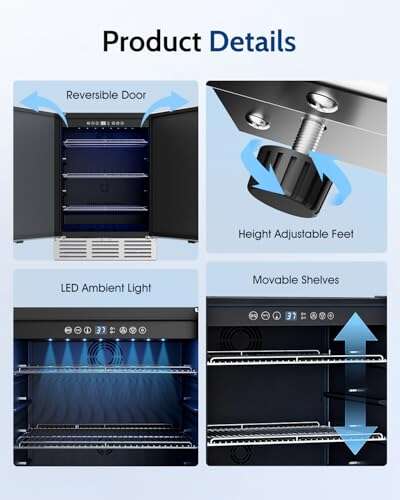
- A reversible door if room layout matters
- A design approved for indoor use
Check housing or dorm rules before buying. Some schools limit appliance size or prohibit appliances with certain heating or cooling features.
For an office
A small freezer may be useful for ice packs, frozen lunches, or medicine that specifically requires freezing. Do not store medication in a mini fridge unless the product instructions and the prescribing pharmacist allow it.
Look for easy cleaning, a reliable door seal, and enough space for shared use.
For an RV or boat
Confirm the power system and installation requirements. A household mini fridge may not work well with an inverter or battery setup. Vibration, ventilation, and available power can affect performance.
Use the manufacturer’s electrical instructions. Do not use an extension cord or power strip unless the manual specifically permits it.
For frozen food storage
Choose a unit with:
- A stated 0°F freezer rating
- A separate freezer compartment
- A freezer temperature control
- Enough capacity for your food
- A serviceable door gasket
- Clear defrost instructions
If you need to store large amounts of meat, frozen meals, or bulk food, a dedicated freezer is usually more practical than a mini fridge.
Common mini-fridge freezer problems
The freezer does not freeze
Check these items in order:
- Confirm that the appliance is set to a cold setting.
- Make sure the door closes fully.
- Inspect the gasket for gaps or damage.
- Remove heavy frost buildup if the manual allows user defrosting.
- Leave space around vents and cooling surfaces.
- Move the appliance away from heat and direct sun.
- Use a thermometer to measure the actual temperature.
- Contact the manufacturer if the unit remains warm.
Unplug the appliance before cleaning or defrosting it. Never chip away frost with a knife or sharp tool. A punctured cooling line can release refrigerant and may ruin the appliance.
The refrigerator freezes food
Food may freeze when it touches the cold plate, the thermostat is set too low, or air cannot circulate. Move food away from the rear wall and check the temperature.
If the refrigerator section stays below 32°F, adjust the control according to the manual. Persistent freezing may indicate a faulty thermostat or sensor.
Excess frost covers the freezer
Some mini fridges require manual defrosting. Frost acts like a blanket and reduces usable space and cooling performance.
Defrost when frost becomes thick enough to block storage or airflow. Follow the manual and let the ice melt naturally. Do not use a hair dryer near standing water or electrical parts.
Mini-fridge freezer safety tips
Use a mini fridge safely by following the manufacturer’s installation and power instructions.
- Keep the appliance on a stable, level surface.
- Leave the required clearance around the cabinet.
- Plug it into a properly grounded outlet.
- Do not overload the outlet.
- Keep cords away from water and heat.
- Clean spills quickly.
- Do not block vents.
- Keep raw meat sealed and below ready-to-eat food.
- Use a thermometer for frozen or highly perishable food.
- Dispose of food that may have been held at unsafe temperatures.
- Keep children from climbing into an unplugged old refrigerator.
A mini fridge is not a substitute for a medical refrigerator, laboratory freezer, or commercial food-storage system unless it is specifically rated for that use.
Key takeaways
- Some mini fridges have freezers, but many only have an icebox.
- A true freezer should maintain about 0°F for frozen food storage.
- A separate freezer door helps, but the temperature rating matters more.
- Check the manual and freezer capacity before buying.
- Use an appliance thermometer when performance matters.
- A mini fridge works best for small amounts of frozen food, not bulk storage.
Frequently asked questions
Do all mini fridges have freezer compartments?
No. Many mini fridges are refrigerator-only models. Others have a small icebox or a separate freezer compartment. Check the product specifications before purchase.
Can I put frozen food in a mini fridge?
You can store frozen food in a mini fridge only when its freezer section is designed to maintain frozen temperatures. A thermometer can confirm whether the compartment stays near 0°F.
Can a mini fridge make ice?
Some models can freeze water in an ice tray. That does not prove the compartment can safely store frozen food for a long period.
Why does my mini-fridge freezer keep thawing?
Possible causes include a warm room, frequent door openings, heavy frost, poor airflow, a damaged door gasket, or a failing compressor or thermostat. Measure the temperature before deciding whether the appliance needs repair.
Is a mini fridge freezer good for ice cream?
Only if it maintains a low, steady temperature. Ice cream may soften in a small icebox that can freeze ice but cannot hold standard freezer temperatures.
Can I use a mini fridge as a freezer?
No. A refrigerator-only mini fridge is not designed to operate as a freezer. Changing the thermostat or blocking vents can damage the appliance and may create unsafe food-storage conditions.
Conclusion
Mini fridges may have no freezer, a small icebox, or a separate freezer section. The most reliable way to tell the difference is to check the stated freezer temperature, capacity, and owner’s manual.
If you need to store frozen food, choose a model rated for about 0°F and verify its performance with an appliance thermometer. If you only need cold drinks, ice, or a few short-term frozen items, a compact model with an icebox may be enough.

Appliance Review Expert
Lucas Ramirez is a trusted voice at HomeFixGrid.com, known for his clear, practical, and creatively written guides that simplify appliance care for everyday homeowners. With a strong focus on hands-on testing and real-world problem-solving, Lucas brings expert insight into appliance reviews and troubleshooting techniques. Her work empowers readers to confidently maintain, repair, and choose the right appliances for their homes.