Where Is Defrost Drain On A Refrigerator: Find And Unclog It
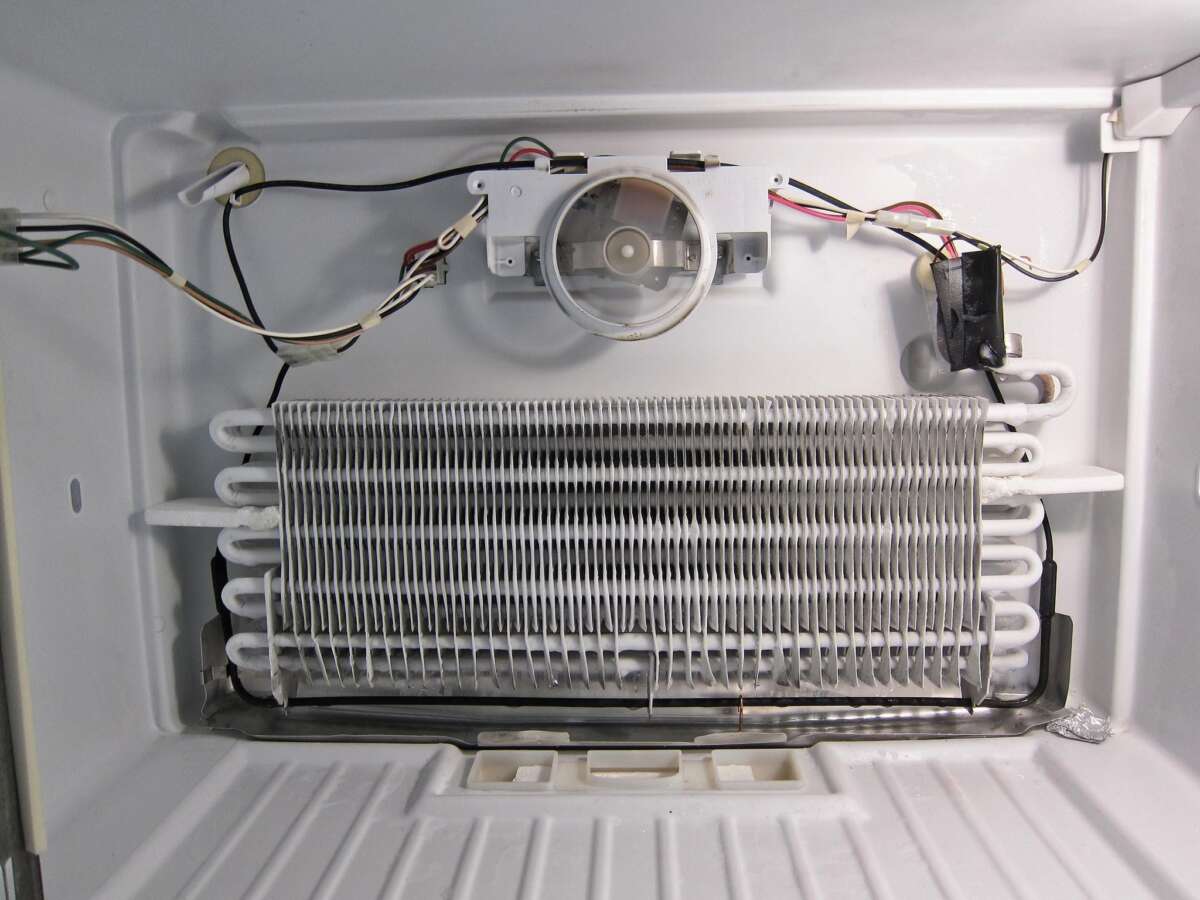
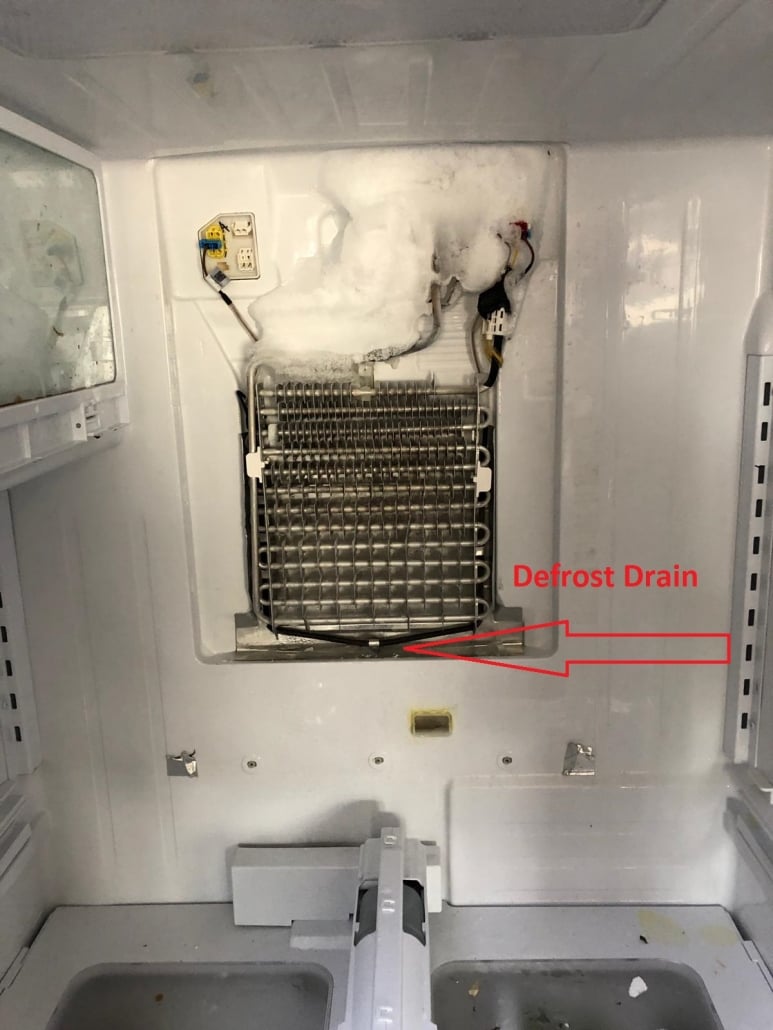
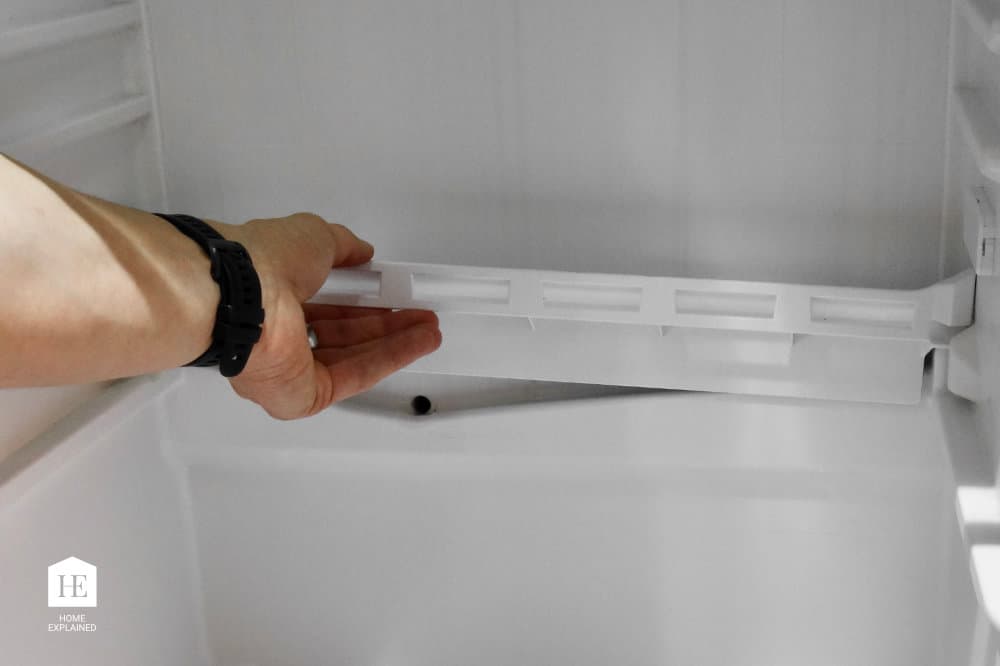
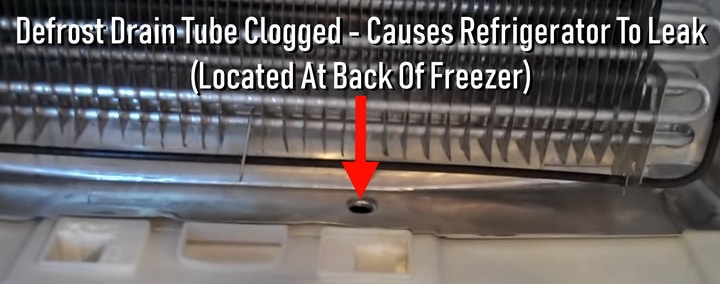
In most refrigerators sold in the United States, the defrost drain is inside the freezer compartment, near the back wall or bottom of the freezer. It may look like a small hole, slot, or shallow channel beneath the evaporator coil cover. On some models, the drain is hidden behind a rear panel.
During a normal defrost cycle, melted ice flows into this drain. It then travels through a tube to a drain pan under the refrigerator, where the water evaporates. If the drain freezes or becomes clogged, water may collect on the freezer floor, leak into the fresh-food section, or form ice around the bottom drawer.
The exact location depends on the refrigerator style and model. Always check the owner’s manual before removing an interior panel.
Where Is the Defrost Drain Located?
The defrost drain is usually at the lowest point beneath the freezer’s evaporator coil. The evaporator coil is the cold component that removes heat from the freezer. A plastic or metal cover often hides it.
Here are the most common locations in U.S. refrigerators:
| Refrigerator type | Usual defrost drain location |
|---|---|
| Top-freezer refrigerator | On the freezer floor or rear wall, often under a small cover |
| Bottom-freezer refrigerator | At the back or bottom of the freezer drawer |
| Side-by-side refrigerator | Near the rear wall or below the evaporator cover in the freezer |
| French-door refrigerator | On the freezer floor, beneath the lower drawer or rear evaporator cover |
| Older manual-defrost model | May not have an automatic defrost drain |
Look for a small round hole, narrow slot, or trough. It may be covered by ice, food packaging, or a frost panel.
Some refrigerator designs place the drain behind the rear freezer panel. If you cannot see a drain hole, do not assume the refrigerator lacks one. The drain may be hidden from view by the evaporator cover.
The drain’s path
The drain has two parts:
- The drain opening inside the freezer.
- The drain tube that carries water to a pan below the refrigerator.
The opening is the part most likely to freeze or clog. The tube can also collect sludge, mold-like buildup, or debris. A blocked tube prevents water from leaving the freezer during defrost cycles.

How to Find the Defrost Drain in Your Refrigerator
You can usually find the drain with a careful visual check. Start with the freezer because that is where the defrost water begins.
1. Empty the freezer
Move frozen food to an insulated cooler. Remove ice trays, shelves, bins, and loose food packages that block the rear wall or floor.
Keep food cold while you work. The USDA recommends keeping a refrigerator at or below 40°F and a freezer at 0°F. A full cooler with ice can help protect food during a longer repair.
2. Inspect the freezer floor
Look at the lowest area of the freezer. Check for:
- A small hole in the center or rear of the floor
- A narrow drain slot
- A shallow plastic channel
- A sheet of ice covering the floor
- Water or ice beneath a drawer
in many top-freezer models, the drain is near the back wall. In French-door and bottom-freezer models, the drain may sit beneath the lower drawer or behind an interior panel.
3. Check the rear freezer panel
If no drain is visible, look for a removable rear panel. The panel may cover the evaporator coil and drain trough.
Do not remove the panel if it is heavily frozen in place. The plastic may crack, and the evaporator coil may sit directly behind it. A model manual can show whether the panel is designed for homeowner removal.
4. Search by model number
Find the model number on the refrigerator’s inner wall, ceiling, door frame, or kick plate. Enter the full model number in the manufacturer’s support site or manual library.
This matters because two refrigerators with the same outside design may have different drain locations. A manual can also show which panels are safe to remove.
How to Unclog a Refrigerator Defrost Drain
If the drain is visible and accessible, you can often clear a minor ice blockage at home. Work slowly. The drain is part of the cooling system, and nearby parts can be easy to damage.
What you may need
- Towels
- A shallow pan or bowl
- A soft cloth or sponge
- Warm water
- A turkey baster or large syringe
- A flexible plastic tube or pipe cleaner
- A flashlight
- A cooler for food
Do not use a knife, screwdriver, wire, or other sharp metal tool to break ice near the evaporator coil. A punctured coil can release refrigerant and may require major repair.
Cleaning steps
-
Unplug the refrigerator if the manual permits it.
Turning off power reduces the risk of electric shock while water is present. Protect the food first. -
Remove standing water and loose ice.
Use towels or a sponge. Do not force ice away from the freezer floor. -
Melt ice around the drain.
Apply warm, not boiling, water with a turkey baster. Repeat as the ice softens. -
Flush the drain opening.
Send a small amount of warm water into the hole. The water should move through the tube and reach the drain pan below. -
Clear the first section of the tube.
If needed, gently insert a flexible plastic tube or soft pipe cleaner. Do not push hard. -
Dry the freezer.
Remove leftover water before restoring power and replacing food. -
Check the drain pan.
Look under the refrigerator for the pan. It may sit near the compressor. If the pan is full or dirty, clean it according to the manual.
A clear drain should accept warm water without backing up. If the water rises, drains very slowly, or returns after a few days, the blockage may be deeper in the tube.
Do not use these methods
Avoid:
- Boiling water, which can damage plastic parts
- Chemical drain cleaners, which may leave harmful residue
- Compressed air, which can force water into insulation or electrical areas
- Sharp tools, which can puncture the coil or drain tube
- An open flame or high heat
- A heat gun
A hair dryer may melt ice, but it can also warp plastic or create an electrical hazard around water. If you use any warm-air method, follow the manufacturer’s instructions and keep the appliance unplugged and dry. A safer approach is to use warm water and allow extra thawing time.
Why Is Water Leaking From the Refrigerator?
Water near the refrigerator floor usually means the defrost water is not reaching the drain pan. A clogged defrost drain is common, but it is not the only possible cause.
| Symptom | Likely cause |
|---|---|
| Ice sheet on the freezer floor | Frozen or blocked defrost drain |
| Water under the crisper drawers | Drain blockage or drain tube icing |
| Frost on the freezer’s rear wall | Defrost system problem or poor airflow |
| Water under the refrigerator | Full, cracked, or displaced drain pan |
| Water near the front door | Refrigerator is not level or door seal is leaking |
| Water inside the fresh-food section | Clogged drain, blocked air passage, or another leak |
| Repeated ice after cleaning | Drain heater, defrost control, or airflow problem |
Ice on the freezer floor
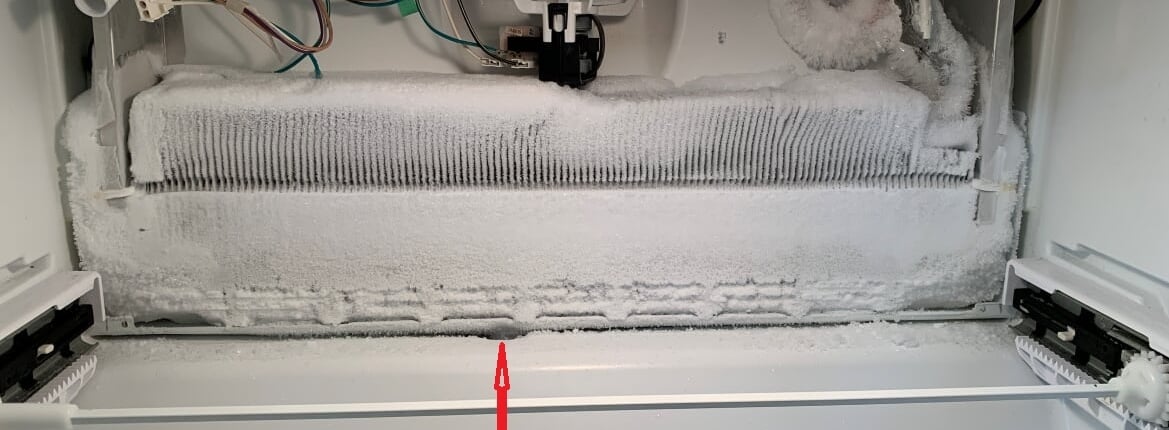
An ice sheet often forms when defrost water enters the freezer but cannot leave. The water freezes after each defrost cycle. Over time, the ice grows and may block a drawer.
Clear the ice and test the drain with warm water. If the ice returns, the refrigerator may have a recurring freeze problem rather than a simple clog.
Water under the crisper drawers
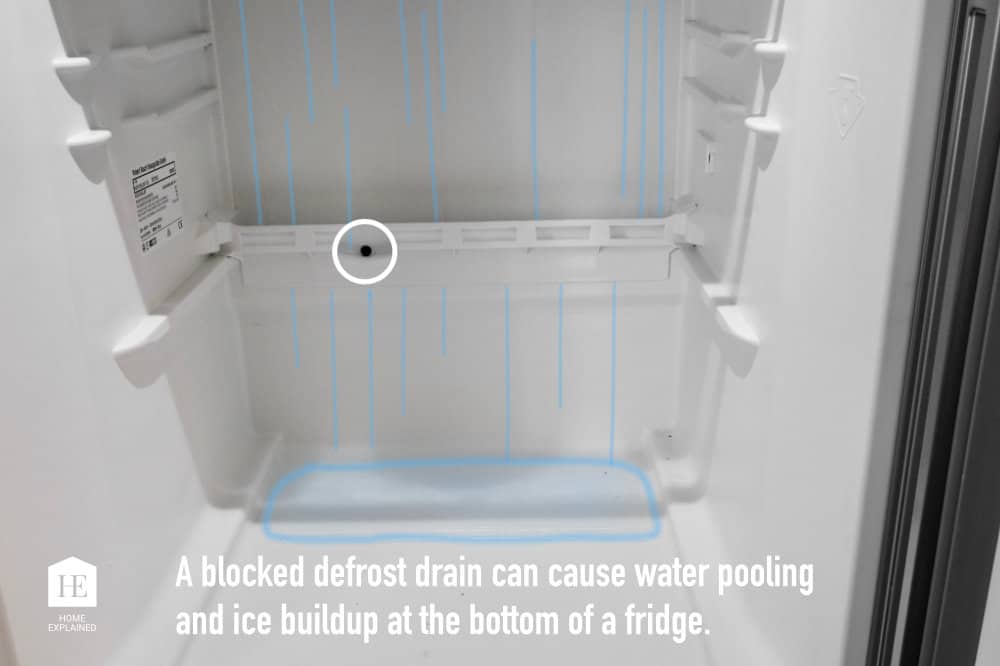
Water under the crisper drawers is a common sign that water from the freezer is traveling into the refrigerator compartment. The drain may be frozen, or the drain channel may be blocked.
Dry the area and inspect the freezer drain first. Also check that food packages are not touching the rear wall and blocking airflow.
Water under the refrigerator
Water under the appliance may come from the defrost drain pan, a water dispenser line, an ice maker line, or a damaged pan. Do not assume every leak is caused by the defrost drain.
If the refrigerator has a water dispenser or ice maker, inspect those supply lines. Shut off the water supply before repairing a leaking line.
Frost across the rear freezer wall
Heavy frost across the entire rear wall can point to a failed defrost heater, sensor, timer, or electronic control. A blocked drain alone usually creates ice near the bottom, although a drain problem can exist with other faults.
If frost returns soon after a full thaw, professional diagnosis may be needed.
What If the Defrost Drain Keeps Freezing?
A drain that freezes again usually needs more than a quick flush. The cause may be a missing drain-trough part, a failed drain heater, poor airflow, or a drain tube that does not shed water correctly.
Check these items:
-
The freezer door seal
A torn or loose gasket allows warm, moist room air into the freezer. That moisture becomes frost and can refreeze in the drain. -
Food placement
Packages pressed against the rear wall can block air movement and create cold spots. Leave the vents clear. -
The refrigerator’s level
Many refrigerators are designed to sit slightly higher in front. A badly tilted appliance may not drain as intended. Follow the manual for leveling instructions. -
The drain tube outlet
Some models have a rubber valve or small outlet at the bottom of the drain tube. Debris can block it. Access may require removing a rear cover. -
The defrost system
A failed heater or sensor can cause thick frost that eventually blocks airflow and the drain.
Do not repeatedly chip away large amounts of ice without finding the cause. Repeated thawing can damage food, raise energy use, and leave the refrigerator unable to maintain safe temperatures.

Refrigerator Styles That Need Special Care
The drain location changes with the design of the refrigerator. The most useful clue is the freezer layout.
Top-freezer models
Top-freezer refrigerators often have a visible drain hole or trough near the rear of the freezer floor. Some models hide it behind the evaporator cover.
These models are often easier to inspect, but the drain may still require a full thaw before it can be cleared.
Bottom-freezer models
Bottom-freezer refrigerators may place the drain beneath the pull-out drawer. Remove the drawer only if the manual explains how to do so.
The drain can be hard to see because the evaporator compartment may sit behind a fixed panel. Do not force the drawer or panel.
French-door models
French-door refrigerators often use a wide lower freezer drawer. The defrost drain may be beneath an interior cover or under the freezer compartment.
Water under the lower drawer is a strong reason to inspect the drain, but it can also come from an ice maker or water line located in the upper section.
Side-by-side models
Side-by-side refrigerators often place the evaporator and drain behind the rear freezer panel. The opening may be low on the panel or at the bottom of the evaporator compartment.
Because wiring and cooling parts may sit behind the panel, use the model manual before removing screws.
Compact and dorm refrigerators
Some compact refrigerators use a small drain hole inside the fresh-food compartment rather than a freezer drain. This hole may sit on the rear wall below the cooling plate.
Water in a compact refrigerator may be normal if it flows into the small collection channel. Clean the hole with warm water and a soft plastic tool if the manual allows it.

When Should You Call a Refrigerator Repair Technician?
Call a qualified appliance technician when the drain cannot be reached safely, the problem returns, or the refrigerator shows signs of a larger failure.
Get professional help if:
- The evaporator coil is exposed and damaged
- The refrigerator leaks refrigerant
- The drain freezes again soon after cleaning
- The freezer develops a thick layer of frost
- The refrigerator cannot hold safe temperatures
- Water reaches electrical parts
- A water line or ice maker is leaking
- You smell burning or see damaged wiring
- The appliance trips a circuit breaker
- The model manual prohibits homeowner access
Unplug the refrigerator if water reaches electrical components or if you see damaged wiring. Do not open a sealed refrigeration system or attempt to add refrigerant yourself.
If the appliance is under warranty, check the warranty terms before removing panels. Unauthorized repairs may affect coverage, depending on the manufacturer and the work performed.
Common Mistakes to Avoid
The most common mistake is looking only inside the fresh-food compartment. On many U.S. refrigerators, the defrost drain starts in the freezer.
Other mistakes include:
- Poking the drain with a metal object
- Pouring boiling water into a plastic drain channel
- Using drain cleaner
- Removing a frozen panel by force
- Ignoring the drain pan below the refrigerator
- Replacing food before the freezer returns to 0°F
- Treating every leak as a defrost-drain problem
- Repeatedly thawing the appliance without checking the door seal
Another common error is confusing the defrost drain with the water dispenser drain. A dispenser drip tray collects spilled water. It does not carry defrost water from the freezer.

Frequently Asked Questions
Does every refrigerator have a defrost drain?
Most frost-free refrigerators have a defrost drain because they melt ice from the evaporator during automatic defrost cycles. Older manual-defrost refrigerators may not have an automatic drain system.
Can I pour hot water down the refrigerator drain?
Use warm water, not boiling water. Boiling water can damage plastic parts or create a rapid temperature change that cracks components. A turkey baster works well for controlled flushing.
Where does the refrigerator defrost water go?
Defrost water travels through a drain tube to a pan under the refrigerator. Heat from the compressor and surrounding air usually helps the water evaporate.
Why does my refrigerator drain keep clogging?
Repeated clogs may result from food debris, ice buildup, a damaged drain-trough component, poor door sealing, or a defrost-system fault. If cleaning does not solve the issue, the appliance needs further diagnosis.
Can I clean the drain without unplugging the refrigerator?
A small amount of warm water may be used for a visible drain, but unplugging is safer when water could reach electrical parts. Follow the owner’s manual and protect perishable food before turning off power.
Final Answer
The defrost drain on most refrigerators is inside the freezer, near the back wall or bottom, below the evaporator coil. It may be visible as a small hole or hidden behind the rear freezer panel.
Remove loose ice, warm the area with controlled amounts of warm water, and test whether water reaches the drain pan below the refrigerator. Use only soft plastic tools, never sharp metal or chemical cleaner. If the drain repeatedly freezes, the refrigerator may have a door-seal, defrost-system, or drain-tube problem that requires professional service.
For the exact location, use the full model number and the owner’s manual. Manufacturer support libraries from Whirlpool, GE Appliances, Samsung, and Frigidaire provide model-specific manuals and service guidance.

Appliance Review Expert
Lucas Ramirez is a trusted voice at HomeFixGrid.com, known for his clear, practical, and creatively written guides that simplify appliance care for everyday homeowners. With a strong focus on hands-on testing and real-world problem-solving, Lucas brings expert insight into appliance reviews and troubleshooting techniques. Her work empowers readers to confidently maintain, repair, and choose the right appliances for their homes.