
Why My Refrigerator Is Making Noise: Causes And Fixes
Your refrigerator is usually making noise because its compressor, fans, ice maker, or cooling system is running.
If you are wondering why my refrigerator is making noise, the sound may be normal, easy to fix, or a sign of a failing part. The key is to identify the type of noise, when it happens, and whether your refrigerator is still cooling well. This guide explains the most common causes, safe checks, repair options, and warning signs that need professional help.

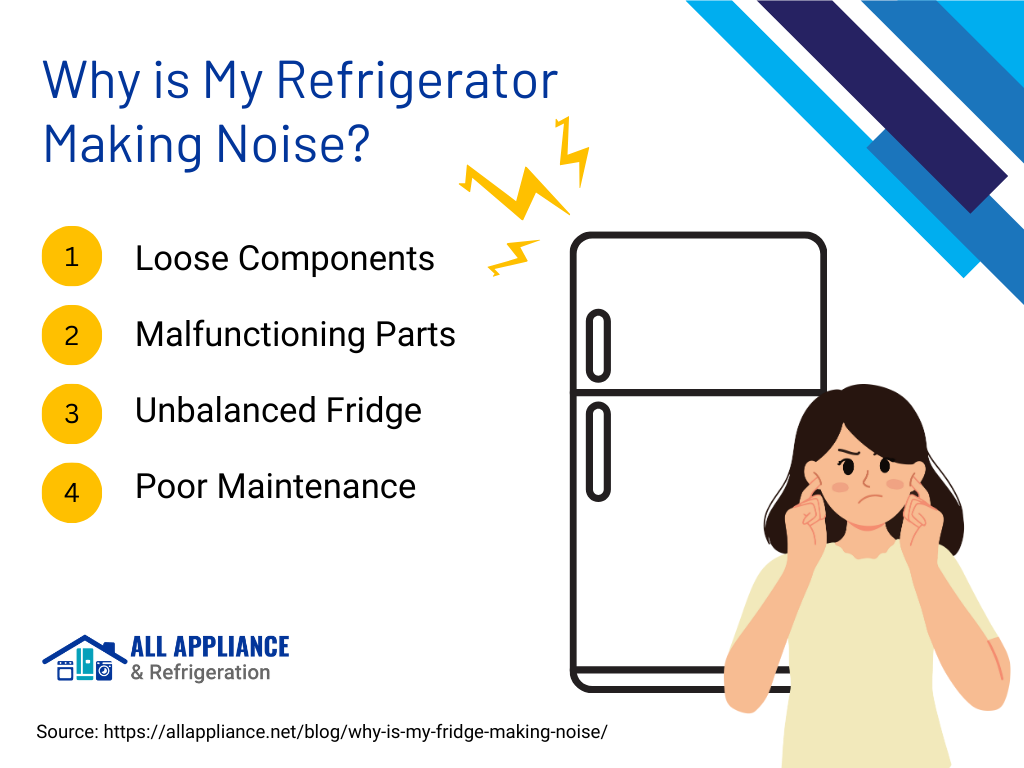
Why Is My Refrigerator Making Noise?
Modern refrigerators are not silent. They use compressors, motors, fans, valves, and pumps to keep food cold. These parts switch on and off throughout the day, so some humming, clicking, buzzing, or dripping sounds are expected.
The real concern is a noise that is new, very loud, constant, or paired with poor cooling. A sudden change often points to a loose part, blocked fan, ice buildup, or worn motor.
Common causes include:
• The compressor is running during a cooling cycle.
• The evaporator fan is moving air inside the freezer.
• The condenser fan is removing heat near the bottom or back.
• The ice maker is filling, freezing, or releasing ice.
• The refrigerator is not level.
• A drain pan, shelf, or water line is vibrating.
• Ice is touching a fan blade.
• A fan motor, relay, or compressor is beginning to fail.
When people ask, “why my refrigerator is making noise,” the answer is often found by matching the sound to its location. A noise from inside the freezer has a different cause from a rattle behind the appliance.

Refrigerator Noises That Are Usually Normal
Some sounds may seem alarming but are part of normal operation. Refrigerators often make more noise at night because the kitchen is quiet and there are fewer background sounds.
Humming or low buzzing
A steady hum usually comes from the compressor. The compressor circulates refrigerant through the sealed cooling system. It may run for long periods during hot weather, after grocery shopping, or when the door has been open.
A soft hum is normally safe. However, a loud buzz that continues without cooling may point to a faulty start relay or compressor problem.
Clicking
A single click can happen when the thermostat or control board starts or stops a cooling cycle. You may also hear a click when the ice maker begins a new cycle.
Repeated clicking every few minutes is different. It can mean the compressor is trying to start but cannot. This problem needs prompt attention because the refrigerator may stop cooling.
Gurgling or bubbling
Gurgling often comes from refrigerant moving through the evaporator or from water flowing into the drain pan. This sound may happen after the compressor stops.
It can also occur during automatic defrost. In most cases, gentle bubbling or gurgling is normal.
Dripping or sizzling
During a defrost cycle, water can drip onto a warm drain pan. The water may sizzle briefly as it meets the pan or another warm surface.
A small amount of water in the drain pan is expected. Water pooling inside the refrigerator or leaking onto the floor is not.
Cracking or popping
Plastic parts can expand and contract as the temperature changes. This may create occasional cracking or popping sounds from the freezer walls or interior panels.
The sound should be brief and occasional. Frequent loud pops may suggest heavy frost buildup or a component that needs inspection.

What Different Refrigerator Sounds Can Mean
Learning the sound pattern can help you narrow down why my refrigerator is making noise before you call for service.
Loud humming from the back
A loud hum from the back often comes from the compressor or condenser fan. Dust around the condenser coils can make the system work harder and sound louder.
First, check whether the refrigerator has enough space around it. Then inspect the lower front grille or rear access area for dust, pet hair, and debris.
Rattling or vibrating
Rattling may come from a loose drip pan, water line, shelf, or rear cover. It may also happen when the refrigerator touches a wall or cabinet.
Try gently pressing the suspected panel while the noise occurs. If the sound stops, the panel may need tightening or a small cushion to reduce vibration.
Buzzing inside the freezer
A buzzing sound inside the freezer often involves the ice maker or evaporator fan. The ice maker may buzz while opening its water valve or filling with water.
If the buzz continues and the fan appears to scrape, unplug the refrigerator before inspecting further. Ice around the fan can create a loud buzzing or grinding sound.
Grinding or scraping
Grinding usually deserves closer attention. The evaporator fan may be hitting ice, or the fan motor bearings may be worn.
Do not keep running the refrigerator for days if the sound is severe. A damaged fan can stop moving cold air and may cause food temperatures to rise.
Whistling or hissing
A soft hiss may occur as refrigerant moves through a narrow tube. Air may also whistle around a door gasket that does not seal correctly.
Check the gasket for cracks, gaps, or food debris. A poor seal lets warm air enter and can make the refrigerator run longer.
Squealing
Squealing often comes from a fan motor or another moving part. It may become louder when the refrigerator starts or when a fan changes speed.
Because fan motors are electrical parts, replacement is usually safer than trying to lubricate them. Many modern fan motors are sealed and are not designed for home repair.

How to Troubleshoot a Noisy Refrigerator Safely
You can perform several simple checks without removing electrical covers. Always protect your hands and avoid touching exposed wires or moving blades.
1. Find the noise
Stand near the refrigerator and listen from three areas:
• Inside the fresh food section
• Inside the freezer
• Behind or underneath the appliance
Open the freezer door briefly. If the sound stops, the evaporator fan or door switch may be involved. Some models stop the fan when the door opens, so this test can provide a useful clue.
2. Check whether the refrigerator is level
An uneven refrigerator can vibrate, rock, or cause doors to close poorly. Place a small level on the top of the cabinet, then adjust the front leveling feet if needed.
A level appliance should lean slightly toward the back in many models. Follow the owner’s manual because leveling methods vary.
3. Inspect shelves and containers
Glass shelves, bottles, and storage bins can touch one another and create a surprising rattle. Move items apart and confirm that shelves sit firmly in their tracks.
This simple check often solves why my refrigerator is making noise without any repair.
4. Look for frost around the freezer fan
Heavy frost on the rear freezer wall may indicate an airflow or defrost problem. Frost can reach the fan and cause scraping or grinding.
Do not chip ice with a knife or sharp tool. You could puncture a cooling line, which can permanently damage the refrigerator.
5. Clean accessible condenser areas
Unplug the refrigerator before cleaning coils or removing a lower grille. Use a coil brush and a vacuum to remove dust gently.
Not every refrigerator has exposed coils in the same location. Some models use a sealed condenser system, so check the manual before opening panels.
6. Check the ice maker and water supply
If the ice maker is on but the water supply is off, it may buzz or click as it tries to fill. Turn off the ice maker until the water line is connected.
Look for a kinked water tube or a filter that is not seated correctly. Never force a filter into place.
7. Measure the temperature
Use a refrigerator thermometer rather than relying only on the control display. The U.S. Food and Drug Administration recommends keeping the refrigerator at or below 40°F and the freezer at 0°F.
A noisy refrigerator that stays within safe temperatures may only need monitoring. A noisy refrigerator that is warming needs faster action.
When a Refrigerator Noise Means a Repair Is Needed
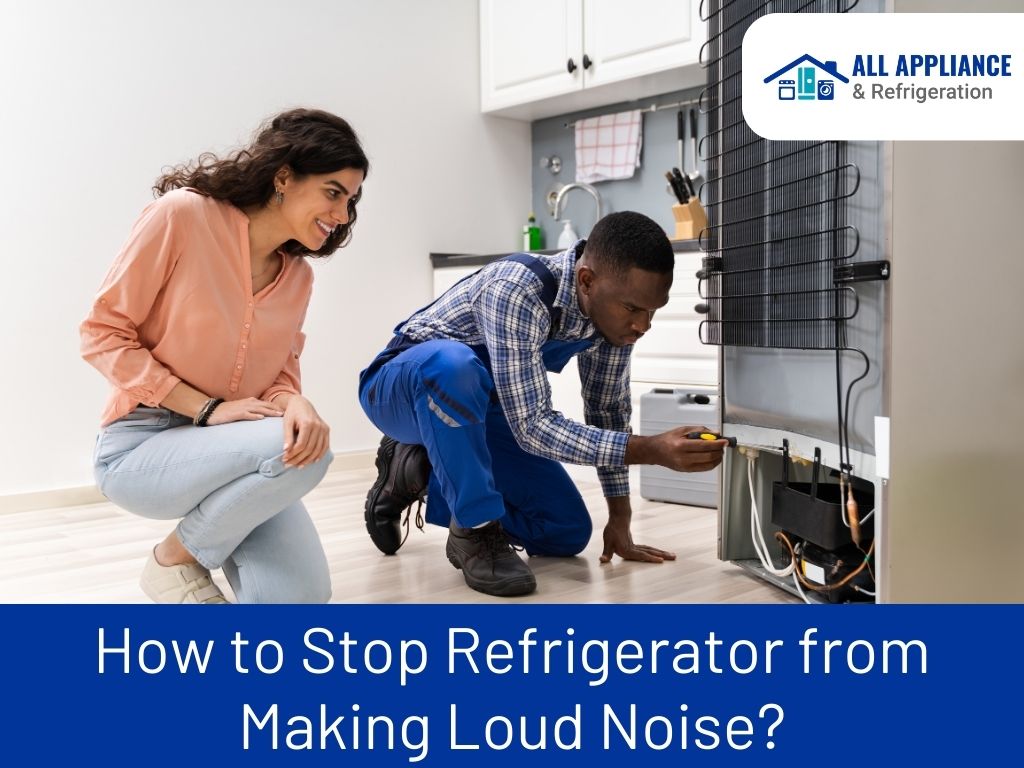
Noise alone does not always reveal the exact fault. A technician may need to test the compressor, fan motors, start relay, control board, or sealed system.
Call for professional service when:
• The refrigerator makes repeated clicking and does not cool.
• A grinding sound continues after visible ice is removed.
• The compressor becomes extremely hot or repeatedly stops and starts.
• You smell burning plastic or see melted wiring.
• The refrigerator trips a circuit breaker.
• Water leaks onto the floor or near electrical parts.
• Food temperatures rise above safe levels.
• The noise starts after a power surge.
The compressor and sealed refrigerant system are not good do-it-yourself projects. Refrigerant handling requires specialized tools and training. A professional can also test electrical parts safely and check for a refrigerant leak.
A useful rule is simple: if the noise is loud, new, and linked to poor cooling, do not wait for the refrigerator to fail completely. Early service may prevent food loss and a more costly repair.

Common Refrigerator Parts That Make Noise
Understanding the main parts can make a service visit easier and help you explain the problem clearly.
Compressor
The compressor is the motor that moves refrigerant through the system. It normally produces a low hum or mild vibration.
A compressor that clicks repeatedly, overheats, or fails to start may have a bad start device or internal damage.
Evaporator fan
The evaporator fan moves cold air from the freezer through the refrigerator. It can make a whirring sound during normal operation.
Ice, food packaging, or a worn bearing may cause scraping, squealing, or grinding.
Condenser fan
The condenser fan helps release heat near the compressor. Dust, a blocked grille, or a damaged blade can make it rattle or buzz.
This fan may run whenever the compressor runs, though the exact pattern depends on the model.
Ice maker
The ice maker uses a motor and water valve. Buzzing, clicking, and knocking may occur during a normal ice-making cycle.
A repeated buzz with no water entering the ice maker may indicate a closed supply valve, blocked filter, frozen fill tube, or failed valve.
Drain pan
The drain pan catches water from automatic defrost. If it is loose, it may vibrate against the cabinet.
A technician can usually secure or replace a damaged pan quickly.

Mistakes to Avoid When Your Refrigerator Makes Noise
A few common reactions can turn a small issue into a costly repair.
• Do not use a knife, screwdriver, or hair dryer close to plastic freezer parts unless the manual specifically allows it.
• Do not spray lubricant into a fan motor or electrical area.
• Do not remove the rear cover while the refrigerator is plugged in.
• Do not ignore a burning smell, smoke, or repeated breaker trips.
• Do not store food in a refrigerator that cannot maintain a safe temperature.
• Do not turn the temperature control to the coldest setting as a permanent fix.
One mistake I often see is focusing only on the sound and ignoring the temperature. The sound matters, but cooling performance tells you whether the appliance may be in immediate trouble.
Another mistake is pulling the refrigerator tightly against the wall. Many models need open space for air circulation. The installation guide provides the correct clearance for your model.
How to Prevent Refrigerator Noise
Regular care can reduce vibration and help cooling parts last longer.
• Keep the refrigerator level.
• Leave the clearances listed in the owner’s manual.
• Keep shelves and bottles from touching.
• Clean accessible condenser coils as recommended by the manufacturer.
• Replace water filters on the stated schedule.
• Keep the door gasket clean and flexible.
• Close the doors fully after each use.
• Avoid placing hot food directly against the refrigerator’s rear wall.
• Remove ice buildup according to the manufacturer’s instructions.
The U.S. Department of Energy notes that proper maintenance and good airflow help refrigeration equipment operate efficiently. Maintenance cannot prevent every compressor or control failure, but it can reduce strain caused by dust, poor seals, and blocked airflow.
Keep a simple record of unusual sounds. Note the date, sound type, location, and refrigerator temperature. This information can help a technician find the problem faster.

Should You Repair or Replace a Noisy Refrigerator?
The best choice depends on the refrigerator’s age, repair cost, condition, and energy use. A fan motor, door gasket, leveling foot, or ice maker valve may be worth repairing.
A sealed-system or compressor repair can cost much more. If the appliance is older and has already needed several repairs, replacement may offer better value.
Before deciding, compare:
• The repair estimate
• The refrigerator’s age
• Recent repair history
• Energy use
• Warranty coverage
• Availability of replacement parts
• The risk of food loss if the appliance fails
A manufacturer’s warranty may cover some parts but not labor or damage caused by incorrect installation. Check the warranty terms before approving work.
Frequently Asked Questions About Why My Refrigerator Is Making Noise
Is it normal for a refrigerator to make noise?
Yes. Compressors, fans, ice makers, valves, and defrost systems all create sound during normal operation. A new, harsh, or constant noise deserves closer attention, especially if cooling performance changes.
Why is my refrigerator making a loud humming noise?
A loud hum may come from the compressor or condenser fan. Check for dust, poor airflow, contact with the wall, or an uneven floor, and seek service if the refrigerator is not cooling properly.
Why is my refrigerator making a clicking noise?
Occasional clicking can happen when a cooling cycle or ice-making cycle starts. Repeated clicking every few minutes may mean the compressor cannot start, so professional testing is recommended.
Why is my refrigerator making a buzzing noise?
Buzzing may come from the ice maker, water inlet valve, or a fan blade touching ice. Turn off the ice maker if the water supply is disconnected, and unplug the appliance before checking for visible ice near a fan.
Why is my refrigerator making a grinding noise?
Grinding often points to ice contacting the evaporator fan or a worn fan motor. Do not use sharp tools to remove ice; follow the manual or arrange service if the sound continues.
Can a noisy refrigerator be dangerous?
Most refrigerator noises are not dangerous, but burning smells, smoke, exposed wires, overheating, or repeated circuit trips require immediate action. Unplug the appliance if it is safe to do so and contact a qualified technician.
How do I know if a refrigerator noise is serious?
A noise is more serious when it is sudden, very loud, or linked to warm food, frost, leaks, or repeated clicking. Track the sound and temperature, then arrange repair if the problem does not stop.
Conclusion
The answer to why my refrigerator is making noise usually starts with the sound’s type, location, and timing. Humming, gentle gurgling, dripping, and occasional clicking can be normal, while grinding, repeated clicking, burning smells, and poor cooling need attention.
Start with safe checks: level the appliance, move rattling items, inspect the door gasket, clean accessible coils, and check the ice maker. Protect your food by monitoring the temperature, and call a qualified appliance technician for compressor, electrical, fan, or sealed-system problems.
Use these steps to find the cause before the noise becomes a breakdown. If you have solved a refrigerator noise or still need help identifying one, explore more appliance care guides or share your experience in the comments.

Appliance Review Expert
Lucas Ramirez is a trusted voice at HomeFixGrid.com, known for his clear, practical, and creatively written guides that simplify appliance care for everyday homeowners. With a strong focus on hands-on testing and real-world problem-solving, Lucas brings expert insight into appliance reviews and troubleshooting techniques. Her work empowers readers to confidently maintain, repair, and choose the right appliances for their homes.