Can Candle Wax Be Melted In Microwave: Safe Tips
Introduction
Yes, candle wax can be melted in a microwave in the United States, but it must be done with care. The safest method is usually a double boiler, because it heats wax slowly and evenly.
If you use a microwave, place the wax in a microwave-safe glass container. Remove all metal, the wick, wick tab, and other candle parts first. Heat the wax in short bursts, stir often, and never leave it alone.

Is It Safe to Melt Candle Wax in a Microwave?
Microwaving candle wax can be safe when you control the heat and use the right container. The main risks are overheating, fire, hot spots, and glass breakage.


Wax does not heat as evenly as water. A microwave can create hot areas in the wax, even when the surface looks calm. Fragrance oils and other candle additives may also heat at different rates.
The safest rule is simple:
Use low or medium power, short heating times, frequent stirring, and a thermometer.
Do not microwave a complete candle in its original jar. The jar may contain metal parts, trapped air, or a wick tab. Some candle containers are not made for microwave heat.
Microwaving wax is best for small amounts. For large batches, a double boiler or wax melter gives better control.

What Types of Candle Wax Can Go in a Microwave?
Most common candle waxes can be softened or melted in a microwave. The wax type affects the melting time and the heat needed.
| Wax type | Typical melting range* | Important notes |
|---|---|---|
| Soy wax | About 120–130°F | Can become grainy if heated or cooled poorly |
| Paraffin wax | About 120–160°F | Melts well but can develop hot spots |
| Beeswax | About 144–149°F | Needs more heat and may take longer |
| Coconut wax blends | Often about 100–125°F | Follow the blend maker’s instructions |
| Gel wax | Varies by product | Use the manufacturer’s instructions |
| Palm wax | Often about 180–190°F | Higher heat may be needed |
*Melting points vary by brand, blend, additives, and testing method. Check the wax supplier’s instructions when available.
Wax with fragrance oil, color, stearic acid, or other additives may behave differently from plain wax. A blended wax may melt sooner or later than the base wax listed on the label.
Do not assume that all wax is interchangeable. A process that works for soy wax may not work for beeswax or gel wax.


What You Need Before Melting Wax in a Microwave
Gather the right tools before you begin:
- Wax pieces or wax flakes
- A microwave-safe glass measuring cup or bowl
- A silicone spatula or wooden stir stick
- A heat-safe thermometer
- Oven mitts or heat-resistant gloves
- A clean work surface
- Paper towels for small spills
- A scale, if you need a measured amount
Use a container made for high heat. A microwave-safe glass measuring cup is often easier to handle than a wide bowl.
Avoid plastic unless the container is clearly rated for hot wax. Wax can stay hot after the microwave stops. Some plastics can soften, stain, or release unwanted compounds.
Never use a container with:
- A metal rim
- Metallic paint
- A metal handle
- A metal wick tab
- Foil
- Hidden metal parts
- Cracks or chips
Leave space at the top of the container. Do not fill it to the rim.
How to Melt Candle Wax in a Microwave
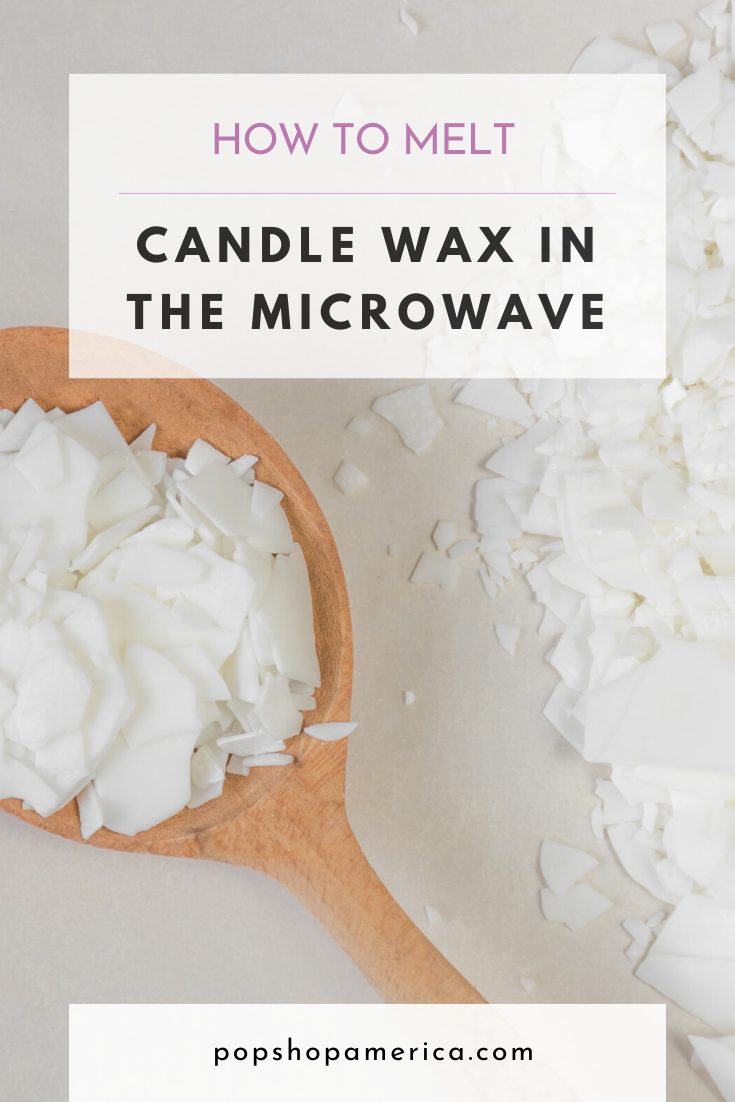
Follow these steps for a small amount of wax.
1. Remove the candle parts
Take out the wick, wick tab, labels, decorations, and any metal pieces. If you are using wax from an old candle, scrape out dirt and debris first.
Do not place a full candle in the microwave. A wick tab can spark, and the original jar may not be safe for microwave use.
2. Break the wax into small pieces
Cut large wax blocks into small chunks, or use wax flakes. Small pieces melt more evenly and reduce the time needed.
Do not cut wax on a surface used for food unless you can clean it well afterward. Keep candle tools separate from cooking tools.
3. Put the wax in a microwave-safe container
Place the wax in a clean, dry glass container. Water can cause hot wax to pop or splatter.
Use less wax than the container can hold. A half-full container is easier to stir and less likely to spill.
4. Set the microwave to lower power
Use about 50% power if your microwave allows power settings. Lower power gives the wax more time to warm through.
Microwave power differs by model. A 1,000-watt oven may heat wax much faster than a 700-watt oven.


5. Heat in short bursts
Start with 30 seconds. Remove the container carefully and stir.
Continue with 15- to 30-second bursts. Stir after every burst. As the wax begins to soften, use shorter intervals.
Do not rely only on time. Stop when the wax is fully liquid and reaches the temperature recommended for your wax.
6. Check the temperature
Use a thermometer when possible. Aim for the wax maker’s recommended pouring temperature.
If no instructions are available, avoid overheating. Many candle waxes pour well at a temperature only slightly above their melting point. More heat is not always better.
Do not let the wax smoke. Smoke, a strong burnt smell, discoloration, or rapid bubbling means the wax may be too hot.
7. Stir until smooth
Stir slowly to spread heat through the wax. Scrape the sides and bottom of the container.
If you are adding fragrance oil or color, follow the supplier’s temperature instructions. Additives can change the wax’s behavior and may be damaged by excess heat.
8. Pour with care
Place the container on a stable, heat-safe surface. Pour slowly into the prepared mold or candle vessel.
Keep the container away from children, pets, paper, fabric, and other items that can catch fire. Hot wax can cause burns even when it does not look extremely hot.
How Long Does Candle Wax Take to Melt in a Microwave?
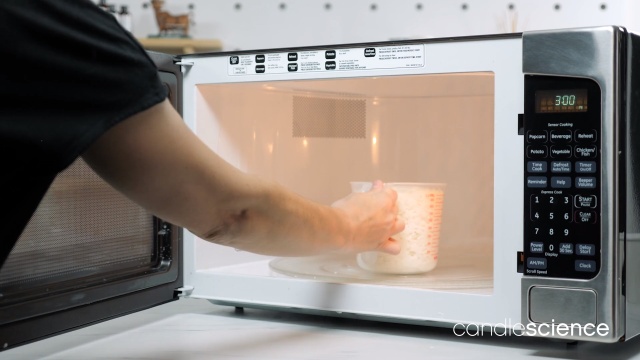
Small pieces often melt in about 2 to 5 minutes, but there is no safe universal time. The result depends on several factors:
- Wax type
- Amount of wax
- Piece size
- Microwave wattage
- Power setting
- Container shape
- Starting temperature
- Amount of fragrance or color
For example, 4 ounces of soy wax flakes in a wide glass container may melt faster than 4 ounces of beeswax in a tall cup. A cold container can also increase the heating time.
Use time only as a guide. The thermometer and the wax’s appearance matter more.
Stop heating when the wax is liquid and smooth. Continuing to heat it “just to be sure” raises the risk of overheating.


Microwave vs. Double Boiler for Melting Wax
A double boiler is usually the better choice for candle making. It uses hot water to heat the wax gently and evenly.
| Method | Main benefit | Main drawback |
|---|---|---|
| Microwave | Fast and convenient for small amounts | Can create hot spots |
| Double boiler | Better heat control | Takes more setup and time |
| Electric wax melter | Good for repeated candle making | Costs more and needs storage |
| Heat plate with a pouring pot | Useful for larger batches | Requires careful temperature control |
To use a double boiler, place wax in a heat-safe pouring pot. Set the pot in a larger pan of hot water. Heat the water gently and stir the wax until it melts.
Do not let water enter the wax. Water can cause splashing when you pour or burn the candle.
A microwave may be reasonable for a small craft project. A double boiler is usually more suitable for repeated work, large amounts, or wax that needs close temperature control.

What Should You Never Microwave With Candle Wax?
Never microwave wax with metal or unknown materials. Metal can spark and damage the microwave or start a fire.
Avoid microwaving:
- A candle with its wick still attached
- A candle with a metal wick tab
- Wax in a metal tin
- Wax in a foil container
- A jar with metallic decoration
- A sealed container
- A cracked glass container
- Water mixed into wax
- Wax with paper, dried flowers, or other decorations
Do not seal the container. Steam and air need room to escape. A sealed container can build pressure.
Do not add essential oils before checking their safety and temperature limits. Some oils can lose scent, and some may be flammable. Candle fragrance oil should be used according to its safety data and the supplier’s instructions.

How to Tell If Candle Wax Is Too Hot
Wax may be too hot if you see or smell any of these signs:
- Smoke
- A burnt odor
- Darkening or unusual color change
- Fast bubbling
- A very thin, watery appearance
- A hot container that is difficult to handle
- Wax splashing during stirring
Turn off the microwave at once if the wax smokes or smells burnt. Keep the door closed for a moment if you suspect a fire. Do not pour water onto burning wax.
If flames appear, keep the microwave door closed and unplug the appliance only if you can do so safely. Leave the area and call 911 if the fire does not stop quickly or spreads.
Never carry a container of burning wax. Moving it can spread the fire.

What If Wax Spills in the Microwave?
Let the wax cool and harden before cleaning it. Do not wipe hot wax with a bare hand or wet cloth.
Once cool, remove large pieces with a plastic scraper. Use a soft cloth with warm, soapy water for residue, but check the microwave manufacturer’s cleaning instructions first.
Do not pour melted wax down a sink or drain. It can harden inside the pipe and cause a blockage.
If wax enters vents, electrical parts, or spaces you cannot clean, stop using the microwave. Contact the manufacturer or a qualified appliance repair service.
Do not use a knife or metal scraper inside the microwave. It can damage the interior coating.

Can You Melt Wax in the Original Candle Jar?
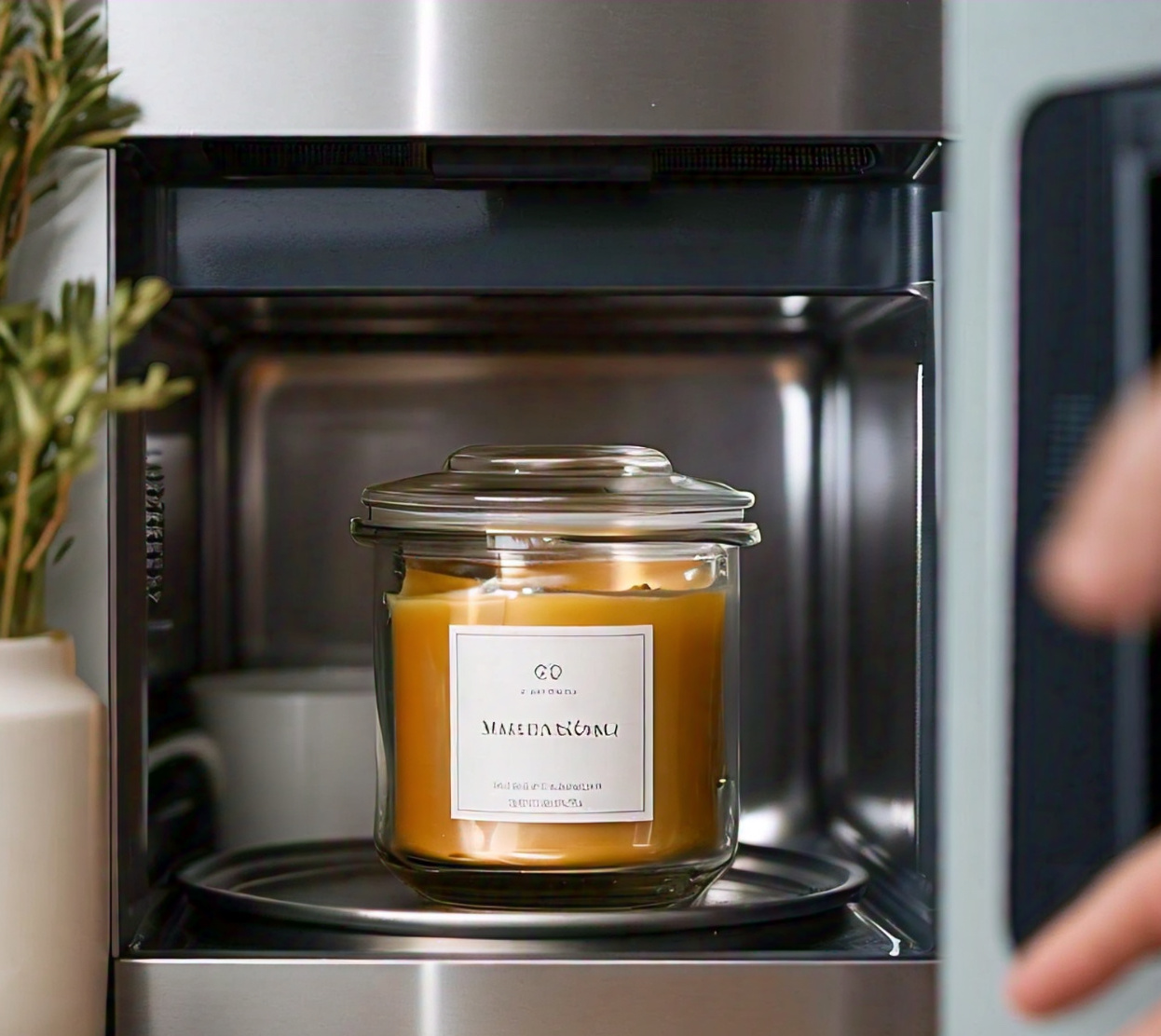
Usually, you should not microwave the original candle jar. The jar may not be labeled as microwave-safe, and it may have a wick tab or other metal part attached to the bottom.
Glass can also break from uneven heating or sudden temperature changes. A cold jar placed in a hot environment may experience thermal shock.
Transfer the wax to a clean, microwave-safe glass container instead. If you want to reuse the candle jar, remove the remaining wax with a safer method, such as:
- Let the wax harden.
- Remove large pieces by hand or with a plastic tool.
- Wash the jar with warm, soapy water if the manufacturer allows it.
- Inspect the glass for cracks before reuse.
Do not use a candle jar for food unless it is designed and approved for food storage. Fragrance and soot can remain in the container.
Can You Melt Candle Wax in a Microwave Without Water?
Yes. Candle wax does not need water to melt.
In fact, keep water away from hot wax. Water can sink below the wax, turn to steam, and cause hot wax to splatter.
A double boiler uses water outside the wax container. The water heats the container, but it should not mix with the wax.
Keep both the wax and the container dry before heating.
How to Melt Wax From an Old Candle
You can reuse wax from an old candle, but inspect it first. Old wax may contain soot, dust, wick pieces, or fragrance that has changed over time.
For a small amount:
- Remove the old wick and metal tab.
- Break the wax into small pieces.
- Pick out visible debris.
- Place the wax in a microwave-safe glass container.
- Heat at 50% power in short bursts.
- Stir after each burst.
- Strain the liquid wax through a fine heat-safe strainer if needed.
- Pour it into a prepared mold or container.
A coffee filter is not always suitable because hot wax can clog it or make it fail. Use a tool made for hot liquids.
Reused wax may not burn like new wax. It can have a weaker scent, a different color, or a shorter burn time. Test the finished candle before giving it as a gift.

Common Mistakes When Microwaving Candle Wax
Heating wax for several minutes without checking it
Long heating cycles can create hot spots. Use short bursts and stir often.
Using high power
High power can heat the outside or bottom of the wax too quickly. Medium or low power gives more control.
Leaving metal in the wax
A wick tab, foil, or metal container can spark. Remove every metal part.
Using a sealed container
Pressure can build inside a sealed container. Use an open, heat-safe container.
Adding water to thin the wax
Water does not safely thin wax. It can make the hot wax splatter.
Overfilling the container
Leave room for stirring and movement. A container filled to the top can spill easily.
Touching the container without protection
Glass and wax can stay hot after the microwave stops. Use oven mitts.
Pouring wax down the drain
Wax can harden in pipes. Let it cool, then dispose of it in solid form or follow local waste rules.

A Simple Safety Decision Guide
Use this guide before choosing a method:
- Small amount, clean wax, microwave-safe glass: A microwave may work with short bursts and close attention.
- Large amount of wax: Use a double boiler or wax melter.
- Wax with metal or decorations: Remove them first. If you cannot, do not microwave it.
- Unknown wax or unknown container: Use a double boiler with a suitable pouring pot.
- Wax that smokes or smells burnt: Stop heating and treat it as overheated.
- Need exact temperature control: Use a thermometer and a double boiler.
- Working near children or pets: Choose a controlled method and keep the work area closed off.
When in doubt, do not microwave the wax. The time saved is not worth risking a fire, burn, or broken container.

Frequently Asked Questions
Can you melt soy candle wax in the microwave?
Yes. Soy wax can be melted in a microwave-safe glass container. Use about 50% power, short bursts, and frequent stirring. Follow the wax maker’s melting and pouring temperatures when available.
Can you melt beeswax in the microwave?
Yes, but beeswax usually needs more heat than soy wax. Cut it into small pieces and heat it slowly. Watch closely because the container and wax can become very hot.
Can a glass jar go in the microwave with wax?
Only if the glass is clearly marked as microwave-safe and has no metal parts. A candle jar is not automatically microwave-safe. A separate heat-safe glass measuring cup is the safer choice.
Can candle wax catch fire in a microwave?
Yes. Wax can overheat and ignite. Smoke, a burnt odor, or bubbling are warning signs. Never leave melting wax unattended.
Is it better to melt candle wax on the stove or in the microwave?
A double boiler on the stove is usually better for temperature control. A microwave can be useful for small amounts when you heat slowly and check the wax often.
Conclusion
Candle wax can be melted in a microwave, but only with careful control. Use small pieces, a microwave-safe glass container, low or medium power, short heating bursts, and frequent stirring.
Do not microwave a complete candle, metal parts, unknown containers, or sealed jars. For large batches or repeated candle making, use a double boiler or a purpose-made wax melter instead.
The safest next step is to check the wax manufacturer’s melting instructions, then heat the smallest practical amount with a thermometer nearby.

Appliance Review Expert
Lucas Ramirez is a trusted voice at HomeFixGrid.com, known for his clear, practical, and creatively written guides that simplify appliance care for everyday homeowners. With a strong focus on hands-on testing and real-world problem-solving, Lucas brings expert insight into appliance reviews and troubleshooting techniques. Her work empowers readers to confidently maintain, repair, and choose the right appliances for their homes.