Can You Cook Garlic Bread In The Microwave: Quick Guide
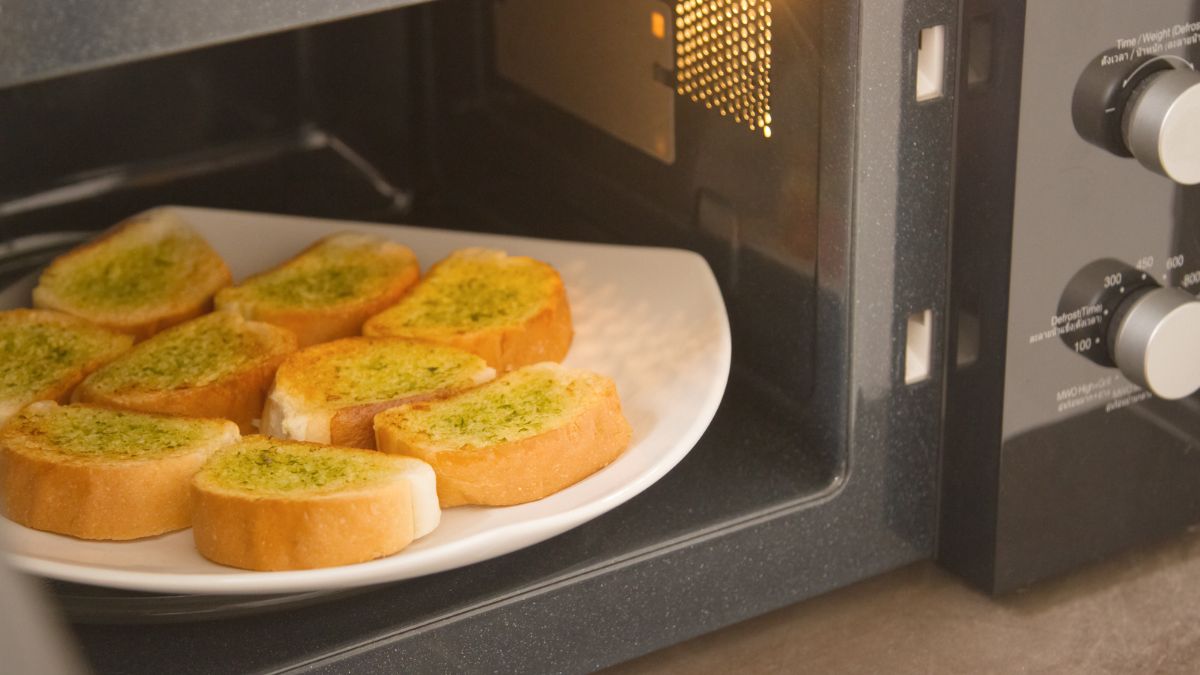
Yes, you can cook garlic bread in a microwave. It is quick and safe when you use a microwave-safe plate and follow the package directions. The bread will heat well, but it will not become crisp or browned like garlic bread baked in a conventional oven, toaster oven, or air fryer.
For a fast side dish in a U.S. kitchen, microwave garlic bread for about 20 to 40 seconds per piece on high. Exact time depends on the bread’s size, starting temperature, and your microwave’s power. Check it after each short burst to avoid tough bread or overheated butter.
Introduction
Microwaving garlic bread works best when you need a soft, warm slice in a hurry. It is useful with soup, pasta, chili, or a frozen meal. The microwave heats the water in the bread and the butter or oil, but it does not create the dry, browned surface that gives oven-baked garlic bread its crisp crust.
For the best texture, use the microwave to warm the bread, then finish it in a toaster oven, oven, or air fryer if you want a crisp top. Always follow the package instructions first, since frozen garlic bread products vary by brand and may include special trays or coverings.


How to Microwave Garlic Bread
The basic method is simple: place the bread on a safe plate, heat it in short bursts, and check the center before eating.
What you need
- Garlic bread, fresh, refrigerated, or frozen
- A microwave-safe plate
- A microwave
- A paper towel, if the bread is very moist or greasy
- Oven mitts for handling a hot plate
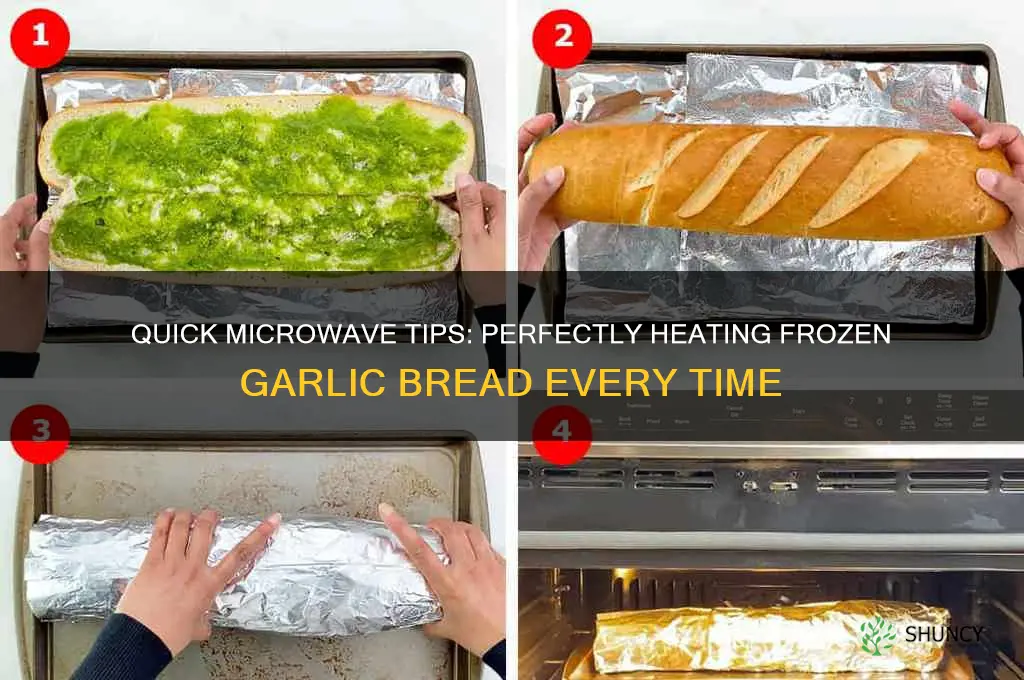
Do not use aluminum foil, metal trays, metal twist ties, or metallic wrappers in a microwave. Remove the garlic bread from its package unless the label clearly says that the package is microwave-safe.
Step-by-step method
-
Read the package directions.
Use the manufacturer’s instructions when they are available. They are written for that specific product. -
Remove all unsafe packaging.
Take off foil, plastic film, cardboard sleeves, and metal parts unless the package gives clear microwave instructions. Never assume that a cardboard tray is safe just because it looks plain. -
Place the bread on a microwave-safe plate.
Arrange slices in one layer. Leave space between pieces so they heat more evenly. -
Cover loosely if needed.
A microwave-safe cover can help keep the bread from drying out. Do not seal the cover tightly. Steam needs a way to escape. -
Heat on high in short bursts.
Start with 15 to 20 seconds for one slice. Add 10-second bursts until the center is warm. -
Turn or rearrange the bread if needed.
Microwaves can leave cold spots. Rearranging the pieces helps reduce uneven heating. -
Let the bread rest for about 30 seconds.
Heat continues to spread after the microwave stops. Resting also lets melted butter settle into the bread. -
Check before serving.
The bread should be warm throughout. If the center is still cold, heat it again for 5 to 10 seconds.


General microwave timing
Use this chart as a starting point, not a guarantee. Microwave power differs among U.S. models, and frozen bread takes longer than room-temperature bread.
| Garlic bread | Starting state | Suggested time |
|---|---|---|
| One small slice | Room temperature | 10–20 seconds |
| One thick slice | Room temperature | 20–35 seconds |
| One slice | Refrigerated | 20–40 seconds |
| One slice | Frozen | 30–60 seconds |
| Two small slices | Refrigerated | 35–60 seconds |
| Two slices | Frozen | 60–90 seconds |
Heat frozen pieces in short intervals. If the bread is still cold after the first cycle, continue in 10-second bursts. Avoid running the microwave for several minutes at once.
How to tell when it is done
Microwave garlic bread is ready when:
- The middle feels warm when pressed gently.
- The butter or garlic spread has melted.
- No frozen spot remains in the center.
- The bread is soft but not hard or rubbery.
Be careful with the butter or garlic topping. It can become much hotter than the bread. Let the slice cool briefly before taking a large bite.

Can You Microwave Frozen Garlic Bread?
Yes, most frozen garlic bread can be microwaved, but the package instructions should come first. Some frozen products are designed only for an oven, toaster oven, or air fryer. If the label does not list microwave cooking, the product may still warm safely on a plate, but the result may be poor and the packaging may not be suitable.
Frozen garlic bread often becomes soft when microwaved. Ice inside the bread turns to steam, and that moisture can make the crust chewy. The garlic butter may also melt before the bread is fully warm.
For better results:
- Separate the pieces if possible.
- Place them in a single layer.
- Start with 30 seconds for one slice.
- Turn the slice or rotate the plate.
- Continue in 10-second bursts.
- Rest the bread for 30 seconds before serving.
Do not microwave a frozen loaf wrapped in foil. Aluminum foil can spark and may damage the microwave. Remove the loaf from its packaging and follow the product label.
If the frozen garlic bread is stuck together, do not force the pieces apart with a knife while frozen. Heat the package only if the label permits it, or microwave the bread for a short burst until the pieces separate safely.

Why Does Microwave Garlic Bread Get Soggy?
Microwave garlic bread can turn soggy because microwave energy heats moisture inside the bread. That moisture becomes steam. In an oven, the surface dries and browns. In a microwave, the steam often stays near the bread, so the crust loses its crisp texture.
The type of bread also matters. Thick, soft bread tends to hold more moisture than a thin baguette. A heavy layer of butter or oil can make the surface feel greasy. Covering the bread tightly can trap even more steam.
To reduce sogginess:
- Heat one or two pieces at a time.
- Use short cooking intervals.
- Do not cover the bread tightly.
- Place a paper towel under the bread if it releases excess butter.
- Let the bread rest uncovered.
- Finish it in an oven, toaster oven, or air fryer if crispness matters.
A microwave is best for speed and softness. It is not the best tool for browning.


How to Make Microwave Garlic Bread Crisp
A microwave alone cannot reliably make garlic bread crisp. It can warm the bread, but it does not provide the same dry heat as an oven or toaster. For a crisp top, use a two-step method.
Microwave, then toast
- Microwave the garlic bread until warm, using short bursts.
- Transfer it to a toaster oven or regular oven.
- Toast it at about 400°F until the edges are crisp and the top is lightly browned.
- Watch it closely because butter and garlic can burn quickly.
For a larger frozen loaf, use the oven instructions on the package rather than microwaving first. The oven may need to cook the loaf from frozen so the center and crust finish at the same time.
Microwave, then air fry
An air fryer can crisp the surface after the microwave warms the center. Use the product’s directions when available. As a general approach, place the warm bread in the air fryer in one layer and heat it briefly at a moderate temperature. Check often because thin slices can brown fast.
Do not put plastic wrap, paper packaging, or foil into the air fryer unless the manufacturer specifically permits it.
Which method should you choose?
| Goal | Best method |
|---|---|
| Fastest warm bread | Microwave |
| Crisp edges and browned butter | Oven or toaster oven |
| Crisp surface with a short cook time | Air fryer |
| Warm center and crisp top | Microwave, then toaster oven or air fryer |
The trade-off is simple: the microwave saves time, while dry heat gives better texture.
Microwave Garlic Bread Safety Tips
Microwave garlic bread is usually low risk when handled correctly, but packaging and hot toppings can cause problems.
Use microwave-safe cookware
Place the bread on glass, ceramic, or another plate labeled microwave-safe. Avoid plates with metallic paint or decorative trim. Do not use foil or metal.
The U.S. Food and Drug Administration advises using cookware made for microwave use and following the microwave and food-package instructions. More information is available in the FDA’s guide to microwave oven safety.
Do not seal food tightly
Steam can build pressure under sealed plastic or tightly closed containers. Use a loose cover with a vent, or leave the bread uncovered.
Watch for hot butter
Garlic butter can heat unevenly. One part of the bread may feel warm while the topping is very hot. Let the bread rest before eating.
Store leftovers correctly
Refrigerate leftover garlic bread soon after serving. Do not leave perishable butter- or cheese-topped bread at room temperature for long periods. Reheat only the portion you plan to eat.
For broader food-handling guidance, consult the U.S. Department of Agriculture’s FoodKeeper tool and food safety recommendations.
Know when to discard it
Throw away garlic bread if it has:


- Mold
- A sour or unusual smell
- A slimy surface
- Packaging that is swollen or damaged
- An unknown storage history
Microwaving does not make spoiled food safe.
Common Problems and Fixes
The bread is still cold in the center
Likely cause: The slice is thick, frozen, or the microwave has lower wattage.
Fix: Heat it in 10-second bursts. Turn or rearrange the bread between bursts. Rest it briefly before checking again.
The edges are hard
Likely cause: The bread was heated too long or at full power without a break.
Fix: Use shorter intervals. A loose microwave-safe cover may help keep the bread from drying out.
The topping is melted but the bread is cold
Likely cause: The butter or oil heats faster than the dense bread.
Fix: Let the bread stand for 30 seconds, then heat again in a short burst. For frozen bread, separate the slices so heat can reach the center.
The bread is chewy
Likely cause: Steam has softened the crust.
Fix: Leave the bread uncovered while it rests. Finish it in a toaster oven or air fryer if you want a crisp surface.
The microwave makes a popping sound
Likely cause: Metal, foil, metallic packaging, or a plate with metal trim may be present.
Fix: Stop the microwave immediately. Remove the suspected metal item after it cools. Never continue heating if sparks appear.
The bread smells burnt
Likely cause: Garlic, butter, or exposed bread has overheated.
Fix: Stop cooking and inspect the bread. If it is blackened or has a harsh burnt smell, discard it. Use shorter heating intervals next time.
Key Takeaways
- You can cook or reheat garlic bread in the microwave.
- Start with 20 to 40 seconds per slice, then add short bursts.
- Frozen garlic bread may need 30 to 60 seconds or more, depending on size and microwave power.
- The microwave makes garlic bread warm and soft, not crisp.
- Remove foil and unsafe packaging before heating.
- Use a toaster oven, oven, or air fryer when you want browning.
- Let the bread rest before eating because the butter may be very hot.
Frequently Asked Questions
Can you microwave garlic bread without a plate?
It is better to use a microwave-safe plate. The plate catches melted butter and keeps the bread from touching unsafe surfaces. Do not place garlic bread directly on a metal rack, foil, or a metal-lined package.
How long do you microwave garlic bread from frozen?
Start with 30 seconds for one slice. Add 10-second bursts until the center is warm. Thick pieces or several slices may need 60 to 90 seconds, but the exact time depends on the microwave and product.
Can you microwave garlic bread in its plastic wrapper?
Only if the package clearly says that the wrapper is microwave-safe and provides microwave instructions. Otherwise, remove the wrapper. Some plastic can melt or transfer unwanted chemicals when heated.
Can you microwave garlic bread with cheese on top?
Yes. Heat it in short bursts and watch the cheese closely. Cheese can become very hot and greasy, so let the bread cool for a moment before eating.
Is microwave garlic bread safe to eat?
Yes, when the bread is fresh or properly stored, the packaging is microwave-safe or removed, and the bread is heated on a safe plate. Microwaving does not repair spoiled food, and metal or foil should not be used.
Conclusion
You can microwave garlic bread when speed matters. Place it on a microwave-safe plate, heat it in short bursts, and check the center before serving. For soft, warm bread, the microwave works well. For crisp edges and a browned garlic topping, use an oven, toaster oven, or air fryer instead—or combine the microwave with one of those methods.

Appliance Review Expert
Lucas Ramirez is a trusted voice at HomeFixGrid.com, known for his clear, practical, and creatively written guides that simplify appliance care for everyday homeowners. With a strong focus on hands-on testing and real-world problem-solving, Lucas brings expert insight into appliance reviews and troubleshooting techniques. Her work empowers readers to confidently maintain, repair, and choose the right appliances for their homes.