What Is Fridge To Freezer Drawer: Complete Guide
A fridge-to-freezer drawer is a refrigerator drawer that can switch between refrigerator mode and freezer mode. In the United States, many models let you set the drawer for fresh food, drinks, meat, seafood, or frozen food. The drawer changes its temperature through electronic controls, but the exact settings and features depend on the refrigerator model.
This feature can help when you need extra cold storage for a holiday meal, frozen food, drinks, or weekly groceries. It does not always mean that the drawer can reach the same temperature as a full freezer, so check the owner’s manual before storing food in it for a long time.

What Is a Fridge-to-Freezer Drawer?
A fridge-to-freezer drawer is a convertible refrigerator drawer. It can work as either:


- A refrigerator drawer for food kept above freezing
- A freezer drawer for food kept at or below 0°F
- A special-purpose drawer for drinks, meat, seafood, or deli foods
You may also see this feature called a:
- Convertible drawer
- Flex drawer
- FlexZone drawer
- Custom temperature drawer
- Dual-temperature drawer
- Refrigerator-freezer drawer
- Convertible freezer drawer
The names vary by brand. The key feature is the same: one drawer has more than one temperature range.
A normal crisper drawer does not work this way. It helps control humidity inside the refrigerator, but it does not turn into a freezer. A standard freezer drawer also may not be convertible. Some refrigerator models have a fixed freezer drawer that stays near 0°F.
How is it different from a regular freezer drawer?
A regular freezer drawer is built to remain frozen. A fridge-to-freezer drawer can change modes.
For example, you might use a convertible drawer as a refrigerator during a normal week. Before a large family meal, you could switch it to freezer mode for extra frozen storage. Afterward, you can return it to refrigerator mode.
The drawer is useful because it adds flexibility. However, it may have less space than the main freezer, and its temperature may take several hours to stabilize after a mode change.

How Does a Convertible Drawer Work?
A convertible drawer uses a cooling system, sensors, insulation, and electronic controls to change its temperature. When you select a new mode, the control system changes how the drawer is cooled.
The drawer may use:
- A separate air channel
- A small evaporator or cooling coil
- A fan
- A temperature sensor
- A digital control panel
- A sealed divider between the drawer and the main refrigerator
The design differs by model. Some drawers have their own cooling system. Others receive cold air from the refrigerator or freezer section.
What happens when you change from refrigerator to freezer mode?
The drawer does not freeze food at once. It needs time to cool down.


A typical change involves these steps:
- Remove food that does not belong in the new temperature range.
- Select the freezer or frozen-food setting.
- Keep the drawer closed while it cools.
- Wait for the drawer to reach the target temperature.
- Add food only after the drawer is cold enough.
The owner’s manual should tell you how long the change may take. The time depends on the model, room temperature, food load, and how often the drawer is opened.
Do not assume that a drawer is safe for frozen food simply because the display says “freezer.” If you need to protect valuable food, check the actual temperature with an appliance thermometer.

What Temperatures Should a Fridge-to-Freezer Drawer Reach?
For food safety, the main targets are:
| Use | Recommended temperature |
|---|---|
| Refrigerator storage | 40°F or below |
| Freezer storage | 0°F |
| Frozen food transport for short periods | Keep food frozen or as cold as possible |
The U.S. Department of Agriculture recommends keeping refrigerators at 40°F or below and freezers at 0°F. These limits help slow bacterial growth and preserve frozen food quality.
A convertible drawer may offer several settings rather than only “fridge” and “freezer.” Common options include:
- Produce
- Beverage
- Deli
- Meat
- Seafood
- Soft freeze
- Frozen food
- Ice cream
The label does not replace the temperature. A “meat” setting may be colder than a normal refrigerator setting, but it may still be warmer than 0°F. A “soft freeze” setting may keep food partly frozen for easier cutting, but it may not be suitable for long-term frozen storage.
Why does 0°F matter?
Food kept at 0°F remains frozen. Freezing stops most bacterial growth, but it does not destroy every harmful microorganism. When food thaws, bacteria can become active again.
Food quality also changes over time. Frozen food may develop freezer burn, dry spots, or changes in texture. Keeping the drawer at 0°F helps maintain quality, but it does not make food last forever.
For current food safety guidance, see the USDA refrigerator and freezer storage guidance.
How can you check the drawer temperature?
Place a refrigerator or freezer appliance thermometer inside the drawer. Do not rely only on the control panel because the displayed setting may be a target, not the temperature of the food.
For a useful check:
- Put the thermometer near the center of the drawer.
- Close the drawer.
- Leave it closed for several hours.
- Read the temperature.
- Repeat the test after adding food.
A nearly empty drawer may change temperature faster than a full drawer. The reading can also vary near the front, back, top, and bottom.


What Can You Store in a Fridge-to-Freezer Drawer?
You can store different foods depending on the selected mode and the actual temperature. Always follow the instructions for your model.
In refrigerator mode
A convertible drawer may work well for:
- Lunch meat
- Cheese
- Yogurt
- Drinks
- Fresh produce
- Ready-to-eat foods
- Ingredients for a planned meal
Some models include a special deli or beverage setting. These settings may use a temperature that is colder than the main refrigerator compartment.
In freezer mode
A drawer that reaches 0°F can hold:
- Frozen vegetables
- Frozen fruit
- Ice cream
- Frozen meals
- Meat
- Poultry
- Seafood
- Bread and baked goods
Use freezer-safe containers or packaging. Food exposed to air can lose moisture and develop freezer burn.
Foods that need extra care
Do not place food in a convertible drawer until you know its temperature. Use caution with:
- Raw meat
- Poultry
- Seafood
- Milk and dairy products
- Infant food
- Leftovers
- Medication that requires refrigeration
If the drawer warms above 40°F, follow USDA food safety advice. When in doubt about perishable food, discard it rather than tasting it to judge safety. The smell or appearance of food cannot reliably show whether it contains harmful bacteria.

How Do You Use a Fridge-to-Freezer Drawer?
Using the drawer is simple, but the correct order matters.
Step 1: Read the refrigerator manual
Find the section for the convertible drawer. Look for:
- Available modes
- Temperature ranges
- Recommended foods
- Mode-change instructions
- Lockout features
- Cleaning directions
- Alarm meanings
- Whether the drawer has a separate temperature sensor
Different brands use different controls. A setting called “cold” on one model may not match the same setting on another.
Step 2: Choose the mode before loading food
Select the desired mode while the drawer is empty or lightly loaded. This gives the drawer the best chance to reach the new temperature.
If you switch from refrigerator mode to freezer mode, remove foods that could freeze poorly. Lettuce, fresh berries, eggs in shells, and some dairy products may suffer texture changes when frozen.
Step 3: Allow time for cooling
Keep the drawer closed as it cools. Opening it repeatedly adds warm air and extends the cooling time.
Use an appliance thermometer when the food is valuable or highly perishable. This step is especially useful after a power outage, repair, or long period with the drawer open.


Step 4: Load the drawer correctly
Avoid packing food so tightly that cold air cannot move. Leave space around air vents and sensors.
Good storage habits include:
- Place older food where you can see it first.
- Label food with the freezing date.
- Use flat packages so they freeze more evenly.
- Keep raw meat sealed below ready-to-eat foods when possible.
- Do not block the drawer from closing fully.
- Clean spills quickly.
Step 5: Change the mode only when needed
Frequent mode changes can waste energy and create temperature swings. Choose the setting that matches your normal use.
A convertible drawer may save space, but it does not create extra total capacity. It changes how a section of the refrigerator is used.
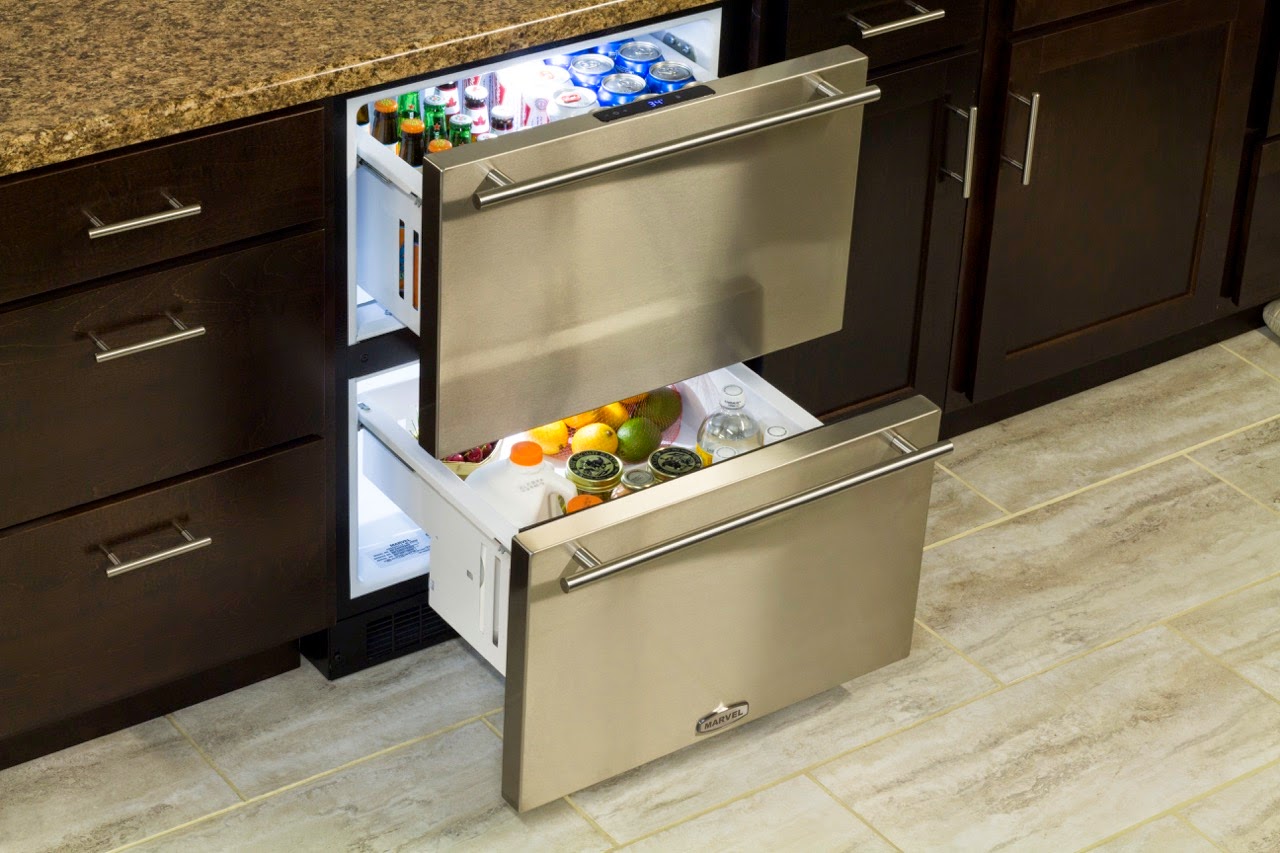
Fridge-to-Freezer Drawer vs. Other Refrigerator Drawers
The terms can sound similar, but the functions differ.
| Drawer type | Main purpose | Can it freeze food? |
|---|---|---|
| Crisper drawer | Controls humidity for produce | No |
| Meat or deli drawer | Keeps selected foods colder | Usually no |
| Beverage drawer | Holds drinks at a set temperature | Usually no |
| Freezer drawer | Stores frozen food | Yes |
| Convertible drawer | Switches between temperature modes | Sometimes, if it reaches 0°F |
The phrase “cold drawer” does not always mean “freezer.” A drawer may be colder than the main refrigerator but still remain above freezing.
Check the manual for the actual range. If the documentation does not state that the drawer is suitable for frozen-food storage, treat it as a refrigerator drawer.

What Are the Benefits and Limits?
A fridge-to-freezer drawer is most useful when your storage needs change from week to week.
Benefits
- Adds flexible storage
- Reduces the need to rearrange the main freezer
- Keeps drinks or snacks easy to reach
- Provides a separate area for meat or seafood
- Helps during holidays and large gatherings
- May let a household choose between more fresh or frozen storage
Limits
- It may have less room than a full freezer
- It may cool more slowly after a mode change
- Some settings may not reach 0°F
- Temperature can rise when the drawer is opened often
- The drawer may use extra electricity when operated as a freezer
- Repair can be more complex than with a basic drawer
- A control setting does not prove the actual food temperature
The most important question is not whether the drawer has a “freezer” button. The important question is whether it can maintain 0°F under normal use.

How Much Does a Convertible Drawer Increase Storage?
A convertible drawer increases usable flexibility, not necessarily total refrigerator capacity.
For example, imagine a refrigerator with:
- A 10-cubic-foot main refrigerator section
- A 5-cubic-foot main freezer
- A 2-cubic-foot convertible drawer
If the drawer operates as a refrigerator, the household has about 12 cubic feet of refrigerator space and 5 cubic feet of freezer space. If the drawer operates as a freezer, the household has about 10 cubic feet of refrigerator space and 7 cubic feet of freezer space.
This is a simple example, not a capacity claim for a particular model. Actual usable space will be lower than the listed volume because shelves, bins, walls, and air gaps take up room.
A convertible drawer works best for people whose storage needs change. It may be less useful for a household that always needs the same large amount of freezer space.

Common Problems and Troubleshooting
A convertible drawer that does not cool correctly may have a simple cause. Check the safest and easiest items first.
The drawer will not switch modes
Possible causes include:
- The control panel is locked
- The drawer is not fully closed
- The refrigerator is in Sabbath mode
- The control was not held long enough
- The model does not support the selected mode
- A power interruption reset the controls
Try unlocking the controls and checking the manual. Do not force the drawer or remove electrical panels.
The drawer is not cold enough
Check whether:
- The drawer has just changed modes
- The door or drawer seal is dirty
- Food blocks an air vent
- The main refrigerator is also warm
- The condenser needs cleaning, if the manual allows it
- The drawer is opened too often
- The room is very warm
- The temperature setting is incorrect
If the main refrigerator and freezer are both warm, the issue may affect the whole appliance. If only the convertible drawer is warm, the drawer’s sensor, fan, damper, or control system may need service.
Food is freezing in refrigerator mode
Possible causes include:
- The selected setting is colder than expected
- Food is touching a cold wall or air outlet
- The drawer is nearly empty
- A sensor is covered
- The refrigerator temperature is set too low
- Cold air is entering from a faulty damper
Move sensitive food away from vents and check the temperature with a thermometer. If freezing continues, contact the manufacturer or a qualified appliance technician.
The drawer has frost or ice
Some frost may occur if warm, moist air enters the drawer. Common causes include:
- A drawer that does not close fully
- A damaged gasket
- Wet food placed inside uncovered
- Frequent opening
- A blocked drain or air path
Do not chip ice away with a knife. You could damage the liner or puncture a cooling line. Follow the manufacturer’s defrost instructions.
When should you call for service?
Arrange service when:
- The drawer cannot hold a safe temperature
- The appliance repeatedly shows a temperature alarm
- The compressor runs constantly
- You hear unusual electrical sounds
- The gasket is damaged and cannot be replaced easily
- You smell burning or see damaged wiring
- The unit leaks refrigerant or oil
Unplug the refrigerator only when it is safe to do so and when doing so will not create a food-safety problem. Never open sealed refrigeration parts or handle refrigerant yourself.

How Do You Choose a Refrigerator With This Feature?
Before buying, compare the drawer’s actual function rather than its name.
Look for these details:
- Temperature range: Does the drawer reach 0°F in freezer mode?
- Independent control: Can you set the drawer without changing the main refrigerator?
- Mode-change time: How long does the manufacturer say cooling may take?
- Capacity: Is the drawer large enough for your usual food?
- Air separation: Does the drawer have its own cooling path?
- Alarm system: Does it warn you when the drawer is too warm?
- Power outage behavior: Does it retain the selected mode?
- Cleaning: Can you remove the bin and wash it safely?
- Repair access: Are drawer parts and seals available?
- Energy use: Does the appliance carry an updated EnergyGuide label?
Energy use varies by the complete refrigerator design, not just the convertible drawer. Compare the appliance’s energy information with similar models. The U.S. Department of Energy refrigerator guidance explains how refrigerator energy use works.
A convertible drawer is a good fit if you need flexible storage. If you need a large, permanent freezer, a full-size freezer compartment or separate freezer may be more practical.

Safety Rules for Using a Fridge-to-Freezer Drawer
Follow these basic rules:
- Keep refrigerator food at 40°F or below.
- Keep frozen food at 0°F.
- Use a thermometer when the actual temperature matters.
- Do not overload the drawer.
- Keep raw meat and seafood sealed.
- Wash hands after handling raw food.
- Do not use a damaged drawer seal.
- Discard food that has been above a safe temperature for too long.
- Follow the owner’s manual for cleaning and defrosting.
- Keep children from climbing into empty drawers or refrigerators.
The FDA food safety guidance and USDA guidance provide current information about refrigeration, freezing, and food handling.

Key Takeaways
- A fridge-to-freezer drawer is a convertible drawer that can work as a refrigerator or freezer.
- Not every cold drawer can freeze food.
- For freezer storage, confirm that the drawer reaches and maintains 0°F.
- For refrigerator storage, keep it at 40°F or below.
- Use an appliance thermometer instead of trusting the display alone.
- Read the refrigerator manual before changing modes.
- Allow the drawer time to cool before adding valuable or perishable food.
- Do not block vents, overfill the drawer, or force ice out with sharp tools.
FAQs
Can any refrigerator drawer become a freezer?
No. Only drawers designed and rated as convertible or freezer-capable should be used for frozen food. A crisper, deli, meat, or beverage drawer may become cold but still remain above freezing.
How long does a fridge-to-freezer drawer take to freeze?
The time depends on the model, starting temperature, room temperature, food load, and how often the drawer is opened. Check the owner’s manual and verify the temperature with an appliance thermometer.
Can I put ice cream in a convertible drawer?
Yes, if the drawer maintains about 0°F. Ice cream may become soft if the drawer is warmer than a standard freezer. Check the temperature instead of relying only on the “freezer” label.
Does changing the drawer to freezer mode freeze the main refrigerator?
Usually not. Many models isolate the convertible drawer from the main refrigerator. However, the cooling design differs, so check the product manual for your specific appliance.
Can I switch the drawer from freezer to refrigerator while food is inside?
You should usually remove frozen food before changing to refrigerator mode. A mode change may raise the temperature and partially thaw the food. Follow the manufacturer’s instructions.
Is a convertible drawer worth it?
It can be worthwhile if your household shifts between fresh and frozen storage. It may not be worth the added cost or complexity if you always need the same amount of freezer space.
Conclusion
A fridge-to-freezer drawer is a flexible storage zone that can change from refrigerator use to freezer use. Its value depends on one detail: whether it can maintain the temperature you need.
Use the drawer as refrigerator space when it stays at or below 40°F. Use it for long-term frozen food only when it reaches and holds 0°F. Read the manual, allow time for temperature changes, and confirm the result with an appliance thermometer.

Appliance Review Expert
Lucas Ramirez is a trusted voice at HomeFixGrid.com, known for his clear, practical, and creatively written guides that simplify appliance care for everyday homeowners. With a strong focus on hands-on testing and real-world problem-solving, Lucas brings expert insight into appliance reviews and troubleshooting techniques. Her work empowers readers to confidently maintain, repair, and choose the right appliances for their homes.