Can You Have A Microwave In A Dorm: Rules And Tips
Introduction
Yes, you can often have a microwave in a U.S. dorm room—but not always. Each college sets its own housing and fire-safety rules. Some schools allow small microwaves in student rooms. Others permit them only in shared kitchens or ban them from bedrooms and residence halls.
Before you bring one to campus, check your school’s current housing handbook. Look for rules on microwave size, wattage, approved appliances, power strips, and room types. If the handbook is unclear, ask residence life or your resident assistant before move-in.

Why Dorm Microwave Rules Are Different
Dorm microwave policies differ because colleges must manage fire risk, electrical loads, ventilation, and room design. A microwave may be safe in one building but restricted in another with older wiring or no kitchen space.
Most schools consider several factors:
- Fire safety: A microwave can overheat food, damage containers, or cause a fire if used incorrectly.
- Electrical capacity: Many dorm rooms share circuits with lights, refrigerators, computers, and other devices.
- Ventilation: A microwave can create steam, smoke, or strong food odors in a small room.
- Building design: Some residence halls have shared kitchens with approved appliances.
- Housing contracts: Your lease or room agreement may ban certain appliances even when they are legal to own.
The word “dorm” also covers different housing types. A traditional residence hall, apartment-style dorm, suite, and university-owned apartment may all have different rules.
Common college policies
A school may use one of these approaches:
| Policy type | What it usually means |
|---|---|
| Microwaves allowed | You may keep a microwave in your room if it meets size and wattage limits. |
| Microwaves allowed only in kitchens | You must use a shared kitchen or suite kitchen. |
| Microwave and refrigerator combination required | The school may allow only a listed micro-fridge unit. |
| Microwaves banned | You may not bring or use one in the residence hall. |
| Seasonal or building-specific rules | The policy may change by dorm, room type, or academic year. |
Do not assume that a microwave is allowed because another student has one. Some students may have an approved unit, may live in a different building, or may be breaking the rules.

How to Check If Your Dorm Allows a Microwave
The safest method is to check official housing information before you pack. Search your college’s website for terms such as residence life handbook, prohibited appliances, housing contract, or fire safety rules.
Follow these steps:
-
Find your housing contract.
The contract often lists banned or limited appliances. -
Read the residence hall handbook.
Check both the general appliance section and the rules for your specific building. -
Look for technical limits.
Note any maximum wattage, size, weight, or plug requirements. -
Check whether your room includes a micro-fridge.
A school-owned unit may be the only microwave permitted. -
Ask housing staff if the wording is unclear.
Contact residence life, housing assignments, or your resident assistant. -
Save the answer.
Keep an email or screenshot of the rule. This can help if a move-in inspection raises a question.
Ask a clear question, such as:
“Is a personal countertop microwave allowed in my assigned room? If so, what are the maximum wattage, size, and plug requirements?”
A verbal answer from another student is not enough. Housing rules can change each year, and enforcement can vary by building.

What Microwave Specs Are Usually Suitable for a Dorm?
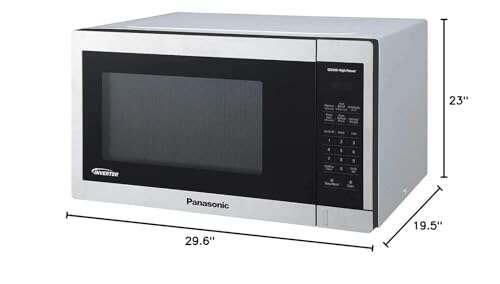
If your school permits a personal microwave, choose a compact countertop model that fits the stated limits. The exact limit comes from your college, not from a universal dorm standard.
Wattage
Many compact microwaves use less power than full-size models, but the label may show different numbers:
- Input wattage: The power the microwave draws from the wall.
- Cooking wattage: The microwave energy used to heat food.
For dorm safety, the school may care about input wattage because it affects the electrical circuit. Check the product label or manual instead of guessing from the marketing name.
A microwave that draws 1,200 watts may be restricted even if it is sold as a small model. If your housing rule gives a maximum, compare that limit with the appliance’s electrical rating.
Size and weight
Measure the space before buying. Leave room around the unit as required by its manual. Do not place it inside a closed cabinet unless the manufacturer specifically allows that setup.
Check these measurements:
- Width
- Depth
- Height
- Door swing
- Clearance above and around the unit
- Distance from the wall outlet
- Weight if the desk or shelf has a limit
Plug and certification
Use a microwave with its original grounded plug. Look for a recognized safety certification mark, such as UL, ETL, or another mark accepted by your school or local authority.
A certification mark does not mean the microwave is allowed in your dorm. It only relates to the product’s evaluation under the relevant safety standard. The housing policy still controls.
Control features
Simple controls are often useful in a dorm. Helpful features may include:
- Clear time controls
- A stop or cancel button
- A kitchen timer
- An interior light
- A child-lock feature if children may visit
- A removable turntable that is easy to clean
Extra cooking modes are not essential. A safe fit, correct power rating, and easy cleaning matter more.

How to Use a Microwave Safely in a Dorm Room
Use the microwave only when the appliance, location, outlet, and food container are all suitable. The U.S. Food and Drug Administration advises following the manufacturer’s instructions and using microwave-safe cookware.
Set it up correctly
Place the microwave on a stable, level surface. Keep it away from sinks, wet areas, bedding, paper clutter, and curtains. Do not block its vents.
Plug it directly into the wall if the manufacturer and housing rules require that setup. Avoid extension cords. Do not plug a microwave into a cheap power strip shared with a mini-fridge, hair dryer, heater, or other high-power device.
If the outlet, plug, or cord becomes hot, stop using the microwave. Unplug it if you can do so safely, and report the problem to housing staff or a qualified electrician.
Use safe containers
Use containers labeled for microwave use. Glass and many microwave-safe ceramic dishes are common choices. Some plastic containers can melt or release chemicals when heated, so follow the container label.
Never microwave:
- Metal dishes or foil unless the manual specifically permits a limited use
- Metal twist ties
- Containers with hidden metal trim
- Sealed jars
- Closed food containers
- Eggs in their shells
- Grapes or other items known to spark under some conditions
Cover food loosely to reduce splatter. Do not seal the cover. Steam needs a way to escape.
Prevent overheating
Stay nearby while the microwave runs. Do not use it as a place to dry clothes, paper, towels, or other items.
Liquids can become very hot without appearing to boil. Heat them for short periods, let them stand briefly, and handle the container with care. Stir food when appropriate and follow the package directions.
If you see sparks, smoke, or flames, stop the microwave at once. Keep the door closed if there is a fire. Unplug the unit only if you can do so without touching flames or entering danger. Leave the room and call 911 if the fire does not stop quickly or if anyone is at risk.

Can You Use a Microwave With a Mini-Fridge?
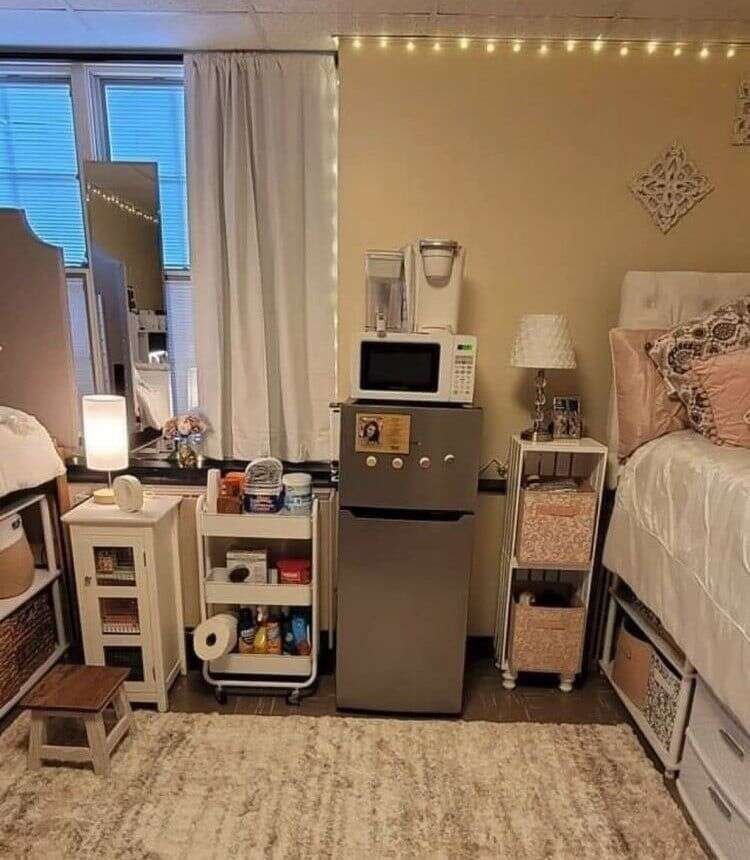
Sometimes, but the answer depends on the dorm’s rules and the electrical design. Many residence halls provide a combined micro-fridge made for student rooms. A personal microwave placed on top of a mini-fridge may be banned even when both appliances are individually allowed.
A mini-fridge can also create a practical problem. Refrigerators cycle on and off. When a microwave starts, it draws a large amount of power for a short time. Sharing one outlet or circuit may trip a breaker, especially if other high-power devices are running.
Do not unplug or bypass a refrigerator’s safety device. Do not use an unauthorized adapter to create more outlets. If the setup trips a breaker, stop using the combination and ask housing maintenance for help.
If the school supplies a micro-fridge, use it as directed. The school may require students to use its equipment because it has been checked for the room’s electrical system and furniture layout.

What Can You Cook in a Dorm Microwave?
A microwave works well for simple meals, reheating, and small portions. It cannot replace a full kitchen for every type of cooking.
Good dorm-friendly options include:
- Oatmeal
- Rice and other microwaveable grains
- Frozen vegetables
- Canned soup in a microwave-safe bowl
- Baked potatoes
- Steamed vegetables
- Scrambled eggs made in a suitable container
- Leftovers
- Microwaveable pasta or packaged meals
Cut food into even pieces so it heats more evenly. Stir food during heating when the package or recipe calls for it.
Microwave heating can be uneven. The U.S. Department of Agriculture recommends using a food thermometer when food safety depends on reaching a safe internal temperature. This matters for foods such as meat, poultry, egg dishes, and leftovers.
Refrigerate perishable food within two hours, or within one hour when the surrounding temperature is above 90°F, according to USDA guidance. A microwave can reheat food, but it does not make poor storage safe.
Foods that need extra care
Some foods may splatter, burst, dry out, or heat unevenly. Take care with:
- Sauces
- Soup
- Hot dogs and sausages
- Eggs
- Potatoes
- Rice and pasta
- Frozen meals
- Foods with thick centers
Follow the package directions. Let food stand for the listed time after cooking. The standing time allows heat to spread through the food.

What to Do If Your Microwave Is Banned
A microwave ban does not mean you have no way to heat food. Use the options approved by your school.
You may be able to:
- Use a shared residence hall kitchen
- Use a microwave in a student lounge
- Buy meals from the dining hall
- Use an approved micro-fridge
- Ask whether your building has an accessible cooking space
- Request guidance from housing staff if you have a disability-related need
Do not hide a microwave or use it after staff tell you to remove it. A housing violation can lead to a fine, confiscation, or conduct action. More seriously, an unapproved appliance can create risk for everyone in the building.
If you need a microwave for a documented medical or disability-related reason, contact disability services and housing. Ask about the school’s accommodation process. Do not assume that an accommodation is automatic; the school may need information and may offer a different approved setup.
Common Dorm Microwave Mistakes
The most common problems come from assuming that a small appliance is automatically safe or allowed.
Mistake 1: Buying before checking the rules
A compact microwave can still violate a no-appliance policy. Check first, then buy.
Mistake 2: Using a power strip
Microwaves draw substantial power. A power strip may overheat or trip the circuit if it is overloaded. Follow the microwave manual and housing rules.
Mistake 3: Blocking ventilation
Pushing the microwave against a wall or placing items on top can restrict airflow. Use the clearances in the manual.
Mistake 4: Heating sealed food
Steam can build pressure inside a closed container. Open or vent containers as directed.
Mistake 5: Leaving food unattended
A short cooking time does not remove the risk of smoke, sparks, or an overheated container.
Mistake 6: Treating a dorm microwave like an oven
A microwave does not brown food in the same way as an oven. Do not use metal bakeware or improvised accessories unless the manufacturer specifically permits them.
Mistake 7: Ignoring a damaged cord
Do not use a microwave with a cut cord, loose plug, cracked door, broken seal, or damaged housing. Report it or replace it.

Dorm Microwave Decision Checklist
Use this checklist before bringing a microwave to campus:
- The housing contract allows a personal microwave.
- The rule applies to your exact residence hall and room type.
- The microwave meets the school’s wattage limit.
- The microwave fits on a stable, open surface.
- The outlet and plug meet the manual and housing rules.
- You do not need an extension cord or unsafe adapter.
- The microwave has no damaged parts.
- You have microwave-safe containers.
- You know where the nearest approved kitchen is.
- You know how to report a tripped breaker, smoke, or damaged outlet.
If any answer is “no,” pause before using the appliance. Ask housing staff for a clear answer.

Frequently Asked Questions
Can I bring my own microwave to college?
You can bring one only if your college permits personal microwaves in your building and room. Check the housing contract for limits on wattage, size, and placement.
What size microwave is best for a dorm?
A compact countertop microwave is usually easier to fit than a full-size model. However, the best size is the largest unit that stays within your school’s space and wattage rules. Measure your surface before you buy.
Can I plug a microwave into a power strip?
Do not assume that you can. Microwaves often draw high power, and many housing policies ban connecting them to power strips or extension cords. Follow the appliance manual and your school’s rule. A direct wall connection may be required.
Are microwaves allowed in dorm rooms with no kitchen?
Some schools allow them, while others place microwaves in shared kitchens only. The lack of a kitchen does not automatically create an exception.
Can I use a microwave if I have a meal plan?
A meal plan does not usually change appliance rules. You may still need to follow the residence hall’s safety policy, even if you mainly eat dining hall food.
What should I do if my microwave starts smoking?
Stop the microwave. Keep the door closed if there is a flame. Leave the area and call 911 if the fire continues or anyone is in danger. Report the incident to housing staff, even if the smoke stops.
Conclusion
You can have a microwave in a dorm only when your U.S. college allows it and the appliance meets the stated safety limits. The key checks are your housing contract, residence hall rules, wattage limit, outlet requirements, and placement instructions.
Before move-in, ask housing staff for written confirmation. If the microwave is approved, use a stable surface, safe containers, proper ventilation, and no unauthorized extension cord or power strip. If it is banned, use the shared kitchen or another approved option rather than risking a housing violation or electrical problem.

Appliance Review Expert
Lucas Ramirez is a trusted voice at HomeFixGrid.com, known for his clear, practical, and creatively written guides that simplify appliance care for everyday homeowners. With a strong focus on hands-on testing and real-world problem-solving, Lucas brings expert insight into appliance reviews and troubleshooting techniques. Her work empowers readers to confidently maintain, repair, and choose the right appliances for their homes.