Can You Put Clay In The Microwave: Safe Heating Guide
Usually, no—you should not put clay in the microwave unless the package clearly says that the specific product is microwave-safe.
In the United States, “clay” can mean many things. Modeling clay, polymer clay, air-dry clay, ceramic clay, and finished pottery all react differently to microwave heat. Most raw or craft clay can soften, crack, release fumes, trap steam, or catch fire. A piece of pottery may be microwave-safe only after it has been properly fired, glazed, and labeled for microwave use.
The safest rule is simple: check the product label first. If the label does not approve microwave use, keep the clay out of the microwave.

Why Clay Can Be Unsafe in a Microwave
A microwave heats water and other polar molecules by making them move rapidly. Clay may contain water, oils, solvents, binders, metal particles, or other materials that heat in uneven ways.
That uneven heating can cause:
- Cracks or breaks
- Steam buildup
- Surface scorching
- Smoke or strong odors
- Fire
- Damage to the microwave
- Burns from hot clay or steam
A microwave does not heat clay like a kiln. A kiln uses controlled, even heat to remove moisture and change ceramic clay into a hard material. A microwave heats certain parts of an object faster than others. That difference can create stress inside the clay.
Clay that feels dry on the outside may still hold moisture in the center. When that water turns into steam, pressure can build inside the piece. The clay can split or burst, especially if it is thick.
Microwave-safe and oven-safe are also different terms. A product made for a conventional oven may not be safe in a microwave. Likewise, a food container labeled microwave-safe does not mean that raw clay placed inside it is safe.
Can You Microwave Different Types of Clay?
The type of clay determines the risk, but most craft clays should not go in a microwave.
| Clay type | Microwave recommendation | Main concern |
|---|---|---|
| Polymer clay | Do not microwave unless the manufacturer gives clear approval | Uneven heating, fumes, scorching, and possible fire |
| Air-dry clay | Do not microwave | Trapped moisture, cracks, steam, and uneven drying |
| Ceramic or pottery clay | Do not microwave before kiln firing | Water inside the clay can turn to steam and break the piece |
| Modeling clay or plasticine | Do not microwave | Oils, waxes, pigments, and fillers may melt or burn |
| Salt dough | Do not microwave | Rapid moisture loss, cracking, smoke, or scorching |
| Fully fired ceramic pottery | Only if labeled microwave-safe | Glaze, cracks, metal decoration, and heat buildup |
| Food-safe clay product | Follow the exact package directions | Products differ in ingredients and curing methods |
Polymer clay
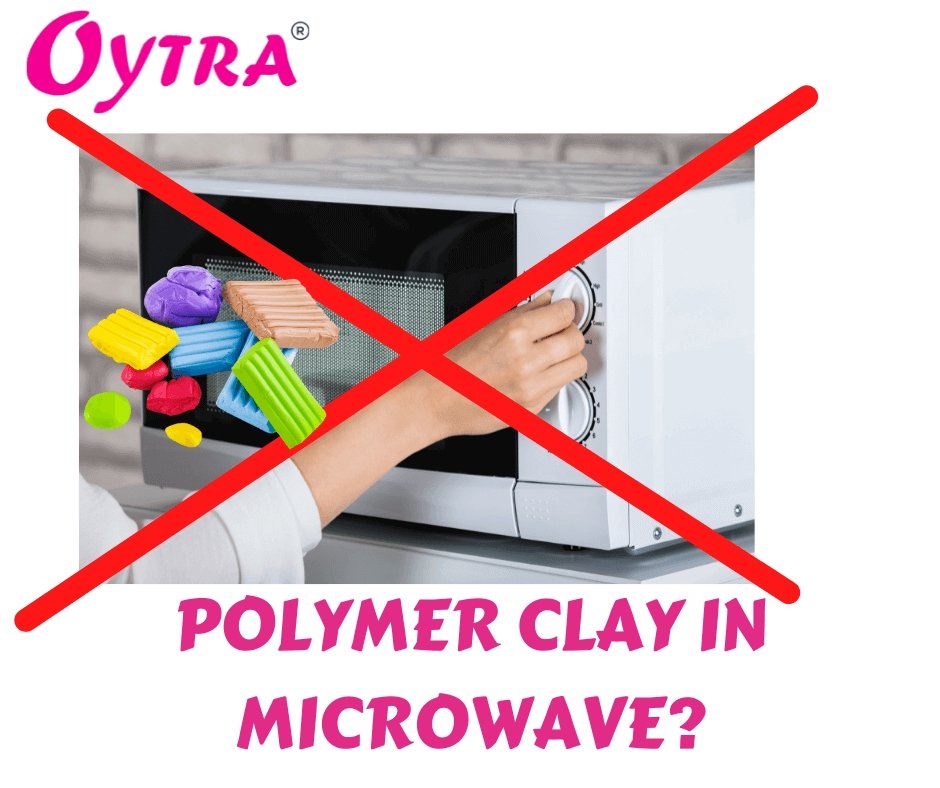
Polymer clay is made from a plastic-based material. It is designed to cure in a conventional oven at a specific temperature and for a specific time.
Do not use a microwave as a faster substitute. Microwave energy can heat the clay unevenly. Some areas may remain soft while others become very hot. The clay may scorch, release an unpleasant odor, or catch fire.
Follow the brand’s package instructions. For example, polymer clay makers such as Sculpey provide oven-curing directions and warn users not to use a microwave for curing their products.
Air-dry clay
Air-dry clay hardens as water leaves the material. A microwave can force the outside to dry much faster than the inside.
That rapid change can cause:
- Warping
- Deep cracks
- A hollow or weak center
- Steam pockets
- Broken details
Let air-dry clay cure at room temperature unless the manufacturer gives a different method. Keep thick pieces in a dry, well-ventilated place. Turning the piece from time to time may help it dry more evenly.
Ceramic clay and greenware
Raw ceramic clay must be dried completely before it goes into a kiln. Even then, a microwave is not a safe replacement for kiln firing.
A handmade piece may look hard but still contain water in its center. Heating it in a microwave can create steam and cause the piece to break apart. Kiln firing also changes the clay through controlled heat that a household microwave cannot provide.
Modeling clay and plasticine
Modeling clay often contains waxes, oils, or plastic materials. It may soften when warm, but that does not mean it is safe to heat.
A microwave can make the material run, smoke, or heat unevenly. Some pigments or additives may also create strong odors. Use the product as directed rather than trying to dry or harden it in a microwave.

Can You Microwave Clay to Dry It Faster?
Do not microwave wet clay to speed up drying. The faster method can damage the piece and create a burn or fire risk.
For air-dry clay, use slow drying instead:
- Place the piece on a clean, dry surface.
- Keep it away from direct heat and strong sunlight.
- Turn it gently as the outer surface firms up.
- Allow extra time for thick areas.
- Follow the package instructions before sanding, painting, or sealing.
If the piece is very thick, reduce its size or add support during the design stage. Large solid masses dry poorly because moisture has farther to travel before it can leave.
Do not place wet ceramic clay in a microwave, even for a short time. The microwave may not visibly damage the piece at first, but trapped moisture can later cause cracking or breakage.
A conventional oven is not automatically a safe drying tool either. Use an oven only when the clay maker gives exact oven directions. Polymer clay, for example, needs the temperature listed by its manufacturer. Air-dry clay and ceramic clay usually do not become safer simply because they are heated in a kitchen oven.

Is Finished Pottery Safe in the Microwave?
Finished pottery may be microwave-safe, but the word “pottery” alone is not enough.
A fired ceramic mug or bowl is more likely to be suitable when:
- The maker labels it microwave-safe.
- It has no metallic paint, gold trim, or silver trim.
- It has no visible cracks, chips, or hairline fractures.
- It does not become unusually hot during normal use.
- It was made with suitable ceramic materials and glaze.
Decorative pottery may contain metallic details that spark in a microwave. A crack can also allow water to enter the ceramic body. That water may heat and expand, which can make the piece break.
If you are unsure about an unlabeled handmade item, avoid using it in the microwave. Use a known microwave-safe glass or ceramic container instead.
A cautious home check
A common screening test involves placing the empty ceramic item beside a cup of water in the microwave. Heat the water for about one minute, then check whether the ceramic feels much hotter than the water.
This test is not a guarantee of safety. It cannot confirm that a glaze is food-safe, detect every internal crack, or prove that the piece will remain safe over repeated use. Do not test an item with metal decoration, visible damage, or an unknown coating.
The safest choice is still a clear microwave-safe label from the maker.

What to Do If You Already Microwaved Clay
If the clay is heating, smoking, sparking, or producing a strong odor, stop the microwave at once.
Follow these steps:
- Press Stop or open the microwave door if you can do so safely.
- Keep the door closed if there is a flame inside. The closed door helps limit oxygen.
- Unplug the microwave only if you can do it without touching smoke, flame, or hot material.
- Let the item cool completely before handling it.
- Ventilate the room if there is an odor, but avoid breathing smoke.
- Call 911 if the fire does not stop or if the situation is unsafe.
Do not touch hot clay with bare hands. It may look solid while still holding heat or steam.
Afterward, check the microwave for melted material, soot, a damaged interior coating, or a persistent smell. Do not use the appliance if it has visible damage, sparks during later use, or an electrical odor. Have it inspected or replace it.
Throw away clay that has been overheated, burned, or mixed with food. Do not eat food that touched melted craft clay or unknown residue.
Safer Ways to Harden or Cure Clay
The best method depends on the clay type.
For polymer clay
Use a properly working conventional oven at the temperature and time listed on the package. Use an oven thermometer if the manufacturer recommends one or if your oven temperature is unreliable.
Do not guess the temperature. Too much heat can burn polymer clay, while too little heat can leave it weak.
For air-dry clay
Let the piece dry naturally at room temperature. Keep the piece supported and allow more time for thick sections.
Do not seal or paint the surface while the center is still damp. A sealed surface can trap moisture and lead to later cracks.
For ceramic clay
Allow the piece to dry fully, then use a suitable pottery kiln and firing schedule. Kiln firing should be handled by someone with the correct equipment and knowledge of the clay body and glaze.
A local community art center, school, pottery studio, or professional kiln service may be able to fire a piece safely.
For modeling clay
Most modeling clay is meant to stay soft. If you need a hard sculpture, use a product made for that purpose, such as polymer clay, air-dry clay, or a manufacturer-approved modeling compound.

Common Mistakes to Avoid
Several shortcuts can damage clay or create a safety hazard.
- Do not microwave clay for a few seconds “to test it.” A short time can still create hot spots.
- Do not trust appearance alone. Dry-looking clay may hold water inside.
- Do not use an oven setting as a substitute for a kiln. Ceramic firing requires controlled heat and equipment.
- Do not assume food-safe means microwave-safe. These labels address different risks.
- Do not microwave clay with metal paint or foil. Metal can spark and damage the appliance.
- Do not use a covered container to heat wet clay. Steam pressure can build inside.
- Do not heat clay near food. Craft materials are not intended for food contact unless the maker clearly says they are.
- Do not rely on a general internet tip over the product instructions. The exact ingredients and curing method matter.
When instructions conflict, follow the current directions from the product manufacturer. If there are no directions, treat the clay as unsuitable for microwave use.

Quick Decision Guide
Use this simple rule before heating any clay product:
- Raw clay? Do not microwave it.
- Wet or air-dry clay? Let it dry naturally.
- Polymer clay? Use the manufacturer’s oven directions.
- Ceramic clay or greenware? Dry fully and use a kiln.
- Modeling clay? Keep it at room temperature unless the label says otherwise.
- Finished pottery? Use it in a microwave only when it is labeled microwave-safe and has no metal or damage.
- No label or unclear instructions? Do not microwave it.

Frequently Asked Questions
Can you microwave Crayola air-dry clay?
Do not microwave it unless the product’s current package instructions specifically allow microwave use. Air-dry clay is intended to harden as moisture leaves it, so room-temperature drying is the safer default.
Can you microwave polymer clay to cure it?
No. Use the curing temperature and time printed on the polymer clay package. A microwave does not provide the even, controlled heat needed for reliable curing.
Can you microwave pottery clay?
No, not before kiln firing. Moisture inside raw pottery clay can become steam and cause the piece to crack or break.
Can clay pots go in the microwave?
Only if the finished pot is labeled microwave-safe and has no metal decoration or visible damage. A handmade or decorative clay pot without clear instructions should not be used for microwave cooking.
Can you microwave clay to soften it?
Avoid doing so. The clay may heat unevenly, melt, scorch, or release fumes. Use the softening method listed by the manufacturer, such as warming it by hand or using a product-approved method.
Conclusion
You generally cannot put clay in the microwave safely. Raw clay, polymer clay, air-dry clay, modeling clay, and ceramic greenware should stay out of the appliance unless the manufacturer gives direct microwave instructions.
For a safe result, match the material to its proper method: air-dry clay should dry slowly, polymer clay should cure in a conventional oven as directed, and ceramic clay should be fired in a kiln. Use finished pottery in a microwave only when it is clearly labeled microwave-safe and free from metal, cracks, and damage.

Appliance Review Expert
Lucas Ramirez is a trusted voice at HomeFixGrid.com, known for his clear, practical, and creatively written guides that simplify appliance care for everyday homeowners. With a strong focus on hands-on testing and real-world problem-solving, Lucas brings expert insight into appliance reviews and troubleshooting techniques. Her work empowers readers to confidently maintain, repair, and choose the right appliances for their homes.