Can You Use A Countertop Microwave As A Built In: Yes?
Yes, you can use a countertop microwave as a built in only with proper airflow and approval.
If you are asking, “can you use a countertop microwave as a built in,” the answer depends on the microwave model, cabinet design, ventilation, and manufacturer instructions. A countertop unit may fit neatly into a cabinet opening, but fitting is not the same as safe built-in installation. This guide explains the risks, the right methods, common mistakes, and when a true built-in microwave is the better choice.
Can You Use a Countertop Microwave as a Built In?
The short answer is sometimes, but not in every kitchen or with every microwave. A countertop microwave is designed to sit in an open area where air can flow around its sides, back, and top. A built-in microwave is designed for cabinet installation and usually has a front ventilation system or an approved trim kit.
So, can you use a countertop microwave as a built in without changes? Usually, no. Placing it inside a tight cabinet can block the cooling vents. That may cause overheating, poor cooking results, appliance damage, or a fire risk.
The safest options are:
• Use the microwave on an open countertop.
• Install a manufacturer-approved trim kit made for that exact model.
• Choose a microwave that the manufacturer labels as built-in compatible.
• Replace the countertop model with a true built-in microwave.
A microwave can look built in while still being unsafe. The cabinet opening must support proper airflow, electrical access, heat control, and safe use of the door.

What Is the Difference Between a Countertop and Built-In Microwave?
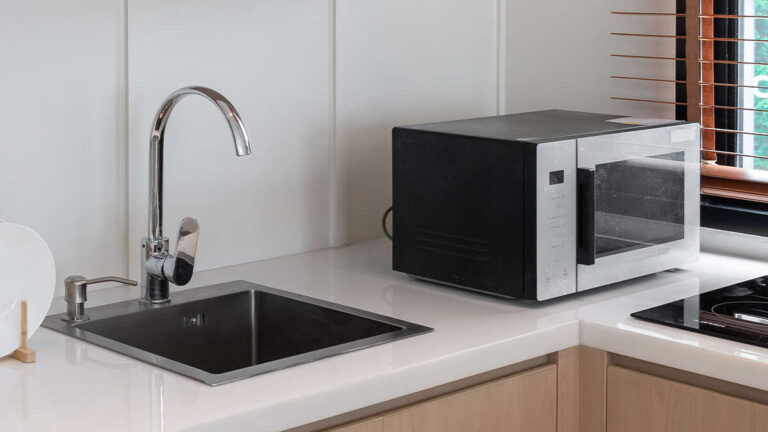
A countertop microwave is a freestanding appliance. It normally has vents on the back, sides, top, or more than one of these areas. These vents release heat from the magnetron and other internal parts.
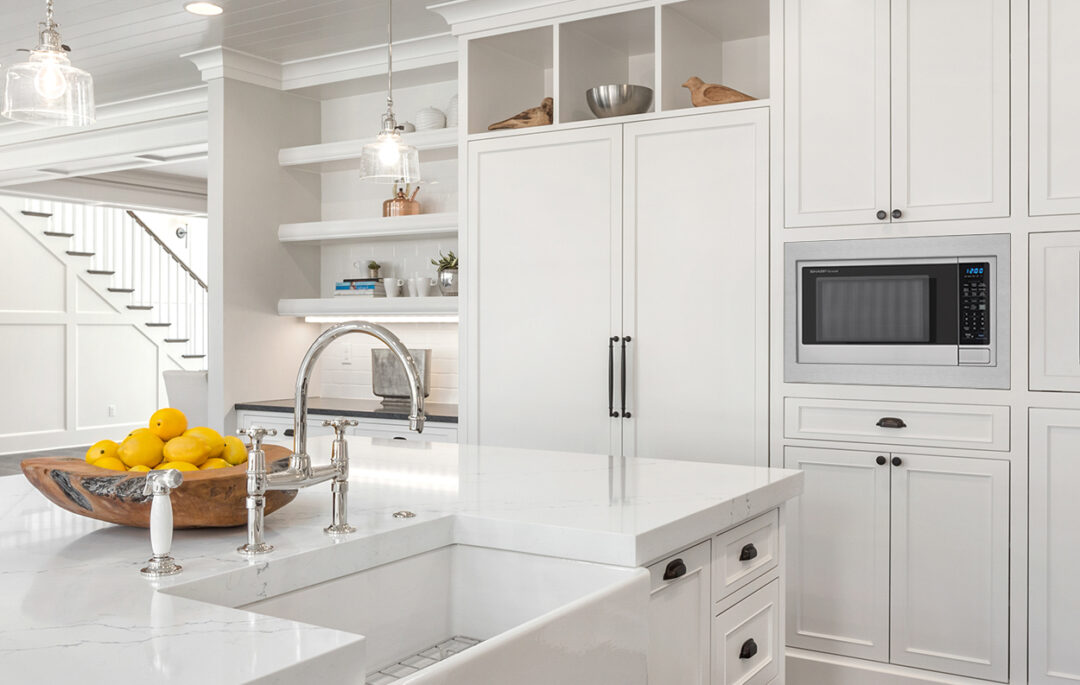
A built-in microwave is made for cabinet or wall installation. It often vents through the front, and its frame may include a trim kit that closes the gap around the appliance. Built-in models also tend to have mounting hardware and installation instructions for cabinet use.
Here are the main differences:
• Countertop microwave: Designed for open-air placement.
• Built-in microwave: Designed for cabinet installation.
• Countertop microwave: Often has exposed side or rear vents.
• Built-in microwave: Usually uses front or controlled ventilation.
• Countertop microwave: Often plugs into a standard outlet.
• Built-in microwave: May require a dedicated circuit or professional wiring.
• Countertop microwave: Usually costs less.
• Built-in microwave: Often costs more but gives a cleaner, custom look.
This difference explains why can you use a countertop microwave as a built in is not a simple yes-or-no question. The appliance’s design matters more than its size or appearance.
Why Cabinet Ventilation Matters
Microwaves create heat while they cook food. The magnetron, transformer, control board, and other parts need a steady flow of air to stay within a safe temperature range.
When a countertop microwave sits inside a tight cabinet, hot air may collect around the appliance. Think of it like wearing a heavy coat while running. The microwave may work for a while, but the trapped heat places extra stress on its parts.
Poor ventilation can lead to:
• Automatic shutdown during cooking.
• Shorter appliance life.
• Overheated wiring or electronic parts.
• Melted cabinet surfaces in extreme cases.
• A greater risk of electrical or fire damage.
• A warranty claim being denied.
The exact clearance depends on the manufacturer. Some models need several inches of open space on top, behind, or on each side. Never guess based on another microwave. Check the installation guide for the exact model number.
If the manual says the microwave is for countertop use only, treat that instruction as a firm limit. A cabinet opening that looks roomy may still block a critical vent.

Can You Install a Countertop Microwave With a Trim Kit?
A trim kit can make some countertop microwaves look built in. However, not every trim kit is universal, and a decorative frame does not automatically make an appliance safe for cabinet use.
A proper trim kit is designed for a specific microwave model or a very limited group of models. It may include:
• A metal or high-temperature frame.
• Mounting brackets.
• Airflow channels.
• Spacers for the correct cabinet depth.
• Instructions for safe installation.
Before buying a trim kit, check these points:
-
Confirm the exact microwave model number.
-
Look for a trim kit listed by the microwave manufacturer.
-
Check the required cabinet opening width, height, and depth.
-
Confirm that the cabinet can support the appliance and trim kit.
-
Review the ventilation and electrical requirements.
-
Make sure the door can open fully without hitting nearby cabinets.
A third-party frame may block vents or trap heat. It may also leave sharp edges, create noise, or place stress on the microwave door. When people ask can you use a countertop microwave as a built in, the most responsible answer is to use a factory-approved solution or choose a true built-in appliance.
How to Make a Countertop Microwave Look Built In Safely
If you want a built-in appearance, you have several safer design choices. The best choice depends on your kitchen layout, budget, and the microwave’s instructions.
Use an open shelf
An open shelf can make the microwave look organized without blocking airflow. Leave the clearances listed in the manual, and use a shelf strong enough to support the appliance.
Add trim around the shelf rather than around the microwave itself. This creates a custom look while keeping the vents open.
Build a microwave cubby
A microwave cubby can work if it is designed around the manufacturer’s clearance rules. The cubby should not be a sealed box. It needs enough space for ventilation, cord access, and safe door operation.
The outlet should remain accessible. Do not bury the plug behind a permanent wall if you cannot unplug the microwave in an emergency.
Use a manufacturer-approved trim kit
This is often the cleanest option for a compatible microwave. Follow the supplied instructions rather than relying on general cabinet measurements.
Install a true built-in model
If you are remodeling or replacing cabinets, a built-in microwave gives the most predictable result. It is designed for the heat, mounting, airflow, and finish requirements of cabinet installation.
In my experience working through kitchen appliance layouts, the best-looking installations are not always the safest. A small air gap and an open rear area may seem less polished, but they protect the appliance and make future service much easier.

Electrical and Cabinet Safety Requirements
A safe installation involves more than ventilation. The cabinet, outlet, circuit, and appliance weight all matter.
Check the following before installation:
• Use the voltage and frequency listed on the microwave label.
• Plug the appliance into a properly grounded outlet.
• Avoid extension cords and power strips unless the manual specifically allows them.
• Keep the cord away from hot surfaces and sharp cabinet edges.
• Confirm that the circuit can handle the microwave’s power demand.
• Make sure the shelf or cabinet base can support the microwave.
• Keep the microwave level so the door and turntable work correctly.
Many countertop microwaves use a standard household plug, but that does not mean every cabinet outlet is safe. Do not remove the grounding pin or use an adapter that defeats grounding.
A built-in installation may require a dedicated circuit. Local electrical rules can also affect outlet placement and wiring. If the microwave will be hardwired or the outlet must be moved, hire a licensed electrician.
Never cut or remove the microwave’s vents. Do not drill into the appliance cabinet, alter the power cord, or bypass a safety switch. These changes can create shock and fire hazards.
Common Mistakes to Avoid
The biggest mistake is assuming that a countertop microwave becomes built in because it fits inside a cabinet. Physical fit does not prove that the appliance has enough air or safe access.
Avoid these common errors:
• Sealing the microwave tightly inside a cabinet.
• Covering side, rear, top, or front vents.
• Using a trim kit made for a different model.
• Placing the microwave above a cooktop when it is not rated for that use.
• Installing it where steam or grease can enter the vents.
• Blocking the door with a nearby wall or cabinet.
• Leaving no way to unplug or service the appliance.
• Ignoring the installation manual.
• Using a shelf that bends under the microwave’s weight.
• Running the microwave empty during testing.
One mistake I often see in kitchen planning is measuring only the width. Depth and ventilation are just as important. A microwave may fit from left to right but still sit too close to the cabinet wall behind it.
Also check the door swing. A microwave that opens into a wall can become frustrating and unsafe, especially when removing hot food.
Countertop Microwave Built-In Installation: Pros and Cons
Using a countertop microwave in a built-in style can offer some useful benefits, but the limitations are important.
Benefits
• Lower purchase price than many built-in models.
• Easy replacement if the microwave fails.
• More model choices and cooking features.
• No need to buy a new appliance during a small kitchen update.
• A custom shelf can improve counter space.
Limitations
• Ventilation may be difficult.
• The warranty may not cover cabinet installation.
• A trim kit may cost more than expected.
• The microwave may not look fully integrated.
• The cabinet must be designed around the appliance.
• Repairs can be harder if the microwave is boxed in.
• The unit may have a shorter life if heat builds up.
For renters or homeowners on a tight budget, an open shelf is often the best compromise. For a major remodel, buying a true built-in model usually offers better long-term value.
How to Check Your Microwave Manual
The owner’s manual is the most reliable source for installation limits. Search for phrases such as “countertop use only,” “built-in installation,” “trim kit,” or “minimum clearance.”
Pay attention to these details:
• Required top clearance.
• Required side clearance.
• Required rear clearance.
• Approved trim kit numbers.
• Cabinet opening dimensions.
• Outlet position.
• Maximum cabinet depth.
• Mounting instructions.
• Warranty limits.
If the manual is missing, find the model number on the microwave’s door frame, back label, or control panel area. Use the manufacturer’s official documentation for that exact model.
Do not rely only on online photos. Two microwaves with the same outside dimensions may have different vent locations and different installation rules.
When the manual is unclear, contact the manufacturer before cutting cabinets. A short call can prevent an expensive cabinet repair or appliance replacement.
A Practical Installation Checklist
Use this checklist before deciding can you use a countertop microwave as a built in:
-
Find the exact model number.
-
Read the installation manual.
-
Confirm whether the microwave is countertop-only or built-in compatible.
-
Measure the full cabinet opening.
-
Measure depth, including the door and handle.
-
Mark every vent on the microwave.
-
Compare the vents with the planned cabinet design.
-
Confirm the required clearances.
-
Check the outlet and circuit.
-
Confirm shelf strength and cabinet support.
-
Check door clearance.
-
Purchase only an approved trim kit.
-
Test airflow and operation before closing the surrounding trim.
-
Keep the manual for future service.
Do not install the final trim until the microwave has been tested. Run a short heating cycle with a microwave-safe cup of water. Watch for unusual noise, heat around the cabinet, odors, or automatic shutdown.
This test does not replace the manufacturer’s requirements, but it can reveal obvious problems before the installation is finished.
When Should You Buy a True Built-In Microwave?
A true built-in microwave is usually the better choice in these situations:
• You are building new cabinets.
• The microwave will sit at eye level.
• You want a seamless custom appearance.
• The appliance will be enclosed on several sides.
• You plan to keep the kitchen for many years.
• You want a matching appliance suite.
• You need reliable front ventilation.
• You want installation support from the manufacturer.
Built-in microwaves cost more, but the price includes a design made for cabinet use. They often include trim, mounting hardware, and clearer installation requirements.
A countertop model can be a smart temporary choice. But if you are paying for custom cabinetry, it may not make sense to save money on the appliance and then risk damage to both the microwave and the cabinet.
Frequently Asked Questions About Can You Use a Countertop Microwave as a Built In
Can you put a countertop microwave inside a cabinet?
You can put one inside a cabinet only when the manufacturer allows it and the required clearances remain open. A tight, sealed cabinet can block vents and cause overheating.
Can you use a countertop microwave as a built in with a trim kit?
Some models can use a trim kit made specifically for that model. Do not use a universal or unrelated trim kit unless the manufacturer confirms that it is safe.
Do countertop microwaves need space around them?
Yes. The needed space varies by model, so check the owner’s manual for exact top, side, and rear clearances. Never cover or block the microwave’s ventilation openings.
Is it safe to put a countertop microwave in a pantry?
It may be safe on an open, ventilated shelf if the manual permits it. Do not operate the microwave in a closed pantry or with the door shut, because heat and steam need a safe escape path.
Can a countertop microwave be installed over a range?
Usually not. Over-the-range microwaves are designed for that location and often include a vent fan, heat protection, and mounting hardware. A standard countertop model may not have those features.
Does a trim kit make any microwave built in?
No. A trim kit improves the appearance and may guide airflow, but it does not make an incompatible microwave safe for cabinet installation. The microwave and trim kit must be approved as a matching pair.
Can I hardwire a countertop microwave?
Most countertop microwaves are designed to plug into a grounded outlet. Hardwiring one without written manufacturer approval can create a safety hazard and may void the warranty.
Conclusion
So, can you use a countertop microwave as a built in? Yes, but only when the manufacturer permits the installation, ventilation remains clear, and the cabinet meets every safety requirement. A factory-approved trim kit or open microwave shelf is safer than placing the appliance in a tight, sealed cabinet.
Check the manual, measure the full opening, protect the electrical connection, and avoid modifying the microwave. If the installation is part of a major remodel, compare the total cost and risk with a true built-in model. Choose the safe option, and share your kitchen layout or installation questions in the comments.

Appliance Review Expert
Lucas Ramirez is a trusted voice at HomeFixGrid.com, known for his clear, practical, and creatively written guides that simplify appliance care for everyday homeowners. With a strong focus on hands-on testing and real-world problem-solving, Lucas brings expert insight into appliance reviews and troubleshooting techniques. Her work empowers readers to confidently maintain, repair, and choose the right appliances for their homes.