How Deep Is A Queen Mattress: Standard Thickness Guide
In the United States, a queen mattress is usually 8 to 14 inches deep. Most standard queen mattresses are about 10 to 12 inches thick. Pillow-top, hybrid, and luxury models may be 14 to 18 inches deep or more.
There is no single required depth for a queen mattress. The word “queen” describes the mattress’s length and width—not its thickness. A standard U.S. queen mattress is about 60 inches wide by 80 inches long, while its depth depends on the design and materials inside.

What Does “Mattress Depth” Mean?
Mattress depth is the distance from the bottom of the mattress to its highest point. It is also called mattress thickness or mattress height.


For example, a mattress listed as 12 inches deep should measure close to 12 inches from its base to its top surface. This measurement does not include:
- A bed frame
- A box spring or foundation
- A mattress topper
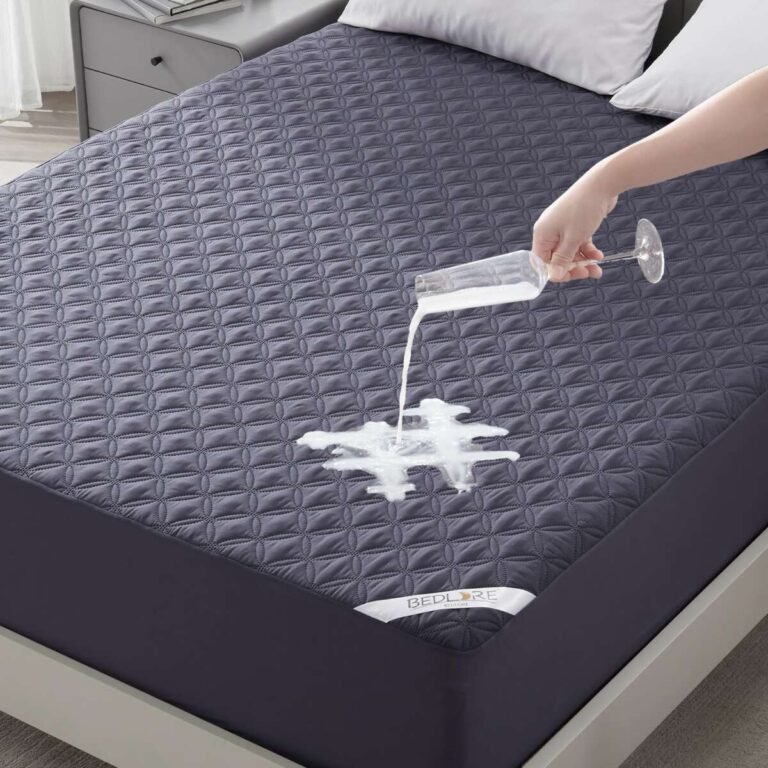
- Sheets, blankets, or a mattress protector
- The height of the floor or platform
A queen mattress can have the same 60-by-80-inch footprint as another queen mattress but be much thicker. The difference often comes from the comfort layers, coils, foam, pillow top, or cover.
Queen mattress depth at a glance
| Mattress type | Common depth |
|---|---|
| Low-profile foam mattress | 6–8 inches |
| Basic innerspring mattress | 8–10 inches |
| Standard foam or hybrid mattress | 10–12 inches |
| Plush or pillow-top mattress | 13–16 inches |
| Extra-thick luxury mattress | 17–20 inches or more |
These are common ranges, not strict rules. Always check the product specifications for the exact model.
How Deep Is a Queen Mattress by Type?
The mattress type affects its depth because each design uses different layers. A thin mattress may work well on a firm platform, while a thicker mattress may provide more cushioning but raise the total bed height.
Memory foam queen mattresses
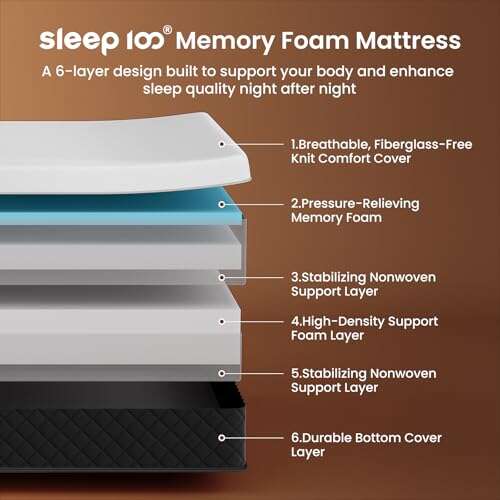
Memory foam queen mattresses are often 8 to 14 inches deep. Many models use several layers, such as:
- A support foam base
- A transition layer
- A memory foam comfort layer
- A removable or sewn-on cover
A 10-inch memory foam mattress may suit people who want a lower bed profile. A 12- or 14-inch model may offer more cushioning, but it can also make the bed harder to enter and leave.
Innerspring queen mattresses
Traditional innerspring mattresses commonly measure 8 to 12 inches deep. Their height depends on the coil unit, padding, foam, and fabric cover.
Some older or basic innerspring mattresses are thinner than modern hybrid models. A pillow-top innerspring mattress can be much thicker than the same mattress without the extra top layer.
Hybrid queen mattresses
Hybrid queen mattresses often measure 10 to 16 inches deep. They combine pocketed coils with foam, latex, or other comfort materials.
The coil layer does not automatically make a mattress thick. The final depth depends on the number and thickness of the comfort layers above and below the coils.
Pillow-top and Euro-top mattresses
A pillow-top or Euro-top can add several inches to the top of a mattress. These mattresses often measure 13 to 18 inches deep.


The main difference is how the top layer is attached:
- A pillow top looks like a separate cushion sewn onto the mattress.
- A Euro-top is sewn closer to the mattress edges and often has a flatter appearance.
Both designs can require deep-pocket sheets.
Latex queen mattresses
Latex mattresses often measure 8 to 14 inches deep. Some use one latex layer, while others combine latex with coils or foam.
Latex can be dense and heavy. Before buying, check that the foundation can support both the mattress and the people using the bed.

What Is the Best Queen Mattress Depth?
For many sleepers, a 10- to 12-inch queen mattress offers a practical balance of comfort, support, sheet fit, and bed height.
A 10-inch mattress may be enough for:
- A guest room
- A lighter adult
- A child or teenager
- A sleeper who prefers a firmer, lower bed
- A room with limited space above the bed
A 12-inch mattress may suit:
- Side sleepers who want more pressure relief
- Couples with different comfort needs
- People who prefer a plush feel
- Sleepers who want more room for layered comfort materials
A 14-inch or thicker mattress may help create a softer feel, but thickness alone does not prove better support. The foam density, coil design, firmness, and construction matter too.
Choose depth based on total bed height
The mattress is only one part of the bed’s height. Use this simple calculation:
Total bed height = foundation height + mattress depth + topper depth
For example:
- 8-inch foundation
- 12-inch mattress
- 2-inch topper
8 + 12 + 2 = 22 inches
That 22-inch figure does not include the bed frame or legs. A tall frame could raise the sleeping surface several more inches.
A common practical target is a bed height that lets you sit down and stand up without deep bending or climbing. Your height, mobility, room design, and personal comfort should guide the choice.


How to Measure a Queen Mattress
Measure the mattress yourself if you need sheets, a topper, a replacement, or a new bed frame. Product listings can round measurements, and an older mattress may have changed shape.
What you need
- A straight ruler or tape measure
- A flat surface
- A helper, if possible
- A straight board or book for more accurate depth measurement
Steps to measure mattress depth
- Remove all bedding. Take off sheets, blankets, and the mattress protector.
- Place the mattress on its foundation or floor. Keep it flat and fully supported.
- Measure from the bottom to the highest point. Do not press down on the mattress.
- Use a straight edge. Lay a board across the top if the surface is soft or rounded.
- Measure at the center and edges. A pillow top may be higher in the middle.
- Record the largest useful measurement. This helps you choose sheets and protectors that fit.
Do not compress the mattress while measuring. Pressing down can make it seem thinner than it is.
Measure the width and length too
A standard U.S. queen mattress is about:
- 60 inches wide
- 80 inches long
Small differences can occur because of manufacturing, covers, foam expansion, or age. Measure the mattress and the frame when a close fit matters.
A California queen is not a common standard size in the same way as a California king. Some specialty brands sell unusual queen variations, so check the exact size before ordering bedding.

How Deep Should Queen Sheets Be?
Queen sheets should have pockets deep enough to cover the mattress and any topper. The correct pocket depth is usually based on the total thickness of those layers.
Use this calculation:
Required sheet pocket depth = mattress depth + topper depth + a small fit allowance
For example:
- 12-inch mattress
- 3-inch topper
- 1 inch of extra room
12 + 3 + 1 = 16 inches
In this case, look for fitted sheets with pockets rated for about 16 inches or more.
Common sheet pocket ranges
| Fitted-sheet pocket | Often suits |
|---|---|
| 8–12 inches | Thin mattresses |
| 12–16 inches | Many standard mattresses |
| 16–18 inches | Thick mattresses or mattresses with toppers |
| 18 inches or more | Very thick mattresses and layered beds |
Manufacturers measure pocket depth in different ways. Some list the maximum mattress thickness, while others list the full pocket fabric. Check the package details when possible.
A sheet that is too shallow may pop off at the corners. A sheet that is too loose may wrinkle and shift during sleep.


Does Mattress Depth Affect Bed Frames and Foundations?
Mattress depth does not usually determine whether a queen mattress fits the frame. The frame must match the mattress’s length and width, while the foundation must provide the required support.
Before placing a queen mattress on a frame, check:
- The frame is made for a queen mattress.
- The support slats are spaced as the mattress maker allows.
- The center support reaches the floor when required.
- The foundation can hold the mattress weight.
- The mattress does not extend beyond the support area.
- The setup does not block vents or moving parts.
- The manufacturer’s warranty requirements are met.
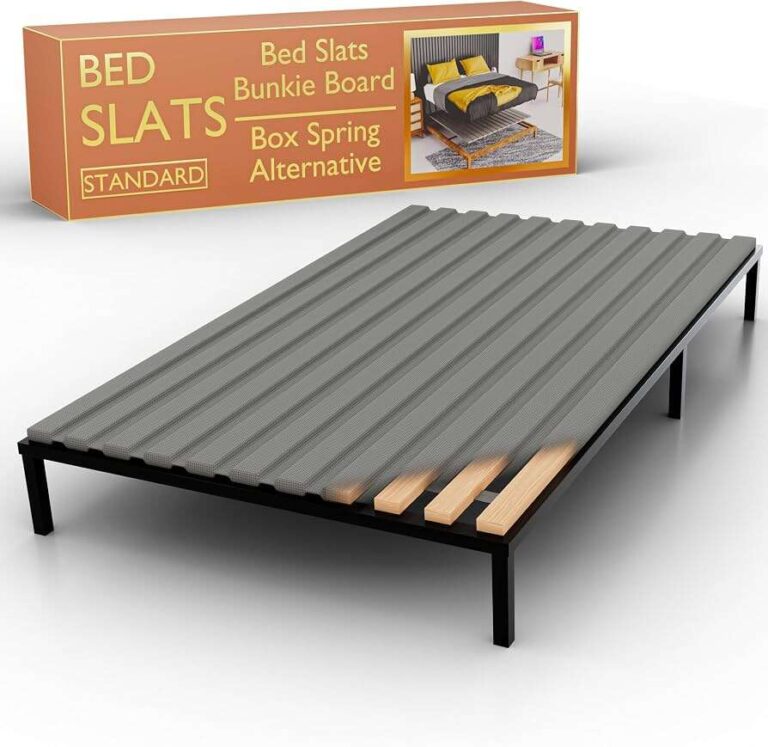
A platform bed may support the mattress without a box spring. Other mattresses may require a compatible foundation. Do not assume that every box spring or slatted frame works with every mattress.
If the mattress maker requires a specific foundation, follow that instruction. Poor support can cause sagging, an uneven sleep surface, or warranty problems.
Will a deep mattress fit inside a bed frame?
Usually, yes—but the fit depends on the frame design. A frame with side rails may leave some of the mattress above the rails. A recessed frame may hold part of the mattress inside the frame.
Check the frame’s interior dimensions and the mattress height before buying. Also confirm that the headboard and footboard do not press against the mattress.
How Deep Should a Queen Mattress Be for Different Sleepers?
There is no universal best depth. The right thickness depends on body weight, sleep position, firmness, room use, and the foundation.
For side sleepers
Side sleepers often prefer a mattress with enough comfort material to cushion the shoulders and hips. A 10- to 14-inch mattress may offer useful options, but depth alone does not guarantee pressure relief.
Look for the right firmness and adequate support. A thick mattress can still feel too firm if its top layers are not soft enough.
For back sleepers
Back sleepers often need a balance between cushioning and support. A 10- to 12-inch mattress may work well, but the ideal choice depends on body shape and firmness.
A mattress that is too soft may allow the hips to sink too far. A mattress that is too firm may leave gaps around the lower back.
For stomach sleepers
Stomach sleepers often need a more supportive surface to limit excessive sinking around the midsection. A thinner or firmer mattress may work better than a very soft, thick pillow top.
Do not choose only by thickness. A 14-inch mattress can be firm, soft, or somewhere in between.
For heavier sleepers
People with larger bodies may benefit from a mattress with strong edge support, durable materials, and a suitable firmness. A thicker mattress can provide more room for comfort layers, but it does not automatically prevent sagging.
Check the manufacturer’s weight guidance if it is provided. For couples, consider the combined weight and the support limits of the foundation.
For children or guest rooms
A lower-profile mattress may be easier for children to use and may reduce the height of a trundle or bunk setup. For bunk beds, follow the bed maker’s maximum mattress height. A mattress that is too thick can raise the sleeping surface above the guardrail.
Never place a thick mattress on a bunk bed without checking the safety instructions for that exact bed.

Common Mistakes When Choosing Queen Mattress Depth
Confusing mattress size with mattress thickness
“Queen” tells you the mattress is about 60 by 80 inches. It does not tell you whether the mattress is 8, 10, 12, or 16 inches deep.
Always look for a separate thickness or height specification.
Buying sheets before measuring the mattress
A thick mattress with a topper may need 16- to 18-inch fitted-sheet pockets. Standard sheets may not stay in place.
Measure the full sleep surface first.
Assuming a thicker mattress is more supportive
Thickness is only one part of mattress construction. Support also depends on the base, coils, foam density, firmness, and edge structure.
Compare the full specifications rather than choosing the tallest model.
Forgetting the topper
A 12-inch mattress becomes a 15-inch sleep surface when paired with a 3-inch topper. That change affects sheet fit, bed height, and sometimes the feel of the mattress.
Measure the mattress and topper together.
Ignoring foundation height
A 14-inch mattress on a tall foundation can make the bed difficult to enter or leave. Measure the total height before buying.
This matters especially in small rooms, under-wall storage areas, and rooms with low windows.
Using the wrong foundation
Some mattresses need a solid platform. Others allow slats within a stated spacing limit. A foundation that does not meet the manufacturer’s instructions may cause uneven support.
Check the mattress warranty and setup guide before placing the mattress on an existing frame.

Queen Mattress Depth: Quick Decision Table
| Your main goal | Depth to consider | What else to check |
|---|---|---|
| Low bed height | 8–10 inches | Firmness and support |
| General everyday use | 10–12 inches | Sleep position and construction |
| More cushioning | 12–14 inches | Foam or pillow-top design |
| Mattress plus topper | 10–14 inches | Total height and sheet pockets |
| Guest room | 8–12 inches | Durability and ease of use |
| Bunk or trundle bed | Follow bed limit | Guardrail and manufacturer rules |
| Easier access for mobility limits | Lower total height | Frame and foundation height |
These ranges are starting points, not medical or design rules. The mattress material and your total bed setup can change the result.
Frequently Asked Questions
Is a 10-inch queen mattress thick enough?
Yes. A 10-inch queen mattress can be thick enough for many adults, guest rooms, and everyday beds. Comfort depends on the mattress design, firmness, support layers, and sleeper’s body type—not depth alone.
Is a 12-inch queen mattress considered deep?
A 12-inch queen mattress is generally considered a standard-to-thick option. It can provide space for several comfort layers without making the bed as tall as a 14- to 18-inch model.
Are all queen mattresses the same size?
Most standard U.S. queen mattresses are about 60 by 80 inches, but small variations can occur. Specialty queen sizes may differ. Measure both the mattress and frame when buying bedding or replacement parts.
Can I use regular queen sheets on a 14-inch mattress?
You may be able to use regular queen sheets if their pocket depth covers the mattress. Many 14-inch mattresses need deep-pocket sheets, especially when a mattress protector or topper is added.
Can a queen mattress be too thick for a bed frame?
Yes. A mattress may fit the frame’s length and width but make the sleeping surface too high. A thick mattress can also interfere with a recessed frame, headboard, footboard, trundle, or bunk-bed guardrail.
Does mattress thickness affect comfort?
It can, because thickness allows room for different support and comfort layers. However, a thicker mattress is not automatically softer, firmer, or more supportive. Construction and firmness are more useful comparison points.
Key Takeaways
- A standard U.S. queen mattress is about 60 by 80 inches.
- Most queen mattresses are 8 to 14 inches deep.
- The most common range is about 10 to 12 inches.
- Pillow-top and luxury models may reach 14 to 18 inches or more.
- Mattress depth does not include the frame, foundation, sheets, or topper.
- Add the topper’s depth when choosing sheets and calculating total bed height.
- Measure the exact mattress when fit matters.
- Check foundation, bunk-bed, frame, and warranty requirements before setup.
Conclusion
A queen mattress is usually 10 to 12 inches deep, but the full range is broader. Thin models may be 8 inches, while pillow-top and luxury designs may exceed 14 inches.
The best depth depends on more than comfort. Measure your mattress, add any topper, check your sheet pocket size, and calculate the height of the complete bed. Before setup, confirm that the queen frame and foundation meet the mattress maker’s support rules.
For a general-purpose U.S. bed, a 10- to 12-inch queen mattress is a practical starting point. Choose a different depth when your room height, sleep style, mobility needs, bedding, or frame calls for it.

Appliance Review Expert
Lucas Ramirez is a trusted voice at HomeFixGrid.com, known for his clear, practical, and creatively written guides that simplify appliance care for everyday homeowners. With a strong focus on hands-on testing and real-world problem-solving, Lucas brings expert insight into appliance reviews and troubleshooting techniques. Her work empowers readers to confidently maintain, repair, and choose the right appliances for their homes.