How To Adjust Refrigerator Door: Easy Step-By-Step Fix
Adjusting a refrigerator door usually means leveling the appliance, tightening hinges, or turning adjustment screws.
A refrigerator door that will not close, sits unevenly, or swings open can waste energy and spoil food. Learning how to adjust refrigerator door alignment is usually simple, but the correct method depends on the refrigerator model, hinge design, and door weight. This guide explains the process step by step, with practical checks that help prevent damage and improve the seal.
Why a Refrigerator Door Needs Adjustment
A refrigerator door may shift over time because of heavy door bins, loose hinge screws, uneven flooring, or normal movement in the cabinet. Even a small tilt can stop the gasket from sealing evenly against the frame.
A poor seal allows warm air to enter. The compressor may then run more often, which can increase energy use and create extra frost. In serious cases, food may not stay at a safe temperature.
Common signs that your refrigerator door needs adjustment include:
• The top of the door is higher or lower than the other door.
• The door rubs against the cabinet or another door.
• The door does not close by itself.
• The gasket has gaps around one edge.
• The refrigerator rocks or feels unstable.
• The door opens too far or swings open when the appliance is slightly tilted.
Before learning how to adjust refrigerator door height, check whether the problem comes from the appliance itself or from an overloaded door shelf. A gallon jug, large bottles, and glass containers can place surprising stress on the hinges.

Tools and Safety Steps
Most refrigerator door adjustments need only a few basic tools. The exact tool size varies by brand, so check the owner’s manual before removing any hinge cover.
You may need:
• A Phillips screwdriver
• A flat-head screwdriver
• A 1/4-inch or 5/16-inch nut driver
• An adjustable wrench
• A socket set
• A level
• A flashlight
• A helper for heavy French-door or bottom-freezer models
Follow these safety steps before you begin:
-
Move food away from the door shelves. This reduces weight and prevents spills.
-
Unplug the refrigerator if you will remove electrical connectors or lift a door.
-
Keep fingers away from hinge gaps. A heavy door can pinch quickly.
-
Do not disconnect water lines unless the manual tells you to do so.
-
Place small screws in a cup so they do not roll under the refrigerator.
-
Never force a hinge or adjustment bolt. A damaged hinge can cost much more than a simple service call.
For many basic adjustments, the refrigerator can remain plugged in. However, unplugging it is the safer choice when working near wiring, ice makers, or door-mounted displays.
Check the Refrigerator Before Adjusting the Door
Start with simple checks. You may not need to adjust the door at all.
First, make sure the refrigerator stands on a firm, level surface. Use a level across the front edge of the cabinet, then check it from side to side. Most refrigerators are designed to tilt slightly toward the back so the doors can close more easily.
Next, inspect the door gasket. Clean it with warm water and mild dish soap. Crumbs, dried spills, and sticky residue can create a gap that looks like a door alignment problem.
Also check for:
• Overfilled door bins
• Shelves that extend too far forward
• Drawers that are not fully closed
• Ice buildup around the freezer door
• Loose screws on the top or bottom hinge
• A bent hinge or damaged plastic hinge cover
A useful test is the paper test. Close the door on a sheet of paper, then pull gently. You should feel light resistance around most of the gasket. If the paper slides out easily in one area, the seal may need cleaning, reshaping, or replacement.
How to Adjust Refrigerator Door Height
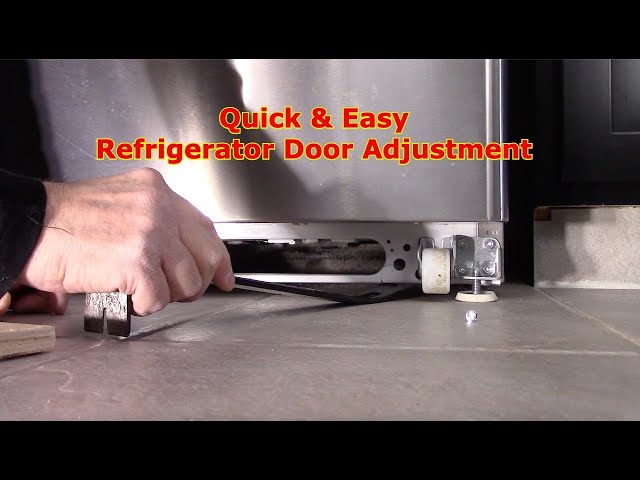
Many refrigerators use an adjustment screw near the lower hinge. Turning this screw raises or lowers the door without removing it.
Use this general method:
-
Open the door and locate the lower hinge or adjustment bolt.
-
Remove the hinge cover if one is present.
-
Find the height adjustment screw. It may require a hex key, socket, or nut driver.
-
Turn the screw slowly in small increments.
-
Turn clockwise to raise the door on many models.
-
Turn counterclockwise to lower the door on many models.
-
Close the door and compare its height with the cabinet or the other door.
-
Repeat until the top edges line up.
Do not assume every refrigerator uses the same direction. Some models reverse the adjustment direction, so test with a quarter-turn first. A quarter-turn can make a visible difference on a heavy door.
When learning how to adjust refrigerator door height, support the door as you turn the screw. This reduces pressure on the hinge and makes the adjustment more precise. On a French-door refrigerator, adjust one door at a time and compare the center gap after each change.

How to Adjust Refrigerator Door Alignment
Door alignment is different from door height. The door may be level at the top but still sit too far forward, too far back, or at an angle.
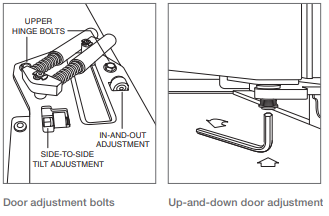
Most alignment problems involve the hinge bolts. To correct them:
-
Remove the hinge cover carefully.
-
Loosen the hinge bolts slightly. Do not remove them.
-
Hold the door in the desired position.
-
Tighten the bolts evenly.
-
Open and close the door several times.
-
Check the gasket for an even seal.
-
Recheck the hinge bolts after the door settles.
Use a level or a measuring tape to compare the door with the cabinet. Do not judge only by appearance. Refrigerator cabinets can have curved edges, and lighting can make a small gap look larger than it is.
If the door sits too far forward, the hinge may need to move inward. If the door sits too far back, the hinge may need to move outward. Make small changes because a few millimeters can affect the gasket and door swing.
This is one of the most important lessons in how to adjust refrigerator door alignment: loosen only the hardware that controls the problem. Removing every hinge bolt at once can allow the door to drop and may damage wiring or water tubing.

How to Level a Refrigerator So the Door Closes
A refrigerator that is not level can make door adjustment difficult. The cabinet should usually be stable, with a slight backward tilt.
To level the appliance:
-
Remove or open the bottom grille.
-
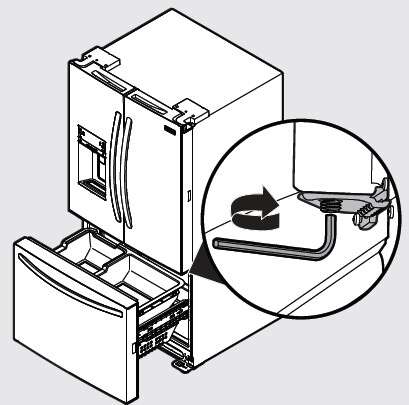
Locate the leveling legs or front rollers.
-
Place a level on the top of the refrigerator.
-
Turn the leveling legs slowly.
-
Raise or lower each side until the appliance is stable.
-
Confirm that the doors close without help.
-
Replace the grille when the adjustment is complete.
Many refrigerators should lean slightly backward, but the exact angle varies by model. A small rearward tilt helps the door return to the closed position. Too much tilt, however, can cause doors to swing shut hard or make shelves appear uneven.
Do not use cardboard, folded paper, or loose wood pieces as permanent shims. They can compress, slide, or absorb moisture. If the floor is badly uneven, use a proper appliance leveling solution recommended for your refrigerator.

How to Adjust a French-Door Refrigerator
French-door refrigerators often have two upper doors and a lower freezer drawer. They may use separate height adjusters, hinge bolts, and a center door mullion.
Begin by checking the top edges of both doors. They should be close to even, but a tiny difference may be normal. Then inspect the center gap and the flexible flap attached to one door.
For a typical adjustment:
• Remove the top hinge cover.
• Locate the height adjustment screw on the hinge.
• Turn the screw in small steps.
• Compare the left and right door edges.
• Check that the center flap folds or closes correctly.
• Make sure the doors do not press tightly against each other.
A center flap that does not close can allow warm air into the refrigerator. It can also strike the opposite door when you close the appliance. If the flap is bent, frozen, or obstructed, correct that issue before changing the door height.
When learning how to adjust refrigerator door settings on a French-door model, avoid lifting one door by its handle. Handles can loosen or bend. Support the lower edge of the door instead.

How to Adjust a Bottom-Freezer Door
A bottom-freezer refrigerator may have a pull-out drawer rather than a hinged freezer door. The drawer can sit crooked if the rails are not fully engaged or if the front panel is loose.
First, remove the freezer baskets and inspect the rails. Make sure both rails extend the same distance and that no food package blocks the drawer.
Then check the front panel screws. Some models allow the panel to move slightly up, down, left, or right after the screws are loosened. Adjust the panel until it is even with the refrigerator doors, then tighten the screws firmly.
If the drawer itself does not close, inspect:
• Roller tracks
• Rail brackets
• Drawer stops
• Ice buildup
• Loose mounting screws
• Bent rails
Do not lubricate refrigerator drawer rails unless the manufacturer allows it. The wrong lubricant can collect dust or damage plastic parts. Replace bent rails rather than forcing them back into shape.
Adjusting the Door Gasket
A door gasket is the soft seal around the refrigerator door. It helps keep cold air inside and warm air outside.
If the gasket is loose but not torn, warm it gently with a hair dryer on a low setting. Keep the dryer moving and hold it several inches away. As the gasket becomes flexible, press it into the correct position and close the door for several hours.
You can also soak the gasket in warm water, dry it, and reshape it by hand. Do not use a heat gun. Excess heat can warp the gasket or damage the refrigerator liner.
Replace the gasket if it is:
• Torn
• Brittle
• Permanently flattened
• Moldy below the surface
• Pulled away from the door
• Unable to seal after cleaning and reshaping
A new gasket may need time to settle. After installation, close the door and allow the seal to sit for several hours. If the gasket still has gaps, the door may need further adjustment.
Common Mistakes to Avoid
A careful adjustment can take only a few minutes. Most problems occur when people rush or adjust the wrong part.
Avoid these mistakes:
• Tightening screws before the door is positioned correctly
• Removing hinge bolts completely
• Turning an adjustment screw several full rotations at once
• Ignoring a damaged gasket
• Leaving heavy items in the door during adjustment
• Using excessive force on plastic covers
• Failing to check the door after the refrigerator runs
• Assuming a crooked door always means a bad hinge
One common mistake is adjusting the door while it is fully loaded. The extra weight changes the hinge position as soon as the shelves are filled again. Empty the door first, make the adjustment, and then reload it with heavy items placed lower and closer to the hinge side.
Another mistake is focusing only on the top edge. A door can look aligned while the bottom gasket leaks. Always check the entire seal from top to bottom.
How to Confirm the Adjustment Worked
After you adjust the refrigerator door, test it in several ways.
Open the door about 12 inches and let go. On many models, it should move toward the closed position. It should not slam shut or remain wide open unless the floor or hinge design requires a different setup.
Check the gasket by:
-
Closing the door on a piece of paper.
-
Pulling the paper from several points.
-
Comparing the resistance around the full seal.
-
Looking for light or visible gaps.
-
Listening for unusual rubbing or clicking.
Allow the refrigerator to run for several hours before judging cooling performance. Opening the door repeatedly can make the cabinet seem warmer than normal. After the appliance reaches its usual temperature, check that food remains properly chilled.
Temperature matters more than appearance. A refrigerator should generally stay at or below 40°F, while a freezer should remain at 0°F. Use an appliance thermometer because the display setting may not match the actual temperature.
When to Call a Professional
You can handle many basic adjustments, but some problems require trained service.
Contact a qualified technician if:
• The hinge is bent or cracked.
• The door drops suddenly.
• A water line leaks after movement.
• Wiring is trapped or damaged.
• The cabinet is warped.
• The door cannot hold its position.
• The gasket does not seal after adjustment.
• The refrigerator rocks even after leveling.
• The compressor runs constantly and temperatures rise.
A damaged hinge can place stress on the cabinet and cause further misalignment. A professional can also check whether the cabinet is twisted, which is not usually fixable with a simple screw adjustment.
If your refrigerator is under warranty, check the service terms before making major changes. Removing sealed components or damaging wiring may affect coverage.
How to Adjust Refrigerator Door: Quick Reference
Use this short checklist when you need a simple plan:
-
Empty the door shelves.
-
Clean and inspect the gasket.
-
Check for obstructions inside the refrigerator.
-
Confirm that the appliance is stable and slightly tilted backward.
-
Locate the hinge adjustment screw.
-
Turn it a small amount at a time.
-
Align the top edges and center gap.
-
Tighten loose hinge bolts.
-
Test the gasket with paper.
-
Check the refrigerator temperature after several hours.
This process works for many common models, but your owner’s manual remains the best guide for exact screw locations and adjustment directions. The design may differ between top-freezer, side-by-side, French-door, and bottom-freezer refrigerators.
Frequently Asked Questions About How to Adjust Refrigerator Door
Why is my refrigerator door not closing properly?
A heavy door shelf, uneven floor, dirty gasket, loose hinge, or internal obstruction can prevent the door from closing. Empty the door, clean the gasket, level the refrigerator, and inspect the hinges before making larger adjustments.
Can I adjust a refrigerator door without unplugging it?
Often, yes. Basic leveling and hinge adjustments may not require unplugging the appliance, but disconnect power before working near wiring, displays, ice makers, or water connections.
Which way do I turn the refrigerator door adjustment screw?
On many models, turning the screw clockwise raises the door and turning it counterclockwise lowers it. The direction is not universal, so use a small quarter-turn and check the result before continuing.
How do I know if my refrigerator gasket is sealing?
Close the door on a sheet of paper and pull gently. Light, even resistance suggests a good seal, while paper that slides out easily in one area may indicate a dirty, damaged, or misaligned gasket.
Why does my refrigerator door swing open by itself?
The appliance may lean too far forward, the floor may be uneven, or the hinge may be worn. Level the refrigerator so it is stable with a slight backward tilt, then test the door again.
How long does a refrigerator door adjustment take?
A basic adjustment often takes 10 to 30 minutes. French-door models, damaged hinges, and drawer rail problems can take longer because they require more inspection and careful alignment.
Should refrigerator doors be perfectly level?
They should look aligned and seal properly, but they may not be perfectly identical due to the design of the cabinet and hinges. Proper sealing and smooth operation are more important than a tiny visual difference.
Conclusion
A refrigerator door usually needs only a few careful changes to work correctly. Start by removing excess weight, cleaning the gasket, checking the floor, and finding the correct hinge or leveling screw. Make small adjustments, test the seal, and confirm the refrigerator reaches a safe temperature.
Knowing how to adjust refrigerator door alignment can protect food, reduce wasted energy, and extend the life of the hinges and gasket. Take your time, follow the model’s manual, and call a qualified technician if you find a bent hinge, damaged wiring, or a warped cabinet. Try these steps today, and share your experience or explore more appliance repair guides for your next home project.

Appliance Review Expert
Lucas Ramirez is a trusted voice at HomeFixGrid.com, known for his clear, practical, and creatively written guides that simplify appliance care for everyday homeowners. With a strong focus on hands-on testing and real-world problem-solving, Lucas brings expert insight into appliance reviews and troubleshooting techniques. Her work empowers readers to confidently maintain, repair, and choose the right appliances for their homes.