
How To Cook Fresh Asparagus In The Microwave: Quick Guide
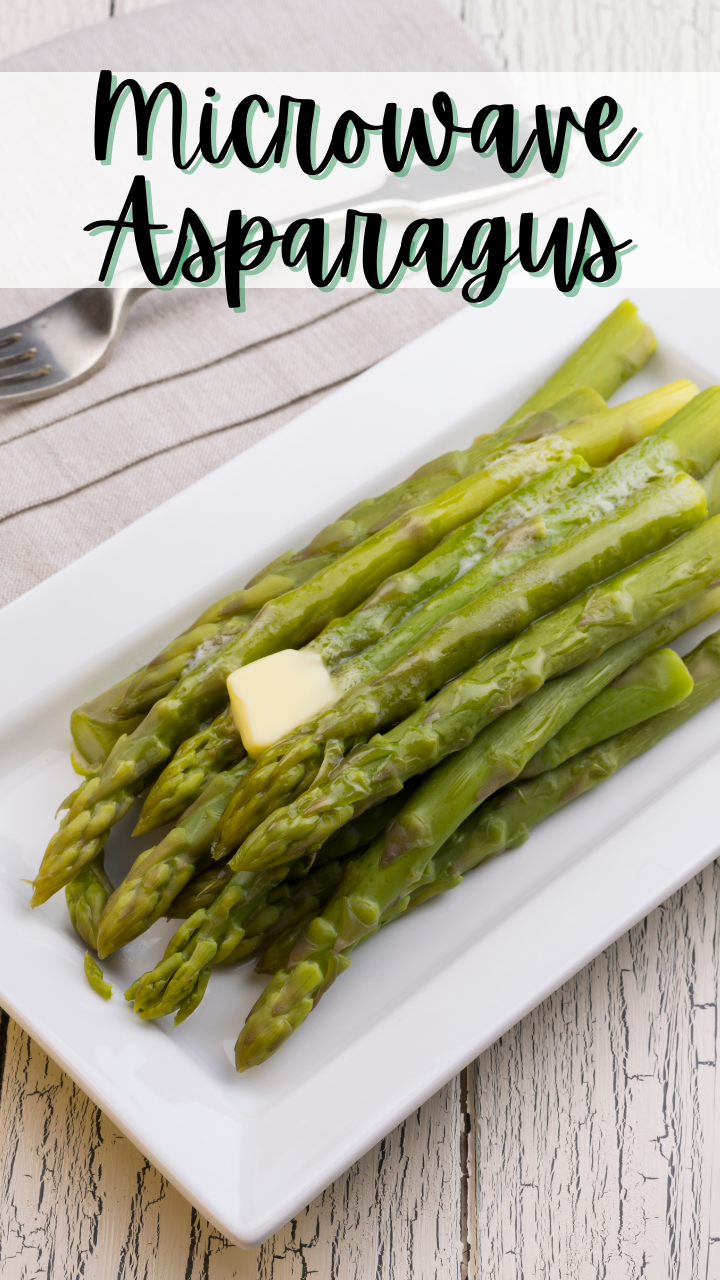
Fresh asparagus cooks well in the microwave and can be ready in about 3 to 5 minutes. Place trimmed asparagus in a microwave-safe dish with 1 to 2 tablespoons of water, cover it loosely, and cook on high until the stalks are bright green and tender.
This method works well in U.S. kitchens when you need a quick side dish for dinner, meal prep, or a holiday meal. Cooking time depends on the microwave’s wattage, the amount of asparagus, and the thickness of the stalks.
Quick Answer: Microwave Fresh Asparagus
For about 1 pound of fresh asparagus:
- Rinse the asparagus under cool running water.
- Trim or snap off the woody ends.
- Place the spears in a microwave-safe dish.
- Add 1 to 2 tablespoons of water.
- Cover with a microwave-safe lid or a damp paper towel.
- Microwave on high for 3 to 5 minutes.
- Check the texture. Add 30-second bursts if needed.
- Season and serve.
Use less time for thin asparagus and more time for thick stalks. Let the asparagus stand for about 1 minute after cooking because it will continue to soften from trapped steam.
What You Need Before Cooking
You need only a few basic items to microwave asparagus:
- Fresh asparagus
- A microwave-safe dish
- A microwave-safe lid, plate, or damp paper towel
- 1 to 2 tablespoons of water
- Tongs or a fork
- Salt, pepper, butter, olive oil, or lemon for serving
Choose asparagus with firm stalks and tips that look closed and fresh. Avoid stalks that feel slimy or have a strong sour smell.
How to Trim Asparagus
The lower part of an asparagus stalk can be tough and stringy. Remove it before cooking.
You have two simple options:
- Snap method: Hold the stalk near the bottom and bend it gently. It should break where the tender part meets the woody end.
- Knife method: Line up several stalks and cut off about 1 inch from the bottoms. This method is faster and creates a more even portion.
Thick asparagus may have tough skin near the base. You can peel the lower few inches with a vegetable peeler, but peeling is not needed for most thin or medium stalks.
Should You Cut the Spears?
You can microwave asparagus whole or cut it into shorter pieces.
Whole spears look better for serving. Cut pieces cook more evenly and fit small dishes more easily. If you cut the asparagus, aim for pieces about 1 to 2 inches long.
Wash asparagus before cutting it. Drying it is not necessary because a little surface moisture helps create steam.

How to Cook Asparagus in the Microwave Step by Step
1. Arrange the asparagus
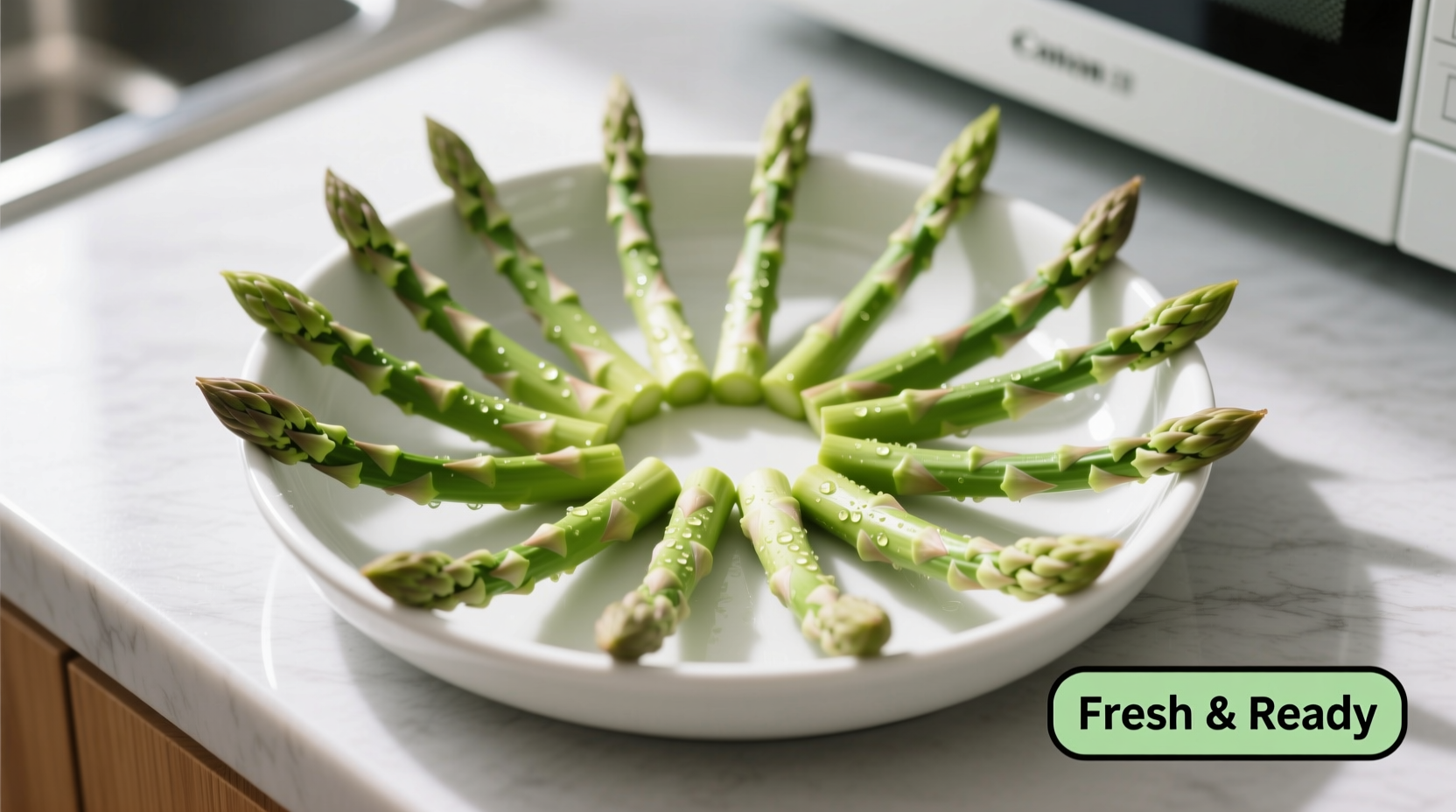
Place the trimmed asparagus in a single layer when possible. If the spears do not fit, stack them loosely rather than packing them tightly.
Put thicker stalks around the outside of the dish and thinner stalks near the center. Microwave ovens often heat the outer areas more strongly, so this arrangement can help the stalks cook at a similar rate.
2. Add a small amount of water
Add 1 tablespoon of water for 8 ounces of asparagus or 2 tablespoons for about 1 pound.
The water creates steam. You do not need to submerge the asparagus. Too much water can make the spears soft and dilute their flavor.
3. Cover the dish safely
Cover the dish with a microwave-safe lid, plate, or damp paper towel.
Leave a small vent for steam to escape. Do not seal the container tightly. Hot steam can build pressure and cause burns when the cover is removed.
4. Microwave on high
Use high power and begin with the time in this table:
| Amount of asparagus | Thin stalks | Medium stalks | Thick stalks |
|---|---|---|---|
| 8 ounces | 2 to 3 minutes | 3 to 4 minutes | 4 to 5 minutes |
| 1 pound | 3 to 4 minutes | 4 to 5 minutes | 5 to 6 minutes |
These times assume a typical U.S. household microwave and fresh asparagus at refrigerator or room temperature. Microwave power varies, so treat the times as starting points rather than fixed rules.
For more even cooking, pause halfway through and rotate the dish or rearrange the spears.
5. Check for doneness
Carefully lift the cover away from your face. Test the thickest part of a stalk with a fork.
The asparagus is ready when it is:
- Bright green
- Tender when pierced
- Slightly firm in the center for a crisp texture
- Soft enough to bend without being limp
If it is still hard, cover it again and microwave in 30-second bursts. Check after each burst to avoid overcooking.
6. Season and serve
Drain any extra water. Add seasoning while the asparagus is hot.
Simple choices include:
- Butter, salt, and black pepper
- Olive oil and lemon juice
- Grated Parmesan
- Garlic powder and red pepper flakes
- Toasted almonds
- A small drizzle of balsamic glaze
Fresh lemon juice works best after cooking. Adding it before microwaving may slightly dull the vegetable’s color.

Microwave Cooking Times and Adjustments
The best microwave time depends on three main factors: quantity, thickness, and microwave power.
For a small serving
For one or two servings, use about 4 to 8 ounces of asparagus. Microwave it for about 2 to 4 minutes on high.
Start with less time if the stalks are thin. A small serving can become soft quickly because it heats faster than a full pound.
For a full pound
A full pound usually takes 3 to 6 minutes. Spread the stalks out as much as possible and turn them halfway through cooking.
If the asparagus is crowded in a deep bowl, the center may cook more slowly. Use a wide, shallow dish when available.
For thin asparagus
Thin spears may be ready in 2 to 3 minutes. Check them early. Their small size makes them easy to overcook.
For thick asparagus
Thick stalks may need 5 to 6 minutes. If the tips are done but the lower stalks remain firm, cut the asparagus into shorter pieces before continuing.
If your microwave has lower wattage
Many U.S. microwaves range from about 700 to 1,200 watts. A lower-wattage model may need extra time.
Add 30 seconds at a time rather than doubling the cooking time. This gives you more control and helps protect the tips from becoming mushy.
If your microwave has higher wattage
A high-wattage microwave may cook the asparagus faster than the table suggests. Begin with the shorter time and check early.
The wattage is often listed on a label inside the microwave door, on the back, or in the owner’s manual.

How to Keep Microwave Asparagus Crisp and Bright
Use a short cooking time, a small amount of water, and immediate checking. These three steps help prevent soft, watery asparagus.
A covered dish traps steam and speeds cooking. However, steam continues to cook the vegetables after the microwave stops. Remove the cover carefully and serve soon after the asparagus reaches the texture you want.
For brighter color, avoid overcooking and do not leave the asparagus sitting in hot water. Drain it as soon as it is done.
If you want very crisp asparagus, microwave it for the shortest suggested time and test it with a fork. You can always cook it longer, but you cannot reverse overcooking.
Why asparagus turns dull green
Asparagus can lose its bright green color when it cooks too long. A large amount of water and extended standing time can also affect its appearance.
A dull color does not automatically mean the asparagus is unsafe. Texture and freshness matter more. Still, overcooked asparagus may taste watery and have a soft texture.
Why the tips cook faster
The tips are more delicate than the lower stalks. They may become soft before the thick ends are tender.
Arrange the asparagus with the thick ends toward the outside of the dish. If needed, cover only the stalks with a small piece of damp paper towel, leaving the tips less covered. Check often when cooking thin spears.

Common Mistakes to Avoid
Using too much water
Asparagus does not need to boil in the microwave. Excess water can make it soggy and reduce its fresh flavor.
Use just enough water to create steam. For most servings, 1 to 2 tablespoons is enough.
Cooking without a cover
An uncovered dish may leave the asparagus dry or unevenly cooked. Covering holds in steam and helps the stalks soften.
Use a loose cover, not an airtight one.
Sealing the container
A sealed container can build pressure. Always vent the cover and open it away from your face.
Steam can cause serious burns even when the food itself does not look extremely hot.
Using metal
Do not place foil, metal trays, metal twist ties, or utensils in the microwave unless the microwave’s instructions specifically allow that item.
Use glass, ceramic, or plastic labeled as microwave-safe. Remove any produce bands, ties, or packaging before cooking.
Overcrowding the dish
A tightly packed dish can produce uneven results. Some stalks may remain firm while others become limp.
Use a wider dish, cook in batches, or cut the asparagus into similar-size pieces.
Adding butter before cooking
Butter can be added before microwaving, but it may pool in the dish and make cleanup harder. Adding it after cooking gives you better control over the flavor.
Trusting the timer without checking
Microwave ovens vary. The timer is only a guide. Check the thickest stalk with a fork, especially when using a new microwave or a different amount of asparagus.

Microwave Asparagus Safety and Storage
Use a microwave-safe container and handle the cover with care. The USDA advises caution with hot food and recommends reheating leftovers to 165°F. Fresh asparagus is normally cooked for texture rather than for a required internal temperature, but any prepared leftovers should be cooled and stored safely.
Refrigerate cooked asparagus within 2 hours. If the room temperature is above 90°F, refrigerate it within 1 hour. Store it in a covered container and use it within about 3 to 4 days for best quality.
When reheating cooked asparagus, add a few drops of water, cover it loosely, and heat until hot throughout. The USDA provides food safety guidance for leftovers and reheating at FoodSafety.gov.
Never microwave asparagus in its original store packaging unless the package clearly says it is microwave-safe and gives cooking directions.

How to Serve Microwave-Cooked Asparagus
Microwave asparagus works as a side dish with chicken, fish, steak, eggs, pasta, rice, and roasted potatoes.
Try one of these quick combinations:
- Classic: Butter, salt, and pepper
- Fresh: Olive oil, lemon juice, and parsley
- Savory: Parmesan and garlic powder
- Spicy: Olive oil, chili flakes, and lime
- Crunchy: Toasted almonds or breadcrumbs
- Rich: A spoonful of hollandaise sauce
You can also chop cooled asparagus and add it to omelets, salads, grain bowls, pasta, or frittatas.
For meal prep, cook the asparagus slightly less than your final preferred texture. It will soften a little when reheated.
Key Takeaways
- Microwave fresh asparagus with 1 to 2 tablespoons of water.
- Cook 8 ounces for about 2 to 4 minutes and 1 pound for about 3 to 6 minutes.
- Use a microwave-safe, loosely covered dish.
- Arrange thick stalks toward the outside.
- Check with a fork and add time in 30-second bursts.
- Handle the cover carefully because hot steam can cause burns.
- Add butter, lemon, salt, or other seasonings after cooking.
Frequently Asked Questions
Can you microwave asparagus without water?
Yes, but a small amount of water usually gives better results. Water creates steam and helps the stalks cook evenly. If the asparagus is already very wet after washing, you may not need to add more.
Should you blanch asparagus before microwaving it?
No. Blanching is not needed. The microwave can cook fresh asparagus from raw in one step.
Blanching may make sense when preparing asparagus for freezing, but it adds an extra step for a meal served right away.
Can you microwave asparagus in a plastic bag?
Only use a bag that is clearly labeled microwave-safe and designed for cooking. Do not use ordinary grocery bags, produce bags, or sealed plastic bags.
A vented microwave-safe container is a simple alternative.
Why is my microwave asparagus watery?
The most common causes are too much water, overcooking, and leaving the asparagus in the covered dish after cooking.
Use less water, shorten the cooking time, and drain the asparagus as soon as it is tender.
Can you microwave frozen asparagus using the same method?
Frozen asparagus needs a different method and usually more time. Follow the package directions when available. Frozen spears may release more water, so drain them before seasoning.
Can you reheat asparagus in the microwave?
Yes. Place the cooked asparagus in a microwave-safe dish, add a few drops of water, cover loosely, and heat in short bursts until hot. Avoid repeated long heating because asparagus can quickly become limp.
Conclusion
Microwaving fresh asparagus is a fast way to make a tender, flavorful side dish in a U.S. home kitchen. Use a small amount of water, cover the dish loosely, start with a short cooking time, and check the thickest stalk before serving.
For the best texture, stop cooking when the asparagus is bright green and fork-tender, then season it while hot.

Appliance Review Expert
Lucas Ramirez is a trusted voice at HomeFixGrid.com, known for his clear, practical, and creatively written guides that simplify appliance care for everyday homeowners. With a strong focus on hands-on testing and real-world problem-solving, Lucas brings expert insight into appliance reviews and troubleshooting techniques. Her work empowers readers to confidently maintain, repair, and choose the right appliances for their homes.