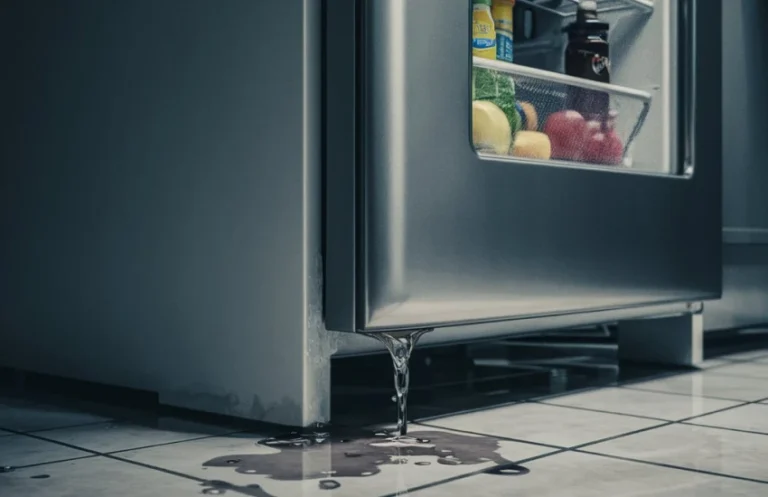
Why Would A Refrigerator Stop Cooling: Quick Fixes
A refrigerator may stop cooling because of a blocked vent, dirty condenser coils, a bad door seal, heavy frost, a failed fan, or a problem with the compressor or sealed system. The fastest way to find the cause is to check the temperature, listen for normal sounds, inspect airflow, and look for frost or water.
In the United States, keep the refrigerator at 40°F or below and the freezer at 0°F. If perishable food has stayed above 40°F for more than two hours, discard it. When the room is above 90°F, the limit drops to one hour.
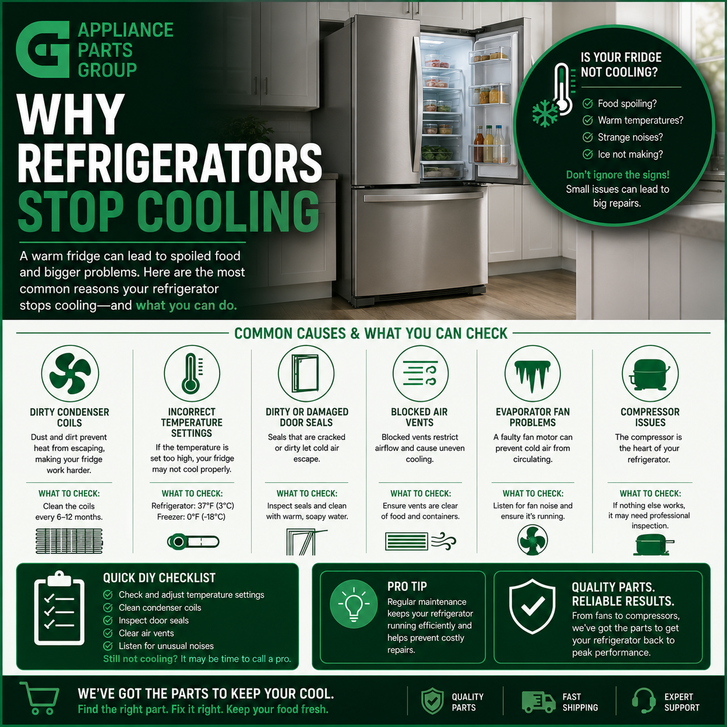
Quick Answer: Why Is Your Refrigerator Not Cooling?
The most common reasons include:
- The temperature control was changed or reset.
- Food is blocking an air vent.
- The condenser coils are dirty.
- The condenser fan or evaporator fan is not running.
- The door gasket is loose, torn, or dirty.
- Frost has blocked the evaporator coil.
- The refrigerator is too close to a wall or heat source.
- The compressor, start relay, thermostat, control board, or sealed system has failed.
Start with simple checks. Confirm the refrigerator has power, set the controls correctly, clear the vents, inspect the door seal, and clean accessible coils. If the freezer is cold but the fresh-food section is warm, airflow or frost is often the issue. If both sections are warm, the problem may involve the compressor, condenser fan, start relay, or sealed system.
First, Identify the Cooling Pattern
The symptom often points to the faulty part. Use the table below as a starting point, not as a final diagnosis.
| What you notice | More likely causes | First checks |
|---|---|---|
| Freezer is cold, refrigerator is warm | Blocked vent, frozen evaporator, failed evaporator fan, bad damper | Clear food, inspect frost, listen for fan |
| Refrigerator and freezer are both warm | Power issue, dirty coils, failed condenser fan, compressor or sealed-system fault | Check outlet, coils, fan, and compressor |
| Refrigerator runs constantly | Dirty coils, poor door seal, warm room, frost buildup, low refrigerant, weak compressor | Check seal, airflow, frost, and coil condition |
| No sound at all | No power, control problem, thermostat, start relay, or compressor | Check breaker, outlet, controls, and interior light |
| Clicking every few minutes | Failed start relay, overheated compressor, or control problem | Unplug and arrange service if it continues |
| Heavy frost on the freezer’s back wall | Defrost-system failure or door left open | Defrost safely and inspect again |
| Water or ice blocks the air vent | Drain or defrost issue, misplaced food, or excess moisture | Clear the vent and check for frost |
| Refrigerator is warm after moving it | Unit may be unplugged, tilted, or not given time to settle | Check the manual and allow proper rest time |
A refrigerator can feel cool while still being unsafe. Use an appliance thermometer to confirm the actual temperature rather than relying on touch.
Safe Troubleshooting Steps
Follow these checks in order. They begin with the least risky and least expensive causes.
1. Check power
Make sure the refrigerator is firmly plugged into the wall. Check whether the interior light, display, or water dispenser works.
If the outlet is dead, reset a tripped breaker or ground-fault circuit interrupter if appropriate. Do not use an extension cord unless the refrigerator manufacturer specifically permits it. A refrigerator should normally use a properly grounded outlet on a suitable circuit.
Do not keep resetting a breaker that trips again. Repeated trips may indicate an electrical fault.
2. Check the temperature controls
Confirm that the refrigerator is not in:
- Demo mode
- Vacation mode
- Cooling-off mode
- Sabbath mode
- A temporary temperature setting
Many electronic models have separate controls for the freezer and fresh-food compartment. A control may also have been moved when food was loaded.
Set the refrigerator to 40°F or below and the freezer to 0°F, then allow time for the temperature to stabilize. A large load of warm food, a long door opening, or a recent power outage can take many hours to correct.
3. Look for blocked air vents
Cold air usually moves from the freezer into the refrigerator through vents or ducts. Food packages, containers, or ice can block that path.
Move items away from:
- The rear freezer wall
- The upper or lower air vents
- The center divider between compartments
- The return vents near the bottom or rear
Do not pack food tightly against the back wall. Leave room for air to move around the shelves.
4. Inspect the door gasket
The gasket is the flexible seal around the door. If it leaks, warm, damp air enters the cabinet and the refrigerator must work harder.
Clean the gasket with warm water and mild dish soap. Look for:
- Tears
- Gaps
- Hard or brittle sections
- Loose corners
- Areas flattened by storage bins
- Dirt that prevents contact with the cabinet
You can use a simple paper test. Close the door on a sheet of paper. If the paper pulls out with almost no resistance in several areas, the seal may be weak. This test is only a rough check; a damaged gasket may need replacement.
Also check that the refrigerator is level enough for the door to close by itself. A bin or shelf that sticks out can create a small gap.
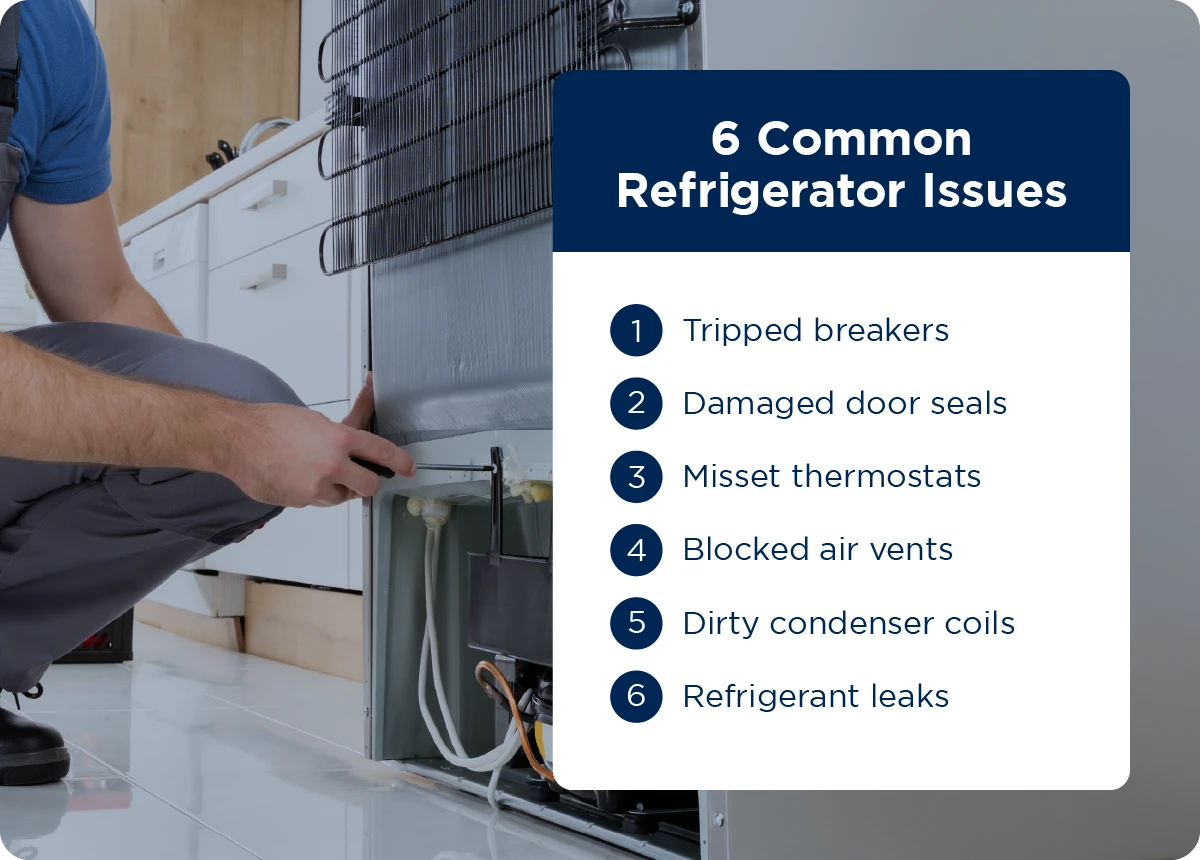
5. Clean the condenser coils
Condenser coils release heat from the refrigerator. Depending on the model, they may be:
- Under the cabinet
- Behind a lower grille
- At the back
- Built into the cabinet walls
Unplug the refrigerator before cleaning accessible coils. Use a refrigerator-coil brush or a vacuum with a soft brush attachment. Remove dust, pet hair, and lint from the coils and nearby floor.
Do not bend tubing or remove sealed panels. If the coils are hidden behind a service panel, follow the owner’s manual or call a technician.
Dirty coils can reduce cooling and make the compressor run longer. Cleaning them may help, but it will not fix a failed fan, compressor, or refrigerant leak.
6. Listen for fans and the compressor
A normally operating refrigerator may make a low hum, fan sound, clicks, or brief changes in pitch. Sound alone cannot prove that a part works, but unusual patterns can help.
You may hear:
- Evaporator fan: Usually inside the freezer. It moves cold air through the compartments.
- Condenser fan: Usually near the compressor or lower rear area. It moves heat away from the system.
- Compressor: A low hum or vibration. It compresses refrigerant to create the cooling cycle.
- Clicking: A short click during startup can be normal. Repeated clicking with no cooling may indicate a start or compressor problem.
Keep hands, tools, hair, clothing, and pets away from moving fan blades. Do not remove electrical covers while the appliance is connected to power.
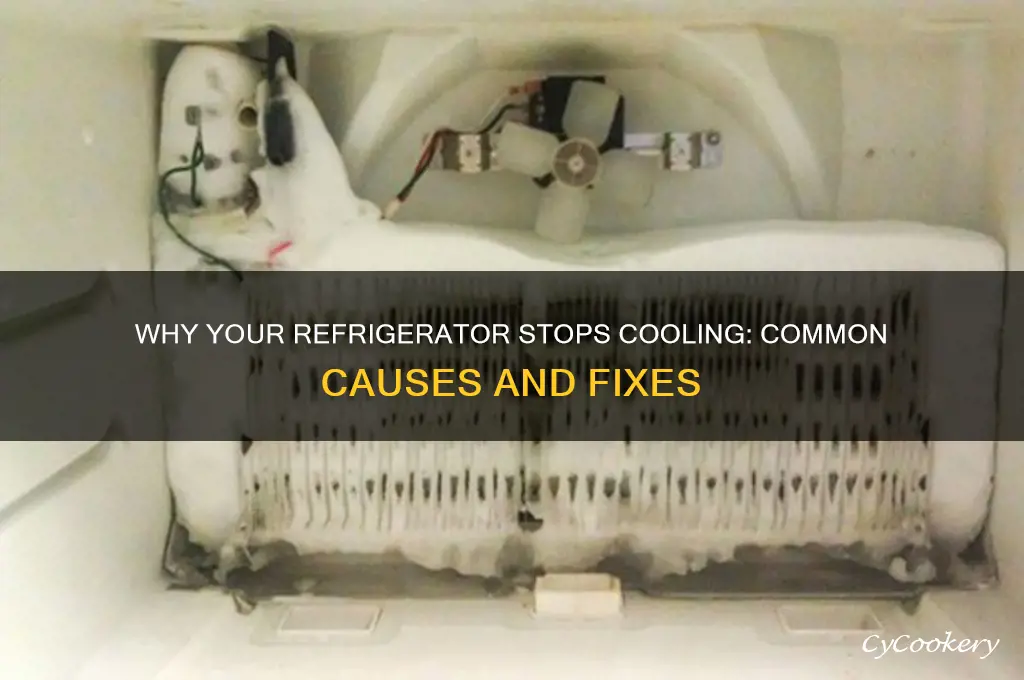
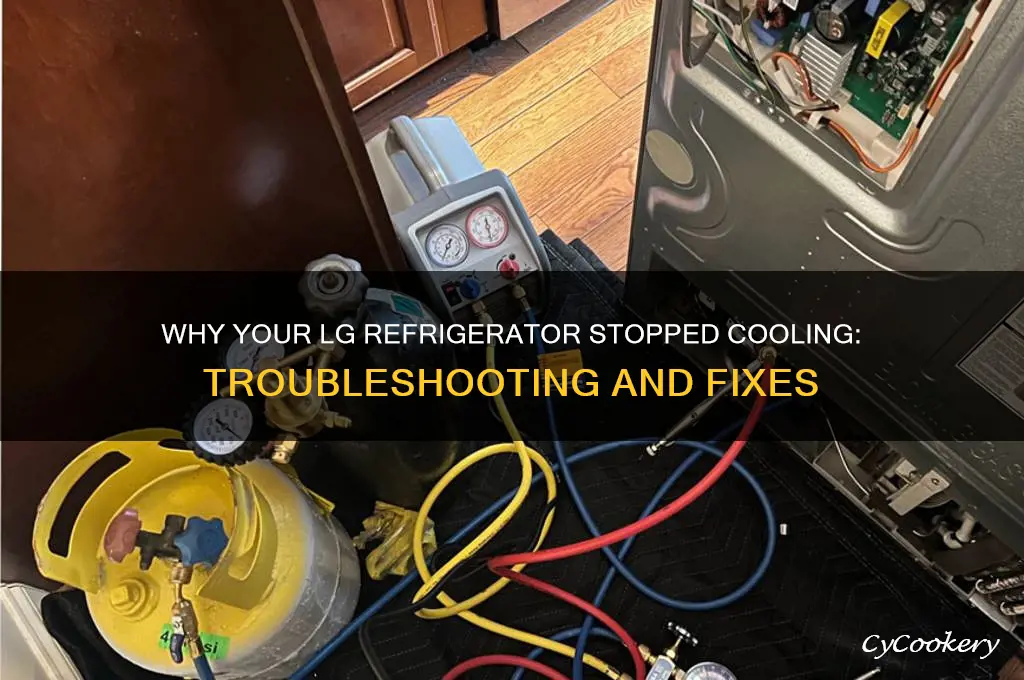
7. Check for frost buildup
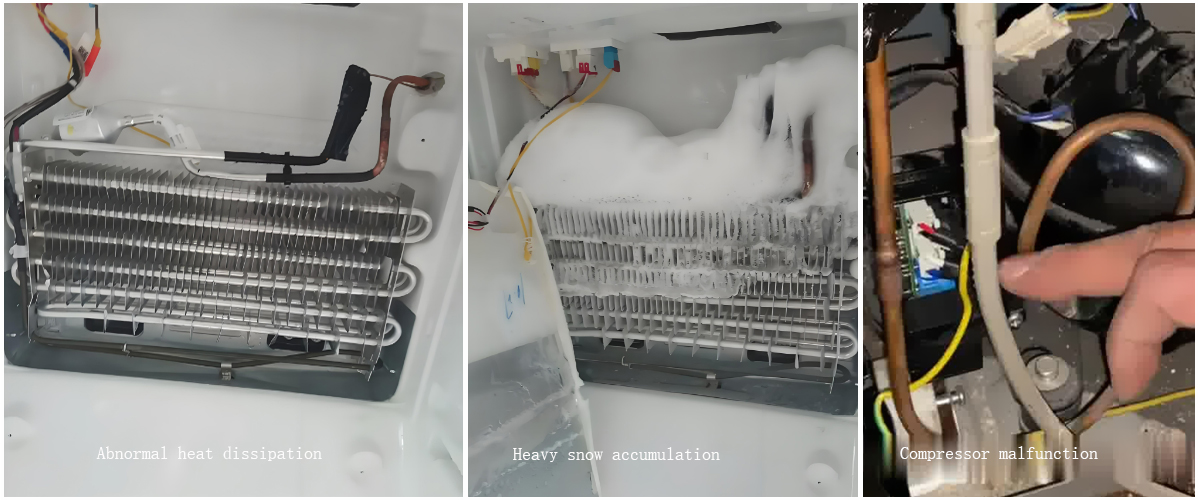
A thick layer of frost on the freezer’s rear wall often points to an airflow or defrost problem. Frost can cover the evaporator coil and prevent cold air from moving.
Common causes include:
- A door left open
- A leaking door gasket
- A failed defrost heater
- A failed defrost sensor or thermostat
- A failed electronic control
- A blocked drain that allows ice to build up
Do not chip ice with a knife, screwdriver, or other sharp tool. The evaporator coil and refrigerant tubing can be damaged easily.
If the owner’s manual allows it, a full manual defrost may restore cooling for a short time. Remove food, unplug the unit, open the doors, and place towels around the base. Never use an open flame or force ice away. A hair dryer can create shock, fire, and plastic-damage risks, especially near water, so it is safer to let the ice melt naturally.
If frost returns, the defrost system needs diagnosis.

Common Mechanical Causes
When basic checks do not solve the problem, the fault may be in one of the refrigerator’s working components.
Evaporator fan failure
The evaporator fan moves cold air from the freezer through the refrigerator. If it fails, the freezer may remain partly cold while the fresh-food section becomes warm.
Possible signs include:
- Little or no airflow from the refrigerator vents
- A warm refrigerator with a cold freezer
- A fan that runs only when the door switch is held down
- A scraping or grinding sound
- Heavy ice around the fan
The fan may stop because of ice, a failed motor, a wiring fault, or a control problem. Unplug the refrigerator before inspecting anything near the fan.
Condenser fan failure
The condenser fan helps remove heat from the system. If it stops, the compressor may become hot and cooling can decline in both compartments.
Signs can include:
- A very hot area near the compressor
- The refrigerator running for long periods
- A fan that does not move when it should
- Repeated clicking or thermal shutdown
- Dust packed around the fan
Fan testing involves electrical parts and may require a meter. A qualified appliance technician should handle live voltage checks.
Defrost-system failure
A frost-free refrigerator periodically melts frost from the evaporator coil. A failed heater, sensor, thermostat, fuse, wiring connection, or control board can stop that cycle.
The key clue is often a solid sheet of frost on the freezer’s rear panel. A temporary manual defrost may restore cooling, but it does not repair the failed part.
Start relay or overload problem
The start relay helps the compressor begin running. If it fails, the compressor may click, hum briefly, and stop.
This is not a good part to replace by guesswork. Start devices vary by compressor and model. Installing the wrong part can cause more damage.
Compressor failure
The compressor is the pump at the heart of the cooling system. A failed compressor may produce:
- No cooling in either compartment
- A repeated click
- A hum followed by a click
- Excessive heat
- Little or no vibration
- A tripped breaker
Compressor replacement is a major repair. It involves refrigerant, brazing, pressure testing, and electrical work. It should be performed by a qualified appliance or refrigeration technician.
Refrigerant leak or sealed-system fault
Refrigerant does not normally get “used up.” If the system is low, there may be a leak or another sealed-system problem.
Possible signs include:
- Both compartments are warm
- The compressor runs for a long time
- Only a small part of the evaporator frosts
- Cooling slowly became weaker
- A technician finds an oily residue near a leak
Do not try to add refrigerant yourself. Refrigerants are regulated substances, and sealed-system work requires specialized tools and training. A refrigerator that needs refrigerant also needs the cause of the loss addressed.
Why the Freezer Is Cold but the Refrigerator Is Warm
This pattern usually means the refrigerator is producing some cold but is not moving enough of it into the fresh-food compartment.
Check these areas:
- Air vents: Make sure food is not blocking them.
- Evaporator fan: Listen for airflow while the freezer door switch is pressed.
- Frost: Look for a thick layer on the freezer’s rear panel.
- Damper: Some models use a motorized door to control cold air entering the refrigerator.
- Return air path: A blocked return vent can stop circulation.
- Temperature sensor: A faulty sensor may give the control board incorrect information.
Do not place a portable fan inside the refrigerator. It may move air, but it does not fix the cause and can create moisture or electrical problems.
Why Both Compartments Are Warm
When the freezer and refrigerator are both warm, begin with power, controls, and heat removal:
- Check the outlet and breaker.
- Confirm cooling mode is active.
- Make sure the condenser coils are not heavily blocked.
- Check whether the condenser fan runs.
- Listen for the compressor.
- Look for repeated clicking.
- Check whether the cabinet has enough clearance.
- Consider whether the room is unusually hot.
A refrigerator in a hot garage may struggle, especially if its design is not rated for that temperature range. Read the owner’s manual for the model’s permitted ambient temperature.
If the compressor runs but neither compartment cools, a sealed-system or compressor problem becomes more likely. If the compressor does not run, the start device, control, thermostat, wiring, or compressor may be at fault.
Food Safety While the Refrigerator Is Warm
Protect food before troubleshooting the appliance.
The U.S. Department of Agriculture recommends keeping a refrigerator at 40°F or below and a freezer at 0°F. Perishable foods should not remain above 40°F for more than two hours, or more than one hour when the room is above 90°F.
Perishable foods include:
- Meat and poultry
- Fish and shellfish
- Eggs
- Milk and soft dairy products
- Cooked leftovers
- Cut fruit and vegetables
- Deli foods
- Foods labeled “keep refrigerated”
Do not taste food to decide whether it is safe. Dangerous bacteria may not change the smell, appearance, or taste.
Move food to a working refrigerator, insulated cooler with ice, or freezer. Keep the doors closed as much as possible. A full unopened freezer can usually hold a safe temperature longer than a refrigerator, but the exact time depends on the room, food load, insulation, and door openings.
When in doubt, discard the food. The cost of replacing groceries is lower than the risk of foodborne illness.
When to Repair or Replace the Refrigerator
Repair makes sense when the unit is relatively new, has a good cabinet and door, and the fault is likely a smaller part such as a gasket, fan, relay, or defrost component.
Get a repair estimate before approving major work such as:
- Compressor replacement
- Sealed-system repair
- Refrigerant leak repair
- Control-board replacement
- Extensive wiring repair
Replacement may be more practical when the refrigerator is older, has repeated failures, shows cabinet damage, or needs a costly sealed-system repair. Also check the manufacturer’s warranty before authorizing work. Some compressors and sealed systems have longer coverage than other parts, but terms vary by brand and model.
Have the model and serial number ready. They are often found on a label inside the refrigerator compartment, along the door frame, or behind a lower drawer.
Mistakes to Avoid
Avoid these common troubleshooting errors:
- Changing the thermostat repeatedly: This can hide the real issue and make temperature changes harder to track.
- Blocking vents with food: Cold air needs a clear path.
- Using a knife to remove ice: A small puncture can damage the sealed system.
- Adding refrigerant without diagnosis: Low refrigerant usually signals a leak or sealed-system fault.
- Cleaning coils while plugged in: Moving fans and electrical parts can cause injury.
- Ignoring repeated clicking: It may indicate a compressor-start problem.
- Trusting touch instead of a thermometer: A cool surface does not confirm safe food temperature.
- Overloading the cabinet: Crowding can restrict airflow and cause uneven temperatures.
- Putting a refrigerator in an unsuitable garage: Extreme heat or cold can affect operation.
- Repairing live electrical parts without training: Capacitors and other components can retain dangerous energy.
If you smell burning, see melted wiring, hear arcing, or notice a damaged power cord, unplug the refrigerator if you can do so safely and arrange professional service.
Key Takeaways
- A refrigerator may stop cooling because of blocked airflow, dirty coils, frost, a bad seal, fan failure, or a compressor or sealed-system fault.
- Check power, controls, vents, the door gasket, coils, fans, and frost in that order.
- A cold freezer with a warm refrigerator often points to an airflow, fan, damper, or defrost problem.
- Both compartments being warm may indicate a condenser, compressor, start relay, or sealed-system issue.
- Keep the refrigerator at 40°F or below and the freezer at 0°F.
- Never chip ice with a sharp tool or attempt sealed-system work without proper training.
Frequently Asked Questions
How long should I wait for a refrigerator to get cold?
After a temperature change, power outage, or large load of warm food, allow several hours for improvement. A newly installed or completely warm refrigerator may need up to 24 hours to reach a stable temperature, depending on the model and conditions. Use an appliance thermometer rather than guessing.
Can unplugging a refrigerator fix it?
Unplugging can reset some electronic controls, but it will not repair a blocked vent, dirty coil, failed fan, bad gasket, refrigerant leak, or weak compressor. If you try a reset, disconnect power safely, wait several minutes, reconnect it, and monitor the temperature. Follow the owner’s manual if it gives different instructions.
Why is my refrigerator making a clicking noise but not cooling?
A click every few minutes can mean the compressor is trying to start and then shutting down. A failed start relay, overheated compressor, control fault, or electrical issue may be responsible. Unplug the unit if the compressor is very hot or the clicking continues, then arrange service.
Will a refrigerator cool without the freezer working?
Most conventional refrigerators rely on the freezer section and evaporator system to make cold air. If the freezer is not cooling, the refrigerator section will usually warm as well. A problem with the evaporator fan, defrost system, compressor, or sealed system can affect both areas.
Is it worth repairing a refrigerator that is not cooling?
It depends on the refrigerator’s age, condition, warranty, and repair cost. A gasket, fan, relay, or defrost repair is often more practical than replacing the appliance. A compressor or sealed-system repair may cost more and should be compared with the price of a suitable replacement.
What to Do Next
Check the outlet, cooling settings, vents, door gasket, condenser coils, fan sounds, and frost pattern. If the refrigerator remains warm after those checks, move perishable food to a safe cold storage space and schedule appliance service.
For official food-safety guidance, see the USDA refrigerator and freezer storage guidance. For appliance-specific settings and access panels, use the owner’s manual for the exact model.

Appliance Review Expert
Lucas Ramirez is a trusted voice at HomeFixGrid.com, known for his clear, practical, and creatively written guides that simplify appliance care for everyday homeowners. With a strong focus on hands-on testing and real-world problem-solving, Lucas brings expert insight into appliance reviews and troubleshooting techniques. Her work empowers readers to confidently maintain, repair, and choose the right appliances for their homes.