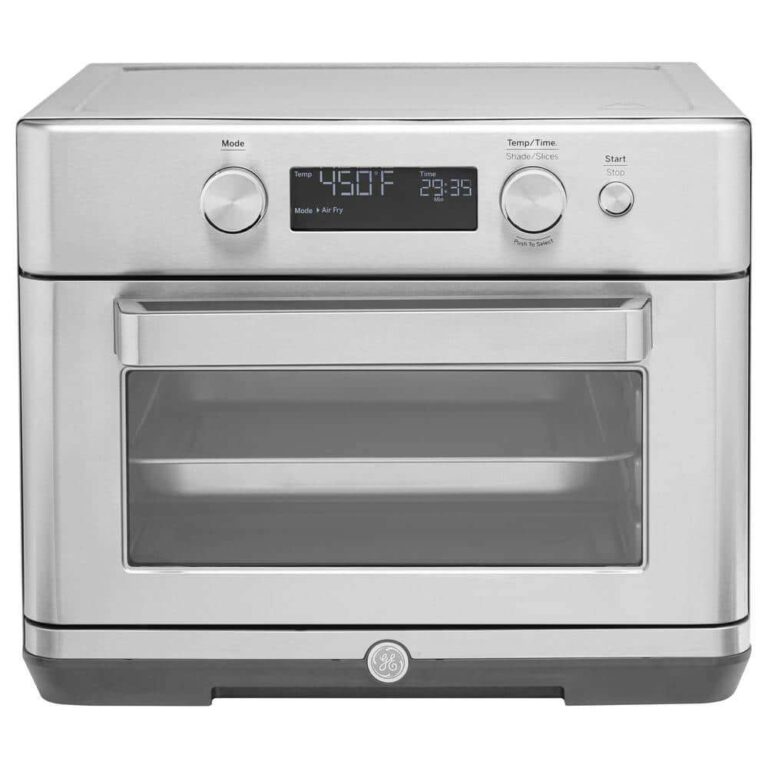
How To Dehydrate Apples In Air Fryer: Easy Guide
You can dehydrate apples in a U.S. air fryer by slicing them thin, drying them at the lowest safe temperature, and checking them often. Set a dehydration function to 135°F to 145°F when available. The apples may take 4 to 8 hours, depending on their thickness, water content, and the air fryer model.
If your air fryer only heats to 170°F or higher, it may cook the apples instead of slowly drying them. Use the lowest setting, watch the slices closely, and expect a darker, crisper result.
This guide uses U.S. measurements and food-safety guidance from sources such as the USDA, the National Center for Home Food Preservation, and the University of Georgia Cooperative Extension.
What You Need
You only need a few items to make dried apples in an air fryer:
- Fresh apples
- A sharp knife or mandoline slicer
- Cutting board
- Lemon juice or an ascorbic acid solution, if desired
- Paper towels or a clean kitchen towel
- Air fryer with a low-temperature or dehydration setting
- Airtight container for storage
Use firm apples that are free from bruises, mold, and soft spots. Honeycrisp, Gala, Fuji, Pink Lady, Granny Smith, and Golden Delicious all work well.
Sweet apples make naturally sweet dried chips. Tart apples, such as Granny Smith, produce a sharper flavor and often hold their shape well.
Wash the apples under cool running water before slicing. Do not use soap or detergent on produce.
How to Dehydrate Apples in an Air Fryer
The basic method is simple: prepare thin slices, remove surface moisture, dry them at low heat, and let them cool before storage.
1. Wash and slice the apples
Wash the apples and dry them well. You can peel them, but the peel adds color, fiber, and texture.
Remove the core and seeds. Slice the apples into rounds or half-moons that are about ⅛ inch thick.
A mandoline can make even slices, but use its hand guard. Uneven slices dry at different speeds. Thin slices become crisp more easily, while slices closer to ¼ inch stay softer and chewier.
2. Treat the slices to reduce browning
Apple slices naturally turn brown when exposed to air. This change does not mean the apples are unsafe, but a pretreatment can help them keep a lighter color.
Choose one of these options:
- Dip the slices in lemon water made with 1 tablespoon of lemon juice per cup of water.
- Use a commercial fruit-preserver solution according to its label.
- Skip the treatment if color does not matter to you.
Do not soak the apples for a long time. A short dip is enough. Drain them well, then pat them dry with paper towels.
3. Arrange the apple slices
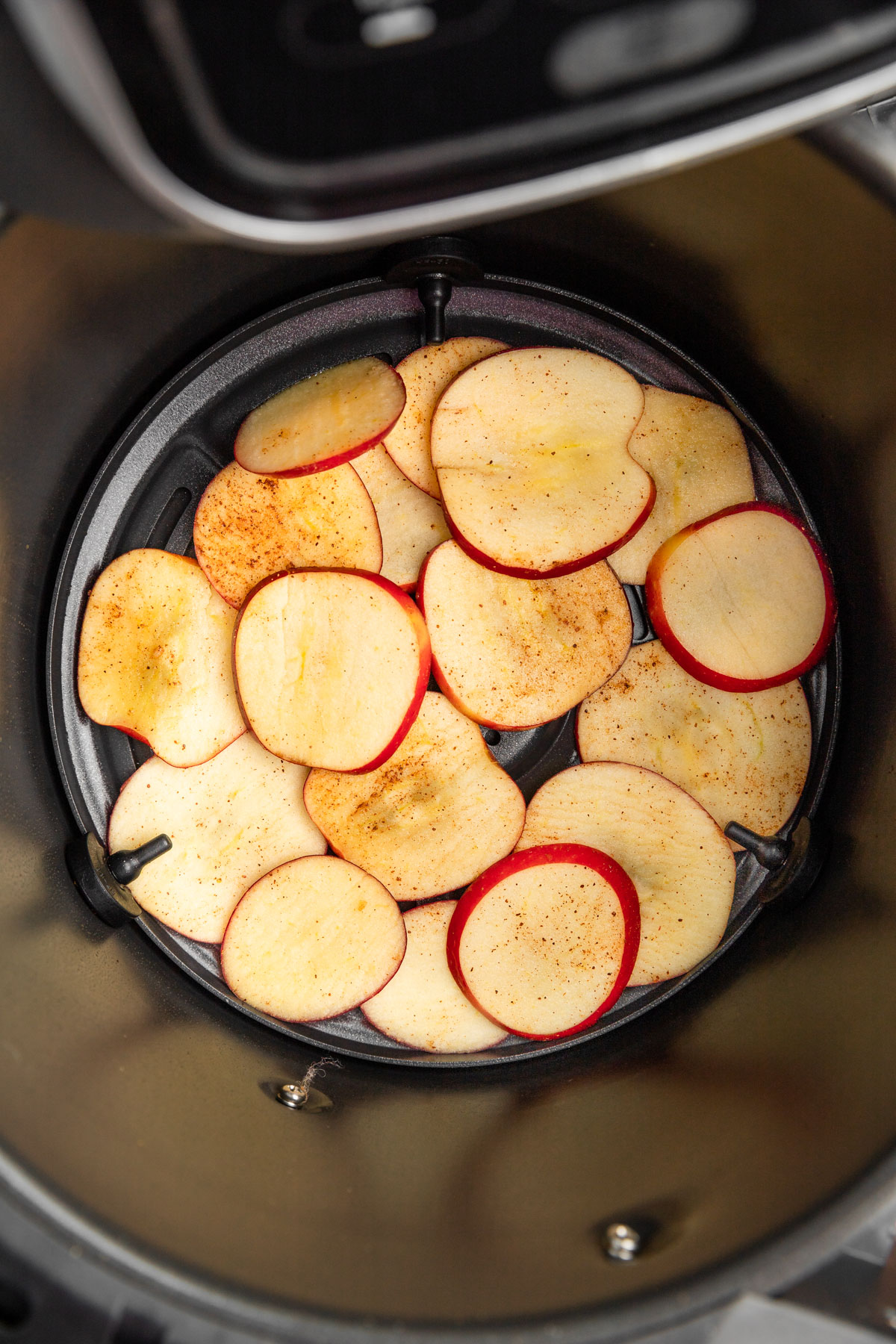
Place the slices in a single layer in the air fryer basket or on its drying racks. Leave a little space between slices so air can move around them.
Avoid stacking or overlapping the apples. Crowding traps moisture and leads to uneven drying.
If your air fryer has more than one rack, rotate the racks during drying unless the manufacturer says the fan distributes heat evenly.
4. Set the temperature
Use the air fryer’s dehydrate setting at 135°F to 145°F if it has one.
If the appliance has a manual low-temperature setting, select the lowest setting that keeps the apples warm without quickly browning them. Many air fryers do not go below 170°F. At that temperature, the apples can dry faster, but they can also brown, harden, or burn around the edges.
Do not assume that every air fryer’s “dehydrate” mode works the same way. Airflow, heating cycles, basket size, and minimum temperature vary by model.
5. Dry the apples
Dry the slices for about 4 to 8 hours at 135°F to 145°F. Begin checking them after 3 to 4 hours.
Thinner slices may finish sooner. Thick slices, crowded baskets, and apples with high moisture may need more time.
Rotate the trays or turn the slices halfway through if they dry unevenly. Some air fryers heat the upper or lower rack more strongly than the rest of the chamber.
6. Check for doneness
Remove one slice and let it cool for several minutes. Cooling matters because warm fruit feels softer than it will at room temperature.
Properly dried apple slices should be:
- Dry to the touch
- Flexible and leathery for a chewy snack
- Firm and crisp if you want apple chips
- Free from wet or sticky centers
- Free from visible moisture
If the slice feels damp inside, return the batch to the air fryer and dry it longer. Test more than one slice, since thicker pieces may finish later.
7. Cool and condition the apples
Spread the finished slices on a clean plate or cooling rack. Let them cool completely before packing them.
For better storage, place the cooled apples in a loosely covered glass or food-safe container for about 7 to 10 days. Shake the container once a day and check for moisture or condensation. This step is called conditioning. It helps distribute any remaining moisture among the pieces.
If you see moisture inside the container, dry the apples again before long-term storage.

How Long Does It Take to Dehydrate Apples in an Air Fryer?
Most thin apple slices take 4 to 8 hours at a low temperature, but there is no single time that works for every air fryer.
| Slice thickness | Temperature | Typical time | Texture |
|---|---|---|---|
| About ⅛ inch | 135°F–145°F | 4–6 hours | Crisp or lightly chewy |
| About ¼ inch | 135°F–145°F | 6–8 hours | Chewy and soft |
| About ⅛ inch | 170°F or higher | 2–4 hours | Faster, darker, less even |
These times are practical starting points, not guarantees. Air fryer models differ, and apples vary in size and moisture.
The best test is texture after cooling. Do not rely on color alone. Dark edges can mean browning rather than complete dehydration.
Should You Peel Apples Before Dehydrating Them?
No. Peeling is optional.
Leaving the peel on saves time and gives the slices more texture. It also adds fiber. Peel the apples if you prefer a smoother texture or if the skins are tough.
If you keep the peel, scrub the apples under running water and remove any damaged areas. A food-safe produce brush can help clean firm skins.
How to Make Apple Chips Instead of Chewy Apple Slices
For crisp apple chips, slice the apples very thinly and use a single layer. Aim for slices close to ⅛ inch.
Dry them at 135°F to 145°F until they feel firm after cooling. If they remain flexible, continue drying in short 15- to 30-minute periods.
A higher temperature may make chips faster, but it also increases the chance of burning. Sugar in apples can darken before the center is fully dry.
Apple chips can soften when exposed to humid air. Store them in a tightly sealed container after they cool.

What to Do If Your Air Fryer Does Not Have a Dehydrate Setting
You can still try the process if the air fryer has a low manual temperature setting.
Set it as low as the appliance allows and check the apples often. If the lowest setting is 170°F, use short checks after the first hour. The apples may brown or crisp rather than dehydrate slowly.
Some appliance manuals allow the door to remain slightly open during low-temperature drying. Others do not. Only use an open-door method if the manufacturer specifically permits it and the appliance remains stable and safe.
Do not block the air fryer’s vents. Do not place a towel, foil, or another object over the opening. If the apples brown quickly, stop the process and use a food dehydrator or an oven method designed for low-temperature drying.
A food dehydrator is usually better for large batches because it maintains low heat and provides more drying space.
Common Problems and Fixes
The apples are still soft and wet
Likely causes:
- The slices are too thick.
- The basket is crowded.
- The apples were not dried long enough.
- The air fryer temperature is too low for its airflow pattern.
Fix: Continue drying in 20- to 30-minute intervals. Test a cooled slice each time.
The apples burn around the edges
Likely causes:
- The temperature is too high.
- The slices are too thin.
- The air fryer has a strong heating element.
- Sugar from the apples is browning quickly.
Fix: Lower the temperature if possible. Move the slices farther from the heating element, rotate the tray, and check them more often.
The apples are brown
Browning can happen from oxidation or heat. Lemon water may slow oxidation, but it will not prevent all color changes.
If the apples taste good and are fully dry, browning is usually a quality issue rather than a safety issue. Reduce the heat and use a shorter pretreatment next time.
The apples are unevenly dry
Uneven slices and crowded racks are common causes.
Slice the apples more evenly, keep them in one layer, and rotate the racks during drying. Remove finished pieces while the thicker slices continue to dry.
The apples became soft after storage
They likely absorbed moisture from the air or were packed before they were fully dry.
Dry them again, let them cool completely, and use an airtight container. In humid parts of the United States, moisture control matters even more.

How to Store Dehydrated Apples
Store fully dried apples in a clean, airtight container in a cool, dark, dry place.
Good storage options include:
- Glass jars with tight lids
- Food-safe plastic containers
- Vacuum-sealed bags
- Freezer bags with as much air removed as possible
Label the container with the drying date. Check the apples from time to time for moisture, mold, unusual odor, or a fermented smell.
For longer storage, keep dried apples in the refrigerator or freezer. The National Center for Home Food Preservation recommends storing dried foods in clean, dry containers and protecting them from moisture, light, heat, insects, and oxygen.
Discard the batch if you see mold. Do not taste food that shows mold or has an abnormal smell.
Are Air-Fried Dehydrated Apples Safe?
They can be safe when you use sound produce, dry the slices thoroughly, and store them correctly. Drying removes enough moisture to slow spoilage, but it does not make poor-quality fruit safe or guarantee the destruction of every pathogen.
Start with clean apples and clean equipment. Keep raw food away from dirty surfaces, and wash your hands before preparation.
Do not pack warm apples into a sealed container. Trapped heat can create condensation, which adds moisture and may encourage spoilage.
For young children, cut larger or very firm dried apple pieces into small, manageable pieces. Dried fruit can be chewy and may present a choking risk, especially for young children.

Can You Add Cinnamon or Sugar?
Yes. Cinnamon works well on dried apples.
For even coverage, add a small amount before drying. Avoid adding much sugar because it can make the slices sticky and cause faster browning.
You can also add:
- Pumpkin pie spice
- Ground ginger
- Nutmeg
- A small pinch of salt
- Cinnamon with a light dusting of sugar
Season lightly. As the water leaves the apple, its natural flavor becomes more concentrated.
How to Use Dehydrated Apples
Dried apples work as a snack, but they have other uses too:
- Add them to oatmeal or cereal.
- Stir them into trail mix.
- Chop them into muffin or quick-bread batter.
- Use them in homemade granola.
- Add them to stuffing or grain dishes.
- Rehydrate them for cooked recipes.
- Crush them as a topping for yogurt or ice cream.
To rehydrate them, cover the pieces with hot water for about 10 to 20 minutes. Drain them before adding them to a recipe. The final texture will be soft, not the same as fresh apple.
Air Fryer vs. Oven vs. Food Dehydrator
An air fryer is convenient for a small batch, but it is not always the best tool for slow drying.
| Method | Main benefit | Main limitation |
|---|---|---|
| Air fryer | Fast setup and small batches | Limited space and uneven low-heat control |
| Oven | Handles larger batches | May not reach a low enough temperature |
| Food dehydrator | Steady low heat and large drying area | Requires a separate appliance |
Choose an air fryer when you want a small amount of dried apples and your model has a reliable low-temperature setting.
Choose a food dehydrator when you plan to dry fruit often or want more consistent results. Choose an oven only when it can maintain a suitable low temperature and provide enough airflow.

Key Takeaways
- Slice apples about ⅛ inch thick for crisp chips.
- Use a 135°F to 145°F dehydration setting when available.
- Dry the apples for about 4 to 8 hours, checking them early.
- Keep slices in one layer with space between them.
- Judge doneness after the apples cool.
- Condition the dried apples before long-term storage.
- Re-dry any apples that show moisture in the storage container.
- If your air fryer only reaches 170°F, watch the apples closely because they may brown or cook.
Frequently Asked Questions
Can I dehydrate apples at 200°F in an air fryer?
You can, but 200°F is high for slow fruit dehydration. The apples may brown, burn, or become crisp on the outside while retaining moisture inside. Use the lowest setting available for better control.
Do I need to soak apples before air frying them?
No. Soaking is optional. A brief lemon-water dip can slow browning, but it does not replace proper drying.
Why did my dried apples turn chewy instead of crispy?
The slices may be too thick, or they may need more drying time. Let a slice cool before judging it. Continue drying in short intervals if the center remains moist.
Can I dehydrate apples without a rack?
Yes, if the air fryer basket allows air to circulate around the slices. Keep the apples in a single layer and avoid overlap. A rack can increase capacity, but it is not required.
How long do homemade dehydrated apples last?
Storage life depends on how completely the apples were dried and how well they are protected from moisture. Keep them in an airtight container in a cool, dry, dark place, and check them for condensation, mold, and unusual odors. Refrigeration or freezing can extend storage quality.
Conclusion
To dehydrate apples in an air fryer, slice them evenly, use the lowest suitable temperature, and dry them until they are firm after cooling. A dehydration setting near 135°F to 145°F gives the best control, while higher settings require closer watching.
Start with a small batch. That lets you learn how your air fryer handles apple slices before you fill the basket. When the apples are fully dry, cool them completely, condition them, and store them in an airtight container.
Sources and Further Reading
- National Center for Home Food Preservation: Drying Fruits
- USDA: Keep Food Safe
- FDA: Selecting and Serving Produce Safely
- University of Georgia Cooperative Extension: Food Preservation

Appliance Review Expert
Lucas Ramirez is a trusted voice at HomeFixGrid.com, known for his clear, practical, and creatively written guides that simplify appliance care for everyday homeowners. With a strong focus on hands-on testing and real-world problem-solving, Lucas brings expert insight into appliance reviews and troubleshooting techniques. Her work empowers readers to confidently maintain, repair, and choose the right appliances for their homes.